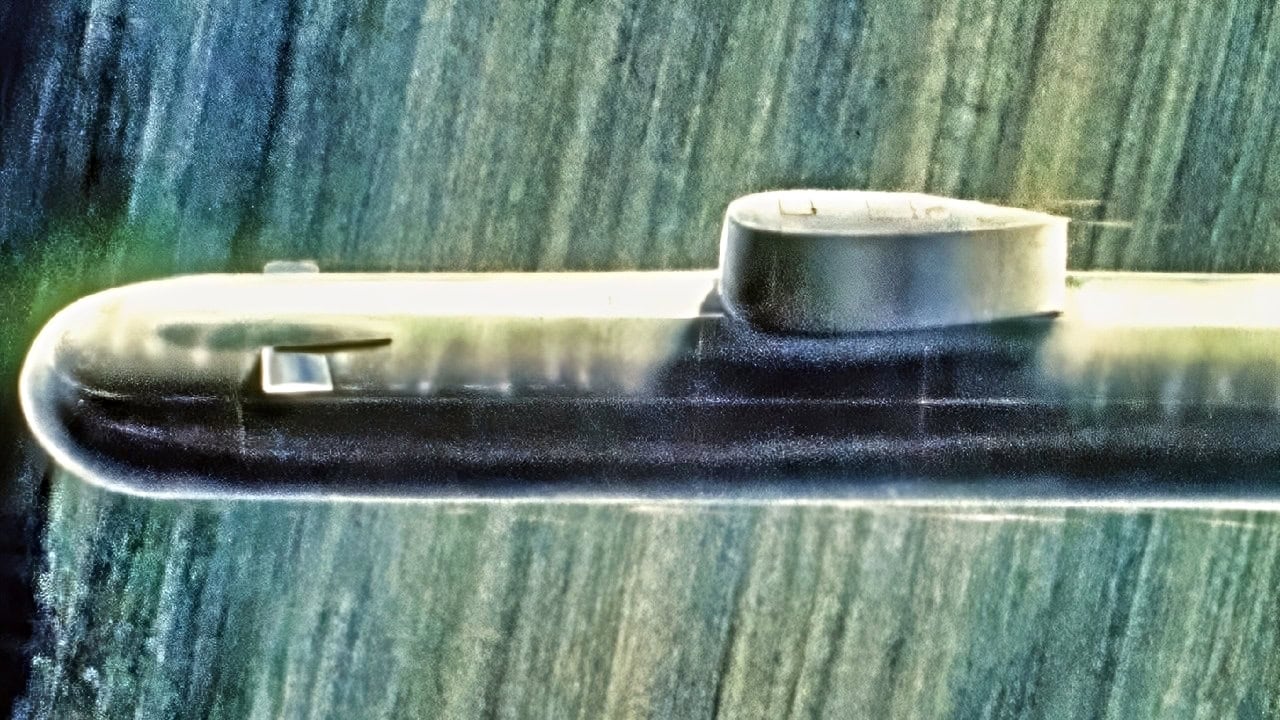
Summary and Key Points on Komsomolets or Mike-Class Submarine: On April 7, 1989, an electrical fire in her seventh compartment southwest of Norway’s Bear Island burned at close to 2,000 degrees, burst her oxygen canisters and split the hull. She sank stern first; the escape capsule built for the entire crew jammed in the sail, then blew free from more than 1,000 feet down. Most of her crew did not survive the fire, the sea or the cold. She rests 5,500 feet down with her reactor and two nuclear torpedoes, and surveys confirm cesium and strontium are escaping.
The Record-Breaking Russian Submarine That Never Came Back to Port
The K-278 Komsomolets was a one-of-a-kind Soviet attack submarine known to NATO as the Mike-class. This Project 685 Plavnik-type submarine was built to achieve extremely deep diving depths along the lines of the Alfa-class submarines that preceded her. While the Alfa class was built as a high-speed deep-ocean interceptor, designed to hunt US attack submarines and surface ships, this single experimental Mike-class hull served as a testbed for sensors and weapons operating at depth and high speeds.
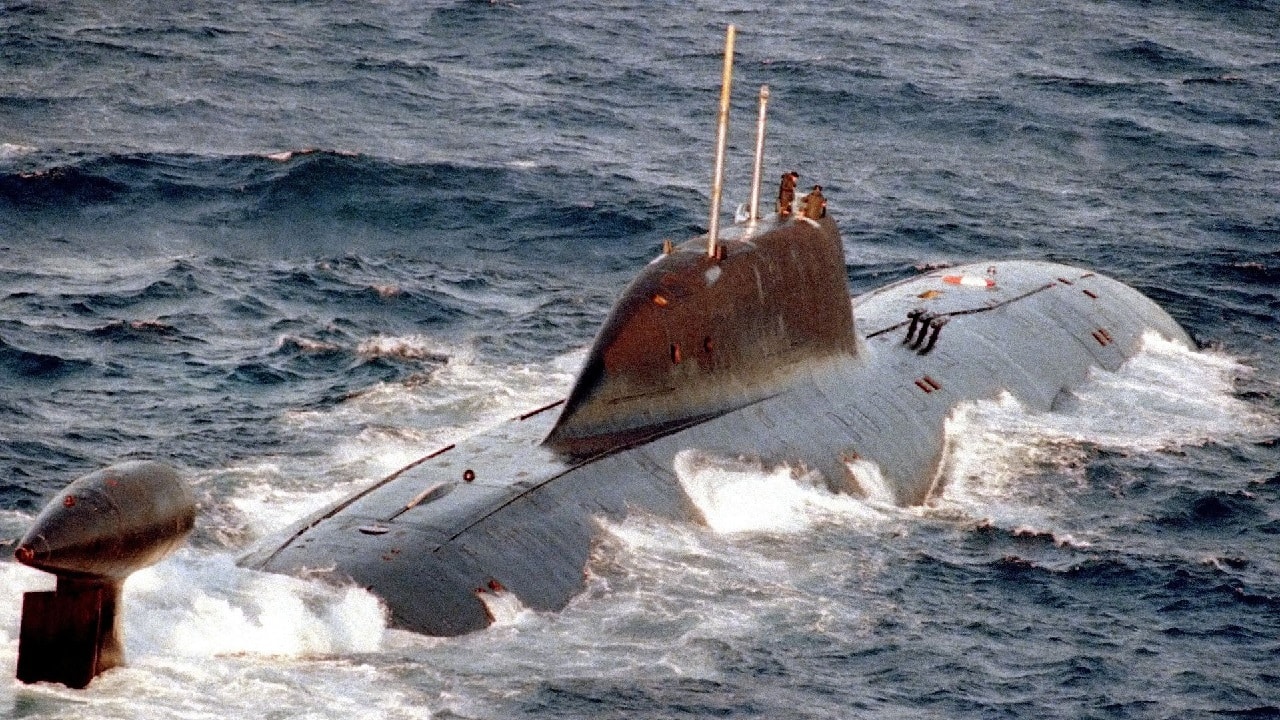
K-322 Cachalot, Akula class submarine underway. A port quarter aerial view of the Russian Northern Fleet AKULA class nuclear-powered attack submarine underway on the surface.
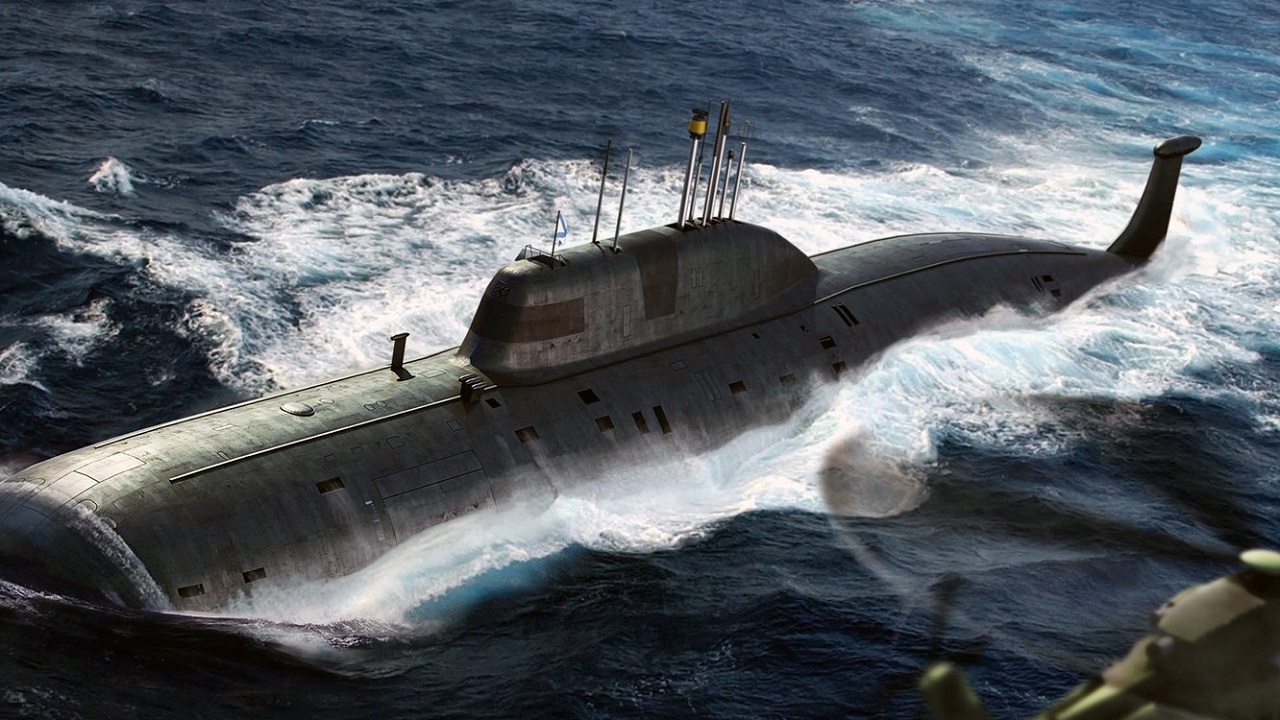
Akula-Class Submarine. Image Credit: Computer Generated Image, Screenshot.
To achieve this, the Komsomolets had a double hull of lightweight, high-strength titanium, and an OK-650b-3 pressurized water nuclear reactor.
This 3rd-generation reactor was specific to the Mike-class experimental design and allowed high natural coolant circulation without noisy reactor coolant pumps increasing its acoustic signature.
It also featured the latest safety technology for early detection of radiation leaks and emergency core cooling of the reactor.
Like the Alfa-class, the Mike-class emphasized systems automation to reduce crew size.
A submarine must carry food for its crew while also making water for them to drink and bathe with, and even oxygen to breathe.
A smaller crew means more room for equipment and less energy spent making air and water, improving endurance.
The Komsomolets would have a standard complement of 64.
By contrast, the US Los Angeles-class attack submarine had a crew of 143 and a high degree of systems automation itself.
The Mike-class Komsomolets Was The Deepest Diving Attack Submarine Of Its Day
The Komsomolets launched in May 1983 and had successful sea trials, and the Soviet Navy put her to work in a series of test dives to test the hull’s dive limits incrementally.
In August 1984, the sub became the undisputed record holder for depth, reaching a working depth of 3,300 feet, then dipping briefly to 3,350 feet.
This was still not as deep as its theoretical crush depth of 4,500 feet.

An aerial port quarter view of a Soviet Mike class nuclear-powered attack submarine underway.
As a safety feature, the Komsomolets had a pressurized escape capsule in the sail that could safely accommodate the entire crew and reach the surface safely without the crew dying of decompression sickness.
The Experiment Ends With The Loss of the Mike-class Komsomolets
On April 7th, 1989, the Komsomolets was operating about 100-135 nm Southwest of Bear Island, Norway, at a depth between 1,100-1,260 feet, when an electrical fire broke out in her #7 engineering compartment.
The procedure for fighting the fire was to remotely dump a fire retarding chemical into the compartment to starve the fire of oxygen and snuff it out.
Despite the closure of watertight doors, the fire still spread through wiring cut-throughs into forward compartments, even as the crew began fighting it immediately.
A high-pressure airline ruptured in the rear compartment, and when the captain ordered the sub to the surface, air meant to force water from the ballast tanks at high pressure was also fed into the fire like a blowtorch.
The Komsomolets still reached the surface.
The captain called for the nuclear reactor to be shut down safely, leaving the cripple sub on limited electrical power provided by a diesel generator.
Temperatures inside the rear compartment approached 2,000 degrees, and the right turbo generator sprayed atomized oil and hydraulic fluid into the fire, which spread to adjacent forward compartments.
Then the fire reached 4 air-vitalization canisters in the 6th compartment containing chemical plates that burned with intense energy.
The containers burst violently, rupturing the titanium hull, and the submarine began taking on water and sinking.
The Desperate Escape From The Mike-class Komsomolets
With his submarine now burning and sinking.
The captain ordered the boat to be abandoned.
Many of the crew, including the injured, were brought on deck and climbed into a pair of 25-man life rafts.
The water and air temperatures were both conducive to rapid hypothermia.
As the sub began to sink slowly, the captain and five volunteers remained aboard in a vain effort to save her; the fires had now spread to compartment 4, and she was flooding stern first.
At more than 1,000 feet, the captain and remaining crewmembers climbed into the escape capsule, which refused to detach from the sail as the Komsomolets rapidly sank away with them.
They had mistakenly left one man behind; they could not let him into the capsule because once closed, the hatch could not be reopened.
A tremendous explosion in either the battery compartment or compressed air tanks blasted the escape capsule free into an uncontrolled, rapid ascent.
Upon reaching the surface, the intense pressure inside it blew the hatch off, and the rapid equalization of pressure killed 4 of those inside, including the captain.
Among the crew of 69, there would be just 27 survivors; the rest were killed by the accident itself, injuries sustained, or hypothermia while awaiting rescue.
The Radioactive Tomb Of the Mike-class Komsomolets
The Komsomolets came to rest at a depth of more than 5,500 feet in the waters off Norway.
Its proximity to the country and its presence in heavily fished waters created the potential for an environmental crisis if radiation escaped from the submarine at a depth that made recovery nearly impossible.
In addition to its nuclear reactor, the Komsomolets also carried two torpedoes with nuclear warheads containing plutonium.
In the 1990s, attempts were made to use a gelatinous compound to seal hull fractures and torpedo tubes to prevent radiation leaks.
Regular surveys have been conducted to determine the level of radiation leakage, which have confirmed that elements like Cesium-137 and Strontium-90 are escaping from the sub.
But water is a very good shield against radiation, and 5,500 feet of it above a nuclear reactor, combined with currents, is believed to dilute it to levels of significant danger.
So, for the foreseeable future, the radioactive tomb of the Mike-class K-278 Komsomolets will remain where it is: deep beneath the pitch-black waters of the Norwegian Sea.
About the Author: Sean Spoonts
Sean Spoonts is the former Editor-In-Chief of SOFREP.com. He is a military analyst, writer, and commentator whose work has appeared in Newsweek, CS News, Ukrinform, and various military/veteran media networks and professional publications, including the Military Intelligence Professional Bulletin. He is a U.S. Navy veteran, having served as an Aviation Anti-Submarine Warfare Operator and Search and Rescue Helicopter Aircrewman.