
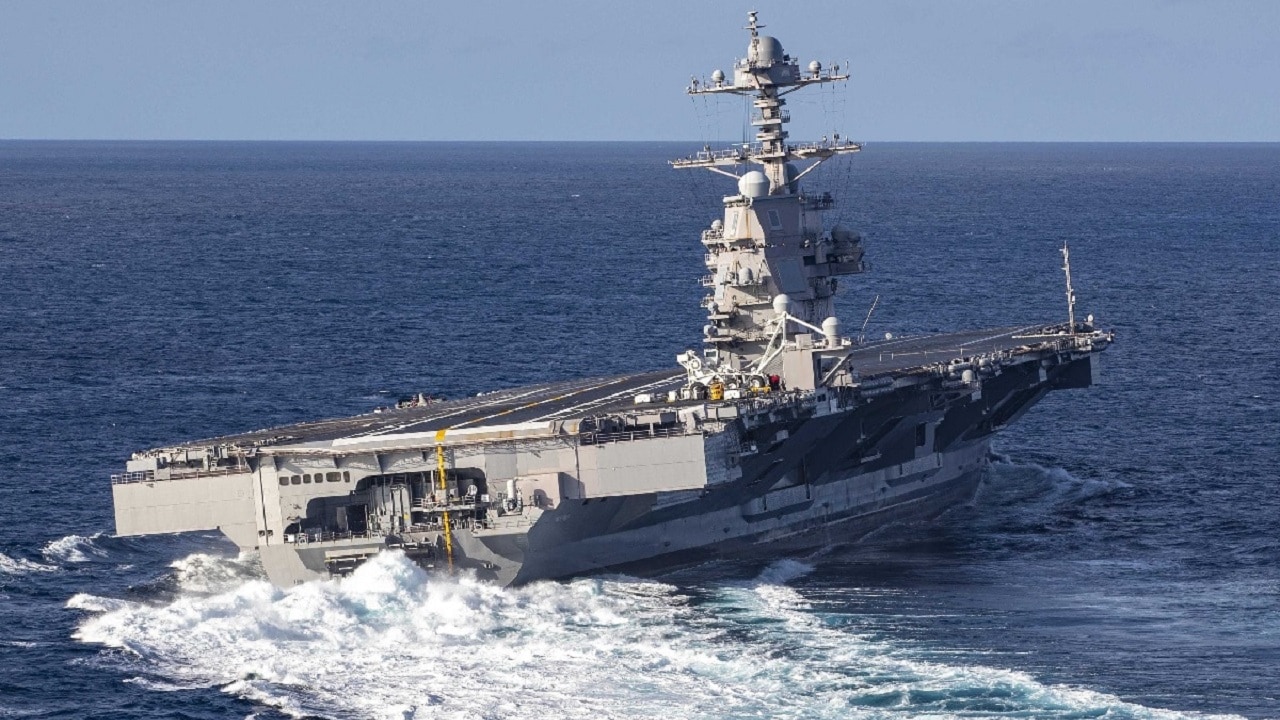
Summary and Key Points: In August 2026, the White House directed the Navy to study converting the future aircraft carrier USS Doris Miller (CVN-81) from electromagnetic to steam-powered catapults. The Navy delivered a plan in October, and preliminary estimates reported by USNI News suggest the design work alone could cost about $10 billion.
New Steam Aircraft Carriers Again for the US Navy?
President Donald Trump’s proposal to return American Ford-class aircraft carriers to steam-powered catapult systems is encountering bipartisan resistance in Congress.
During a November 17 confirmation hearing for Navy Secretary nominee Hung Cao, Senate Armed Services Committee Chairman Roger Wicker (R-Miss.) categorically rejected the proposal. “Secretary Cao, returning to steam is a non-starter, and everybody needs to understand that,” Wicker said. Wicker’s remarks followed an earlier exchange between Cao and Democratic Senator Tim Kaine concerning Trump’s preference for steam catapults.
The Republican chairman’s opposition is significant given his influence over naval procurement and defense spending, suggesting Trump’s wish will go unfulfilled.
What Trump Wants
In August 2026, the White House directed the Navy to investigate converting the future USS Doris Miller (CVN-81) to steam-powered catapults.
The administration requested estimates concerning the financial cost and construction delays associated with the conversion.
Cao delivered the requested plan in October. The Navy’s Ford-class carriers were designed around the Electromagnetic Aircraft Launch System (EMALS), manufactured by General Atomics and incorporated into the designs of CVN-78 through CVN-81.
According to USNI News, preliminary estimates suggest that the design work required to reintroduce steam could cost approximately $10 billion.
That figure alone illustrates the complexity of reversing the Navy’s technological transition, which now seems increasingly unlikely.
Steam vs. EMALS
Aircraft carriers have relatively short flight decks, so heavily loaded aircraft often need assistance to reach flying speed before reaching the end of the deck.
Catapults accelerate aircraft along the deck, allowing fighters and other aircraft to take off carrying substantial fuel and weapon loads.
Steam-powered catapults have been used aboard American aircraft carriers since the 1950s, using pressurized steam to drive a piston that accelerates the aircraft.
Steam catapults are proven and familiar to the Navy and remain in use on Nimitz-class carriers.
EMALS, by contrast, is 21st-century technology that uses electrical energy and a linear induction motor to accelerate the aircraft.
The electromagnetic system provides more precise control over acceleration, which potentially reduces stress on aircraft structures.
EMALS is also designed to accommodate a broader range of aircraft weights, including lighter uncrewed aircraft.
The Navy adopted EMALS as part of a broader effort to improve carrier efficiency and future operational flexibility.
Trump Prefers Steam
Trump’s preference for steam catapults dates back to his first presidential administration.
In 2017, Trump publicly criticized electromagnetic launch technology as excessively complicated and expensive.
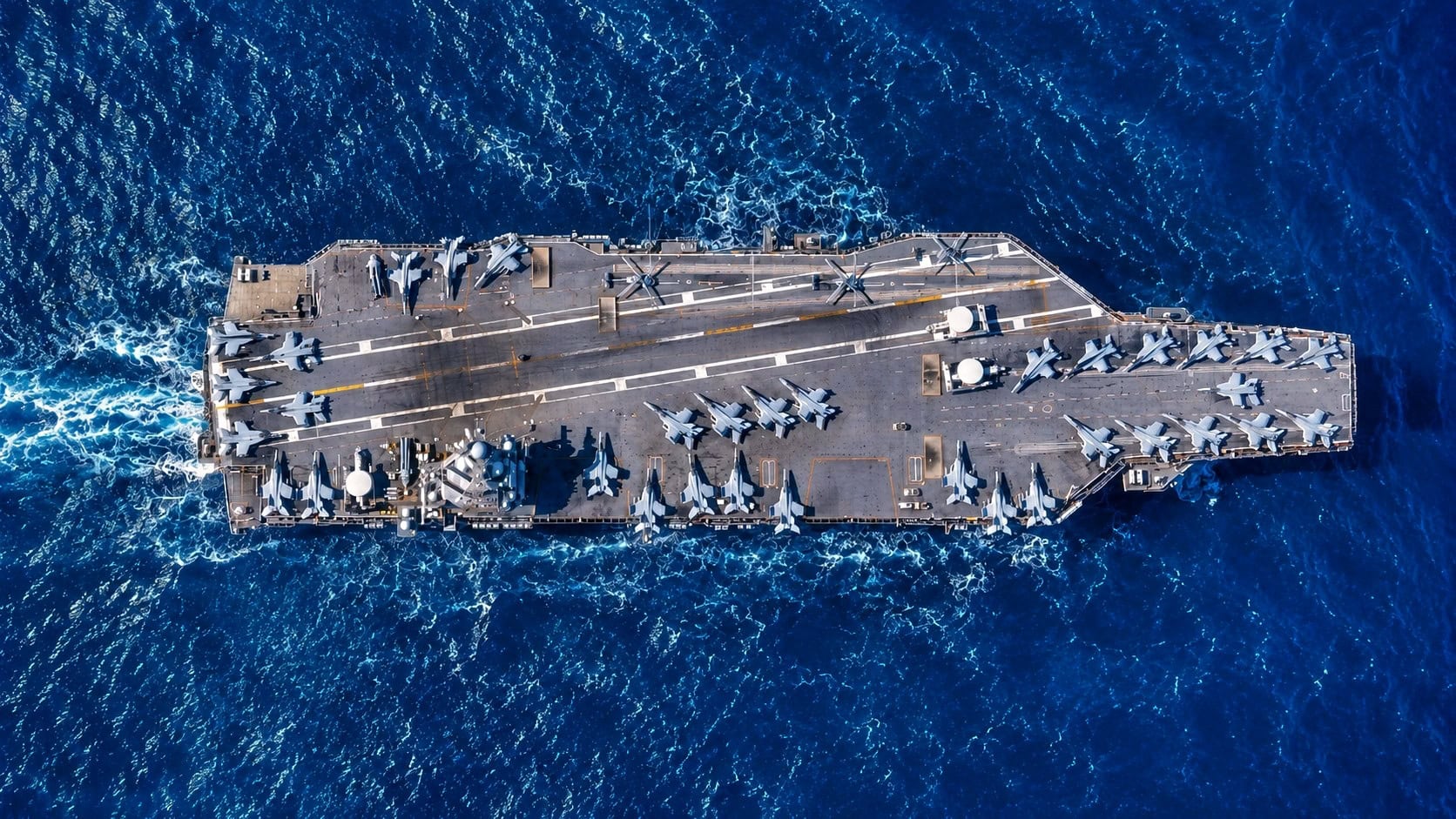
USS Gerald R. Ford. Image Credit: Banana Nano.
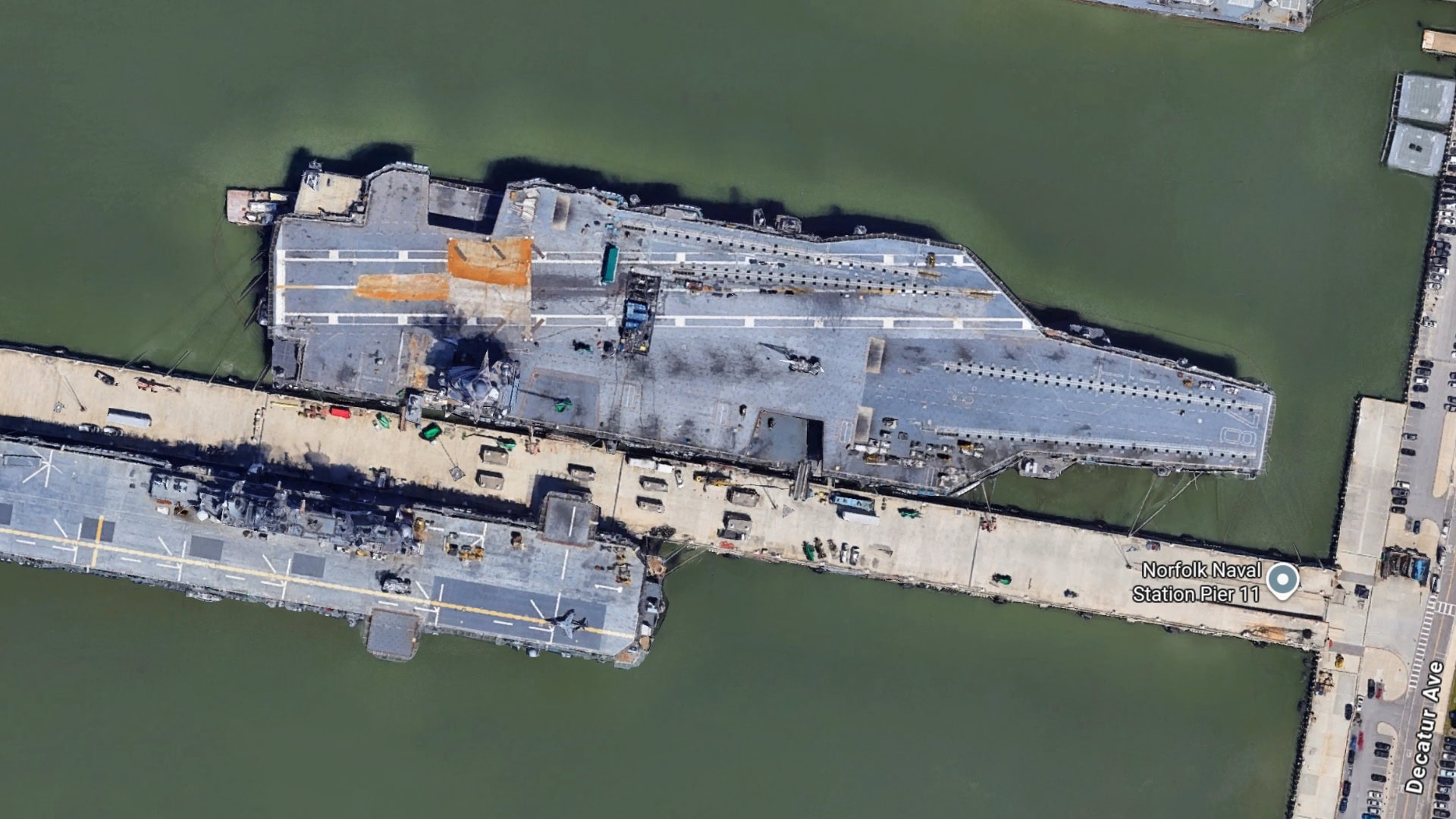
USS Gerald R. Ford Google Maps Photo Screenshot.
The Ford-class program has experienced genuine technological problems, including early reliability difficulties with EMALS.
Critics have questioned whether the Navy introduced too many immature technologies simultaneously.
By comparison, steam catapults have benefited from decades of operational experience and refinement.
But the Ford class was designed around greater electrical generating capacity and reduced reliance on steam power for auxiliary systems.
Reintroducing steam catapults would require substantial changes to the carriers’ internal infrastructure, including steam distribution and supporting equipment.
The conversion would therefore involve considerably more than simply swapping one part for another.
It would likely result in new construction delays and sustainment complications at a time when American shipyards are already overburdened and backed up.
The Backup
The catapult controversy comes as the Navy struggles to expand its fleet and deliver new warships on schedule—all while China is engaged in one of world history’s most ambitious shipbuilding sprees.
In August, the White House issued a memorandum that directed the Navy to investigate purchasing certain auxiliary vessels and smaller surface combatants from foreign shipyards.
The administration reportedly wants to leverage foreign building expertise, particularly from countries such as South Korea, while expanding domestic industrial capacity.
Cao argued that foreign participation could accelerate construction and modernize American shipbuilding practices.
The proposed arrangement would allow foreign yards to construct two hulls abroad alongside investments in American shipbuilding facilities.
Congress has expressed skepticism about the proposal, however, with both House and Senate versions of the NDAA containing provisions that restrict foreign shipbuilding—yet another disagreement between Congress and Trump over naval procurement.
Cao’s confirmation hearing also highlighted the strain that extended military operations have placed on the Navy, specifically the unusually long deployments supporting American operations in the Middle East.
Both the USS Gerald R. Ford and USS Abraham Lincoln experienced deployments approaching one year. The George H.W. Bush Carrier Strike Group is also expected to deploy for nearly a year.
The point is, the Navy is stretched thin, which makes the prospect of procurement delays especially concerning.
About the Author: Harrison Kass
Harrison Kass is a writer and attorney focused on national security, technology, and political culture. His work has appeared in Tablet, City Journal, The Hill, The Spectator, and The Cipher Brief. He holds a JD from the University of Oregon and a master’s in Global & Joint Program Studies from NYU—more at harrisonkass.com.