
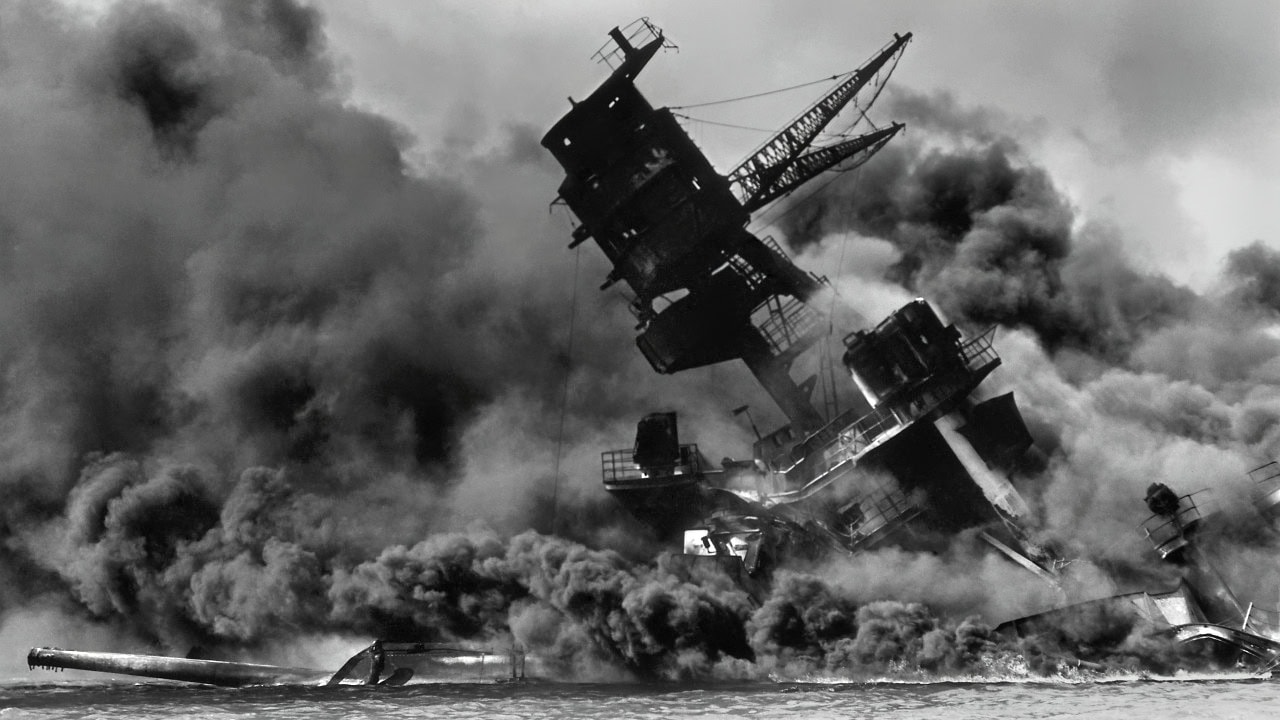
Key Points and Summary – Pearl Harbor has a second, forgotten catastrophe. On May 21, 1944, West Loch—packed with LSTs loaded for the Saipan invasion—erupted in a chain of explosions and fires.
-Fuel ignited on the water, burning debris rained over a wide radius, and blasts continued for hours as ships tried to get underway.
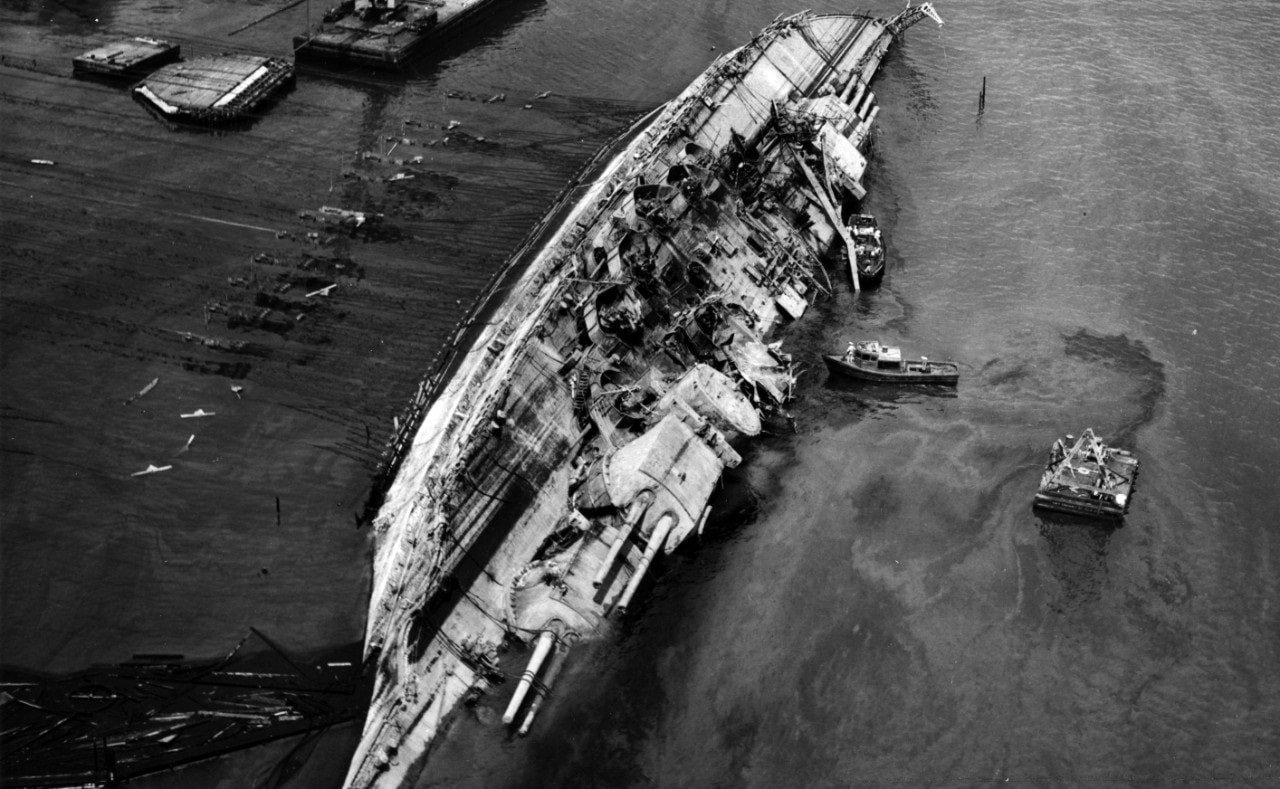
The USS Oklahoma, moored at Ford Island, Pearl Harbor, was sunk by Japanese aircraft during the attack on Pearl Harbor. A total of 429 crewmen aboard the USS Oklahoma were killed in the early morning hours of Dec. 7, 1941, after the ship quickly capsized from the numerous torpedo hits.
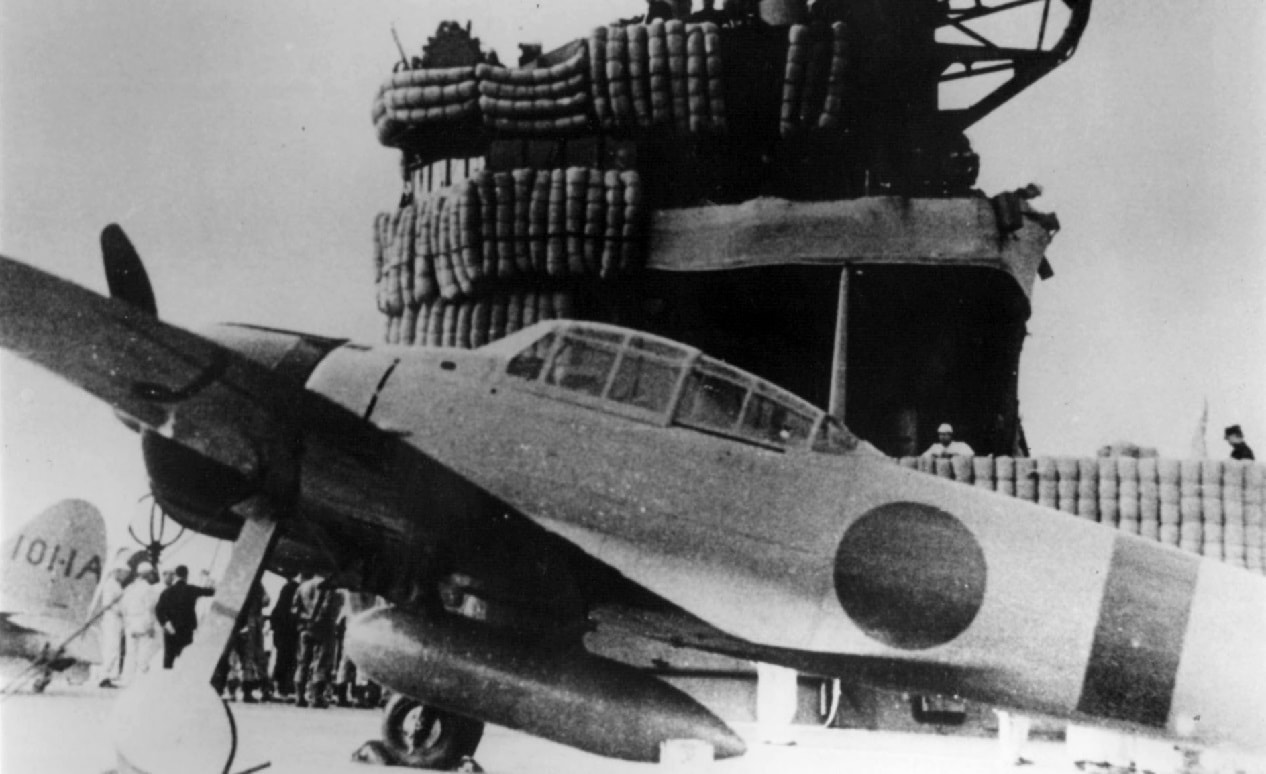
Pearl Harbor. Image Credit: Creative Commons.
-At least 163 died and 396 were injured; multiple LSTs and landing craft were destroyed, yet the Saipan timetable held thanks to quick replacements.
-The cause remains disputed, but the Navy tightened rules on separating fuel and ammunition, enforcing no-smoking, and redesigning berths.
-Few outside the base ever heard it.
The U.S. Navy West Loch Disaster: Pearl Harbor’s Lesser-Known Tragedy of 1944
December 7 marked the 84th anniversary of the Imperial Japanese Navy’s attack on the U.S. Navy base at Pearl Harbor (as well as the adjacent U.S. Army Air Corps bases at Hickam Field, Wheeler Field, and Bellow Field). The “date which will live in infamy,” as President Franklin Delano Roosevelt called it, killed 2,403 Americans and spurred America’s entry into World War II.
What is not as broadly known to all but the most hardcore history buffs is the fact that another disaster took place at Pearl Harbor 2.5 years after the bombing, while World War II was still raging. This incident, however, was not a deliberate attack by Imperial Japan, but rather a tragic accident. We now take a look at the West Loch Disaster, one of the greatest non-combat disasters in U.S. history.
The Basics
A key source of information for this story is the Naval History and Heritage Command, with its article, “Pearl Harbor Ablaze Again: The West Loch Disaster.”
Pearl Harbor contains three subareas, or “lochs,” named East, Middle, and West. East and Middle Lochs had been ravaged during the IJN’s attack, but West Loch was spared on that day. However, on May 21, 1944, fate finally caught up with the last loch.
In addition to Navy and civilian vessels, West Loch was being used to harbor large stores of ammunition, fuel, and other materiel. By May 1944, the loch was even more laden with war materiel than usual, in preparation for the upcoming invasion of Saipan. The berths housed 29 Landing Ship, Tanks (LSTs), each of them the length of a football field. In the words of historian Howard E. Shuman, these LSTs “were floating ammunition dumps.”
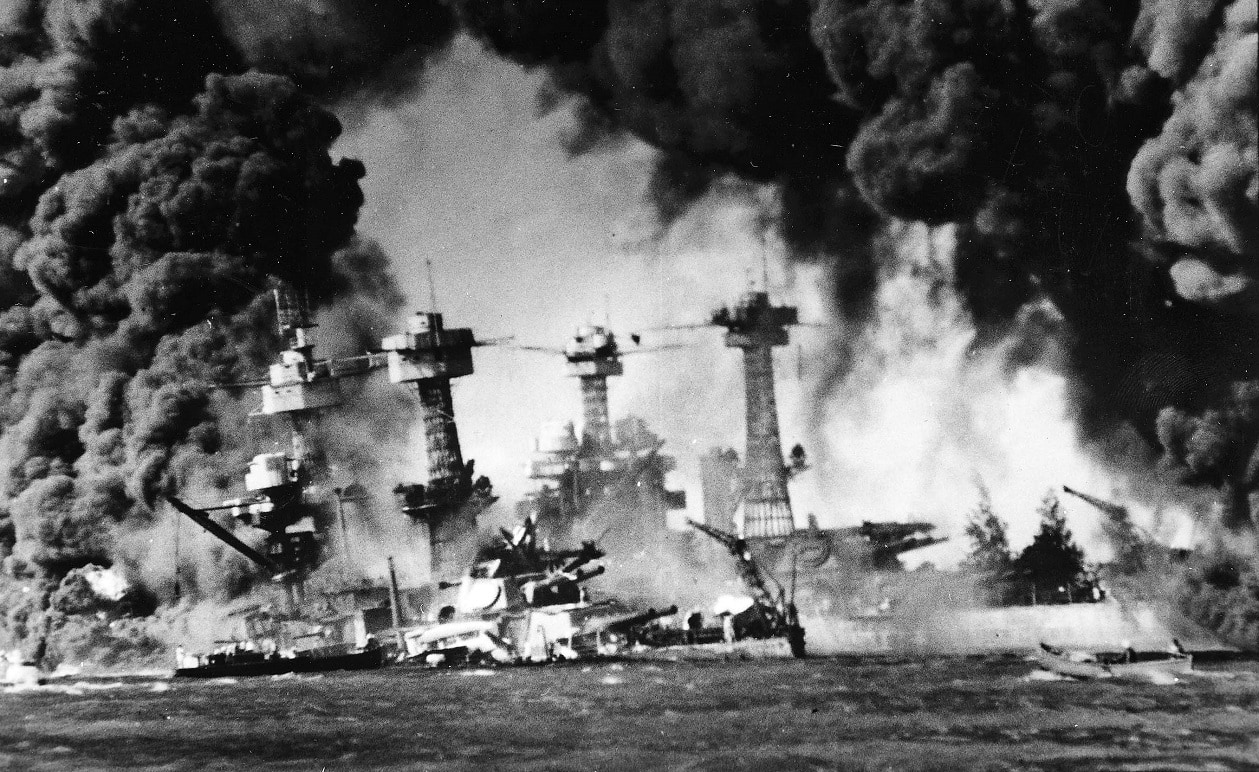
Battleship USS West Virginia sunk and burning at Pearl Harbor on Dec. 7, 1941. In background is the battleship USS Tennessee.
Disaster struck from berthing station T-8, as LST-353 appeared to spontaneously combust. Shrapnel flew out in every direction, burning debris fell from the sky, and shockwaves from the blast forces picked men up off their feet and flung them into the sea. High-octane gasoline spilled into the water and ignited, which led to additional fires breaking out on neighboring LSTs. “There was a terrific explosion,” according to Paul E. Cooper, a Marine on board a neighboring LST, while William L. C. Johnson, a pharmacist’s mate on the tank deck of nearby LST-69, recounted that “I thought my head had blown off.”
As if that weren’t bad enough, a second major explosion transpired just three minutes later at berthing area T-9 as the LSTs were beginning to evacuate the area. This explosion, according to Johnson, “threw equipment, men, and shrapnel all over the harbor…I dove into the water and held my hands over my head.” Added Cooper, “All these men I was trying to keep [inside] came running through the door at the same time. I got knocked down as they went over the side into the water.”
NHHC continues: “And now a third explosion, perhaps the largest, issued from one of these LSTs. Sound waves traveled as far as 15 miles. Flaming debris came down in a 3,000-foot radius. As the sky rained fire, LSTs at the rest of the berthing areas began to get underway.”
Murphy’s Law, the notion that “anything that can go wrong, will,” came into full, cruel effect: “The explosions continued for hours. Shortly before 2200, when things seemed to be under better control, LST-39 caught fire again. At 0130, LST-480 reignited. And even as late—or early—as 0510 on the following day, 22 May, the Pearl Harbor signal tower was reporting fire and smoke in the direction of West Loch.”
It wasn’t until 8 a.m. on May 22 that all of the fires were either extinguished or at least contained, and even then, some ships kept burning for days.
Casualties and Aftermath
Historian Samuel Eliot Morison puts the death toll at 163. Another 396 sustained injuries, many of them excruciating and grievous. If there’s any silver lining behind the tragic cloud, it’s the fact that two-thirds of personnel were on shore leave when the initial explosion occurred, thus preventing the death and injury toll from rising even higher.
There were also materiel losses:
-6 LSTs destroyed, with two more LSTs so badly damaged, they could not be used for the upcoming invasion of Saipan;
-3 Landing Craft, Tanks destroyed;
-17 amphibious tractors destroyed;
-8 howitzers destroyed.
Another silver lining is that the invasion of Saipan was not delayed by the West Loch disaster. Reserve LSTs appeared in short order, thus enabling the invasion to take place as scheduled on June 15, 1944. After 24 days of savage fighting and the deaths of roughly 3,225 U.S. troops, 27,000 Japanese troops, and 10,000 civilians, American victory at Saipan was secured.
Lessons Learned
NHHC notes that “There is no consensus on what caused the first explosion at West Loch;” however, “Evidence after the fact, including eyewitness reports, shows plenty of risk factors. Men were seen smoking cigarettes near gasoline drums. Welding had been underway on deck. A Navy intelligence report hypothesized a dropped mortar shell. The mystery endures because no one close enough to the initial blast survived to give account of what he saw.”
Nonetheless, the Navy was able to draw three painful lessons from the West Loch Disaster and apply those lessons new directives:
-Facilities for loading gasoline and facilities for loading ammunition must be kept separate.
-Safety precautions, such as smoking bans, must be enforced with the utmost rigor.
-Mooring berths, especially for LSTs, must be designed in such a way as to minimize the risk of fire and maximize the chances of escape.
About the Author: Christian D. Orr, Defense Expert
Christian D. Orr is a Senior Defense Editor. He is a former Air Force Security Forces officer, Federal law enforcement officer, and private military contractor (with assignments worked in Iraq, the United Arab Emirates, Kosovo, Japan, Germany, and the Pentagon). Chris holds a B.A. in International Relations from the University of Southern California (USC) and an M.A. in Intelligence Studies (concentration in Terrorism Studies) from American Military University (AMU). He is also the author of the newly published book “Five Decades of a Fabulous Firearm: Celebrating the 50th Anniversary of the Beretta 92 Pistol Series.”