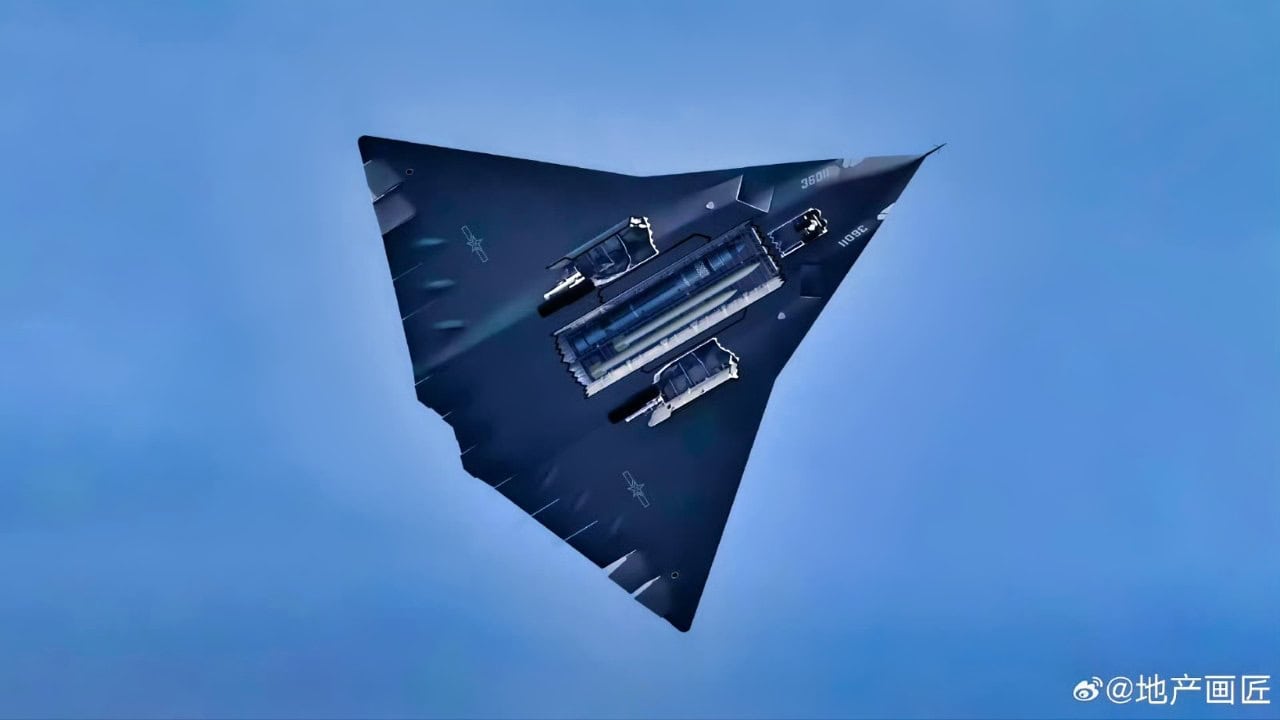
Key Points and Summary – China is rolling out exotic, next-generation aircraft designs at an impressive pace—but propulsion remains the stubborn bottleneck.
-A GE Aerospace executive says Beijing is catching up fast, fueled by scale, engineering talent, and years of technology acquisition—both legal transfer and espionage.
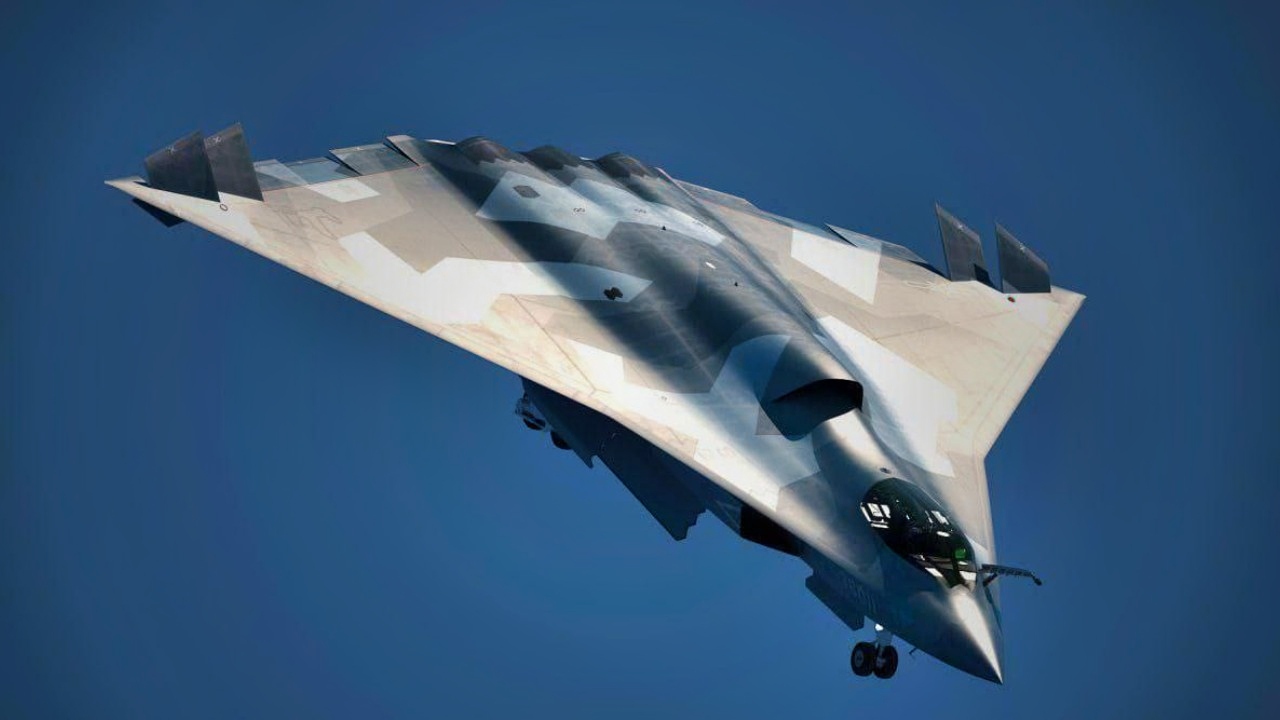
J-36 Fighter Artist Rendition. X Screenshot.
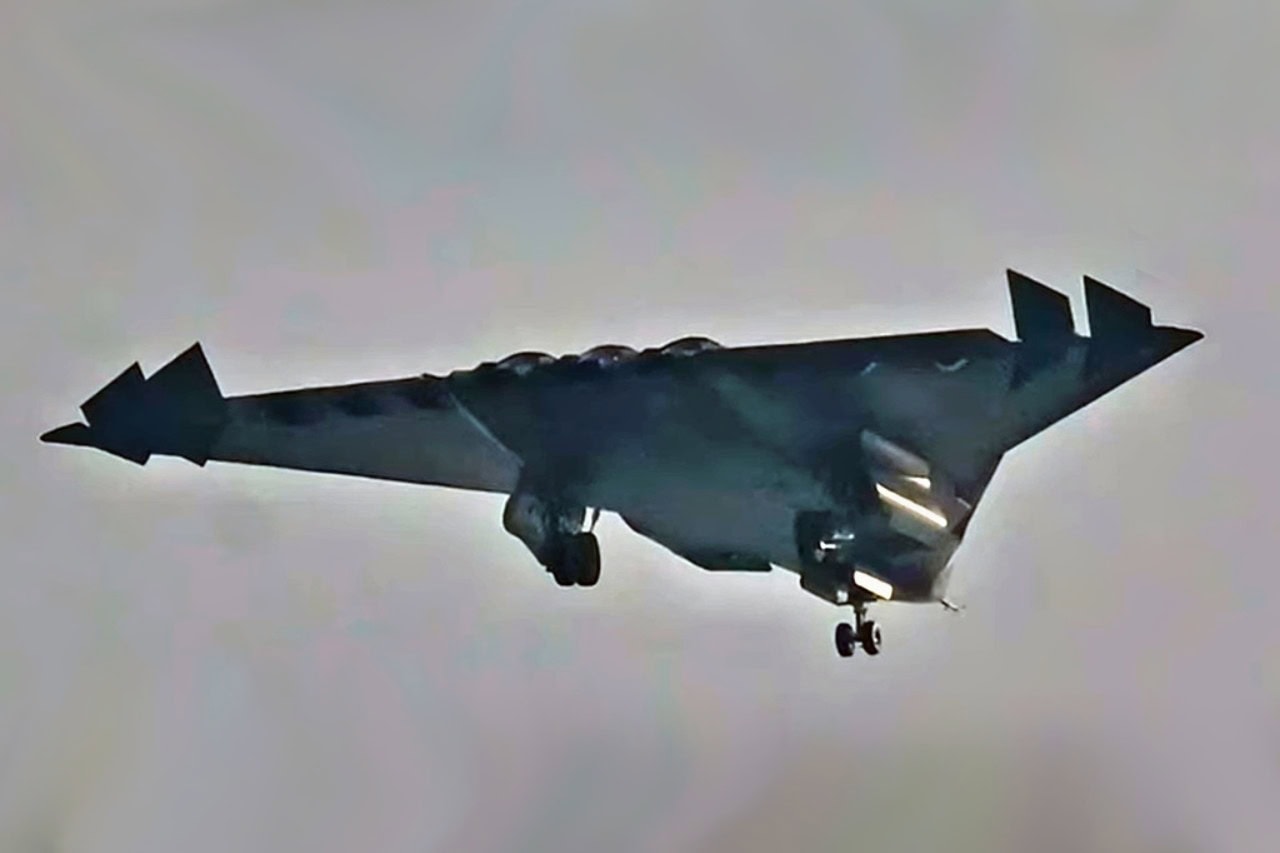
J-36 Fighter from China. Image Credit: Creative Commons.
-China’s engine lineup is expanding, from WS-10 derivatives to more advanced powerplants supporting frontline aircraft, yet reliability and overhaul cycles still lag well behind U.S. standards.
-What powers the newest prototypes, including the J-36, is still unclear.
-Meanwhile, the U.S. is betting its sixth-gen leap on adaptive propulsion for programs like the F-47 and F/A-XX.
China’s 6th-Gen Fighters Have a Problem: Engines
In its quest to field the next generation of sixth-generation aircraft, China’s aviation industry is expanding its capabilities and rapidly prototyping a new group of exotic-looking and potentially radar-defeating aircraft. But despite the rapid progress the country has made, mature jet engine technology is proving to be a difficult obstacle.
China’s domestic engine development has faced strong headwinds in the past. Though the country’s aviation industry, and in particular the development of fifth- and potentially sixth-generation aircraft, is moving forward at a breakneck pace to reach parity with, and supersede, that of the United States, propulsion has been a perennial problem.
Speaking at an event hosted by the Mitchell Institute for Aerospace Studies, an American think tank, Steve Russell, Vice President & General Manager, Edison Works at GE Aerospace, explained that China is rapidly advancing in increasingly advanced aerospace technology.
But, he added, the United States does still retain a qualitative edge.
“They are catching up and we do know that they’re certainly trying to borrow our technology still, like they have in the past,” Russell said.
Cognizant of its own engine shortcomings, China has acquired jet engine technology from other countries, particularly the United States. Technology transfer agreements with American and European companies have forced firms to disclose sensitive trade secrets to China.
Still, espionage has also been a means of boosting China’s domestic jet engine industry. Russel would know this well, as GE was itself the victim of a concerted Chinese espionage effort.
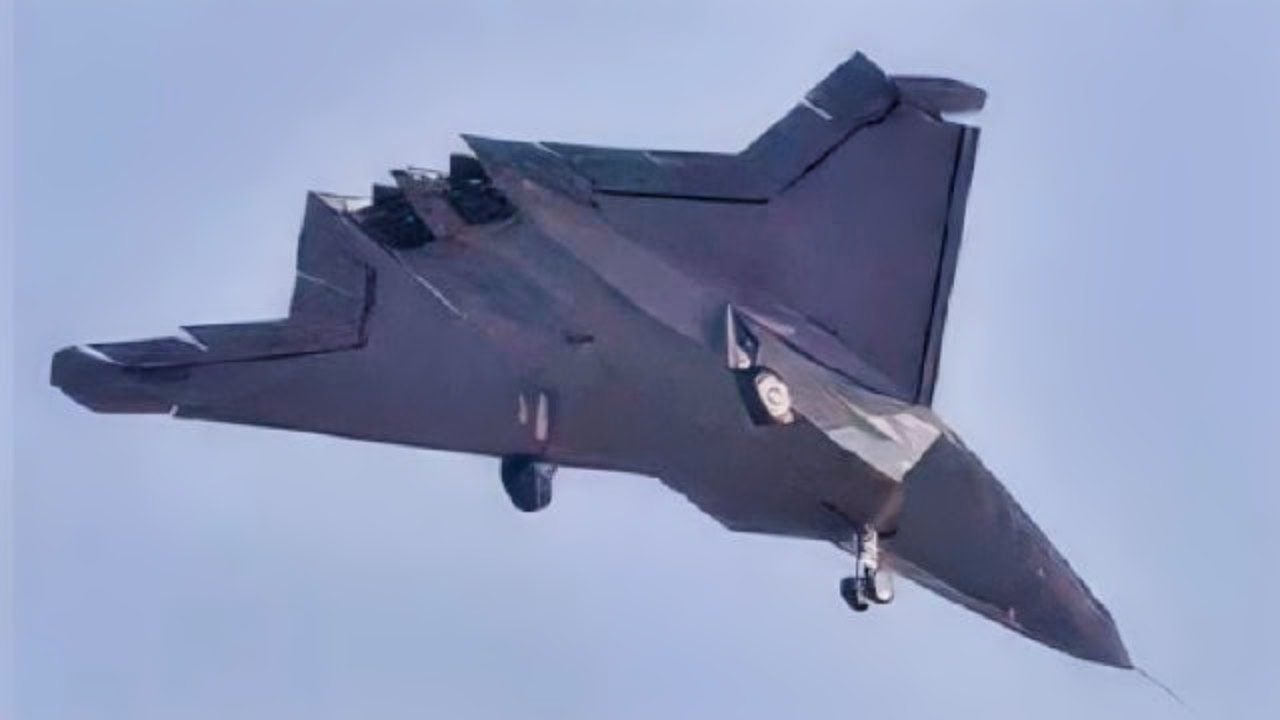
China’s J-50 Fighter. Image Credit: Screenshot from X.
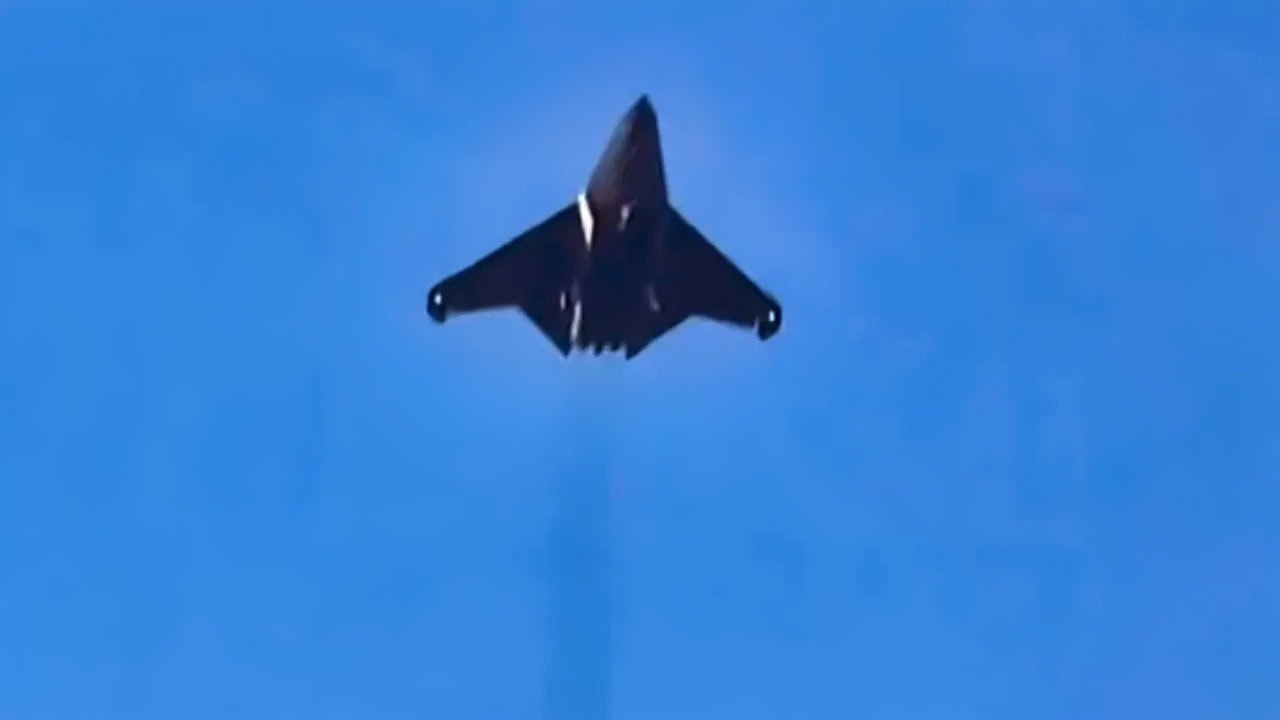
J-50 Fighter from China. Image Credit: Screenshot from Social Media.
In 2022, an ethnic Chinese citizen and former GE engineer was convicted by the US Department of Justice for “conspiring to steal General Electric trade secrets knowing or intending to benefit the People’s Republic of China,” according to a Justice Department release. The defendant, Xiaoqing Zheng, was sentenced to two years in prison and fined.
But the case put on display how successful China’s espionage campaign has been, despite this and other convictions, and an increasing pool of engines of increasing sophistication propels China’s growing fleet of aircraft.
One such engine is the Shenyang WS-10, which has been widely deployed throughout the People’s Liberation Army Air Force. The more powerful Shenyang WS-15 builds on that design and powers the country’s Chengdu J-20 stealth fighter jet. In contrast, the WS-20 is a domestic high-bypass engine powering the Xian Y-20, an aerial tanker aircraft.
China’s J-35, a fighter outwardly similar to the American F-35 stealth fighter, is thought to be powered by the WS-21, which is based on the engine that powers the JF-17, a fourth-generation fighter jointly developed by China and Pakistan.
Russel explained that, though China’s jet engine technology lags behind the United States, its domestic builds are sufficiently mature to have weaned Beijing from the legacy Soviet- and Russian-built jet engines it has historically relied on. Following the Sino-Soviet split and worsening relations between the Soviet Union and Communist China, Moscow eschewed selling aerospace technology to Beijing. But the collapse of the Soviet Union and the subsequent cash crunch thawed the export freeze as Russia sought to address acute financial problems. “They’ve got a lot of people and a lot of smart engineers too,” he explained. “They’re working fast, and they have a demand because they’re building many, many jets.”
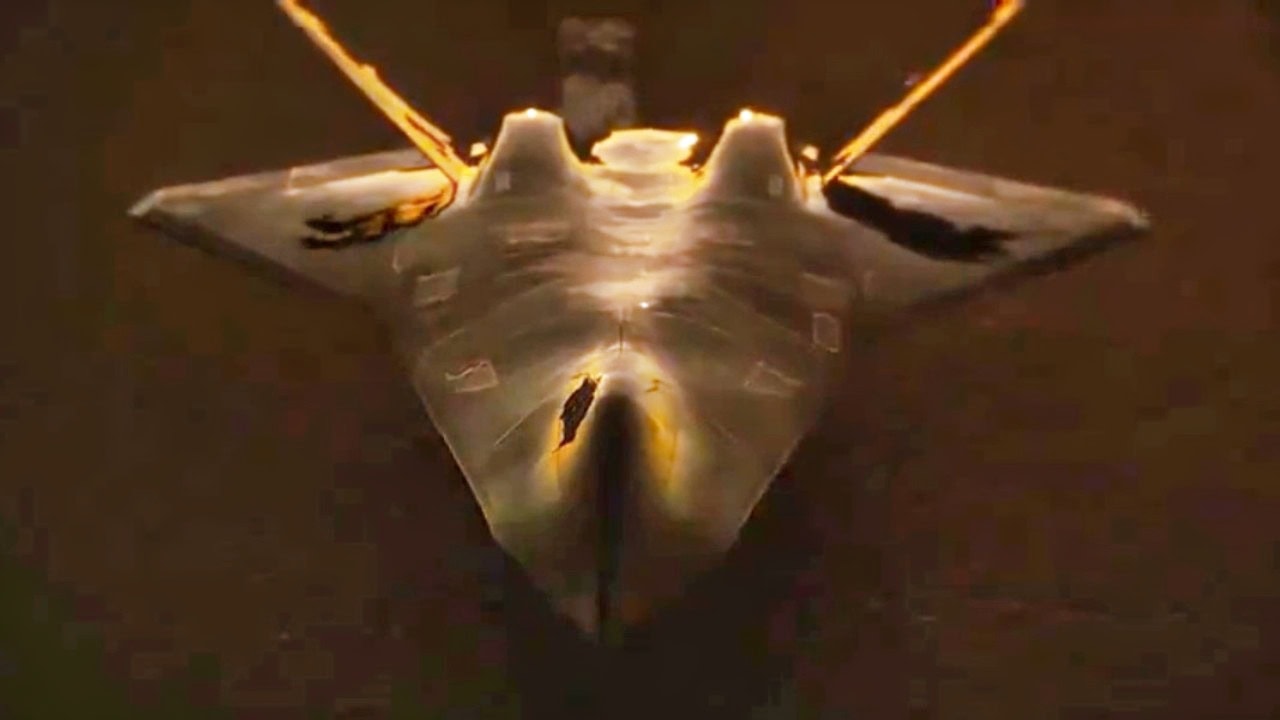
F-47 Fighter from Boeing. Image Credit: U.S. Air Force Screenshot.
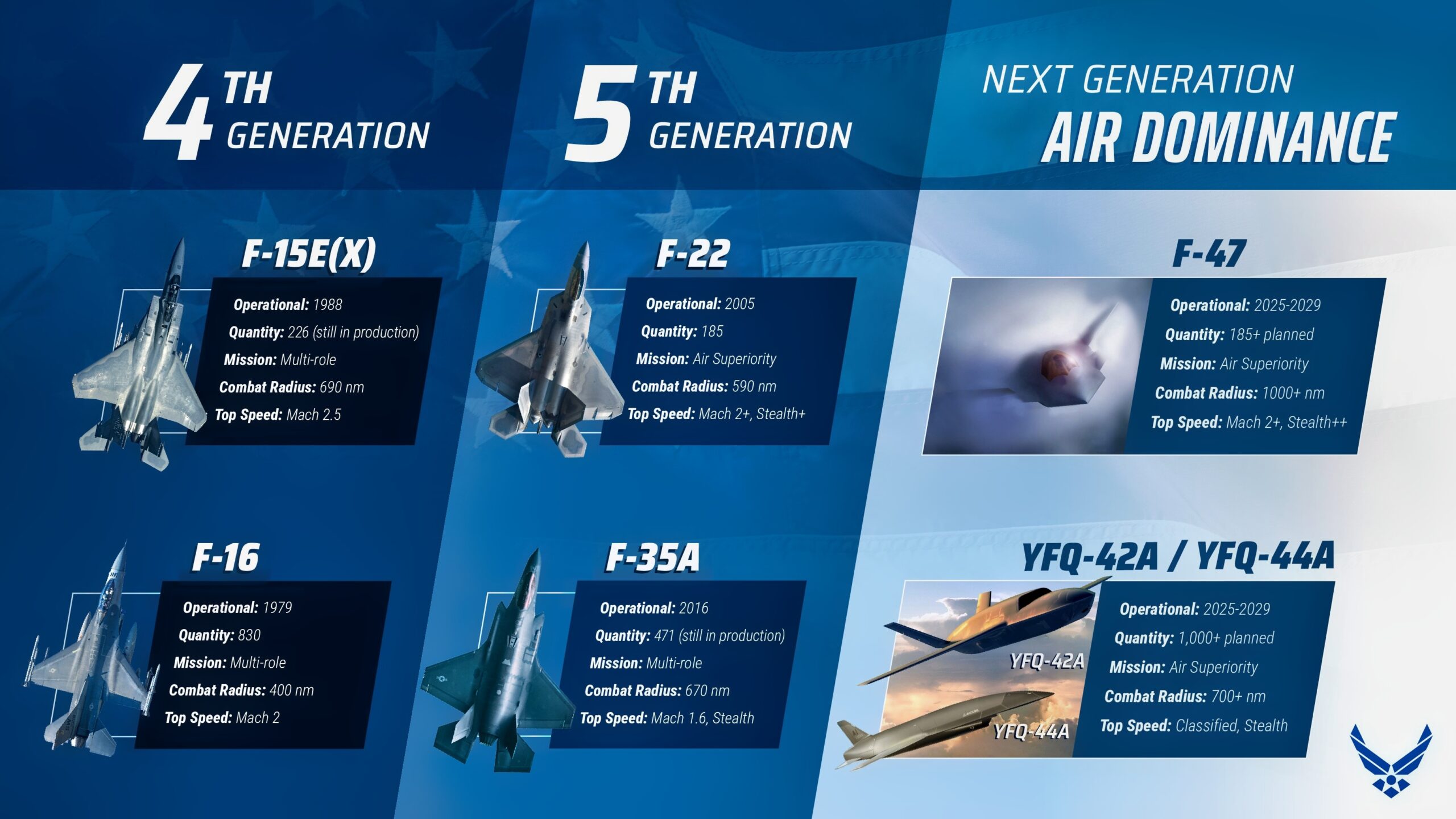
F-47 Infographic. Image Credit: U.S. Air Force
But Russel added that American engines built by GE Aerospace and its rival Pratt & Whitney are still superior to their Chinese counterparts. “Our reliability tends to be still an order of magnitude better than theirs,” he explained, adding that American engines typically require deep overhauls after accruing thousands of flight hours of use. In contrast, their Chinese equivalents require overhaul after just hundreds of hours.
“But they’re getting better, and we’re seeing them get better,” he added. “That’s why we must take this next generational leap to make sure that we maintain that advantage that we have.”
Recent months have seen a flurry of never-before-seen Chinese aircraft revealed, including the unique J-36 and others, but what engines power those aircraft — whether the aforementioned engines or entirely new powerplants — is far from clear.
“The identity of its [the J-36] powerplant remains a mystery, as well as its future intended powerplant (there is a high likelihood of variable cycle engines finding their way aboard in the future),” one analyst noted.
“Going forward, the PLA watching community will track progress in developmental testing, initial production, and service entry, alongside how procurement of the J-36 will proceed with other programs such as the J-20 family and the land-based J-35A. Related aerial combat platforms such as the H-20 and the many inevitable UCAV platforms of varying tiers will also be significant.”
But the American aerospace industry is also advancing next-generation propulsion designs.
The F-47, an air superiority fighter built by Boeing, and the US Navy’s upcoming F/A-XX fighter, both sixth-generation aircraft, will be propelled by the propulsion unit developed under the Next Generation Adaptive Propulsion program, despite a program delay reported earlier this year.
Engine for China’s Air Force Drama: What Happens Now?
For now, it seems, American aerospace firms retain a qualitative jet-engine edge over their Chinese counterparts, particularly in reliability during sustained use.
As, presumably, does the United Kingdom’s Rolls-Royce, another aerospace firm. But that lead is eroding as China gains experience with the technology — and there may not be much time for delay, considering the often-reported 2027 timeframe for a Chinese invasion of Taiwan.
About the Author: Military Expert Caleb Larson
Caleb Larson is an American multiformat journalist based in Berlin, Germany. His work covers the intersection of conflict and society, focusing on American foreign policy and European security. He has reported from Germany, Russia, and the United States. Most recently, he covered the war in Ukraine, reporting extensively on the war’s shifting battle lines from Donbas and writing on the war’s civilian and humanitarian toll. Previously, he worked as a Defense Reporter for POLITICO Europe. You can follow his latest work on X.