
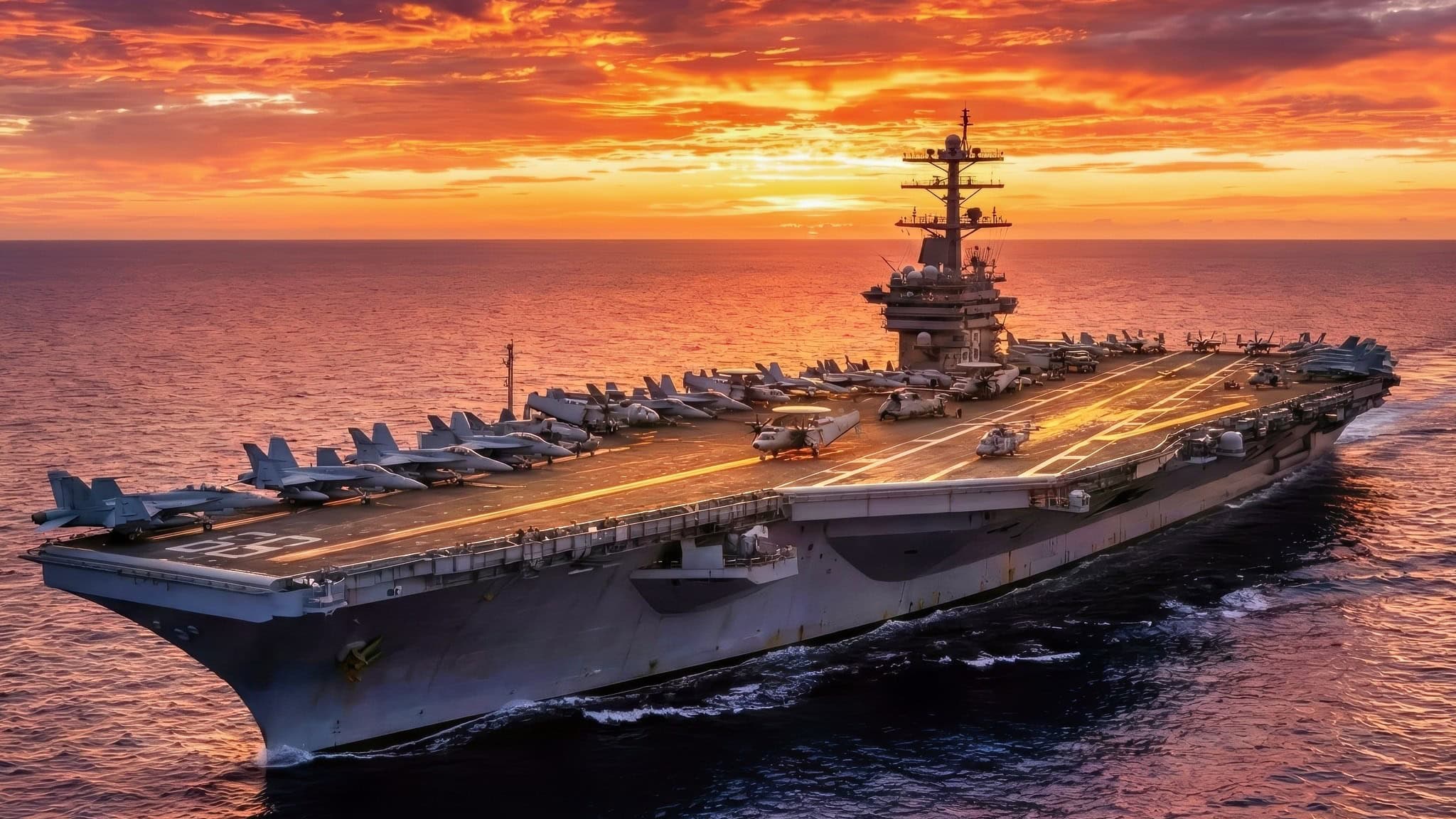
Key Points and Summary – Satellite images from western China have revealed full-scale mockups of U.S. aircraft carriers and destroyers laid out on rails in remote desert test ranges.
-Beijing is using these targets to refine its DF-21D and DF-26 “carrier-killer” missiles and other non-kinetic tools as part of a broader anti-access/area denial strategy designed to keep U.S. carrier strike groups far from any Taiwan fight.
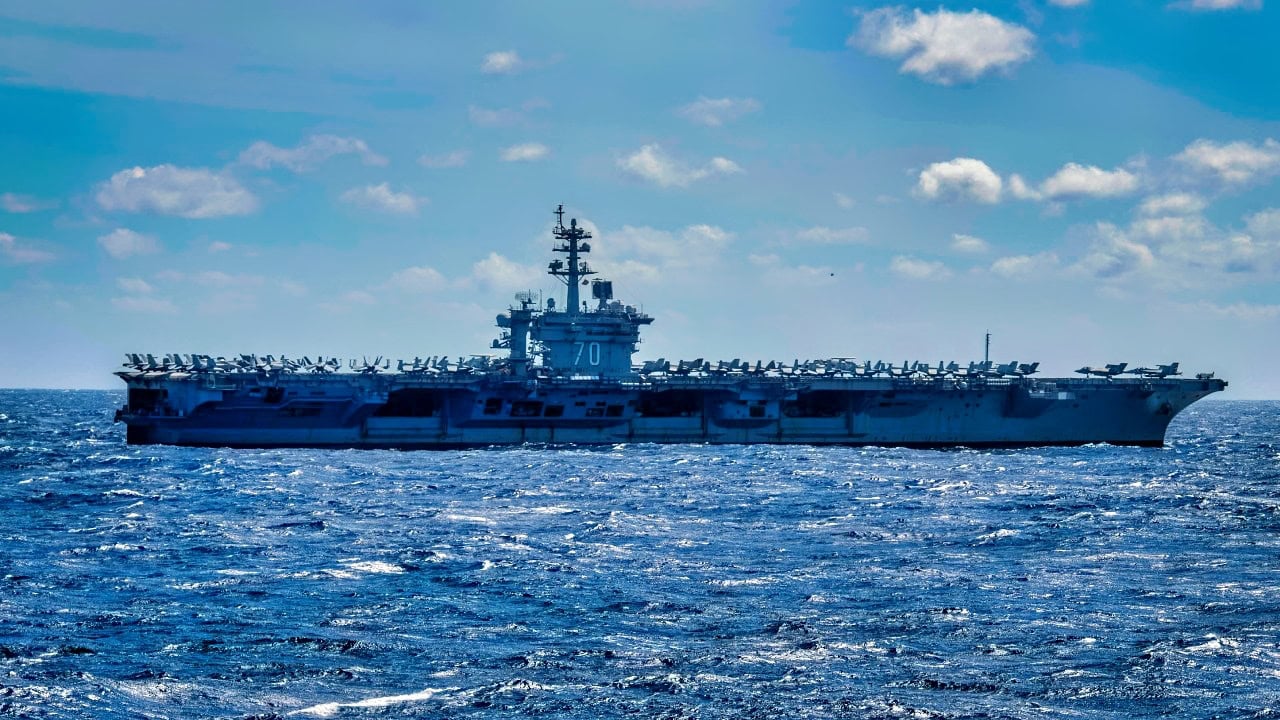
SOUTH CHINA SEA (Jan. 17, 2025) – The Nimitz-class aircraft carrier USS Carl Vinson (CVN 70) transits the South China Sea during a Maritime Cooperative Activity with the Philippine Navy, Jan. 17, 2025. The U.S. and Philippines work together as allies, enhancing the interoperability of maritime forces and supporting their shared goal of a free and open Indo-Pacific. Carrier Strike Group ONE, is underway conducting routine operations in the U.S. 7th Fleet area of operations. (U.S. Navy photo by Mass Communication Specialist 3rd Class Brianna Walker)
-Desert ranges let China test tracking, terminal guidance, warhead effects, and even emerging hypersonic and electronic-warfare concepts.
-Still, hitting a static desert hulk is far easier than striking a defended, maneuvering carrier at sea.
In 1 Word: Missiles.
China Built Fake US Carriers in the Desert. The Message Is Clear.
In 2020, satellite imagery of desert regions in China showed large structures that closely resembled U.S. aircraft carriers. Other structures showed smaller vessels resembling Arleigh Burke-class destroyers and other U.S. surface ships. Curiously, some of these structures sat on rail lines to simulate basic movement.
The mockups were likely designed to test out the effectiveness and accuracy of some of China’s new anti-ship missiles in preparation for a potential conflict with the U.S.
Why China is Building Fake Aircraft Carriers in its Deserts
The mockups serve as training and testing platforms for China’s growing arsenal of anti-ship weapons, particularly long-range precision missiles such as the DF-21D and DF-26, which are often referred to as “carrier killers.”
These weapons are central to China’s Anti-access/area denial (A2/AD) strategy, which aims to keep U.S. forces at bay during a conflict.
Missile systems require rigorous testing under conditions that mimic real-world scenarios, and a carrier mockup helps replicate the radar signature of an actual carrier. Simulated movement thanks to rails allows engineers to test tracking and strike capabilities against moving targets.
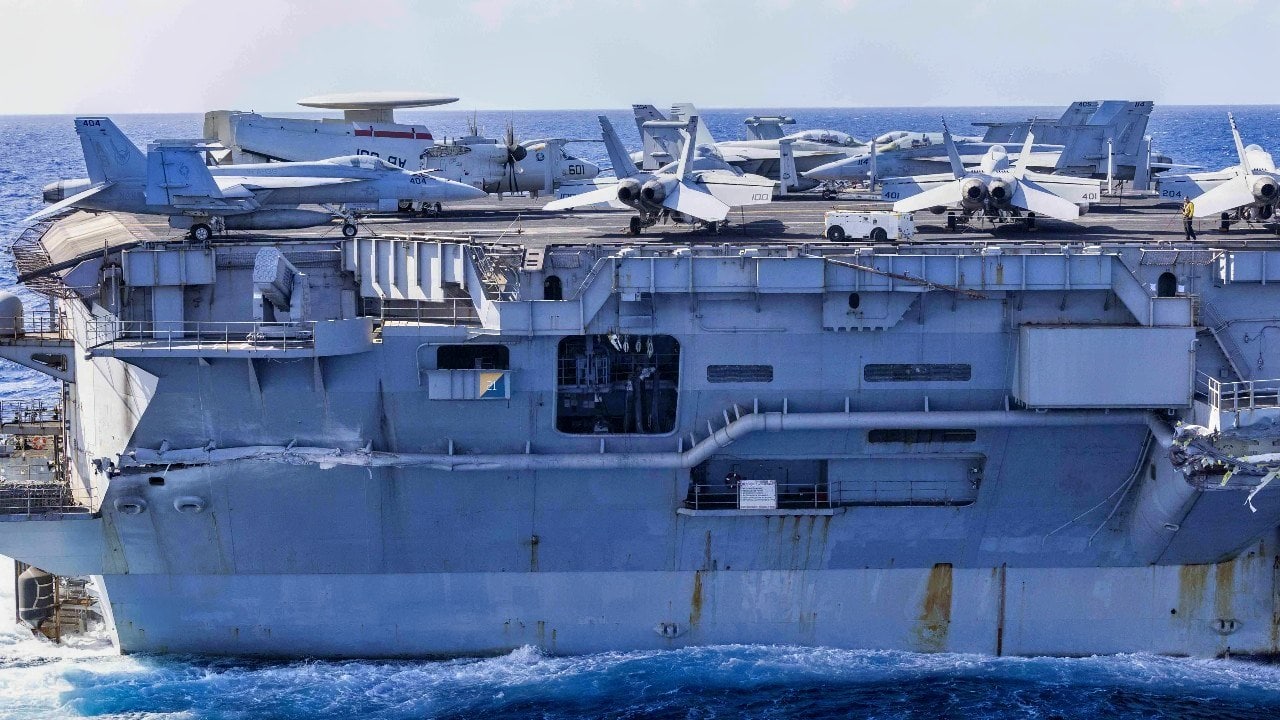
(Feb. 13, 2025) Exterior damage of USS Harry S. Truman (CVN 75) viewed from an MH-60S Sea Hawk helicopter, attached to the “Dragonslayers” of Helicopter Sea Combat Squadron (HSC) 11 following a collision with the merchant vessel Besiktas-M, Feb. 12, while operating in the vicinity of Port Said, Egypt. USS Harry S. Truman, the flagship of the Harry S. Truman Carrier Strike Group (HSTCSG), is on a scheduled deployment in the U.S. 6th Fleet area of operations supporting U.S. Naval Forces Europe-Africa to defend U.S., Allied and partner interests. (U.S. Navy photo by Chief Mass Communication Specialist Jose Hernandez)
Improving missile accuracy is critical. China’s anti-ship ballistic missiles rely on complex guidance systems, including satellite navigation, radar seekers, and possibly infrared sensors. Testing against realistic targets ensures that during terminal guidance, the final phase of missile flight, a projectile can make precise adjustments to hit a moving carrier. Impact tests also provide valuable data on missile performance, warhead effectiveness, and penetration capabilities.
China’s deserts, especially those in Xinjiang and Gansu provinces, offer ideal conditions for testing.
The regions are isolated, minimizing the risk of foreign surveillance and civilian interference. The flat terrain provides a controlled environment for measuring missile trajectories and impact points with precision.
China’s Area Denial Strategy
The existence of these mockups highlights several key aspects of China’s military strategy. First, Beijing understands that it cannot match the might of the U.S. Navy in the near term, so it focuses on denying U.S. forces access to critical regions through long-range missiles. The DF-21D has a range of about 1,500 kilometers, and the DF-26 can reach up to 4,000 kilometers. These weapons allow China to target carriers far from its shores, supported by integrated surveillance systems that include space-based sensors, drones, and over-the-horizon radars.
Second, the mockups suggest that China is preparing for potential high-end conflict against the United States, particularly over Taiwan.
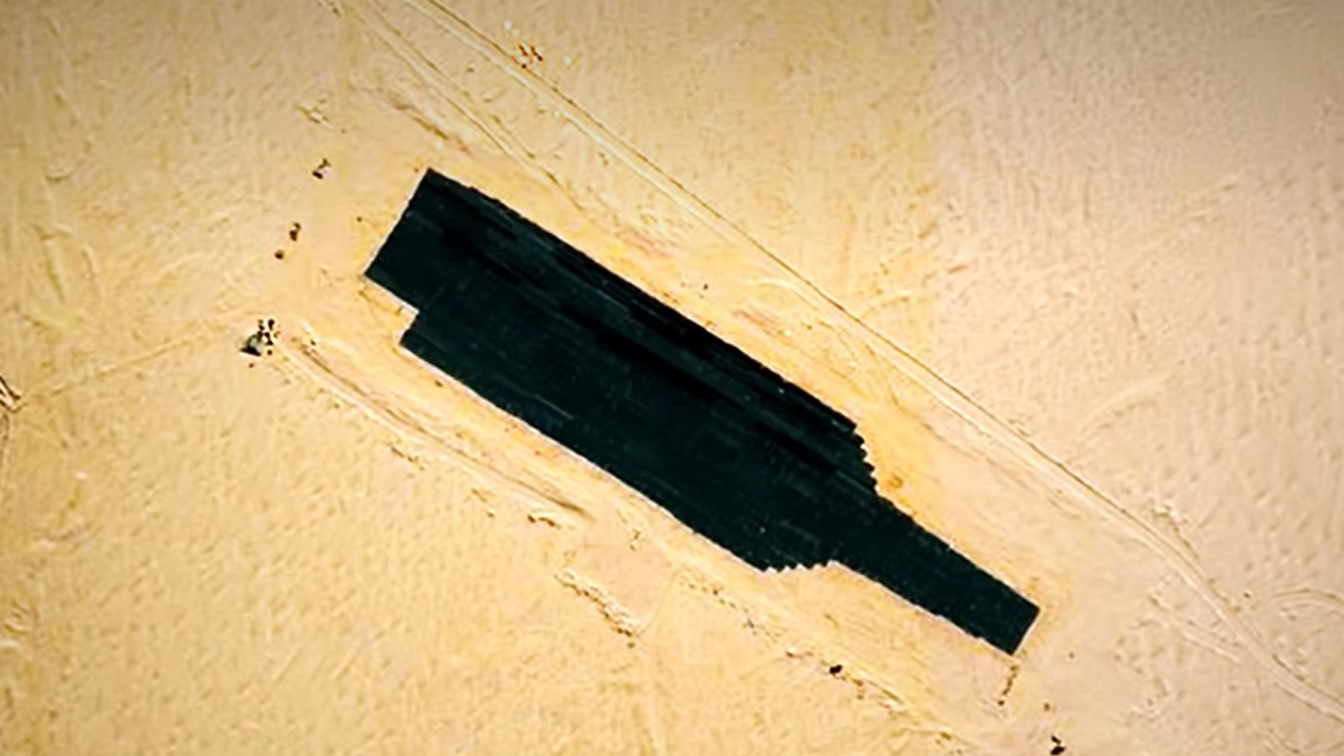
China’s missile testing range using a cut out of an aircraft carrier. Image Credit: Creative Commons.
Neutralizing carriers would be a priority in such a conflict. Third, these structures may also be used to test emerging technologies beyond ballistic missiles, such as hypersonic glide vehicles, which are faster and harder to intercept than traditional missiles. They could also support experiments with Electronic Warfare (EW) systems designed to disrupt carrier communications and radar, as well as drone swarms intended to overwhelm carrier defenses.
Target Practice
China is not the first nation to build mock targets for military testing. During the Cold War, the Soviet Union constructed mockups of Western assets for missile development.
Similarly, the U.S. military uses target ships and mock facilities for its own weapons testing.
However, the scale and specificity of China’s carrier mockups underscore its focus on countering U.S. naval power in a way that is both technologically sophisticated and strategically deliberate.
While these mockups demonstrate China’s intent, the tests are still a far cry from recreating real naval conditions. Targeting a carrier in combat is far more complex than striking a stationary mockup in the desert. Carriers operate with escorts, electronic countermeasures, and layered defenses, making them difficult to hit.
Accurate targeting requires real-time data, which is vulnerable to disruption through cyber attacks or EW. Furthermore, developing carrier-killer capabilities could provoke an arms race and heighten tensions in the Indo-Pacific, increasing the risk of miscalculation and escalation.
China’s Rising Military Might
China’s efforts must be viewed within the larger U.S.-China strategic competition. The United States seeks to maintain freedom of navigation and deter aggression through carrier deployments, while China aims to push U.S. forces farther from its shores.
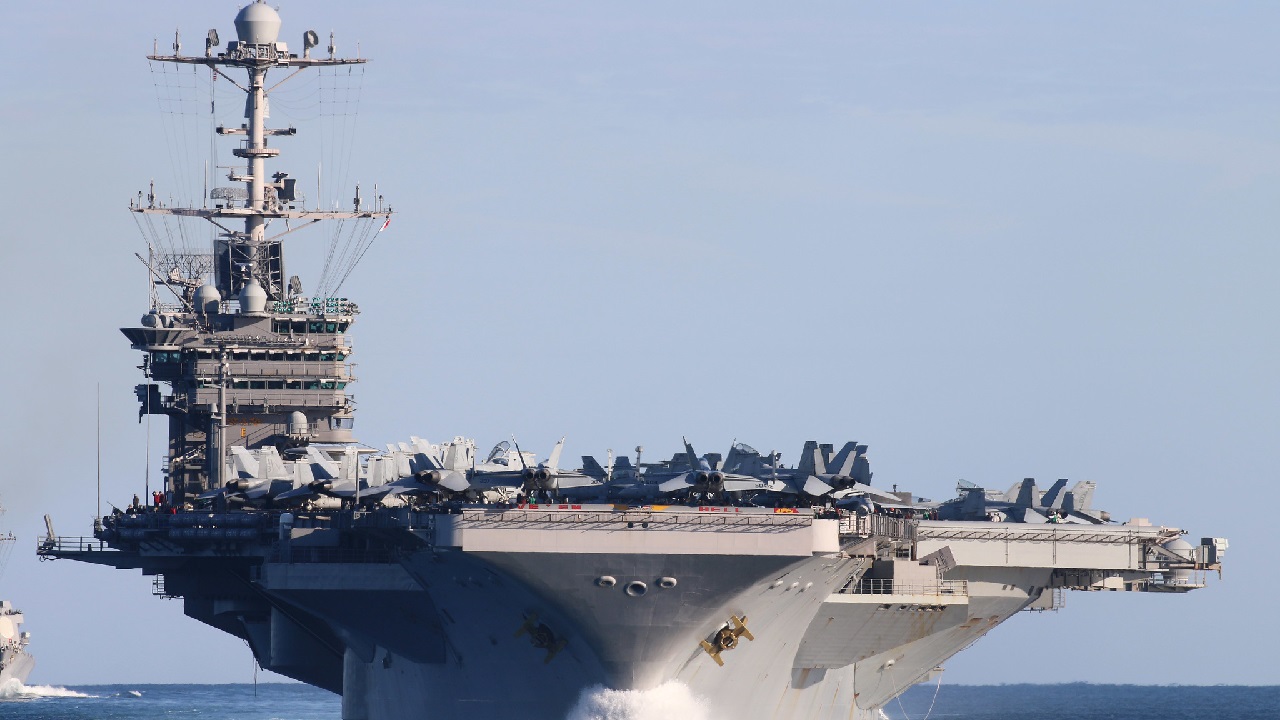
The aircraft carrier Harry S. Truman (CVN 75) participates in a composite unit training exercise (COMPTUEX). Truman is underway as a part of the Harry S. Truman Carrier Strike Group (HSTCSG) performing COMPTUEX, which evaluates the strike group’s ability as a whole to carry out sustained combat operations from the sea, ultimately certifying the HSTCSG for deployment. (U.S. Navy photo by Mass Communication Specialist 2nd Class Tommy Gooley/Released)
Regional powers such as Japan, Australia, and India are enhancing their own capabilities in response to China’s buildup. All sides are investing heavily in advanced technologies, including hypersonics, missile defense, and cyber warfare, creating a dynamic and potentially volatile security environment.
Over the past two decades, China has embarked on one of the most ambitious military modernization programs in history.
The People’s Liberation Army Navy has evolved from a coastal defense force into a blue-water navy capable of projecting power far beyond China’s shores.
This transformation is driven by several factors. First, China seeks to secure its maritime periphery, including the South China Sea and East China Sea, which are vital for trade and energy imports.
Second, Beijing views Taiwan as a core national interest and anticipates that any attempt to reunify by force could trigger U.S. intervention. Finally, China recognizes that the U.S. Navy, with its carrier strike groups, remains the most formidable maritime force globally. Neutralizing or deterring these carriers is essential for China to achieve regional dominance.
About the Author: Isaac Seitz
Isaac Seitz, a Defense Columnist, graduated from Patrick Henry College’s Strategic Intelligence and National Security program. He has also studied Russian at Middlebury Language Schools and has worked as an intelligence Analyst in the private sector.