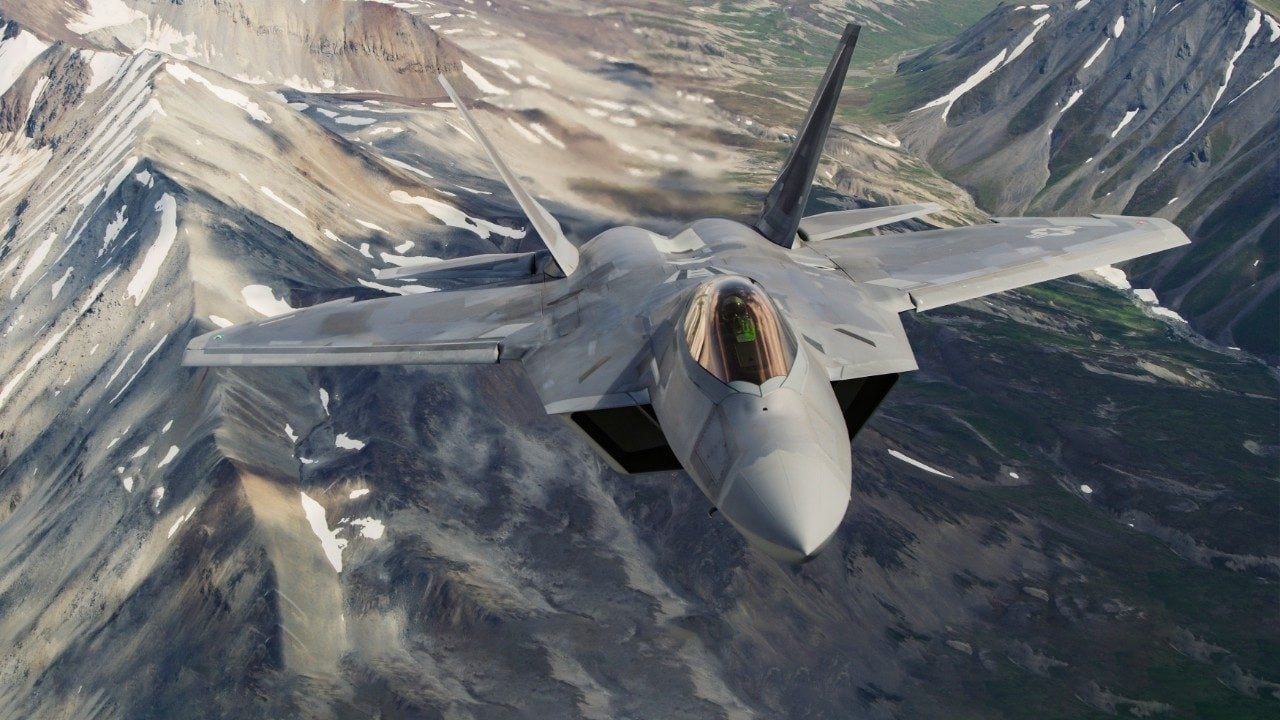
Key Points and Summary – Russia’s S-550 air-defense system is being described as a mobile, next-generation interceptor that could blur the line between missile defense and space warfare.
-Reportedly derived from work on the S-500, the concept is an ASAT and anti-ICBM tool designed to track hypersonic threats, ballistic missiles in midcourse, and select satellites.
Sentinel ICBM U.S. Air Force
-The uncertainty is the point: public claims of deployment outpace verification, and effectiveness would hinge on sensors, command networks, and wartime survivability.
-Even if S-550 can hit targets in LEO or MEO, proliferated constellations may limit strategic payoff—yet a credible threat could still reshape planning.
-That possibility alone changes deterrence.
The S-550 Is a Dangerous Challenge from Russia
Russia’s satellite-shooting S-550 air defenses may be transitioning from initial fielding and early test and experimentation into the operational sphere, as Russia begins fielding and potentially deploying the weapon.
First fielded with the Russian Armed Forces in 2021, the advanced S-550 is designed to build on progress with the well-known S-500 Prometheus air-defense system while operating as a next–generation, mobile anti-satellite (ASAT) and anti-ICBM weapon.
ICBM Defense
The idea with the S-550 is to engineer a space-capable weapon that can track and intercept ICBMs, hypersonic weapons, satellites, and even some spacecraft, using a network of radar systems and long-range precision interceptors. An interesting essay on Deagle.com specifies that the S-550 is specifically built to intercept US hypersonic weapons and the well-known X-37 US Air Force spacecraft.
Sentinel ICBM. Image Credit: Creative Commons.
The S-550 system could also be used to target the growing number of US Small and Medium-Earth Orbit satellites, which operate at lower altitudes and use high-throughput mesh networking to blanket otherwise disconnected fields of view.
MEO and LEO satellites are also considered critical to hypersonic missile defenses as they can help establish a continuous target track on otherwise non-targetable hypersonic missiles traveling from one radar aperture or field of regard to another too fast to be tracked.
The S-550 uses a hypersonic interceptor to track hypersonics, something which could make sense given the speed of hypersonic weapons.
Space War
The ability to track and destroy satellites introduces new dynamics to space warfare, as satellites have not historically been considered vulnerable to standard surface-to-air defenses. However, there is precedent for this, as anti-satellite (ASAT) weapons have been in operation for many years, particularly in the Russian and Chinese militaries.
For decades, the US regarded space as an international collaborative sanctuary and was reluctant to militarize it.
However, the extensive extent to which Russia and China spent decades militarizing space ultimately forced the Pentagon to create the United States Space Force and to prepare to defend US interests against hostile actors in space.
An ability to strike satellites and spacecraft from the ground seems unlikely. Yet several countries operate interceptors capable of tracking or destroying an ICBM during its “midcourse” phase, when it is transiting through space.
Many of these interceptors are engineered with kill vehicles and sensors designed to distinguish a decoy from an actual ICBM, so it may not be clear whether the S-550 has a comparable ability to adjust course in flight using sensors and an array of interwoven radar systems.
Uncertain status
Although numerous public reports, including some from Russia’s TASS news agency, state that the S-550 was initially fielded in 2021, it is unclear whether the weapon is now fully deployed or combat-ready.
Numerous public reports cite Russian claims that the weapon is deployed and combat-ready. Yet, there is little to no formal validation of this, so the actual status of the S-550 remains shrouded in mystery.
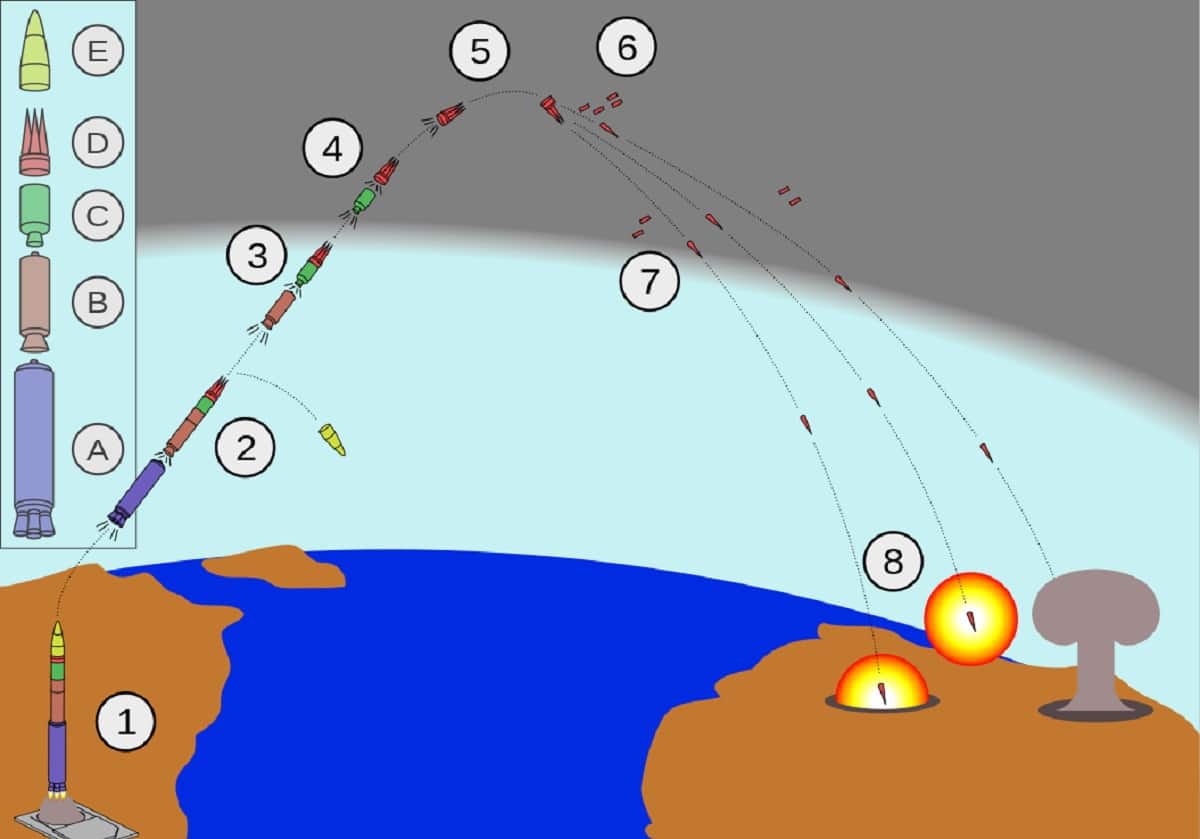
Diagram depicting the different stages of a Minuteman III missile path from launch to detonation, as well as the different basic stages of the missile themselves. Based on information in TRW Systems. (2001) Minuteman Weapon System History and Description.
The S-550 is said to be a mobile system, a capability that makes it more difficult to track or target from the ground or the air.
The ultimate effectiveness of the S-550 also seems somewhat questionable, given that there are now hundreds of MEO and LEO satellites, launched in large numbers by design to provide sheer “mass” and “redundancy” and ensure continued operational functionality if several are hit or disabled.
Therefore, even if the S-550 were able to target some satellites, it seems unclear if that would render an entire integrated MEO and LEO system inoperable. Of greater concern, perhaps, is the possibility that the S-550 could track and destroy a US military space platform such as the X-37B, as it could be a manned, weaponized spacecraft.
Operational effectiveness also depends on integration with broader command, control, and early-warning networks. An ASAT or high-altitude interceptor is only as effective as the information it receives.
In a contested environment, adversaries may attempt to disrupt sensors, communications, or decision-making processes, thereby limiting the system’s practical impact.
About the Author: Kris Osborn
Kris Osborn is the President of Warrior Maven – Center for Military Modernization. Osborn previously served at the Pentagon as a highly qualified expert in the Office of the Assistant Secretary of the Army—Acquisition, Logistics & Technology. Osborn has also worked as an anchor and on-air military specialist at national TV networks. He has appeared as a guest military expert on Fox News, MSNBC, The Military Channel, and The History Channel. He also has a Masters Degree in Comparative Literature from Columbia University.