Key Points and Summary – The Pentagon’s latest China Military Power assessment argues Beijing is modernizing fastest in the air and at sea—while using arms exports as a tool of influence.
-The report highlights China’s export fighters (including J-10C and JF-17 sales, and potential FC-31 interest), and frames Taiwan planning around multiple options: blockade, strike campaign, or invasion.
-It also notes a key constraint: China may still lack sufficient conventional amphibious lift—yet training with civilian roll-on/roll-off ships hints at a workaround. At sea, Beijing’s carrier ambitions expand to nine by 2035.
-The lingering wildcard: combat experience.
China’s Military Has a Message: The Pentagon Says Beijing Is Building Toward 2027
The Pentagon’s annual report on the state of the Chinese military is in, and the picture it paints is one of increasingly sophisticated Chinese capabilities, particularly in the air and at sea.
“As of December 2024, China remained the world’s fourth-largest arms supplier, primarily using
state-run organizations such as Aviation Industry Corporation of China (AVIC) and North
Industries Corporation (NORINCO) for its exports,” the Department of Defense document notes. “China sells major defense equipment in the air, land, and maritime domains category of conventional military equipment to its customers.”
“In addition, arms transfers are a component of China’s foreign policy and complement assistance and initiatives that are part of the Belt and Road Initiative. Many developing countries, especially in Africa, purchase China’s weapons systems because they are less expensive than Western
systems. China recognizes that some potential customers view their arms as lower in quality or reliability, and thus offers financial incentives such as trade for minerals and flexible payment options.”
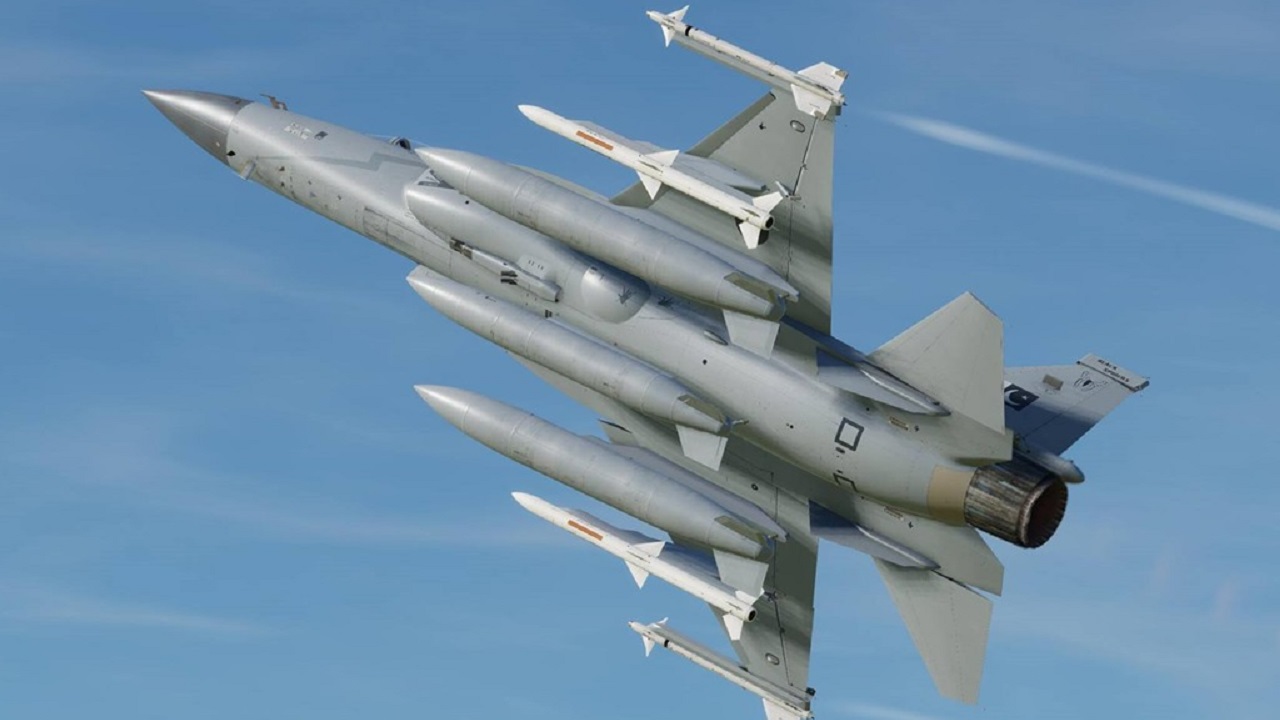
JF-17 fighter. Image Credit: Creative Commons.
China builds three aircraft for the export market: the FC-31, a stealthy single-seat fighter that shares some design commonalities with the more advanced J-35; the J-10C, a single-engine, non-stealthy, multi-role fighter; and the JF-17, a fourth-generation fighter jointly developed with Pakistan.
What the Pentagon Worries About When It Comes to China’s Military
The report outlines which countries have already imported Chinese fighters: Pakistan has bought 36 J-10C fighters since 2020, and Nigeria, Myanmar (Burma), and Azerbaijan have each purchased JF-17 fighters. Iraq may also import the JF-17 from China, potentially to replace its American F-16 fighters. Bangladesh, Egypt, Iran, Indonesia, and Uzbekistan may also be interested in the J-10C, and potential interest in the more advanced FC-31 is flagged for Saudi Arabia, the United Arab Emirates, and Egypt.
Interestingly, the report notes that “there is no indication the PLAN is significantly expanding its number of tank landing ships and medium sized landing craft, despite almost certainly not having the conventional air and maritime lift capacity to conduct a large-scale amphibious assault on Taiwan.”
But, the report does concede, “the PLAN continues to train with civilian roll-on/roll-off commercial vessels, which may indicate that the PLAN is seeking to mitigate this shortfall by incorporating dual-use civilian lift vessels.”
Chinese shipbuilders are the world’s most prolific, responsible for the lion’s share of the commercial ships built for shipping firms worldwide. Over half of the ships constructed are produced in China — in stark contrast, just 0.1 percent of ships are built in the United States.
And while the vast majority of those ships are built explicitly for civilian purposes, some analysts believe that a significant portion of China’s civilian shipping fleet could be repurposed for military use in the event of an amphibious invasion of Taiwan, which would be one of, if not the largest, most complex operation in the history of warfare. And, as one Reuters report noted, the People’s Liberation Army has the legal authority to repossess the country’s civilian shipping fleet for military use.
Attack Taiwan by 2027?
The oft-mentioned year by which China’s leader, Xi Jinping, wants the People’s Liberation Army to achieve a decisive victory over Taiwan, provide a counterbalance to the United States, and deter or control other countries in the region is 2027.
To that end, China is, the report says, pursuing a multi-pronged approach that includes an outright invasion of the island, a naval blockade, or a massive strike campaign.
One of the areas in which the United States retains both a qualitative and quantitative advantage over China is in aircraft carriers. The United States Navy operates the world’s largest fleet of aircraft carriers, 11 in total, all nuclear-powered. In addition to the ten Nimitz-class carriers, the US Navy also operates the upcoming Gerald R. Ford-class, currently represented by the lead ship, the class’s namesake, with subsequent hulls under construction.
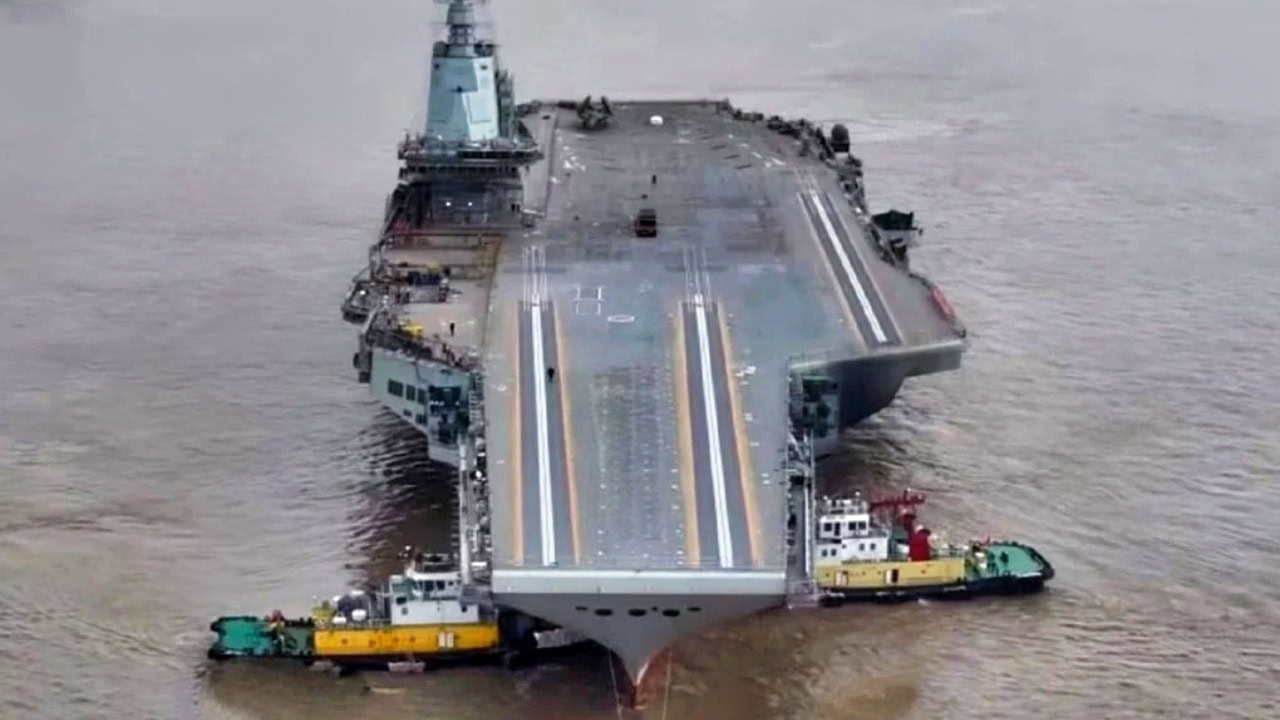
The People’s Liberation Army Navy, on the other hand, operates just three aircraft carriers, all conventionally powered, with a fourth under construction. Analysts anticipated that the fourth aircraft carrier, the PLAN’s Type 004, would be nuclear-powered.
While China’s first two aircraft carriers are ski-jump carriers, unlike those in the United States Navy, the remainder will be larger flattop carriers. The report explains that by 2035, the PLAN plans to build an additional six aircraft carriers, bringing its carrier force to nine in total.
China’s Navy and Overall Military Is Rising Fast
In sum, China’s ambitious goal of displacing the United States across multiple technologies and domains is advancing rapidly, particularly at sea and in the air. While the United States is expected to retain a slim numerical carrier advantage for the foreseeable future, technological parity is likely to increase.
So too with China’s carrier air wings, which, though they lack concrete combat experience like that of the United States Navy, are likely to be as capable as those of the United States Navy.
One of the remaining question marks is unquantifiable: will combat experience prove to be the difference between victory and defeat?
Will it provide a decisive military edge? That is a question that only actual combat can test.
About the Author: Military Expert and Author Caleb Larson
Caleb Larson is an American multiformat journalist based in Berlin, Germany. His work covers the intersection of conflict and society, focusing on American foreign policy and European security. He has reported from Germany, Russia, and the United States. Most recently, he covered the war in Ukraine, reporting extensively on the war’s shifting battle lines from Donbas and writing on the war’s civilian and humanitarian toll. Previously, he worked as a Defense Reporter for POLITICO Europe. You can follow his latest work on X.