Key Points and Summary – When North Korea stormed across the 38th parallel in June 1950, an exhausted post-WWII US Army rushed a tiny blocking force into combat.
-Task Force Smith—just 540 under-equipped soldiers with obsolete anti-tank weapons—dug in near Osan to slow a battle-hardened North Korean column backed by T-34 tanks.
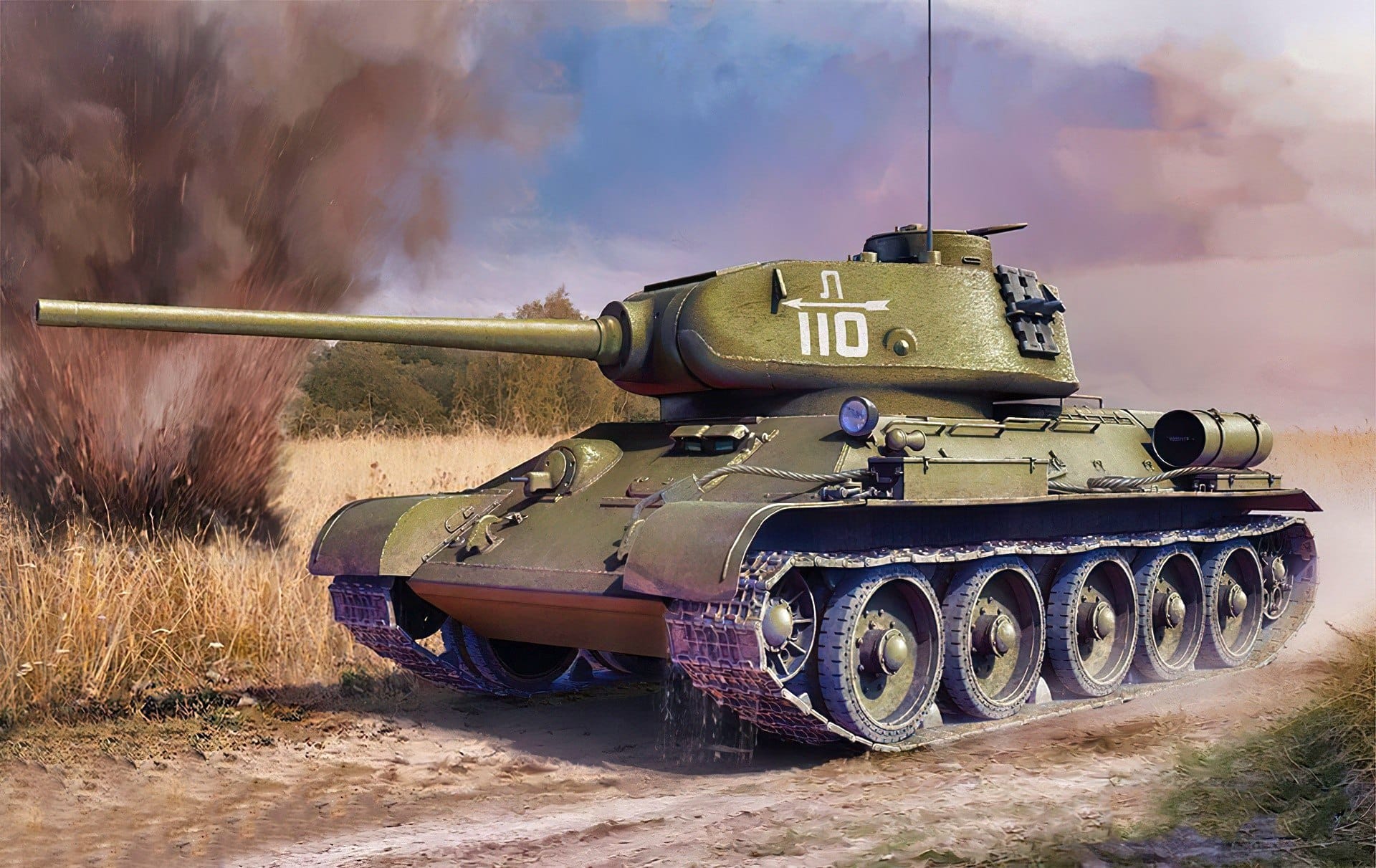
T-34 Tank. Image Credit: Creative Commons.
-Their shells bounced off armor, communications failed, and the unit was flanked and nearly overrun. The Americans were forced into a chaotic retreat with heavy losses and little effect on the advance.
-The defeat was a brutal wake-up call that exposed US unpreparedness and helped galvanize the greater effort that ultimately stabilized Korea.
The Day America Met North Korea in Battle — And Lost at Osan
In the aftermath of the Second World War, the US Army needed some time to recuperate after the large-scale carnage it had just witnessed. With Berlin and Japan occupied, it seemed like the US could take a few moments to catch its breath.
Unfortunately, Kim Il-sung and his communist supporters in China and Russia had other plans.
With the outbreak of the Korean War, the UN authorized the use of force to repel the invasion (this was only possible because the USSR boycotted that particular Security Council meeting). However, the American forces in the region were far from prepared to stop the tide of communist fighters. Near the town of Osan, south of Seoul, the Americans met the North Koreans for the first time … and lost.
The US Goes to War Again
The Korean War erupted on June 25, 1950, when the North Korean People’s Army (NKPA) crossed the 38th parallel and invaded South Korea. The NKPA advanced rapidly, capturing Seoul within three days and pushing South Korean forces into a desperate retreat toward the southern tip of the peninsula. The United Nations, led by the United States, responded quickly, authorizing military assistance to South Korea.
However, the US Army in Japan, which was closest to the theater, was understrength and ill-prepared for immediate combat. Post-World War II demobilization had left American forces with outdated equipment, minimal training, and insufficient manpower. Despite these shortcomings, General Douglas MacArthur ordered the deployment of Task Force Smith, a hastily assembled unit from the 24th Infantry Division, to delay the North Korean advance until reinforcements could arrive.
Task Force Smith: Composition and Mission
Task Force Smith consisted of approximately 540 men, primarily from the 1st Battalion, 21st Infantry Regiment, supported by two 105mm howitzers from the 52nd Field Artillery Battalion. Commanded by Lieutenant Colonel Charles Bradford Smith, the unit was lightly armed, with World War II-era M1 rifles, a few bazookas, and limited ammunition. Critically, they lacked effective anti-tank weapons, a vulnerability that would prove disastrous.
The mission was simple yet daunting: delay the North Korean advance near Osan, a town roughly 25 miles south of Seoul, long enough for additional US forces to establish a defensive line further south. The expectation was not to defeat the enemy but to buy time.
Meanwhile, the NKPA spearhead approaching Osan was formidable. The 4th Infantry Division, supported by the 105th Armored Division, fielded thousands of troops and a significant number of Soviet-made T-34/85 tanks, arguably some of the best medium tanks of the era. These tanks had proven their worth during World War II and were far superior to anything Task Force Smith could counter effectively.
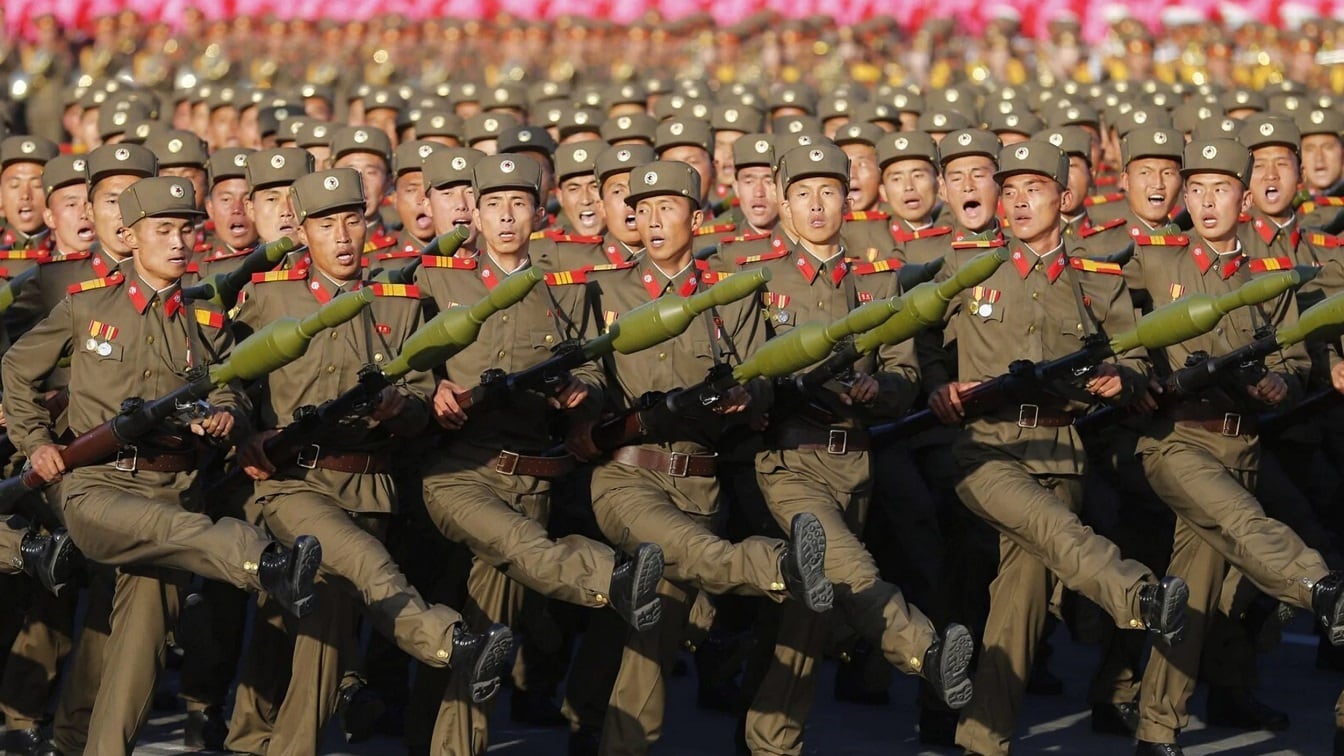
North Korean Special-Operations Forces. Image Credit: Creative Commons.
At dawn on July 5, 1950, Task Force Smith took positions on two hills overlooking the main highway north of Osan. Around 7:30 am, the first column of T-34 tanks appeared. The Americans opened fire with artillery and small arms, but their weapons were largely ineffective against the tanks’ thick armor.
Bazooka rounds bounced off, and artillery shells caused minimal damage. The tanks continued forward, shrugging off the American fire. Direct artillery hits disabled some, but most pressed on, overrunning the US positions. After the tanks passed, waves of North Korean infantry followed, engaging Task Force Smith in intense firefights. Despite their courage, the Americans were outnumbered and outgunned.
Collapse and Retreat
By early afternoon, Task Force Smith was in danger of being encircled. Ammunition was running low, communications were breaking down, and casualties were mounting. Lieutenant Colonel Smith ordered a withdrawal. The retreat quickly turned chaotic, with many soldiers abandoning their equipment and fleeing south under heavy fire. Of the 540 men who entered the battle, about 150 were killed, wounded, or captured. The NKPA suffered minimal losses and continued its advance almost unhindered.
The engagement lasted roughly 7 hours but failed to significantly delay the North Korean offensive.
Several factors contributed to the American defeat at Osan. US planners had underestimated the enemy, assuming North Korean forces were poorly trained and equipped. In reality, the NKPA was battle-hardened, well-organized, and armed with modern Soviet weapons.
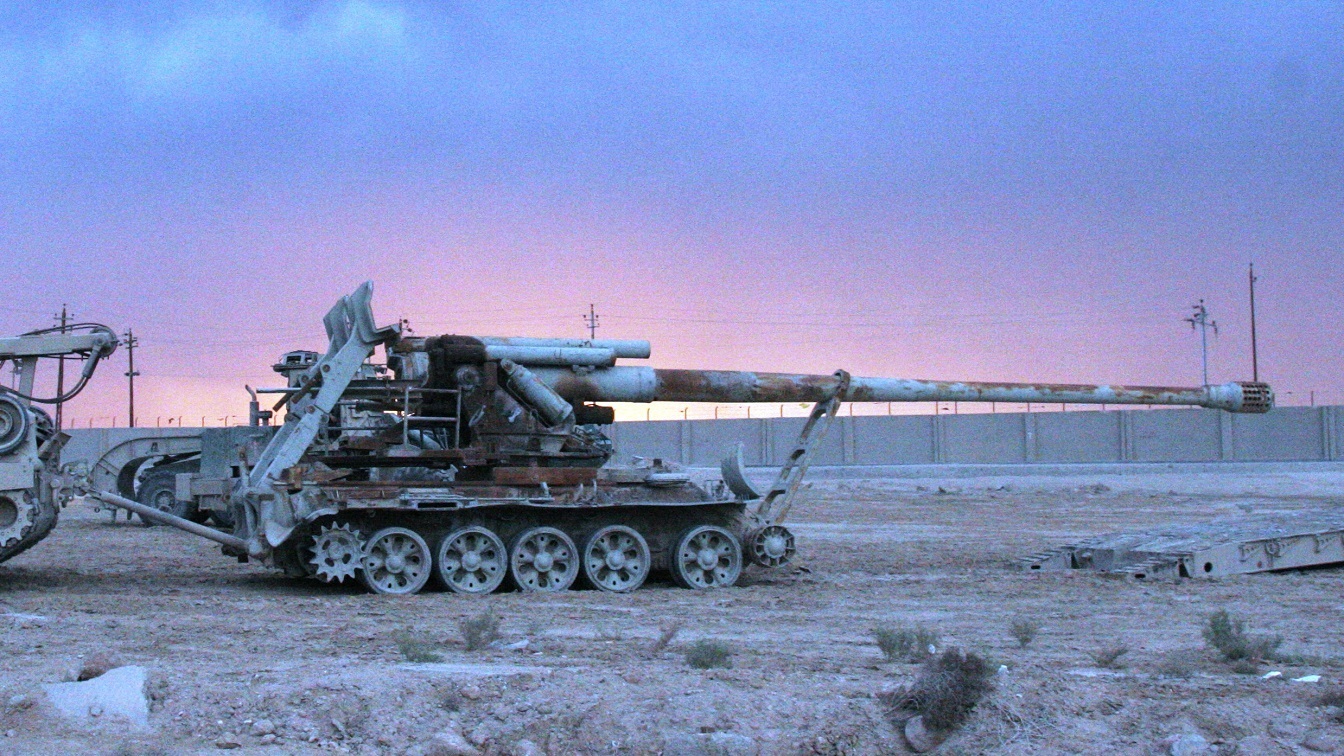
U.S. Marines assigned to Regimental Combat Team 1 use an M-88A2 Hercules recovery vehicle to remove a damaged Iraqi self-propelled artillery piece from the Al Anbar University campus in Ramadi, Iraq, Nov. 29, 2008, during a tank removal mission. Marines are removing the tank as part of the ongoing effort to rebuild Iraq and beautify the country. (U.S. Marine Corps photo by Lance Cpl. Albert F. Hunt/Released)
Task Force Smith lacked sufficient anti-tank weaponry, heavy artillery, and air support. Their bazookas were obsolete, and their artillery was ineffective against T-34 tanks. Logistical weaknesses compounded the problem, as the unit had limited ammunition and supplies. Communications were unreliable, and reinforcements were far away.
Finally, the belief that a small force could significantly delay a mechanized army was overly optimistic. The mission was essentially a holding action doomed from the start.
Aftermath and “End” of the Korean War
Although it was a tactical defeat, the Battle of Osan was strategically significant for several reasons. It served as a wake-up call for US forces, exposing severe deficiencies in American readiness and forcing urgent measures to reinforce and re-equip troops in Korea.
The defeat shattered any illusions of an easy victory and underscored the seriousness of the conflict, galvanizing US and UN commitment to the war effort. Osan was the first in a series of delaying actions by the 24th Infantry Division, culminating in the establishment of the Pusan Perimeter, where UN forces finally stabilized the front.
Two months later, it was North Korea’s army who would be on the retreat as MacArthur and his forces sent Kim Il-sung’s forces running. The Korean War ultimately ended in a stalemate, with neither side achieving a military victory.
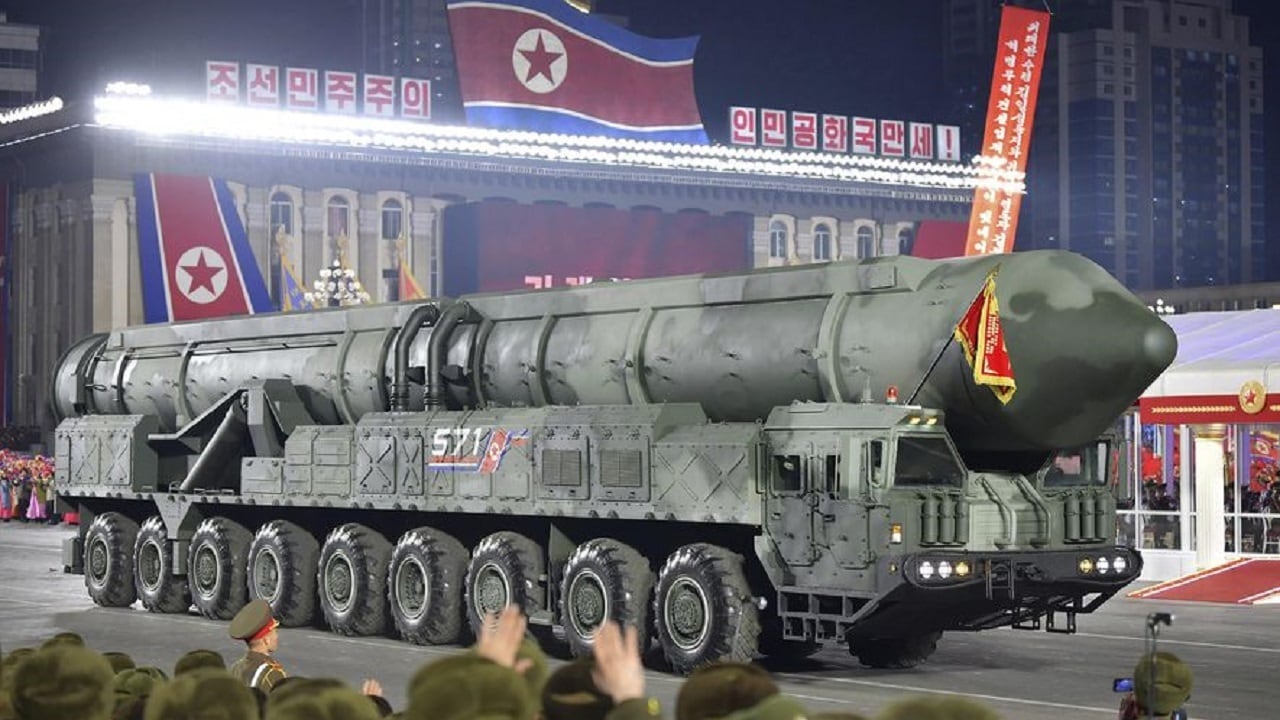
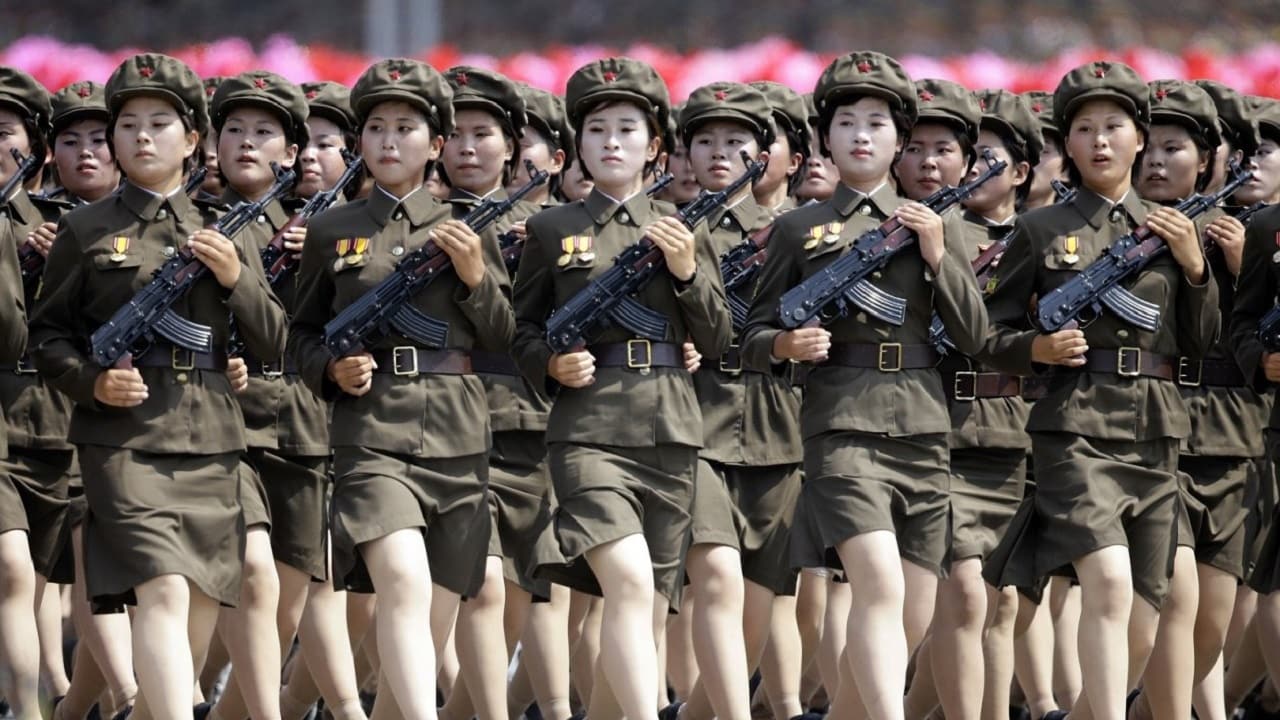
Image Credit: KCNA/North Korean Government.
Had it not been for the US, Korea would be one unified communist country, and had it not been for China, Korea would be a Western-aligned republic. Technically, the war never really ended. It led to a ceasefire with a clear line of demarcation between North and South Korea.
The issue of reunification was pushed back until a diplomatic solution can be reached, or until one side annihilates the other.
About the Author: Isaac Seitz
Isaac Seitz, a Defense Columnist, graduated from Patrick Henry College’s Strategic Intelligence and National Security program. He has also studied Russian at Middlebury Language Schools and has worked as an intelligence Analyst in the private sector.