

Synopsis: Built under treaty-era limits, the South Dakota-class battleships packed nine 16-inch guns, heavy armor, and high speed into a compact hull just as World War II arrived.
-These ships fought through Guadalcanal and beyond, proving their value as radar-equipped, hard-to-kill escorts and shore bombardment platforms for carrier task forces.
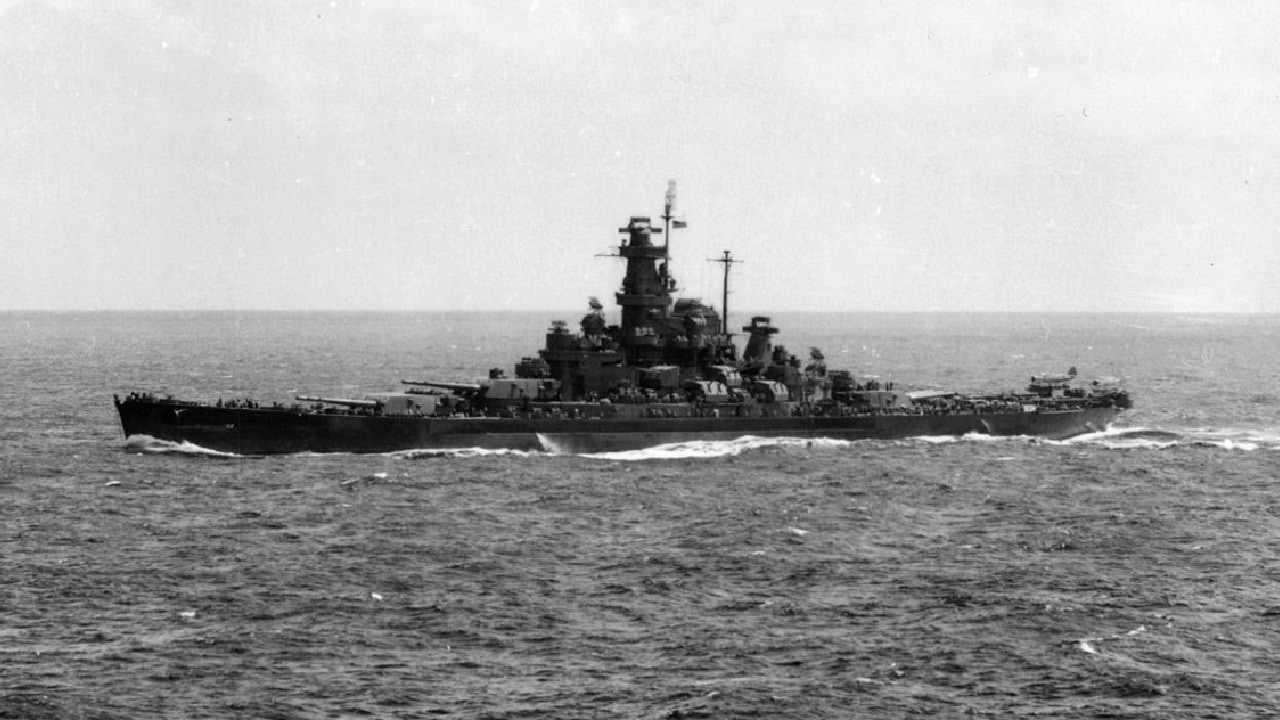
South Dakota-Class USS Alabama Battleship.
-But their story also shows how quickly doctrine can be overtaken: airpower, submarines, and long-range sensors steadily displaced big-gun dominance, and the class was retired after the war.
-For any modern “Golden Fleet,” the lesson is simple—design for tomorrow’s missile-and-drone fight, not yesterday’s battleship logic. Otherwise the Navy buys ships that age.
The South Dakota Class was a WWII Battleship Legend
When the United States Navy launched the South Dakota-class battleships in the early 1940s, it did so amid two opposing pressures shaping what the American military required.
It occurred during the Treaty-era constraint, meaning that the naval arms-control treaties of the 1930s, which capped battleship size, armament, and displacement, were in effect.
But even as war approached, U.S. designers were still being forced to stay close to those limits – particularly the 35,000-ton displacement cap.
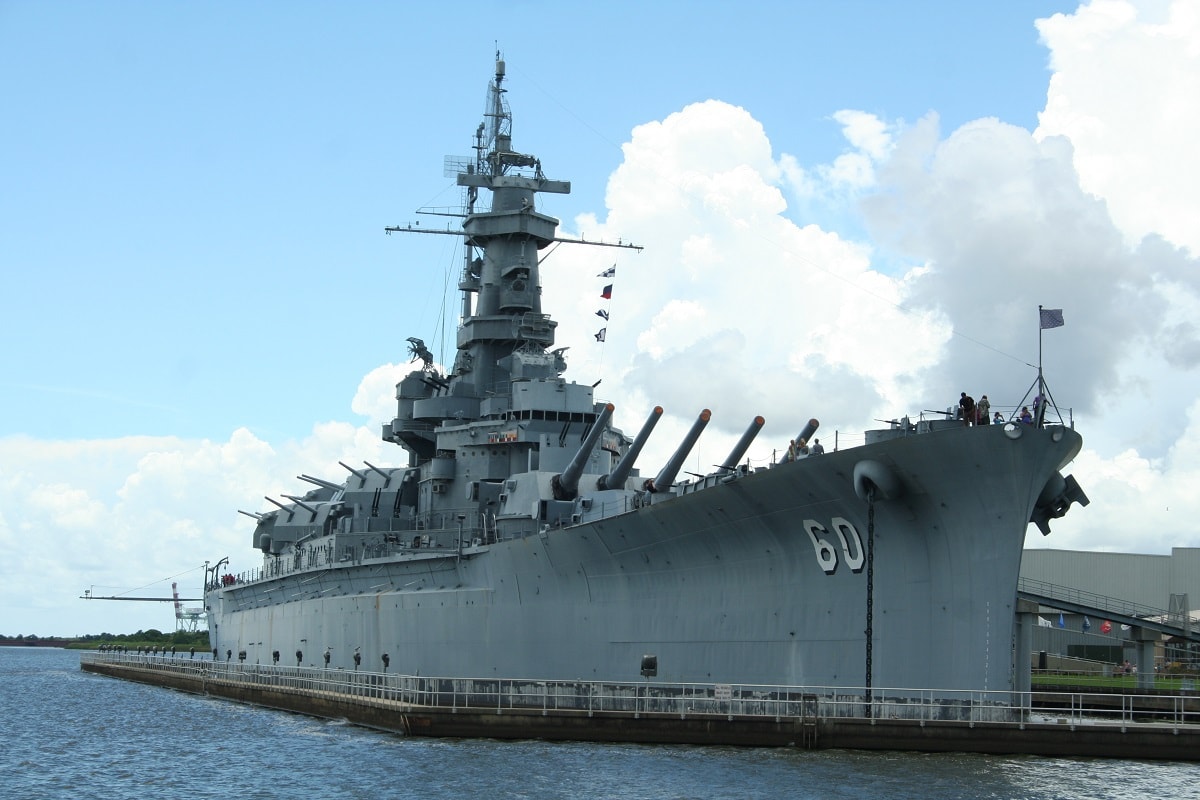
USS Alabama Battleship
All the while, the U.S. was preparing for a large, industrial, and high-intensity war against peer navies – especially Japan – where ships would require maximum firepower, armor, and survivability.
The four South Dakota-class battleships were among the last great gun platforms commissioned by the U.S. and served with distinction throughout the Pacific Theater in World War II.
Their design, successes, and eventual obsolescence tell the story of the limits of battleship doctrine in the age of airpower and carriers – and perhaps offer an essential story for the U.S. as President Donald Trump pursues a new “Golden fleet” of modern battleships.
The South Dakota-Class
The South Dakota-class was conceived in the late 1930s amid rising global tensions and as naval treaties began to unravel.
Under the Washington and London Naval Treaties, ships were limited to a standard displacement of 35,000 long tons and main guns no larger than 16 inches.
But when Japan withdrew from the treaty in 1936, the “escalator clause” permitted larger armament among other signatories – but the U.S. Congress insisted on keeping displacement near the original treaty limit even as firepower and protection limits were expanded.
The resulting design therefore reflected a series of compromises for the U.S in terms of its guns (nine 16-inch/45-caliber guns in three turrets), heavy armor concentrated in a small hull, and improved machinery designed to achieve high speed despite tight weight limits.
These features made the South Dakota smaller and better armored than their North Carolina predecessors, rated at around 37,970 tons standard displacement and capable of 27.5 knots powered by four steam turbines and eight boilers.
USS South Dakota (BB-57), Indiana (BB-58), Massachusetts (BB-59), and Alabama (BB-60) were laid down between 1939 and early 1940 and commissioned from March through August 1942.
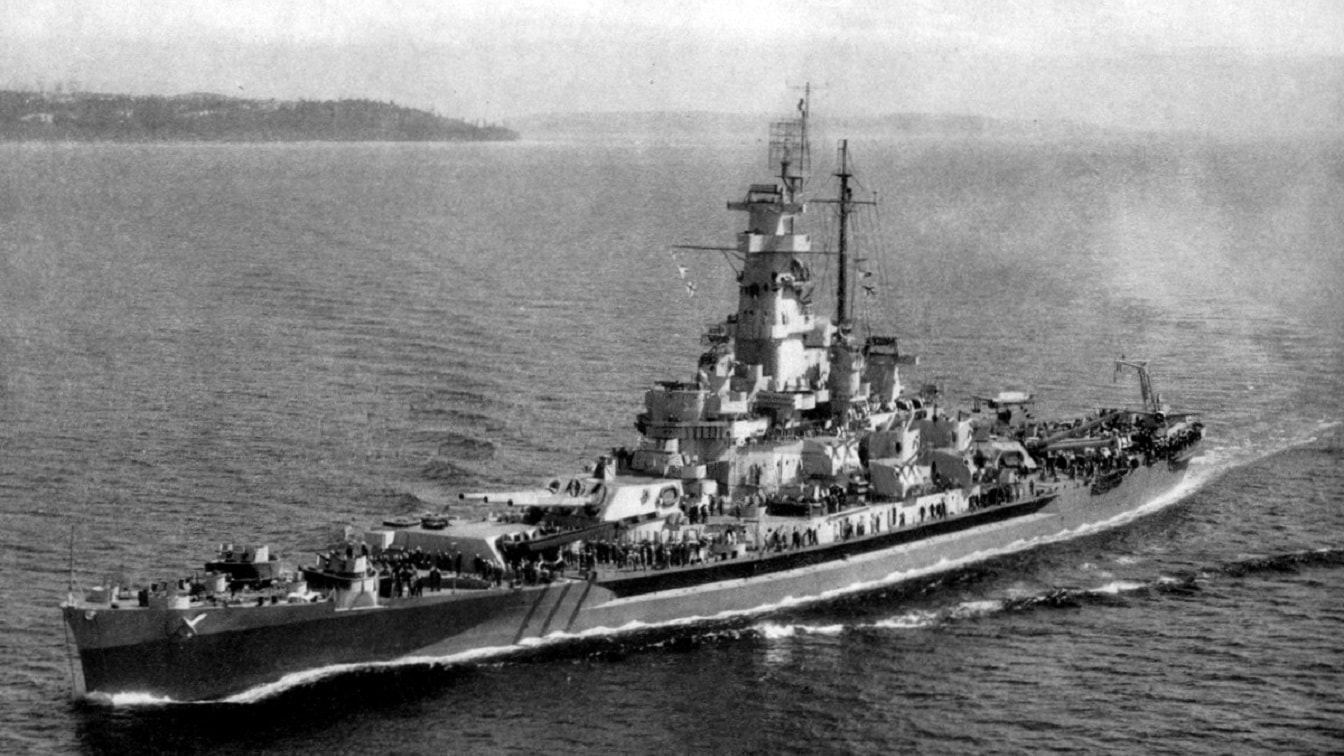
The U.S. Navy battleship USS Massachusetts (BB-59) underway, most probably after her refit at the Puget Sound Naval Shipyard, Washington (USA), circa in July 1944. She is painted in Camouflage Measure 22.
Unlike many other prewar naval assets, however, these vessels entered service amid a global conflict. They were tasked with both fleet screening (operations designed to protect a naval force) and direct gunfire support.
The attributes, capabilities, and mission profiles of these ships have prompted naval historians to characterize them as among the best battleships ever built under strict treaty constraints, noting that the compact layout allowed for heavy armor relative to hull size.
World War II Service
Once in the war, South Dakotas quickly moved into frontline operations. South Dakota herself was used in the Guadalcanal campaign in late 1942, where she endured intense aerial and surface action.
During the Battle of Santa Cruz Islands and the subsequent fight off Guadalcanal, her anti-aircraft batteries engaged multiple Japanese attacks, and her thick armor helped her withstand significant damage that would have seriously compromised or sunk other vessels.
Those early engagements revealed the strengths and limitations of using battleships in fleet operations, which were increasingly dominated by airpower and radar-guided combat.
Radars in the class gave them improved target acquisition capabilities at night and in poor visibility, providing a significant tactical edge over many of the class’s Japanese counterparts.
Throughout 1943 and 1944, the class served primarily as escort ships for faster carrier task forces, a role that reflected another shift in naval warfare.
The South Dakotas’ heavy anti-aircraft batteries and radar capabilities proved vital during carrier strikes – and on occasion, they provided shore bombardment in support of amphibious landings.
Despite their wartime service, by the end of World War II, the strategic utility of battleships was beginning to wane due to the emergence of long-range naval aircraft and submarines. In the postwar downsize, all four South Dakota-class ships were decommissioned and placed in reserve, and none returned to active service in the jet or nuclear ages that followed. Massachusetts. Alabama was preserved as a museum ship, while South Dakota and Indiana were eventually scrapped.
However, the South Dakota class’s legacy persists in both naval history and ongoing debates about the future of surface warfare – and it certainly offers a cautionary lesson for today, too.
The South Dakota class shows how even well-designed ships can be overtaken by changes in how wars are fought – especially given the long period of time it takes to create entirely new classes of ship.
The Trump-Class Battleship Is Coming
As the U.S. weighs President Trump’s proposed “Golden Fleet” of new warships, the challenge will be ensuring they are not built for yesterday’s – or even today’s – maritime environment, but for a future defined by missiles, drones, sensors, and rapidly evolving new naval threats.
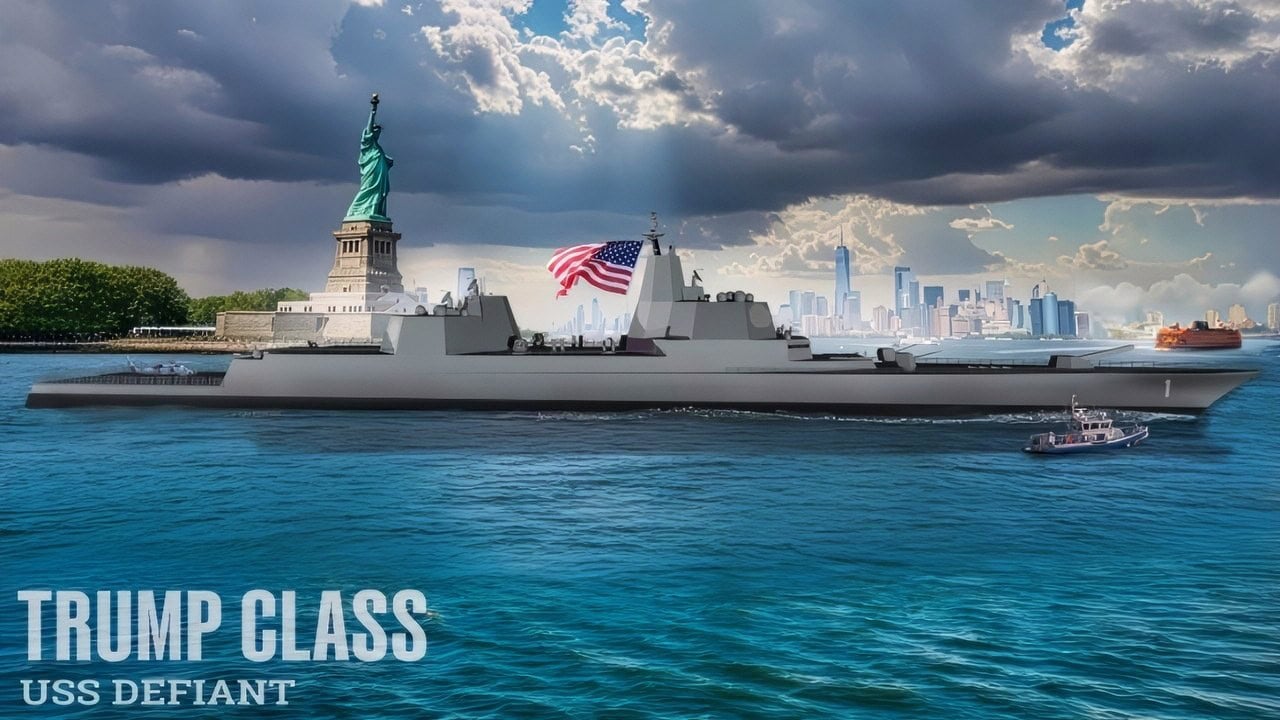
Trump-Class Battleship. Image Credit: Creative Commons/White House.
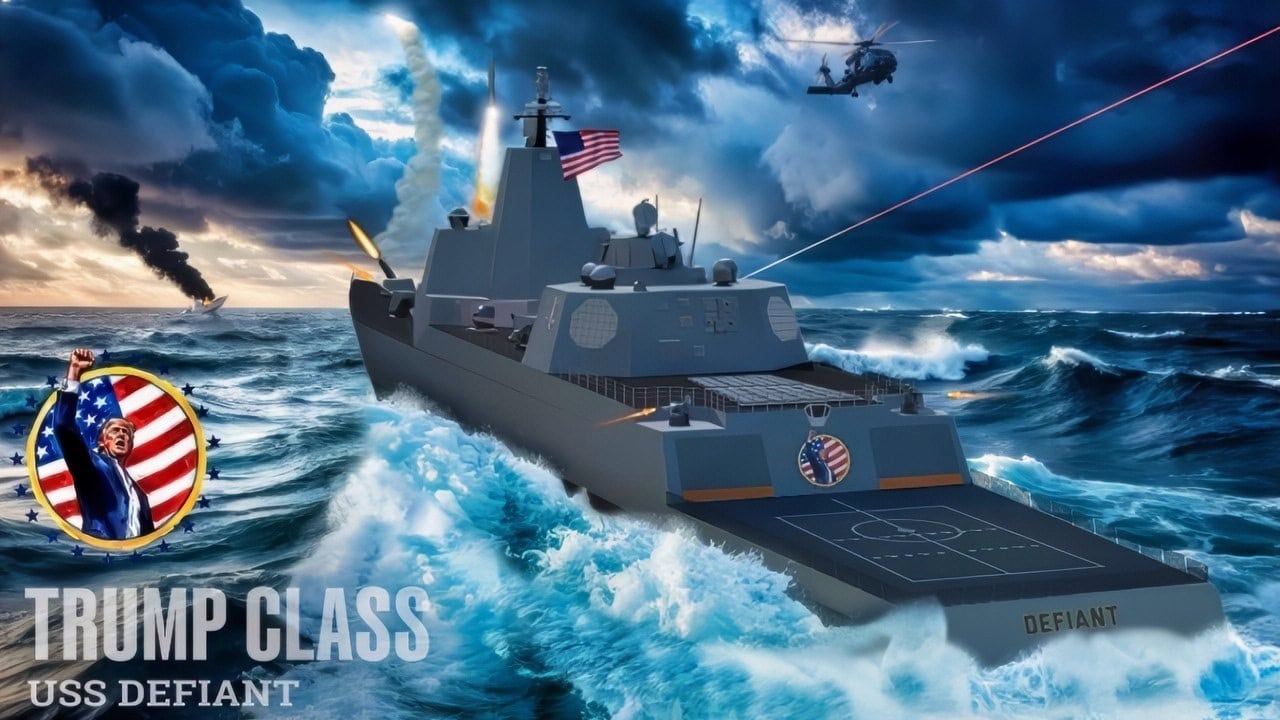
Trump-Class Battleship. Image Credit: Creative Commons/White House Photo.
About the Author:
Jack Buckby is a British author, counter-extremism researcher, and journalist based in New York who writes frequently for National Security Journal and 19FortyFive. Reporting on the U.K., Europe, and the U.S., he analyzes and understands left-wing and right-wing radicalization and reports on Western governments’ approaches to the pressing issues of today. His books and research papers explore these themes and propose pragmatic solutions to our increasingly polarized society. His latest book is The Truth Teller: RFK Jr. and the Case for a Post-Partisan Presidency.