
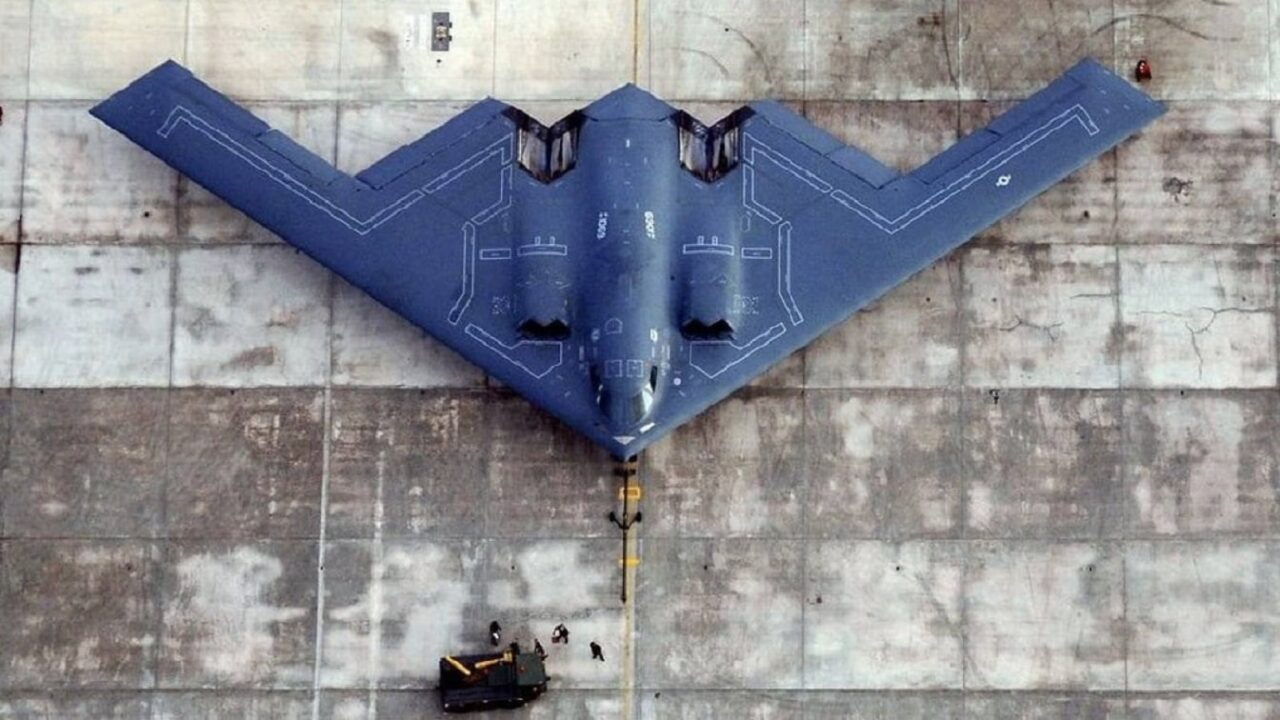
KEY POINTS: The B-21 Raider Is a Smash Success – Here’s Why
-The B-21 Raider is quietly becoming one of the Pentagon’s rare procurement success stories.
-More than four years after lawmakers first praised the next-generation stealth bomber as “on time and on budget,” two aircraft are already flying, with initial combat capability possible as early as 2026 and entry into service targeted for 2027.
-The Air Force’s Rapid Capabilities Office and a strict cost cap helped hold unit prices down, even through COVID-era inflation and a one-time $1.2 billion hit absorbed by Northrop Grumman.
-With at least 100 bombers planned and production ramping up, some defense experts now argue the U.S. should double the buy.
The B-21 Bomber Flying High
“The B-21 Raider Is on Time and on Budget. That’s a Miracle.” That was the headline of a Popular Mechanics article about the new strategic bomber, which was published more than four years ago, in April of 2021.
The 2021 piece called the B-21 a rare “military procurement success story,” and Rep. Adam Smith, at the time, the chairman of the House Armed Services Committee, declared that the B-21 was “on time, on budget, and they’re making it work in a very intelligent way.”
Now, more than four years later, with two of the bombers already flying and more to come, the project remains on schedule.
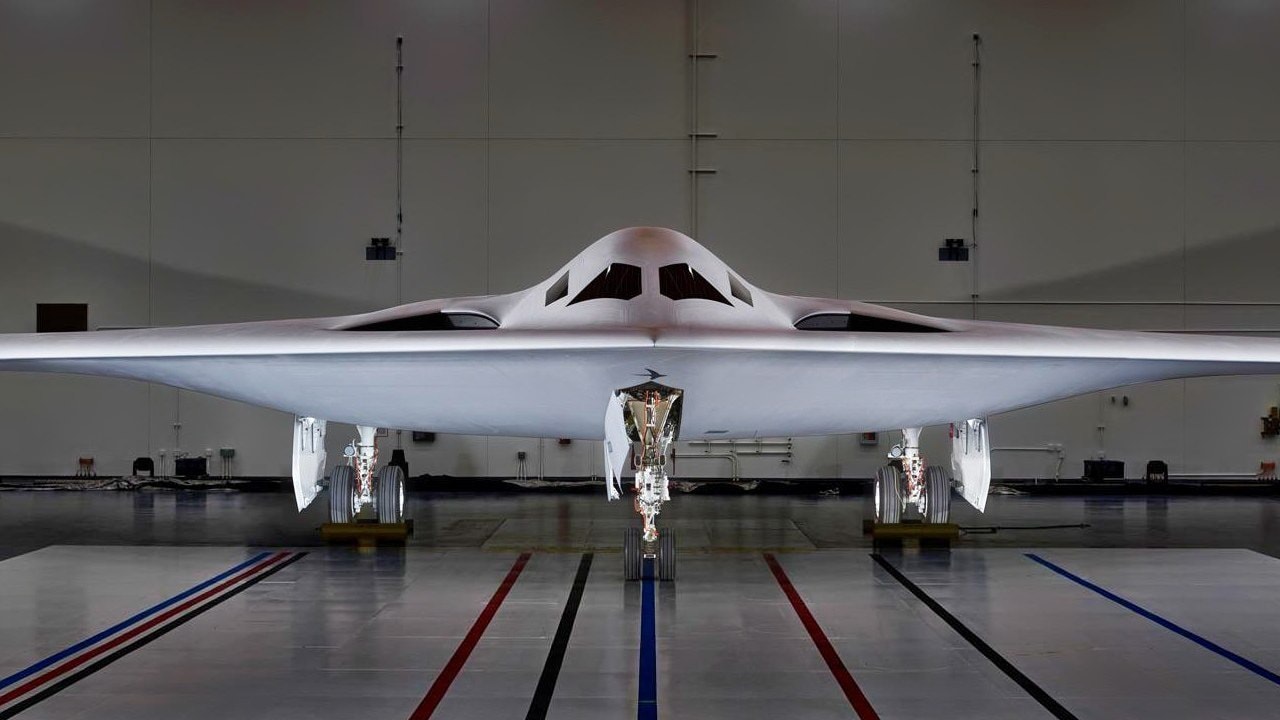
B-21 Raider Bomber U.S. Air Force.
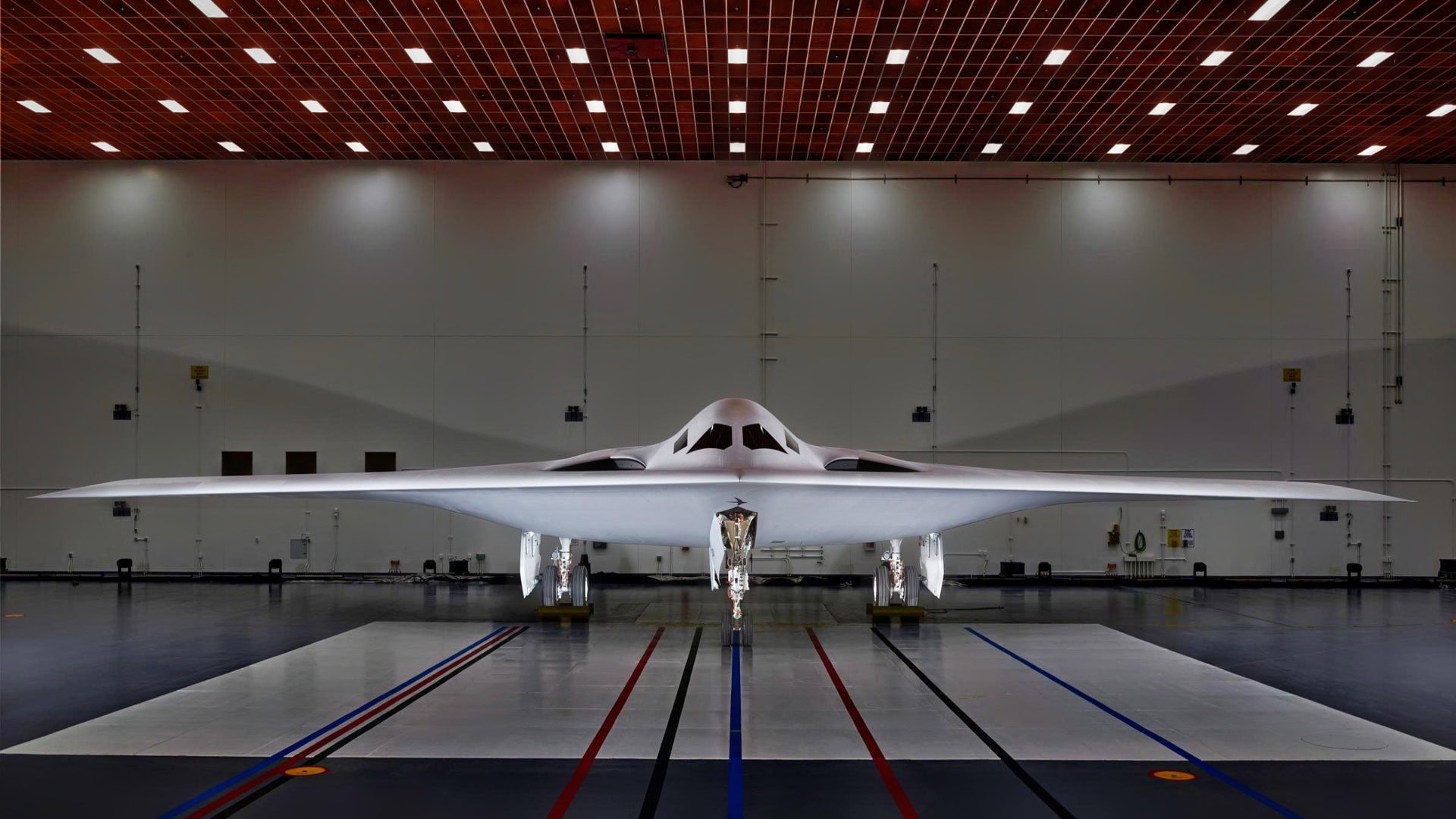
B-21 Raider U.S. Air Force. Image Credit: U.S. Air Force.
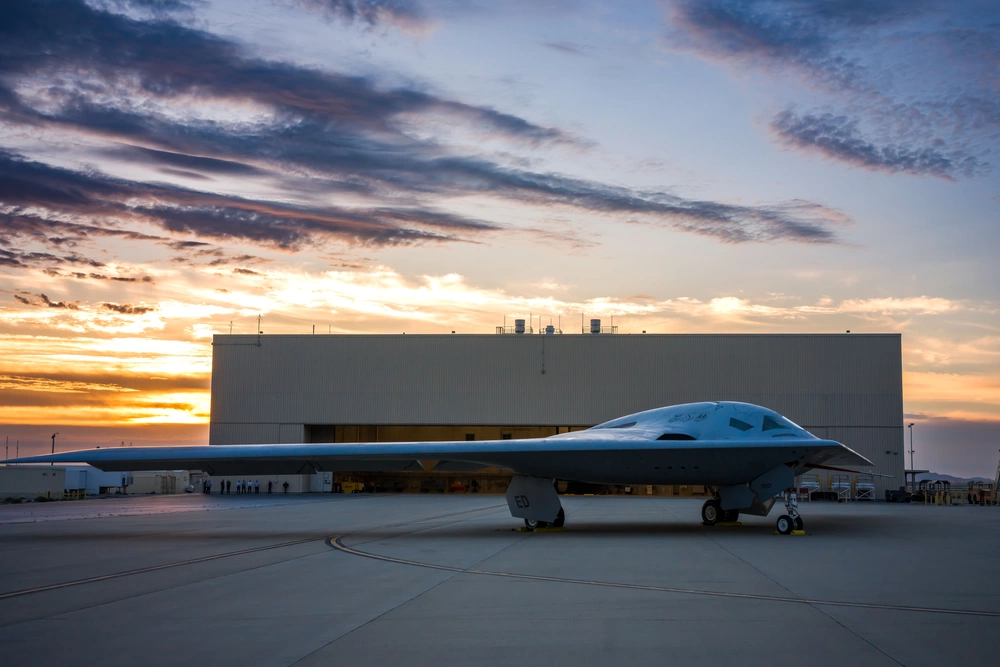
According to a Simple Flying story last month, “the program appears to be more or less on budget and on schedule. Two years after the first flight, the rapid development of the program is seeing the next-generation bomber on track to enter service in 2027.”
Air and Space Forces reported in July that the existing B-21 Raiders could participate in combat operations, if necessary, as soon as 2026.
How They Did It
Back in March, Rebecca Grant of RealClearDefense wrote a column praising B-21 as the “bomber on a budget.” Grant is a national security analyst and vice president, defense programs for the Lexington Institute.
“One of the most overlooked insights from the recent Air Force budgets is that the B-21 program is proving a new business case by keeping costs under control,” Grant wrote of the B-21 program.
“During the 2025 budget cycle, smooth progress on the production line enabled the Air Force to negotiate lower rates for the B-21 bombers now in production. The Air Force trimmed about $1 billion off the B-21 program’s cost for Fiscal Year 2025 alone and bagged additional savings for future years.”
That program, Grant wrote, has given the Pentagon the confidence to invest in more advanced weapons programs.
“Coming in under budget is a first for a stealth aircraft – and quite a victory for the bomber leg of the nuclear deterrence Triad. Contrast that with the snarls affecting nuclear shipbuilding and the Columbia-class submarine program. It is also a great vote of confidence for future sixth-generation programs for both the Air Force and the Navy.”
Of course, the B-21 being on time and on budget isn’t exactly a new phenomenon- after all, it was pointed out back in 2021 that it was looking that way.
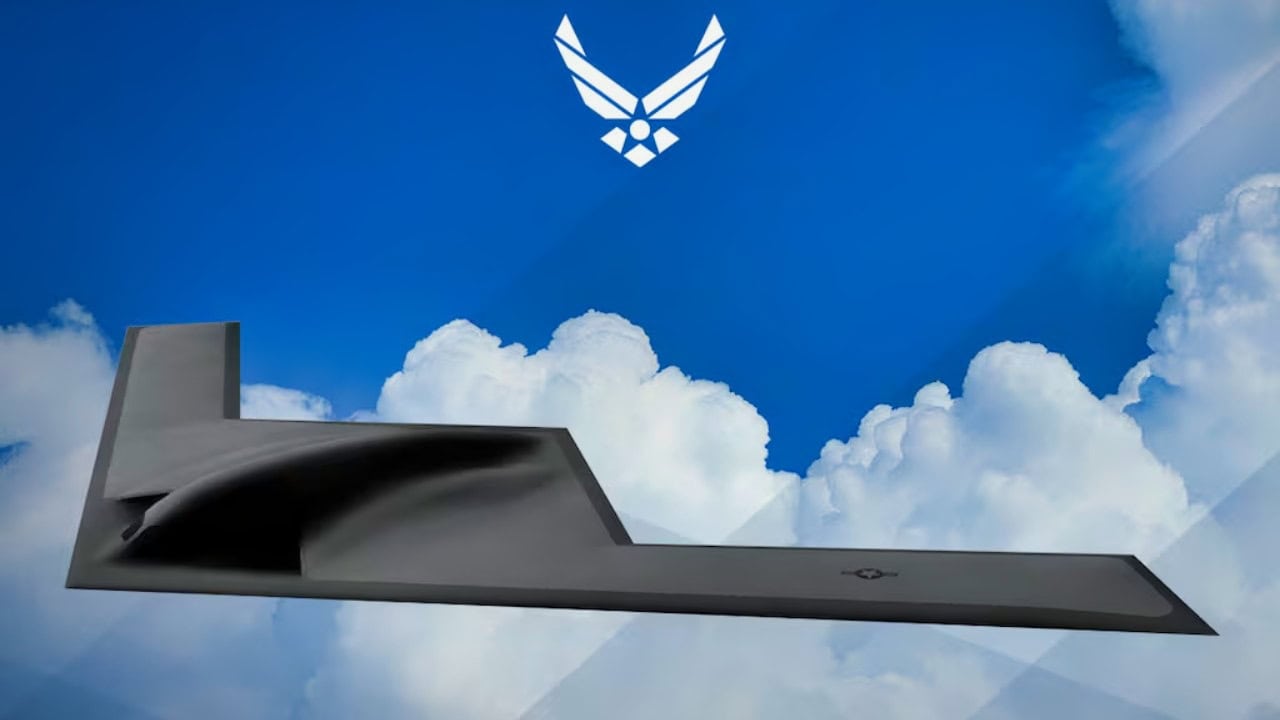
B-21 Raider Bomber.
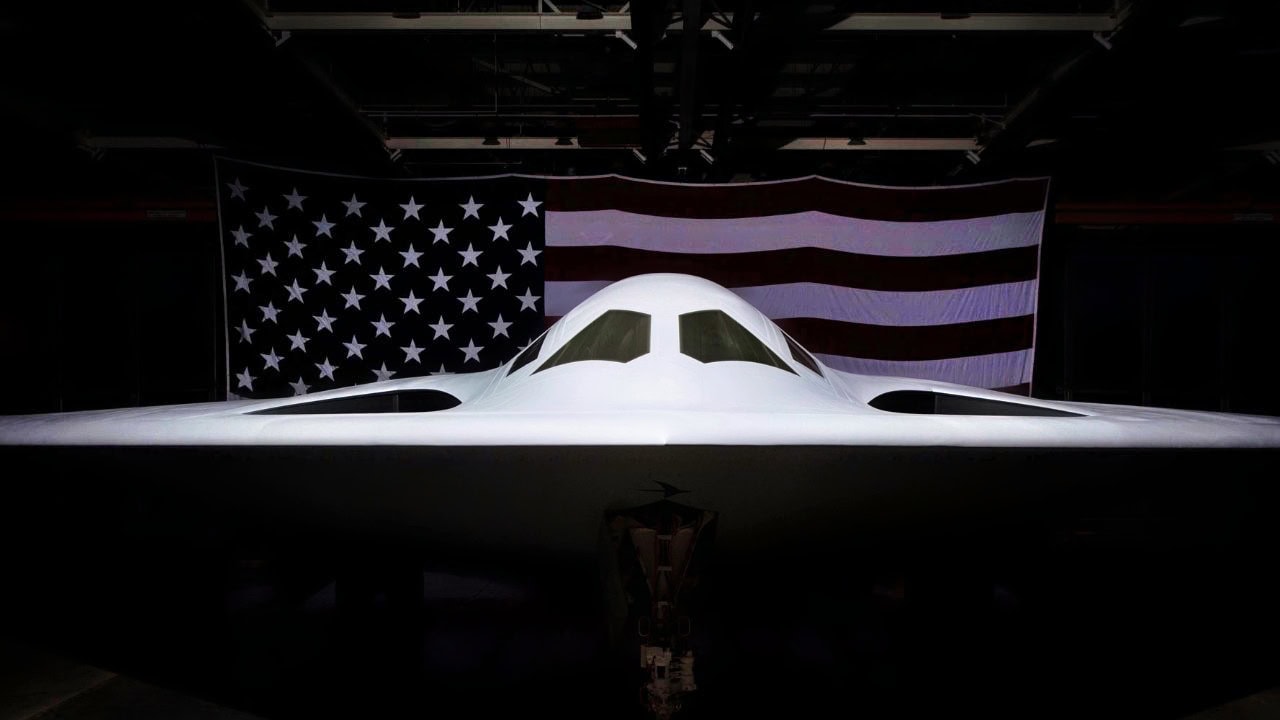
B-21 Raider Bomber. Image Credit: Creative Commons.
That’s because, per the RealClearDefense analysis, it was a priority from the start of the project to “bend the cost curve” on the B-21.
“A cost cap of $550 million per bomber (averaged over 100 aircraft, and in 2010 dollars) was set as a performance parameter for the competition. Northrop Grumman was widely believed to have won the B-21 program due to the combination of its experience in stealth bombers and its low bid price,” Grant wrote.
“However, executing the B-21 plan has been a testament, first and foremost, to the Air Force’s Rapid Capabilities Office (RCO), the team that ran the B-21 from source selection onward but likes to stay out of the limelight.”
The B-21’s cost estimates even weathered the COVID pandemic and the subsequent years of high inflation.
“Inflation in the wake of the COVID pandemic hit the B-21 along with other defense programs, leading to increased costs for wages and supplies for both prime contractors and their hundreds of suppliers,” the RealClearDefense story said.
“The B-21 program quickly digested those costs. In January 2024, Northrop Grumman reported that it had taken a one-time after-tax charge of $1.2 billion due to macroeconomic factors that increased the costs of manufacturing the B-21. The cost was swallowed as the first low-rate production lot began.”
Later that year, Secretary of the Air Force Frank Kendall told Congress in testimony that “B-21 unit costs had decreased during contract negotiations with Northrop Grumman.”
Second in Flight
The Air Force had confirmed in September that the second B-21 Raider had taken flight, after social media reports had spotted the bomber in the sky.
The Simple Flying story added that two more of the Raiders are expected to take flight in 2026. The Air Force also announced that “extensive military construction projects” were coming in 2026 at all three B-21 main operating bases.
“In addition of a second B-21 to the flight test program accelerates the path to fielding,” Air Force Chief of Staff Gen. David Allvin. “By having more assets in the test environment, we bring this capability to our warfighters faster, demonstrating the urgency with which we’re tackling modernization.”
“The B-21 Raider program represents a cornerstone of our strategic nuclear modernization,” Allvin added. “The concurrent efforts in testing, sustainment preparation, and infrastructure investments clearly illustrate our commitment to providing unmatched capabilities to deter and defeat threats well into the future.”
Expanded Production
As of now, the Pentagon plans to purchase 100 B-21 Raiders. It was reported in October that Northrop Grumman and the Air Force were in talks to accelerate output of the bomber.
Northrop Chief Executive Officer Kathy Warden said on an earnings call this fall that the company “continues to work closely with the Air Force on the B-21 programme and expects additional awards later this year, including LRIP Lot 3 and advance procurement for Lot 5.”
Others have argued that the Pentagon should order many more of the B-21 bombers, possibly even doubling its order.
In a widely-cited article published in June of 2025 by The Heritage Foundation, Shawn Barnes and Robert Peters proposed that the production rate be doubled.
“The B-21 Raider represents the future of America’s strategic bomber force, a platform designed to ensure dominance in an era of complex and evolving threats. But the success of this program hinges not only on its advanced capabilities but also on the ability to produce it at scale and speed,” the authors wrote.
“History has shown the perils of settling for what seems affordable rather than what is necessary. The United States cannot afford to make the same mistake with the B-21 Raider. Quantity, as much as quality, will define the strategic balance of the 21st century.”
About the Author: Stephen Silver
Stephen Silver is an award-winning journalist, essayist, and film critic, and contributor to the Philadelphia Inquirer, the Jewish Telegraphic Agency, Broad Street Review, and Splice Today. The co-founder of the Philadelphia Film Critics Circle, Stephen lives in suburban Philadelphia with his wife and two sons. For over a decade, Stephen has authored thousands of articles that focus on politics, national security, technology, and the economy. Follow him on X (formerly Twitter) at @StephenSilver, and subscribe to his Substack newsletter.