
Key Points and Summary – For much of the 1980s, the “F-19” was the most famous fighter jet never built.
-A skipped designation between the F/A-18 and F-20, Cold War secrecy, and whispers about radar-evading “black projects” convinced the public—and some foreign militaries—that a secret F-19 stealth fighter existed.

Image via Steam advertisement.
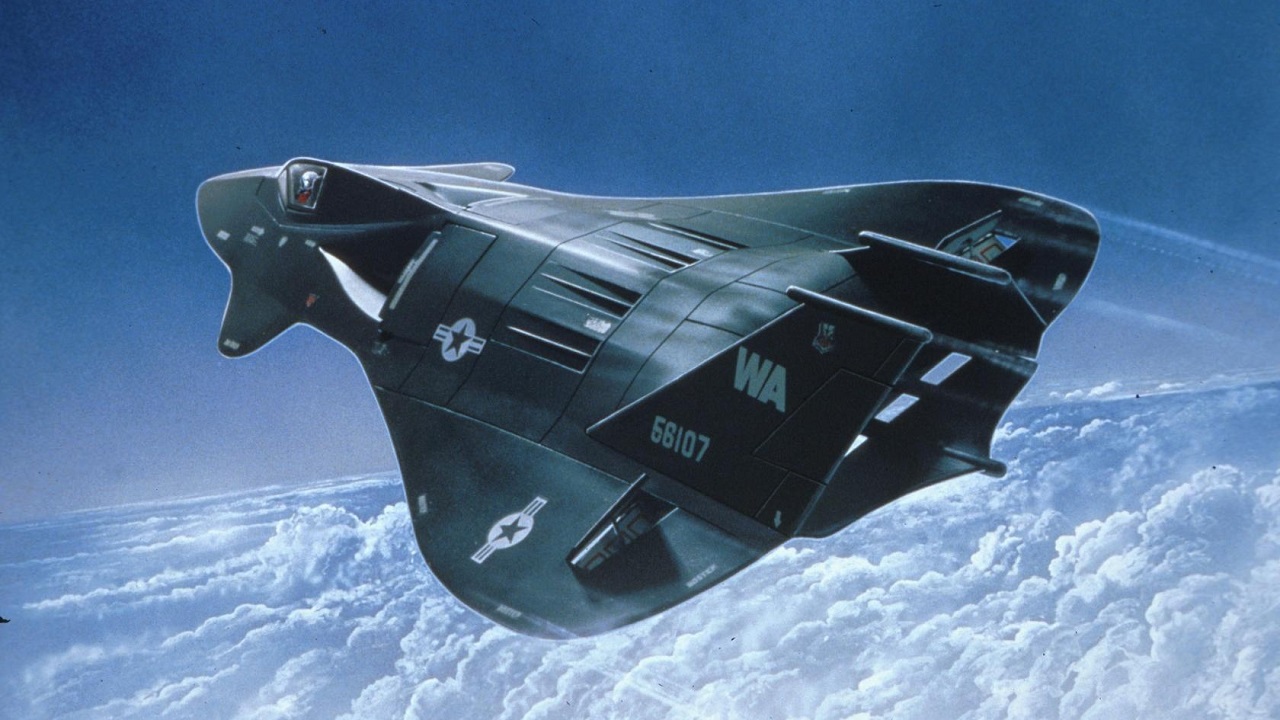
-Model-maker Revell turned the myth into an icon with its manta ray-shaped “F-19 Stealth Fighter,” cementing the fake jet in popular culture.
-In reality, there was no F-19 program at all, and the real stealth aircraft—Lockheed’s angular F-117 Nighthawk—looked nothing like the fantasy.
-The episode shows how an information gap can become its own powerful story.
The F-19 Stealth Fighter That Never Was: How a Phantom Jet Fooled the World
The F-19 might be the most famous fighter jet never to have been built.
Through much of the 1980s, the public—and even some foreign militaries—believed that the US was working on a secret F-19 stealth fighter program. The aircraft became a symbol of late Cold War secrecy, misinformation, and public imagination.
Root of the Myth
In the US military, aircraft designations typically follow a predictable order. F-19 should have fallen between the F/A-18 Hornet and the F-20 Tigershark.
But the Pentagon simply skipped the F-19 designation without offering an official explanation.
And in the era of black projects and Cold War paranoia, the skipped designation looked deliberate and secretive. Speculation surged, suggesting that the number was skipped to hide a sensitive program, likely a stealthy one.
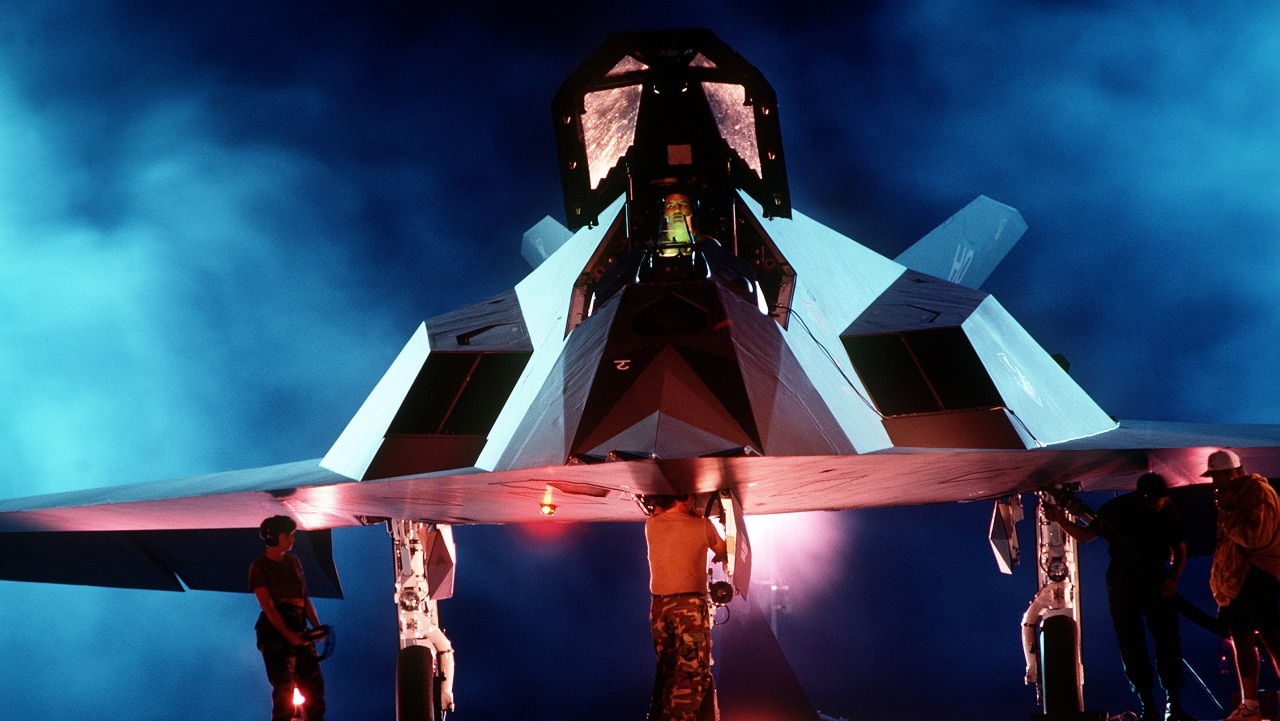
A back lit front view of a F-117A Stealth Fighter aircraft. From Airman Magazine’s February 1995 issue article “Streamlining Acquisition 101”.

Four F-117 Nighthawks fly in formation during a sortie over the Antelope Valley recently. After 25 years of history, the aircraft is set to retire soon. As the Air Force’s first stealth fighter, the F-117 is capable of performing reconnaissance missions and bombing critical targets, all without the enemy’s knowledge. (Photo by Bobbi Zapka)
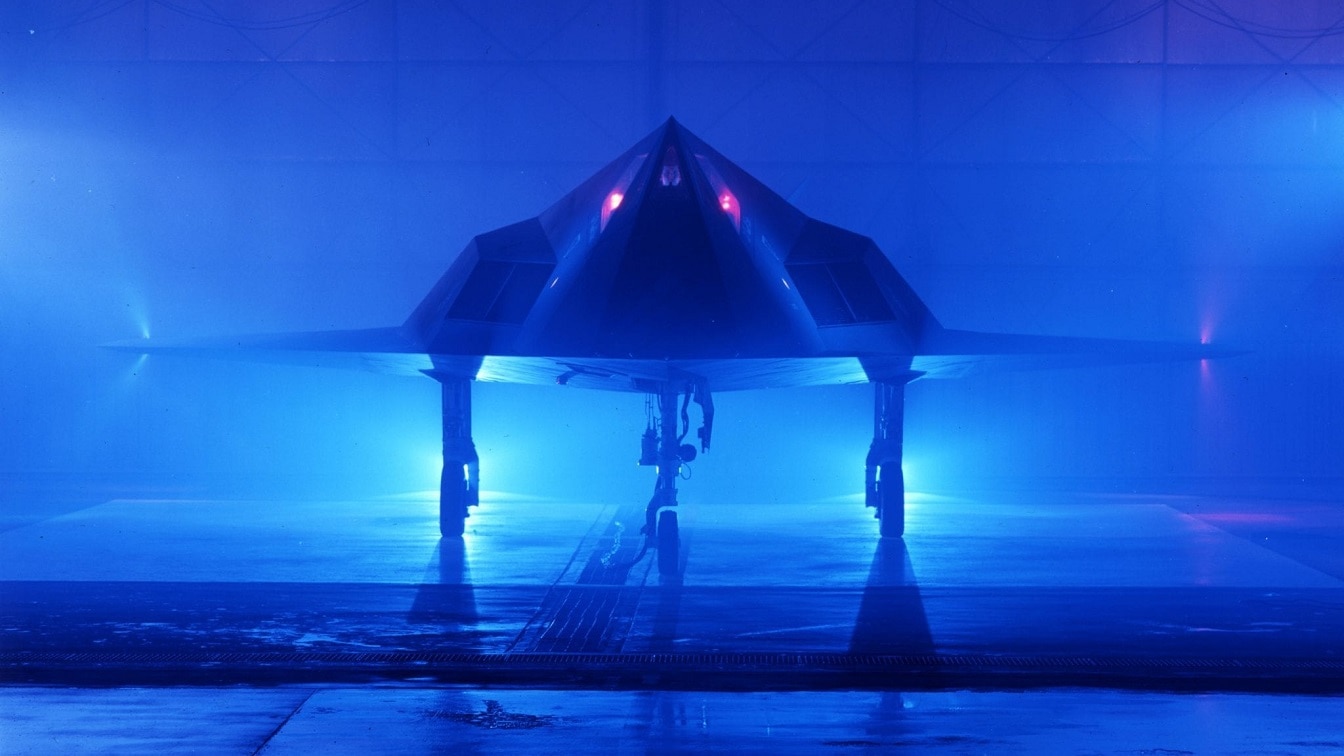
F-117. Image Credit: Lockheed Martin.
The speculation was rooted in reality. Early stealth programs like Have Blue and Senior Trend were deeply classified.
Yet rumors of radar-evading aircraft leaked to the public through Pentagon budget documents, aviation journalism, and even some sightings near Area 51. The idea that the government was developing strange things in secret was entirely plausible and, in fact, was actually happening.
In 1986, the F-19 myth was mass-marketed as a plastic model by Revell, titled the “F-19 Stealth Fighter.” Revell’s model, built of plastic, was sleek and manta ray-shaped, and came to be known decisively as the shape of the F-19.
The model sold well and turned a non-existent plane into an artifact of American popular culture.
After the Revell model gained mainstream exposure, the F-19 transcended, appearing in fiction, video games, trading cards, and magazines. Artists created speculative designs that the public assumed were educated guesses of the actual F-19 aircraft.
The F-119 Reality
The F-19 designation was skipped, not for some conspiracy, but because no one wanted to use the number. Northrop wanted the F-20 designation for marketing purposes; they thought the F-19 would confuse their branding.
The Air Force regarded 19 as unappealing or unlucky. There was no organized cover-up—just a variety of actors opting out of the designation.
But of course, to the public, the collective bypassing only reinforced the myth.
In 1988, however, the F-19 bubble would burst with the unveiling of the F-117 Nighthawk, the result of the Have Blue black project, the world’s first operational stealth aircraft.
Understandably, the Pentagon had kept the F-117 a closely guarded secret, a new platform capable of penetrating defended airspace undetected. Obviously, the platform carried immense strategic value.
And the specifics of the platform —the angular, faceted design —completely contradicted earlier artistic renderings of the F-19, including the manta ray-shaped Revell model, which bore no resemblance to the F-117. Indeed, the reveal of the F-117 effectively killed the F-19 myth.
But the myth persisted for so long with good reason. Many Cold War programs were genuinely hidden.
And when an institution like the Pentagon omits data, or skips a designation, the public is inclined to fill in the gap with their own narrative—in this case, pure mythology. It was also a different time, the advent of stealth technology.
Before the F-117’s unveiling, no one knew precisely what a stealth aircraft was supposed to look like. So people speculated. The widespread assumption was that stealth aircraft had smooth curves that radar would glide over.
And then magazines and model companies profited from that speculation, publishing their own takes and further cementing the F-19 within the public’s imagination.
But there never was an F-19. There was no prototype ever developed, no budget allocated, certainly no test flights ever taken.
Ironically, there was a secret stealth program underway at the very same time, the Have Blue program, but this had nothing to do with the F-19. And the Air Force allowed public attention to drift toward the fictional F-19. Why? Because this helped conceal the truth about the F-117.
The F-19 never flew—and never existed. Yet it helped influence how the American public perceived stealth performance.
It served as a reminder that sometimes the absence of information becomes information in and of itself.
Today, the F-19 serves as a moment in aviation history that had nothing substantive to do with aviation technology, but offered insights into how the public perceives aviation technology and the institutions that create that technology.
About the Author: Harrison Kass
Harrison Kass is an attorney and journalist covering national security, technology, and politics. Previously, he was a political staffer, candidate, and a US Air Force pilot select. He holds a JD from the University of Oregon and a master’s in global journalism and international relations from NYU.