
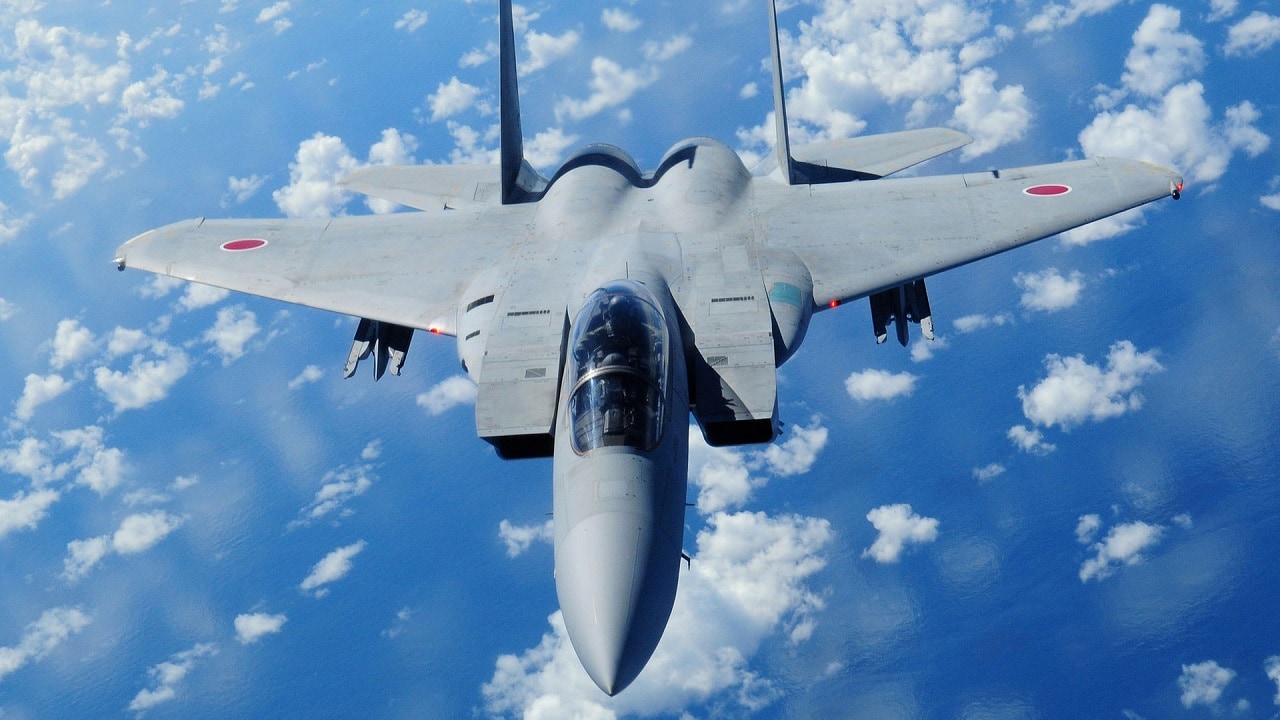
Key Points and Summary – Japan’s Ministry of Defense will convert one F-15J squadron at Chitose Air Base in Hokkaido to the F-35A around 2030, while keeping a second F-15J squadron in place.
-The move reflects Tokyo’s need to strengthen northern air defenses against rising Russian and Chinese activity without creating readiness gaps or unaffordable costs.
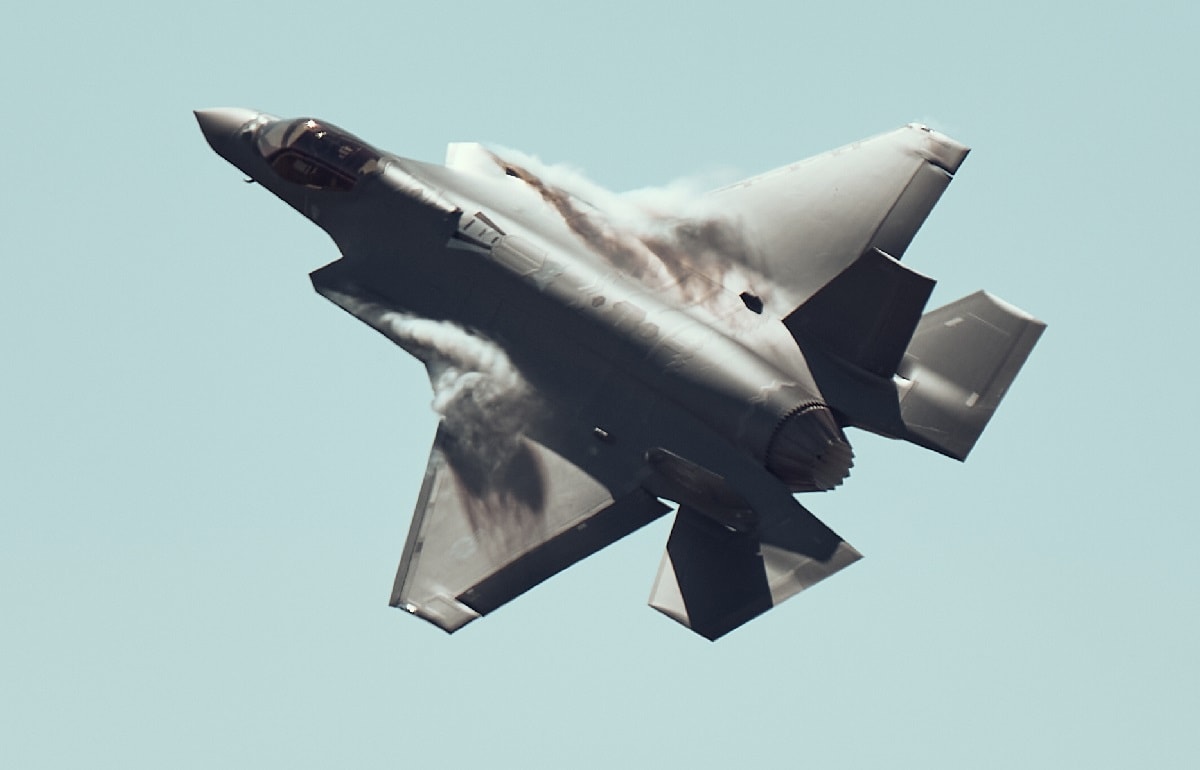
Roger Layn, a World War II veteran from Monkton, Vt., watches a landing of F-35A Lightning IIs assigned to the 158th Fighter Wing as they return from a training flight, Vermont Air National Guard Base, South Burlington, Vt., June 5, 2020. Layn, a 1st Lt. in the Army Air Forces as a bomber pilot who served in the European Theater and spent 15 months in a German P.O.W. camp, spent his 100th birthday with the 158th. (U.S. Air National Guard photo by Tech. Sgt. Ryan Campbell)
-Chitose will keep roughly the same aircraft total as stealth jets arrive on a one-for-one basis.
-Upgraded “Super Interceptor” F-15Js will continue to handle high-tempo scrambles, while the F-35A adds stealth, sensors, and networking, signaling how Japan plans to blend fourth- and fifth-generation airpower.
Japan to Field F-35A Alongside F-15J At Key Northern Base
Japan’s Ministry of Defense announced this month that a squadron based at Chitose Air Base in Hokkaido will be transitioning from the Mitsubishi F-15J to the Lockheed Martin F-35A Lightning II, marking a significant moment in the Japan Air Self-Defense Force’s (JASDF) evolving force structure.
Under the announced plans, one of the two F-15J squadrons at Chitose will be converted to operate modern stealth fighters beginning with deliveries scheduled around fiscal year 2030, while the other will retain its long-serving Eagles for the foreseeable future.
The decision comes as Tokyo works to balance readiness, capability, and cost amid rapidly changing regional security conditions.
The Chitose base, situated on Japan’s northern flank facing Russia and China, is a crucial part of Japanese planning and the broader readiness equation: replacing aging platforms where needed while preserving capable fourth-generation fighters in roles where they remain effective seems to be Japan’s most cost-effective option for now.
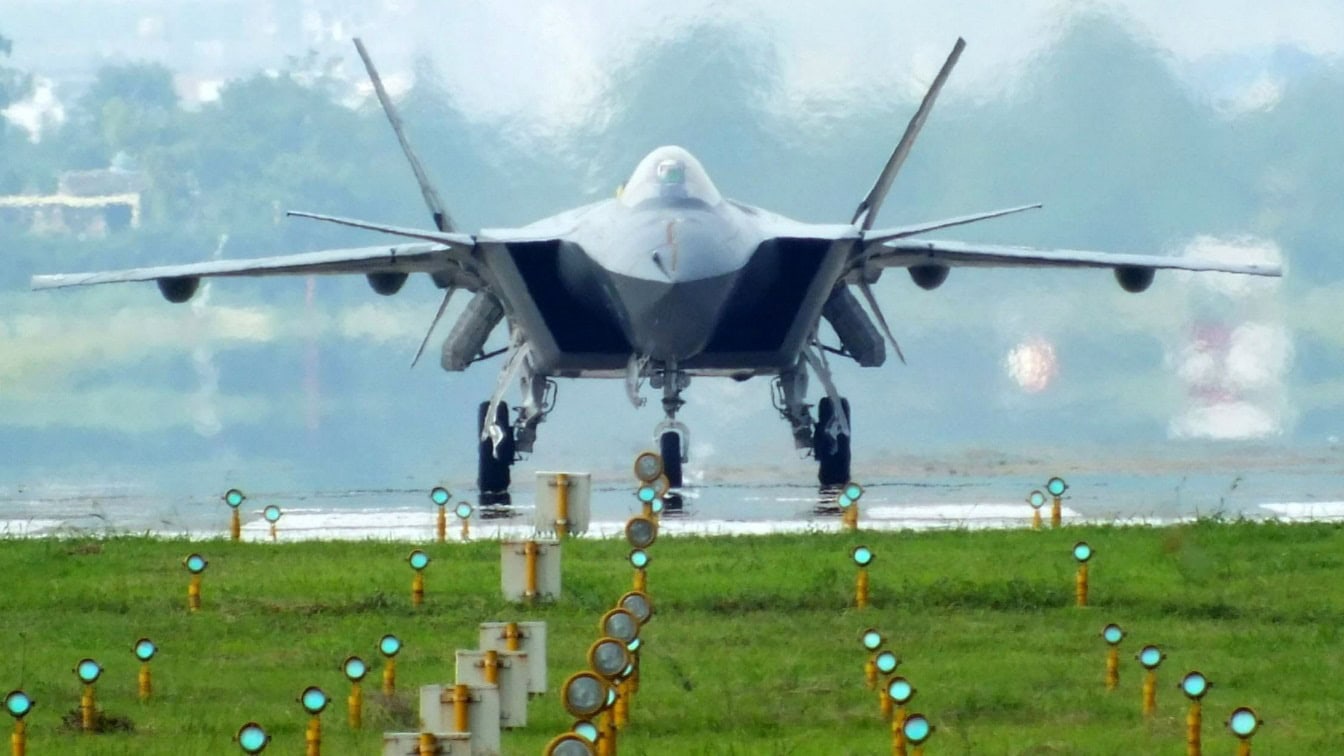
J-20 stealth fighter. Image Credit: Creative Commons.
With Russian and Chinese aircraft increasingly operating near Japan’s airspace, and Japan scrambling fighters at unprecedented rates, Tokyo and its fighter force are truly at a crossroads.
The Chitose decision thus offers a window into how Japan plans to deal with an increasingly aggressive China, and how it is hedging its bets between legacy systems like the F-15J and cutting-edge platforms like the F-35A.
The Best Decision For Now
Chitose Air Base has long served as a key strategic hub for Japan’s northern air defense mission.
As one of JASDF’s principal fighter bases in Hokkaido, it is tasked with monitoring movement over the Sea of Japan and the broader northern region, including potential incursions by long-range Russian aircraft and fighters.
Under the recently announced plan, one of the existing F-15J squadrons – either the 201st or 203rd Tactical Fighter Squadron – will be re-equipped with F-35As, leaving the other squadron to continue flying the F-15J/DJ.
According to Ministry of Defense documents, the decision was influenced by several factors, including available space for necessary F-35A infrastructure, training airspace, and other logistics related to replacing the fourth-generation aircraft.
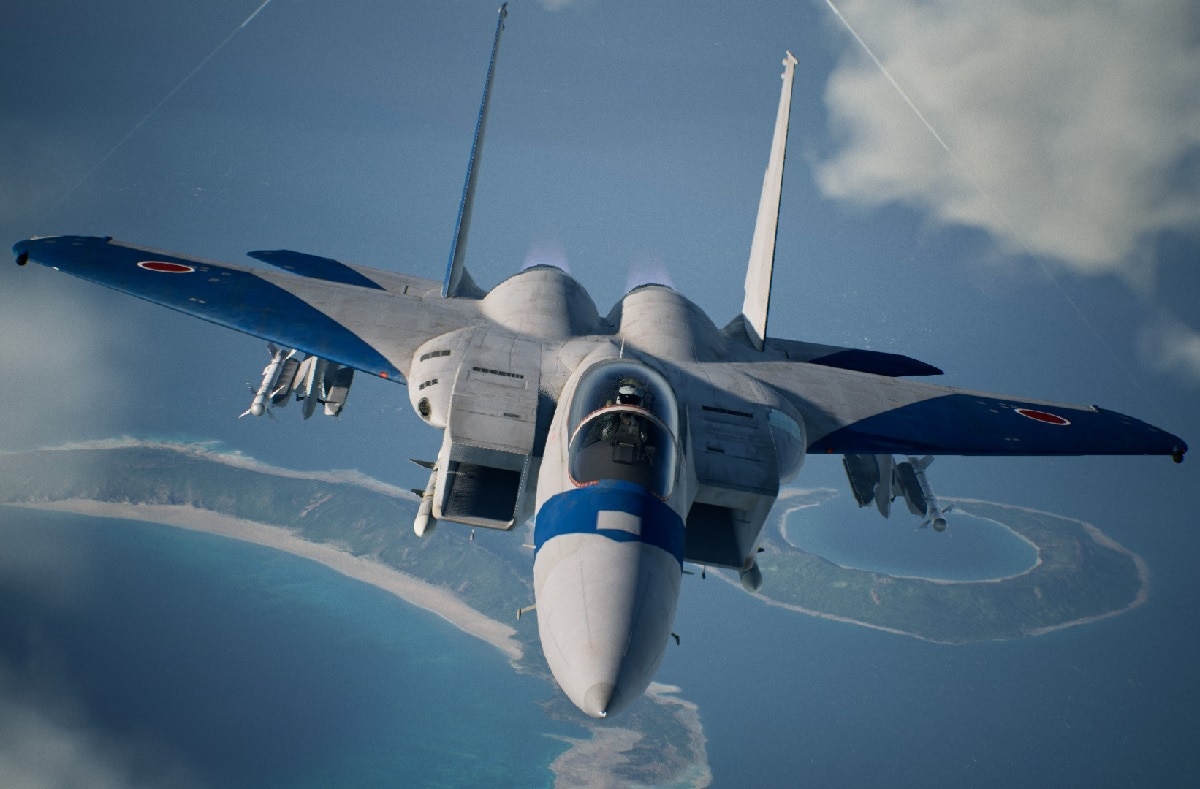
F-15J Image: Creative Commons.
Importantly, though, the transition at Chitose is not simply a matter of phasing out Japan’s fourth-generation F-15Js across the board.
The logistics and operational realities of replacing an entire fighter fleet are considerable, and Japan’s approach to upgrading its capabilities is more innovative and more standard: replacing where possible, training as they go, and preparing for an eventual replacement of the whole fleet sometime in the future.
At Chitose, the total number of aircraft based at the airfield will remain roughly the same as F-35As replace F-15Js on a one-to-one basis.
The decision will also require no major personnel shifts in the short term.
The strategy also reflects Tokyo’s broader fighter restructuring efforts.
The JASDF already fields three F-35A squadrons – two at Misawa Air Base and one at Komatsu – with Chitose now set to host a fifth squadron as part of a plan to acquire up to 147 F-35s in total.
The logic behind replacing only some F-15Js becomes even easier to understand when one considers how busy Japan’s air defense mission really is.
Japanese fighters are launched frequently to intercept foreign aircraft approaching the country’s airspace, particularly from China and Russia. In recent years, JASDF jets have been scrambled hundreds of times per year, with Chinese military flights making up a large share of those encounters.
Replacing everything in one go, therefore, would pose a considerable challenge to the Japanese air force.
Japan Still Needs the F-15J
The F-15J is by no means an incapable jet. It is a licensed variant of the U.S. F-15C Eagle built by Mitsubishi Heavy Industries and has been central to Japan’s air superiority architecture since its induction in the early 1980s.
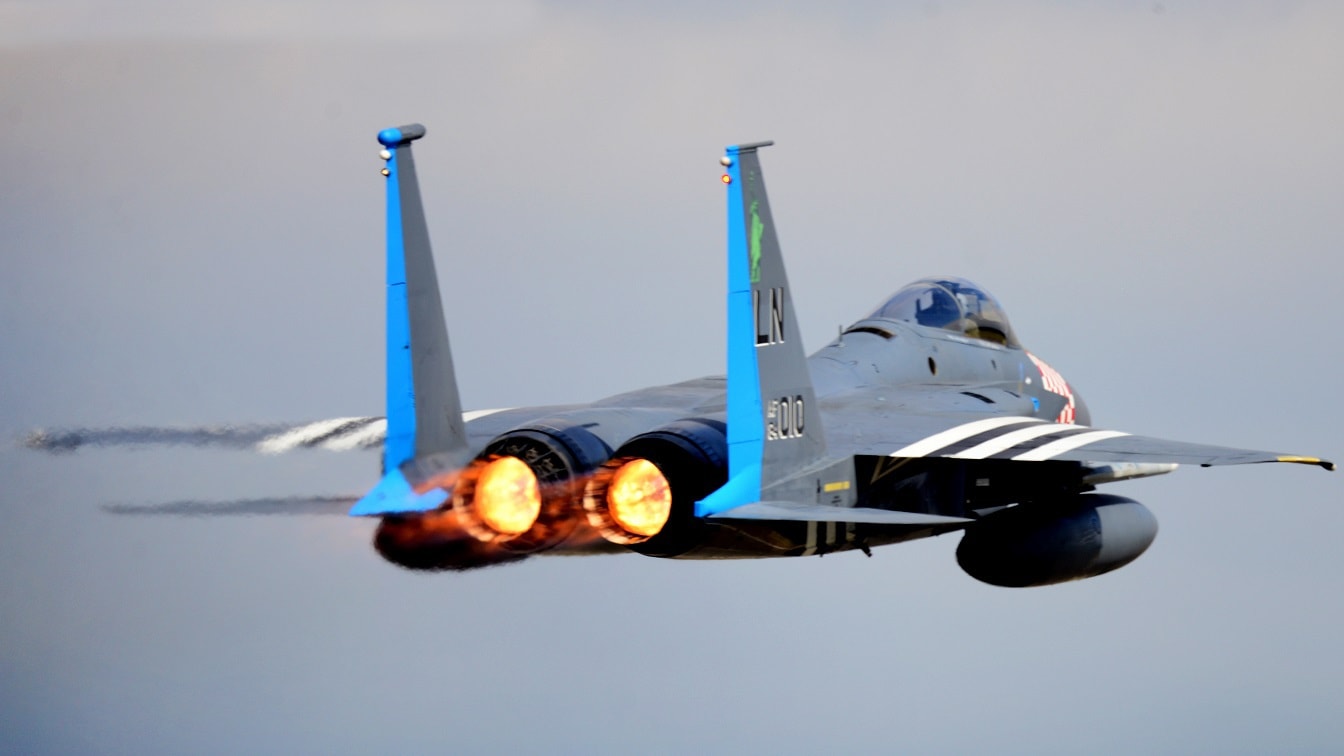
An F-15C Eagle painted in the heritage colors of it’s P-47 Thunderbolt predecessor makes a high-speed pass April 11, over Royal Air Force Lakenheath, England. The 493rd Fighter Squadron conducts routine training daily to ensure RAF Lakenheath brings unique air combat capabilities to the fight when called upon by United States Air Forces in Europe-Air Forces Africa. (U.S. Air Force photo/ Tech. Sgt. Matthew Plew)
The aircraft’s combination of speed, range, and payload capacity made it a natural choice for intercepting foreign aircraft approaching Japan’s airspace in recent decades. In that time, it has scrambled thousands of times and done so effectively.
Over time, the F-15J has seen a series of upgrades, too – benefiting from new radar and avionics enhancements that have kept it relevant against evolving threats.
Recent plans under Japan’s “Super Interceptor” initiative have aimed at introducing advanced radar systems, improved electronic warfare suites, and compatibility with long-range weapons.
This upgrade ensures the F-15Js remain relevant even as fifth-generation jets enter service.
Those upgrades, then, ensure that Japan can move forward with a phased upgrade plan without falling behind technologically or strategically. The upgrades are expected to extend the aircraft’s operational life into the 2030s and beyond.
That logic explains why Chitose will host both jets. As Japan upgrades dozens of F-15Js to serve into the mid-2030s while F-35A deliveries to Chitose begin in the next half-decade, Tokyo is deliberately staggering the transition to avoid readiness gaps at one of its most crucial frontline northern bases.
About the Author:
Jack Buckby is a British author, counter-extremism researcher, and journalist based in New York who writes frequently for National Security Journal. Reporting on the U.K., Europe, and the U.S., he works to analyze and understand left-wing and right-wing radicalization, and reports on Western governments’ approaches to the pressing issues of today. His books and research papers explore these themes and propose pragmatic solutions to our increasingly polarized society. His latest book is The Truth Teller: RFK Jr. and the Case for a Post-Partisan Presidency.