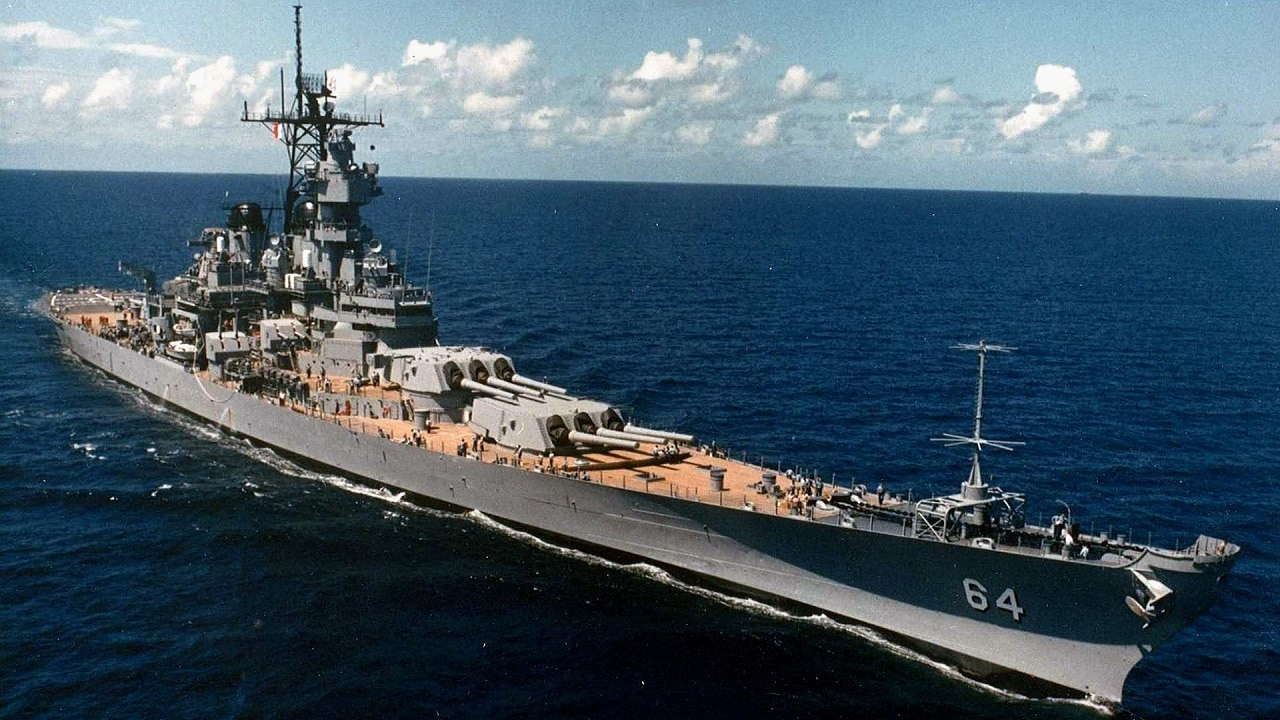
Key Points and Summary – Donald Trump’s proposed Trump-class battleships—flagships of a new “Golden Fleet”—promise to be the most lethal surface combatants ever built, packing hypersonic weapons, massive VLS magazines, and even talk of resurrected railgun technology.
-On paper, they would dwarf Arleigh Burke–class destroyers and serve as command nodes for aircraft carriers and U.S. Navy surface action groups. This would be similar to an F-35 stealth fighter, in many respects.
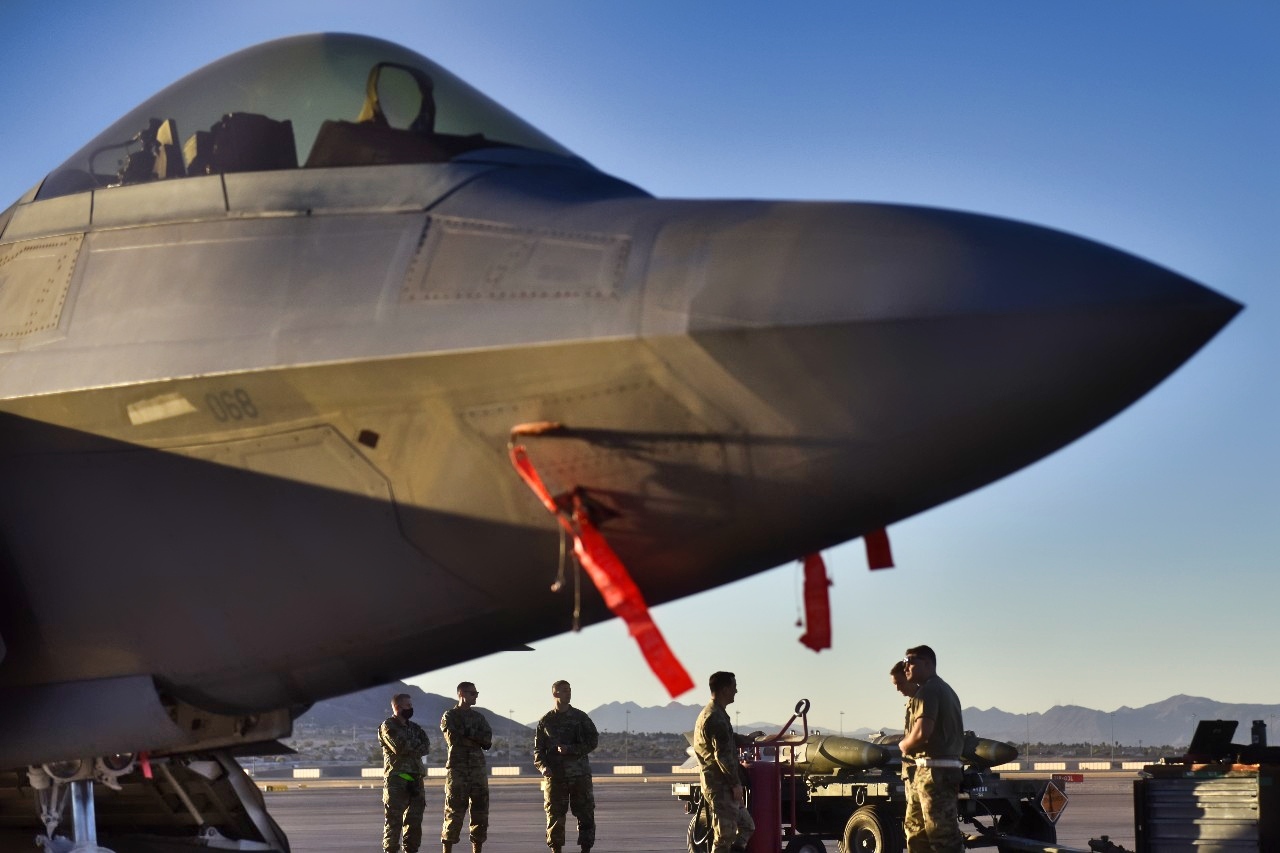
Airmen from the 757th Aircraft Maintenance Squadron talk about their execution plan next to an F-35 Lightning prior to the start of weapons load crew competition at Nellis Air Force Base, Nevada, Oct. 16, 2020. Throughout the year weapons crews are put to the test of safely loading and unloading ordinance to their respective aircraft in front of their peers while being timed. At the end of the year, the winners from each event are pitted against each other to see which team is the best. (U.S. Air Force photo by Tech. Sgt. Alexandre Montes)
-In practice, the concept collides with a troubled shipbuilding base, chronic delays and overruns, and a Navy strategy that favors more numerous, smaller ships for Distributed Maritime Operations.
-With details sparse, timelines distant, and politics unpredictable, the Trump-class remains more ambition than assured reality.
Trump’s “Trump-Class” Battleships: Game-Changer or Naval Fantasy?
U.S. President Donald Trump made waves with an announcement that he wants the U.S. Navy to procure a new class of battleships.
The prospective Trump-class would resurrect the battleship—at least in name—and seemingly would incorporate a number of technologies that have raised eyebrows.
But is the Trump-class an actual, serious naval project?
Several important questions remain unanswered and cast doubt on the class’ future.
The Navy dubbed the Trump-class battleships “the most lethal surface combatant ever constructed,” adding that the class would be “an unambiguous statement of American commitment to maritime superiority with capability to distribute more firepower across the fleet than any other class of ship, for any Navy, in history.”
The president’s announcement was accompanied by a computer-generated infographic seeming to show the ship in combat—as well as a presumably provisional schematic rendering—and a general overview of the ship’s projected armaments.
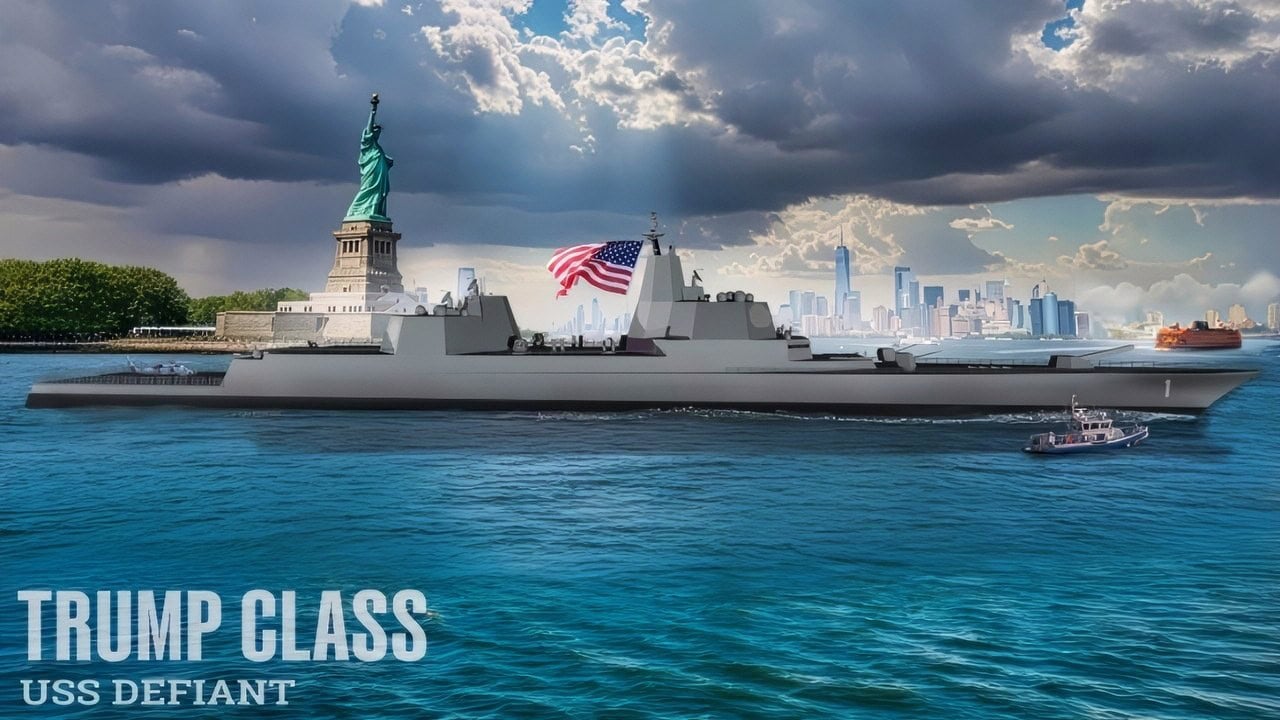
Trump-Class Battleship. Image Credit: Creative Commons/White House.
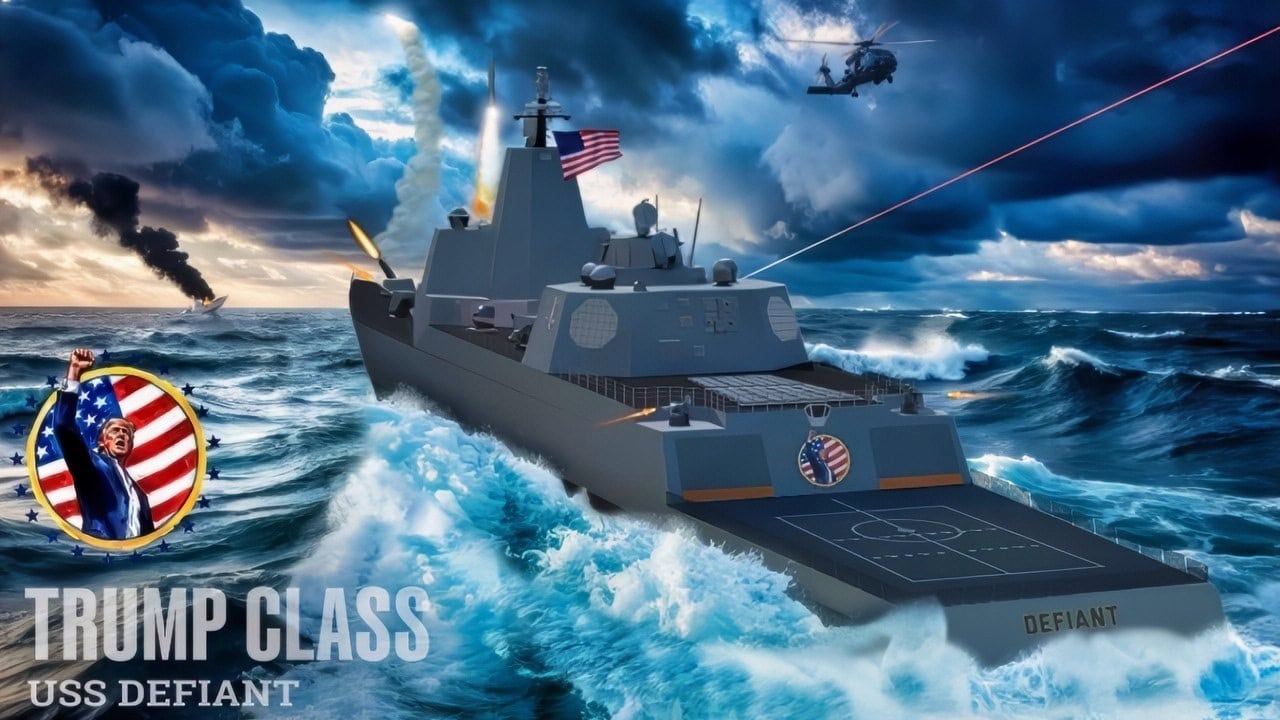
Trump-Class Battleship. Image Credit: Creative Commons/White House Photo.
“These new battleships will stand as the centerpiece of the Navy’s Golden Fleet initiative and will be the first of its kind providing dominant firepower and a decisive advantage over adversaries by integrating the most advanced deep-strike weapons of today with the revolutionary systems of the years ahead,” the U.S. Navy announcement explained. “Engineered to outmatch any foreign adversary, the new battleship class will be the centerpiece of naval power.
At triple the size of an Arleigh Burke-class destroyer, its massive frame provides superior firepower, larger missile magazines, and the capability to launch Conventional Prompt Strike hypersonic missiles and the Surface Launch Cruise Missile-Nuclear.”
The announcement added that the Trump-class battleships would “be capable of operating in a traditional Integrated Air and Missile Defense role with a Carrier Strike Group or commanding its own Surface Action Group for Surface and Anti-Submarine Warfare efforts in addition to delivering long range hypersonic strategic fires and quarterbacking the operations of an entire fleet as the central command control node.”
The Railgun Comeback?
The announcement raises an interesting prospect: the resurrection of naval rail guns, a technology with great promise but several seemingly insurmountable obstacles. Harnessing great amounts of electric power, rail guns accelerate solid metallic projectiles to supersonic speeds far greater than conventional guns can. Greater range, shorter time to target, and no propellant necessary—on paper, these are all excellent qualities.
But in practice, the technology proved to be elusive for the U.S. Navy. Barrel wear caused by the railgun projectile’s extreme velocity was a limiting factor. Thermal management also caused difficulties, as did projectile guidance.
So is the Navy resurrecting its foray into railgun technology? Though General Atomics reportedly pitched its rail gun for Trump’s Golden Dome initiative, there is little indication the company’s effort found fertile ground.
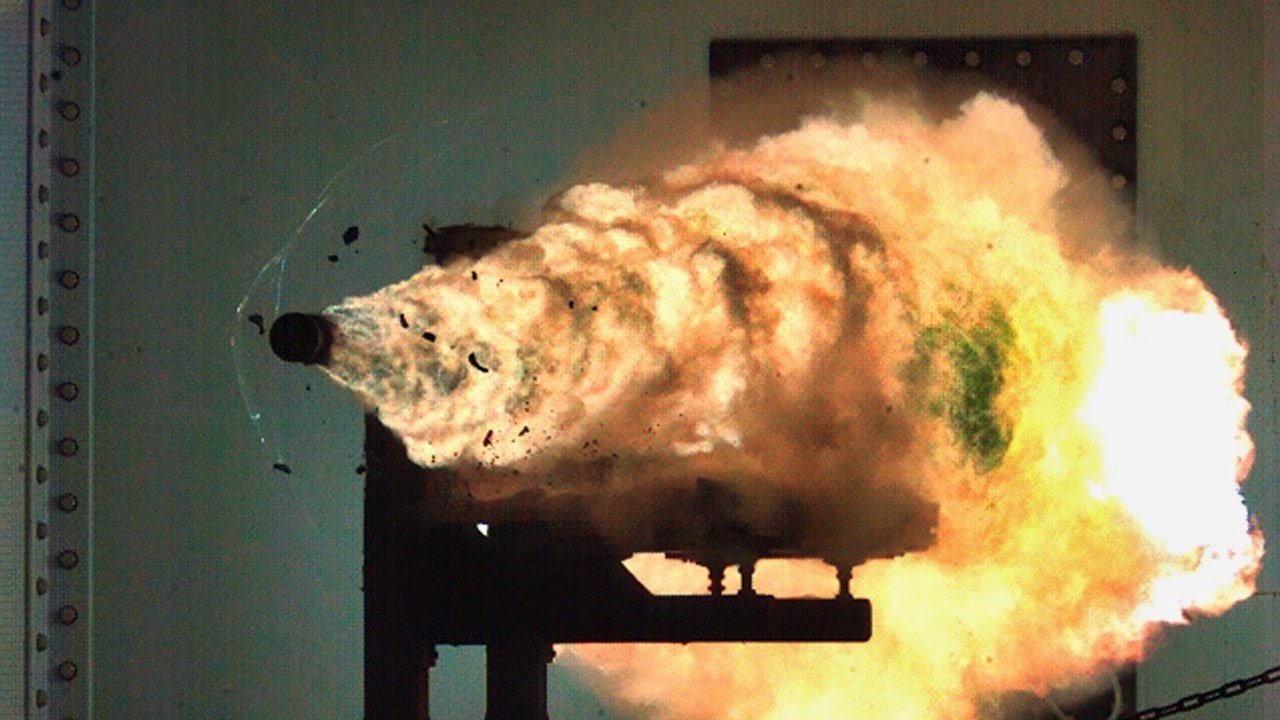
(Jan. 31, 2008) Photograph taken from a high-speed video camera during a record-setting firing of an electromagnetic railgun (EMRG) at Naval Surface Warfare Center, Dahlgren, Va., on January 31, 2008, firing at 10.64MJ (megajoules) with a muzzle velocity of 2520 meters per second. The Office of Naval Research’s EMRG program is part of the Department of the Navy’s Science and Technology investments, focused on developing new technologies to support Navy and Marine Corps war fighting needs. This photograph is a frame taken from a high-speed video camera. U.S. Navy Photograph (Released)
The Battleship Comeback: Possible?
There is, of course, precedent for battleships, which last served in the U.S. Navy in the early 1990s.
During the 1980s, all four Iowa-class battleships were reactivated as part of the Navy’s goal of building a 600-ship fleet. They underwent extensive modernization, integrating Tomahawk cruise missiles, Harpoon anti-ship missiles, and modern fire-control systems—all while retaining their World War II-era 16-inch main guns.
Their second lives in service were short by naval standards. The Iowa was decommissioned in 1990 following a fatal turret explosion, and the rest of the recommissioned battleships were decommissioned again in the early 1990s. Since then, the Navy has not reactivated or built battleships, and the surviving U.S. hulls are museum ships.
What About Building These U.S. Navy Warships?
The announcement, however, does draw attention to a deeper issue afflicting the U.S. shipbuilding industry: the slow pace of shipbuilding often results in budget overruns and schedule delays.
Earlier this year, Navy Secretary John Phelan admitted that deep structural issues plague the Navy. “All of our programs are a mess,” he explained to lawmakers this summer. “I think our best is six months late and 57 percent over budget. … That is the best one.”
But building large surface warfare ships is somewhat at odds with the Navy’s Distributed Maritime Operations, an operational approach aimed at countering anti-access/area-denial strategies, particularly in the Indo-Pacific, by dispersing assets widely but also prioritizing a large number of smaller warships over fewer large surface vessels.
Trump-Class Battleships: What Happens Now?
Considering the possible impact of the Trump-class of battleships, at this very early stage, is an exercise in futility. Given the projected long lead time of the class, which is ostensibly slated for introduction in the 2030s, the best policy for observers is to wait to watch, and measure the project’s progress.
About the Author: Caleb Larson
Caleb Larson is an American multiformat journalist based in Berlin, Germany. His work covers the intersection of conflict and society, focusing on American foreign policy and European security. He has reported from Germany, Russia, and the United States. Most recently, he covered the war in Ukraine, reporting extensively on the war’s shifting battle lines from Donbas and writing on the war’s civilian and humanitarian toll. Previously, he worked as a Defense Reporter for POLITICO Europe. You can follow his latest work on X.