
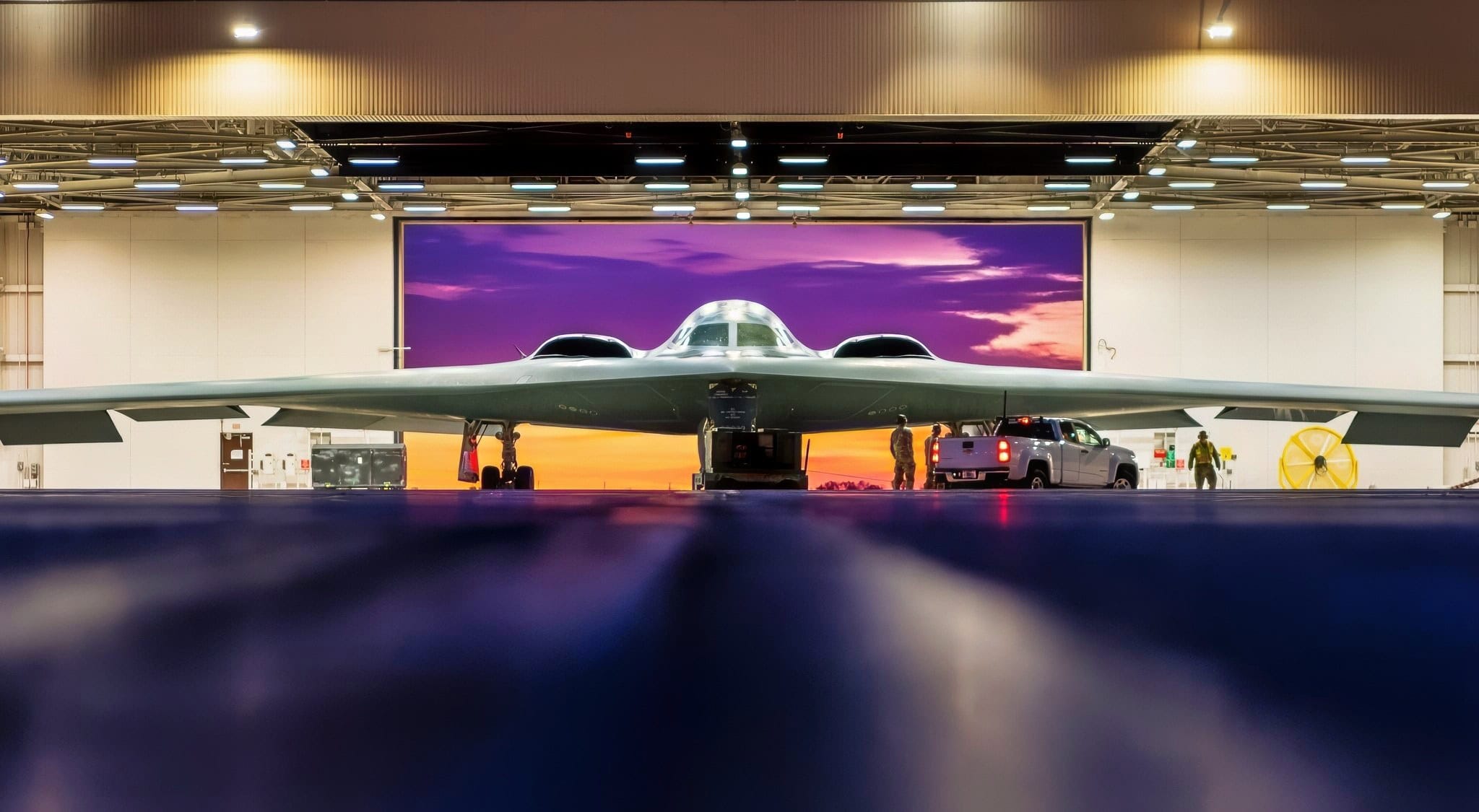
Key Points and Summary – This piece dissects the Air Force’s ambitious ten-year plan built around the F-47 NGAD and B-21 Raider, plus ‘Super’ F-22s, ‘Ferrari’ F-35s and an upgraded B-52J.
-Dr. Brent Eastwood argues these programs could give the service unmatched first-strike and follow-on punch against China or Iran, but only if politics and budgets cooperate.
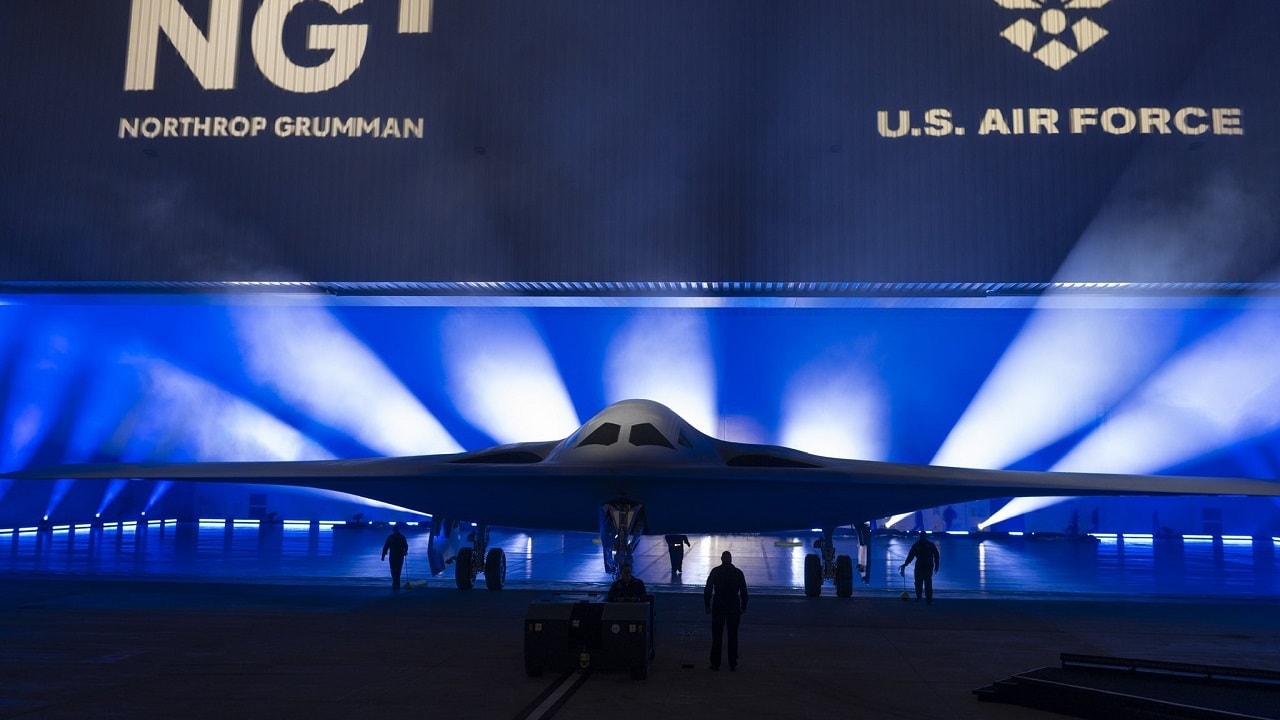
B-21 Raider. Image Credit: U.S. Air Force.
-He sketches a rough $200-plus billion price tag and doubts Congress will fund every upgrade at scale, forecasting roughly 100 NGADs and 100 B-21s instead of a full “dream fleet.”
-Even so, he concludes U.S. pilots, training and existing fifth-gen jets keep the Air Force formidable. The real fight, he suggests, is between strategy and affordability.
The U.S. Air Force’s Next 10 Years Can Be Summed Up in Two Jets: NGAD and B-21
The next ten years are critical for the U.S. Air Force.
The big-ticket items are the F-47 NGAD and the B-21 Raider, which the White House is fully behind.
These two airplanes will deliver a devastating one-two punch to U.S. adversaries and be instrumental for any Air Force response to aggression from China that results in a shooting conflict.
The existing F-22s and F-35s may be getting a facelift to compete in the 2030s. There is a “Super” F-22 planned and a “Ferrari” F-35 (these are upgrade packages, not new airplanes) that will create a second-to-none fighter fleet to emerge from legacy systems.
The B-52J has a new, but delayed, radar and engine package that should finally be ready in 2030.
So, what will the Air Force look like in, say, 2035?
Let’s Take a Deeper Dive into the Air Force ‘Super’ and ‘Ferrari’
The Super F-22, should all airplanes of the class receive the proposed upgrades, has much upside.

An F-22 Raptor aircraft performs a high-speed bank at the Marine Corps Community Services-sponsored annual air show Oct. 3, 2008, at Marine Corps Air Station Miramar, San Diego. (U.S. Marine Corps photo by Lance Cpl. Dan T. Le/Released)
The F-22 base software will likely include artificial intelligence and machine learning. The Super will fly Collaborative Combat Aircraft (CCA) for better ground strike and situational awareness.
The F-22 Super will have upgraded hypersonic weapons and the ability to “quarterback” the unmanned teaming arrangement with the CCA for excellent electronic warfare capabilities as well.
The “Ferrari” F-35 will likely become a “near” sixth-generation fighter with improved stealth coatings and the ability to control CCAs.
The Ferrari will have improved sensors and targeting mechanisms. The F-35 will become a “flying supercomputer,” also harnessing AI and perhaps even quantum computing in the cockpit.
Will These Programs Be On Time and Under Budget?
But there is the pesky problem of cost and the risk that new airplanes might be delayed, leading to schedule slips.
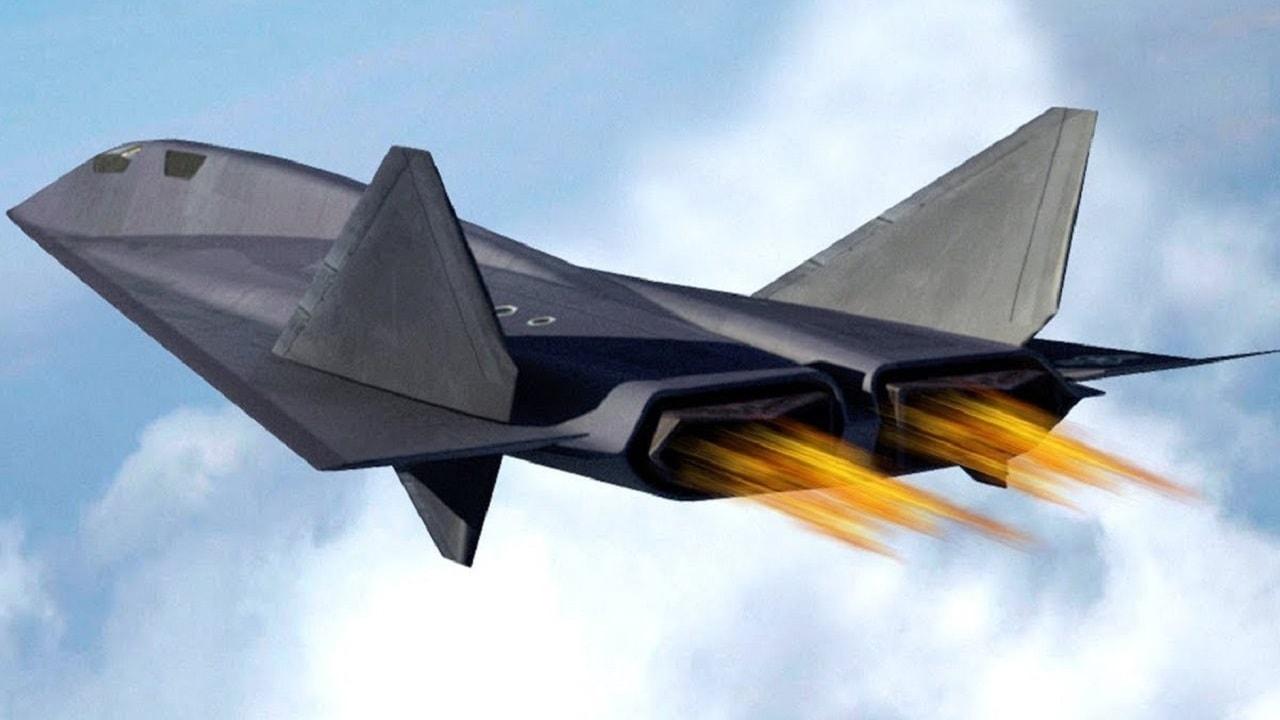
The F-47 NGAD could fly in the next two years, although the 2028 first-flight timeline may be optimistic. The B-21 program is so far on time and under budget. Two Raider bombers are already flying.
By: Image Credit: Rodrigo Avella
These super stealth airplanes are an irresistible part of the Air Force’s future doctrine. They are Day One assets that can suppress enemy air defenses, destroy airplanes on the ground, and bomb other military infrastructure.
Day Two of the warfare brings in the updated F-22s and F-35s, and don’t forget a devastating bombing-and-missile-launch run from the B-52J that could happen, too.
This Will Be A Heavy Lift
However, the American defense acquisition system depends on a vast network of suppliers, ample money from Congress, buy-in from the president, and voters who understand the value of Peace Through Strength.
Domestic political pressures could hurt the Air Force’s plan for dominance. President Donald Trump may support a muscular defense policy and build-up for the flying branch but there will be a new Commander-in-Chief in 2029.
This person may have different priorities. The composition of the House of Representatives and the Senate is sure to change after the 2026 midterm elections. Voters are leaning toward inflation and affordability as the main issues, and not defense and foreign policy.

Image: Lockheed Martin showing a refueling NGAD fighter.
While Trump focuses on his international peace triumphs and efforts to end wars, the American public is more apt to be glued to kitchen table issues, instead of preferring a substantial military build-up. Moreover, what will the new president support in 2029?
Who Is the Main Bad Guy for the Air Force?
Armchair strategists assume the next conflict will be against China, but what if that never happens?
There could be another bombing run against Iran to squelch new nuclear weapons efforts by Tehran.
That would mean the “new look” Air Force would be indispensable. However, the just-released National Security Strategy plan from the White House also emphasizes strength in the Western Hemisphere.
This is more of a U.S. Navy and Marine Corps job, especially as Trump ponders an attack on Venezuela or other covert efforts of regime change against President Nicolas Maduro. Russia could also bludgeon a NATO member within the next ten years. This would give the Air Force a job to do in Europe.
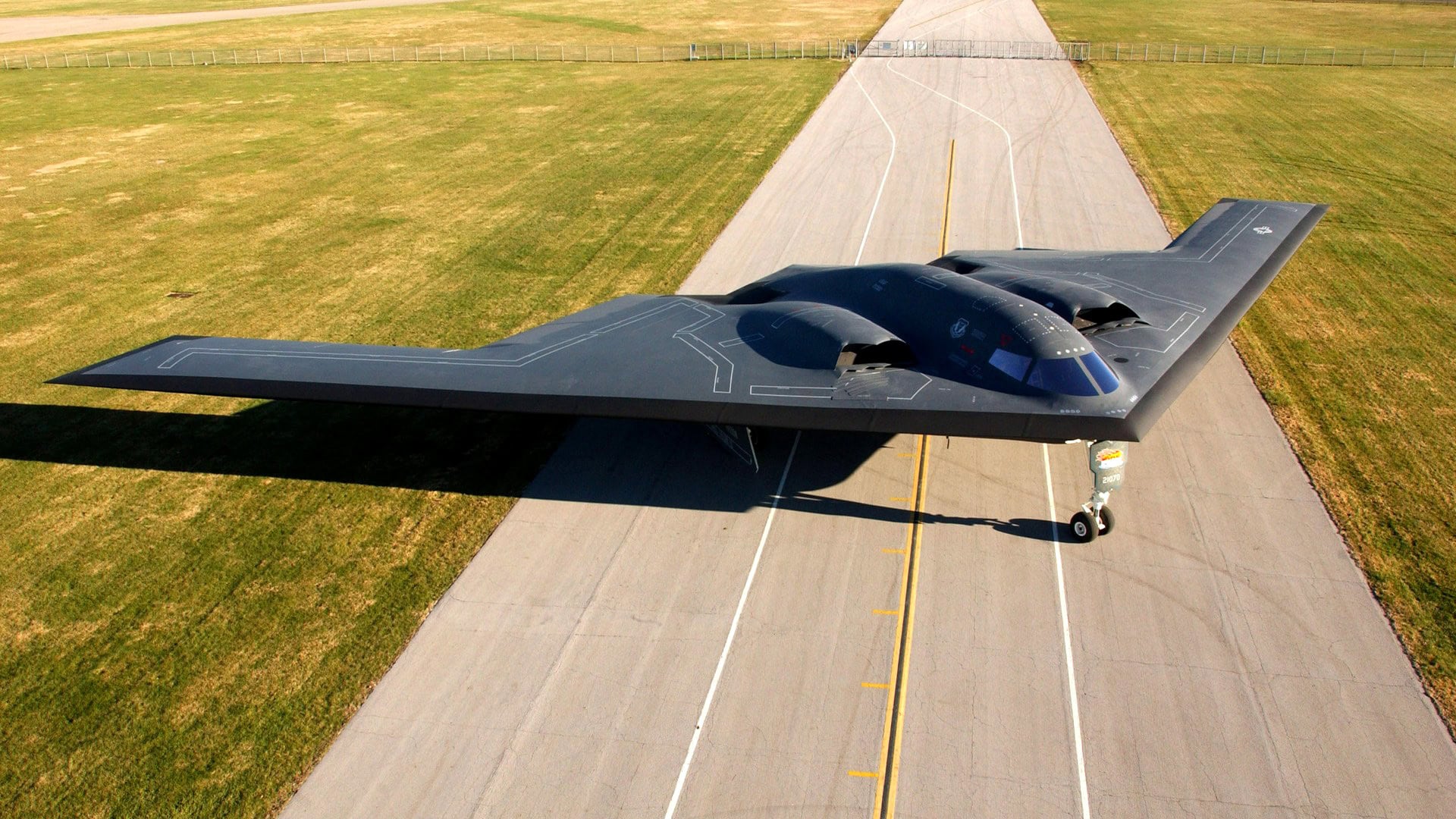
B-2 Bomber. Image Credit: Creative Commons.
Let’s give the service branch the benefit of the doubt and discount the importance of domestic politics and a shifting threat environment. All “new look” airplanes could be ready by 2035. That would be a massive feat for the U.S. military and a plausible outcome with the exemplary political leadership and an “America First” defense strategy that delivers on its promises.
I foresee the F-47 NGAD and the B-21 entering serial production in the early 2030s and being fully on active duty by 2035. The “Super” F-22 and the “Ferrari” F-35 are not as critical as the F-47 and B-21.
The existing Raptors and Lightning IIs will need some updating, but these fifth-generation airplanes are already excellent. The B-52J will be less of a factor, and I don’t see it dominating the fight in 2035.
Eye-Watering Costs Could Curtail the Air Force Wish List
Now, allow me to make a quick cost analysis.
This will be simplistic “back of the envelope” arithmetic. I’ll use round figures for the cost estimate.
I see $100 billion each for the F-437 NGAD and for the B-21, all things being equal.
Super and Ferrari upgrades for the F-22 and F-35 could be around $500 million, and the B-52 updates would cost another $50 million.

B-52J Bomber U.S. Air Force. Image Credit: Creative Commons.
That’s around $200.55 billion total. This is just for acquisition, not counting maintenance, research and development, or test and evaluation.
The sum is around a fifth of the annual defense budget if you use upfront costs and not total lifecycle investment.
Is the United States ready to spend that kind of money just on the Air Force?
The service branch is not likely to get everything on its wish list.
That’s why I only see the Air Force receiving the B-21 and F-47 NGAD at around 100 airplanes apiece. The price tag for everything else is just too high.
This risks the F-35 and F-22 becoming outdated, but the Air Force will have to make do. I can live with the F-47 NGAD and the B-21 only as part of the Air Force’s next ten years, but will that be enough to fight a future war within the next decade?
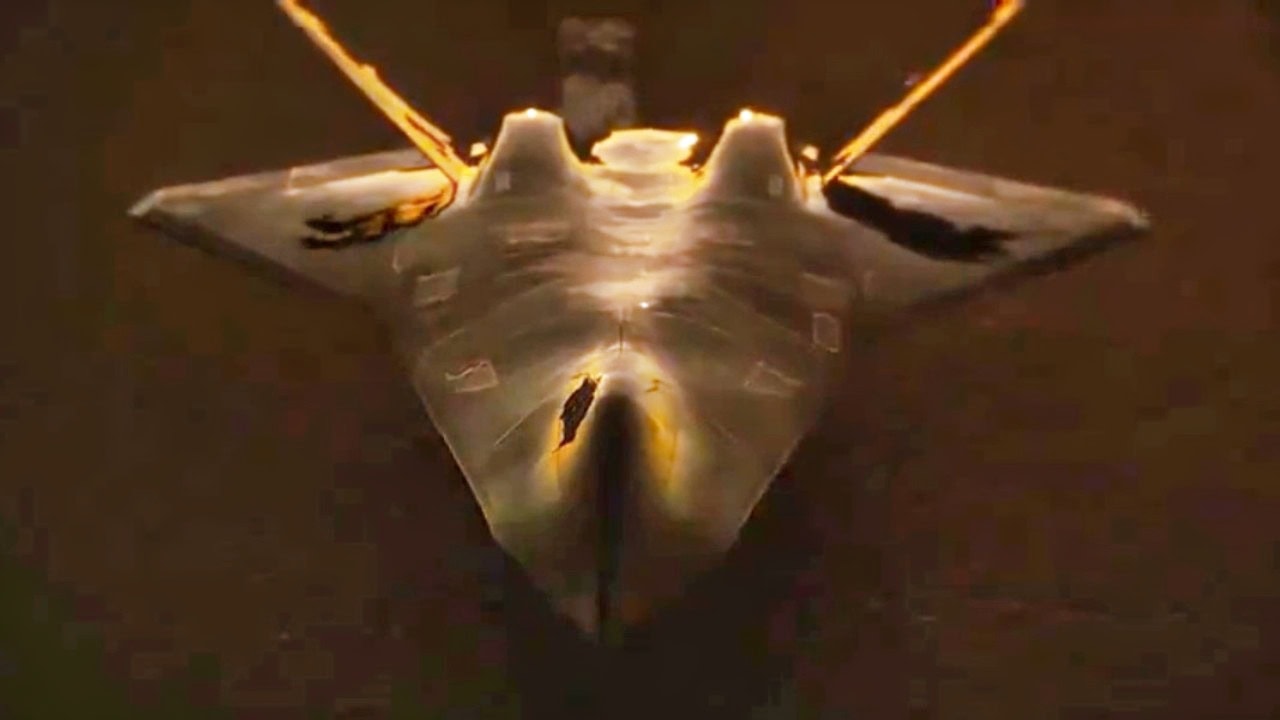
F-47 Fighter from Boeing. Image Credit: U.S. Air Force Screenshot.
What Happens Next: NGAD and B-21 Raider Coming?
Let’s not panic yet. American pilots are the best in the world. No Air Force has such realistic training, advanced tutelage, and combat experience.
The airplanes already in the service can be air-dominant if given the chance. But the Air Force is constrained by budgetary limitations and will have to pick and choose the most cost-effective future.
The F-47 NGAD, B-21 Raider, F-22 Super, and F-35 Ferrari, plus the B-52J, would be a totally formidable group of airplanes, but acquiring them all is a bridge too far. Keep in mind that the overall order of battle is intact. The U.S. military is as strong as ever, and the Air Force is still a major contributor to executing U.S. defense strategy. The amount of money that needs to be invested is significant, and don’t forget that these programs can be delayed by cost creep, too.
Give the credit to the Air Force for having an ambitious wish list to answer the rise of great powers around the world, but keep an eye on domestic political pressures and budget issues that could see some of these programs curtailed or even cancelled. The “new look” Air Force is not entirely assured, but it will be as formidable as ever, even with a limited number of new airplanes and upgrades.
About the Author: Brent M. Eastwood
Author of now over 3,000 articles on defense issues, Brent M. Eastwood, PhD is the author of Don’t Turn Your Back On the World: a Conservative Foreign Policy and Humans, Machines, and Data: Future Trends in Warfare plus two other books. Brent was the founder and CEO of a tech firm that predicted world events using artificial intelligence. He served as a legislative fellow for US Senator Tim Scott and advised the senator on defense and foreign policy issues. He has taught at American University, George Washington University, and George Mason University. Brent is a former US Army Infantry officer. He can be followed on X @BMEastwood.