
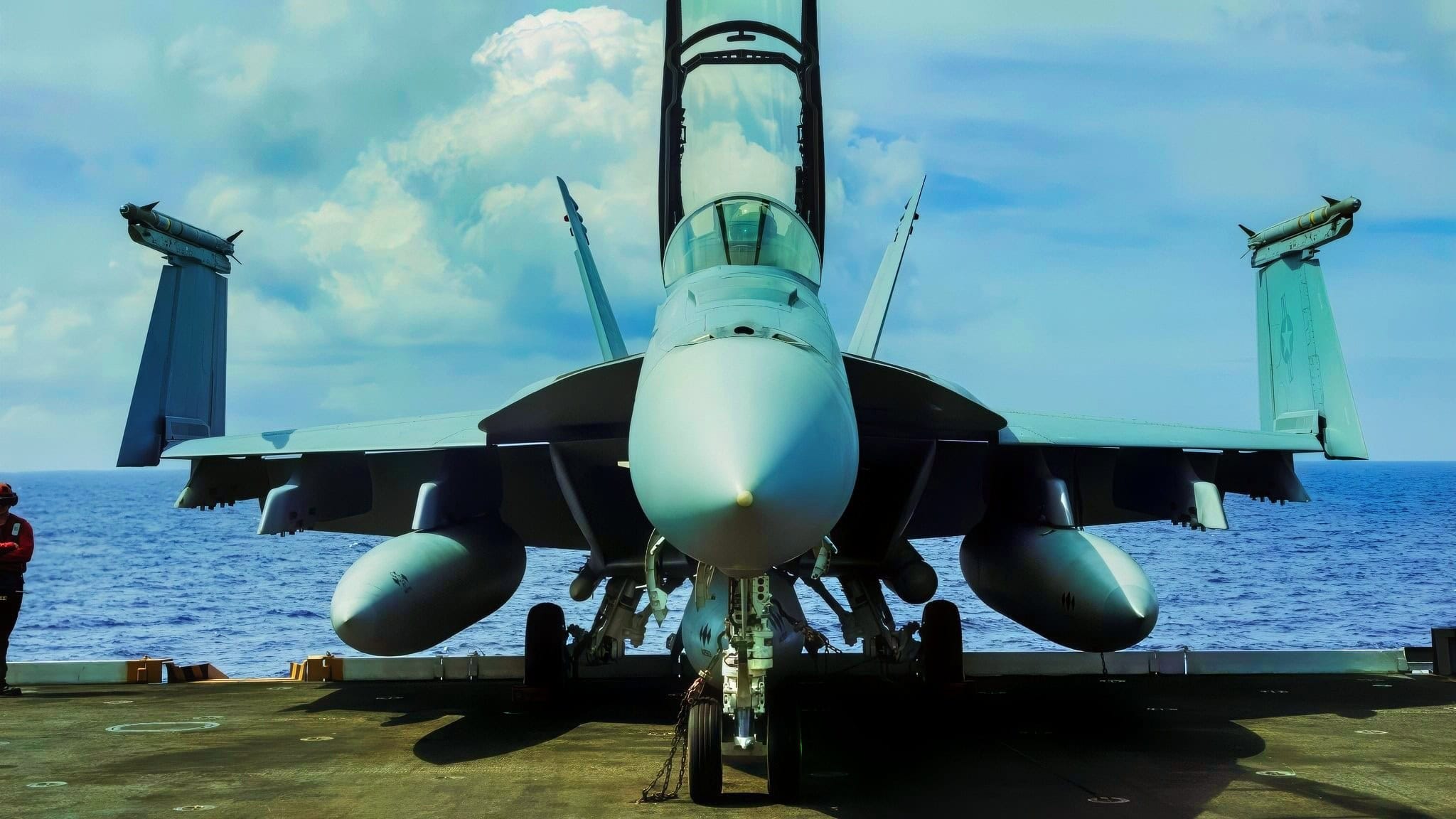
Key Points and Summary – Dr. Brent M. Eastwood argues the U.S. Navy cannot afford to retire USS Nimitz in 2026, especially with delays to the new USS John F. Kennedy pushing delivery to 2027.
-Dropping to 10 carriers as China fields “carrier-killer” missiles and expands its fleet would strain U.S. commitments in the Indo-Pacific, Middle East, Europe, and now the Caribbean, where USS Gerald R. Ford is signaling against Venezuela.
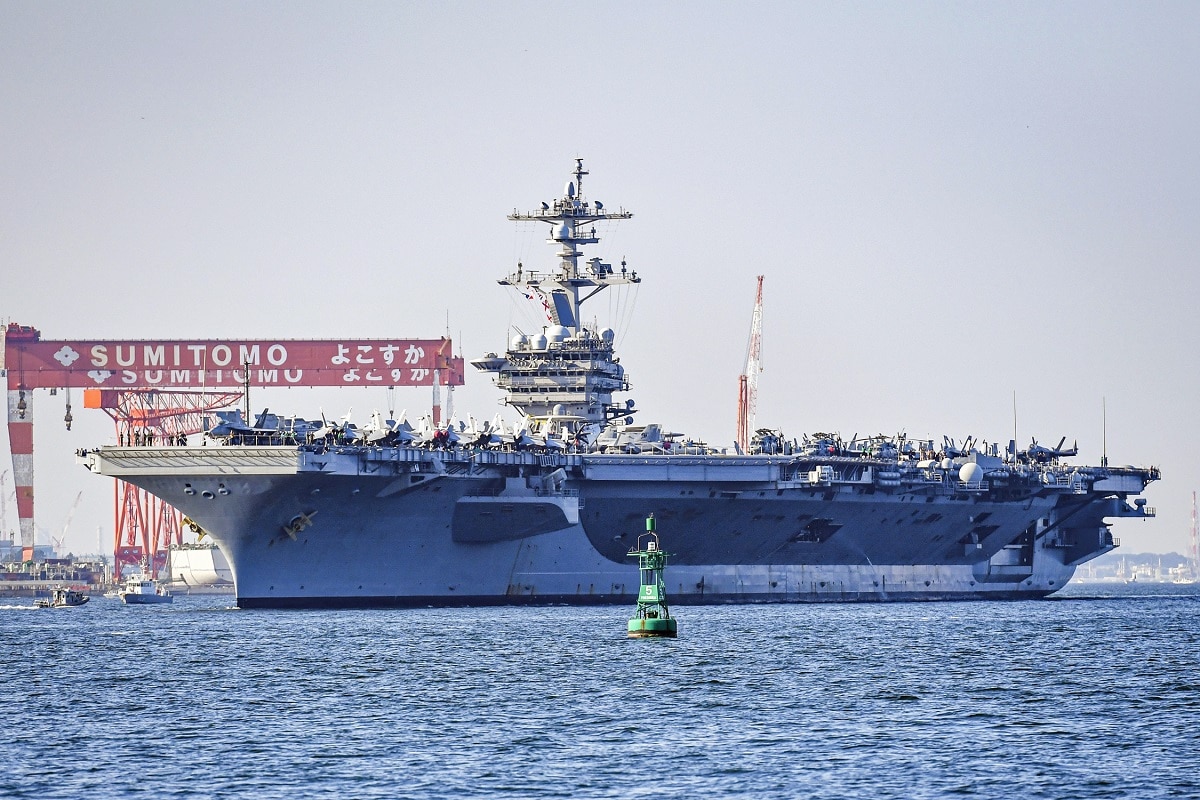
YOKOSUKA, Japan (Aug. 28, 2021) — The Nimitz-class aircraft carrier, USS Carl Vinson (CVN 70), navigates Tokyo Bay on the way to Commander, Fleet Activities Yokosuka for a scheduled port visit. Carl Vinson, homeported in San Diego, Calif., and the accompanying Carrier Strike Group (CSG 1), are on a rotational deployment in the U.S. 7th Fleet area of operations to enhance interoperability with partners and serve as a ready-response force in support of a free and open Indo-Pacific region. (U.S. Navy photo by Mass Communication Specialist 1st Class Ian Cotter)
-With multiple carriers tied up in maintenance and others pinned to hotspots from the Red Sea to the Arctic, Eastwood contends Nimitz should be kept on for at least two more years to prevent a dangerous carrier shortfall.
Retiring Navy Aircraft Carrier USS Nimitz in 2026 Would Be a Huge Mistake
Why not keep the USS Nimitz aircraft carrier on active duty for another one to two years instead of retiring it in 2026?
If the Nimitz were to be decommissioned as planned, it would leave the U.S. Navy with one less carrier to mitigate hot spots around the globe.
The second Gerald R. Ford-class supercarrier, the USS John F. Kennedy, is going to be delayed for at least another two years before it’s delivered in 2027.
That would leave the United States with only 10 carriers instead of 11.
So taking the Nimitz out of action is not a good decision. It is definitely long in the tooth at over 50 years of service.
And admittedly, this ship is a maintenance hog and expensive to keep afloat.
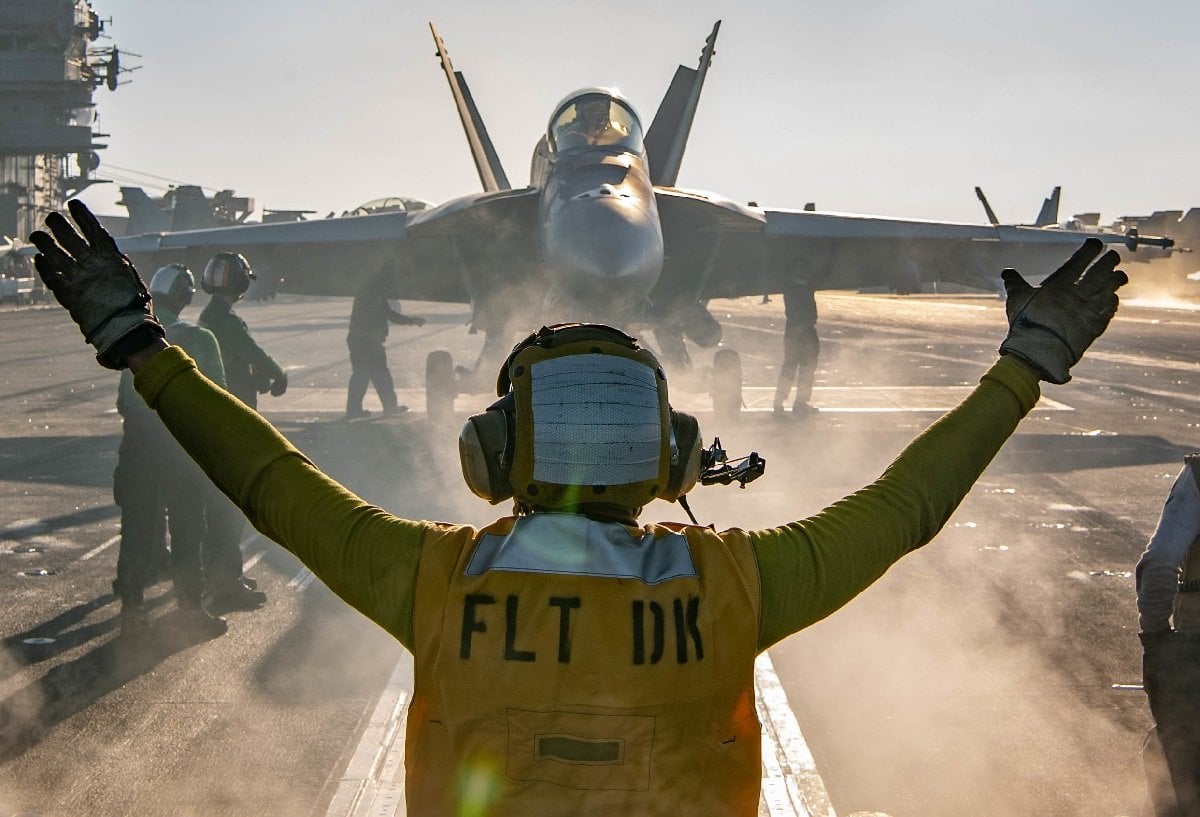
ARABIAN SEA (Jan. 17, 2021) A Sailor directs an F/A-18E Super Hornet from the “Kestrels” of Strike Fighter Squadron (VFA) 137 on the flight deck of the aircraft carrier USS Nimitz (CVN 68) during flight operations. Nimitz, the flagship of Nimitz Carrier Strike Group, is deployed to the U.S. 5th Fleet area of operations to ensure maritime stability and security in the Central Region, connecting the Mediterranean and Pacific through the western Indian Ocean and three critical chokepoints to the free flow of global commerce. (U.S. Navy photo by Mass Communication Specialist 3rd Class Charles DeParlier) 210117-N-JX182-1128.
But carriers are needed to address hot spots in regions around the world, such as the Middle East, East Asia, and Europe.
Now the USS Gerald R. Ford is in the Western Hemisphere to intimidate Venezuela. One carrier will be in the Caribbean for an extended period.
That leaves one fewer flat-top available to respond to crises in other combatant commands.
Quick Arithmetic Shows That the Navy Needs Every Aircraft Carrier in the Fleet
The math just doesn’t look right. Two to three carriers are often out of action due to repair work and Refueling and Complex Overhaul (RCOH).
At least two must remain in the Indo-Pacific. One would be in Oceania.
Two would be needed in Europe and the North Atlantic.
Two require service in the Middle East. One must be on reserve for a flexible response. That adds up to 10 or 11 carriers.
Take the Nimitz off the table, and the numbers do not look suitable for the U.S. Navy.
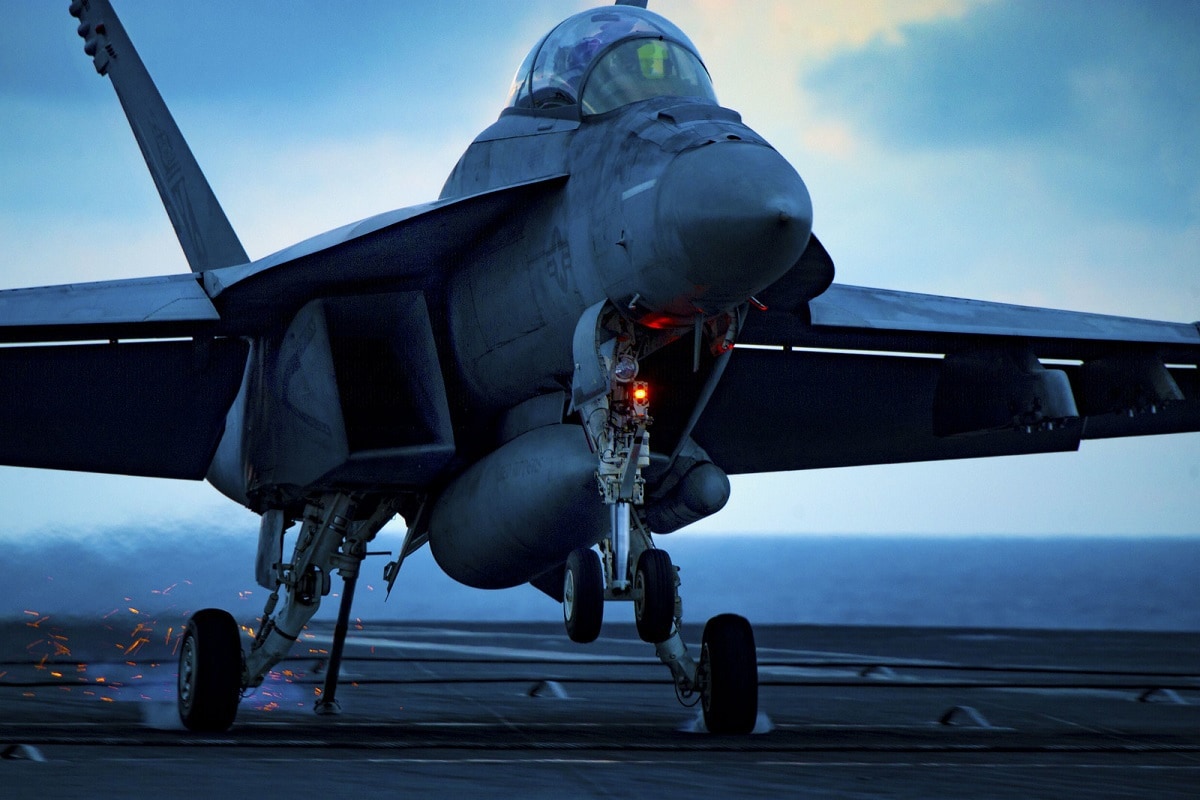
ATLANTIC OCEAN (July 4, 2018) An F/A-18F Super Hornet assigned to the “Red Rippers” of Strike Fighter Squadron (VFA) 11 sits on the flight deck of the Nimitz-class aircraft carrier USS Harry S. Truman (CVN 75). Harry S. Truman is deployed as part of an ongoing rotation of U.S. forces supporting maritime security operations in international waters around the globe. (U.S. Navy photo by Mass Communication Specialist 3rd Class Rebekah A. Watkins/Released) 180704-N-UJ486-0313.
The New USS John F. Kennedy Ford-class Is Not Ready
The maritime branch should absorb the maintenance costs and extend the service life of the USS Nimitz for the next two years, if possible, until John F. Kennedy is ready.
And what if the Kennedy needs more than two years? The culprit is the problematic Advanced Arresting Gear and the Advanced Weapons Elevato,r which need time-sucking work. There could be more schedule slips. This is a problem the Naval battle planners must keep in mind as they devise a strategy for carrier utilization.
China’s Assassin’s Mace Gambit Can Sink a Carrier
The Indo-Pacific is the biggest concern as China has three active carriers and one in development that will likely be nuclear-powered. China has its “Assassin’s Mace” strategy that emphasizes carrier-killing missiles – some that can serve as hypersonic weapons.
Plus, an attack from a Chinese submarine or airplane could even sink one of America’s vaunted flat-tops.
This is where my idea of having a “flex” carrier in reserve would be all-important for steam with its strike group to East Asia in relief.
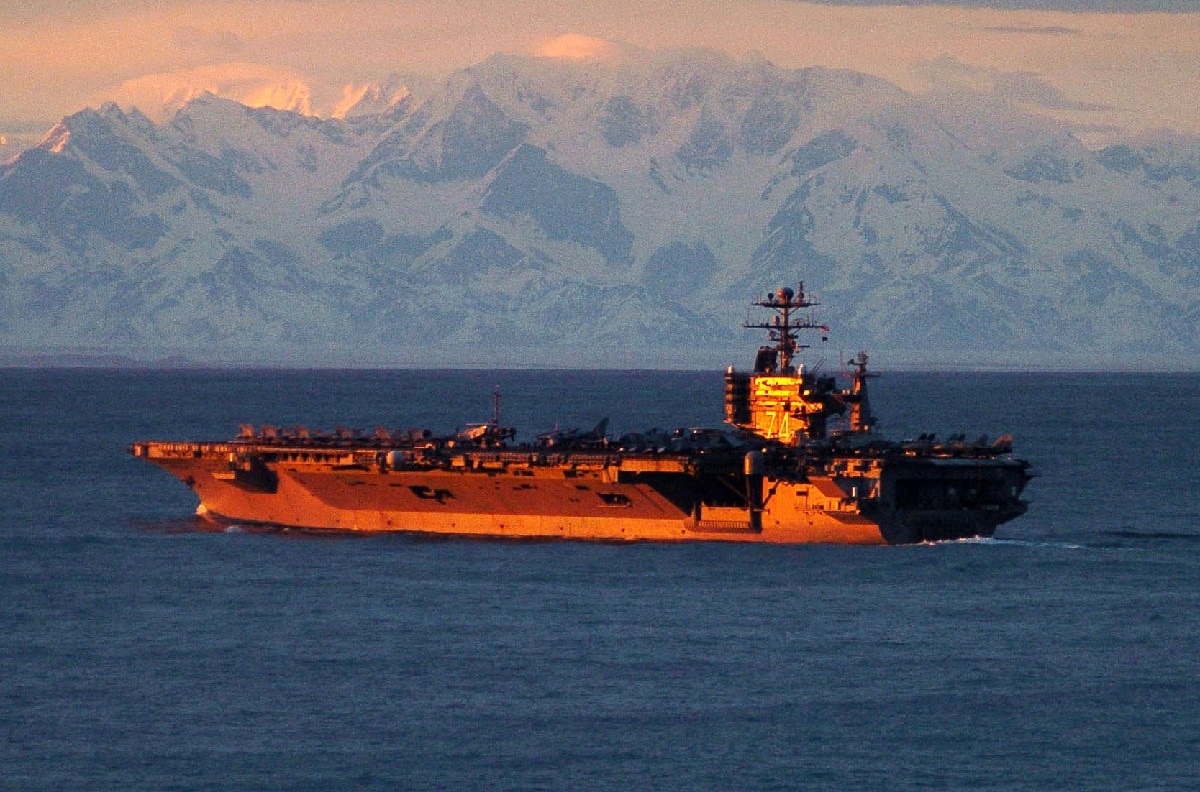
Gulf of Alaska (Jun. 12, 2004) – The Nimitz-class aircraft carrier USS John C. Stennis (CVN 74) steams near the snow capped mountains of the Alaskan coastline during the late Alaskan sunset. Stennis and embarked Carrier Air Wing Fourteen (CVW-14) have just completed Exercise Northern Edge, during a scheduled deployment. U.S. Navy photo by Photographer’s Mate 3rd Class Mark J. Rebilas (RELEASED)
Show of Force Against Venezuela
With the Nimitz out of the equation, the Navy cannot meet all of its obligations, especially if the Chinese damage or sink a carrier. Meanwhile, using carriers for full-time deployments in the Caribbean is a new development. The Gerald R. Ford just sent a sortie of twoF/A-18E/F Super Hornets to patrol the Gulf of Venezuela near Maracaibo.
The Super Hornets reportedly loitered in the area for about 40 minutes. The situation is getting serious and will require an extended carrier presence near Venezuela if President Donald Trump elects to instigate regime change against Caracas.
The new National Security Strategy from the White House calls for the United States to dominate the Western Hemisphere.
This means a carrier will be operating near South America for the coming months. That keeps the Gerald R. Ford busy into 2026 when the Nimitz is scheduled for retirement.
Asymmetric Warfare From Terrorists in the Middle East
We know that the Iranian-backed Houthis terrorists were a pain in Yemen. The militants fired numerous missiles and drones at two different U.S. carrier strike groups in the Red Sea and the Gulf of Aden.
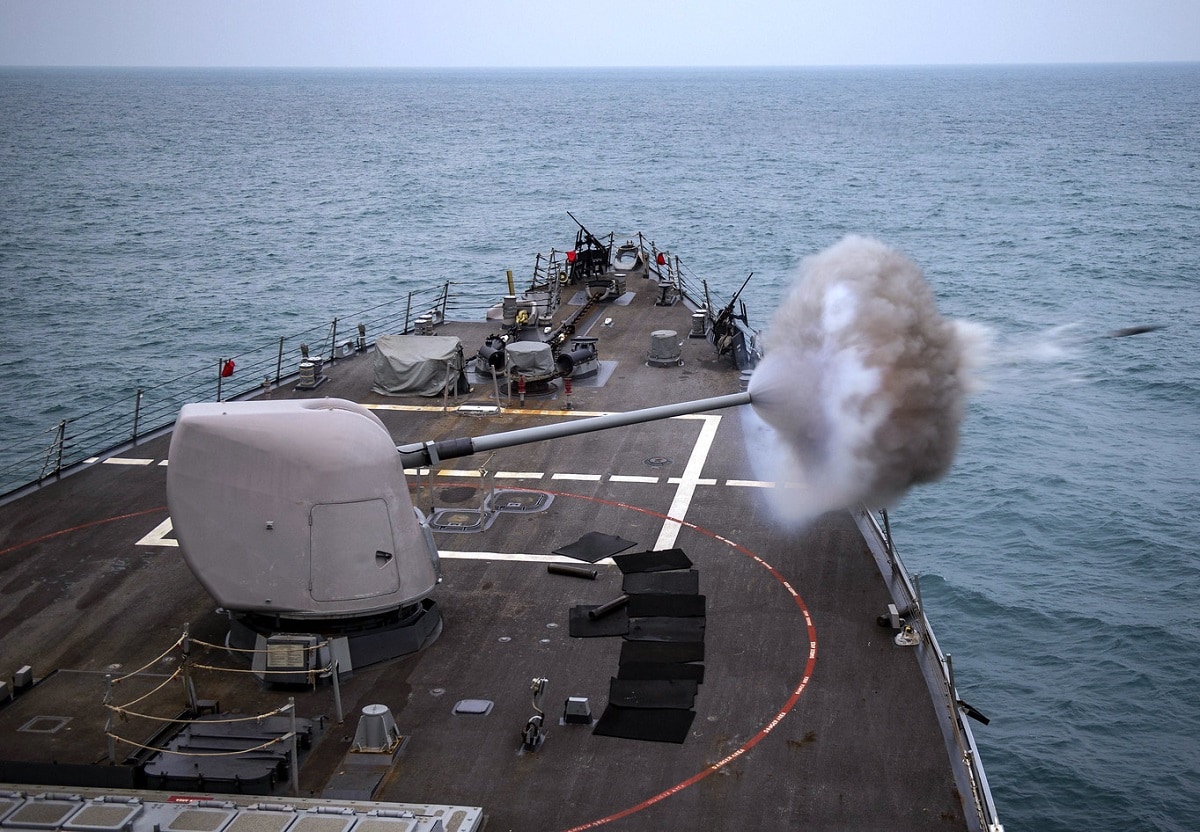
ARABIAN GULF (Dec. 18, 2020) The guided-missile destroyer USS John Paul Jones (DDG 53) fires its Mark 45 5-inch gun during a live-fire exercise in the Arabian Gulf, Dec. 18, 2020. John Paul Jones is part of the Nimitz Carrier Strike Group and is deployed to the U.S. 5th Fleet area of operations in support of naval operations to ensure maritime stability and security in the Central Region, connecting the Mediterranean and the Pacific through the western Indian Ocean and three strategic choke points critical to the free flow of global commerce. (U.S. Navy photo by Mass Communication Specialist 3rd Class Aja Bleu Jackson) 201218-N-XG173-1132
This was a dangerous group of desperados who could have damaged a carrier with their weapons.
The Navy did an excellent job avoiding the attacks despite some close calls. But the battle showed that a ragtag group of fighters can menace a carrier strike group. That likely means two carriers in the Middle East for the foreseeable future.
Israel needs assistance, too. The Israeli-Gaza truce is tenuous. There could also be another attack by Israel or the United States on Israeli nuclear infrastructure. A carrier is needed in the Mediterranean to ensure the Navy creates a high level of deterrence in the area of operations.
The Americans must also lead NATO navies to face down the Russian Navy, and that could even include Russian warships transgressing into the Arctic that would require carriers to cover that region, plus Europe.
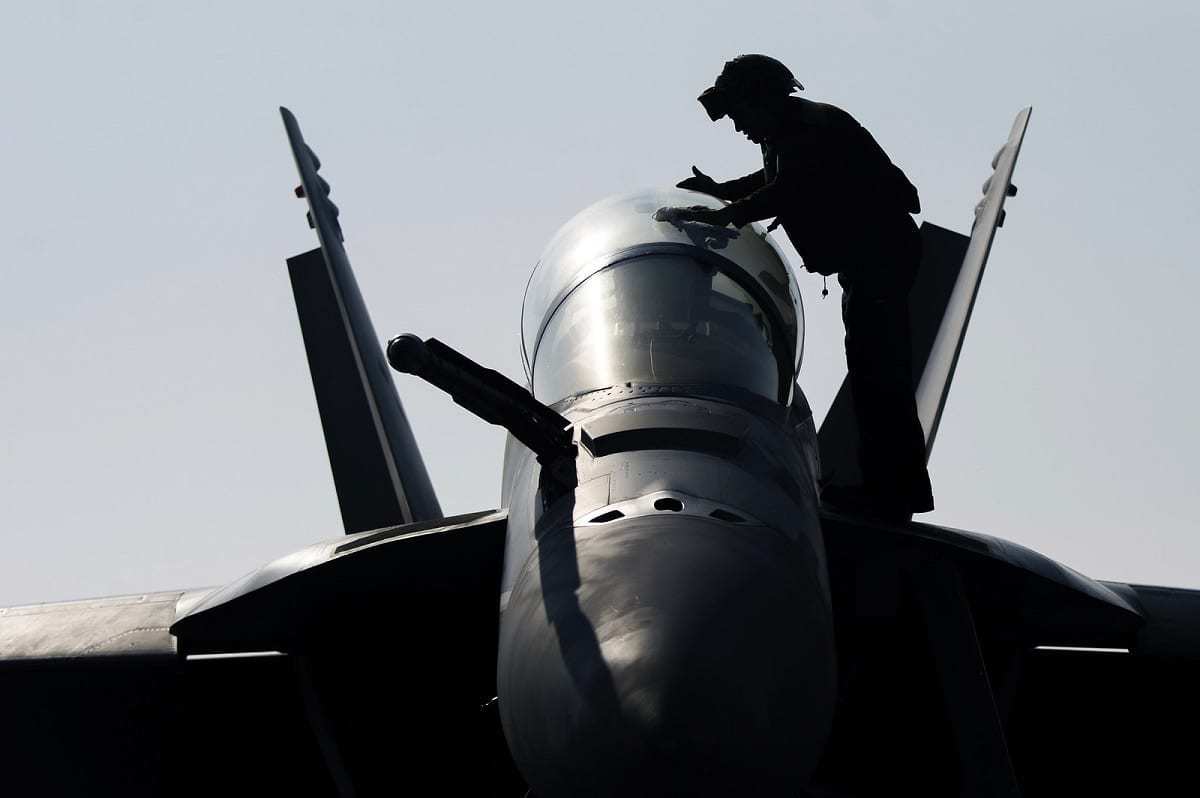
ADRIATIC SEA (June 2, 2018) Airman Louis Calderon wipes down the window of an F/A-18F Super Hornet assigned to the “Fighting Checkmates” of Strike Fighter Squadron (VFA) 211 on the flight deck aboard the Nimitz-class aircraft carrier USS Harry S. Truman (CVN 75). Harry S. Truman is operating in the U.S. 6th Fleet area of responsibility in support of maritime security operations alongside allies. (U.S. Navy photo by Mass Communication Specialist 3rd Class Rebekah A. Watkins/Released)180602-N-UJ486-0001
Even if there is a ceasefire in the Russo-Ukrainian war, fighter jets from U.S. carriers would be needed to enforce a no-fly zone. This could mean a carrier deployment to the Black Sea.
The geopolitical threat environment is just too much for the Navy’s flat-tops without the Nimitz. The solution is to keep it in business until the John F. Kennedy can replace it. This will require a significant investment in time and money, but the resources expended will be worth it. More than 50 years is a long service life, but surely the Navy can extend Nimitz’s excellent service until 2027.
About the Author: Brent M. Eastwood
Author of now over 3,000 articles on defense issues, Brent M. Eastwood, PhD is the author of Don’t Turn Your Back On the World: a Conservative Foreign Policy and Humans, Machines, and Data: Future Trends in Warfare plus two other books. Brent was the founder and CEO of a tech firm that predicted world events using artificial intelligence. He served as a legislative fellow for US Senator Tim Scott and advised the senator on defense and foreign policy issues. He has taught at American University, George Washington University, and George Mason University. Brent is a former US Army Infantry officer. He can be followed on X @BMEastwood.