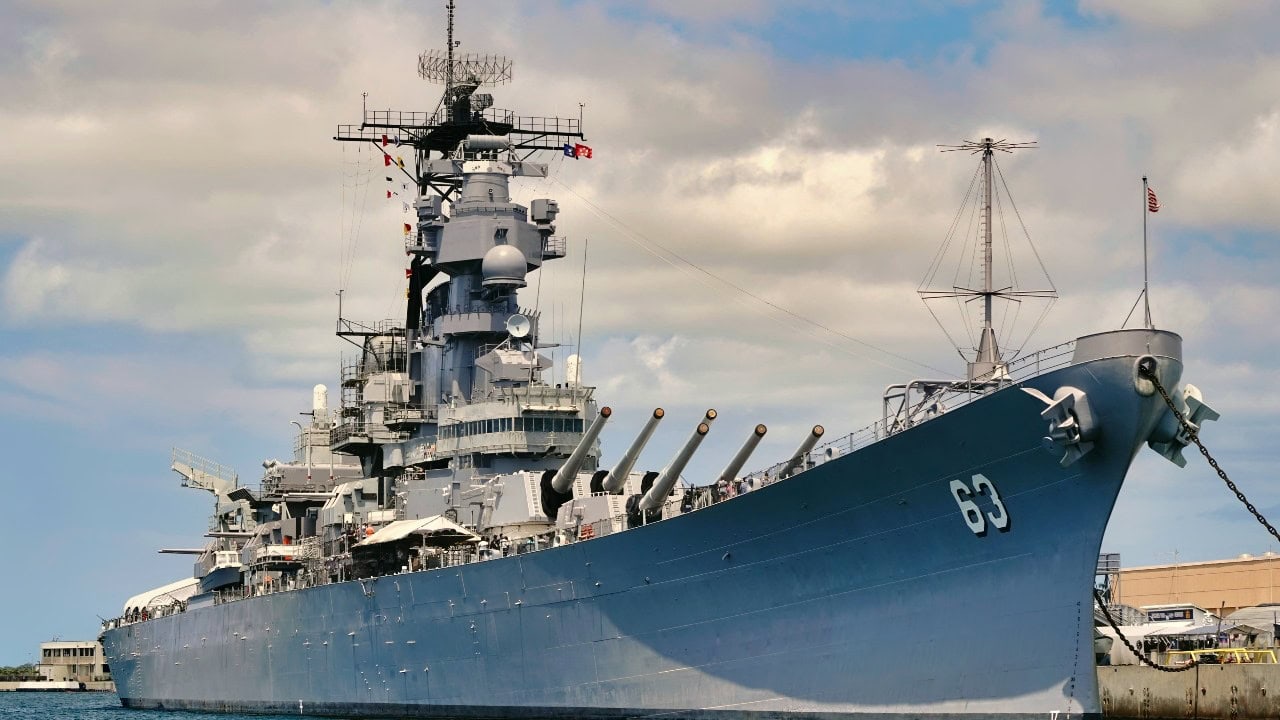
Synopsis: A proposed “Trump-class” battleship concept argues the Navy needs more than exquisite sensors—it needs massed, networked firepower for a Pacific fight.
-With the fleet relying heavily on Arleigh Burke destroyers and facing a larger PLA Navy by hull count, advocates say a modern battleship could carry cruiser-like command-and-control plus a large vertical-launch missile load.
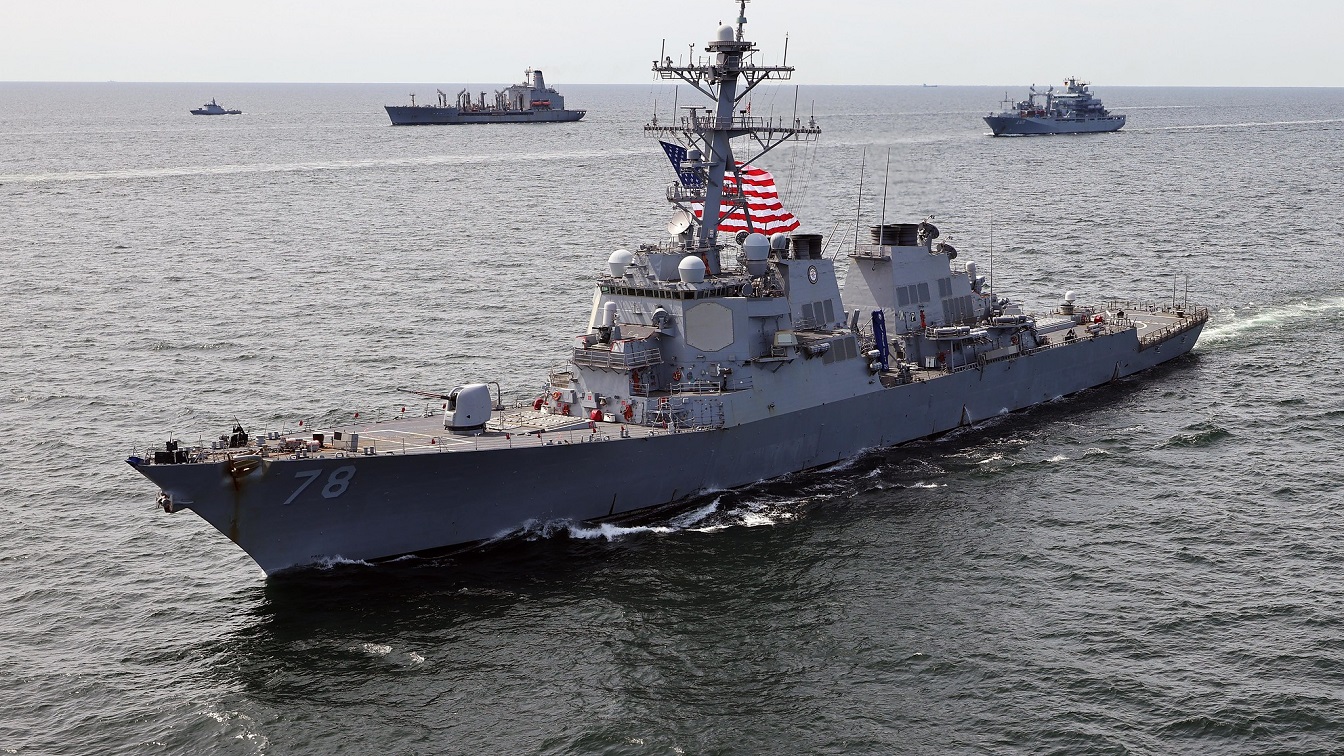
BALTIC SEA (June 6, 2022) The Arleigh Burke-class guided-missile destroyer USS Porter (DDG 78) sails in formation in the Baltic Sea, June 6, 2022, during exercise BALTOPS22. BALTOPS 22 is the premier maritime-focused exercise in the Baltic Region. The exercise, led by U.S. Naval Forces Europe-Africa, and executed by Naval Striking and Support Forces NATO, provides a unique training opportunity to strengthen combined response capabilities critical to preserving freedom of navigation and security in the Baltic Sea. (U.S. Navy photo) 220606-N-NO901-3008
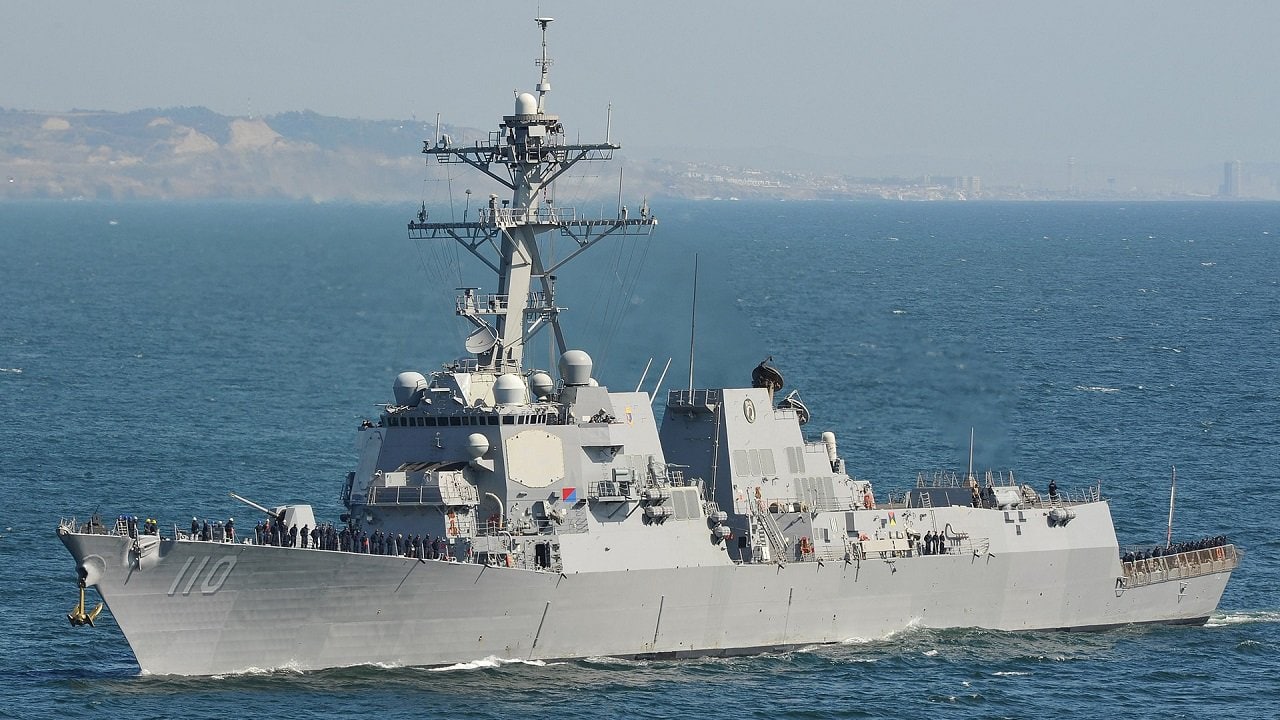
PACIFIC OCEAN (May 4, 2015) – The guided-missile destroyer USS William P. Lawrence (DDG 110) steams toward San Diego Harbor. (U.S. Navy photo by Mass Communication Specialist 3rd Class Nathan Burke/Released)
-Pair that with upgraded deck guns, emerging directed-energy or electronic-warfare systems, and Aegis-grade networking, and the ship becomes a mobile strike magazine and battle manager.
-The idea is deterrence by volume: more shots, longer reach, and tighter kill-chain integration at sea when fights get messy fast.
Why a Trump-Class Battleship Could Matter in a Pacific Fight
The new Trump-class battleships could add unique or unprecedented tactical value to the US Navy by addressing current fleet deficits, particularly in the ability to mass firepower and across wide combat formations.
The US Navy operates a substantial fleet of roughly 75 Arleigh Burke-class destroyers and only about eight or nine cruisers. Hence, the service currently operates with a fleet-size deficit compared to the People’s Liberation Army-Navy.
The operative question related to this dynamic is whether more “mass” or “firepower” would be needed in a potential conflict with China.
Even if US Navy warships, such as its Flight IIA DDG51s and fast-emerging high-tech Flight III DDG 51s, are superior in the realm of sensing and lethality, the US Navy will still need to “mass” maritime firepower in a war with China – given the vast expanse of the Pacific, size of China’s Navy and “range” along its extended coastline.
100 Vertical Launch Systems
DDG 51 destroyers operate with as many as 90-96 Vertical Launch Systems capable of firing Tomahawk missiles and interceptor weapons such as an SM-3 Block IIA or an SM-6.
A maritime formation of several destroyers would then be in position to attack large areas across many miles, particularly given the 900-mile range of a Tomahawk missile and its ability to adjust course in flight to hit moving targets.
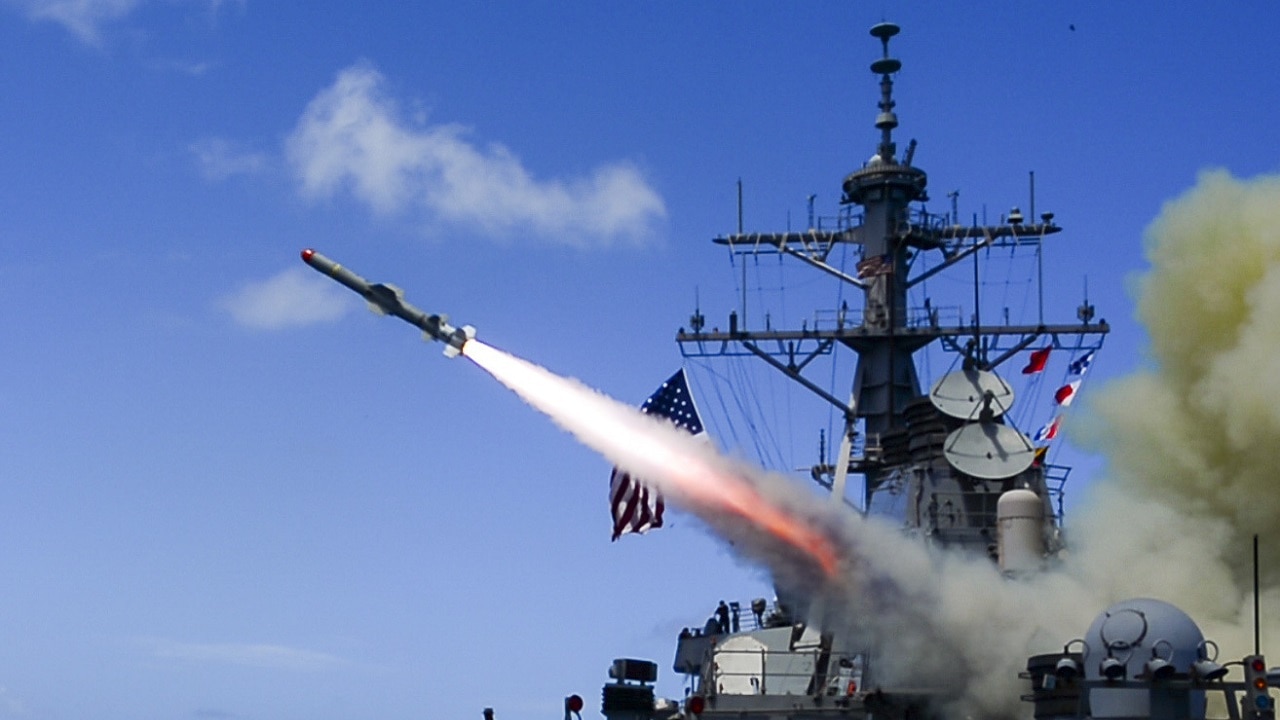
WATERS NEAR GUAM (Mar. 10, 2016) – Arleigh Burke-class guided missile destroyer USS Fitzgerald (DDG 62) conducts a live fire of a harpoon missile during Multi-Sail 2016. Multi Sail is a bilateral training exercise aimed at interoperability between the U.S. and Japanese forces. This exercise builds interoperability and benefits from realistic, shared training, enhancing our ability to work together to confront any contingency. (U.S. Navy photo by Mass Communication Specialist 3rd Class Eric Coffer/Released)
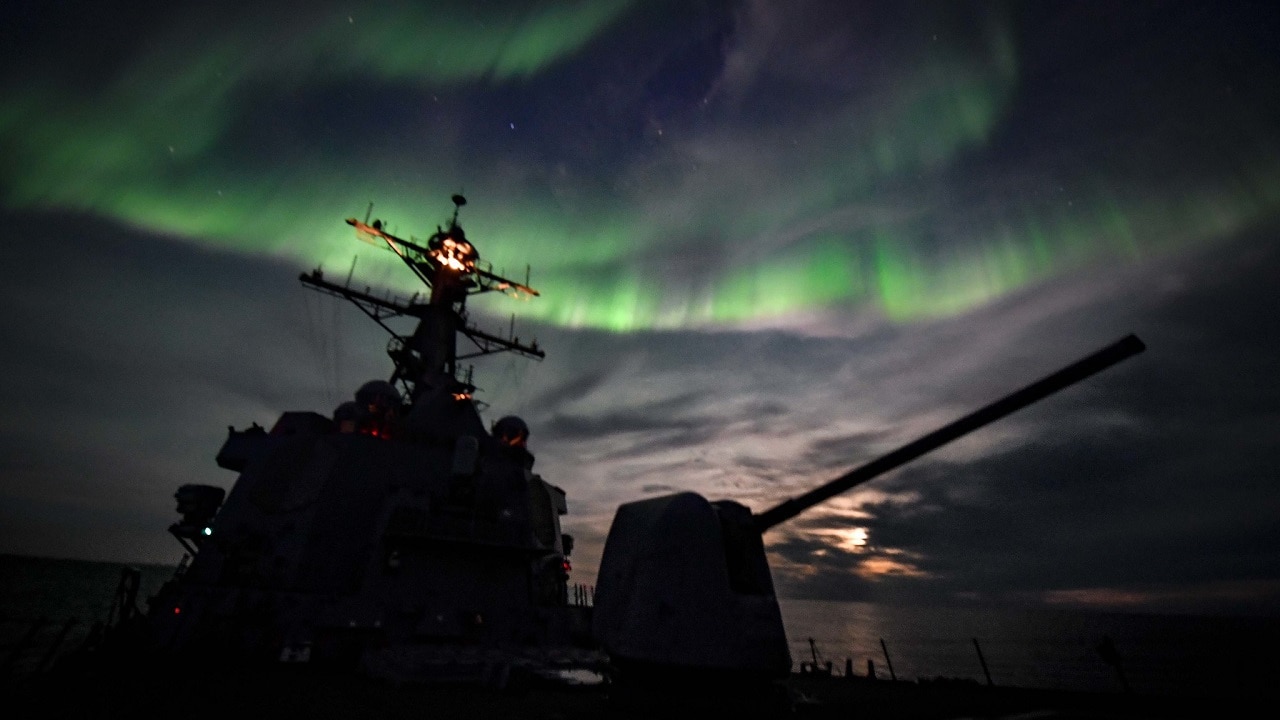
ARCTIC CIRCLE (Sept. 5, 2017) The Arleigh Burke-class guided-missile destroyer USS Oscar Austin (DDG 79) transits the Arctic Circle Sept. 5, 2017. Oscar Austin is on a routine deployment supporting U.S. national security interests in Europe, and increasing theater security cooperation and forward naval presence in the U.S. 6th Fleet area of operations.
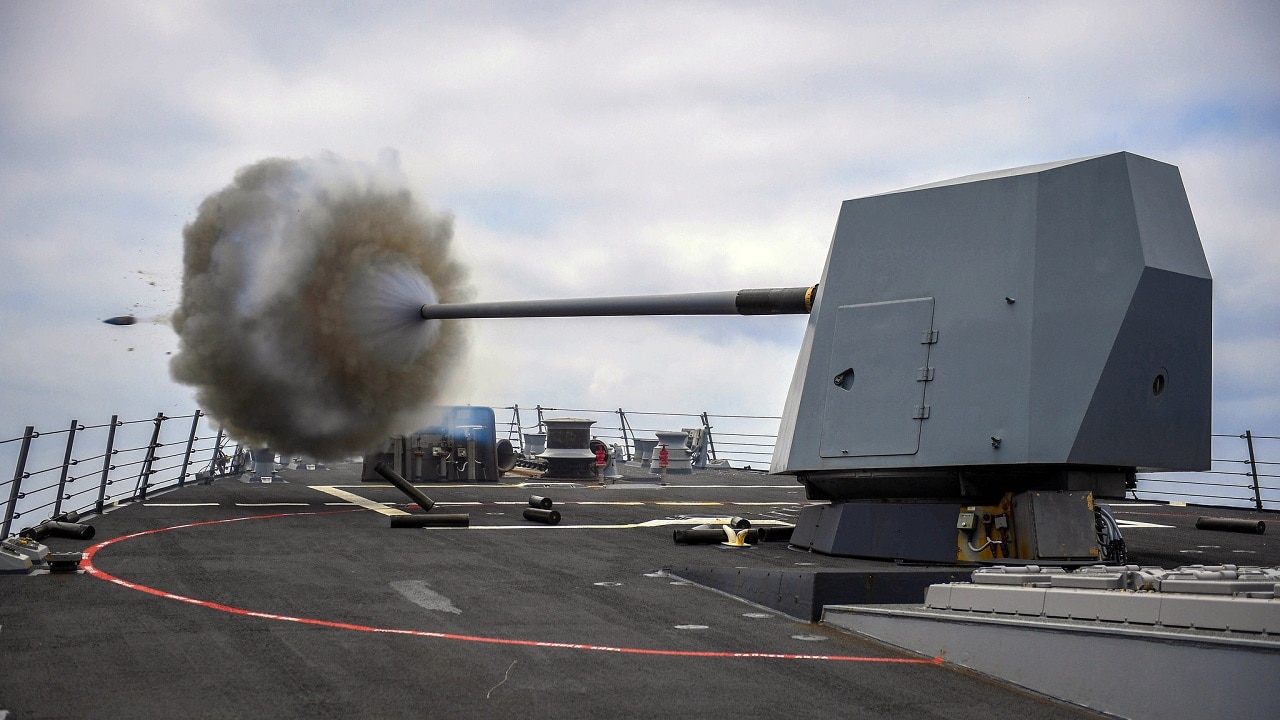
ATLANTIC OCEAN (June 30, 2018) The Arleigh Burke-class guided-missile destroyer USS Bainbridge (DDG 96) fires its Mark 45 five-inch gun during a live-fire exercise. Bainbridge, homeported at Naval Station Norfolk, is conducting naval operations in the U.S. 6th Fleet area of operations in support of U.S. national security interests in Europe and Africa. (U.S. Navy photo by Mass Communication Specialist 1st Class Theron J. Godbold/Released)180630-N-FP878-566
Additional firepower could also be added by submarines; however, a new class of heavily armed battleships would not only supplement firepower requirements but also integrate weapons and fire control with new levels of precision, range, and lethality.
A large battleship could mass or concentrate precision strikes on a large, high-value target and potentially integrate new generations of surface-launched weapons as they emerge.
These new battleships could incorporate as many as 100 VLS systems and a new generation of emerging weapons to include lasers, high-powered microwave, electronic warfare or even rail guns.
Deck-Mounted Guns
In this realm of weapons, new battleships could address the needed improvement across the Navy’s armament of deck-mounted guns.
In recent years, the service has experimented with new, longer-range precision rounds for its 5-inch guns and even explored the possibility of a ship-fired Naval Excalibur variant capable of firing GPS-guided 155mm rounds from the deck of a warship.
New battleships could therefore not only massively increase surface-to-surface and surface-to-land firepower, but also provide the technical infrastructure sufficient to integrate new generations of guns and ammunition in the coming years.
The concept of operation seems quite clear, given that the US Navy would simply not want to be “out-gunned” in a maritime war engagement against China near Taiwan or in the South China Sea.
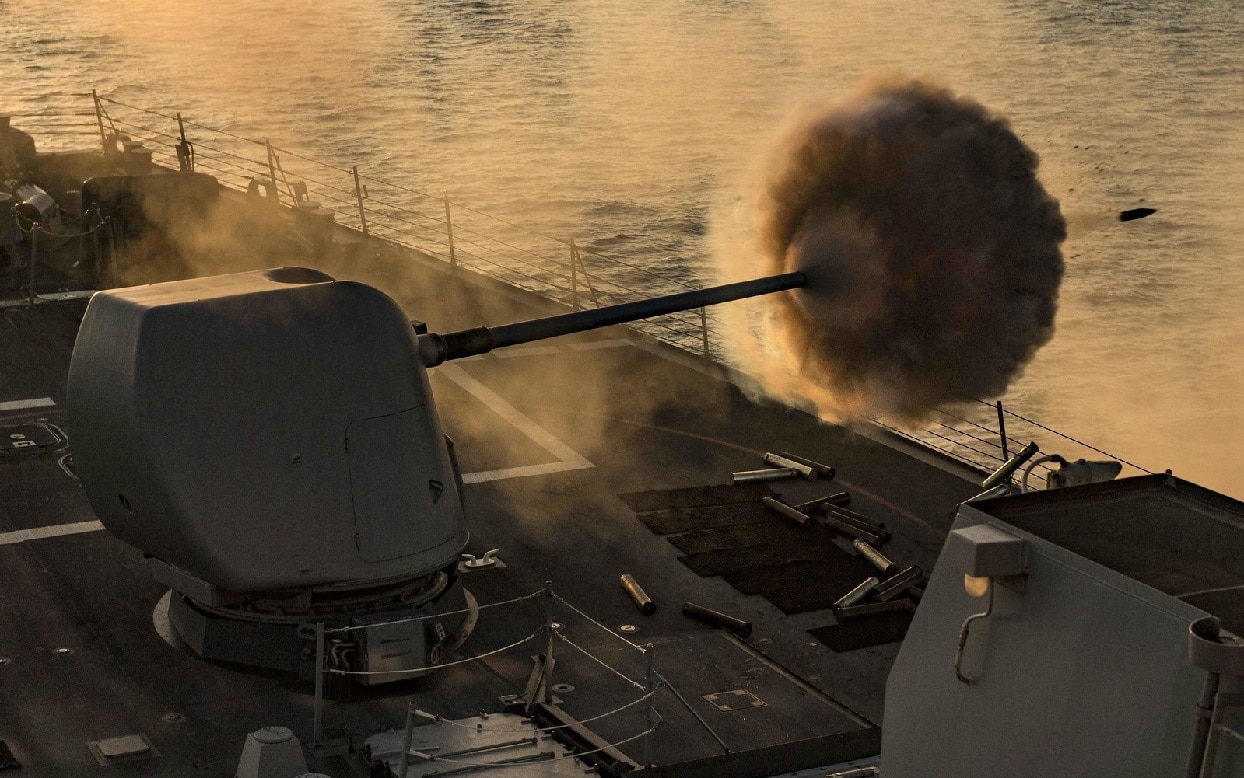
MEDITERRANEAN SEA (Sept. 24, 2018) The Arleigh Burke-class guided-missile destroyer USS Carney (DDG 64) fires its 5-inch gun during a live-fire exercise, Sept. 24, 2018. Carney, forward-deployed to Rota, Spain, is on its fifth patrol in the U.S. 6th Fleet area of operations in support of regional allies and partners as well as U.S. national security interests in Europe and Africa.

SOUTH CHINA SEA (Oct. 19, 2021) The Arleigh Burke-class guided-missile destroyer USS Milius (DDG 69), rear, and the Japan Maritime Self-Defense Force (JMSDF) Akizuki-class destroyer JS Akizuki (DD 115) transit the South China Sea in formation. Milius is assigned to Commander, Task Force (CTF) 71/Destroyer Squadron (DESRON) 15, the Navy’s largest forward-deployed DESRON and the U.S. 7th Fleet’s principal surface force. (U.S. Navy photo by Mass Communication Specialist 3rd Class Christine Montgomery) 211019-N-TC847-1020
Networking
The successful execution of improved targeting and firepower relies heavily on effective networking, an area where a new class of battleships might be well-positioned to excel.
They could be integrated with the most modern versions of Aegis Combat Systems and combine land, surface, air, and space networking to share target-track information, cue drones or forward-operating aircraft to attack specific identified threats, and relay information across the horizon, thereby improving targeting for interceptor missiles.
The Navy’s SM-3 Block IIA, for example, is capable of intercepting ICBMs as they re-enter Earth’s atmosphere in the terminal phase; a next-generation warship could improve connectivity with satellites and help enhance missile defense targeting and precision.
The new battleships could bring new levels of ocean-based multi-domain command and control.
About the Author: Kris Osborn
Kris Osborn is the President of Warrior Maven – Center for Military Modernization. Osborn previously served at the Pentagon as a highly qualified expert in the Office of the Assistant Secretary of the Army—Acquisition, Logistics & Technology. Osborn has also worked as an anchor and on-air military specialist at national TV networks. He has appeared as a guest military expert on Fox News, MSNBC, The Military Channel, and The History Channel. He also has a Master’s Degree in Comparative Literature from Columbia University.