
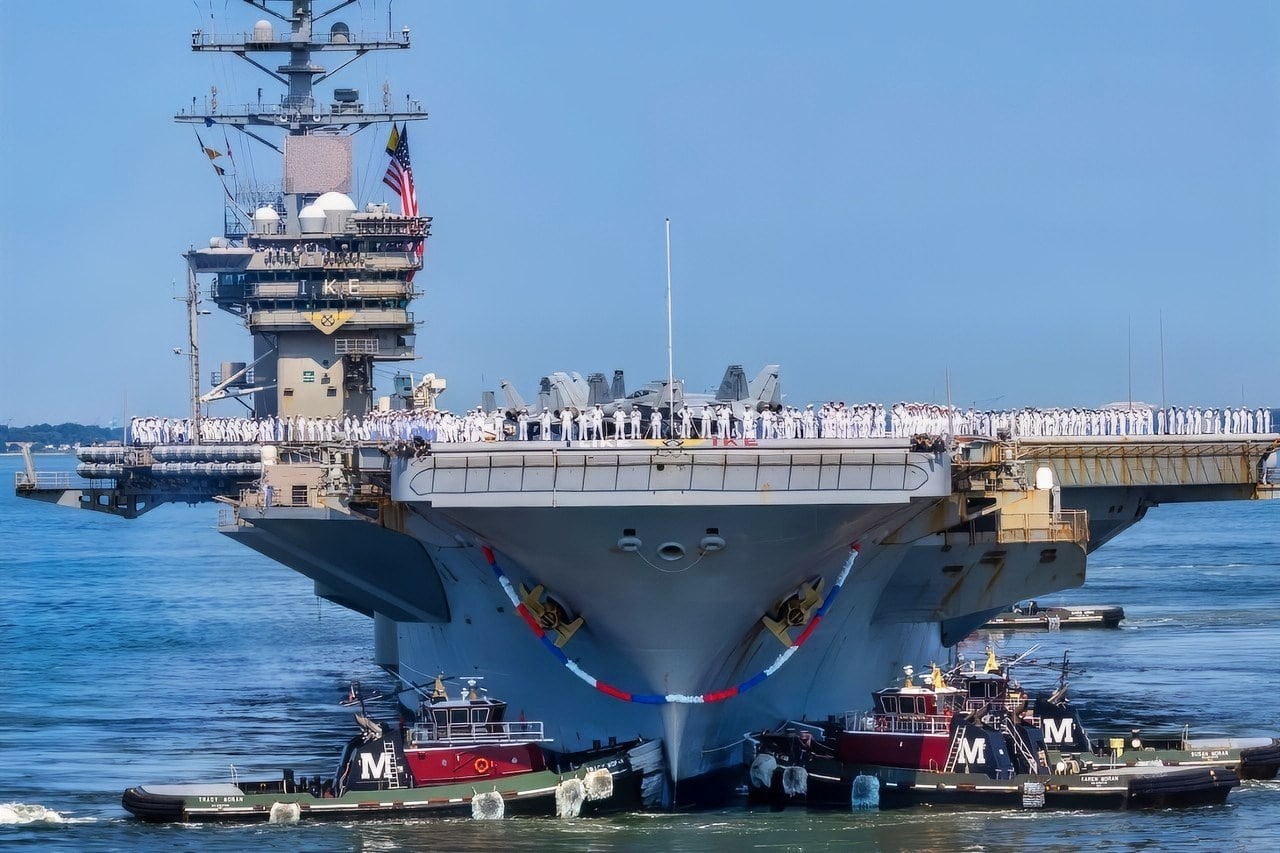
World War III in 2026? Summary and Key Points: With restraints on great-power behavior weakening, 2026 could bring sharper escalation risks across five arenas.
-Greenland introduces the unthinkable prospect of U.S.-Europe friction over Arctic strategy and sovereignty.
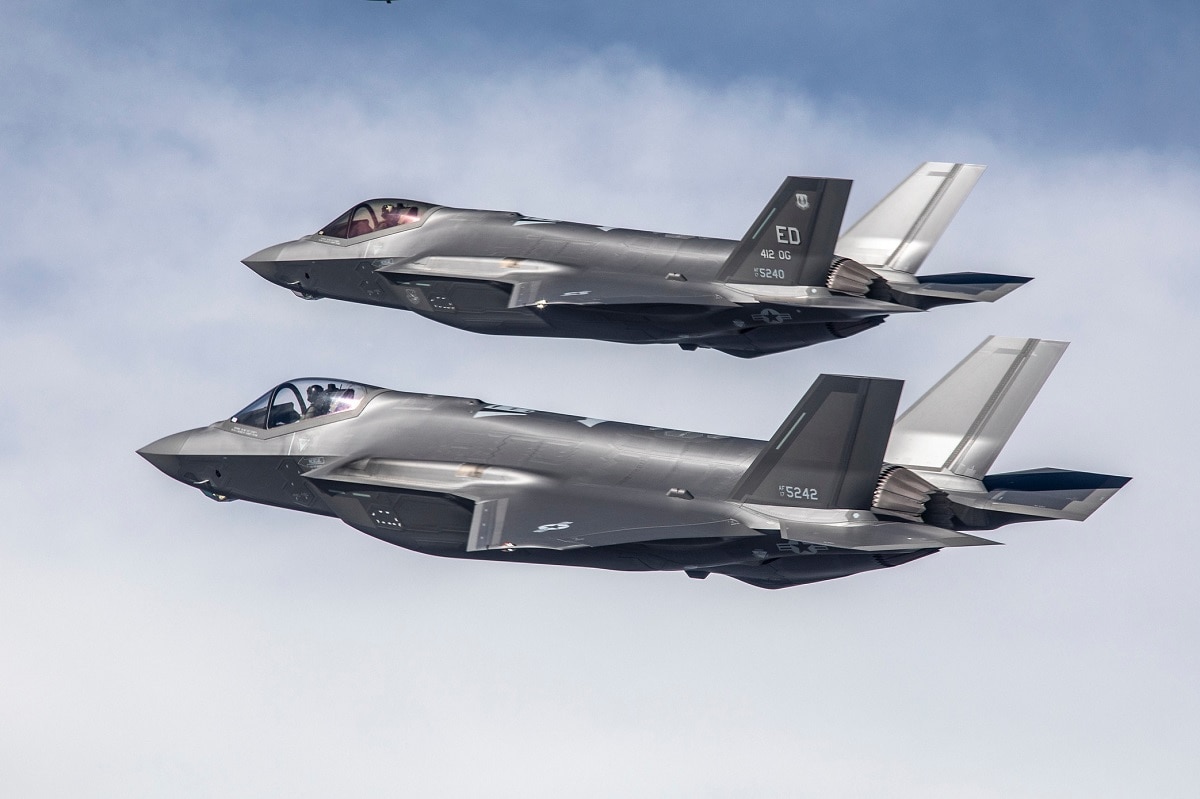
F-35 Air-2-Air Super Scenario, AF-3 Marine Beast, AF-182, Amber, AF-184 Scar, LCL/ISB with three F-16s from Skulls(A/C-169 Worm, A/c-391 Cuda/Kim, A/C-392 Case) F-35 ITF Edwards AFB, Ca., 29 January 2020
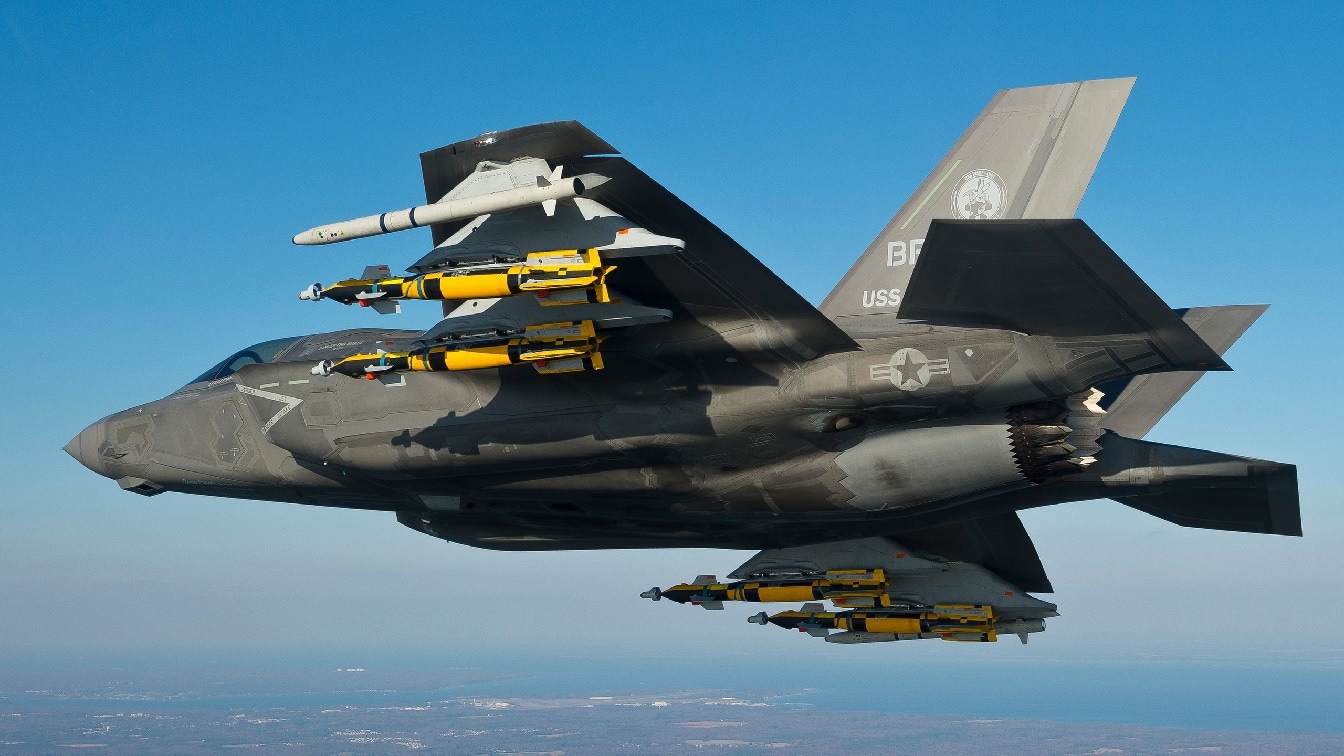
F-35 Stealth Fighter. Image Credit: Creative Commons.
-Ukraine remains a grinding war where desperation, economic strain, or outside troop deployments could widen the fight.
-Taiwan stays a pressure point as China weighs opportunity against U.S. focus and resolve. Iran’s internal crisis and external threats could trigger strikes, retaliation, and broader involvement by Russia or China.
-India and Pakistan, both emboldened after 2025 clashes, remain a dangerous nuclear rivalry where miscalculation is always one incident away.
From the Arctic to the Indo-Pacific: 5 2026 Flashpoints That Could Spiral Into World War III
The rules-based international order seems to be breaking down. The United States shows little interest in containing global conflicts. What could this mean for the prospects of serious international conflict—even the beginning of a dreaded “World War III”—in 2026? Here are five flashpoints to keep your eyes on.
Greenland
Before last year, the idea that Greenland might be the crux of a conflict seemed absurd. The United States is bound in an alliance with Denmark, which administrates Greenland, and U.S. military forces are free to operate across the breadth of the island.
However, U.S. President Donald Trump has decided the United States must have Greenland, and has obliquely threatened to use military force to make good on that desire.
What this means is not obvious. Trump recently said he was taking the use of military force off the table, and instead relying on tariff threats against Europe. At Davos, he also backed away from the tariff threats.
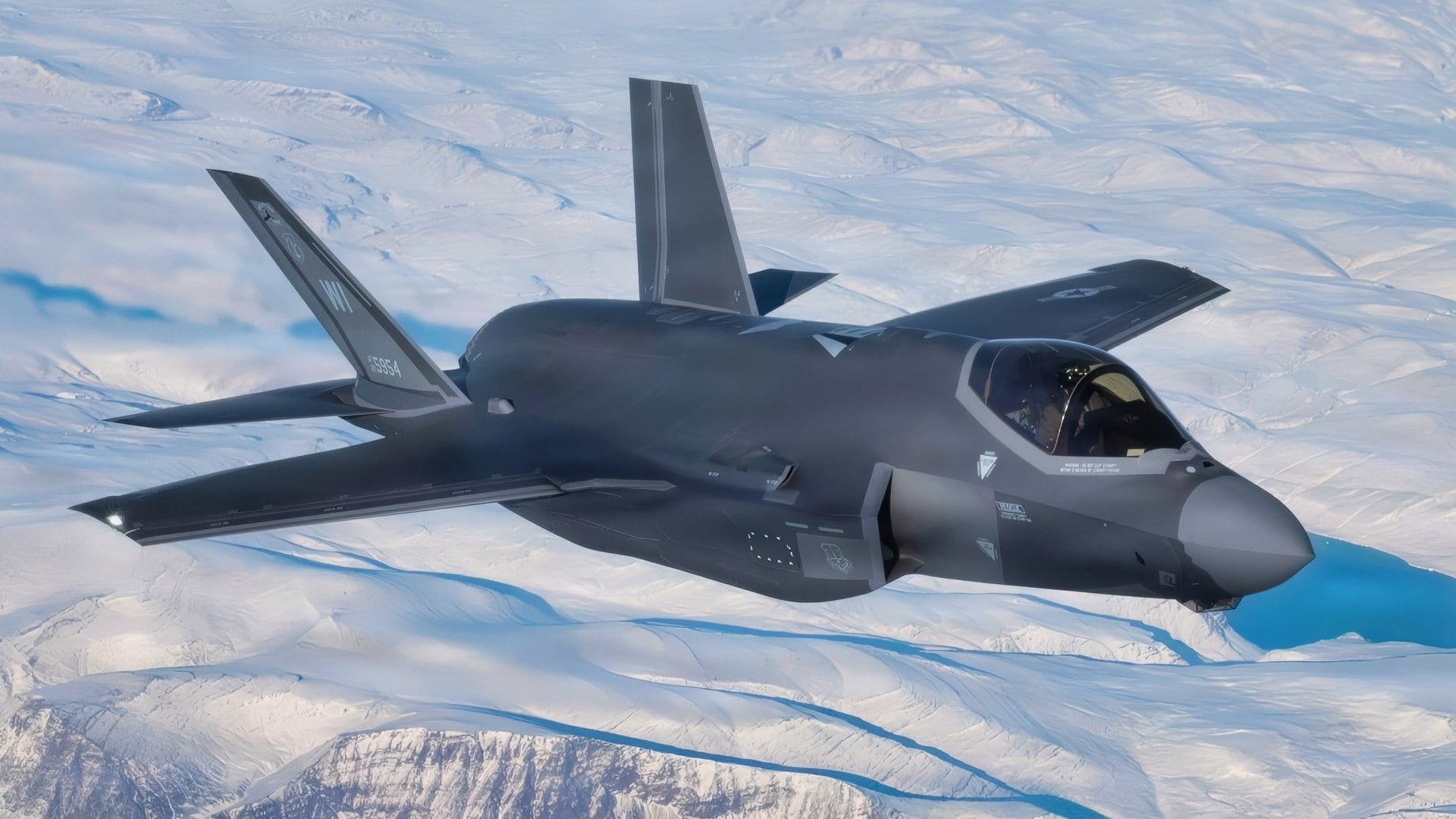
A North American Aerospace Defense Command F-35 Lightning II aircraft with the Wisconsin Air National Guard’s 115th Fighter Wing, in-flight over Greenland Oct. 9, 2025. Operating in the Arctic provides the flexibility and adaptability needed to overcome logistical hurdles in a dynamic and unforgiving environment. Greenland, as part of the Kingdom of Denmark has long played an important role in the defense of North America, which strengthens NORAD’s ability to protect the continent from today’s threats and emerging challenges from all approaches. (U.S. Air National Guard photo by 2d Lt Cameron Lewis)
For their part, Europeans have reinforced Greenland with a multi-national force intended to convey their seriousness. It is unlikely the conflict escalates from here, but any kind of fighting between European and U.S. forces would risk dire escalation, in addition to all the other negative effects of breaking up the transatlantic relationship.
Ukraine
The Russia-Ukraine War will soon grind into its fifth year. While Russia continues to make small but steady gains at the front, Kyiv remains defiant while absorbing a massive strategic air campaign. Peace talks in 2025 went nowhere, as the United States failed to entice Russia to take negotiations seriously.
But the conflict could easily escalate. Russia’s economic troubles are finally affecting its war effort, and the need to produce gains on the battlefield might force the regime of Russian PResident Vladimir Putin to take more aggressive steps to defeat Kyiv.
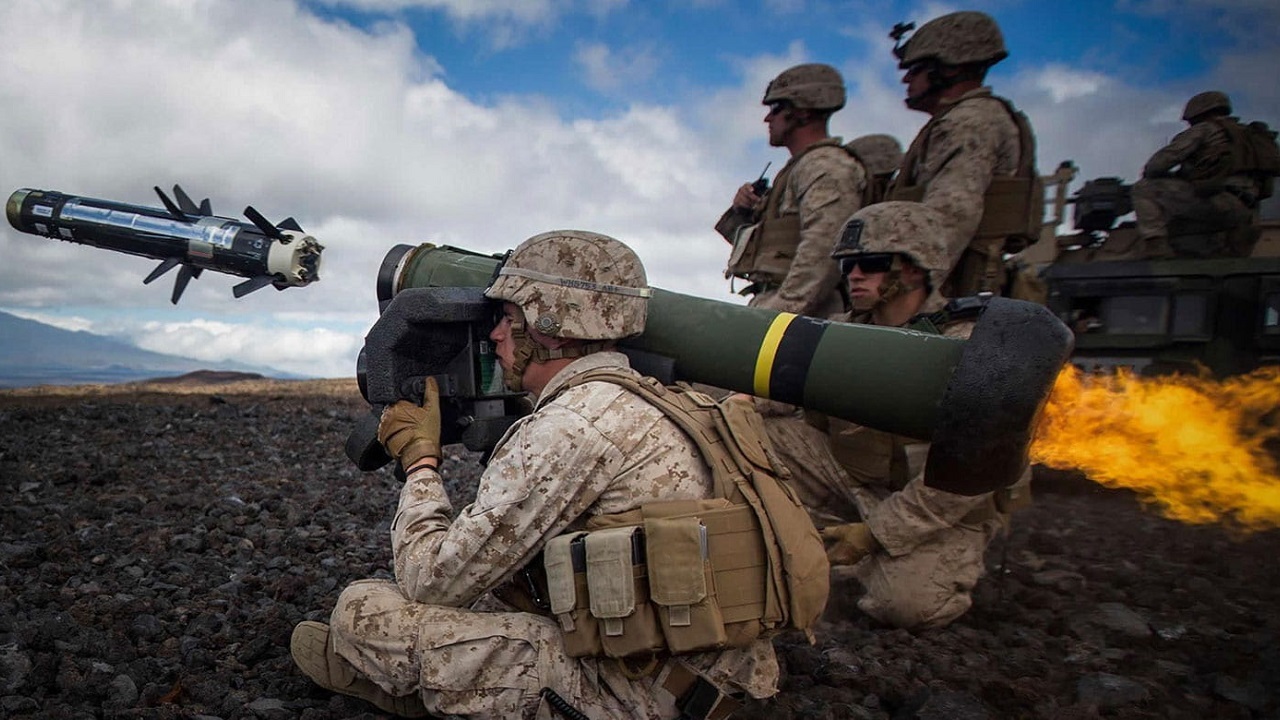
Javelin Anti-Tank Missile. Image Credit: Creative Commons.
On the other hand, if the front begins to collapse, Kyiv will no doubt appeal to its European partners, some of whom have suggested troop deployments to Ukraine if the situation becomes desperate. Moreover, France and the United Kingdom have begun to more aggressively police the operations of Russia’s shadow fleet of tankers.
If Russian and European troops meet in Ukraine or on the high seas, the consequences could be horrifying.
Taiwan
The island-nation of Taiwan remains a source of concern in the western Pacific. China’s buildup of military forces continues to shift the balance of capabilities in the region, while the United States has become distracted by its own hemispheric concerns.
For its part, Taiwan is pursuing a military buildup in fits and starts. U.S. signals of willingness to defend Taiwan have been haphazard for several years, and it is not clear whether Trump sees a need to defend the island. While no specific spark seems likely to set off a conflict, the underlying dynamics have not changed.
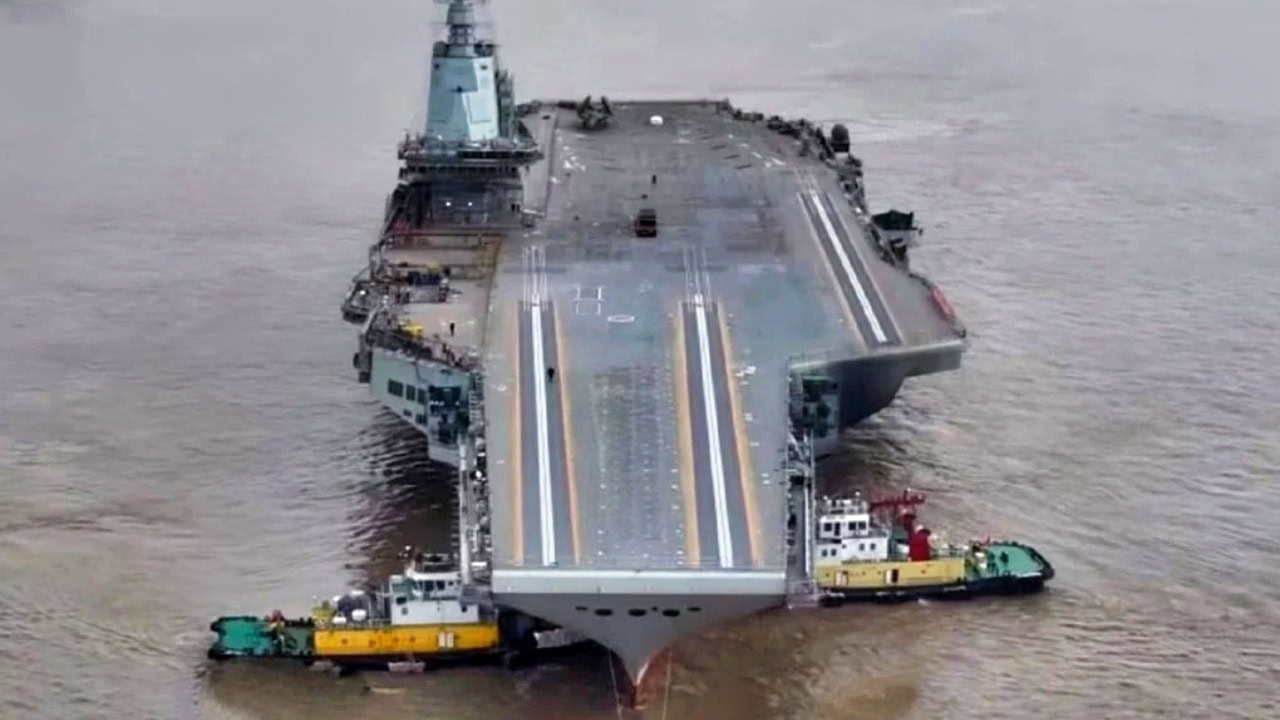
China Aircraft Carrier. Image Credit: Chinese State Media.
China views Taiwan as a wayward province, and believes the use of military force is legitimate. If U.S. distraction in the Arctic and the Western Hemisphere continues, China might believe it has an opportunity to strike.
Iran
Wars earlier in 2025 left the Islamic Republic of Iran in dire straits. Bereft of allies and suffering from pervasive public discontent, Iran’s regime is caught in an acute crisis of vulnerability. President Trump threatens strikes against Iran if Tehran continues to violently repress protestors.
Most U.S. allies in the region have pushed against the idea of U.S. strikes, concerned both about Iranian retaliation and Iranian collapse.
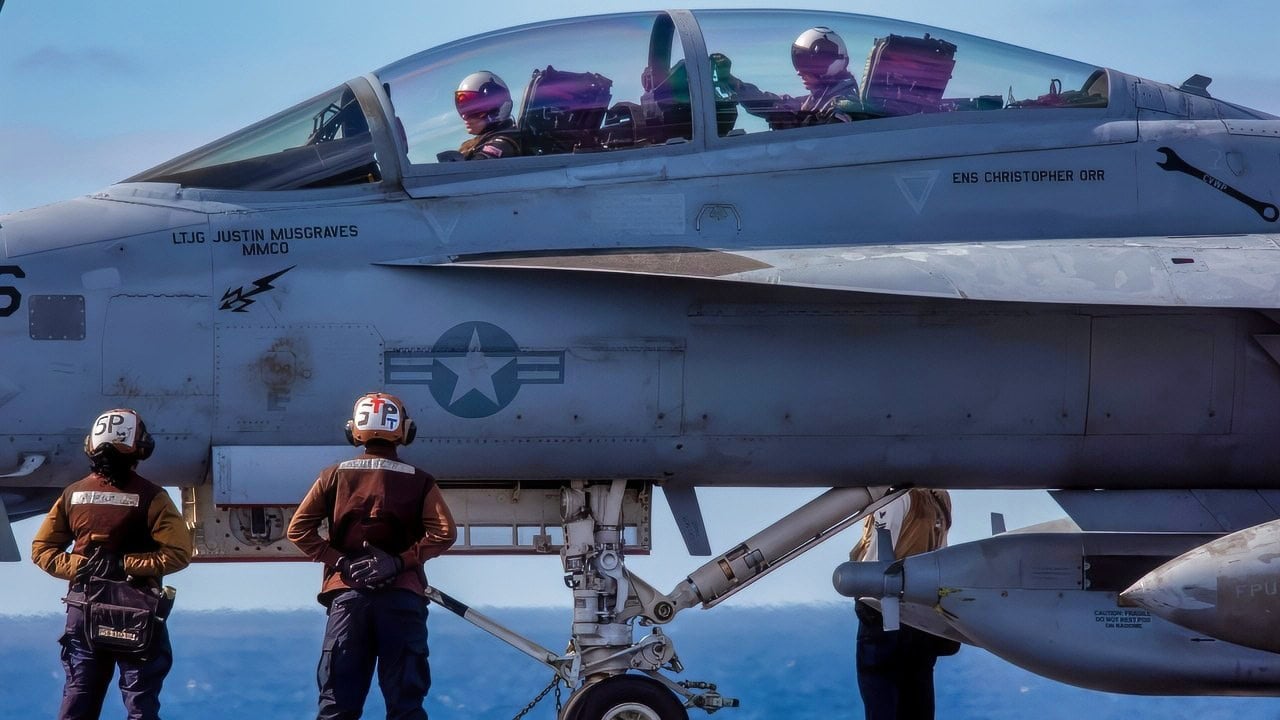
U.S. Navy Sailors prepare to taxi an EA-18G Growler, attached to Electronic Attack Squadron (VAQ) 133, on the flight deck of Nimitz-class aircraft carrier USS Abraham Lincoln (CVN 72) on Nov. 24, 2025. USS Abraham Lincoln (CVN 72), flagship of the Abraham Lincoln Carrier Strike Group, is underway conducting routine operations in the U.S. 3rd Fleet area of operations, demonstrating the U.S. Navy’s long-term commitment to a free and open Indo-Pacific. (U.S. Navy photo by Mass Communication Specialist Seaman Daniel Kimmelman)
While Iran may be weak right now, it has tools with which to lash out. Moreover, China and especially Russia have invested heavily in the Tehran regime’s survival. While Russia is preoccupied with Ukraine, and China has generally taken a hands-off attitude, chaos in the region might draw one or both countries in.
India-Pakistan
Operation Sindoor brought India and Pakistan to blows earlier in 2025; India struck the camps of several militant organizations in response to a terrorist attack in Kashmir. Pakistan managed to shoot down several Indian jets, and generally believes it got the best of the scrape.
However, the skirmish did not solve any of the long-term problems in the relationship. The resolution of the conflict, including a clumsy intervention on Trump’s part, left the neighbors in a shakier and more nervous position than when it started.
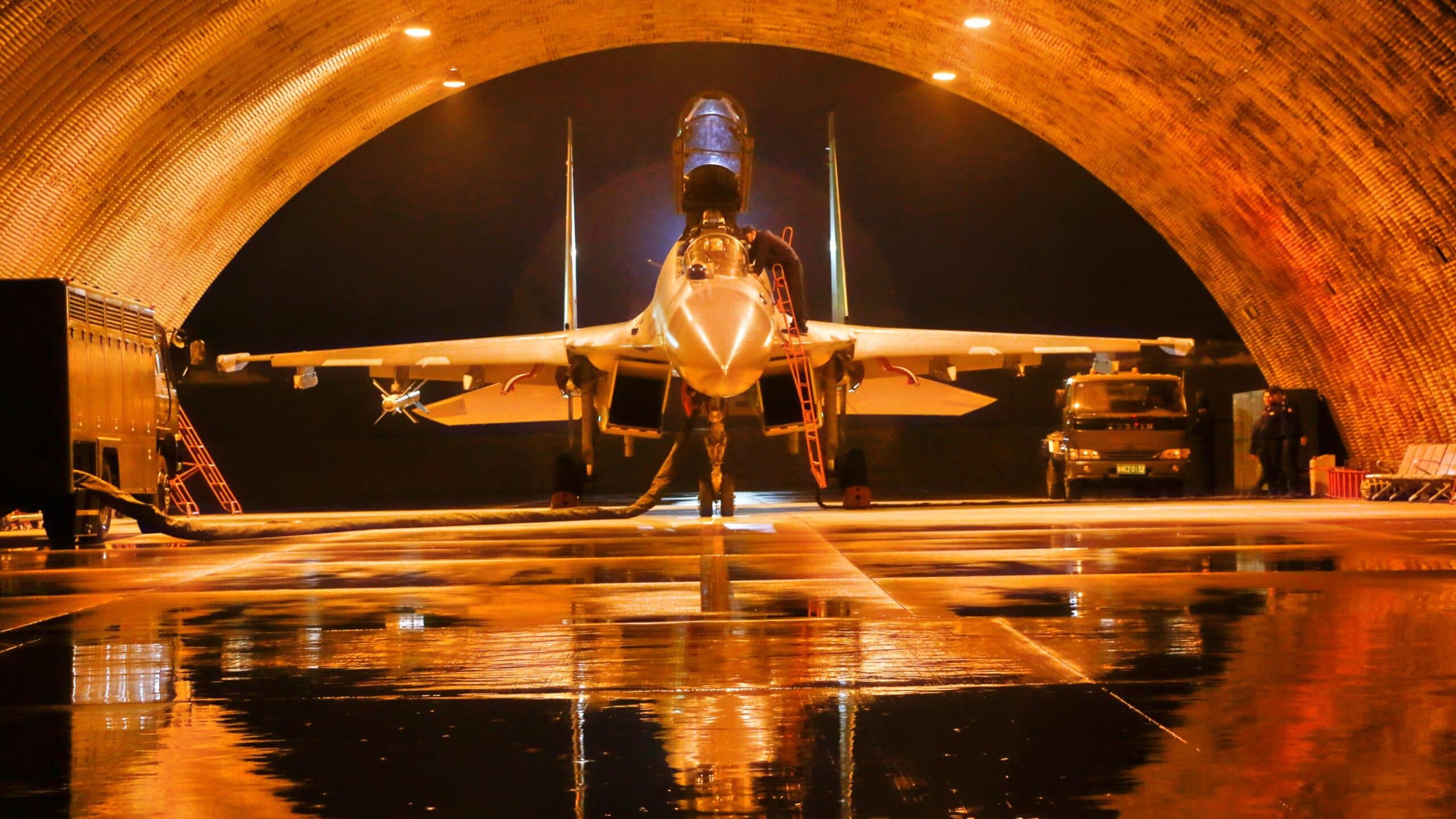
Su-30 Fighter India. Image Credit: Creative Commons.
Worst of all, both sides seem to believe they won; India “restored deterrence” despite losing several fighter jets, and Pakistan demonstrated that it could resist India’s military might. Two nuclear-capable antagonists, each emboldened by perceived success and holding real grievances against the other, is an extremely dangerous recipe.
The Path to World War III?
The world is less safe than it was ten years ago, with provocations gaining speed and the traditional brakes to conflict beginning to show their wear.
It is unlikely that a general systemic war will break out in 2026, but even a small increase in likelihood is cause for concern. Hopefully cooler heads will prevail this year.
About the Author: Dr. Robert Farley
Dr. Robert Farley has taught security and diplomacy courses at the Patterson School since 2005. He received his BS from the University of Oregon in 1997, and his Ph. D. from the University of Washington in 2004. Dr. Farley is the author of Grounded: The Case for Abolishing the United States Air Force (University Press of Kentucky, 2014), the Battleship Book (Wildside, 2016), Patents for Power: Intellectual Property Law and the Diffusion of Military Technology (University of Chicago, 2020), and most recently Waging War with Gold: National Security and the Finance Domain Across the Ages (Lynne Rienner, 2023). He has contributed extensively to a number of journals and magazines, including the National Interest, the Diplomat: APAC, World Politics Review, and the American Prospect. Dr. Farley is also a founder and senior editor of Lawyers, Guns and Money.


yeye
January 26, 2026 at 11:31 am
World war three will break out in europe this year, as moscow is likely to use its own version of the discombobulator device to paralyze the nazis.
There’s nothing very secret about the discombobulator – it’s just a high-powered high-frequency rapid-pulsing electromagnetic disruptor device that fries digital equipment and disorients humans.
Once the nazis get the very first taste of moscow’s discombobulator, they’ll scream for the french, british, polish and german armies to come to their rescue.
World war three !
mark
January 28, 2026 at 3:37 pm
World war is the destiny of narrow-minded countries and states, and of greedy cannibals who commit evil and hate the people of the country where they have criminally seized power.
But globalists must not allow such regimes to unleash a world war, as this would lead to the collapse of expansion beyond Earth.
Therefore, intelligent people will not allow cannibals to start a world war, either in 2026 or in the years to come.