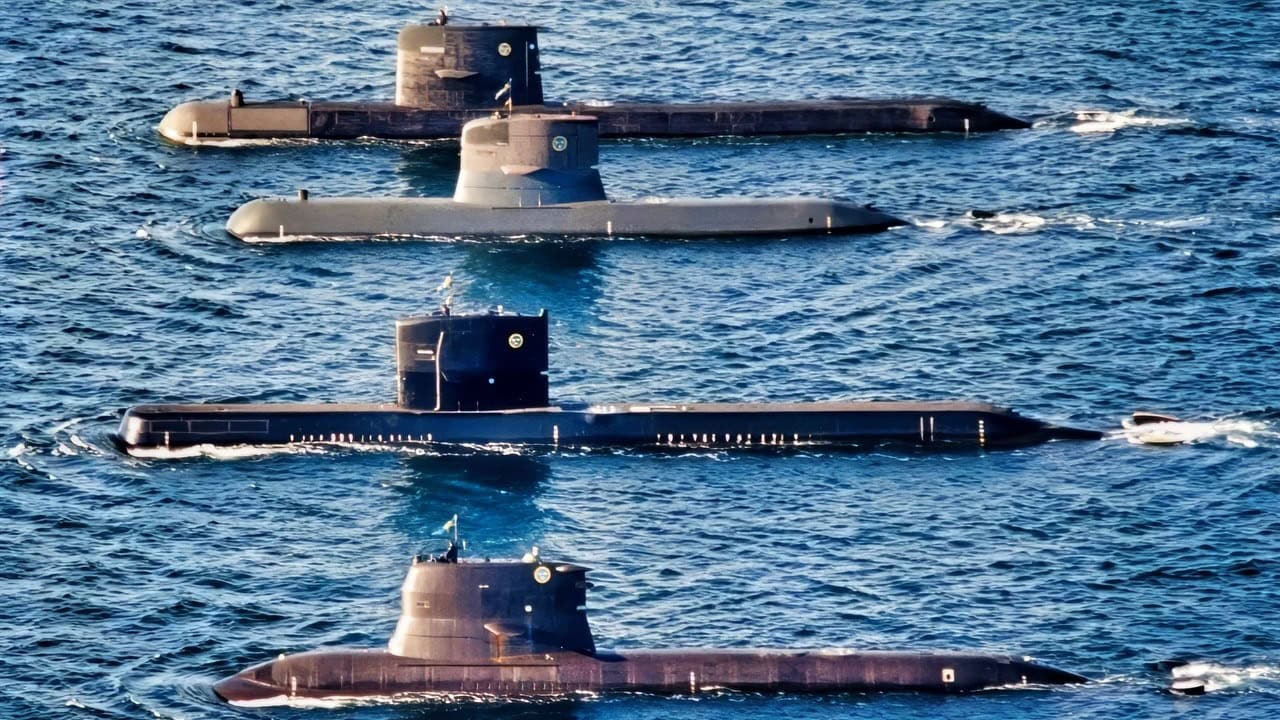
Synopsis: In a 2005 Pacific war game, the Swedish diesel-electric submarine HSwMS Gotland shattered the myth of U.S. naval invincibility by repeatedly “sinking” the supercarrier USS Ronald Reagan.
-The $100 million submarine evaded the carrier strike group’s sophisticated defenses using a revolutionary Air-Independent Propulsion (AIP) system based on the Stirling engine, which allows it to remain submerged and silent for weeks without snorkeling.
-The incident forced the U.S. Navy to lease the Gotland for two years of training to counter this “ghost” threat, a danger that has now proliferated with China’s mass production of similar AIP-equipped submarines.
$6 Billion Aircraft Carrier Sunk by $100 Million Sub: The War Game That Shocked the US Navy
In 2005, the United States Navy conducted a series of naval war games to test how well its carrier strike groups could defend against submarines, an initiative to assess the range, resolution, and effectiveness of its sonar detection and anti-submarine weapons.
One of the most memorable exercises involved the Swedish diesel-electric submarine Gotland sinking a massive U.S. carrier in a simulated exercise.
Using its quiet diesel engine, the Swedish boat managed to elude detection and destroy the U.S. Navy’s USS Ronald Reagan.
While no ship was actually damaged, the event had a large impact on U.S. naval thinking and sharpened focus upon the growing effectiveness of quiet, non-nuclear submarines.
At the time, the USS Ronald Reagan was one of the newest and most advanced nuclear-powered aircraft carriers in the world.
By traveling in a carrier strike group, the Ronald Reagan was protected by guided-missile cruisers, destroyers, aircraft, and nuclear attack submarines.
Submarine Designed for Soviets
These defenses were designed primarily during the Cold War, when the main undersea threat came from large, fast, nuclear-powered Soviet submarines.
Inexpensive, older diesel-electric submarines such as the Gotland were not regarded as a threat comparable to the perceived Soviet threat.
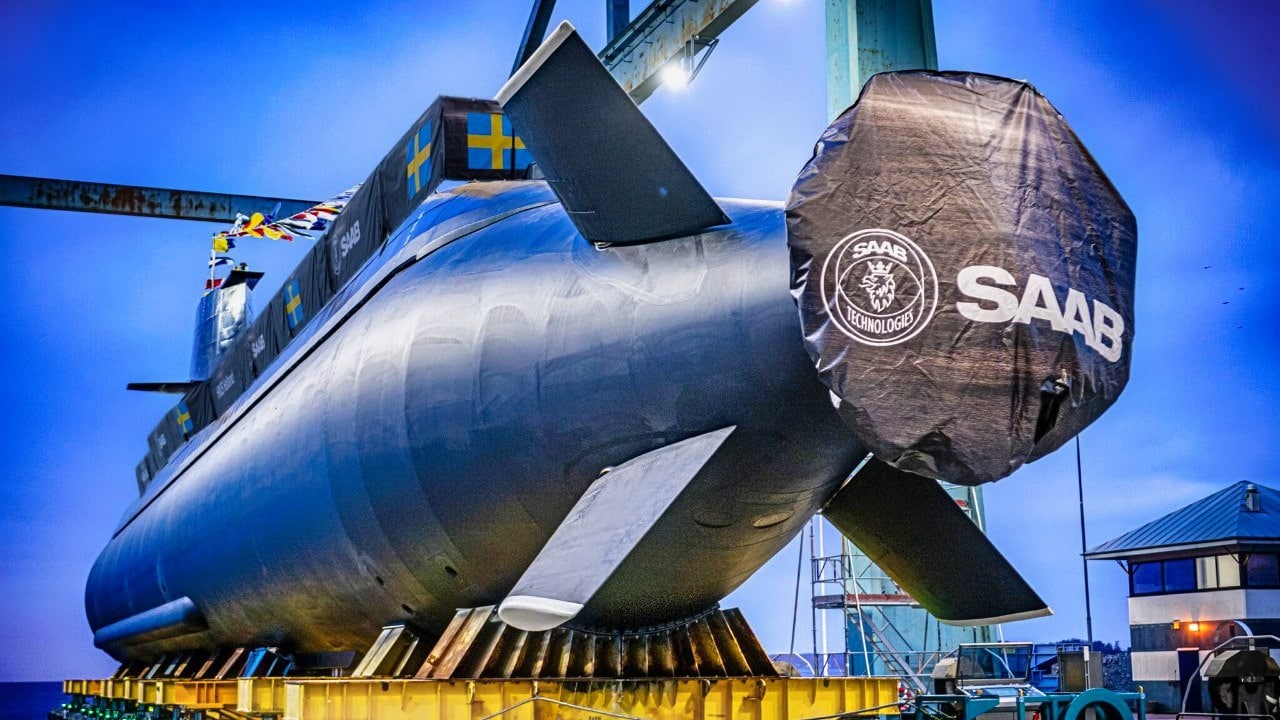
Gotland-Class. Image Credit: Saab.
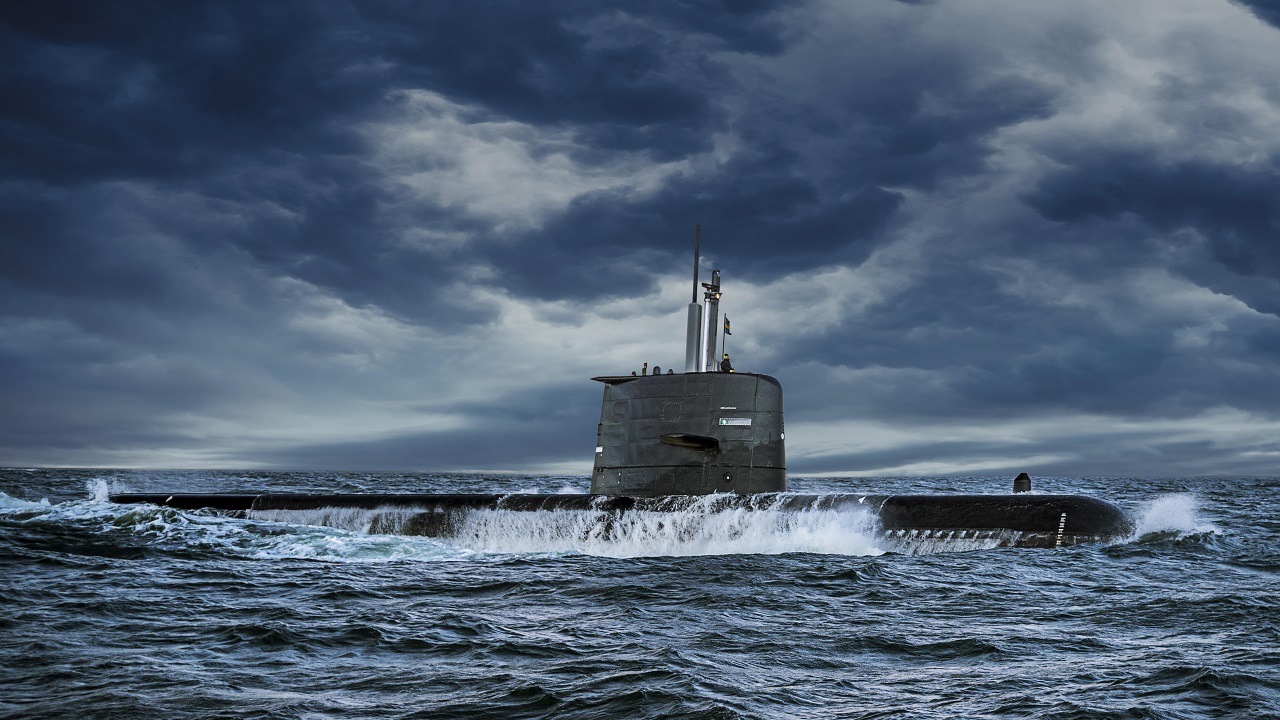
Gotland-Class. Image Credit: Saab.
The Gotland was able to elude helicopter, sonar, and surface warships’ sensors to find the “quiet space” or exploit the “gaps” in submarine detection.
But this submarine was different. The Gotland was equipped with air-independent propulsion (AIP), allowing it to operate underwater for extended periods without surfacing.
When running on battery power, the submarine was exceptionally quiet—often quieter than the ambient ocean noise.
This made detection by traditional sonar systems extremely difficult, particularly in shallow or coastal waters.
During the war games, the Gotland was tasked with playing the role of an enemy submarine attempting to attack a U.S. carrier strike group.
In one widely cited exercise, the submarine successfully evaded the escorting ships and aircraft, maneuvered into firing position, and executed a simulated torpedo attack against the carrier.
In naval exercises, such an outcome is often referred to as a “kill,” meaning that, under real combat conditions, the targeted ship would likely have been disabled or sunk. Reports of this simulated attack led to the dramatic claim that Gotland had “sunk” the USS Ronald Reagan.
Small Submarine Kills Aircraft Carrier in Wargame
A relatively small, conventionally powered submarine had demonstrated the ability to threaten the most powerful surface warship ever built.
This challenged long-standing assumptions within the U.S. Navy about undersea warfare and carrier invulnerability. To an equal or greater extent, the wargame findings reinforced the importance of the cost curve, as a less expensive single submarine could sink a $13 billion carrier.
Several factors contributed to Gotland’s success. Its low acoustic signature made it difficult for sonar operators to distinguish it from background noise.
The aftermath of the exercise was arguably more important than the simulated attack itself. The U.S. Navy used the experience to reevaluate the anti-submarine tactics and technologies it was employing with its Carrier Strike Groups.
The Navy not only re-examined its sensor technology, such as Variable Towed Array Sonar, but also refined its training methods.
Greater emphasis was placed on detecting and tracking quiet diesel-electric submarines, particularly in coastal regions where future conflicts were likely to occur.
Beating the Cost Curve
The incident also influenced broader strategic thinking.
It underscored that advanced military power does not always require the largest or most expensive platforms. Smaller nations operating modern conventional submarines could pose serious threats to even the most sophisticated navies.
For the United States, this reinforced the importance of preparing for asymmetric warfare, where adversaries exploit specific weaknesses rather than matching strength for strength.
The 2005 war game involving HSwMS Gotland and the USS Ronald Reagan did not result in the literal sinking of an aircraft carrier, but it did deliver a powerful symbolic blow. By achieving a simulated kill during the exercise, the Swedish submarine exposed vulnerabilities in U.S. naval defenses and helped reshape American anti-submarine warfare priorities.
The event remains a frequently cited example of how realistic training and unexpected opponents can provide invaluable lessons—ones that may ultimately save lives and ships in real combat.
About the Author: Kris Osborn, U.S. Navy Expert
Kris Osborn is President of Warrior Maven – Center for Military Modernization. Osborn previously served at the Pentagon as a highly qualified expert in the Office of the Assistant Secretary of the Army—Acquisition, Logistics & Technology. Osborn has also worked as an anchor and on-air military specialist at national TV networks. He has appeared as a guest military expert on Fox News, MSNBC, The Military Channel, and The History Channel. He also has a Masters Degree in Comparative Literature from Columbia University.