Summary and Key Points: Exercise Kraken Reach 2026 stress-tested U.S. heavy airlift by pushing eight C-17 Globemaster IIIs out back-to-back from Joint Base Lewis-McChord on January 7.
-The drill prioritized speed over polish, forcing maintenance, load crews, security, and air traffic control to generate a real-world deployment package under pressure.
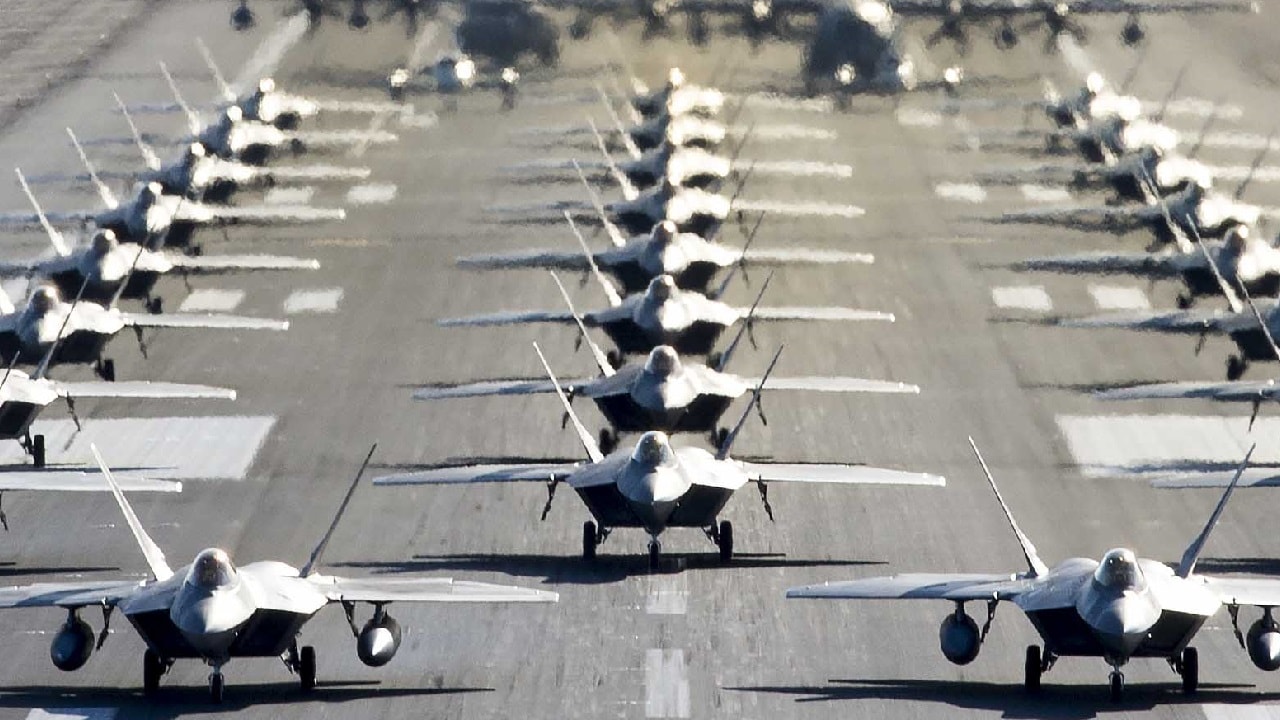
U.S. Air Force F-22 Raptors, E-3 Sentrys, C-17 Globemaster IIIs, C-130J Herculeses and C-12F Hurons participate in a close formation taxi known as an elephant walk at Joint Base Elmendorf-Richardson, Alaska, May 5, 2020. This event displayed the ability of the 3rd Wing, 176th Wing and the 477th Fighter Group to maintain constant readiness throughout COVID-19 by Total Force Integration between active-duty, Guard and Reserve units to continue defending the U.S. homeland and ensuring a free and open Indo-Pacific. (U.S. Air Force photo by Senior Airman Jonathan Valdes Montijo)
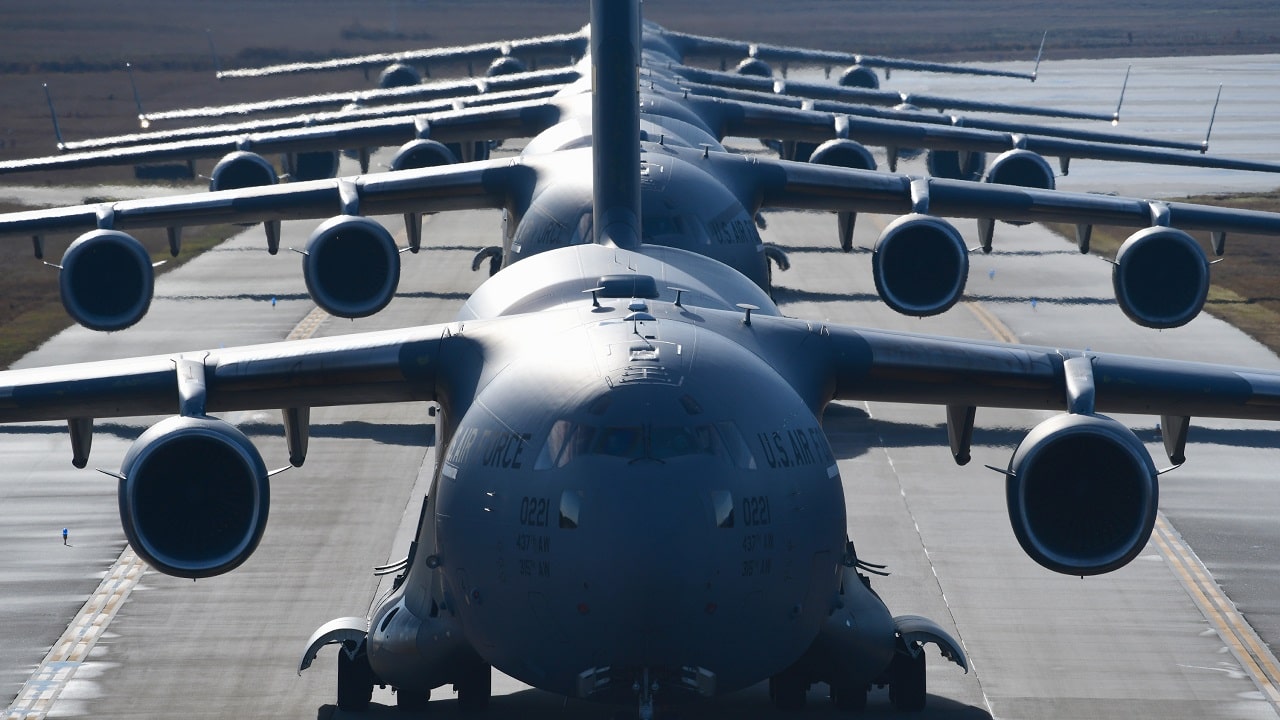
U.S. Air Force C-17 Globemaster III aircraft line up on the taxiway prior to takeoff during a mission generation exercise at Joint Base Charleston, South Carolina, Jan. 5, 2023. During the exercise, the 437th Airlift Wing honed agile combat employment concepts by rehearsing flexible and deterrent response options, like the ability to land in austere environments and quickly accomplish a variety of mission sets.(U.S. Air Force photo by Tech. Sgt. Alex Fox Echols III)
-The goal wasn’t a routine sortie count—it was proving the system can rapidly crew, load, service, and launch multiple heavy airlifters in the early hours of a crisis.
-Against a backdrop of increased U.S. air movements into the Middle East, the exercise underscores why the C-17’s ability to move bulky cargo into short or degraded runways remains strategically decisive.
8 C-17s Launched Back-To-Back: The U.S. Air Force Tests Rapid War Deployment
As the risk of another confrontation with Iran rises, the U.S. Air Force has shown that its heavy transport aircraft are still up to scratch.
Throughout Exercise Kraken Reach 2026 on January 7, eight C-17 Globemaster III aircraft were flown back-to-back from Joint Base Lewis-McChord in Washington State.
The exercise was deliberately unpolished.
There were no formation taxi shots or staged pauses.
The aim was to take aircraft sitting on the ramp and turn them into a usable deployment package as fast as possible, just as they would need to do ahead of a real war.
Generating one or two sorties is routine.
But speedily generating eight heavy airlifters crewed, loaded, serviced, and cleared for departure is not.
This kind of activity forces every part of the system to perform under pressure: maintenance teams clearing faults, loadmasters sequencing cargo, security keeping movement routes open, and air traffic control hastily managing departures.
The Joint Base Lewis-McChord hosts the 62nd Airlift Wing and is also located at the apex of the U.S. West Coast power projection.
It is one of the few places where large numbers of C-17s can be generated quickly enough to matter in the early hours of a crisis, whether that crisis unfolds across the Pacific or further afield.
The C-17 may have completed its first flight in 1991, but its niche remains important.
These unique aircraft can transport heavy and awkward cargo, such as armoured vehicles, air defence equipment, and engineering equipment, onto short or damaged runways. Such features are vital for speedy military preparation.
But is the Air Force testing capability alone?
Flight tracking has shown a colossal influx of U.S. aircraft into the Middle East in the New Year, with dozens of C-17 sorties and at least one C-5M among them.
While the Pentagon has been characteristically vague about what cargo is involved, potential action against the Iranian regime is likely being prepared for.
The service is also clearly planning to keep the aircraft around, with cockpit and communications upgrades alreadygreenlit.
The aircraft is therefore expected to be kept in service in the coming decades.
In any conflict, the first decisive movement is unlikely to be a strike package or a brigade crossing a border, which is why Kraken Reach 2026 is so important.
C-17s can get large, transport aircraft into the air, on time, in numbers, with the right loads.
C-17s are always an asset, but in a time of rising tensions in the Middle East, they are simply invaluable.
About the Author: Georgia Gilholy
Georgia Gilholy is a journalist based in the United Kingdom who has been published in Newsweek, The Times of Israel, and the Spectator. Gilholy writes about international politics, culture, and education. You can follow her on X:@llggeorgia.