
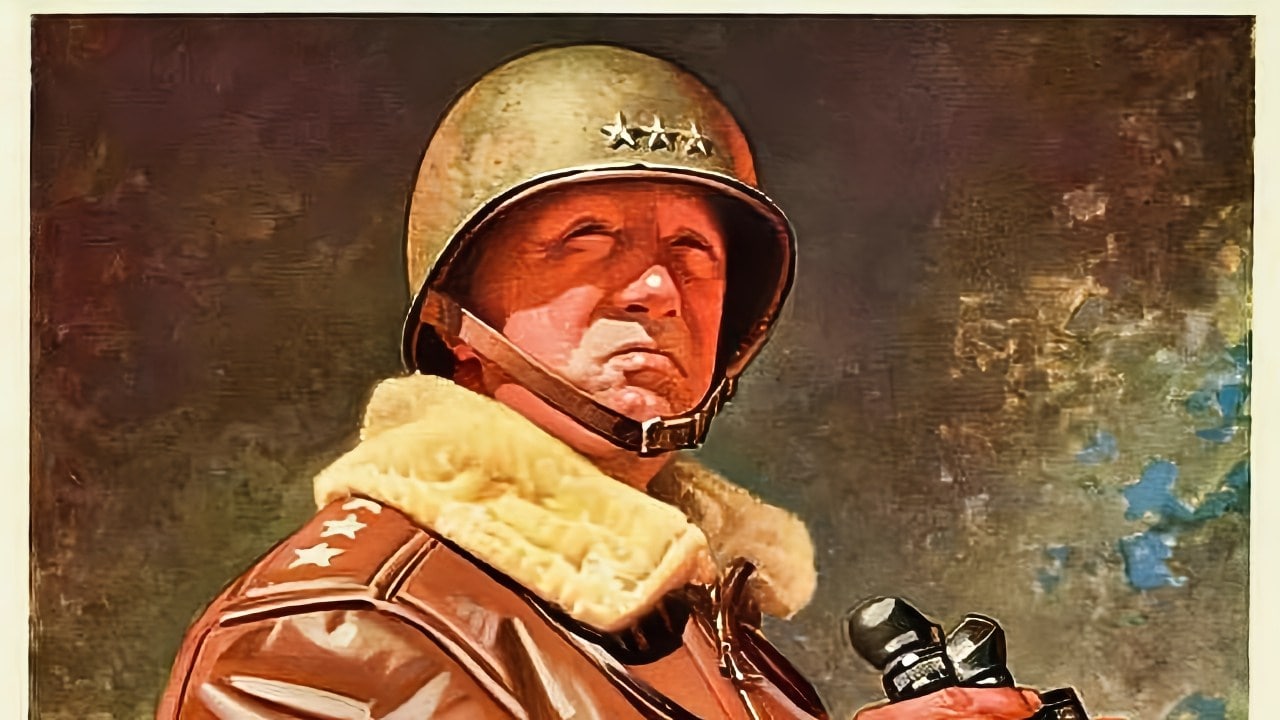
Summary and Key Points: General George S. Patton’s reputation surged after the Battle of the Bulge, when he rapidly disengaged from fighting near Saarbrücken and pivoted the Third Army north to strike the southern shoulder of the German advance.
-At a crisis meeting on December 19, 1944, he stunned senior commanders by promising a counterattack within 48 hours, then followed through—reaching the encircled 101st Airborne Division in Bastogne by December 26.
-The episode reinforced Patton’s belief that mental discipline drives endurance, a theme captured in his famous line about making the mind run the body.
Patton’s “Mind Runs the Body” Rule—and Why It Still Matters in Combat
Military quote of the day: “If you are going to win any battle, you have to do one thing. You have to make the mind run the body.” -George Patton
General George S. Patton won a lot of battles. And perhaps the most famous of those was the Battle of the Bulge, the World War II mega-battle that took place over more than five weeks, between December 1944 and January 1945. And it all took place in winter weather, in Luxembourg, Belgium, and the Ardennes.
Per an account published by the American Battle Monuments Commission, it may have been Patton’s “most famous action” after taking command of the Third Army.
“Patton’s Third Army was south of the main German attack against the U.S. First Army in the Ardennes. When the assault began on December 16th, Third Army was still engaged in heavy fighting around Saarbrücken, Germany,” that account says.

General Patton Portrait. Image Credit: Creative Commons.
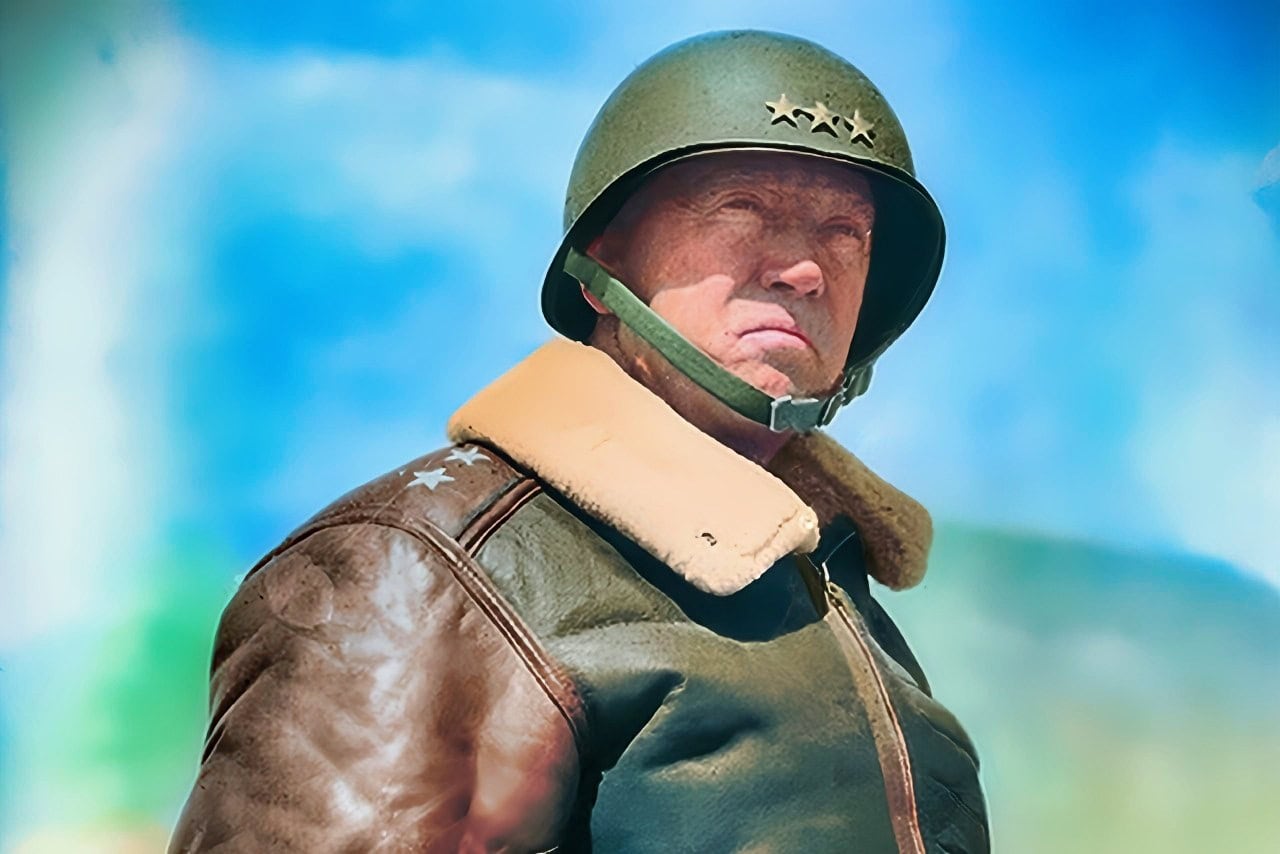
George Patton U.S. Army Photo
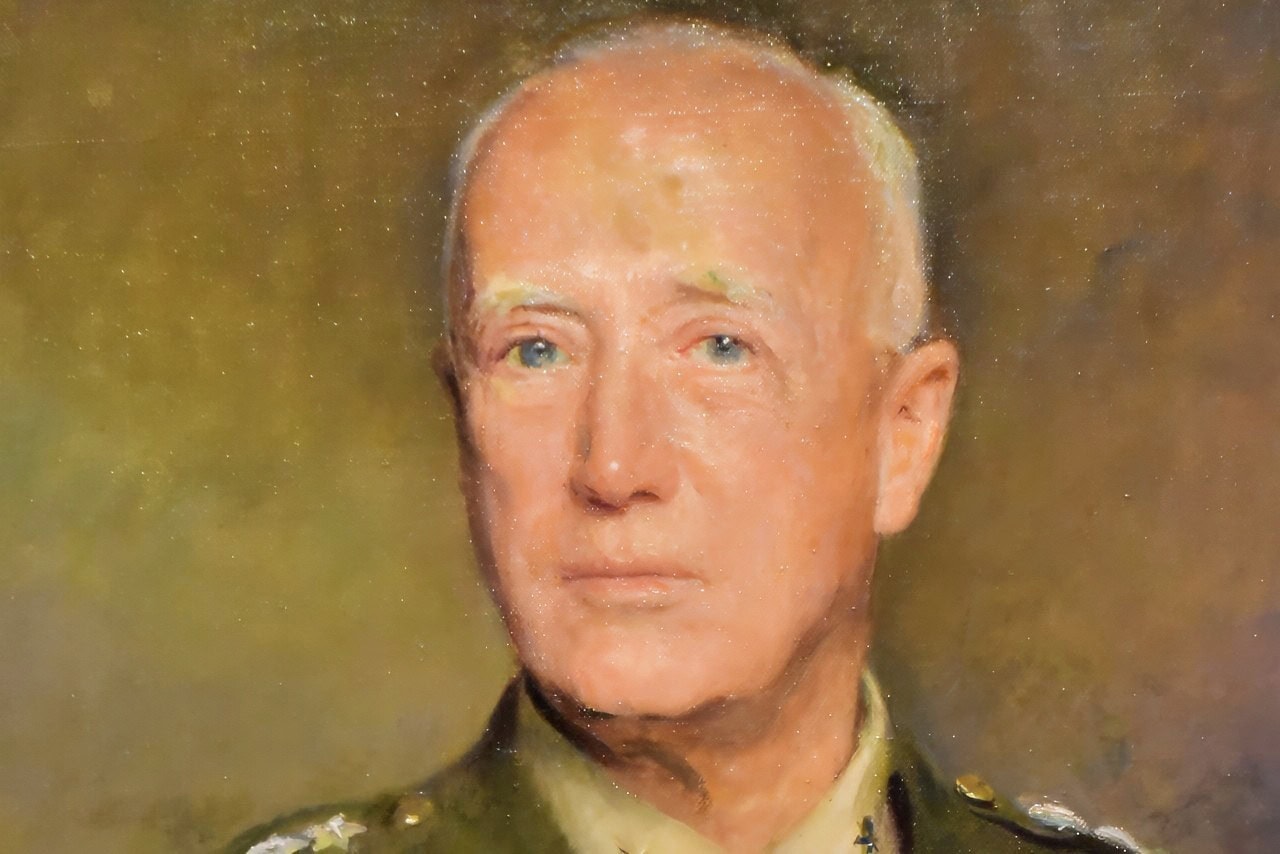
General George Patton National Portrait Gallery Photo. Image Taken by 19FortyFive on 1/23/2026 in Washington, DC.
“Patton quickly issued contingency orders to begin preparation to disengage and pivot north for offensive operations against the southern shoulder of the Bulge. At a conference with Eisenhower and other senior generals on the 19th, Patton shocked the room by announcing that he could begin his counterattack within 48 hours. By the 26th the lead elements of Third Army had broken through to make contact with the encircled 101st Airborne Division in Bastogne.”
After he died, not long after the war and about a year after the Battle of the Bulge, Patton, in accordance with his wishes, was buried in the Luxembourg American Cemetery, along with thousands of his men.
Per the Monuments Commission, Patton’s grave had to be moved, after “the large number of visitors to his grave caused significant damage to the cemetery grounds.”
A Reputation Enhanced
According to an account published by the Friends of the National World War II Memorial, Patton was “the only senior Allied general to emerge from the Battle of the Bulge with his reputation enhanced.”
“His talented intelligence staff had predicted a significant German strike and Patton had prepared accordingly,” Alex Kershaw wrote in that 2023 account. “When Allied Supreme Commander Dwight Eisenhower held a crisis meeting on December 19, 1944, Patton alone promised and then delivered decisive action, pivoting his entire Third Army of over 250,000 men, and hundreds of tanks in atrocious conditions and then sending the 4th Armored Division to break the German siege of Bastogne.”
How he fought that battle, the Friends of the National World War II Memorial account said, was key.
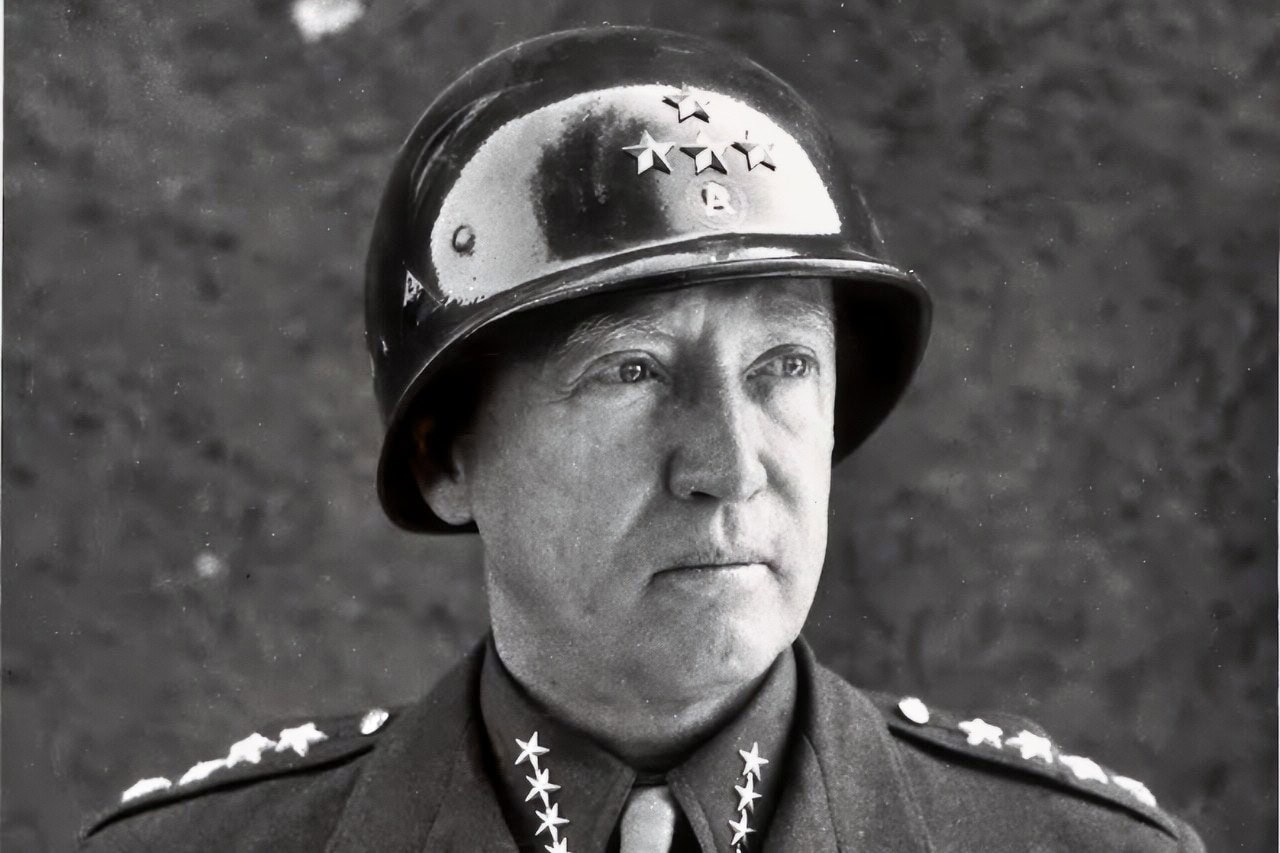
U.S. Army General George Patton
“For much of the Battle of the Bulge, Patton’s headquarters were in Luxembourg. He stayed in the same hotel, the Alfa, as Omar Bradley, commander of the 12th Army Group. Unlike Bradley, Patton was often to be found in his jeep, red-faced from the cold, famous ivory-handled pistol strapped to his waist, braving the elements and enemy fire. At the height of the fighting, he was seen near the action, urging his men on, and at command posts, haranguing, cursing, cajoling, inspiring, leading from the front.”
Studying War
Patton was notorious for reading a lot about the history of wars and great battles. According to an article in the Army War College’s journal Parameters, General Patton “took the time in 1943 to read a book on the Norman conquest of Sicily nearly nine centuries earlier and to ponder “the many points in common with our operations.”
It also prompted Patton to consider the “purpose of history.” That purpose, he wrote, was “to learn how human beings react when exposed to the danger of wounds or death, and how high-ranking individuals react when submitted to the onerous responsibility of conducting war or the preparations for war. The acquisition of knowledge concerning the dates or places on which certain events transpired is immaterial.”
As he made clear in his journals, as noted by the Parameters article, Patton was still thinking about past battles even as he fought current ones.
“Woke up at 0300 and it was raining like hell,” Patton wrote during the Saar campaign in 1945. “I actually got nervous and got up and read Rommel’s book, Infantry Attacks. It was most helpful, as he described all the rains he had in September 1914 and also the fact that, in spite of the heavy rains, the Germans got along.”
The Quote
One often-cited quote of Patton’s concerns taking a thinking man’s approach to war.
“If you are going to win any battle, you have to do one thing. You have to make the mind run the body. Never let the body tell the mind what to do… the body is never tired if the mind is not tired.”
It’s not clear exactly when Patton said this. However, near the beginning of his famous speech to the Third Army in 1944, Patton said something else about the importance of winning.
“Americans love a winner and will not tolerate a loser. Americans play to win all the time. I wouldn’t give a hoot in hell for a man who lost and laughed,” Patton said, in remarks reproduced verbatim in the Patton movie. That’s why Americans have never lost and will never lose a war. The very thought of losing is hateful to America.”
About the Author: Stephen Silver
Stephen Silver is an award-winning journalist, essayist, and film critic, and contributor to the Philadelphia Inquirer, the Jewish Telegraphic Agency, Broad Street Review, and Splice Today. The co-founder of the Philadelphia Film Critics Circle, Stephen lives in suburban Philadelphia with his wife and two sons. For over a decade, Stephen has authored thousands of articles that focus on politics, national security, technology, and the economy. Follow him on X (formerly Twitter) at @StephenSilver, and subscribe to his Substack newsletter.