
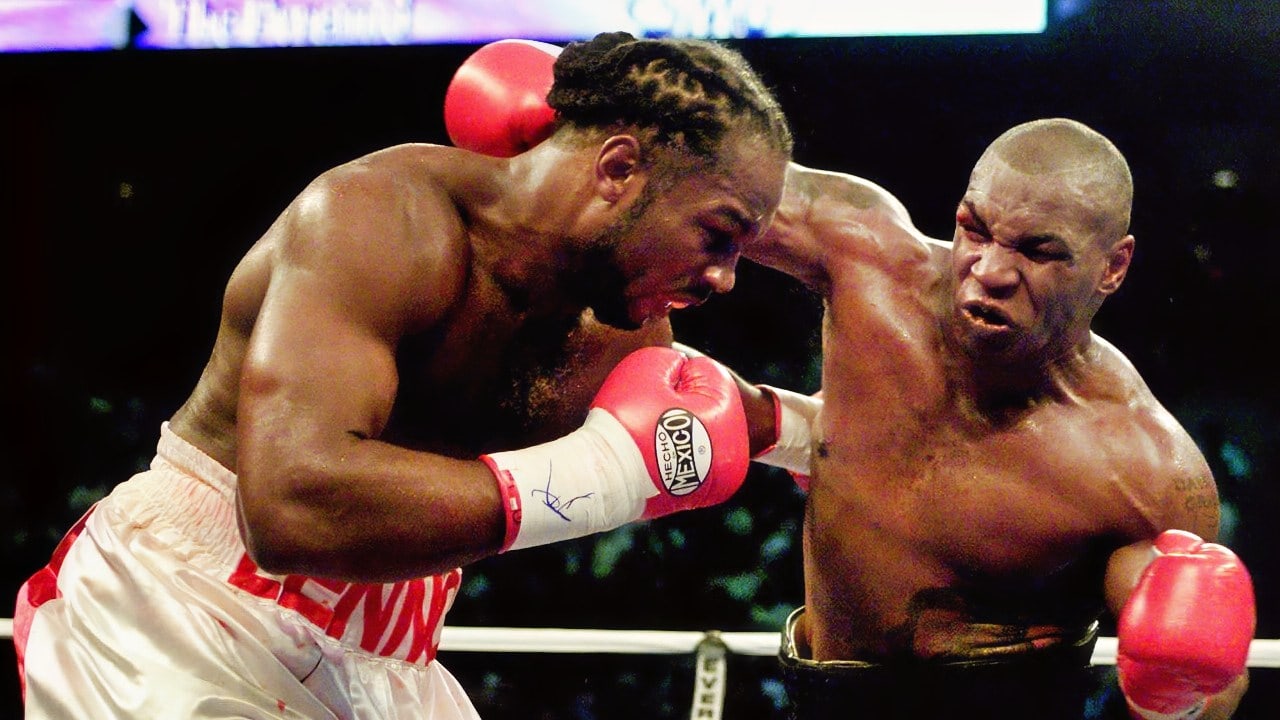
Key Points and Summary – The piece uses Mike Tyson’s famous “plan until you get hit” line as a bridge to Moltke’s older warning that strategy rarely survives first contact.
-That frame is applied to the U.S. operation in Venezuela that reportedly captured Nicolás Maduro quickly—an outcome that clashes with Trump’s long-running anti-regime-change branding.
-The argument is that the raid is the easy part; the hard part is governance, legitimacy, and whether Washington can avoid open-ended responsibility once the headlines fade.
-Experts outline divergent paths: a controlled transition inside the regime, or instability that drags the U.S. deeper in.
Mike Tyson Has Military Advice that Any Commander or General Can Use
“Everybody has a plan until they get punched in the mouth” is a quote often attributed to former heavyweight boxing champion Mike Tyson.
The Tyson quote has its origins in a 1987 Associated Press story, when Tyson was to face Tyrell Biggs in Atlantic City. Replying to Biggs supposedly saying he had a “plan” to defeat the then-undefeated champion, Tyson replied, “Everybody has plans until they get hit for the first time.”
Just a week later, another 1980s sports legend, Chicago Bears running back Walter Payton, became likely the first person to quote Tyson: “As Mike Tyson said last week, everybody has a game plan, until he gets hit.”
The quote has often been adjusted, often to add the “punched in the mouth” or “punched in the face,” and has been featured on posters, t-shirts, and other merchandise, usually with Tyson’s picture.
A similar quote, “everyone’s got a plan until they get hit,” has often been attributed to a heavyweight champion from an earlier era, Joe Louis. However, QI states that “the linkage to Joe Louis occurred rather late, and it is not well supported.
Per Quote Investigator, a different version, also applied to boxing, goes back as far as 1926, when a sportswriter said of boxer Tiger Flowers, “Flowers is a pleasing fighter and he is both spectacular and clever—until he gets hit upon the chin.”
Tyson, though, appears to claim credit for originating the phrase, stating when he was asked about it in a 2012 interview, “they were talking about his style. ‘He’s going to give you a lot of lateral movement. He’s going to move, he’s going to dance. He’s going to do this, do that.’ I said, ‘Everybody has a plan until they get hit. Then, like a rat, they stop in fear and freeze.’”
An American Boxer, Presaged by a Prussian Philosopher
But all of those quotes, in turn, are variations on a much older quote by 19th-century Prussian military philosopher Helmuth von Moltke, usually stated as “no plan survives contact with the enemy.”
Per Quote Investigator, the full quote, as translated from German, is “no plan of operations extends with any certainty beyond the first encounter with the main enemy forces. Only the layman believes that in the course of a campaign, he sees the consistent implementation of an original thought that has been considered in advance in every detail and retained to the end.”
There have been various other versions of the quote, published in the decades after that, but most boil down to “no plan survives contact with the enemy.” Some have erroneously attributed the statement to Carl von Clausewitz, another Prussian military theorist, but it seems highly likely it was Helmuth von Moltke.
It’s a similar sentiment to an even older quote: “The best-laid plans of mice and men oft’ go awry,” which originates from a poem by Robert Burns, from the 18th century.
That would seem to be sort of obvious: All military missions and engagements are unpredictable. No one quite knows how the enemy will respond, even to the well-considered plan of attack.
And there could be lessons from both Helmuth von Moltke and Mike Tyson in the situation in Venezuela.
Regime Change in Caracas
Last week, the United States launched a military operation to enter Venezuela, capture the country’s president Nicolás Maduro, and bring him to the United States to face a series of criminal charges, for narco-trafficking and other crimes.
Per a Time Magazine account of the mission, it was led by Delta Force.
“President Nicolás Maduro of Venezuela and his wife, Cilia Flores, were seized in a pre-dawn raid in Caracas by American special operations forces, the culmination of months of covert intelligence work and steadily escalating military pressure ordered by President Donald Trump to oust the authoritarian leader,” the Time account said.
“The operation, officials said, unfolded in less than half an hour overnight but drew on weeks of rehearsals and a vast armada of aircraft and intelligence assets that tracked Maduro’s behavioral habits.”
Launching a military campaign to displace a foreign leader would appear to go against the foreign policy prescriptions of every one of Trump’s presidential campaigns, in which he railed against Iraq and other foreign wars of choice, and repeatedly implied that his opponents, both in Republican primaries and in general elections, would take America to war, while only Trump could be counted upon to maintain peace.
Trump has spent much of his second term demanding to be awarded the Nobel Peace Prize, while the Washington Post reported after the Venezuela invasion that Trump was reluctant to back the Venezuelan opposition leader, Maria Corina Machado, as Maduro’s successor, at least in part, because she won the Peace Prize last year and did not refuse it.
What Could Go Wrong
The initial mission to capture Maduro appears to have gone, for the most part, as planned. But that doesn’t mean the intervention will ultimately prove a success.
A lot will depend on who governs Venezuela and whether its future will rely on open-ended U.S. involvement.
Politico, over the weekend, talked to some experts about what could come next in Venezuela, including best and worst-case scenarios.
“In reality, this might end up signaling instead that America’s addiction to regime change is just as disastrous in the Western hemisphere as it was in the Middle East. Right now, the Trump administration’s plan appears to be a relatively modest leadership change: the removal of Maduro and his replacement with someone inside the regime who will be more cooperative,” Emma Ashford, a senior fellow with the Reimagining U.S. Grand Strategy program at the Stimson Center, told Politico.
“But this vision of a U.S.-coopted government in Venezuela could very easily go wrong, from a military coup to open chaos in the streets and a much larger U.S. intervention. It is simply too early to tell — and history suggests that our ability to predict the aftermath of targeted regime change is poor,” she added.
“I strongly suspect that the Trump administration will use this Maduro action to threaten the leaders of recalcitrant allies and weak adversaries that they might be next on the chopping block — and such threats might actually work,” Daniel Drezner, academic dean and distinguished professor of international politics at the Fletcher School of Law and Diplomacy at Tufts University, told Politico.
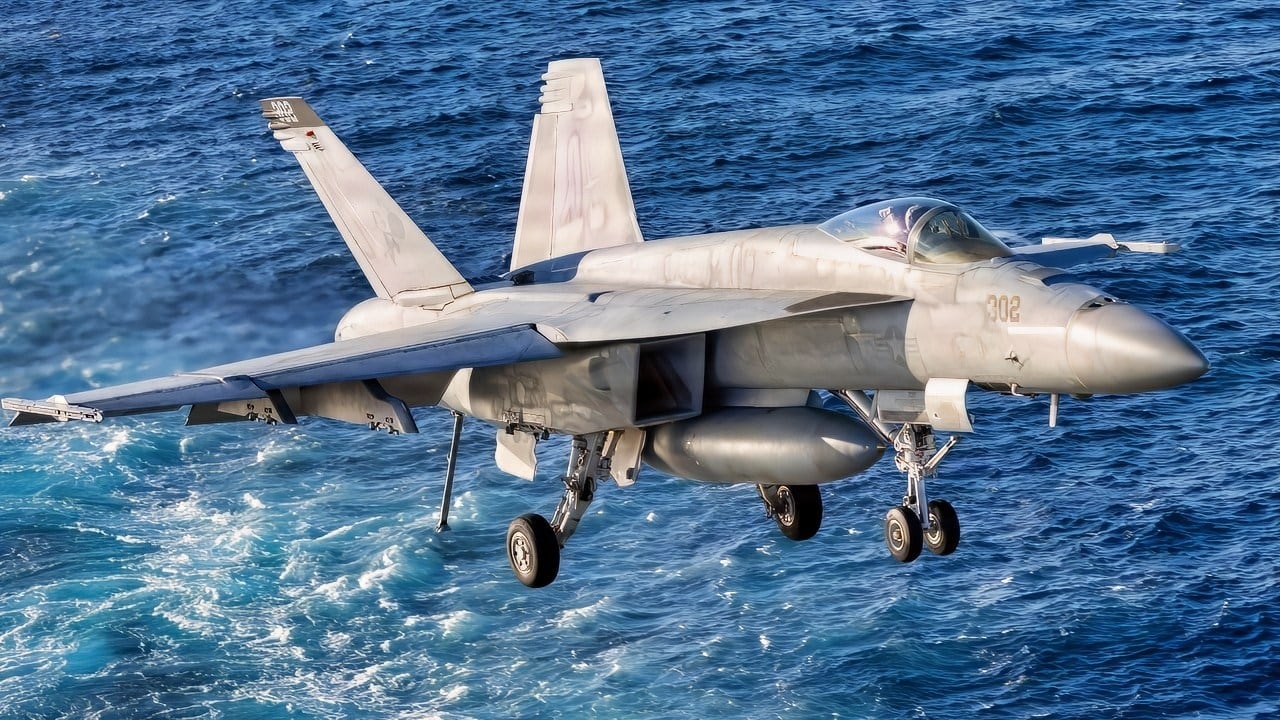
An F/A-18E Super Hornet aircraft approaches the flight deck of the world’s largest aircraft carrier, Ford-class aircraft carrier USS Gerald R. Ford (CVN 78), Nov. 17, 2025. U.S. military forces are deployed to the Caribbean in support of the U.S. Southern Command mission, Department of War-directed operations, and the president’s priorities to disrupt illicit drug trafficking and protect the homeland. (U.S. Navy photo)
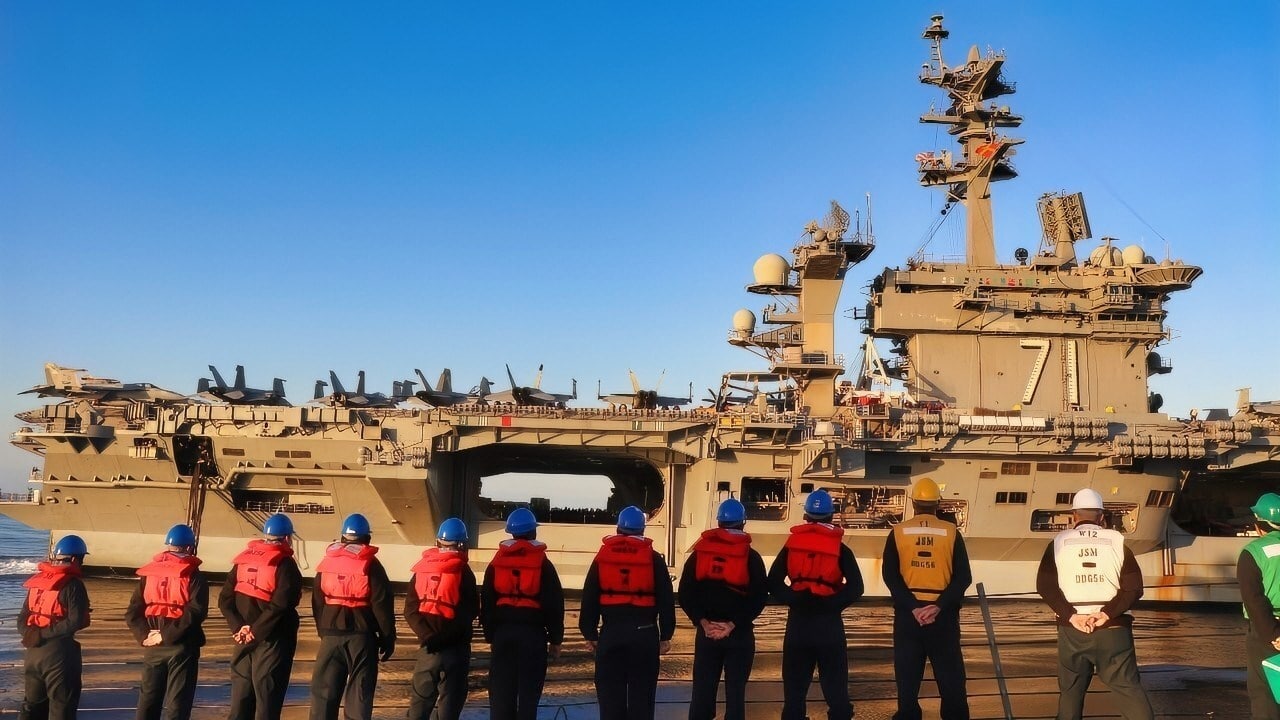
PACIFIC OCEAN (Nov. 28, 2023) Line handling crew assigned to the Arleigh Burke-class guided-missile destroyer USS John S. McCain (DDG 56) prepares to come alongside USS Theodore Roosevelt (CVN 71) for a replenishment at sea. John S. McCain is currently conducting routine training and certifications in the U.S. 3rd Fleet area of operations. (U.S. Navy photo by Ensign Garrett Fox).
“Just as U.S. members of Congress have expressed fears of personal attacks during the Trump years due to his violent rhetoric, countries that lack great power patronage might prove to be more pliable to continued U.S. pressure. Of course, the other effect could be for other country leaders to bind themselves more closely to other great powers as a form of political insurance against the United States. Stay tuned.”
About the Author: Stephen Silver
Stephen Silver is an award-winning journalist, essayist, and film critic, and contributor to the Philadelphia Inquirer, the Jewish Telegraphic Agency, Broad Street Review, and Splice Today. The co-founder of the Philadelphia Film Critics Circle, Stephen lives in suburban Philadelphia with his wife and two sons. For over a decade, Stephen has authored thousands of articles that focus on politics, national security, technology, and the economy. Follow him on X (formerly Twitter) at @StephenSilver, and subscribe to his Substack newsletter.