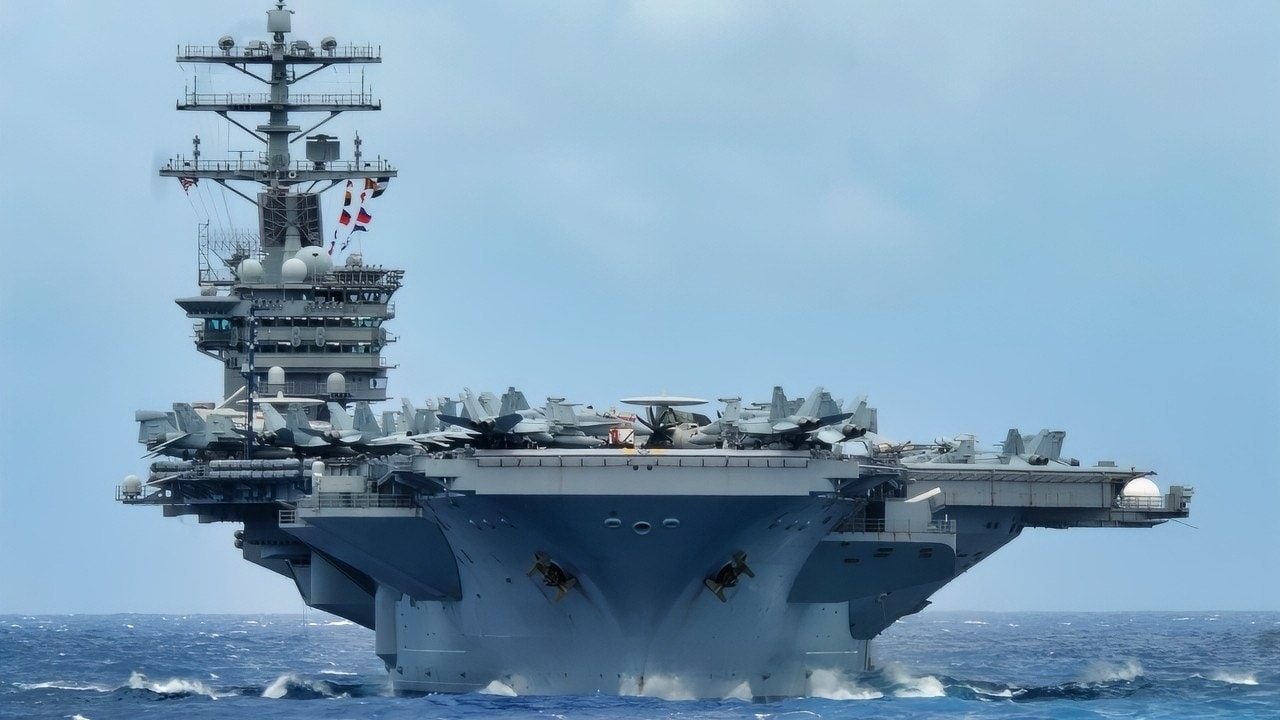
Summary and Key Points – During a NATO exercise in the 1980s, a Canadian Oberon-class diesel-electric submarine penetrated the defenses of the USS Dwight D. Eisenhower carrier battle group and earned a simulated “kill” without being detected.
-Running on batteries, the boat leveraged extreme quiet to exploit acoustic gaps—positioning in “quiet spaces” beneath the carrier where sensors and operators were least likely to pick it up.
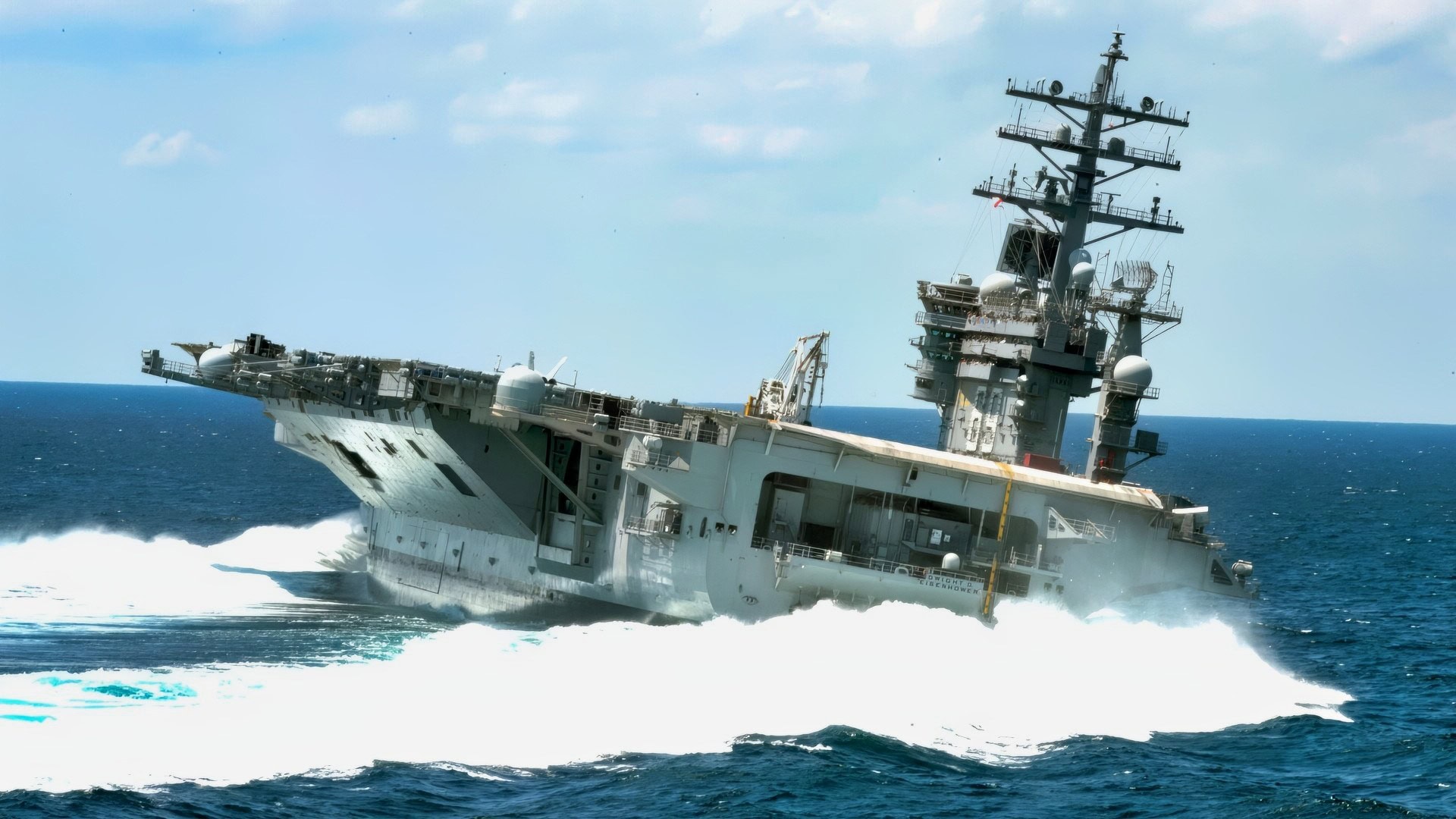
ATLANTIC OCEAN (June 14, 2011) The Nimitz-class aircraft carrier USS Dwight D. Eisenhower (CVN 69) conducts rudder turns during sea trials. Dwight D. Eisenhower completed a nine-month planned incremental availability at Norfolk Naval Ship Yard on June 10 and is scheduled to resume underway operations this summer. (U.S. Navy photo by Mass Communication Specialist 1st Class Christopher Stoltz/Released)
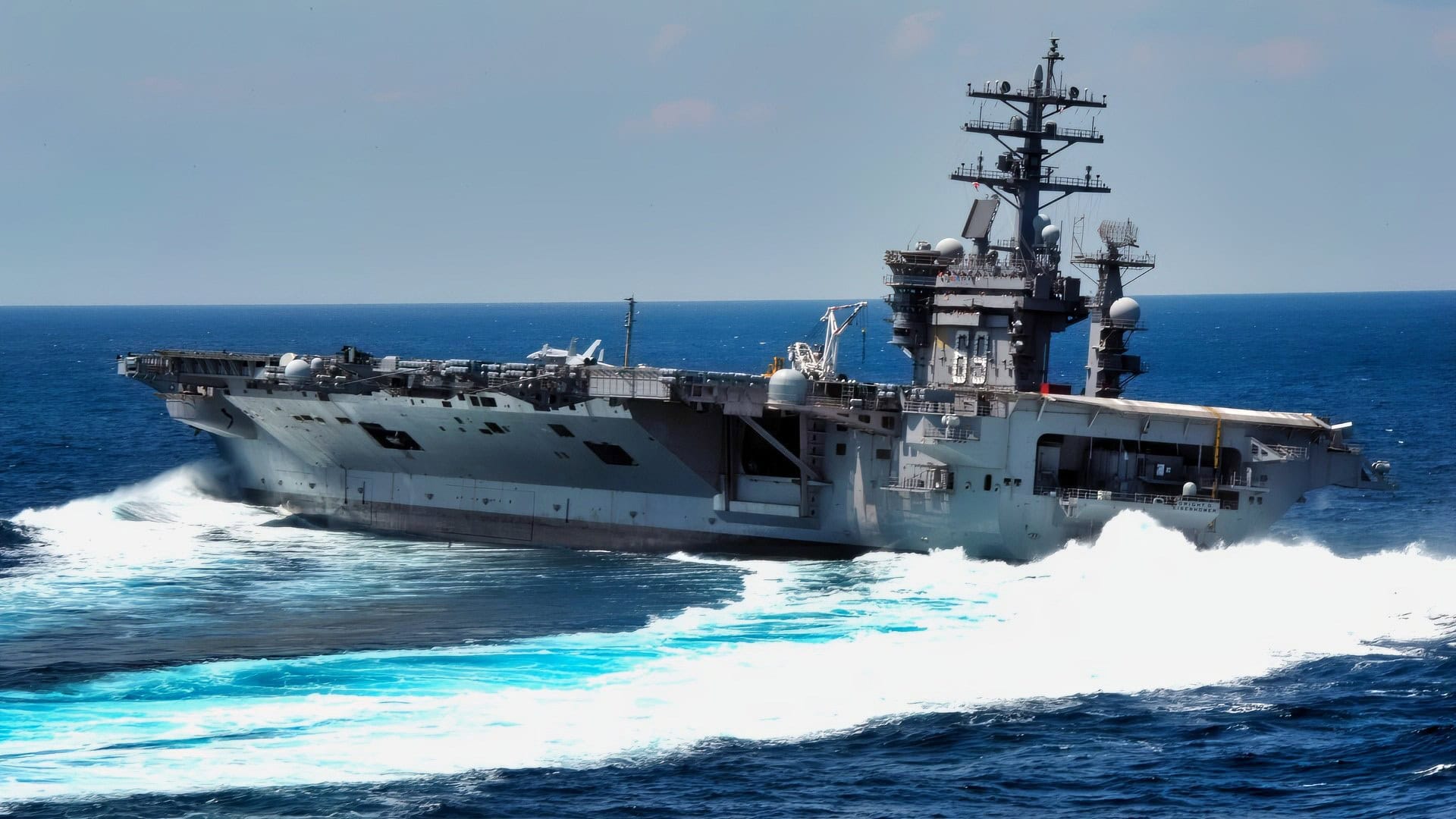
The Nimitz-class aircraft carrier USS Dwight D. Eisenhower conducts rudder turns during sea trials. Dwight D. Eisenhower completed a nine-month planned incremental availability at Norfolk Naval Ship Yard on June 10 and is scheduled to resume underway operations this summer.
-The episode underscored how Cold War ASW expectations—tuned for fast Soviet nuclear submarines—could miss slower diesel boats operating patiently near environmental limits.
-The incident reinforced the value of wargames and the enduring lethality of diesel-electric submarines in constrained waters.
Canadian Oberon Diesel Sub “Sinks” USS Eisenhower in a 1980s NATO Exercise
During a NATO exercise in the 1980s, a Canadian Oberon-class diesel-electric submarine penetrated the defenses of the USS Dwight D. Eisenhower carrier battle group. The submarine achieved a simulated kill without being detected.
Nuclear-powered aircraft carriers supported by cruisers, destroyers, and attack submarines, operated in contested waters threatened by Soviet submarines. Canada’s Oberon-class boats were diesel-electric submarines commissioned in the 1960s. The class was slower and far less technologically sophisticated than its nuclear counterparts, yet it proved surprisingly decisive in critical wargames against concentrated U.S. Navy surface power.
Canadian Submarine Found “Quiet” Spaces
Canada’s battery-powered submarine was able to achieve this simulated kill by finding quiet spaces beneath the carrier where it was not detected. The crew had reportedly trained extensively in anti-submarine warfare from the defender’s perspective, and they understood how to use these features to their advantage, positioning the boat where it was least likely to be heard.
The Oberon-class was stealthy. When running on batteries rather than diesel engines, a diesel-electric submarine is extraordinarily quiet—often quieter than the ambient ocean noise. Nuclear submarines, though fast and capable of remaining submerged indefinitely, must continuously run reactors and coolant pumps, which creates a persistent acoustic signature.
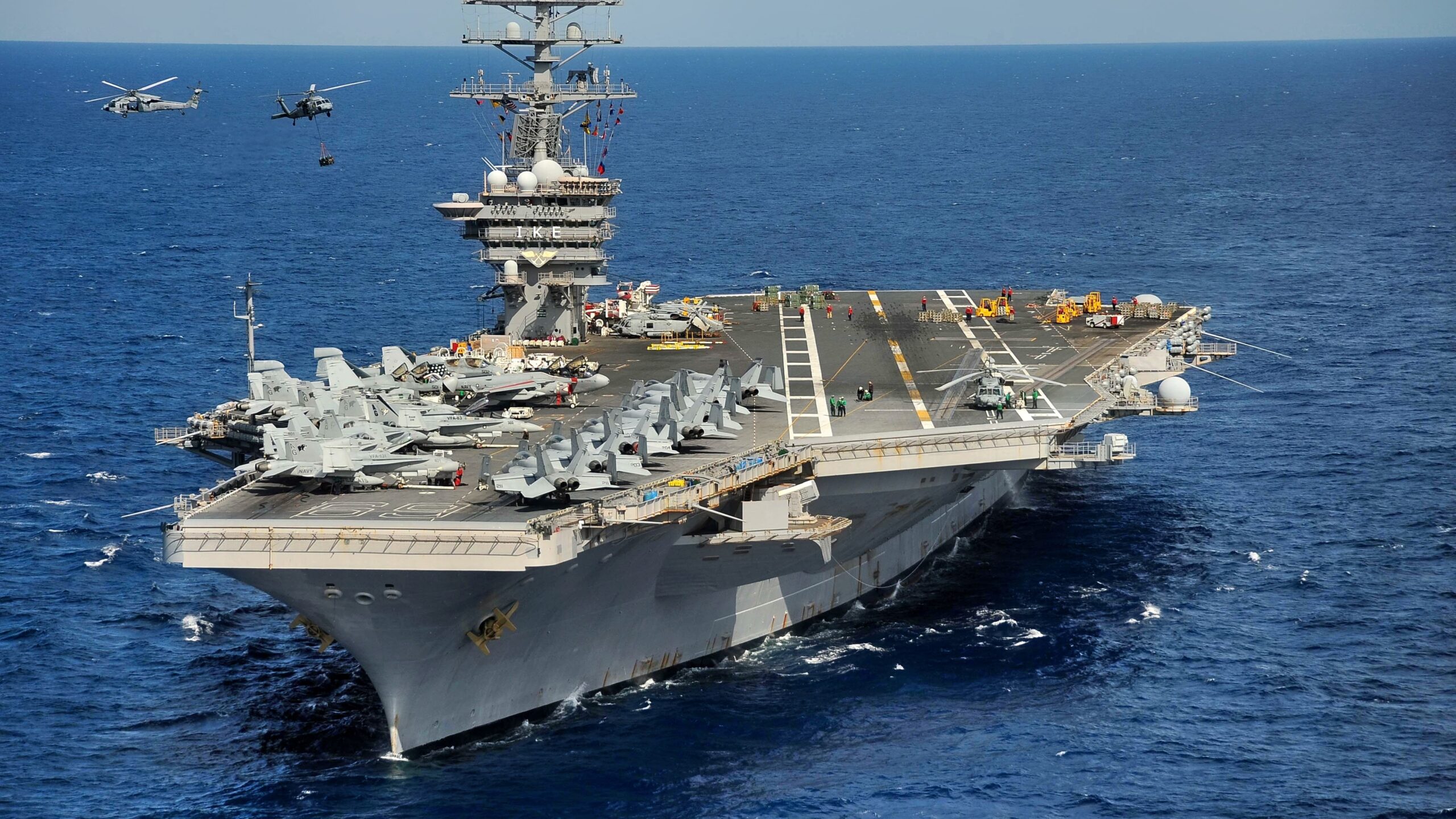
USS Dwight D. Eisenhower. Image Credit: Creative Commons.
In an exercise setting that emphasized realism, the Canadian boat exploited this advantage by remaining slow, patient, and silent, blending into the acoustic background rather than racing to intercept the carrier. This enabled the Oberon to successfully find a quiet space within range from which to launch a simulated torpedo attack.
Oberon Torpedo Attack
At the critical moment, the submarine simulated a torpedo launch. The exercise umpire, a U.S. Navy officer tasked with adjudicating the scenario, evaluated the situation and declared the carrier “sunk,” a 1945 essay recalls.
During the Cold War, U.S. anti-submarine warfare focused heavily on countering fast, deep-diving Soviet nuclear submarines. Screening tactics, sonar settings, and patrol patterns reflected that expectation. A small, slow-moving diesel boat operating close to environmental limits did not align with the threats expected by the Pentagon. As a result, the carrier group’s sensors and operators were looking for something other than the Oberon.
Oberon Inspires US Navy Subs?
This incident likely informed the Navy’s development of attack submarines in subsequent decades, given the specialized engine-quieting technologies built into the Virginia-class submarines.
These submarines also have outstanding surveillance capabilities—they can quietly conduct forward reconnaissance in high-threat areas without being easily detected. Its successor, the Columbia-class submarine, is also engineered to quietly linger in undetected waters, often limiting movements to reduce detectability.
In the case of the Oberon, simulated exercises and wargames achieved their intended purpose—they are designed to expose vulnerabilities in time to correct them.
The Eisenhower episode reinforced the continuing relevance of diesel-electric submarines, particularly in coastal and constrained waters, and underscored the danger of overconfidence.
It also highlighted the importance of training against a wide spectrum of threats, not just the most technologically advanced ones.
About the Author: Kris Osborn
Kris Osborn is the President of Warrior Maven – Center for Military Modernization. Osborn previously served at the Pentagon as a highly qualified expert in the Office of the Assistant Secretary of the Army—Acquisition, Logistics & Technology. Osborn has also worked as an anchor and on-air military specialist at national TV networks. He has appeared as a guest military expert on Fox News, MSNBC, The Military Channel, and The History Channel. He also has a Masters Degree in Comparative Literature from Columbia University