Hybrid Engines & AI: Why the M1E3 Is the Biggest Tank Upgrade in Decades
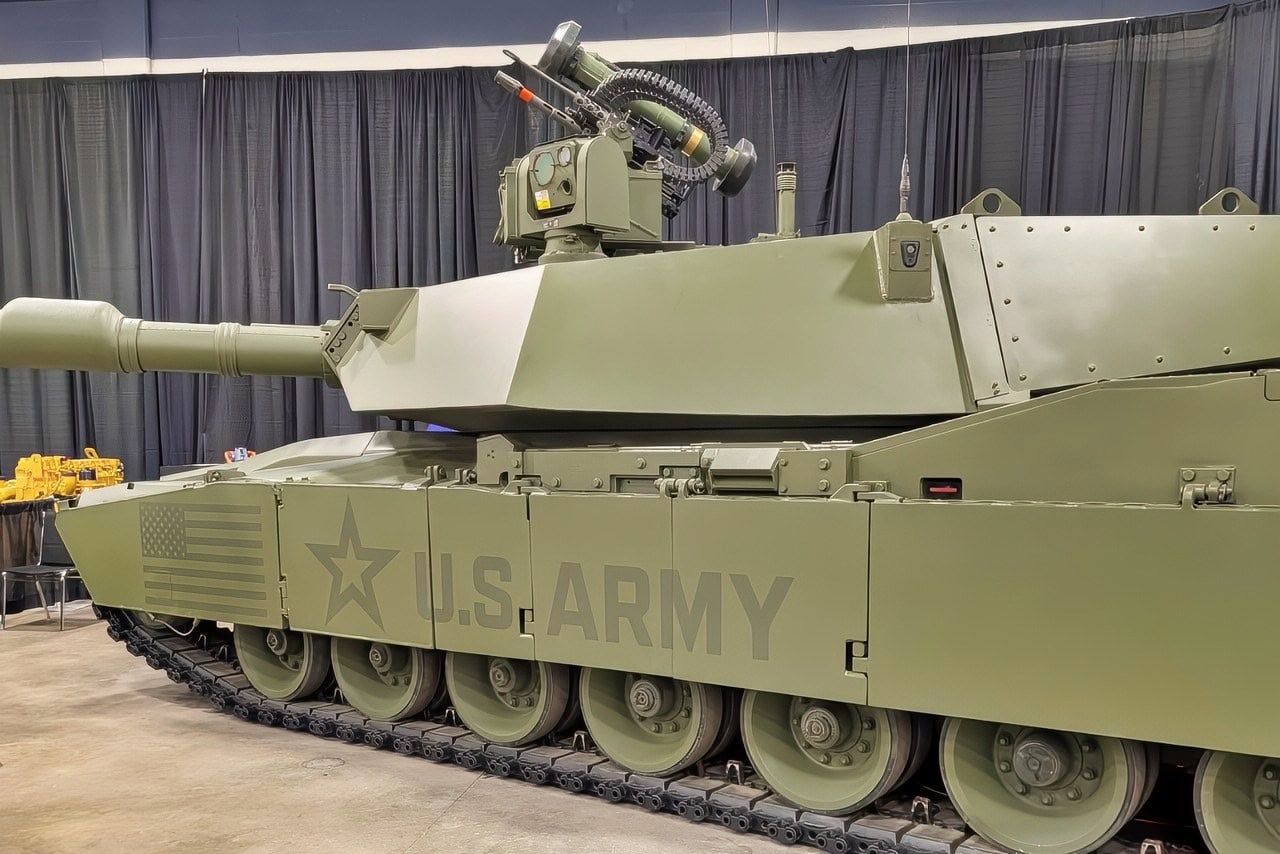
The U.S. Army just released a pre-prototype tank, the M1E3, and 19FortyFive was just in Detroit to see it. We have the pictures below for you.
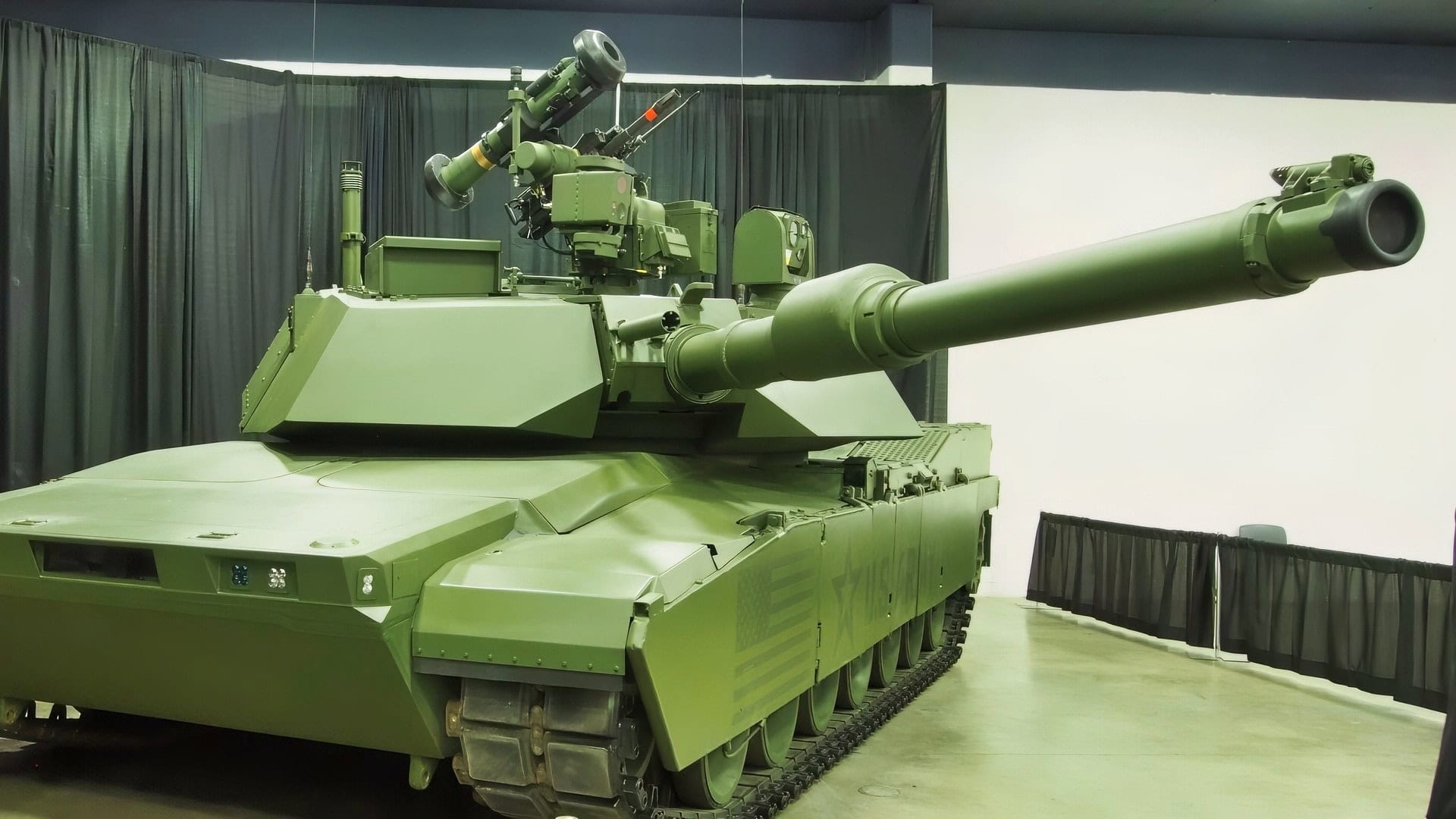
M1E3. 19FortyFive Image from the Detroit Auto Show.
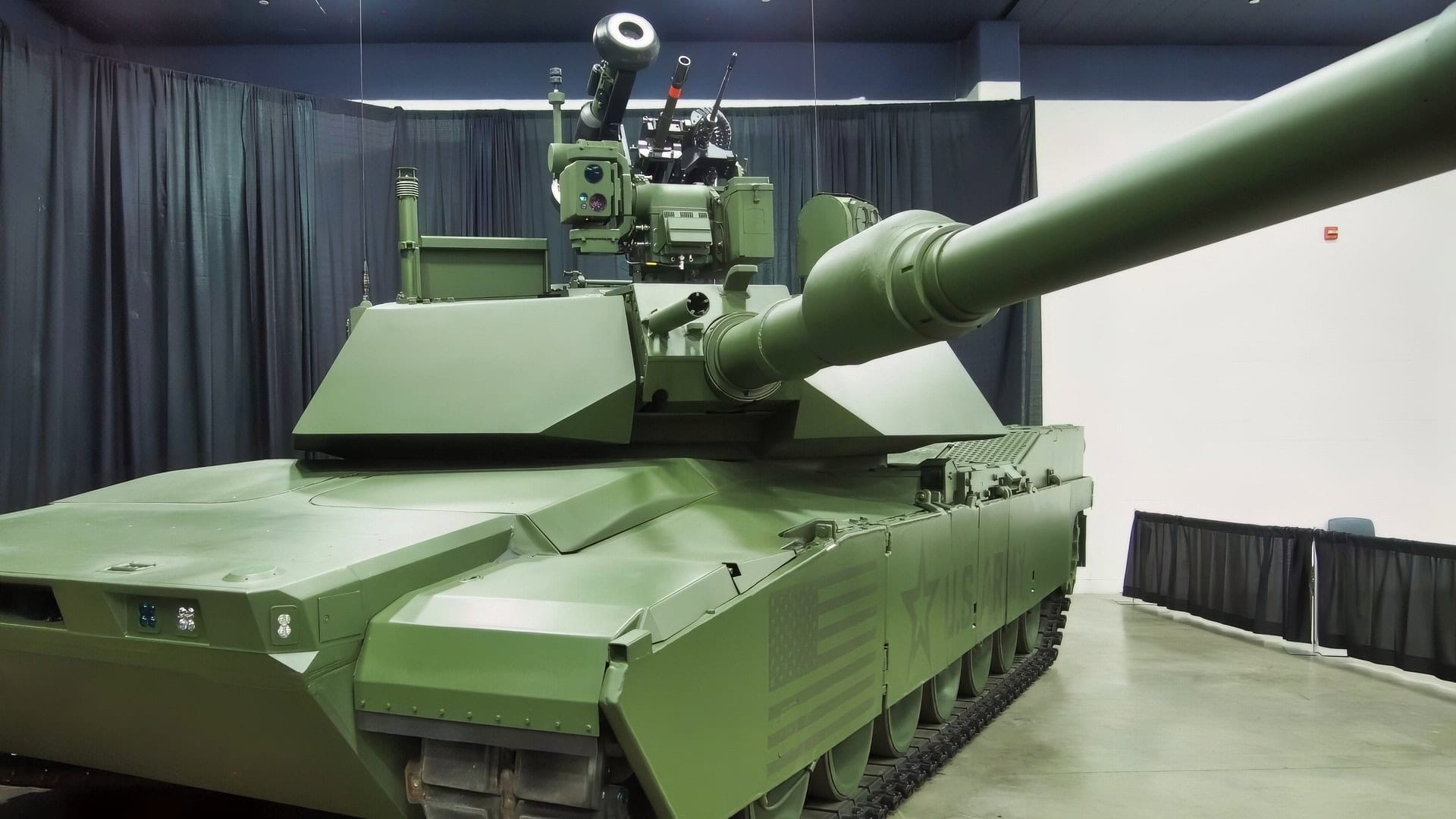
At the Detroit Auto Show, 19FortyFive visited the new M1E3 tank. Image Credit: 19FortyFive.com.
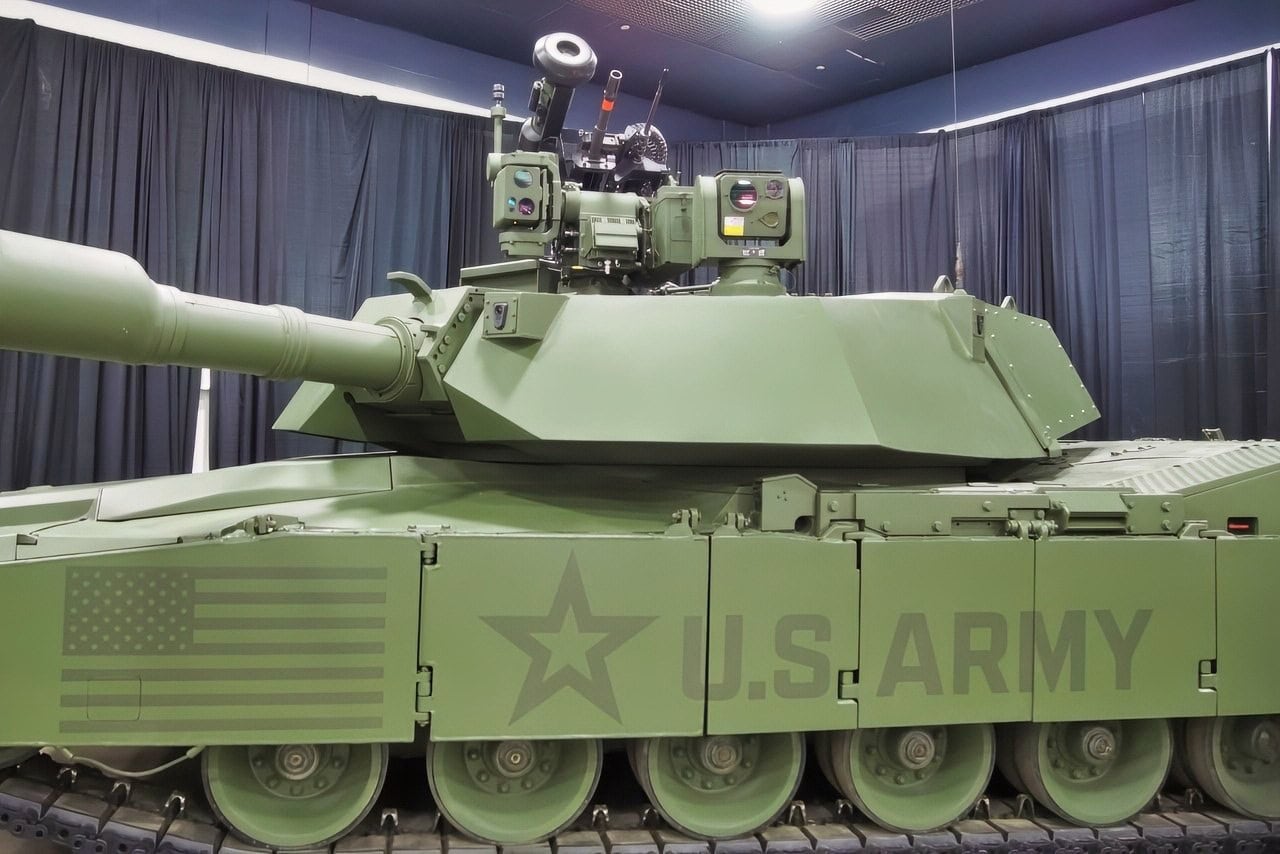
M1E3 from the Detroit Auto Show. Taken by 19FortyFive.com on 1/17/2026.
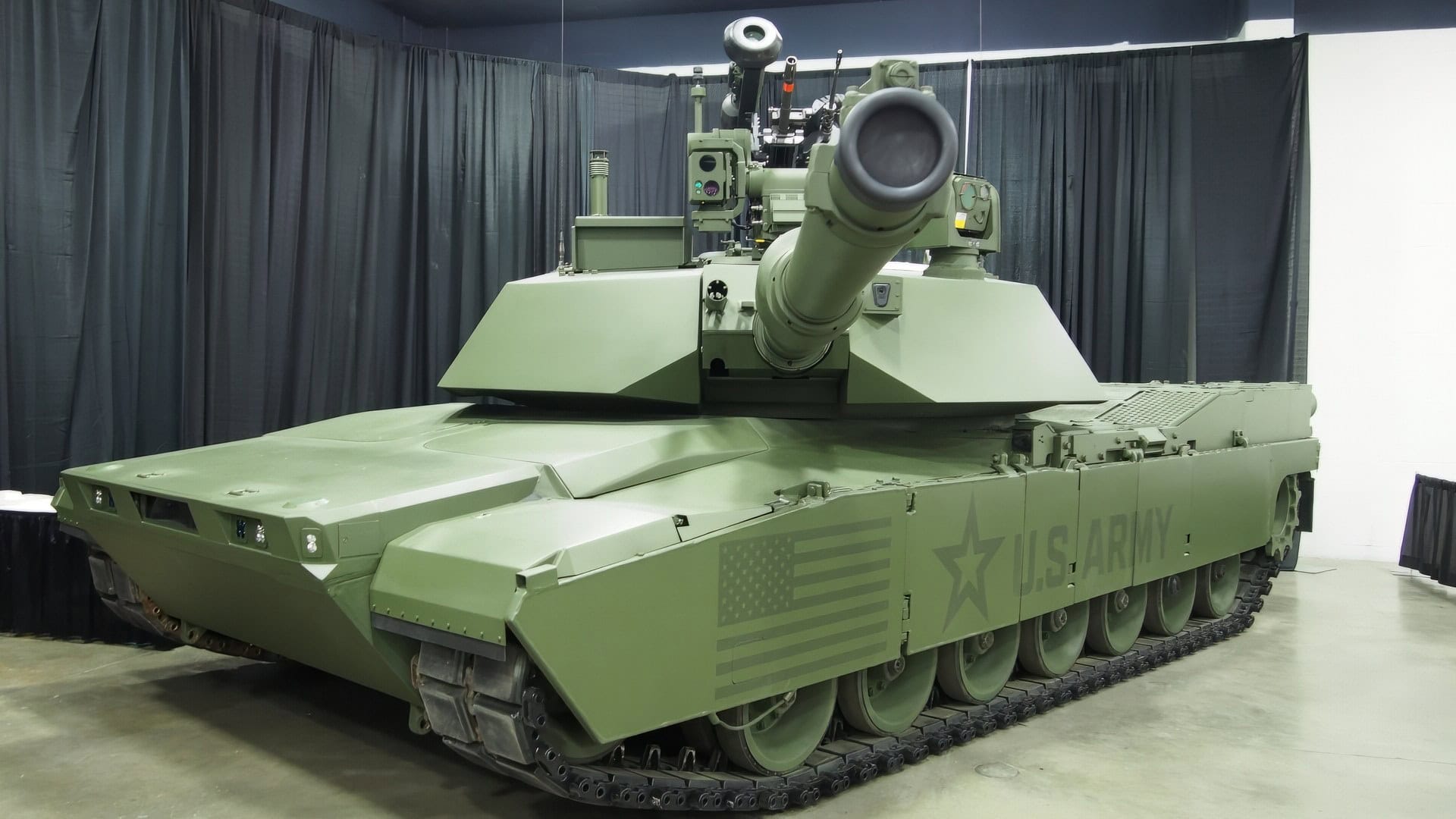
Photo taken on 1/17/2026 of the M1E3 Tank at the Detroit Auto Show. Image by 19FortyFive, All Rights Reserved.
The future tank is meant to be faster, lighter, more fuel-efficient, AI-enabled, built for manned-unmanned teaming, and armed with a new generation of weapons.
Army Chief of Staff General Randy George oversaw the service’s unveiling of the early prototype.
The service wants to merge high-powered anti-armor lethality with range, agility, and light weight. It also wants to incorporate drone-controlling technology and a suite of advanced networking capabilities.
There is often a concern that reducing armor weight to gain speed and mobility may decrease the tank’s overall survivability—but this may no longer be the case.
The new Abrams’ developers likely are incorporating lessons learned from Ukraine to enhance mobility and expeditionary operations without compromising survivability.
On-Board Power
Using a hybrid-electric engine, the M1E3 is planned not only to operate with more range and fuel efficiency, but to benefit from additional on-board electrical power capacity.
Past upgrades to the Abrams have included technologies such as auxiliary power units to fortify additional needs for power to support sensors, computing, targeting technology, and command-and-control systems.
Now, it appears likely that the Army has found a way to enable more on-board power at much lighter weights, which would make the tank more expeditionary, deployable, and able to maneuver over bridges and narrowly configured passageways in a way that 70-ton Abrams tanks cannot.
The new tank will likely be much better positioned to operate in urban areas, control drones, verify targets from stand-off distances, and fire a range of different 120-mm tank round variants.
These attributes help explain why the Army is pursuing the M1E3 Abrams Tank Modernization Program. After acquiring large numbers of the M1A2 SEP v3, the Army appears to be skipping over its M1A2 SEP v4 variant in favor of the emerging M1E3.
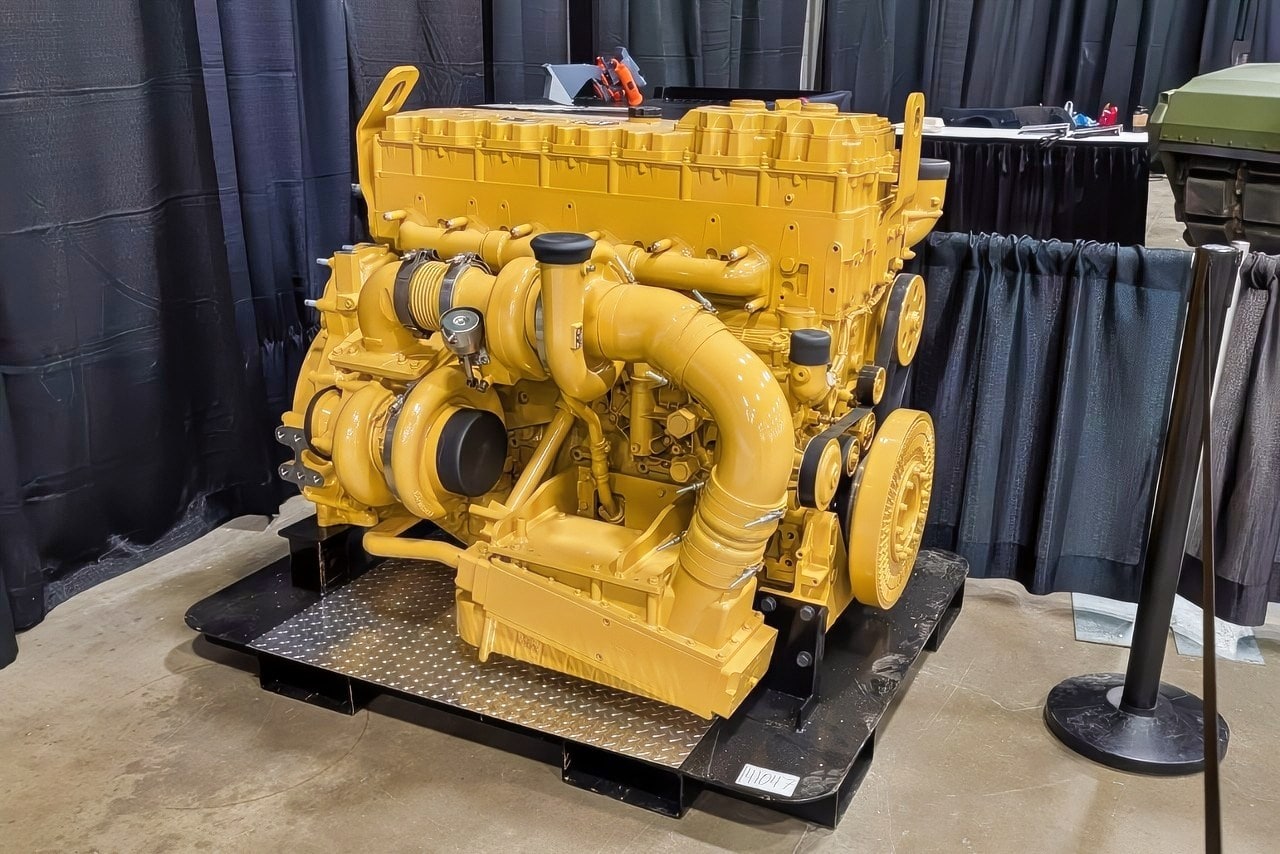
M1E3 Tank at the Detroit Auto Show. Image Credit: 19FortyFive.
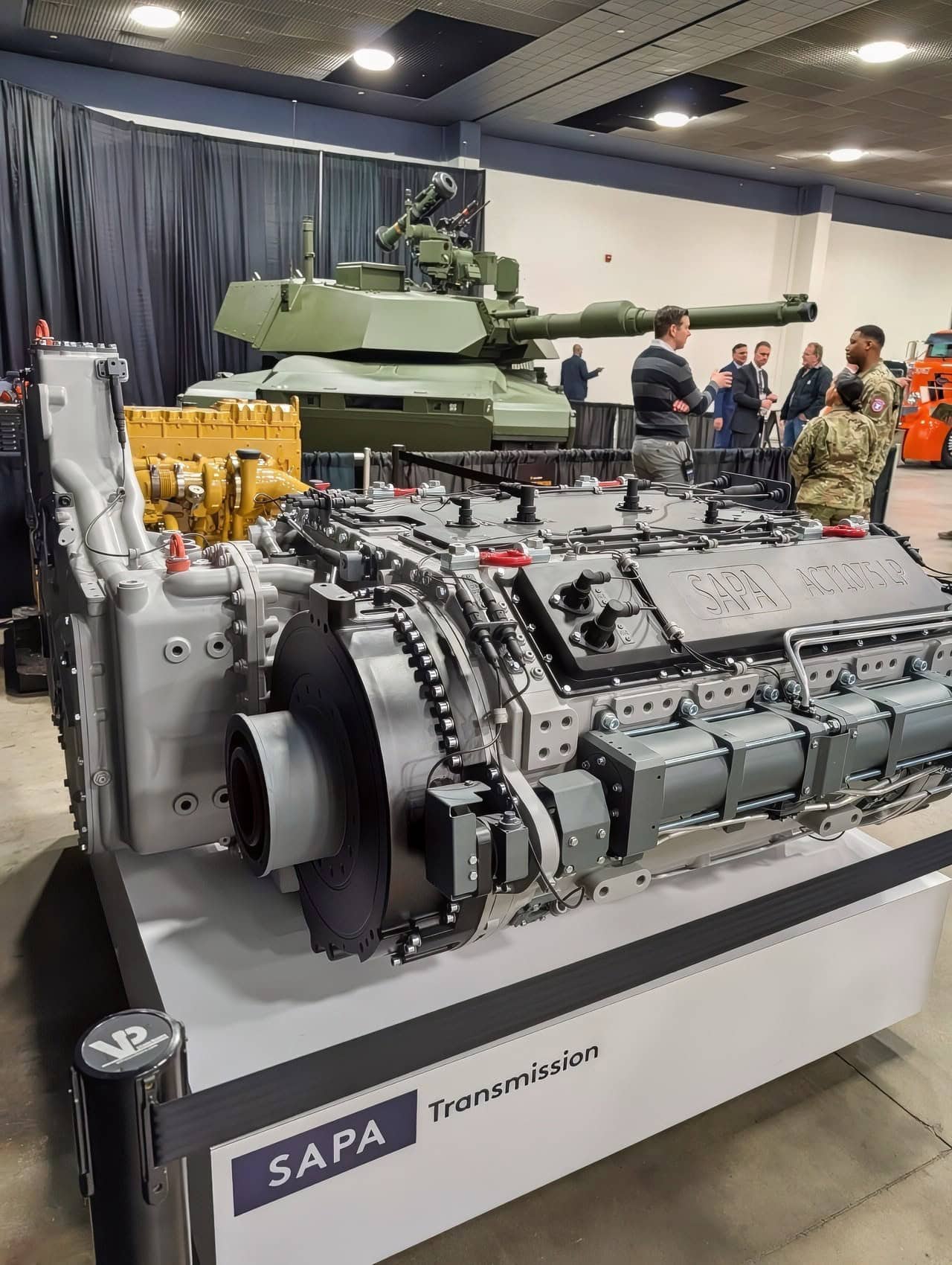
M1E3 Tank at the Detroit Auto Show. Image Credit: 19FortyFive.
The Army is likely engineering its new tank variant to face specifically the anti-armor threats seen in Ukraine. A faster, more agile tank, potentially fortified by longer-range weapons and sensors—and perhaps even active protection—would be in a much better position to thwart, avoid, or destroy common anti-armor threats such as shoulder-fired anti-tank guided missiles.
Scout and infantry support, perhaps aided by ground and air unmanned reconnaissance technologies, will increasingly place tank crews in a position to pick out potential ambush locations at greater stand-off ranges.
New Tactics Improve Survivability
The U.S. Army wants to ensure both survivability and lethality. To do so, it is significantly adjusting its tactics and maneuver formations to align with a new generation of weapons and networking technologies.
Operating air and ground drones in the line of enemy fire, sending large robotic vehicles to clear tank ditches and breach obstacles, and using long-range, high-fidelity sensors to maneuver and target enemies in more dispersed formations are all newer tactical mission possibilities envisioned for the M1E3 main battle tank.
Army and industry innovators are working to integrate new technologies and tactics designed to enable a new generation of tank platforms that can remain lethal in a changing threat environment. While Army tanks must be able to deliver massive firepower, enhance survivability, and carry out mechanized assault missions, the operational scope of Army tanks now also prioritizes technology, networking, and unmanned systems.
Tanks for a New Generation of War
While the main battle tank as a weapon has come under new kinds of threats, tanks appear to be here to stay—particularly an upgraded, lightweight, next-gen variant such as the M1E3. Combined arms maneuver continues to show great combat effectiveness, particularly when tanks are paired with reconnaissance and targeting units, advanced Intelligence, Surveillance, and Reconnaissance capabilities, and a new generation of networking and command-and-control technologies.
Mechanized assault continues to occupy a key place in modern warfare and will likely add tactical relevance in coming years as unmanned systems, AI-enabled computing, sensor image fidelity, and target-data transmission contribute to more survivable attack formations and make long-range weaponry more precise.
Tactics and operational concepts on how best to employ tanks in combat are changing. But the combat value offered by tanks is nearly impossible to replicate.
The Army seems to understand this, which is why it is developing lighter-weight armored attack vehicles such as the M1E3, even while it deploys upgraded traditional Abrams tanks.
About the Author: Kris Osborn
Kris Osborn is the President of Warrior Maven – Center for Military Modernization. Osborn previously served at the Pentagon as a highly qualified expert in the Office of the Assistant Secretary of the Army—Acquisition, Logistics & Technology. Osborn has also worked as an anchor and on-air military specialist at national TV networks. He has appeared as a guest military expert on Fox News, MSNBC, The Military Channel, and The History Channel. He also has a Masters Degree in Comparative Literature from Columbia University.