
M1E3 Abrams vs K3: Hybrid Power, Unmanned Turrets, And The Next Tank Race
As tensions around the world heat up, the race is on for world powers to modernize their ground forces the fastest. The US has invested significant resources in developing the newest iteration of the Abrams, the M1E3.
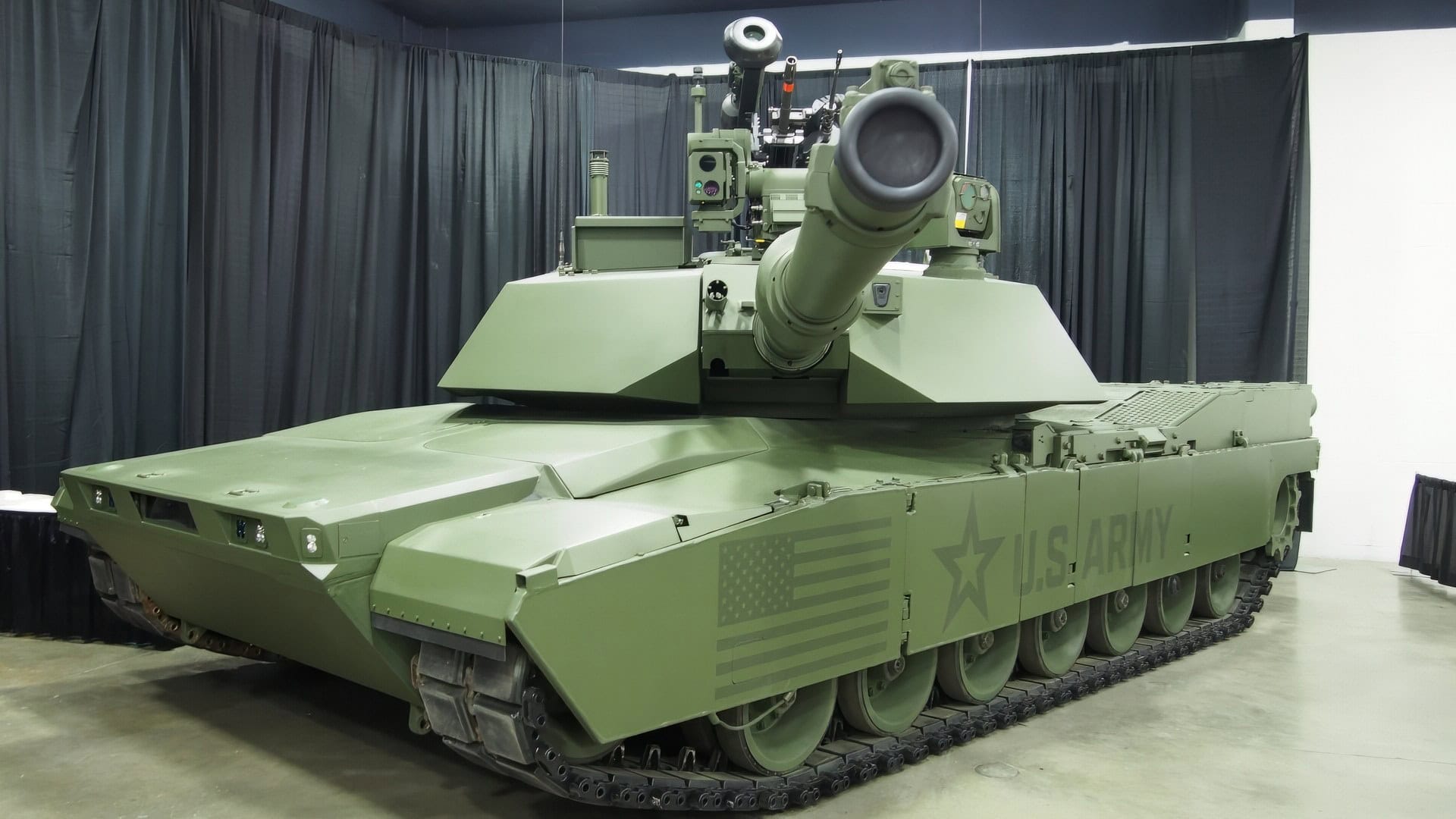
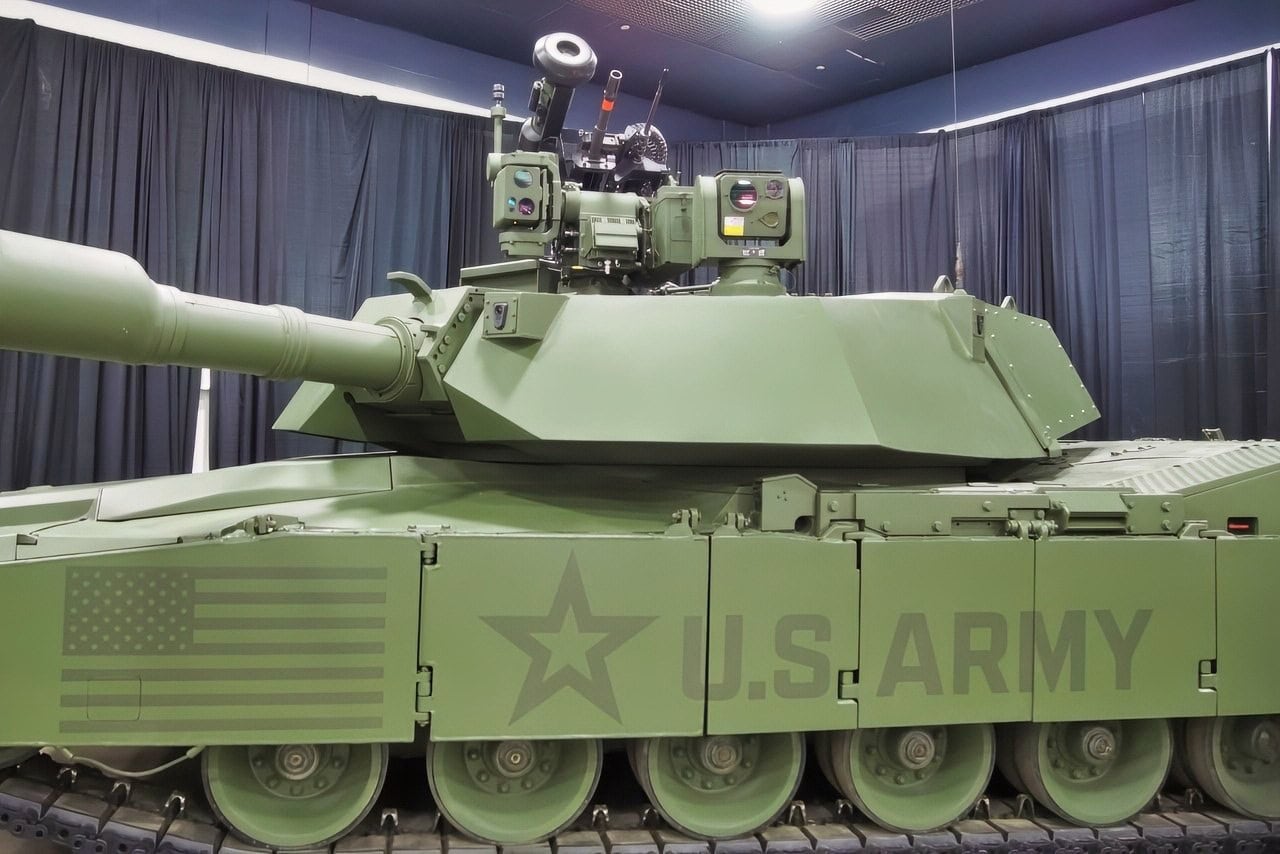
Photo taken on 1/17/2026 of the M1E3 Tank at the Detroit Auto Show. Image by 19FortyFive, All Rights Reserved.
M1E3 Tank from the Detroit Auto Show. Photo Taken By 19FortyFive Staff on 1/17/2026.
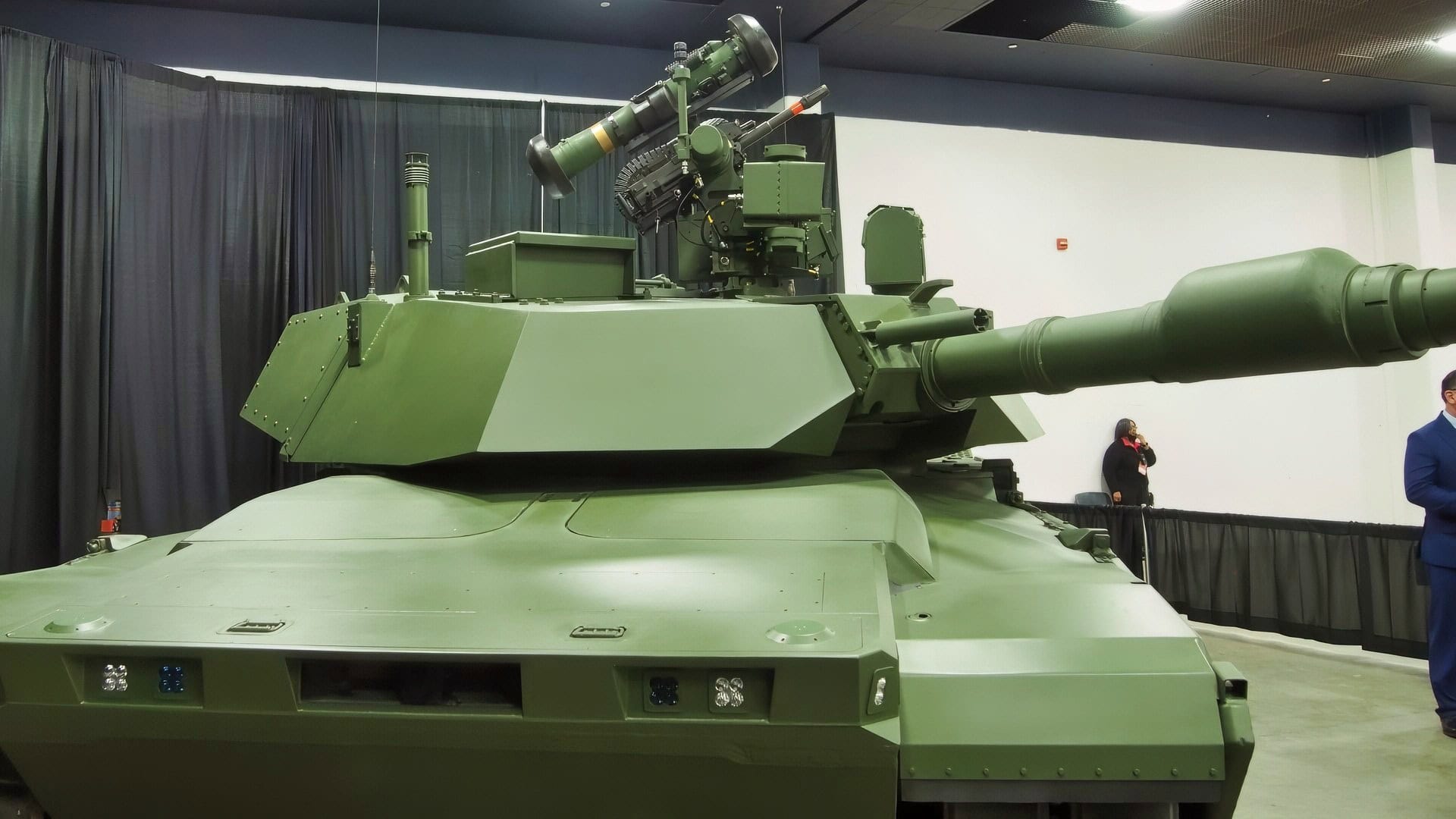
M1E3 Tank at the Detroit Auto Show. Image Credit: 19FortyFive.
Meanwhile, South Korea has begun development of its next-generation main battle tank, the K3. Based on what we know of these two platforms, both represent significant departures from previous iterations.
Still, while the M1E3 retains many components of the Abrams, the K3 is an entirely new design. So, which tank is better? Well…
M1E3 vs K3
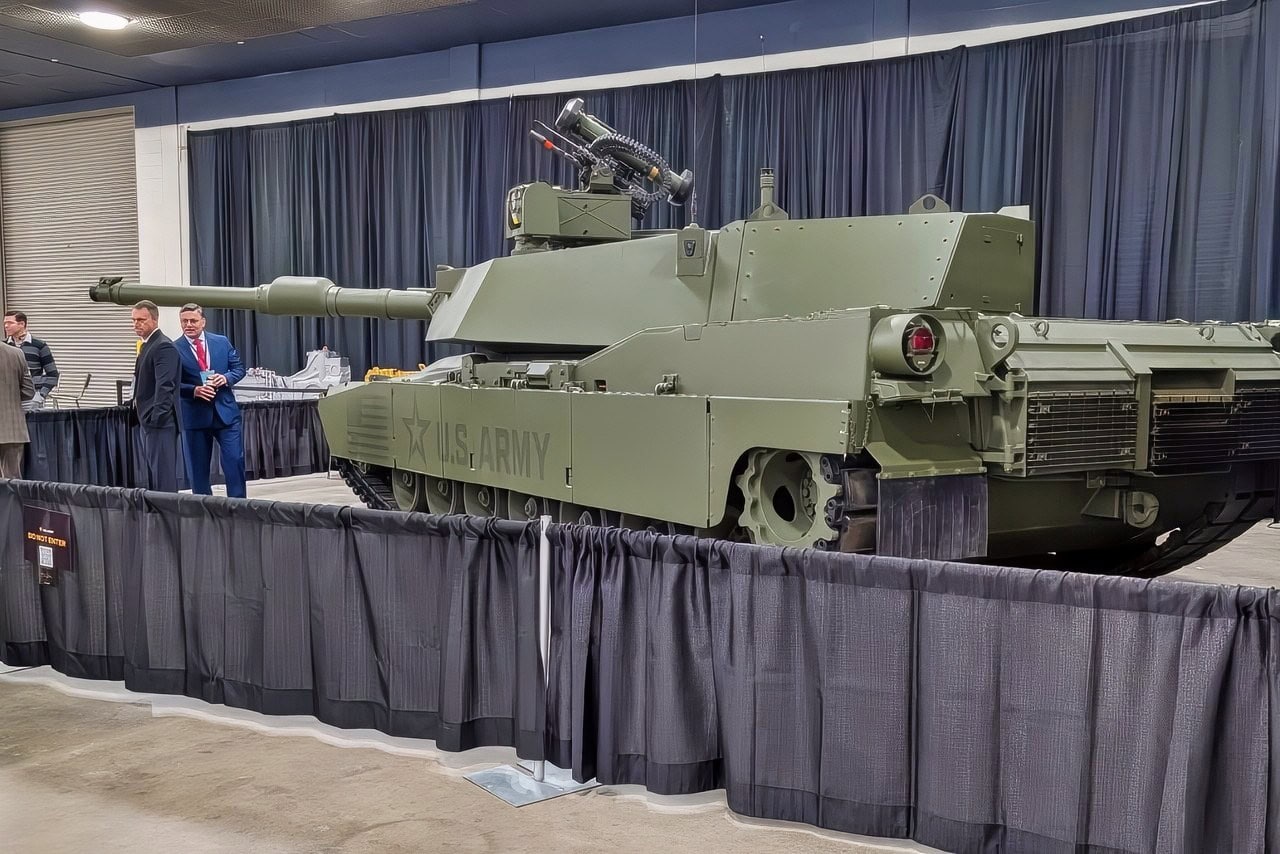
The M1E3 Abrams originated in a September 2023 US Army decision to cancel development of the M1A2 SEPv4 upgrade. While the M1A2 is still a great tank, every new capability adds weight, increases sustainment demands, and reduces deployability. And, in fact, 19FortyFive visited with the new tank in demo form at the Detroit Auto Show, where all of the M1E3 pictures in this article are sourced.
At the same time, observations from the war in Ukraine highlighted that survivability could no longer be achieved solely by adding armor; active protection, internal integration, and electronic measures were now essential. As a result, the Army elected to pursue the M1E3 as a fundamental redesign rather than another incremental upgrade, with the explicit aim of reducing weight and logistical footprint while improving survivability against modern threats.
South Korea’s K3, by contrast, sits much earlier in the development cycle and embodies a more radical vision. In fact, many comment that it looks like the B-21 Raider stealth bomber.
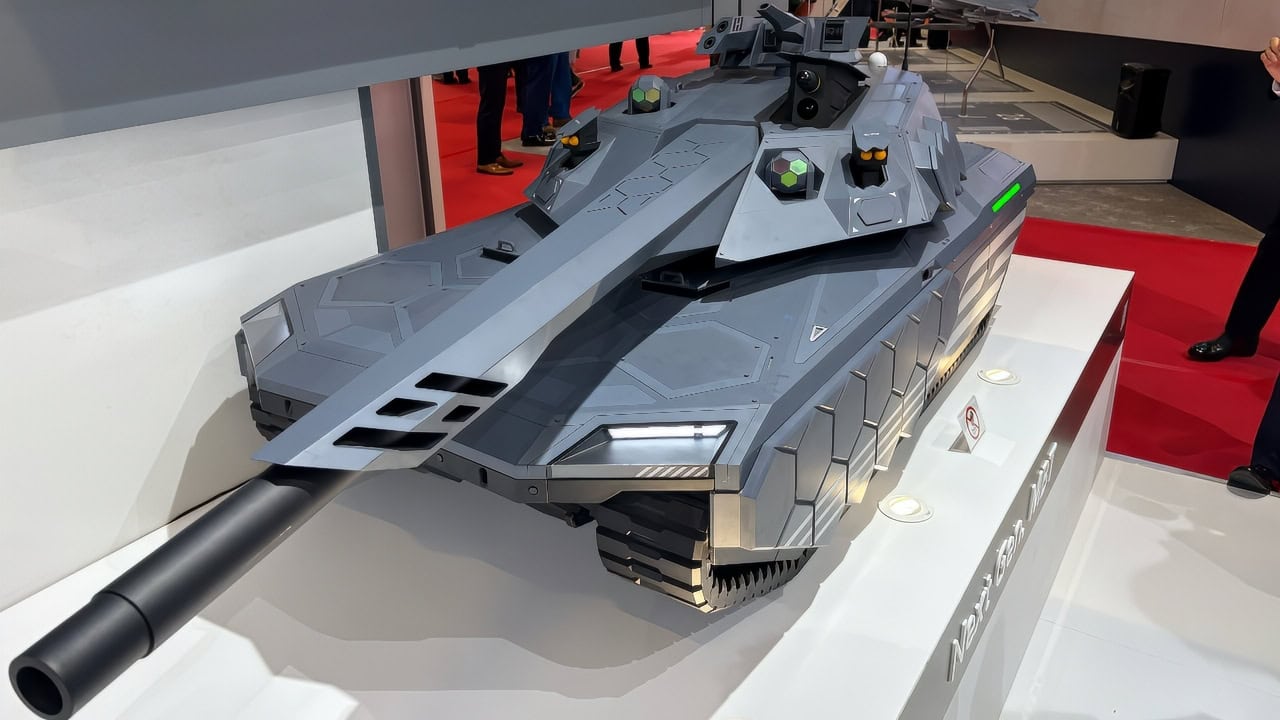
K3 Black Panther Photo. Image Credit: Reuben F. Johnson from 19FortyFive.com
Hyundai Rotem, working with the Agency for Defense Development, first publicly framed the K3 as a successor to the highly capable K2 Black Panther during ADEX 2023. Subsequent reporting in 2024 and 2025 confirms that the company has formally registered the tank’s design with South Korea’s Intellectual Property Office, indicating that the concept has matured into an initial workable design.
The tank is expected to enter service sometime in the 2040s, with upgrades arriving throughout its life cycle.
Firepower and Lethality
In terms of firepower, the M1E3 is expected to retain the 120 mm-class main gun, broadly consistent with existing Abrams variants, albeit paired with an unmanned turret, an autoloader, and advanced fire-control and targeting software. According to the Army, rather than relying on an upgraded caliber, the M1E3 will use new and improved ammunition to enhance its lethality. However, some space is left for a higher-caliber gun if needed. The prototype of the M1E3 includes an RWS with a Javelin integrated; this feature is likely for testing purposes and will likely be removed in later iterations.
The K3, on the other hand, utilizes a 130 mm smoothbore gun in an unmanned turret, fed by an automatic loader and supported by automated fire-control systems. Reports also reference the integration of long-range anti-tank guided missiles, capable of reaching up to 8 kilometers, and a remote weapon station capable of countering drones and close-range threats. If realized, this armament suite would provide significant growth margin and overmatch potential compared to today’s 120 mm systems, though at the cost of greater technical complexity and new ammunition logistics.
Next-Generation Survivability
Protection and survivability are areas where both programs respond directly to recent battlefield lessons. The M1E3 emphasizes integrated active protection systems and internalized survivability measures rather than bolt-on solutions that add mass. Army leaders have been explicit that future Abrams variants must incorporate protection from the outset to remain mobile and sustainable. Moving the crew out of the turret, maintaining blast-isolated ammunition storage, and fusing hard-kill and soft-kill defenses into a unified architecture are widely expected elements of the design.
The K3’s survivability concept takes this further by combining active defenses with structural and electronic measures. Its defenses include hard-kill APS, directional infrared countermeasures, drone-jamming systems, and extensive sensor fusion. The three-person crew is placed in an armored capsule in the hull, separated from ammunition and weapons, echoing trends seen in other next-generation designs. Stealth shaping and reduced emissions are intended to degrade enemy sensors before active defenses are even required.
Revolution in Propulsion
In terms of propulsion, both platforms steer towards more unconventional power systems. The M1E3 is expected to transition away from the Abrams’ traditional gas turbine toward a hybrid-electric solution, improving fuel efficiency, enabling silent watch, and ideally reducing its logistical strain.
The target weight reduction of roughly ten tons compared to the heaviest Abrams variants is central to improving bridge access, recovery, and strategic deployability, all chronic challenges for US armored forces.
The K3’s propulsion is even more ambitious. Initial versions are expected to use a diesel-electric hybrid system, but the long-term goal is to switch to whole-hydrogen-fuel-cell propulsion. Hyundai Rotem and South Korean defense officials argue that hydrogen power offers dramatic reductions in noise and heat signature, improved endurance, and lower maintenance demands.
However, they also acknowledge that this technology is unlikely to mature sufficiently for frontline deployment until around 2040, underscoring the program’s long-term nature.
Which Tank is Better?
In terms of crew and human-machine integration, both vehicles point toward smaller crews and greater automation. The M1E3 is widely expected to operate with three soldiers supported by advanced software, automation, and sensor fusion, with the Army emphasizing modular open systems architecture to speed future upgrades. The K3 goes further. The tank uses artificial intelligence for target identification and prioritization, fully virtualized situational awareness displays, and organic drone launch and recovery from the turret for reconnaissance and targeting.
Both tanks are still very early in their development cycles, so it is impossible to say which one is strictly “better.” However, the K3 represents a more ambitious vision for the future of tank warfare. With a hydrogen-powered system, larger gun caliber, and sophisticated FCS and networked systems, the K3 is likely to be the more advanced tank between the two.
As it stands, the M1E3 is much further along in its development, although neither tank is expected to enter service before the 2030s.
In Three Words: Please Stay Tuned!
About the Author: Isaac Seitz
Isaac Seitz, a Defense Columnist, graduated from Patrick Henry College’s Strategic Intelligence and National Security program. He has also studied Russian at Middlebury Language Schools and has worked as an intelligence Analyst in the private sector.