
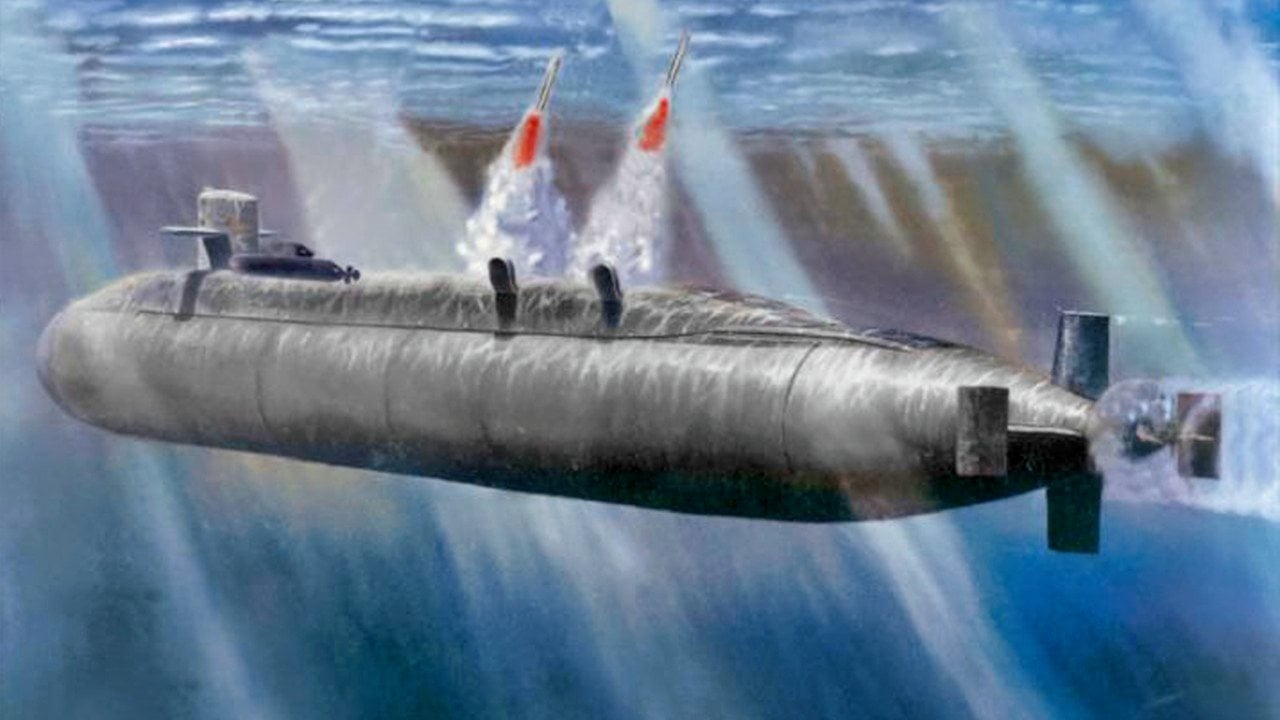
Key Points and Synopsis: While the U.S. Navy’s “Silent Service” typically operates in classified secrecy, it occasionally surfaces its submarines to send powerful messages of deterrence to adversaries like China, Russia, and North Korea.
-A notable example occurred in 2010 when three Ohio-class guided-missile submarines—carrying a combined 462 Tomahawk missiles—surfaced simultaneously across the Indo-Pacific to counter Chinese aggression.
-Under Defense Secretary Pete Hegseth, this strategy of deliberate visibility continues, utilizing the fleet’s massive firepower to signal American resolve in global hot spots.
The Day 3 US Submarines Surfaced at Once to Send a 462-Missile Message to China
The U.S. Navy calls it the Silent Service.
You know it as the American submarine force, and it is more active than you can even imagine.
Commanders “take her deep” as they run more stealthily than most other submarines from navies around the world.
Their location is often classified, and they rarely make public appearances.
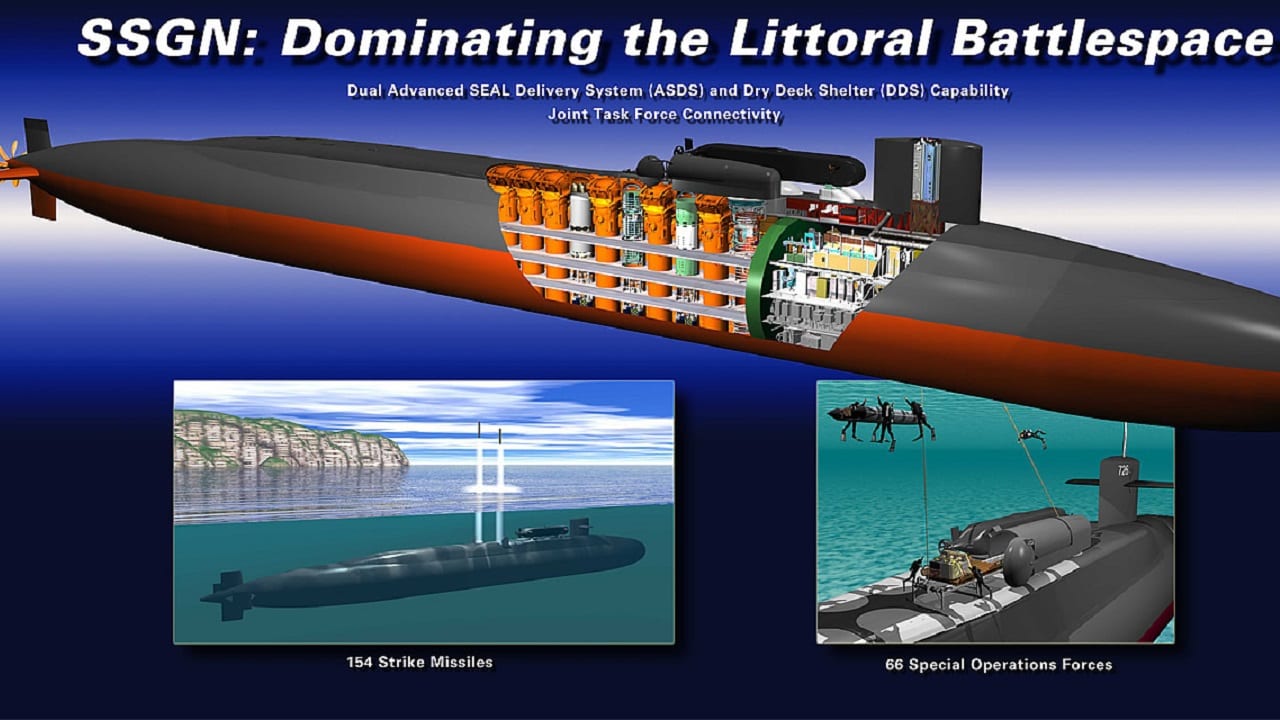
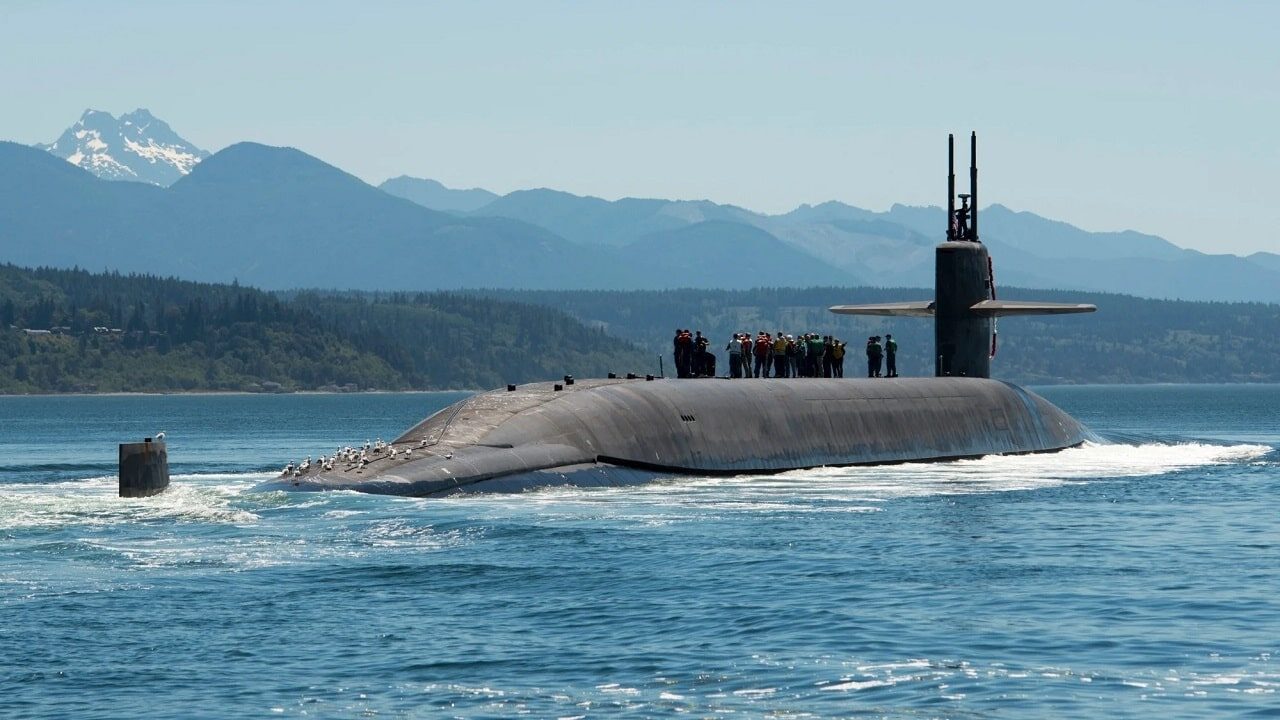
Ohio-class SSGN. Image Credit: US Military.
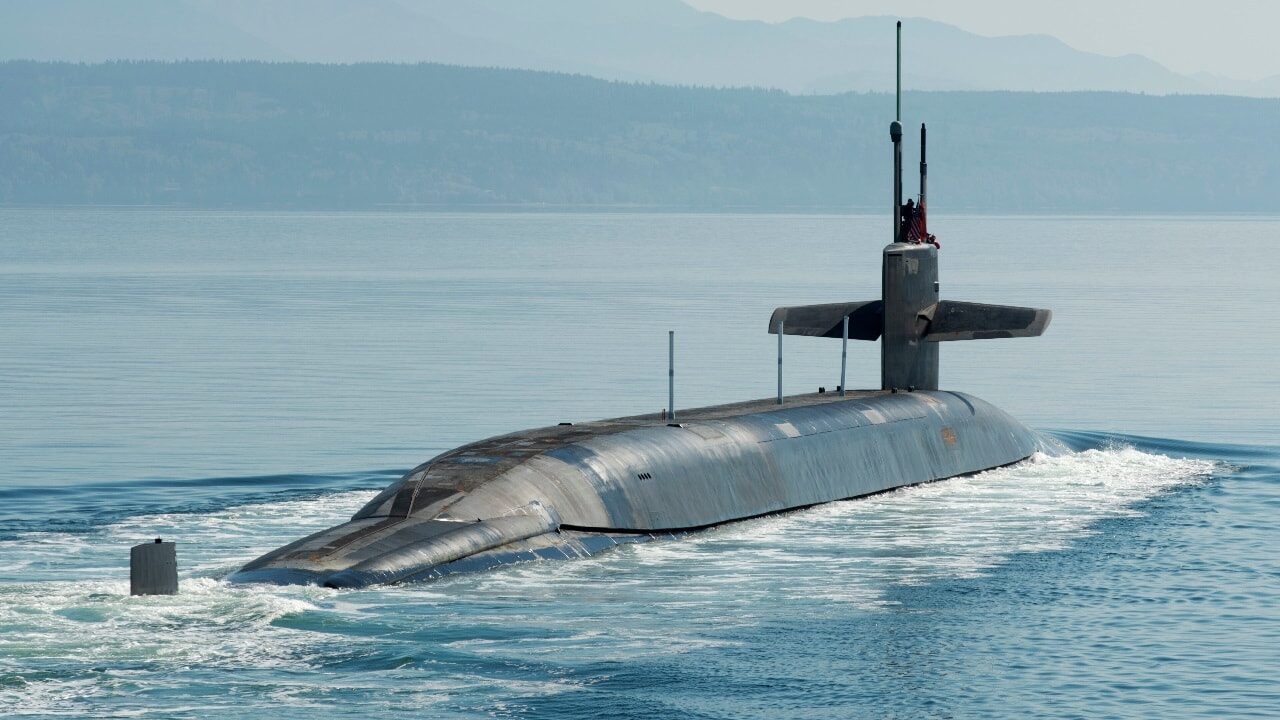
The Blue crew of the ballistic-missile submarine USS Henry M. Jackson (SSBN 730) transits the Hood Canal as it returns home to Naval Base Kitsap-Bangor following a routine strategic deterrent patrol on Sept. 30, 2015. US Navy photo.
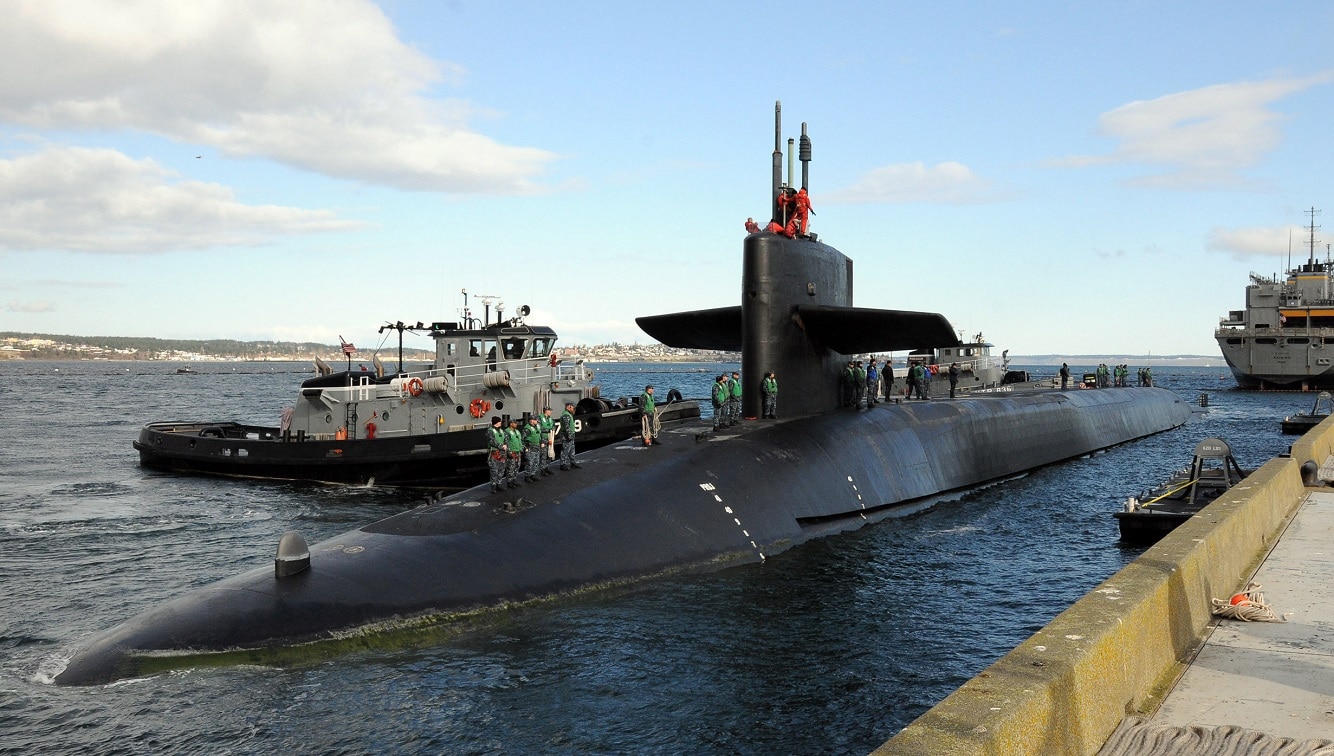
The guided-missile submarine USS Ohio (SSGN 726) prepares to moor at Naval Magazine Indian Island. Ohio recently completed a 14-month forward deployment to the U.S. 7th Fleet area of responsibility.
But there are exceptions to that rule. Sometimes the Navy needs to make a point with a show of force, especially if an adversary is doing something against U.S. national interests.
That was the situation in 2010 when China conducted a missile test in the East China Sea. The Chinese propaganda apparatus was activ,e and the People’s Republic media organs crowed about how their vaunted drill would usher in a powerful form of warfare.
Ohio-Class SSGN: Three Subs Said ‘Here We Are’
The United States was not intimidated, and it answered swiftly and surely. America turned to submarines to send a defiant message.
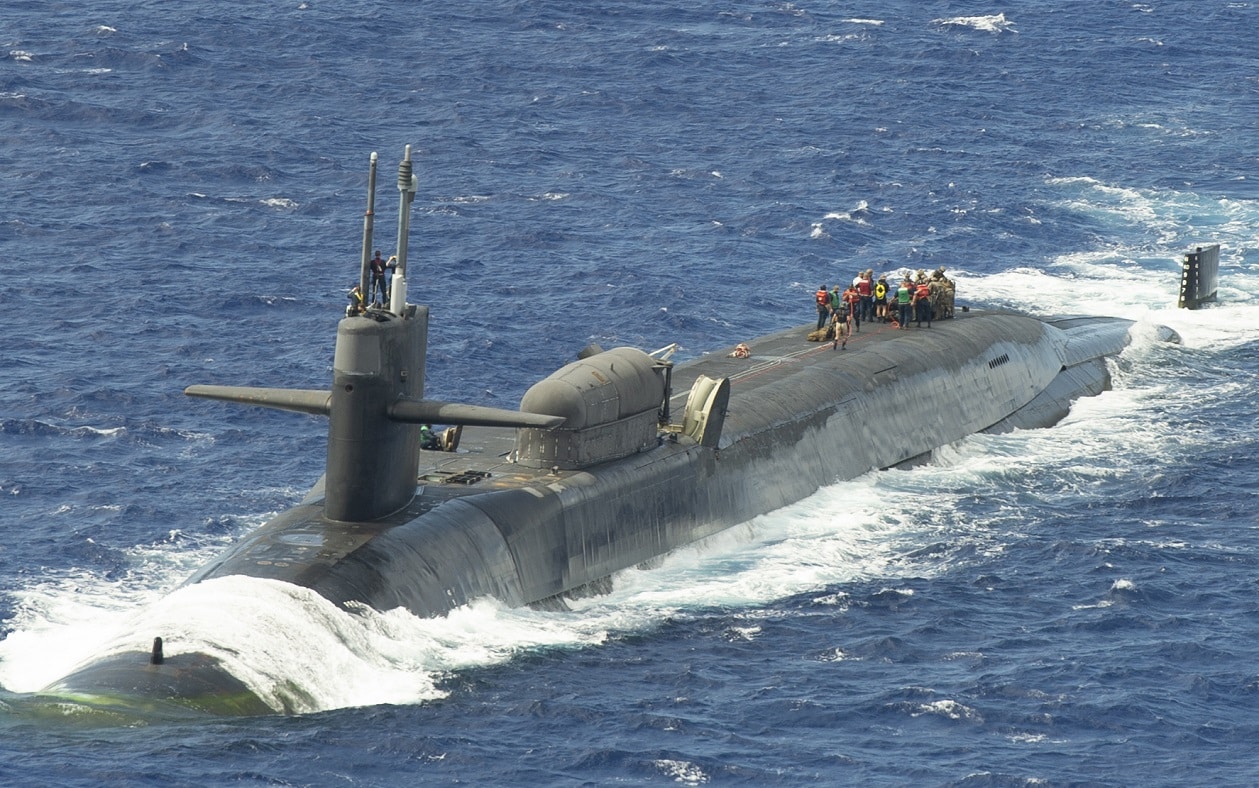
The USS Michigan in Pusan, South Korea, the USS Ohio in Subic Bay, in the Philippines, and the USS Florida near the Indian Ocean base of Diego Garcia came to the surface and said, “Deal with us.”
Ohio-Class. Image Credit: U.S. Navy.
This showed that the U.S. Navy could deploy its submarines at any time and anywhere.
The three Ohio-class guided missile SSGN boats could dish out a wallop of firepower. They carried a total of 462 Tomahawk cruise missiles.
“There’s been a decision to bolster our forces in the Pacific,” said Bonnie Glaser, a China expert who at the time worked for the Center for Strategic and International Studies. She told Time Magazine in 2010 that “There is no doubt that China will stand up and take notice.”
More Than a ‘Coincidence’
The Navy said the surfacing was only a “coincidence,” but the timing was impeccable, and the surfacing was needed to show that the United States had resolve and a high level of military deterrence against China.
This was during President Barack Obama’s effort to pivot to Asia and maintain a bigger force posture in the Indo-Pacific.
The Silent Service Is a Key U.S. Strategic Asset
Skip forward to 2026, and U.S. submarines have a clear role to play as they patrol near China and North Korea.
U.S. aircraft carrier strike groups are threatened by ballistic missiles, and China even has an ICBM now that is conventionally-armed that could blast an American carrier from long range. Subs are less likely to be discovered and can patrol unabated.
The Navy also shows that adversaries must be aware that the United States has a large assortment of ballistic missile submarines, too.
These SSBN or “boomer” boats with nuclear missiles are the jewel of the nuclear triad. They can also surface to send a strategic signal to adversaries.
More Examples of Surfaced Subs
The USS Maine, an Ohio-class boomer, surfaced in July 2023 in South Korea.
That was the first U.S. submarine sighting at that location in decades.
This action was taken to respond to the usual bluster and threatening rhetoric from Supreme Leader Kim Jong Un.
PACIFIC OCEAN (Feb. 9, 2021) Marines assigned to the 1st Force Reconnaissance Company, III Marine Expeditionary Force, assemble a combat rubber raiding craft during a scheduled exercise aboard the guided-missile submarine USS Ohio (SSGN 726). The exercise is part of ongoing III MEF and U.S. 7th Fleet efforts to provide flexible, forward-postured and quick-response options to regional commanders. (U.S. Navy photo by Mass Communication Specialist 1st Class Juan Antoine King) 210209-N-LD174-1006
The North Koreans had been forging ahead with their nuclear weapons program and testing ballistic missiles.
The Americans had to show that their Navy meant business and would not sit idly as Kim rattled his nuclear saber.
Take That Putin
Sometimes the Navy also wants to send a message to Russia about its efforts to deter Vladimir Putin.
The USS Seawolf made a port of call in Tromso, Norway, in August 2020 to exchange crew members, but it showed that the submarine could patrol in the European theater unabated. The Seawolf was also keeping tabs on the Russian Northern Fleet.
The USS Georgia made a statement to Iran and Hamas in December 2020 when it came to periscope depth in the Strait of Hormuz with a guiding force of other ships.
This was done to display naval might in a key strategic chokepoint for maritime transit. Iran was testing one of its submarines at the time.
In June 2024, the USS Tennessee ballistic missile submarine surfaced in the Norwegian Sea alongside guided-missile ships and surveillance aircraft.
This was a clear message to Putin about the U.S. Navy’s global reach. The service was flexing its muscles in response to Russian aggression.
We should not be surprised if the Navy surfaces other submarines in hot spots around the world this year. If the United States is willing to snatch Venezuela’s Nicolas Maduro and bring him to justice, it is certainly able to project force and deterrence with its submarines.
Hegseth Does Not Play Around
These boats are strategic and national command authority-level assets. The Secretary of Defense, Pete Hegseth, is likely briefed on certain submarines patrolling near Russia, China, North Korea, and Iran.
He can decide at any time to make a submarine “go public.”
When It Is Time to Make a Stand
American subs are lethal and deadly – just what Hegseth always claims when referring to the U.S. military. A submarine shows that the Navy has eyes and ears everywhere. These are instruments that also symbolize America’s steadfast commitment to allies.
To be sure, sometimes a submarine only surfaces for replenishment, to change crews, and to allow certain sailors to rest after long voyages.
But at other times, it is to declare that the United States will not be intimidated.
The Navy may say a surfacing is a coincidence, but the maritime service branch can also reveal its submarines’ location at times of geopolitical instability.
We will keep an eye out for submarine sightings in the future to see whether the Navy is being aggressive with its boats.
Secretary Hegseth is always ready to be decisive and steadfast in his commitment to applying force against enemies.
About the Author: Dr. Brent M. Eastwood
Author of now over 3,000 articles on defense issues, Brent M. Eastwood, PhD is the author of Don’t Turn Your Back On the World: a Conservative Foreign Policy and Humans, Machines, and Data: Future Trends in Warfare plus two other books. Brent was the founder and CEO of a tech firm that predicted world events using artificial intelligence. He served as a legislative fellow for US Senator Tim Scott and advised the senator on defense and foreign policy issues. He has taught at American University, George Washington University, and George Mason University. Brent is a former US Army Infantry officer. He can be followed on X @BMEastwood.