
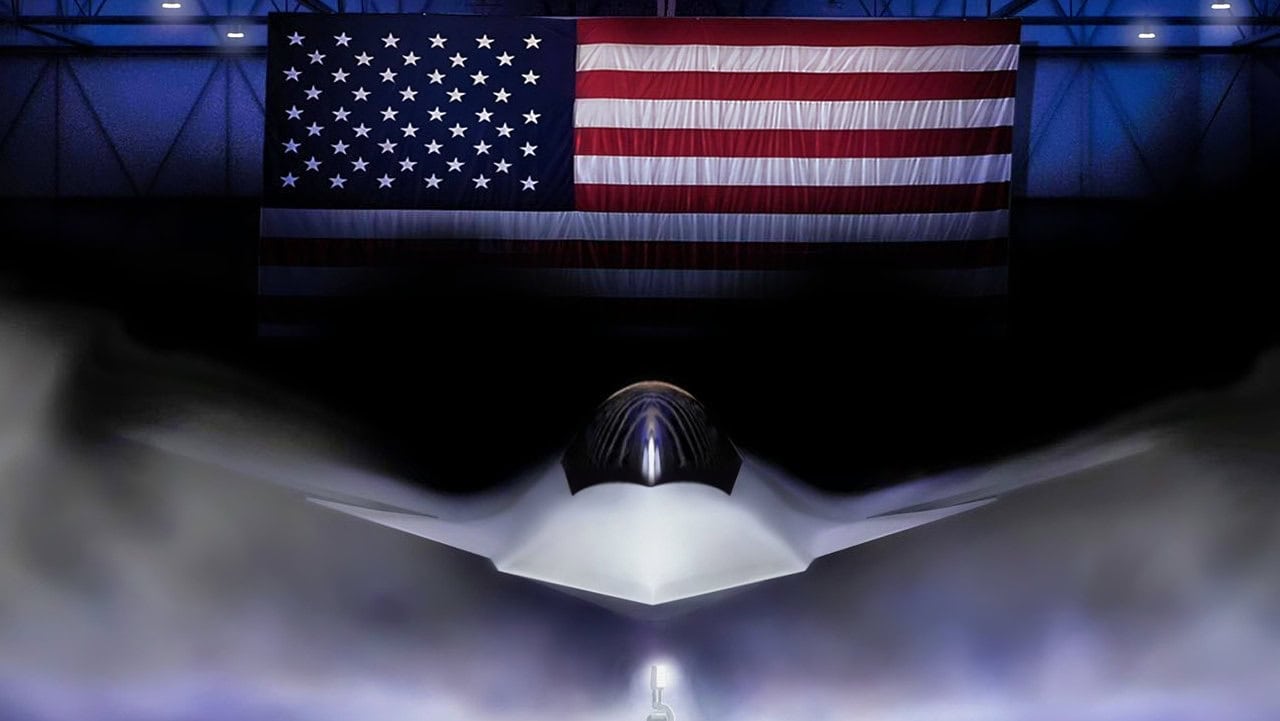
Summary and Key Points – China’s public test flights and commentary have fueled claims that Beijing is ahead in sixth-generation fighters, citing tailless designs, rapid development processes, and reports of advanced J-36 testing. The counterargument is that public visibility can be theater, while U.S. progress may be deliberately opaque.
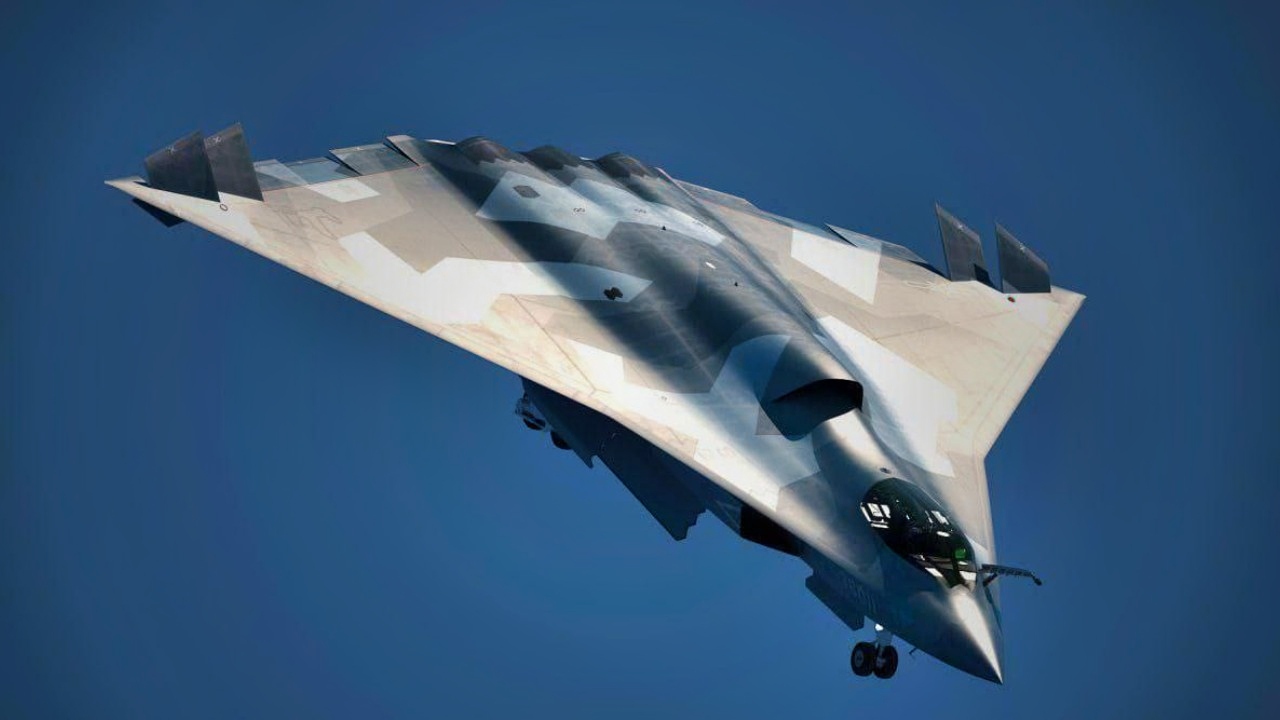
J-36 Fighter Artist Rendition. X Screenshot.
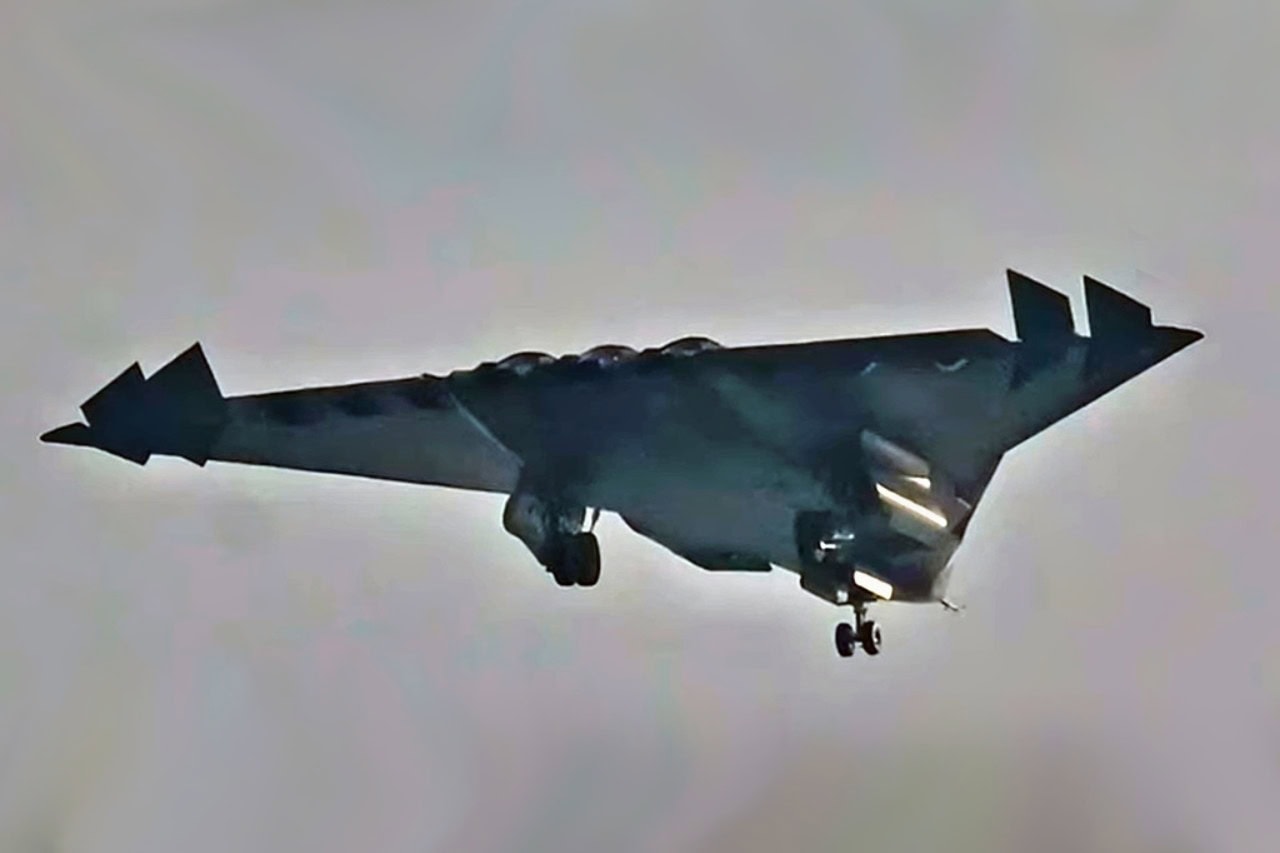
J-36 Fighter from China. Image Credit: Creative Commons.
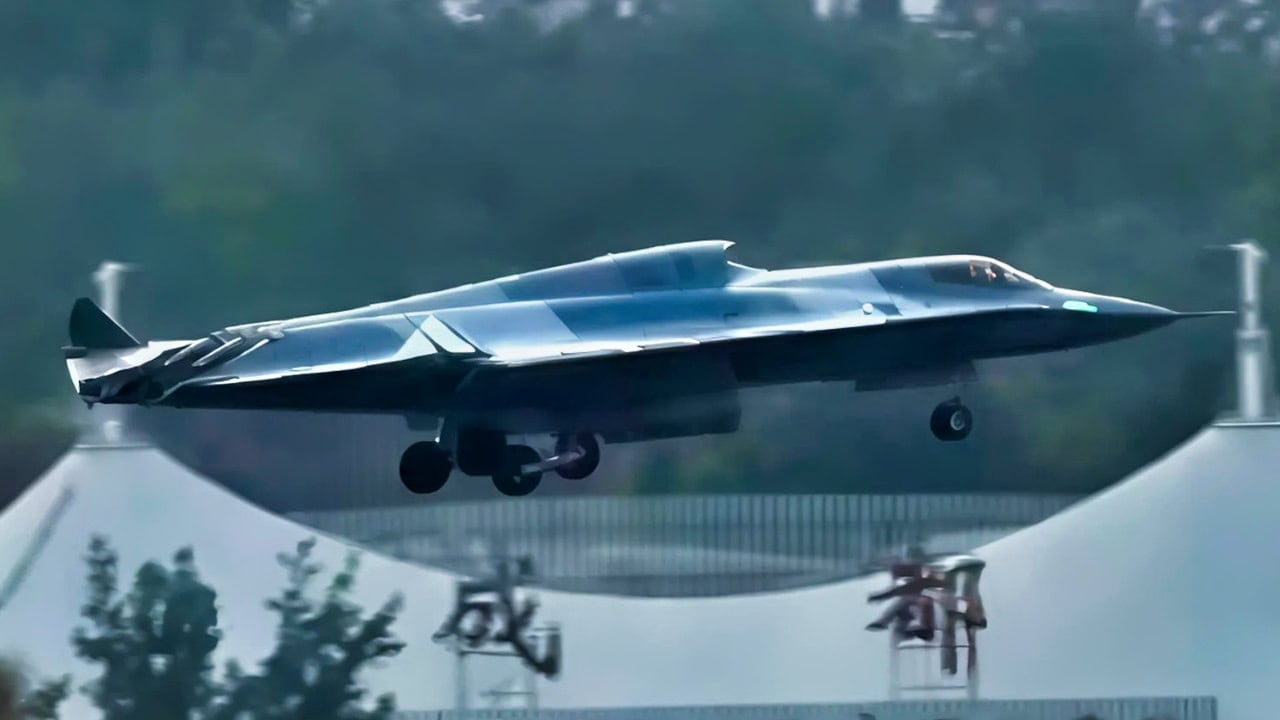
J-36 Fighter from X/Screenshot.
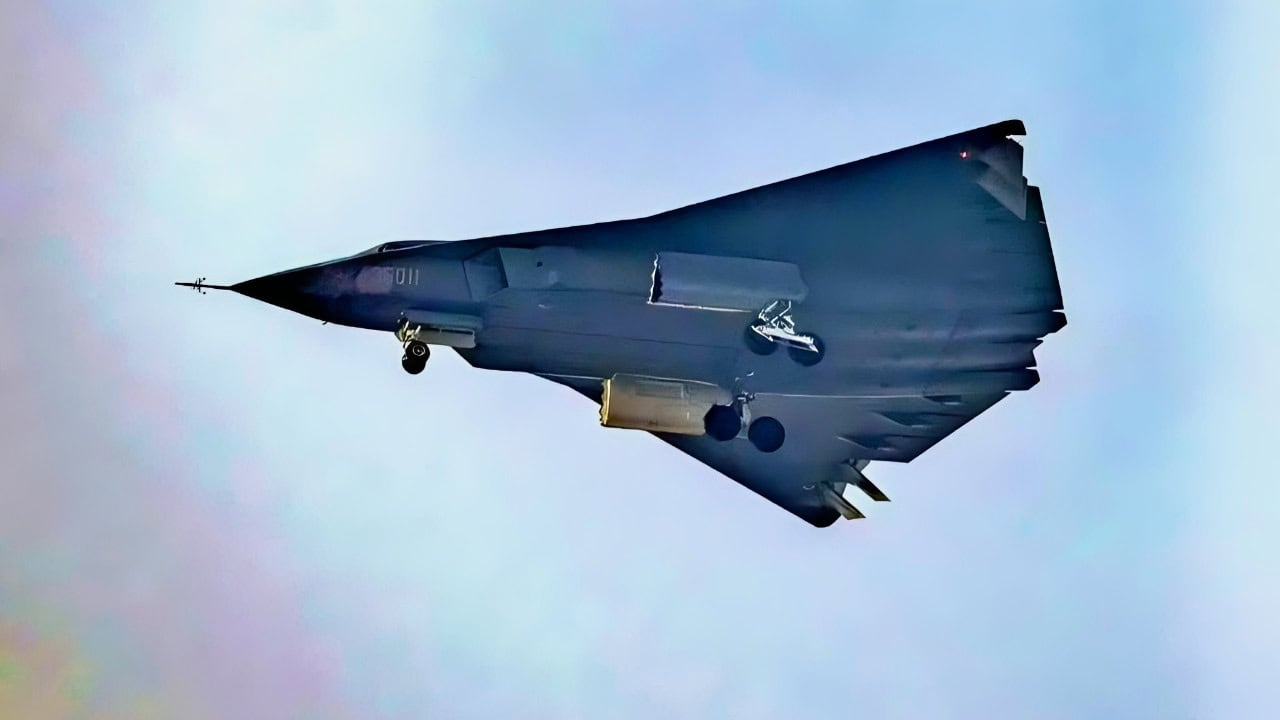
J-36 Fighter from China. Image Credit: X Screenshot.
-The draft points to earlier official remarks that a full-scale U.S. demonstrator flew years ago, arguing that NGAD’s advantage is systems integration, not airframe spectacle.
-It frames F-47 as a family of capabilities—manned-unmanned teaming, sensors, networking, and weapons—where maturity may matter more than first reveals.
Is The US Truly Behind In Sixth-Generation Fighter Development?
In December of 2024, China unveiled two new stealth aircraft to the world through what appeared to be a carefully staged series of test flights. The two aircraft shared some stealthy design characteristics. They were tailless, leading many to conclude that China had developed two sixth-generation fighters and was far ahead of the US in sixth-generation fighter design.
Fast forward to December 2025, Senior Engineer Yang Shuifeng at the Chengdu Aircraft Design Institute has claimed that they’ve developed a revolutionary process and experience to build sixth-generation fighters quickly and reliably, leaving the US years behind.
An article in the South China Morning Post also claims that China’s J-36 is well into advanced flight testing, while its American counterpart, the NGAD F-47, remains mainly on the drawing board.
China Claims to Be Years Ahead of the US
The China Academy, a publication run by the Chinese government, made that outrageous claim on December 30, 2024. They claimed that the stealth aircraft had already been delivered to frontline combat units.
“Notably, photos taken in Sichuan Province indicate that China’s new aircraft are already marked with serial numbers. According to Chinese military regulations, only equipment formally delivered to combat units may have serial numbers. This could suggest that China’s 6th-generation fighter has already entered mass production and may even be combat-ready.
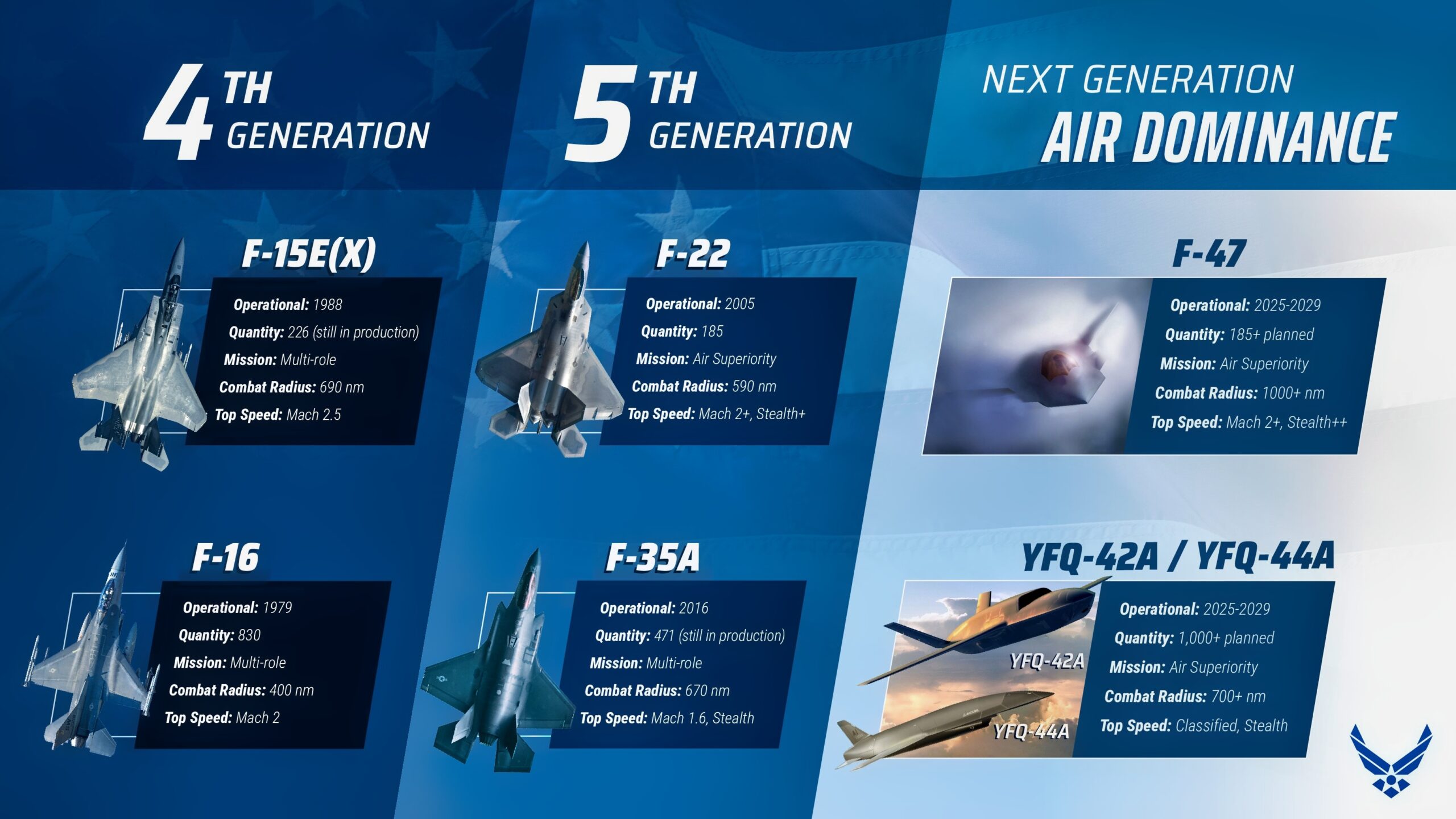
F-47 Infographic. Image Credit: U.S. Air Force
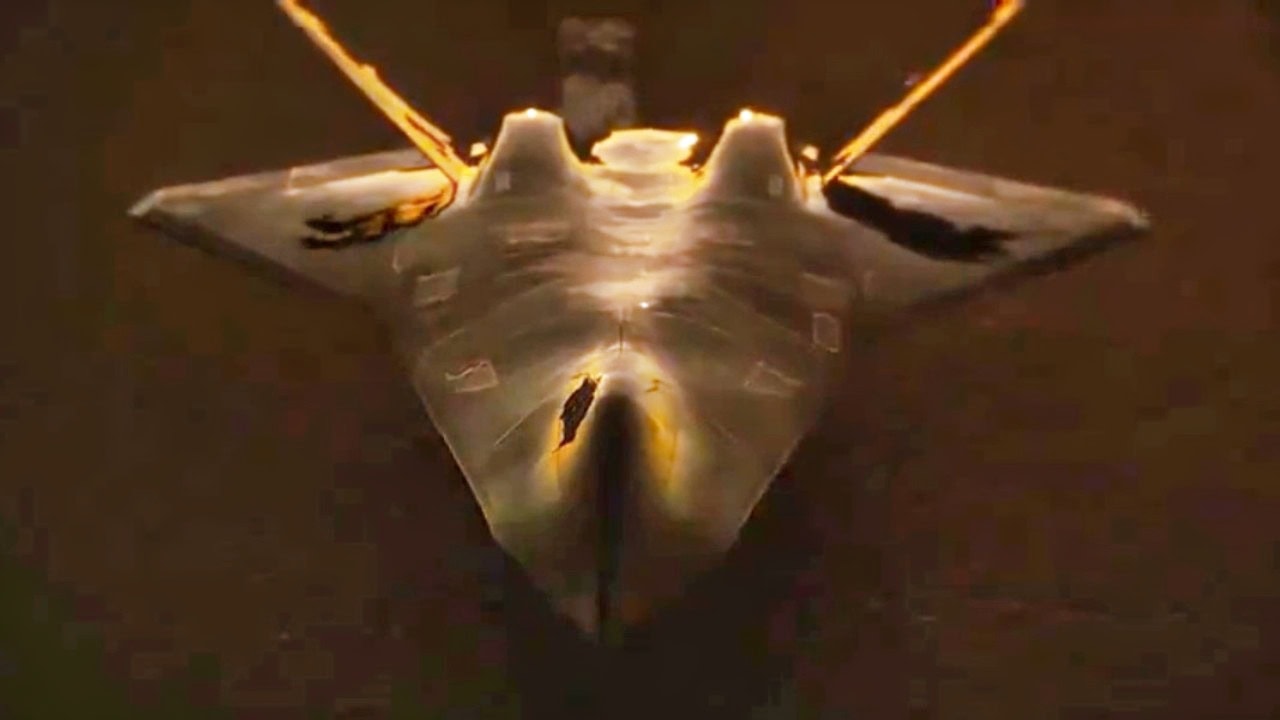
F-47 Fighter from Boeing. Image Credit: U.S. Air Force Screenshot.
“The New York Post, on the other hand, pointed out that the US military has yet to deploy a 6th-generation fighter. This implies that the US Air Force is lagging behind China by as much as a decade. The US Next Generation Air Dominance (NGAD) program, which aims to develop a 6th-generation fighter, was proposed back in 2014. However, as of now, there isn’t even a prototype capable of public flight demonstrations.
This has left many puzzled, given that China’s military budget for 2023 was around $210 billion, while the US military budget is a staggering $916 billion—four times China’s. Why is US military technology falling behind China?”
Of course, we all know that much of this is false. And then there is this from another publication.
“The J-36 and J-XX are tailless sixth-generation fighter jets. By revealing their prototypes, China signaled that it has surpassed both US and Russian technologies by integrating AI, improved stealth, “hypersonic speeds, and advanced weaponry.” Not only do the two sixth-generation fighter aircraft have power generation capabilities hovering around 1 MW, but their integrated networked systems could also change the power dynamics in the Indo-Pacific.
China’s unveiling of the sixth-generation fighters, along with its recent advances in AI, semiconductors, and 6th-generation, sends a clear message to other powers. The coming decade is likely to see a dramatic realignment of military power in Asia, with China at the top of the fighter aircraft pecking order,” writes The Diplomat.
Cheng’s goal is to “seize the initiative and possibly achieve victory without fighting.” By breaking traditional, slow-moving development models, China aims to field advanced capabilities first, creating a deterrent effect. While the J-36 and its lighter sibling, Shenyang Aircraft Corporation’s J-50, undergo intensive flight tests, the US program targets a first flight in 2028.
These Articles Have Conveniently Ignored The Truth
As for the claim that there isn’t even a prototype for public flight demonstrations? The US has been secretly flying Lockheed Martin and Boeing F-47 stealth fighter prototypes for years at a California location.
Will Roper, then Assistant Secretary of the Air Force for Acquisition, Technology and Logistics, announced in 2020, “We’ve already built and flown a full-scale flight demonstrator in the real world, and we broke records in doing it,” Roper said during the Air, Space, and Cyber Conference 2020.
“We are ready to go and build the next-generation aircraft in a way that has never happened before.”
NGAD Is More Than Just A Stealth Fighter
One reason the Air Force has kept such a tight lid on the F-47 is the involvement of other programs.
The F-47 is considered a “family or system of systems.” It will likely be able to fire hypersonic missiles. The engines will be powerful enough to achieve at least Mach 2, and possibly Mach 3. It could be a drone mothership that can operate Collaborative Combat Aircraft drones, which can fly out ahead to collect reconnaissance data, conduct electronic warfare, and provide early warning to protect the NGAD.
The US Air Force’s Collaborative Combat Aircraft (CCA) program is a multi-pronged initiative to test, develop, and implement new autonomous and manned-unmanned aircraft teaming concepts. It is also known as the Loyal Wingman concept, capable of flying independently or in small groups to counter China’s anti-access/area-denial (A2/AD) capabilities.
The US has been testing various drones that could be involved in the CCA program for years.
Our friend Alex Hollings summed it up best. “Ultimately, there’s no way for us to know by looking at China’s aircraft in testing if they’ve managed to bridge the tech divide in terms of avionics, long-range kill webs, and most importantly, in the functionality of AI-powered wingmen meant to fly alongside these crewed aircraft.
‘But even if we give China the benefit of every doubt and assume its hardware and software is every bit as capable as the systems found in America’s top-tier fighters, that would still place China roughly four years behind America’s 6th gen fighter efforts in the best of circumstances.”
And this was before the F-47 was announced.
Jack Buckby wrote last fall, “The gap between America’s classified demonstrator flights and China’s public prototypes suggests that Washington may have a head start in technology maturity.
“And while Beijing may move quickly from prototype to production, the US has the advantage of an established industrial base, combat-tested systems integration, and a focus on building a system of systems that could still prove more capable than China’s ‘loyal wingmen’ drone efforts.
“Ultimately, the race may not be about which sixth-gen fighter enters operational service first, but who fields the most capable aircraft in numbers.”
About the Author: Stephen Balestrieri
Steve Balestrieri is a National Security Columnist. He served as a US Army Special Forces NCO and Warrant Officer. In addition to writing on defense, he covers the NFL for PatsFans.com and is a member of the Pro Football Writers of America (PFWA). His work was regularly featured in many military publications.