
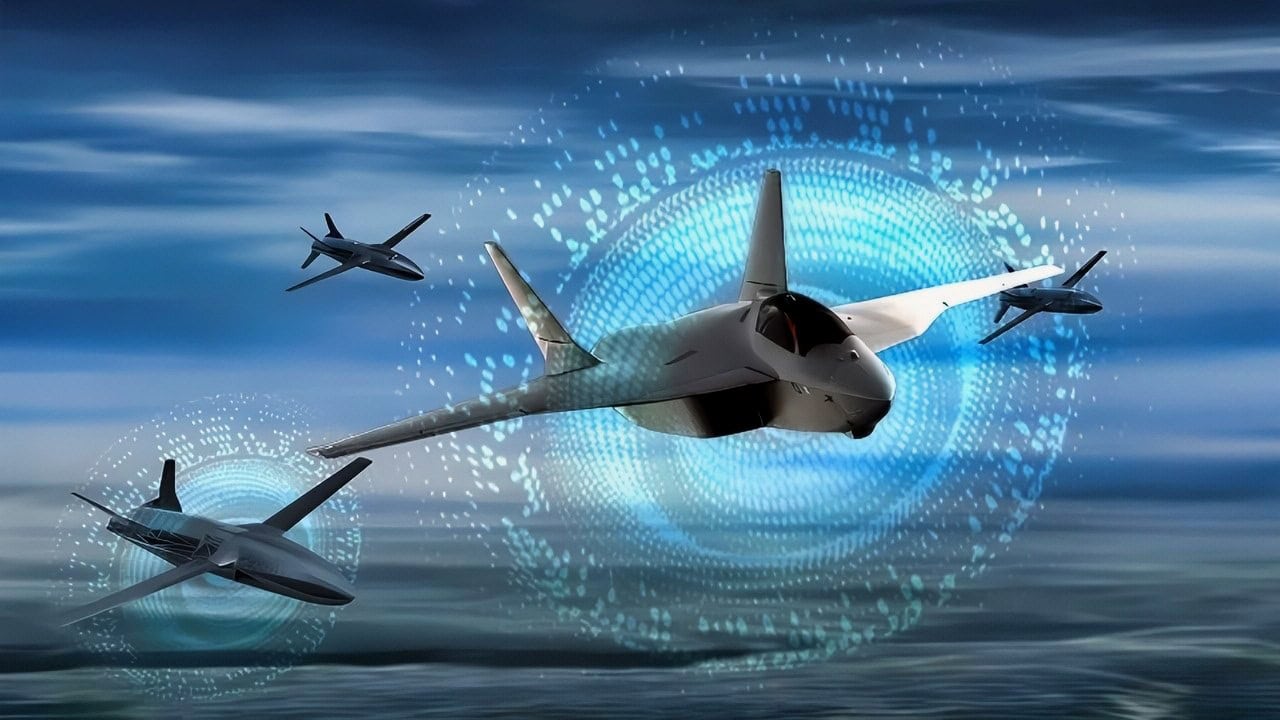
Key Points and Summary – Europe’s flagship next-generation fighter effort, FCAS, just missed another decision deadline—with no verdict from Berlin or Paris and no new timeline in sight.
-The program, launched in 2017 to replace Rafale and Eurofighter fleets around 2040, has stalled as France’s Dassault and Airbus (backing German and Spanish interests) clash over industrial leadership and workshare, with Spain’s Indra also pushing for greater influence.
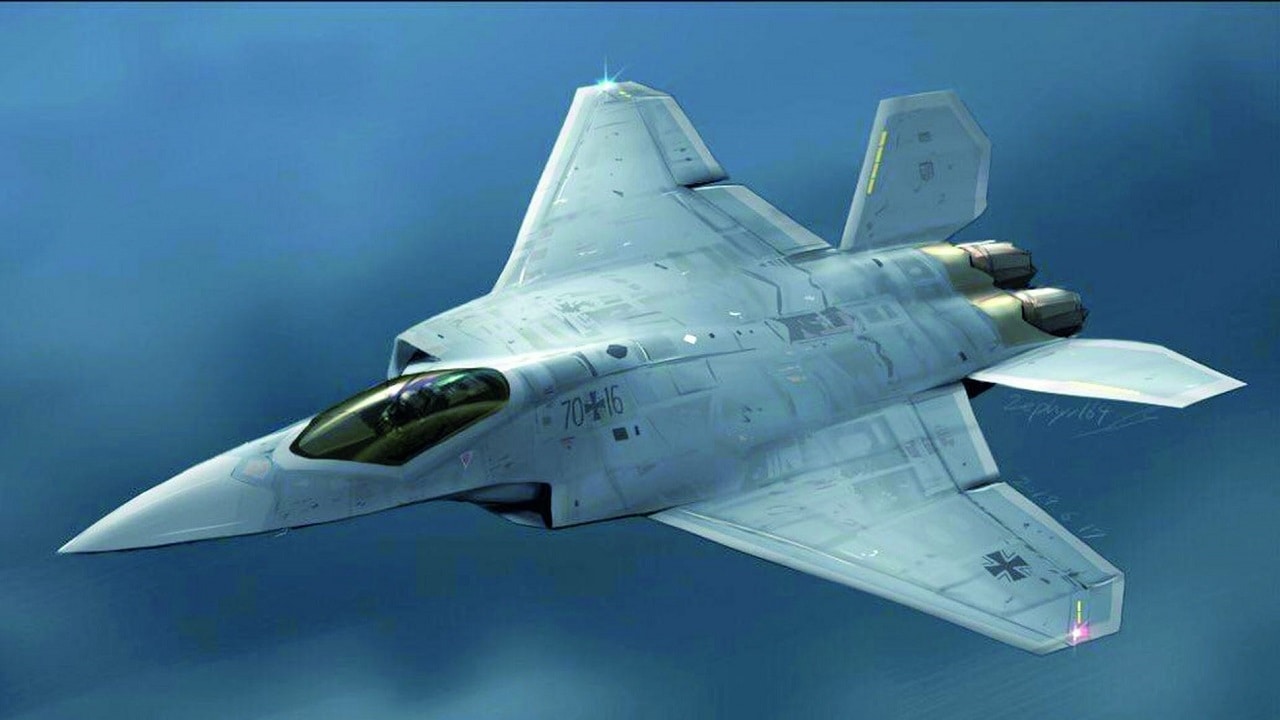
FCAS. Image Credit: Creative Commons.
-The result is a project stuck below top political attention, even as lawmakers openly question whether a single joint aircraft still makes sense. FCAS remains “alive,” but it is clearly at a crossroads.
Europe’s “Sixth-Gen” FCAS Is Stalling Again—Here’s Why It Matters
Germany and France have again delayed a long-anticipated decision on Europe’s flagship next-generation fighter program, casting yet more doubt over the Future Combat Air System (FCAS).
A German government spokesman confirmed on December 31 that no final decision had been made on FCAS, despite earlier pledges from Chancellor Friedrich Merz that the program’s future would be decided before 2026.
No new timeline has been set, and officials indicated that the issue has effectively been sidelined amid broader Franco-German security discussions.
FCAS, launched in 2017, is intended to replace France’s Rafale and Germany’s and Spain’s Eurofighter fleets by around 2040. Unlike earlier European fighter programs, FCAS is conceived as a “family of systems” that combines a crewed next-generation fighter with uncrewed escorts, networked sensors, and an advanced command-and-control architecture.
Progress has gradually stalled on the program, however, reaching a near standstill in 2025 as disputes over industrial leadership and workshare have proven virtually impossible to resolve.
The core problem is a disagreement between France’s Dassault Aviation and Airbus, which represents German and Spanish interests, with Spain’s Indra also seeking greater influence in the project’s architecture and direction.
Contractors cannot agree on which company should have the most impact, with France’s Dassault arguing that its ideas for the next-generation aircraft should be given greater weight owing to its extensive industry experience.
German officials also said the delay stems from the fact that FCAS has not yet been addressed at the highest political level. A spokesman for the chancellor told the defense outlet Hartpunkt that the “comprehensive German-French agenda on foreign and security policy issues” had so far prevented President Emmanuel Macron and Chancellor Friedrich Merz from directly addressing the fighter program. As a result, no political decision has been made on whether to proceed with FCAS.
The postponement follows earlier slippages in the expected timeline for a decision. A verdict was initially scheduled by the end of August.
Still, it was pushed to December, mainly due to unresolved arguments over how responsibilities would be divided among the leading industrial partners.
As uncertainty seemingly deepens, senior political figures in all countries involved have begun to question whether a single joint aircraft still makes sense openly.
In mid-December, Volker Mayer-Lay, a member of parliament from Merz’s conservative bloc, argued that Germany and France may no longer share the exact operational requirements. He suggested that France could pursue its own fighter while Germany and Spain seek alternative solutions.
French officials and industry leaders have echoed that same sentiment for some time, too. In September, Dassault Aviation and a French government representative stated that France retains the capability to develop a next-generation combat aircraft independently if trilateral negotiations were to collapse.
Those comments were, at the time, the clearest signal that Paris was prepared to walk away from the joint framework – and since then, it has only become clearer that Paris is perfectly willing to step back and establish its own fighter program using its domestic industrial base and contractors.
The stakes, however, are still high. FCAS is Europe’s most ambitious and expensive defense program, intended not only to sustain industrial competitiveness on the continent but to preserve strategic autonomy in air combat capabilities at a time when reliance on American systems is growing increasingly controversial.
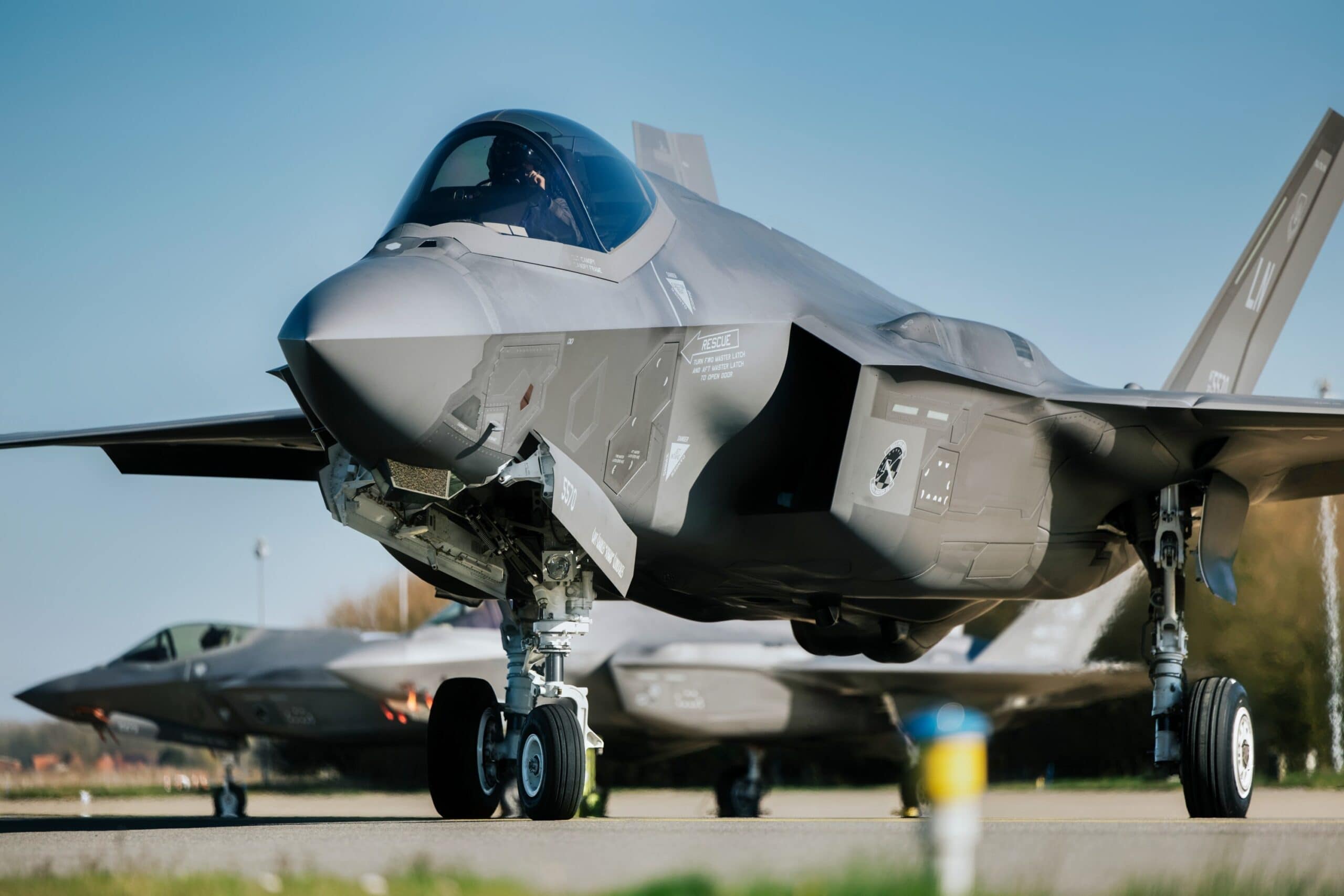
A U.S. Air Force F-35 Lightning II taxis during a cross-servicing event at NATO Allied Air Command’s Ramstein Flag 2025 exercise April 4, 2025. Successful cross-servicing at RAFL25 is an example of the importance of integrated logistics and maintenance training that enhances U.S. warfighting readiness by strengthening United States Air Forces in Europe – Air Forces Africa’s ability to deploy, sustain, and project fifth-generation capabilities across the European theater. (Royal Netherlands photo by Sgt. Maj. Jan Dijkstra)
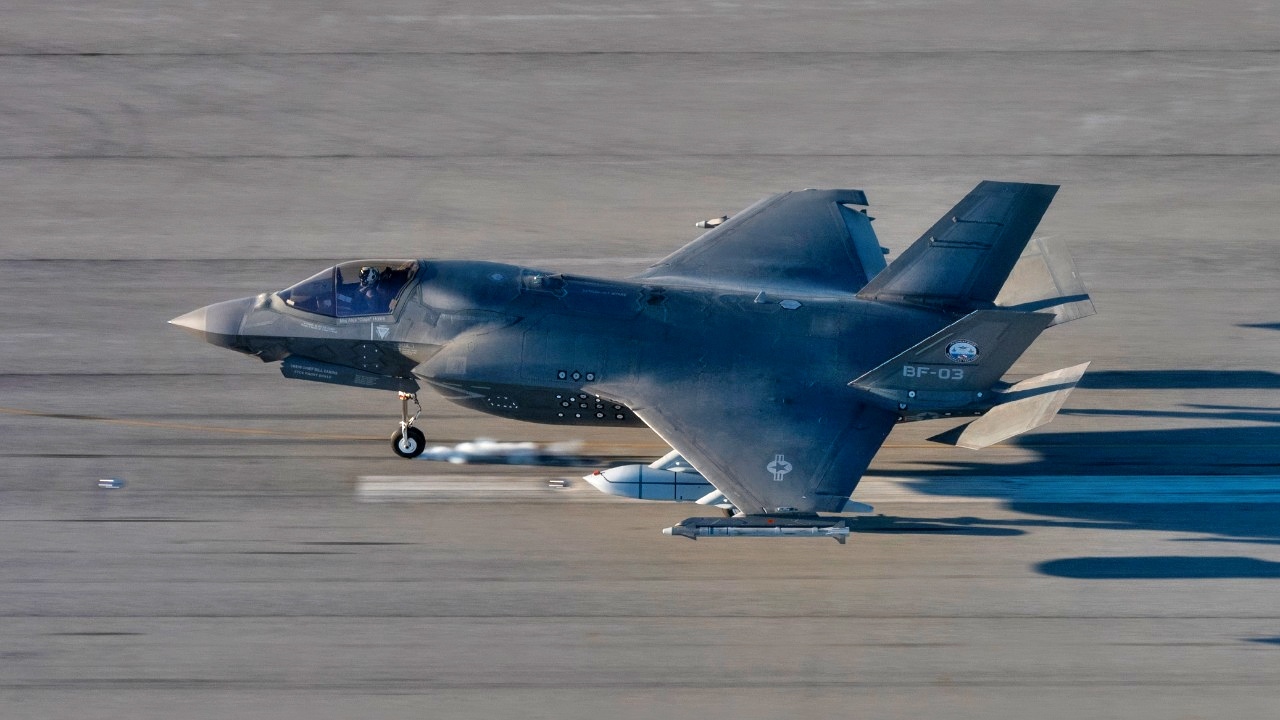
NAS PATUXENT RIVER, Md. — An F-35 Lightning II test pilot conducts the first flight test to certify the F-35B short takeoff and vertical landing variant of the fighter aircraft for carrying the AGM-158C Long-Range Anti-Ship Missile (LRASM). As part of ongoing weapon integration efforts, the Pax River F-35 Integrated Test Force (Pax ITF) team for the first time flew test flights Jan. 14 with two AGM-158 loaded on external stations. LRASM is a defined near-term solution for the Offensive Anti-Surface Warfare (OASuW) air-launch capability gap that will provide flexible, long-range, advanced, anti-surface capability against high-threat maritime targets. The Pax River ITF’s mission is to effectively plan, coordinate, and conduct safe, secure, and efficient flight test for F-35B and C variants, and provide necessary and timely data to support program verification / certification and fleet operational requirements.
Beyond the fighter itself, the program envisioned unarmed and armed drones operating in coordinated formations, connected through secure data links and artificial intelligence.
Repeated delays to the program risk eroding confidence among stakeholders – whatever’s left of it, anyway – and widening the gap between Europe and other major powers already investing heavily in sixth-generation air combat systems with more success.
The delays also raise questions about whether multinational European defense programs can reconcile their national priorities quickly enough to meet future threat needs and timelines – and whether partnerships like this are feasible at all.
FCAS: What Happens Now?
For now, officials in Berlin and Paris insist that the project has not been formally abandoned. Yet the absence of a new decision deadline, combined with increasing public disagreement over industrial control and operational needs, has left FCAS at a crossroads.
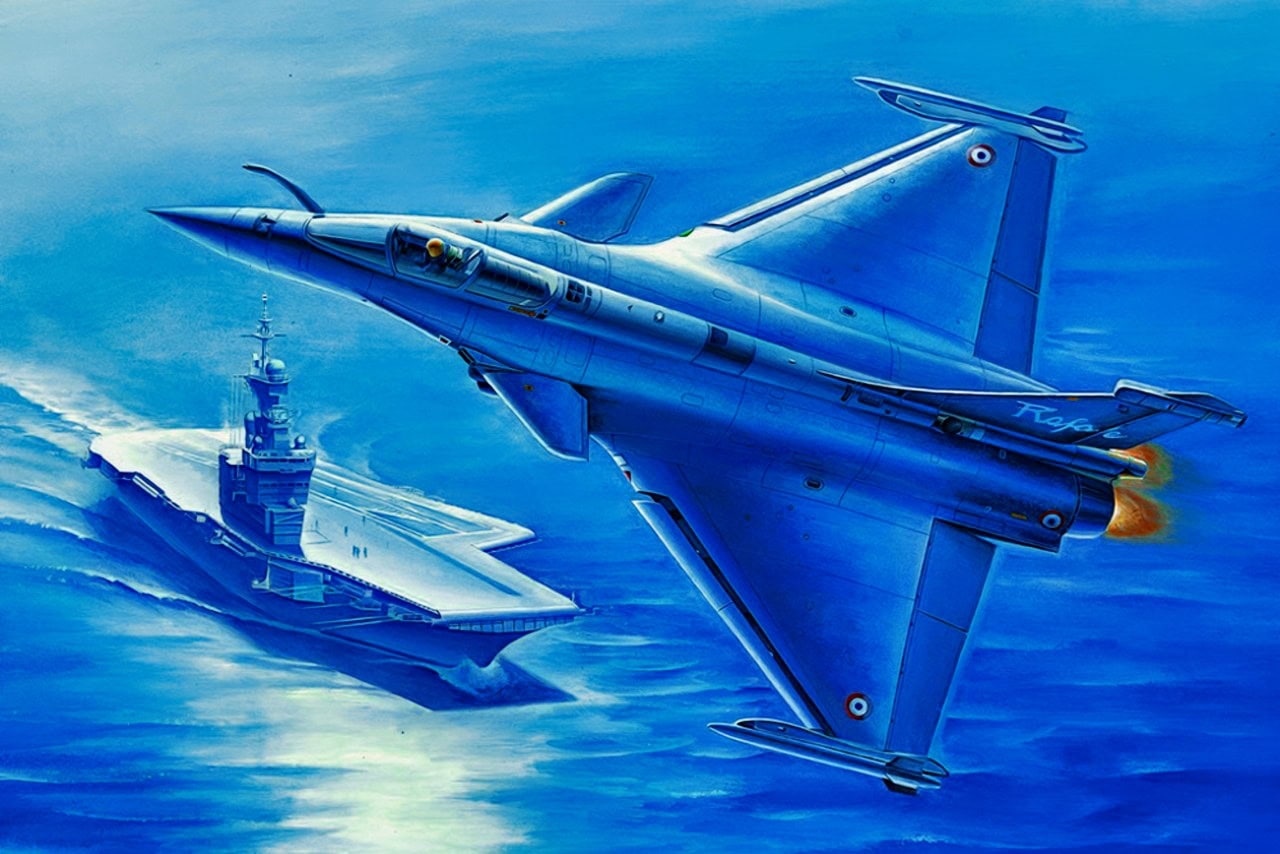
Dassault Rafale Fighter. Image Credit: Creative Commons.

Dassault Rafale Fighter. Image Credit: Creative Commons.
Whether Europe ultimately fields a next-generation fighter or fragments that ambition into separate efforts unified by a “combat cloud,” as has been proposed in recent months, remains to be seen.
About the Author:
Jack Buckby is a British researcher and analyst specialising in defence and national security, based in New York. His work focuses on military capability, procurement, and strategic competition, producing and editing analysis for policy and defence audiences. He brings extensive editorial experience, with a career output spanning over 1,000 articles at 19FortyFive and National Security Journal, and has previously authored books and papers on extremism and deradicalisation.