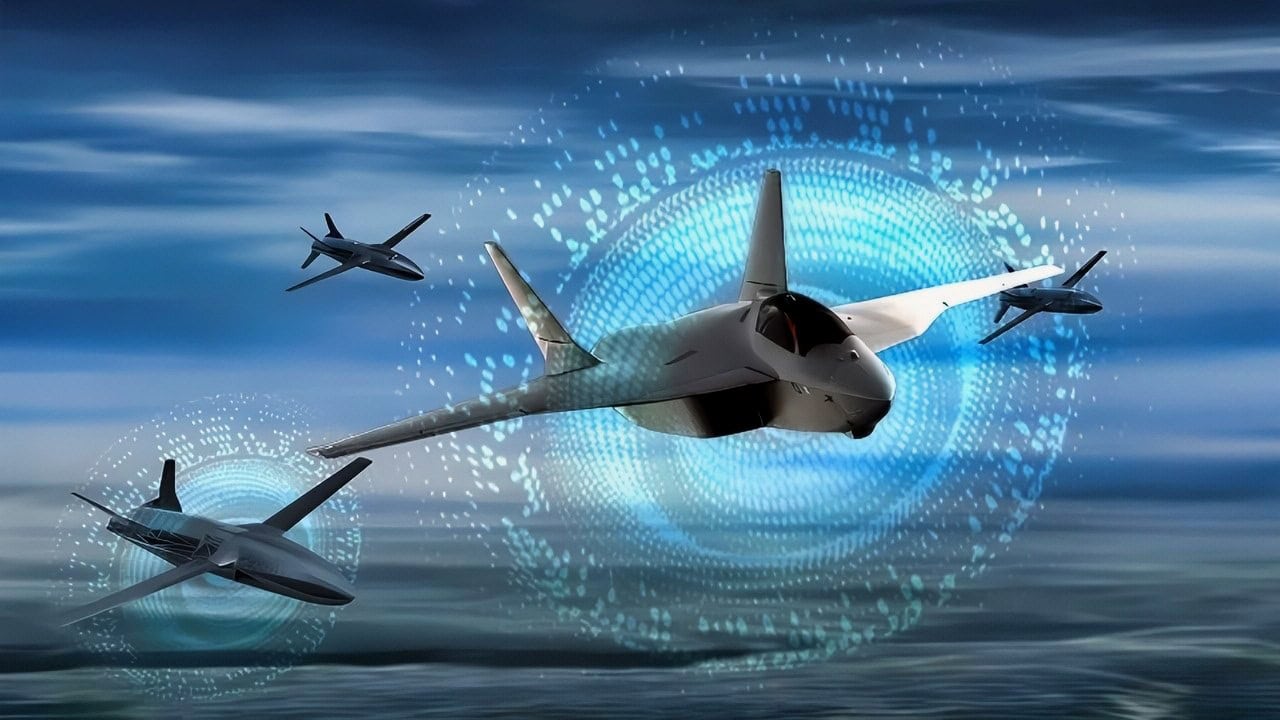
Key Points and Summary – Dassault Aviation CEO Eric Trappier has reignited doubts about the Future Combat Air System, warning that FCAS may not happen if Germany does not rethink its dependence on U.S. arms and accept a clear lead nation for the New Generation Fighter.
-The Franco-German-Spanish program is mired in disputes over workshare, intellectual property, and who truly leads the manned fighter “pillar” amid added complexity from Spain’s Airbus role.
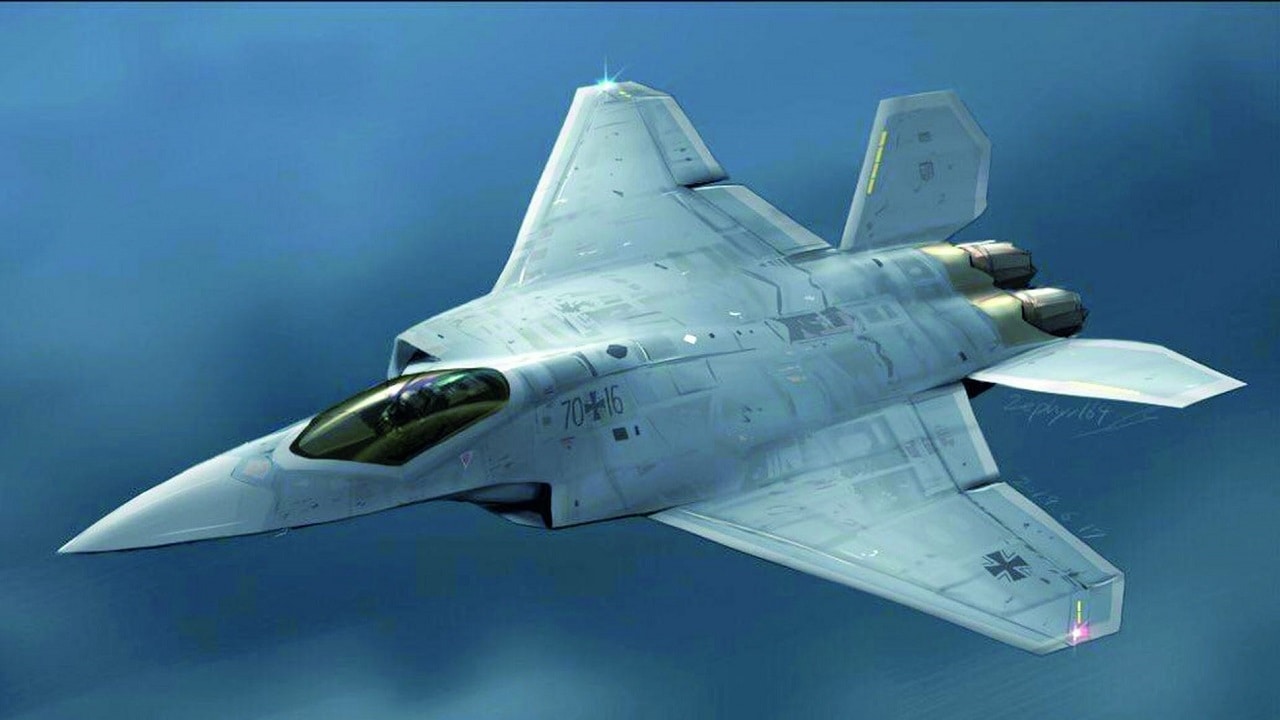
FCAS. Image Credit: Creative Commons.
-With Berlin and Paris now escalating the issue to the Merz–Macron level, FCAS has become a test of Europe’s ability to field a coherent sixth-generation airpower strategy at all.
Dassault CEO Casts New Doubt on Europe’s FCAS “Future Fighter” Dream
Fort Lauderdale, Florida – On Tuesday, 16 December, CEO Eric Trappier of Dassault Aviation prompted speculation as to the future of the at-times fractious Franco-German-Spanish Future Combat Air System (FCAS) 6th-generation fighter aircraft program.
Specifically, the main question in everyone’s mind is whether there is still an inclination by the Germans to stay in the program.
Trappier cryptically commented that the Germans’ decision at least partly depended on whether Berlin was willing to re-evaluate the degree to which it would rely on US arms imports in the future.
“Will it happen? I don’t know,” Trappier told a Center for Development of Security Excellence (CDSE) conference.
He also repeated his position that the program requires one of the partners to be the unambiguous leader or prime contractor for the “core fighter component”, meaning the manned fighter aircraft portion of the overall FCAS effort.
As the German Council of Foreign Relations explained in an explanatory memo on the program this past August, “FCAS is meant as a holistic transformation of air warfare emphasizing cooperation among platforms, munitions, and sensors…The primary pillar of FCAS – at issue in the present controversy – is the New Generation Fighter (NGF). The development of this combat aircraft is under the lead of Dassault Aviation.”
Too Many Pillars and Players
The program has other “pillars” other than the NGF, one of these is the part of the program that will develop a network of combat connectivity assets.
This is described as a “decentralized, distributed, and delegated information-sharing, command-and-control system meant to integrate sensors, responsibilities, and weapons,” and it is intended to be platform-agnostic.
It is referred to within the FCAS program structural designators as the Combat Cloud.
That Combat Cloud will enable interoperability between the NGF and legacy platforms, such as the Tranche 4 and 5 Eurofighters currently on order and the Rafale F5 configuration under development.
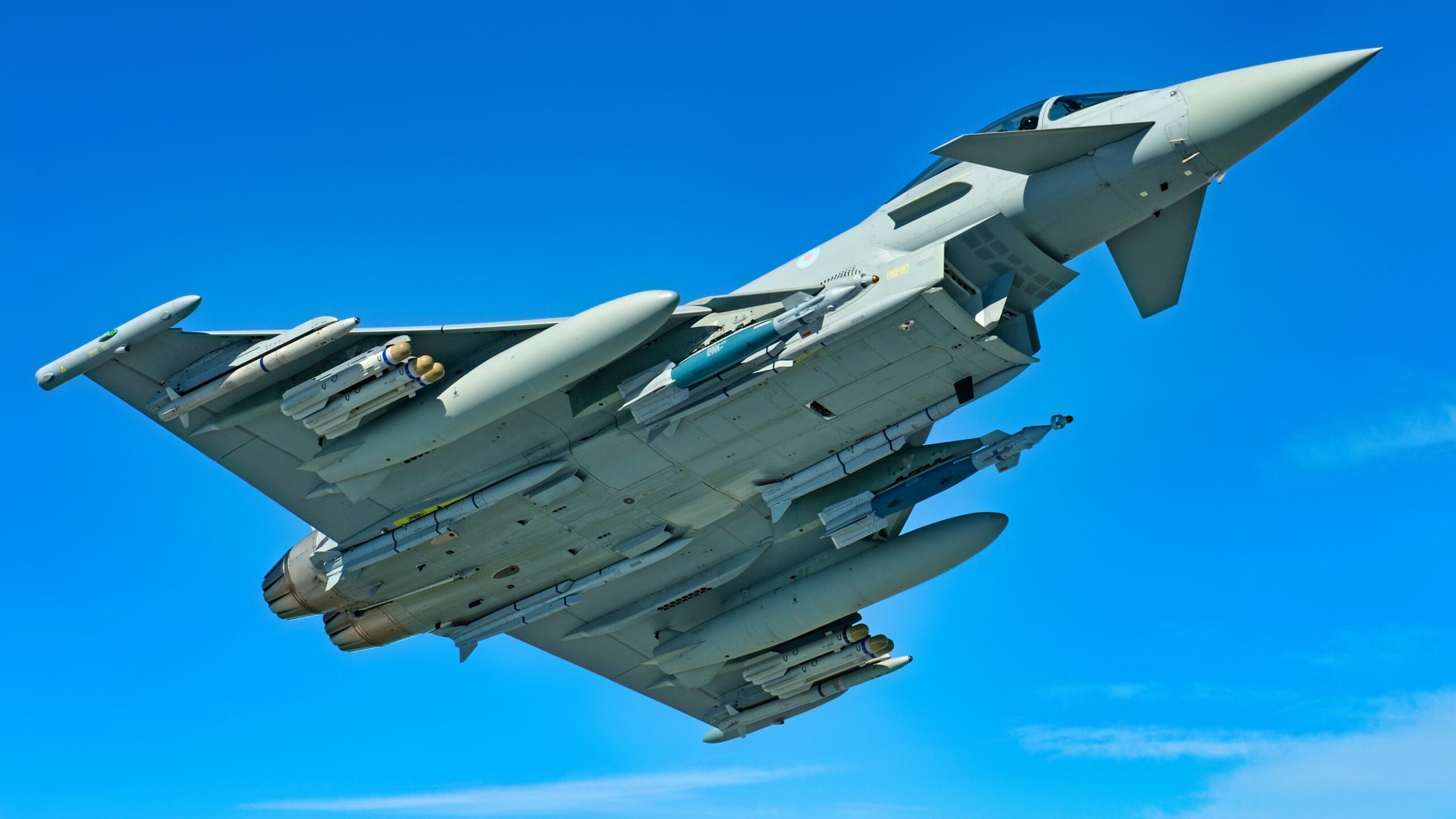
Eurofighter Typhoon. Image Credit: Creative Commons.
A third pillar of the FCAS is the Collaborative Combat Aircraft (CCA) drone-type platforms.
These are further segmented into remote carriers, either “heavy” (reusable) or “light” (single-use), unmanned vehicles that operate in conjunction with manned platforms.
While this division of labor seemed to be relatively straightforward, the program’s lines of authority and zones of responsibility became somewhat garbled when Spain joined the coalition in 2019. Airbus Spain, under the Airbus Germany umbrella, was designated its “national contractor for NGF.”
In Dassault’s perspective, this put the French firm in the position of supposedly being the lead for the manned fighter part of the program.
Still, now in a “minority” status in that it could be overruled by the two Airbus components.
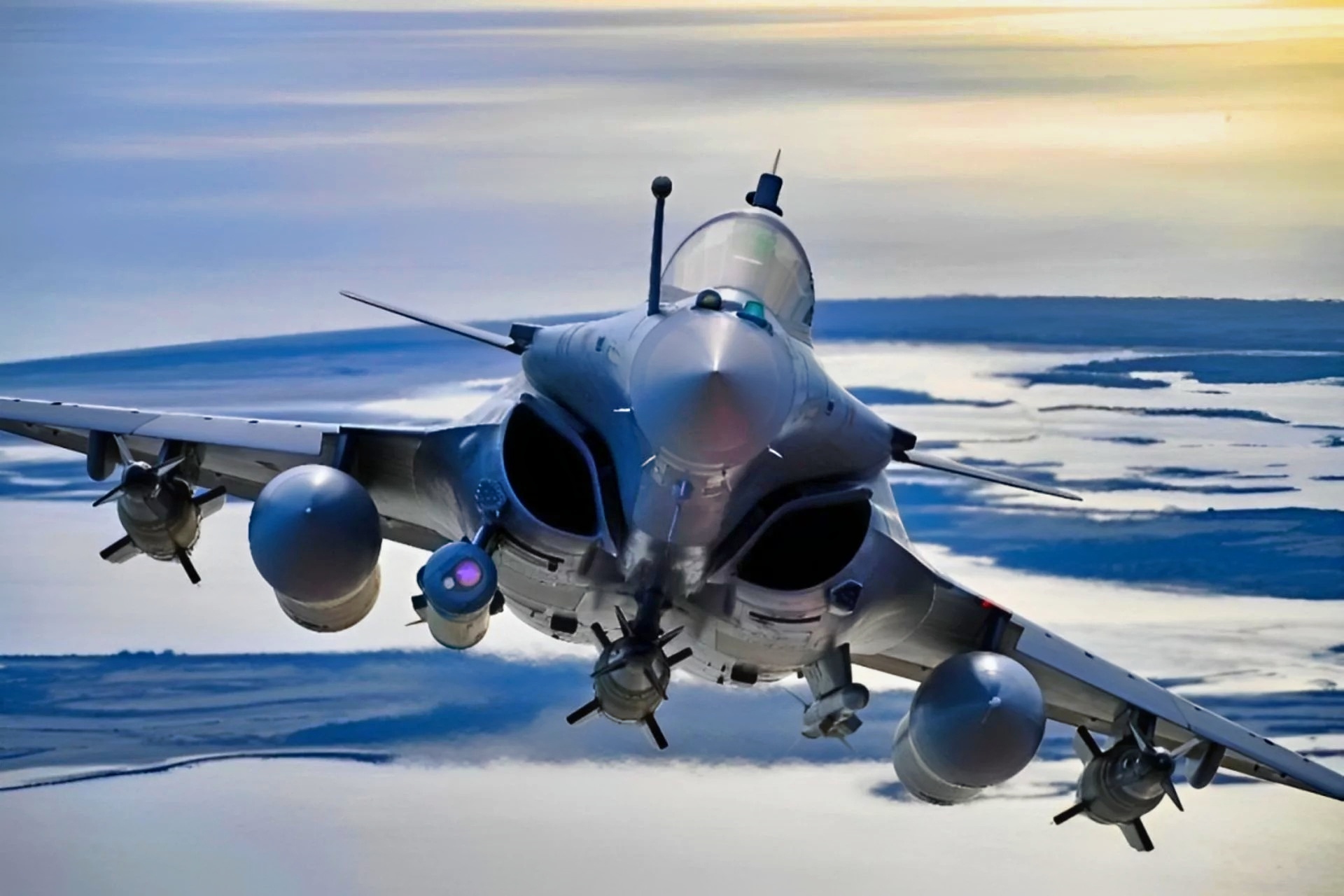
Dassault Rafale Fighter. Image Credit: Creative Commons.
Workshare and The Question of Two Aircraft
Trappier was then asked if there was a feasible compromise in that the differences could be bridged by France and Germany building two different NGF jets under a common umbrella.
This would be a change from the original plans for just one manned fighter aircraft design.
The Dassault CEO’s very terse response to Reuters was simple. “Nobody has talked to me about two aircraft,” he stated.
But, the €100 billion (US $116 billion) FCAS programme has become tangled in disputes over more than just which company will build a new fighter jet and if there will be more than one design, or if Dassault will still be the lone authority running the entire manned aircraft effort.
There have been equally fractious disagreements between the two main industrial partners over workshare and technology rights.
The differences are so pronounced that German Chancellor Friedrich Merz and French President Emmanuel Macron are scheduled to discuss the FCAS this coming week, as a meeting last week of defense ministers failed to resolve any of the industrial conflicts.
Speaking to corporate and public security officials at the same conference, Trappier highlighted Dassault’s central and historical role in Europe’s independent defense industry.
“Europe is not a nation,” he said, emphasizing that defending the continent was the collective responsibility of its member nations.
“Do France, Germany and Spain completely share a willingness to defend Europe? I think they do. The manner in which this is done – that is more complicated,” he said when addressing the CDSE conference.
About the Author: Reuben F. Johnson
Reuben F. Johnson has thirty-six years of experience analyzing and reporting on foreign weapons systems, defense technologies, and international arms export policy. Johnson is the Director of Research at the Casimir Pulaski Foundation. He is also a survivor of the Russian invasion of Ukraine in February 2022. He worked for years in the American defense industry as a foreign technology analyst and later as a consultant for the U.S. Department of Defense, the Departments of the Navy and Air Force, and the governments of the United Kingdom and Australia. In 2022-2023, he won two awards in a row for his defense reporting. He holds a bachelor’s degree from DePauw University and a master’s degree from Miami University in Ohio, specializing in Soviet and Russian studies. He lives in Warsaw