
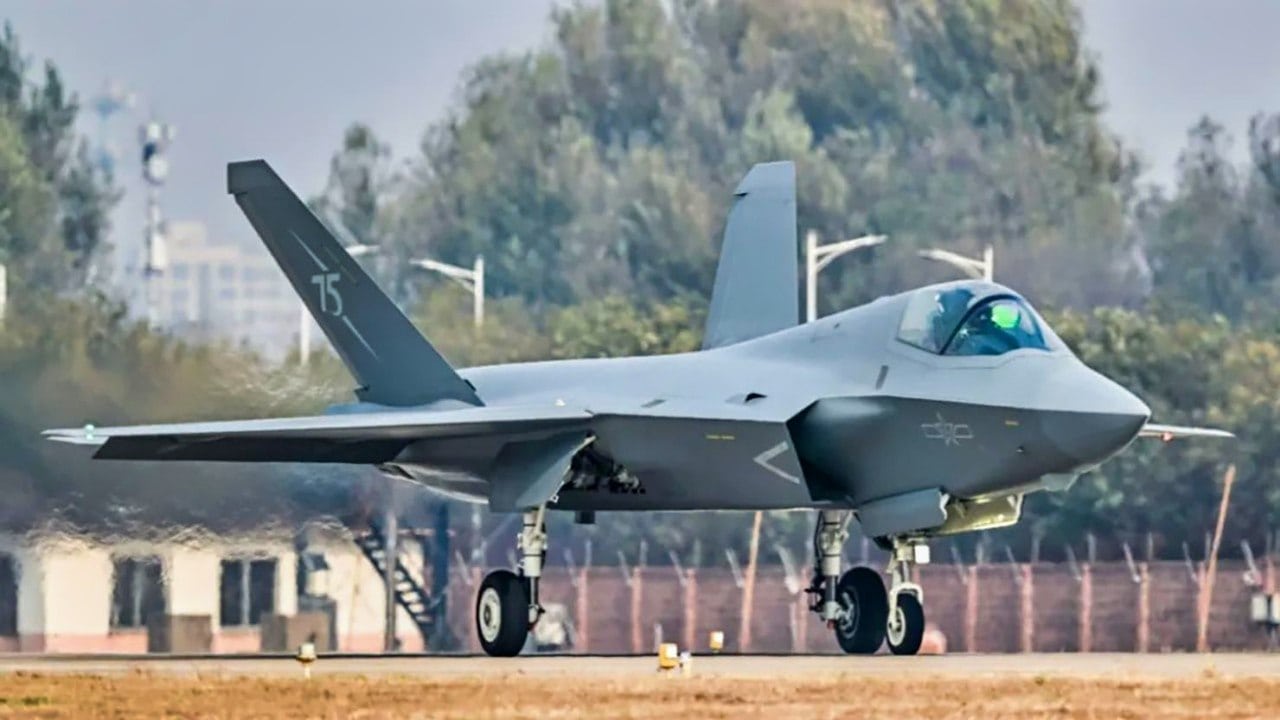
Summary and Key Points: China is signaling that the J-35 is moving from prototypes to real production.
-Early-January imagery showed green-primed airframes flying and parked together, a tell that newly built jets are rolling off the line before receiving operational coatings.
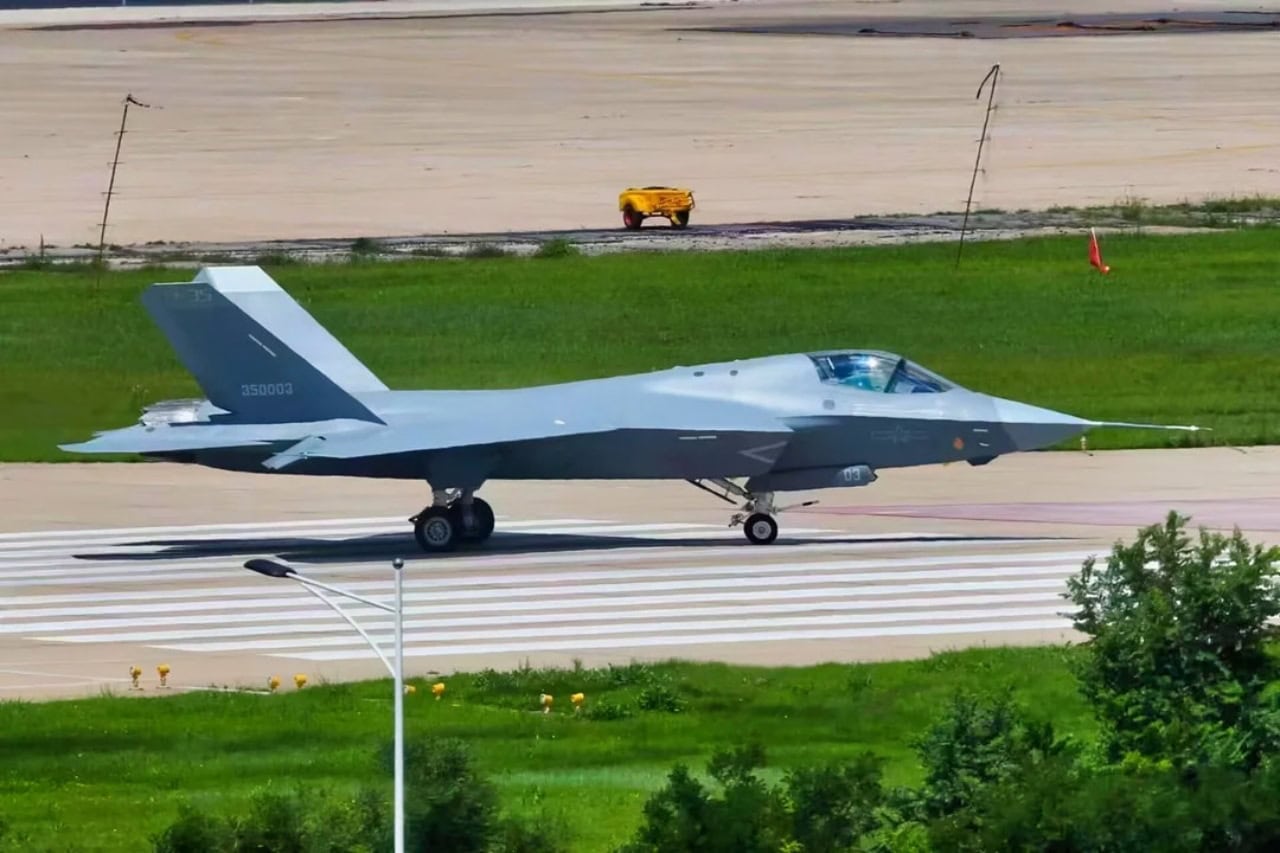
J-35 Fighter. Image Credit: Chinese Internet.
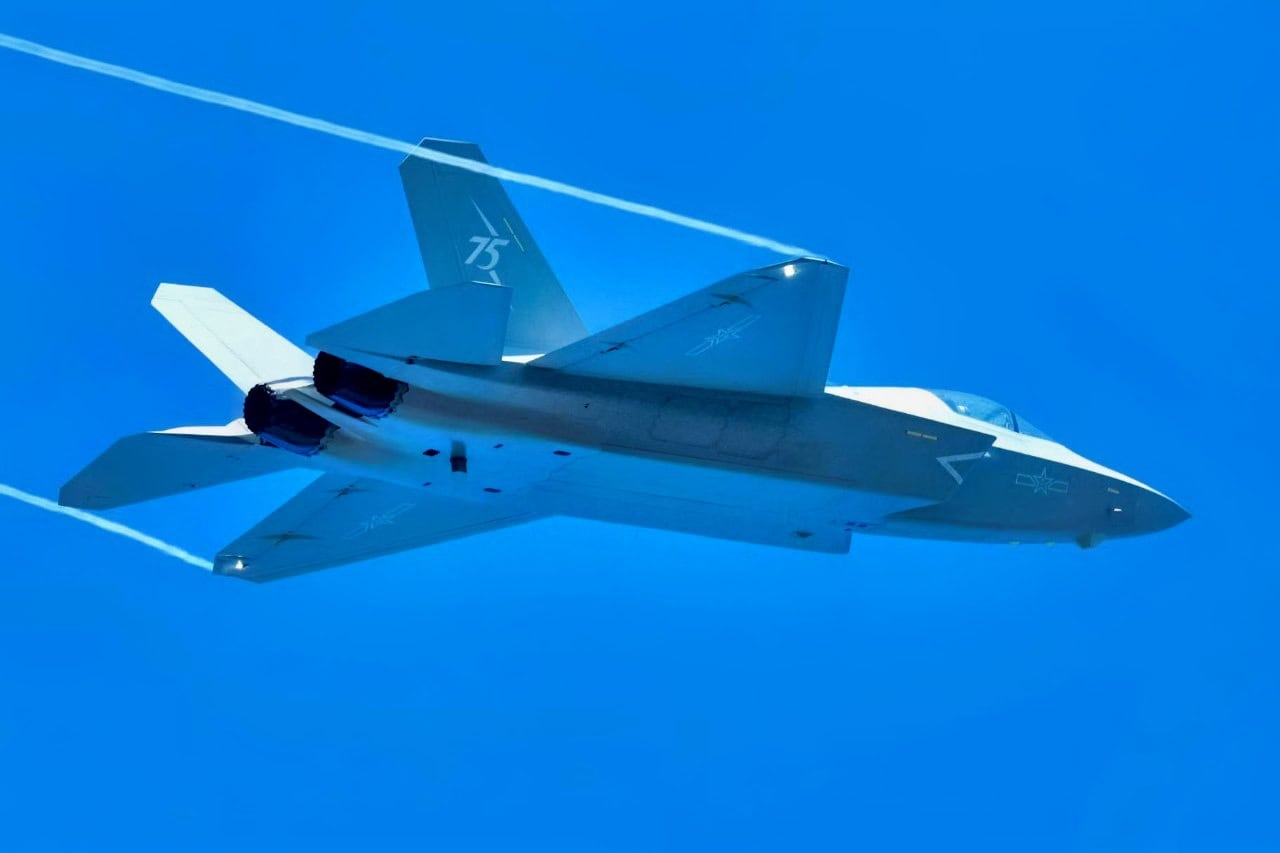
J-35 Fighter. Image Credit: Chinese State Media.
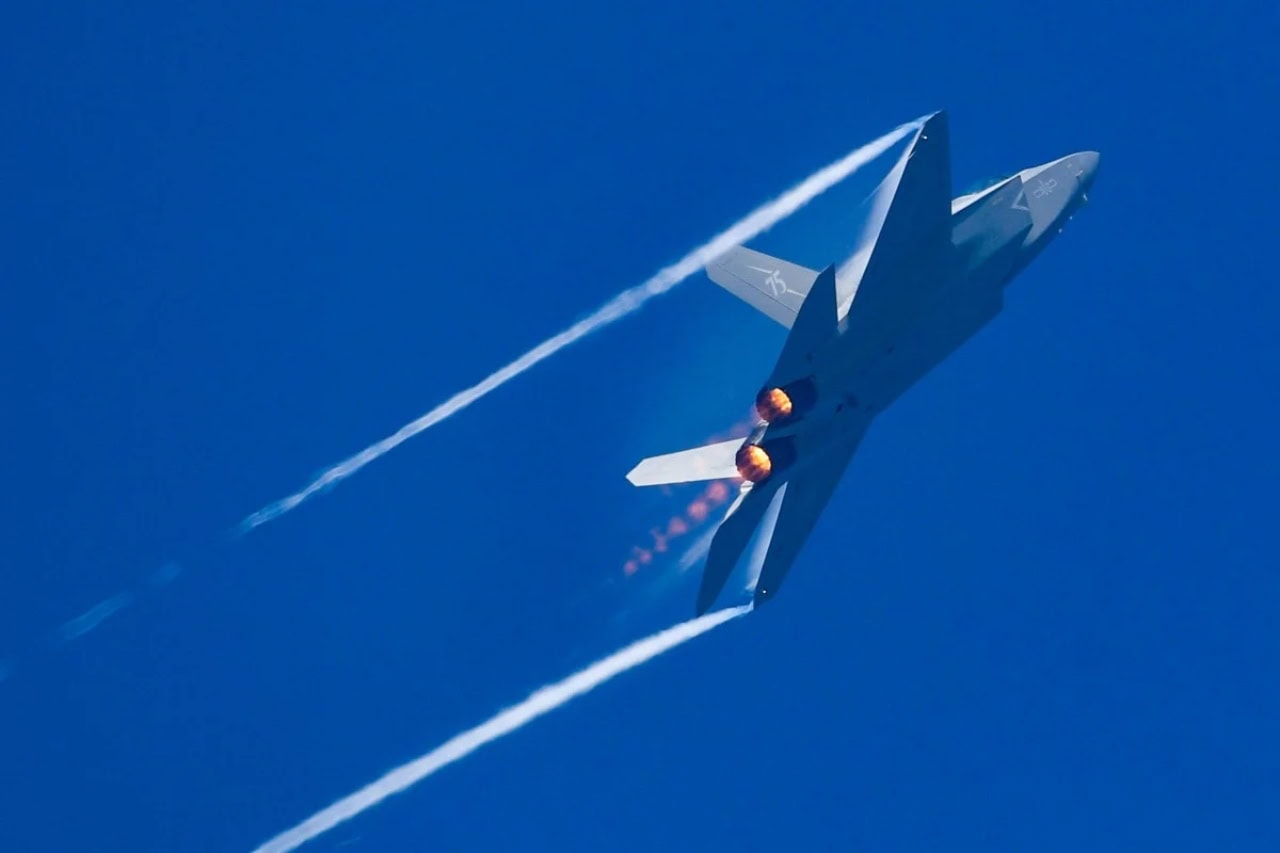
J-35. Image Credit: Chinese State Media.
-The timing matters because Beijing wants a carrier-capable stealth fighter to pair with the Type 003 Fujian and its electromagnetic catapults, enabling heavier launches and longer-range sorties than ski-jump operations allow.
-Shenyang Aircraft Corporation has also completed a new final-assembly complex backed by an 8.6 billion yuan investment, and says overall warplane output could double within three to five years.
China’s J-35 Could Be Entering Serial Production
China appears to be preparing to move its J-35 stealth fighter out of the prototype phase and into production, with a number of apparently deliberate signals from the first two weeks of 2026 indicating that the aircraft is ready for primetime.
On January 9, 2026, the South China Morning Post reported that Shenyang Aircraft Corporation (SAC) released a video of a green-primed J-35 conducting its first flight of the year at SAC’s airfield in Liaoning province, alongside images showing two green-primed aircraft parked together.
The new imagery and footage has been widely interpreted as an industrial flex and an indication that the aircraft is preparing to be finalized.
In the days that followed, analysts argued that the appearance of multiple aircraft in primer – rather than a single demonstrator – suggests that China is edging toward serial manufacturing of its second fifth-generation fighter. China Military Online also described the J-35’s “first flights of 2026,” citing AVIC-linked posts about activity reported at AVIC Shenyang Aircraft Corporation.
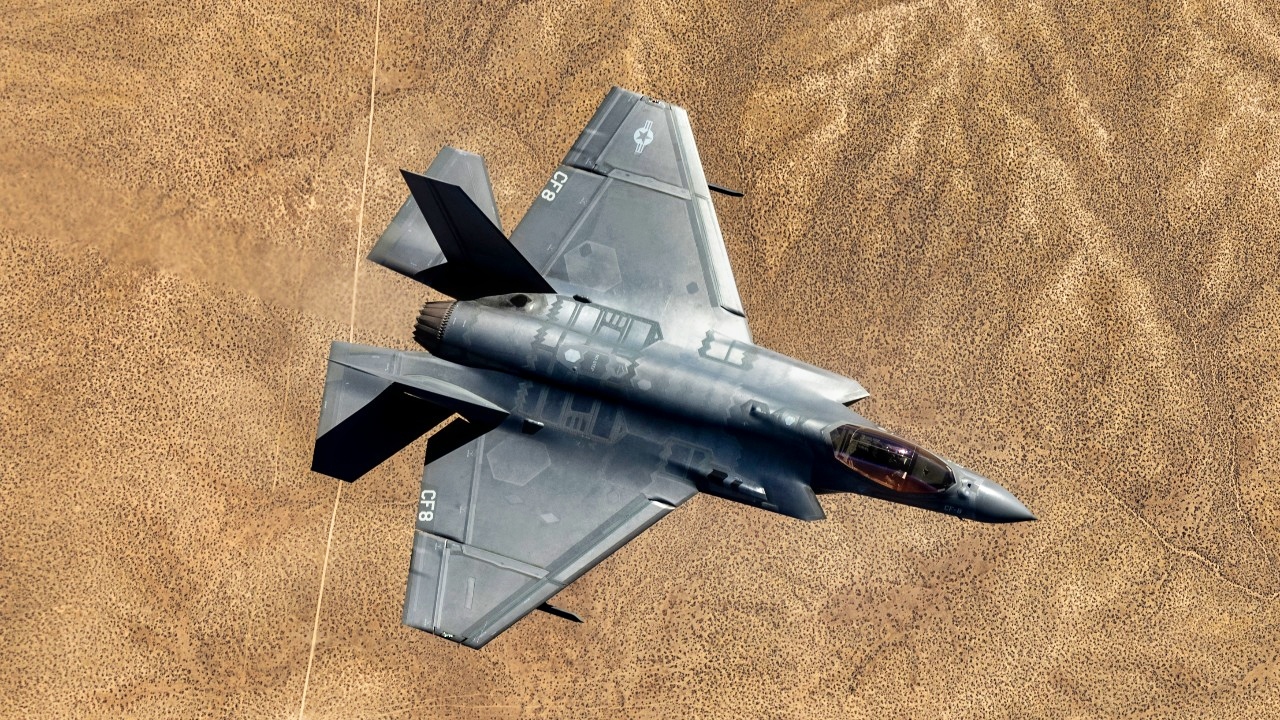
Maj. Nicholas Helmer conducts a mission over the Mojave Desert on October 8, 2024. The F-35C aircraft is assigned to the 461st Flight Test Squadron, F-35 Integrated Test Force at Edwards Air Force Base, California. The aircraft’s dual markings of United States Navy Air Test and Evaluation Squadron Nine (VX-9) and 461st FLTS represents the joint mission of the Integrated Test Force. The F-35 ITF includes people and aircraft from the United States Air Force, United States Navy, United States Marine Corps, foreign partners, Air Force Reserve Command 370th FLTS, and the Air Force Operational Test and Evaluation Center’s 31st TES. (Courtesy Photo, Lockheed Martin Edwards Team)
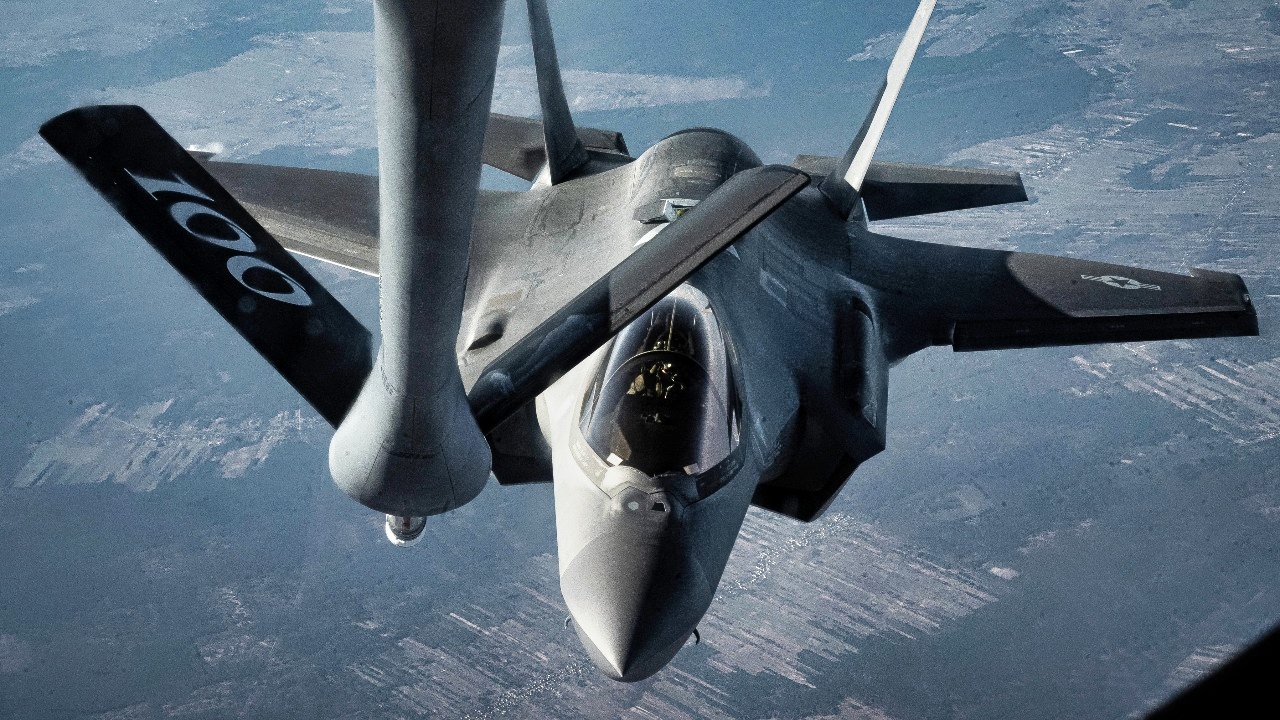
The 388th Fighter Wing’s F-35 Lightning II fifth-generation fighter prepares to receive fuel from a U.S. Air Force Boeing KC-135 Stratotanker attached to the 100th Air Refueling Wing in Eastern European airspace, Feb. 28, 2022. The KC-135 platform is key to enabling U.S. Air Forces in Europe – Air Forces Africa to project credible air power and air operations in concert with NATO allies and partners. (U.S. Air Force photo by Airman 1st Class Edgar Grimaldo)
“AVIC revealed in Weibo posts on Wednesday that a J-35 conducted its maiden flight of the new year on Tuesday at the AVIC Shenyang Aircraft Corporation in Shenyang, Northeast China’s Liaoning Province,” the report explains.
The same report quoted Wang Ya’nan, the chief editor of Beijing-based Aerospace Knowledge magazine, who said that the green primer indicates that the J-35 has not been painted with its tactical coating yet, indicating that it has been newly manufactured.
The news is significant: the arrival of a second Chinese stealth fighter – the first being the Chengdu J-20 “Mighty Dragon” – reflects China’s push to expand its fifth-generation capacity and establishing a navalised variant suited to its new and upcoming supercarriers.
Strategically, it gives Beijing greater flexibility to challenge U.S. and allied airpower – especially in carrier operations and high-intensity regional conflicts – by fielding stealth at scale rather than in small numbers. The first known flight of a carrier-capable variant of the aircraft was reported in October 2021.
By 2025, China was preparing the aircraft for manufacturing at scale, presenting it publicly at the Victory Day parade on September 3, where Chinese state media and other reporting described it as having made its official debut.
Why China Needs the J-35
China already has a stealth fighter – so why does it need the J-35? The answer is simple: naval aviation. China is building a carrier air wing that can operate farther from the mainland and remain survivable against modern air defenses. The strongest clue is the J-35’s planned relationship to China’s newest aircraft carrier, the Type 003 Fujian, which Beijing commissioned in November 2025.
The Fujian’s electromagnetic catapults are intended to launch heavier and more advanced aircraft than China’s older ski-jump carriers. The carrier’s sea trials also featured other aircraft associated with next-generation carrier operations.
The supercarrier is China’s first carrier to feature electromagnetic catapults – a technology designed to widen the range of the aircraft the carrier can launch and, by extension, its operational reach.
China’s earlier carrier aircraft, including the J-15, are large, non-stealthy fighters originally derived from Soviet designs. While effective in the right environments, they face serious survivability limits against modern ship-based air defenses, airborne early-warning aircraft, and fifth-generation fighters.

J-15 Fighter. Image Credit: Creative Commons.
Their operational radius is also limited when launched from ski-jump carriers, which restrict take-off weight and fuel load.
The J-35 addresses those shortcomings directly. Designed from the outset with low observability in mind and intended to operate from catapult-equipped carriers, the J-35 enables heavier launches, longer range, and a greater chance of penetrating defended airspace during the early phases of a conflict. That capability is central to the Type 003 Fujian. And with carrier-capable prototypes having already conducted launches and arrested landings from Chinese carriers, it’s clear that the J-35 is almost ready to be fielded.
China Prepares to Build
As of late 2025, Shenyang Aircraft Corporation had completed a new final-assembly facility, with production lines coming online and mass manufacture now expected to begin this year, in 2026. The site forms part of a much larger industrial complex intended to support long-term, high-volume aircraft manufacturing.
SAC has since stated that it aims to double overall warplane production within three to five years. That ambition suggests the J-35 will become a core component of China’s future air and naval aviation fleets.
The new final assembly facility is located in Shenyang, Liaoning province, where SAC completed a large new factory complex by mid-2025 and began assembly activity ahead of full production as part of a “Shenyang Aerospace City” industrial zone that covers nearly 79 square kilometers. The facility was backed by an 8.6 billion yuan investment and is expected to be the backbone of China’s next-generation warplane manufacturing efforts. Expected annual build numbers have not been disclosed, but the pace at which new images depicting airframes being manufactured and flight tests taking place suggest that China intends to field new aircraft at a rapid pace.
About the Author:
Jack Buckby is a British researcher and analyst specialising in defence and national security, based in New York. His work focuses on military capability, procurement, and strategic competition, producing and editing analysis for policy and defence audiences. He brings extensive editorial experience, with a career output spanning over 1,000 articles at 19FortyFive and National Security Journal, and has previously authored books and papers on extremism and deradicalisation.