The Marines’ New Indo-Pacific Problem: “Bullets, Bandages, and Beans”
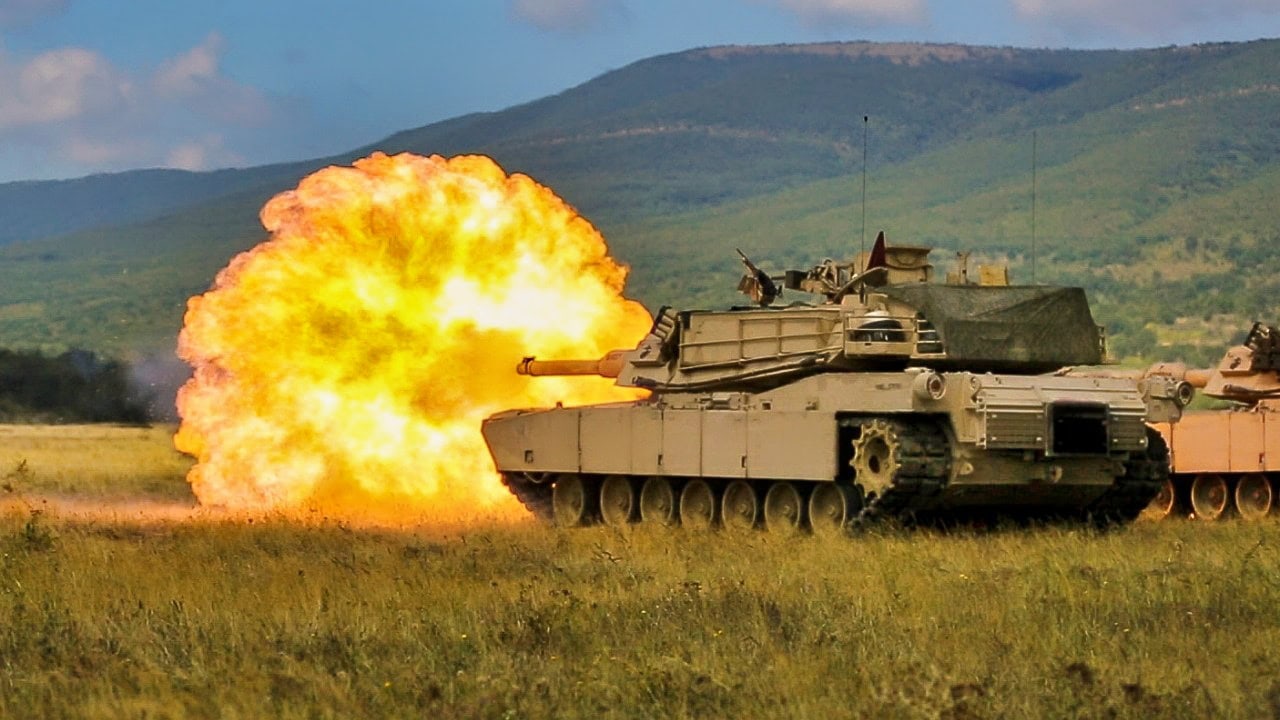
In 2020, the U.S. Marine Corps began its greatest doctrinal change in a generation, which meant the tank had to go.
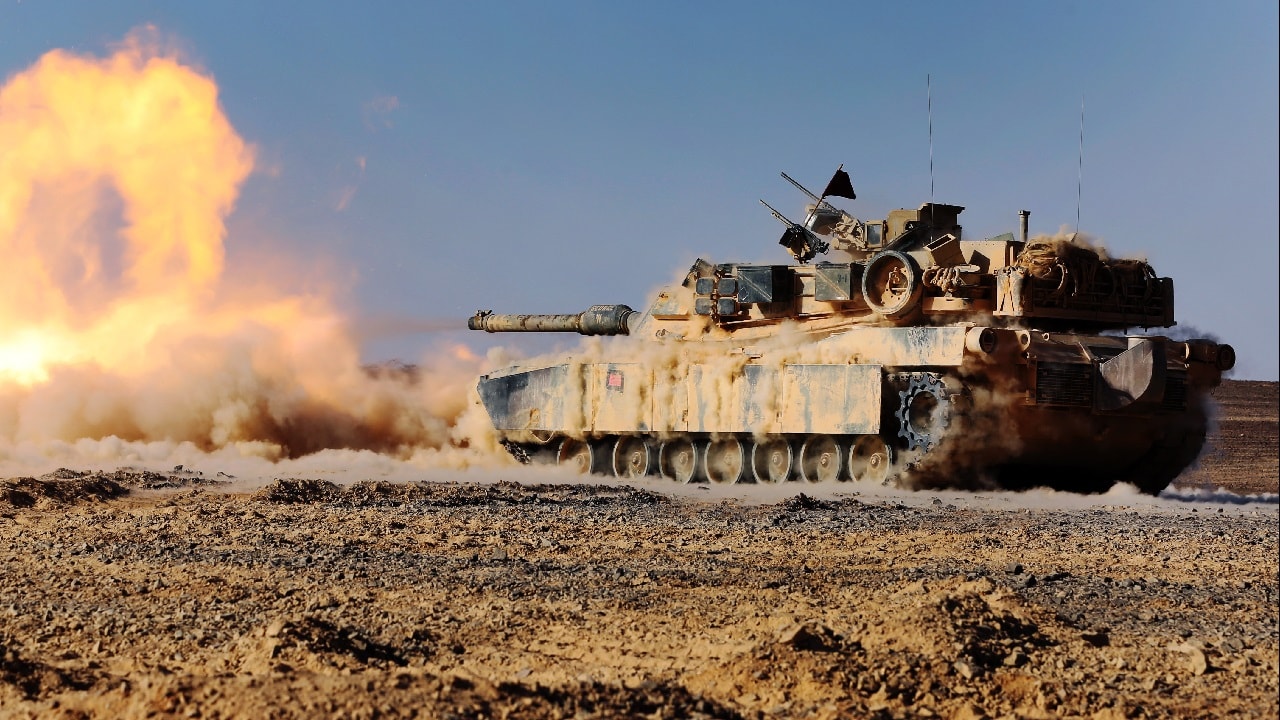
(U.S. Marine Corps photo by Sgt. Devin Nichols/Released)
Initially called Force Design 2030, and now simply Force Design, it aims to transform the Marine Corps by harkening back to its heritage as a naval expeditionary force. That marks a pivot away from the grinding land warfare campaigns that defined the Marine Corps’ involvement in the Middle East as part of the war on terror.
Instead of operating from secure bases on land, the Marine Corps is moving toward tighter coordination with its sister service, the Navy, to face down one adversary in particular: China in the Indo-Pacific region.
“The 38 nations comprising the Asia-Pacific region encompasses 52% of the earth’s surface, home to more than 50% of the world’s population, 3,000 different languages, several of the world’s largest militaries, and five nations allied with the U.S. through mutual defense treaties,” U.S. Indo-Pacific Command states, underscoring just how vital the region is. “Two of the three largest economies are located in the Asia-Pacific along with 10 of the 14th smallest.”
In October last year, the Marine Corps updated Force Design and provided an overview of the progress it has made.
The Implementation of Phase
“Force Design is the Marine Corps’ strategic priority, and this update makes clear both our progress and our direction,” said the Commandant of the Marine Corps, General Eric M. Smith. “We have strengthened formations, fielded new capabilities, and refined our concepts, but modernization remains a continuous campaign of learning and adaptation.”
Smith explained that the Marine Corps is implementing the changes Force Design directs. In particular, the update highlights the ongoing implementation of new technologies and a continuous shift in force structure.
One of the more significant changes to Marine force structure has been to the size of fire teams. In previous years, the Marine Corps reportedly tested and experimented with rifle squads ranging from 12–15 Marines. But the most recent update explains that strategists “made the decision to return to the 13-Marine rifle squad, three fire teams led by a school-trained Sergeant with an added precision fires Marine to operate our small lethal drones.”
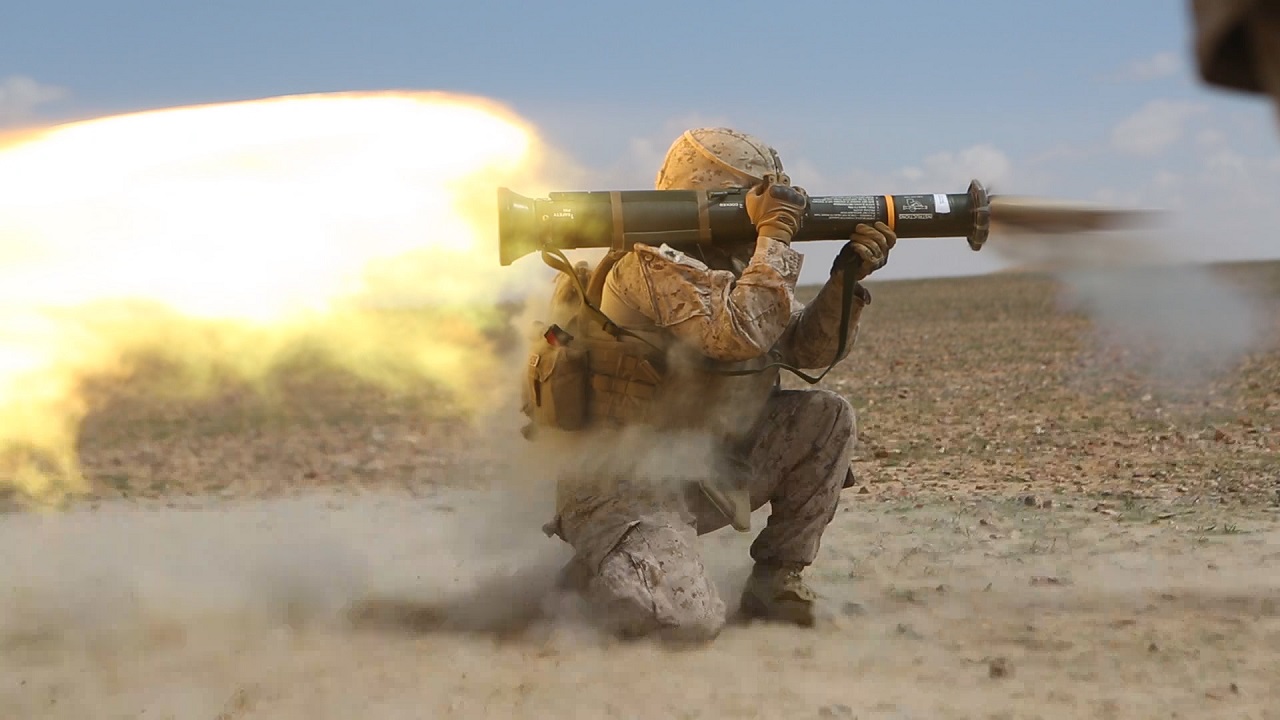
A Marine with Company G, 2nd Battalion, 7th Marine Regiment, Special Purpose Marine Air Ground Task Force – Crisis Response – Central Command, fires an AT4 antitank rocket launcher in the Central Command area of operations, March 23, 2015. The 2/7 Marines participated in a range that tests their ability to conduct an integrated combined arms assault against a simulated enemy position. (U.S. Marine Corps photo by Cpl. Will Perkins/Released)
Supporters and Detractors
Force Design met stiff criticism from virtually the moment it was announced by then-Commandant General David H. Berger. Critiques have focused primarily on three concerns: that Marines would lose their effectiveness in combined arms operations due to the divestment of tanks and artillery; that realizing Force Design 2030 would hamstring the Marine Corps’ ability to respond to threats other than China in the Indo-Pacific; and that Force Design 2030 is untested and therefore unproven. Other criticism focused on Marine Corps logistics and ground mobility, as well as the service’s ability to fight in urban terrain.
Conversely, supporters of Force Design 2030 noted that China is the pacing threat, and the Marine Corps must be ready to fight against it. Some added that the Marine Corps’ pre-Force Design 2030 force structure was deeply outdated and was optimized for land warfare against non-state actors, not peer or near-peer adversaries.
Location, Location, Location
A number of the doctrine’s aspects remain unsettled. But arguably one of the more pressing issues for the Marine Corps is its mobility in contested littoral environments. Historically, the Marine Corps depends on the Navy for medical, logistical, and aviation support (via carrier air wings).
It will probably remain so. As a part of that symbiosis, the Marine Corps planned to acquire the Medium Landing Ship, or LSM, a mid-sized ship that would ferry disaggregated groups of Marines throughout the western Pacific. It would both transport Marines and their equipment and provide a logistical lifeline.
While the Navy previously indicated it would like to acquire between 18 and 35 of the ships, with an option for an additional 9 LSMs, initial cost estimates proved inaccurate, and the lead times long, forcing a reassessment of the acquisition plan. The latest Force Design update explains that LSMs will be acquired in several tranches, with the initial block of ships serving as an “interim solution” intended “to enhance mobility within the First Island Chain now.”
Later LSM orders will incorporate more sophisticated capabilities as those become available and affordable.
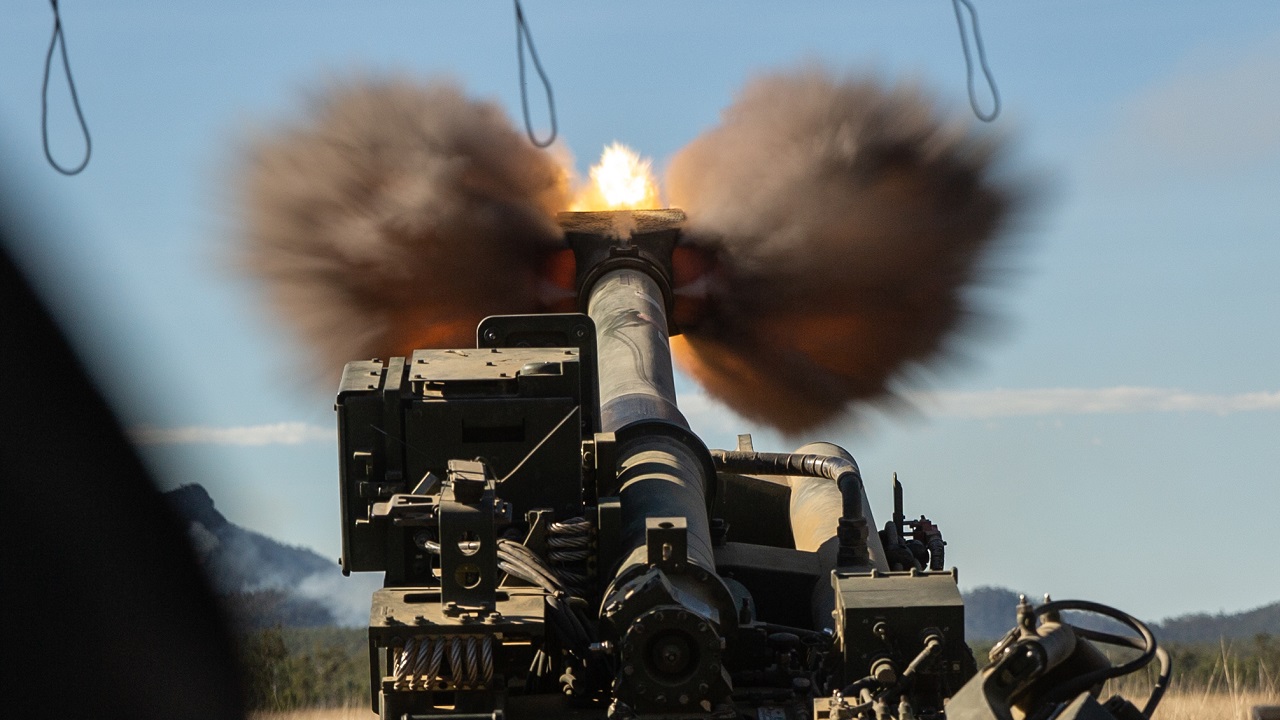
U.S. Marines with Golf Battery, 2d Battalion, 11th Marines, currently attached to the 31st Marine Expeditionary Unit, and Australian Defence Forces with 109th Battery, 4th Regiment, fire an M777 155 mm Howitzer during Exercise Talisman Sabre 21 on Shoalwater Bay Training Area, Queensland, Australia, July 17, 2021. Australian and U.S. Forces combine biennually for Talisman Sabre, a month-long multi-domain exercise that strengthens allied and partner capabilities to respond to the full range of Indo-Pacific security concerts. (U.S. Marine Corps photo by Lance Cpl. Ujian Gosun)
Bullets, Bandages, and Beans
The Force Design update addresses contested logistics and emphasizes the broad distribution of resources through global prepositioning on land and at sea. It also stresses the development of an unmanned surface craft to “provide autonomous long-range logistics distribution,” as well as leveraging “advanced logistics analytics” to get material where it needs to go when it needs to be there.
“The way ahead is clear,” the update concludes. “Force Design is not an endstate but a journey—one that ensures we adapt faster than our adversaries, integrate with the Navy and Joint Force, and remain ready for the future fight. Our charge is to remain the world’s finest fighting force, organized, trained, and equipped to meet the challenges of today and tomorrow. Marines will be first to fight, and Marines will win.”
About the Author: Caleb Larson
Caleb Larson is an American multiformat journalist based in Berlin, Germany. His work covers the intersection of conflict and society, focusing on American foreign policy and European security. He has reported from Germany, Russia, and the United States. Most recently, he covered the war in Ukraine, reporting extensively on the war’s shifting battle lines from Donbas and writing on the war’s civilian and humanitarian toll. Previously, he worked as a Defense Reporter for POLITICO Europe. You can follow his latest work on X.