
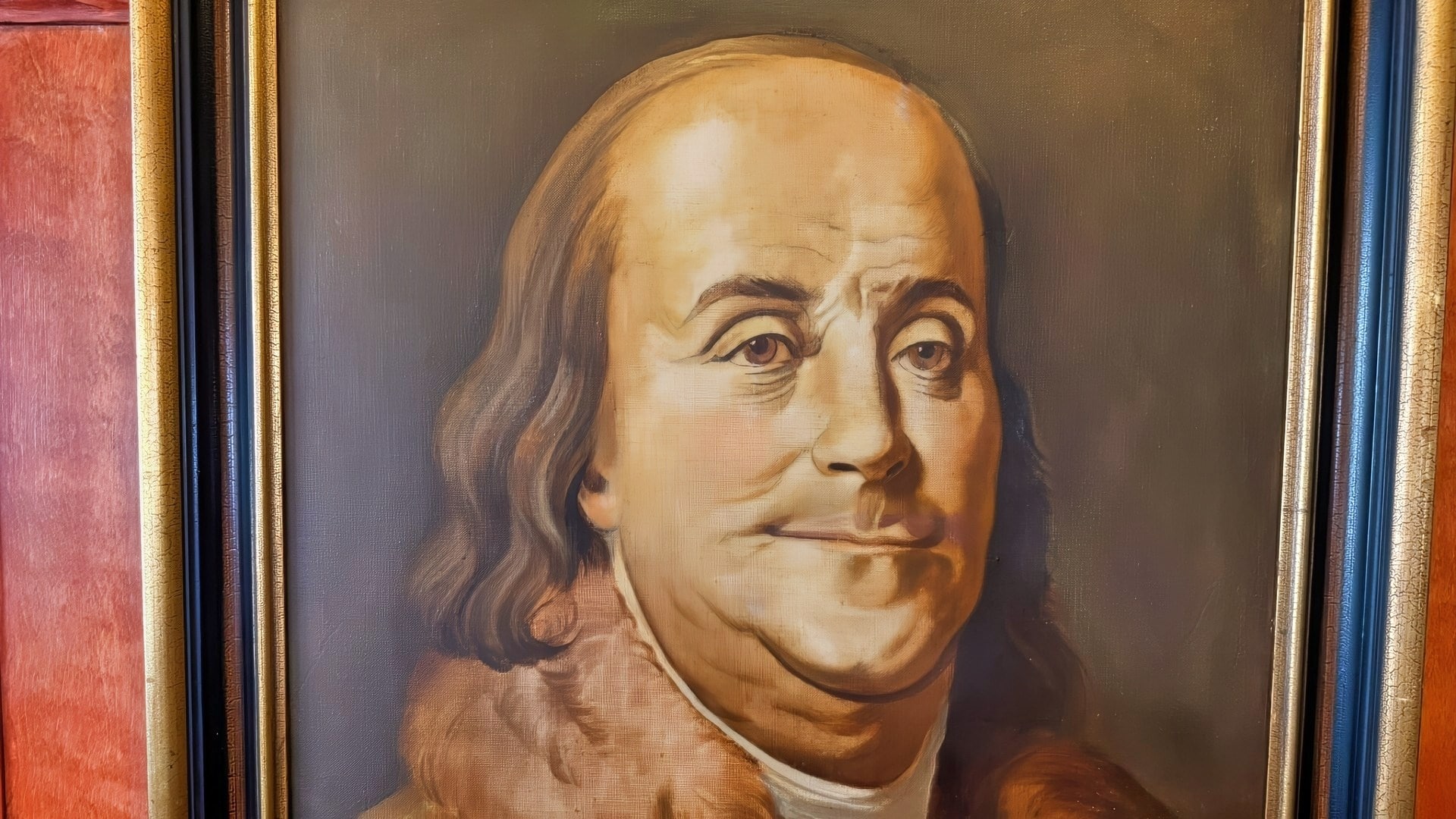
“Never a Good War”: The Benjamin Franklin Line That Still Hits Hard Today
“May we never see another war! For in my opinion, there never was a good war, or a bad peace.” -Benjamin Franklin.

Benjamin Franklin. Image Credit: Creative Commons.
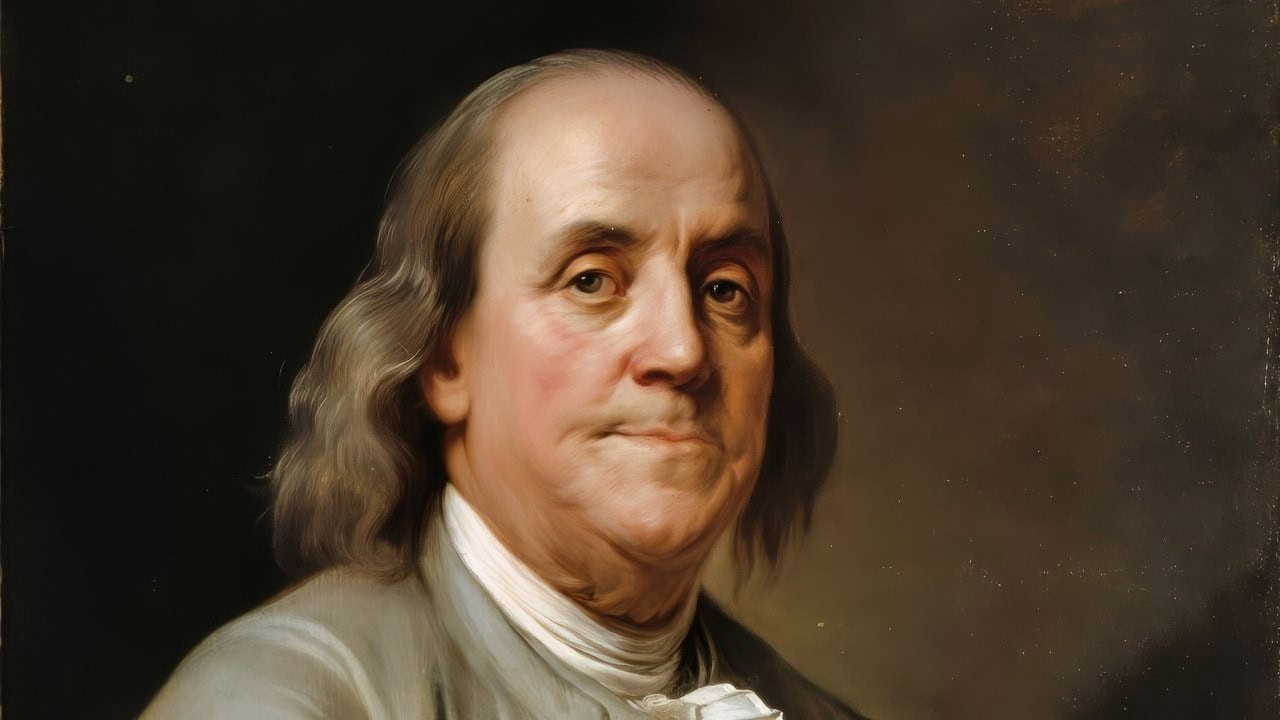
Benjamin Franklin. Image Credit: Creative Commons.
Benjamin Franklin wrote this statement in a letter to Josiah Quincy Sr. on September 11, 1783. The letter included a laundry list of policy initiatives that Franklin wanted the U.S. government to implement. Franklin was somewhat frustrated by his inability to get his way. This letter was among the first complaints about policy gridlock. It was an important early critique of the separation of powers that many politicians lament during their service.
Insights Into How Franklin Was Progressing Towards Peace
Franklin complained in the letter that even though “providence” was on his side, Congress was rejecting his ideas about peace-making between the United States and Britain. He lamented that “our blunders have been many.”
The Inventor and Diplomat Was Growing Frustrated
The esteemed founder was perplexed that he was being criticized in the press for being ineffective in foreign policy-making regarding the Treaty of Paris. “Informed that the practice of abusing me continues, and that some heavy charges are lately made against me respecting my conduct in the treaty, written from Paris and propagated among you; I have demanded of all my colleagues that they do me justice, and I have no doubt of receiving it, from each of them,” he wrote in the missive.
The Slings and Arrows from Critics
Benjamin Franklin also grumbled that he was being charged in the United States “with age and weakness.” This is interesting because it shows that criticism of one’s leadership is always open to debate in the press, and nobody was above negative media coverage even in 1783.
“As to the two charges of age and weakness, I must confess the first; but I am not quite so clear in the latter; and perhaps my adversaries may find that they presumed a little too much upon it when they ventured to attack me.”
General George Washington Portrait. Image Credit: Creative Commons.
General George Washington. Image Credit: Creative Commons.
Maybe Franklin was an early victim of “fake news” and “disinformation” about his health and mental state. However, the inventor was not ready to bow out despite the hectoring in the United States while he was negotiating such an important treaty.
He Knew That Peace Was in Reach Due to His Efforts
Franklin ended his letter on a positive note. “We are now friends with England and with all mankind.” The founder did not view his struggles fondly because of criticism of his reported ineptitude. But he kept the larger goals in mind and forged ahead with the Treaty of Paris in 1783. He was an excellent diplomat and knew that a future war with the British was always possible, and that the treaty’s principles would be important for the future of the United States.
Short Biography of the Revolutionary Hero
Benjamin Franklin was born in 1706 to a lower-middle-class family in Boston. He did not have a traditional education like other founders. Franklin eventually became a printer, and this ascent to partial fame also made him wealthy in Philadelphia. Franklin turned his attention to serving the public and established a library, a hospital, and a college.
“During the American Revolution, he served in the Second Continental Congress and helped draft the Declaration of Independence in 1776. He also negotiated the Treaty of Paris (1783), which ended the Revolutionary War (1775-83). In 1787, in his final significant act of public service, he was a delegate to the convention that produced the US Constitution, according to History.com.
Benjamin Franklin: Self-Taught Genius
Benjamin Franklin loved to read and educated himself in the classics. This self-education forged him into an effective writer. At 16, he was already publishing articles in a newspaper his brother ran. He even once went to England to learn the printing business from some of the best publishers in the world at the time.
The Founding Father then founded the newspaper Pennsylvania Gazette, serving as its main writer, often publishing under a pseudonym so it would appear he had a large stable of journalists. He then began publishing “Poor Richard’s Almanack,” which would increase his popularity and fame.
This is where Franklin published his creative sayings and moral beliefs about health and prosperity. He loved telling people about the importance of living frugally and creating purpose-filled lives.
Way Ahead of His Time
In Philadelphia, Franklin’s attention turned to helping everyone by creating a police force, a militia, and a college that would later become the famed Ivy League institution, the University of Pennsylvania. He even donated efforts to light city streets to further reduce crime. He was also a postmaster who revolutionized the delivery of letters.
The Elon Musk of His Day
In addition, he helped the understanding of electricity with his famous lightning experiment. He thought about charges, storage, and batteries as they pertained to electricity. He longed for refrigeration and invented bifocal glasses and the Franklin stove.
Success in Politics
Franklin became a member of the Pennsylvania Assembly and shone as a public servant. He began negotiations with the British government and led efforts to oppose the Stamp Act. He was then chosen as the Delegate to the Second Continental Congress and helped draft the Declaration of Independence. He went to France to see if the French would help the colonies fight the British. He negotiated and helped write the Treaty of Paris and then, at an amazing 81 years old, served as a delegate to the Constitutional Convention.
Under-rated Diplomat
Franklin was less known for his diplomatic expertise, but his wit and wisdom spurred his sunny persona and popularity across borders. He knew he needed to end the war on good terms, and his experience interacting with foreign governments would shape the future of a new nation that would be instrumental in leading the world toward freedom, democracy, and individual liberty.
About the Author: Brent M. Eastwood
Author of now over 3,000 articles on defense issues, Brent M. Eastwood, PhD is the author of Don’t Turn Your Back On the World: a Conservative Foreign Policy and Humans, Machines, and Data: Future Trends in Warfare plus two other books. Brent was the founder and CEO of a tech firm that predicted world events using artificial intelligence. He served as a legislative fellow for US Senator Tim Scott and advised the senator on defense and foreign policy issues. He has taught at American University, George Washington University, and George Mason University. Brent is a former US Army Infantry officer. He can be followed on X @BMEastwood.