
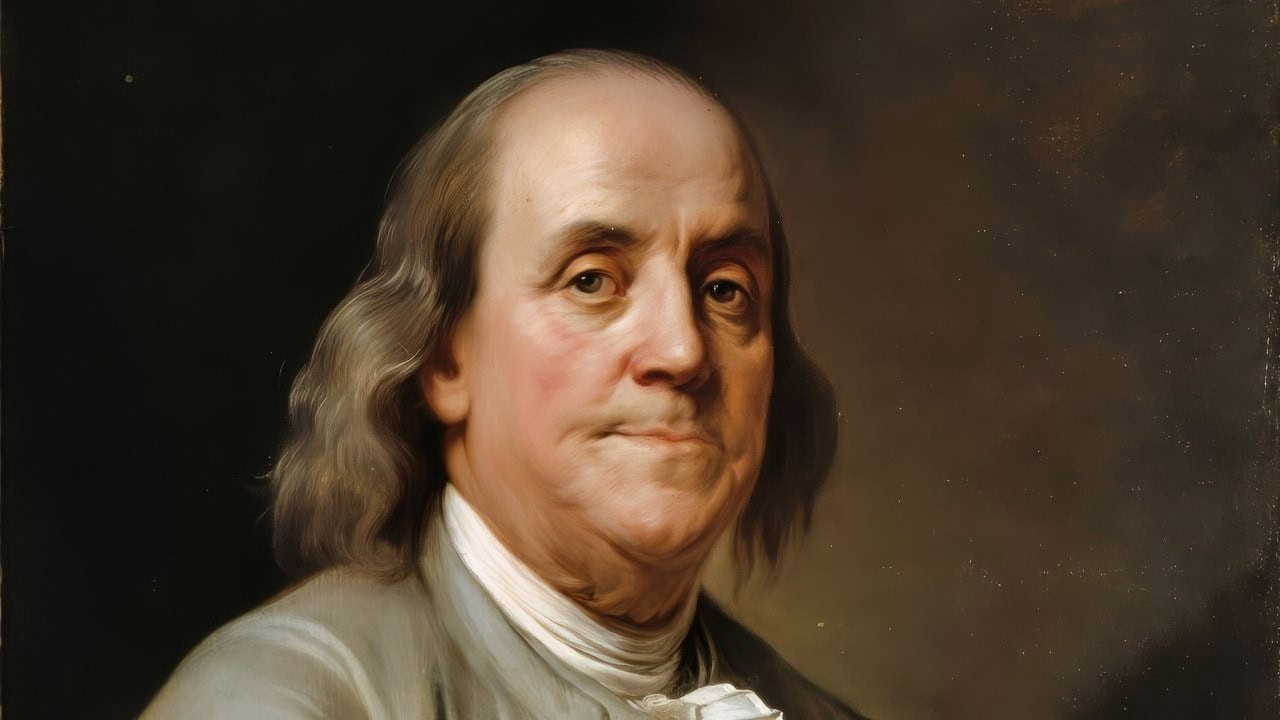
Synopsis: Benjamin Franklin, the 15th of 17 children, rose from a “penniless” printer to become one of America’s most essential Founding Fathers.
A polymath who invented the lightning rod and bifocals, Franklin also shaped the nation’s social fabric by establishing its first library and volunteer fire department.

Benjamin Franklin. Image Credit: Creative Commons.
His “diplomatic charm” secured vital French aid for the Revolution, while his philosophy of “self-improvement” and civic duty guided his life.
In his final years, the man known for Poor Richard’s Almanack became a staunch advocate for the abolition of slavery.
Benjamin Franklin has Important Finacial Advice in 1 Quote
“He does not possess wealth that allows it to possess him.” – Benjamin Franklin
Benjamin Franklin was a major founding father and an important figure in history.
Known for his wit and sense of humor, Franklin was central to shaping America’s morals during the War for Independence.
He had an avid interest in a wide range of subjects, including philosophy, science, politics, and many more. His writings and work influenced the founding of the United States, and his writings further cemented him as an essential figure in American mythology.
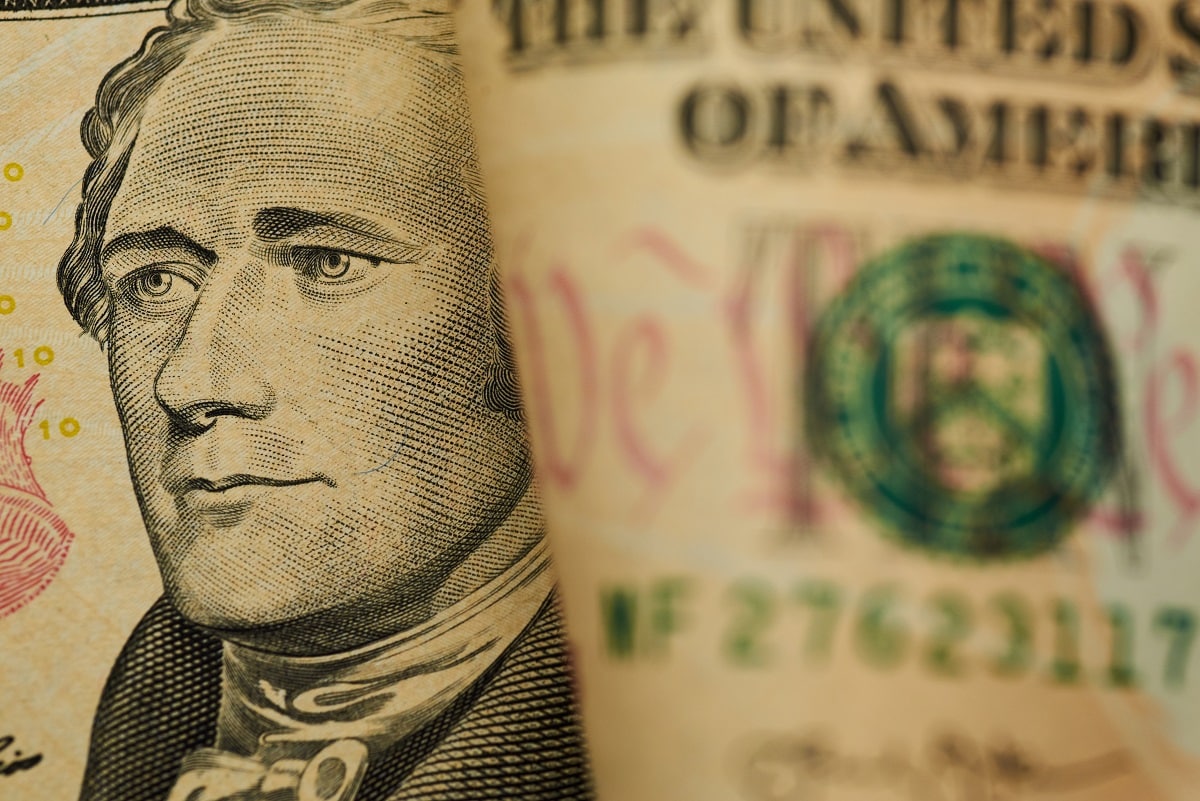
U.S. Dollars. Image: Creative Commons.
Early Life and Education
Franklin was born on January 17, 1706, in Boston, Massachusetts, the fifteenth of seventeen children in a modest family. His father, Josiah Franklin, was a candle and soap maker, and his mother, Abiah Folger, came from a family of Nantucket settlers. Franklin had little formal education. He attended school for only two years before financial constraints forced him to leave. Despite this, Franklin was an avid reader and self-educator, a trait that defined him throughout his life.
At seventeen, Franklin left Boston after tensions with his brother and sought opportunities in Philadelphia. Arriving nearly penniless, he quickly found work as a printer. His industriousness and talent earned him respect, and soon he traveled to London to gain experience in the printing trade. \
After two years abroad, Franklin returned to Philadelphia and established his own printing business. His entrepreneurial spirit flourished as he published The Pennsylvania Gazette, which became one of the most successful newspapers in the colonies. In 1732, he began publishing Poor Richard’s Almanack, a yearly publication filled with practical advice, proverbs, and humor. Its sayings, such as “Early to bed and early to rise makes a man healthy, wealthy, and wise,” became part of American culture.
Shaping the Social Fabric of America
Franklin’s curiosity extended beyond printing and writing. He became deeply interested in science and conducted experiments that earned him international fame. His most famous scientific contribution was his work on electricity.
In 1752, Franklin performed the legendary kite experiment, demonstrating that lightning was a form of electricity. This led to his invention of the lightning rod, which protected buildings from lightning strikes and saved countless lives.
Franklin also invented practical devices, including bifocal glasses, which allowed people to see both near and far without changing lenses; the Franklin stove, an efficient heating device; and the glass armonica, a musical instrument played by rubbing glass bowls.
His scientific writings were published in Europe, and he was awarded honorary degrees and memberships in prestigious societies, cementing his reputation as one of the leading intellectuals of his time.
Franklin believed in improving society through collective effort. He founded numerous institutions that shaped American life, including the Library Company of Philadelphia in 1731, America’s first subscription library; the American Philosophical Society in 1743, promoting scientific inquiry; and the University of Pennsylvania, which evolved from his plans for an academy. He also organized Philadelphia’s first volunteer fire department and helped establish a public hospital. Franklin’s civic initiatives reflected his philosophy that education, science, and community service were essential for progress.
Professional Career of Benjamin Franklin
Franklin’s political influence grew steadily.
He served as Postmaster General, improving communication across the colonies. His diplomatic skills were evident during his time in London from 1757 to 1775, when he represented Pennsylvania and other colonies and advocated for colonial rights.
Initially, Franklin sought reconciliation with Britain, but as tensions escalated, he became a staunch supporter of independence. In 1776, Franklin was appointed to the Committee of Five that drafted the Declaration of Independence. His wisdom and humor helped navigate political challenges during this critical period.
Perhaps Franklin’s most significant diplomatic achievement was securing French support for the American Revolution. As ambassador to France from 1776 to 1785, Franklin charmed the French court and negotiated alliances that provided vital military and financial aid.
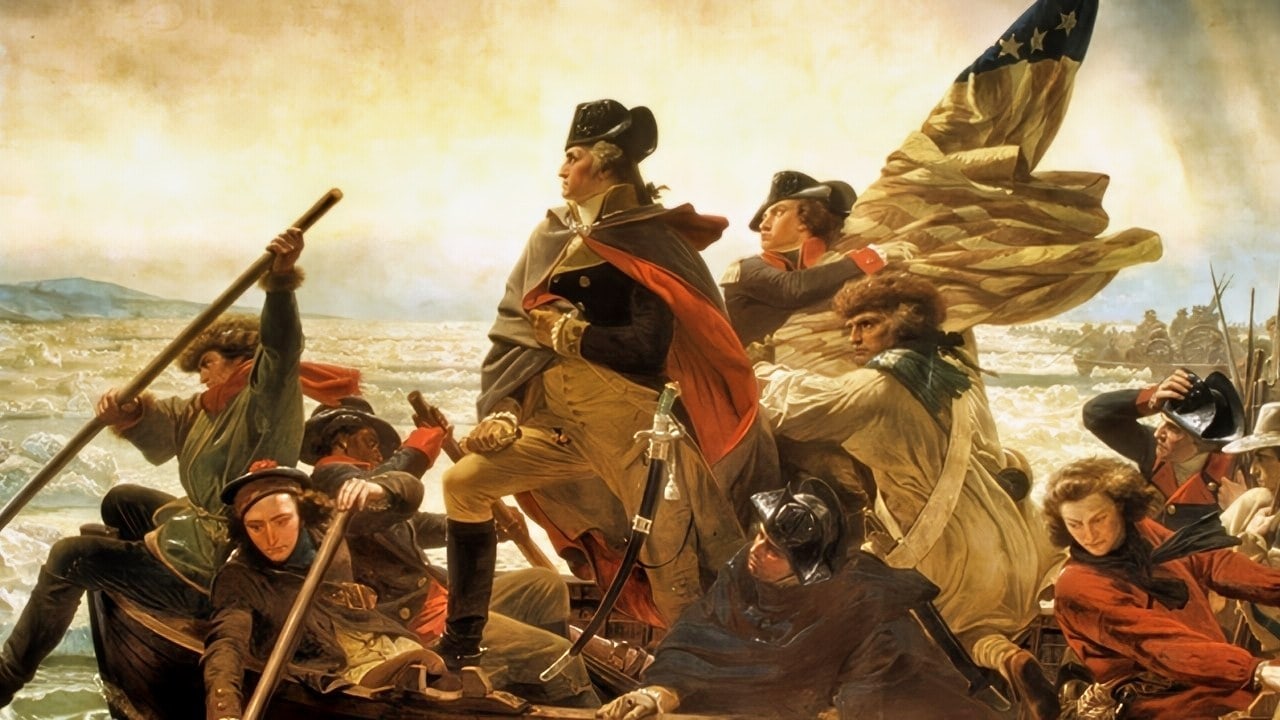
General George Washington. Image Credit: Creative Commons.
After the Revolution, Franklin returned to Philadelphia and continued to serve his country. At the age of eighty-one, he participated in the Constitutional Convention of 1787, lending his experience and advocating for compromise to ensure unity among the states. Franklin was also an early voice against slavery. In his final years, he served as president of the Pennsylvania Society for Promoting the Abolition of Slavery, urging Congress to end the practice.
Benjamin Franklin died on April 17, 1790, at the age of eighty-four. Thousands attended his funeral, and his passing was mourned across America and Europe. Franklin left behind a legacy that was forever immortalized by the country he helped to found.
He was remembered as a man who rose from humble beginnings to become a Founding Father, scientist, inventor, writer, and diplomat.
Franklin’s Philosophy
Benjamin Franklin’s life philosophy centered on the pursuit of self-improvement and practical wisdom. He believed that personal success and societal progress were achieved through discipline, hard work, and education.
Franklin famously developed a system of thirteen virtues, such as temperance, industry, and humility, that he strove to practice daily. Though he admitted he never reached perfection, his commitment to these ideals reflected his belief that moral character and personal responsibility were essential for a meaningful life.
His writings, especially in Poor Richard’s Almanack, emphasized thrift, diligence, and the value of time, encouraging others to live purposefully and avoid idleness.
Equally important to Franklin’s philosophy was his dedication to civic duty and the common good. He saw knowledge and innovation not as private luxuries but as tools to improve society. This belief inspired him to establish libraries, schools, and public services, fostering education and community welfare.
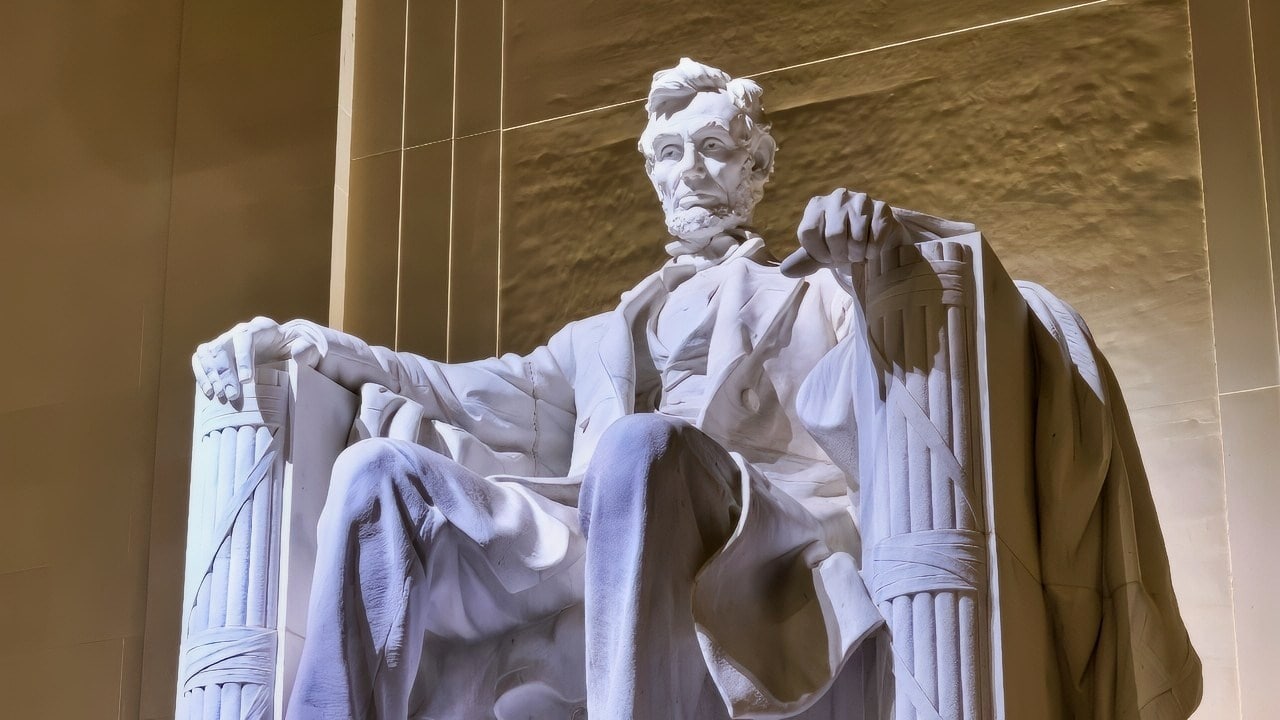
Statue of Abraham Lincoln at the Lincoln Memorial in Washington D.C. on June 12, 2024. The 170-ton statue, sculpted by Daniel Chester French (1850–1931) is located in the Lincoln Memorial on the National Mall. It was carved by the Piccirilli Brothers, assembled in 1920 and unveiled on May 30, 1922.
Benjamin Franklin championed reason and dialogue, valuing compromise and cooperation over conflict. His outlook combined Enlightenment ideals with practical action, shaping him into a figure who not only sought personal growth but also worked tirelessly to create a better world for others.
About the Author: Isaac Seitz
Isaac Seitz, a Defense Columnist, graduated from Patrick Henry College’s Strategic Intelligence and National Security program. He has also studied Russian at Middlebury Language Schools and has worked as an intelligence Analyst in the private sector.