

Key Points and Summary – A quote often attributed to Benjamin Franklin draws a sharp line between war and revolution: in war, a government defines the enemy; in revolution, people decide for themselves who is oppressing them.
-Whether or not Franklin actually said the words, the idea fits the psychology of 1775—when many colonists still viewed themselves as English subjects, yet increasingly believed the British system no longer represented them.
-The piece uses the quote as a lens for independent thinking, skepticism of propaganda, and the moral leap from obedience to self-directed action.
-It then pivots to Franklin’s real legacy as America’s indispensable diplomat in France and a key architect of independence.
Benjamin Franklin’s “War vs. Revolution” Quote Has a Message for America
“War Is When The Government Tells You Who The Bad Guy Is, Revolution Is When You Decide For Yourself” – Benjamin Franklin
The quote is often attributed to Benjamin Franklin, one of the United States Founding Fathers and a key part of the American colonies and later the United States’ early history.
This quote highlights the difference between state-sanctioned conflict (war, where enemies are defined for you by a representative government) and self-directed action (revolution, where you identify your own oppressors, which is the government).
It would be a perfect illustration of what the American colonists faced in 1775, when the first armed conflict between the colonists and the British Army began.
And it should be noted that before and even after the first shots were fired at Lexington and Concord, many people believed themselves to be English citizens who the English government was unjustly representing.
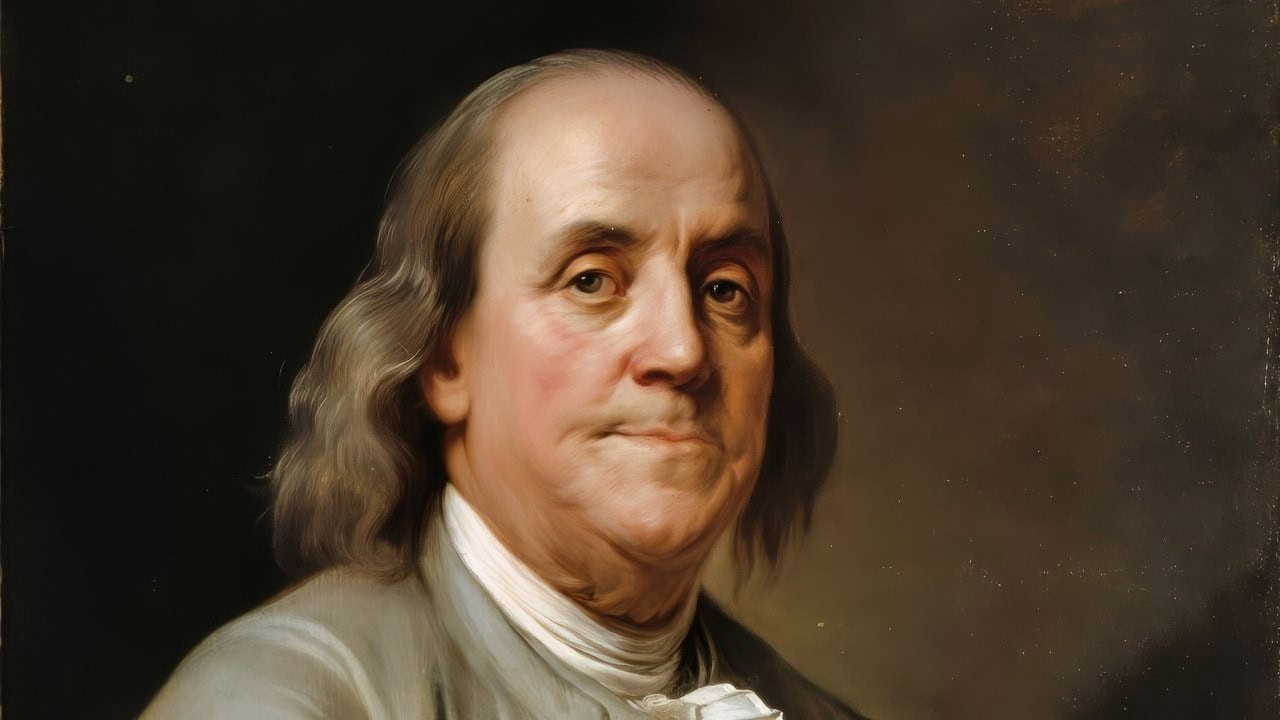
Benjamin Franklin. Image Credit: Creative Commons.
Significance Of The Quote
This quote emphasizes independent thinking, challenging authority, and the power of personal conviction to determine true justice and who deserves opposition, a core theme for a Founding Father like Franklin.
The difference between war and revolution is stark. During a war, the government dictates who the “enemy” is, which could be foreign nations or specific groups, demanding obedience and national unity, often through propaganda, making it harder to question the cause.
However, during a revolution, the people are forced to critically assess their own conditions and decide for themselves who the real oppressors are and what needs changing, shifting from collective obedience to personal conviction.
The quote forces critical, independent thinking over blind allegiance, suggesting true freedom comes from deciding your own values and targets, not accepting those given by leaders. And it challenges the state government’s authority.
While this quote is often attributed to him, wherein it reflects the spirit of the American Revolution, where colonists questioned unjust British rule, ultimately deciding their own fight for liberty against what they perceived as tyranny, a stark contrast to being told who to fight by a distant king, in this case, King George III. There is no credible evidence that Franklin ever said this.
Franklin’s quote (if he ever did say it, others attribute it to Napoleon), promotes self-determination and critical engagement with the power of the individual, contrasting imposed conflict with a self-willed struggle for liberation.
Franklin Was The United States’ First Diplomat
During the Revolutionary War years, Benjamin Franklin was a critical member of the Founding Fathers, serving as a key diplomat in France to secure vital military and financial aid.
Franklin helped draft the Declaration of Independence, and was a key member of the Committee of Five with John Adams, Roger Sherman, Robert Livingston, and the primary author of the document, Thomas Jefferson, who drafted the Declaration of Independence, reviewing and editing Jefferson’s initial draft.
He famously changed”sacred and undeniable” to “self-evident” to ground rights in reason, and he was also one of the few Founding Fathers to sign the Declaration of Independence, the Treaty of Paris, and the Constitution. He helped shape the document’s language, removing controversial passages.
Getting Financial And Military Aid From France
Franklin was a delegate to the Continental Congress. It helped organize defenses and militia during the French and Indian War, where the first inkling of independence was born out of necessity, embodying the spirit of the Enlightenment and New World ideals.
In 1754, he used his press to circulate the famous “Join or Die” cartoon in an attempt to rally the colonies against the French. While at the congress, Franklin proposed the Albany Plan, which failed at the time but later inspired the Articles of Confederation and helped unite the colonies.
Franklin was the US’s diplomat in France (1776-1785). Appointed as America’s representative. Franklin’s popularity and skill charmed French society, becoming a popular figure for the Americans in Europe.
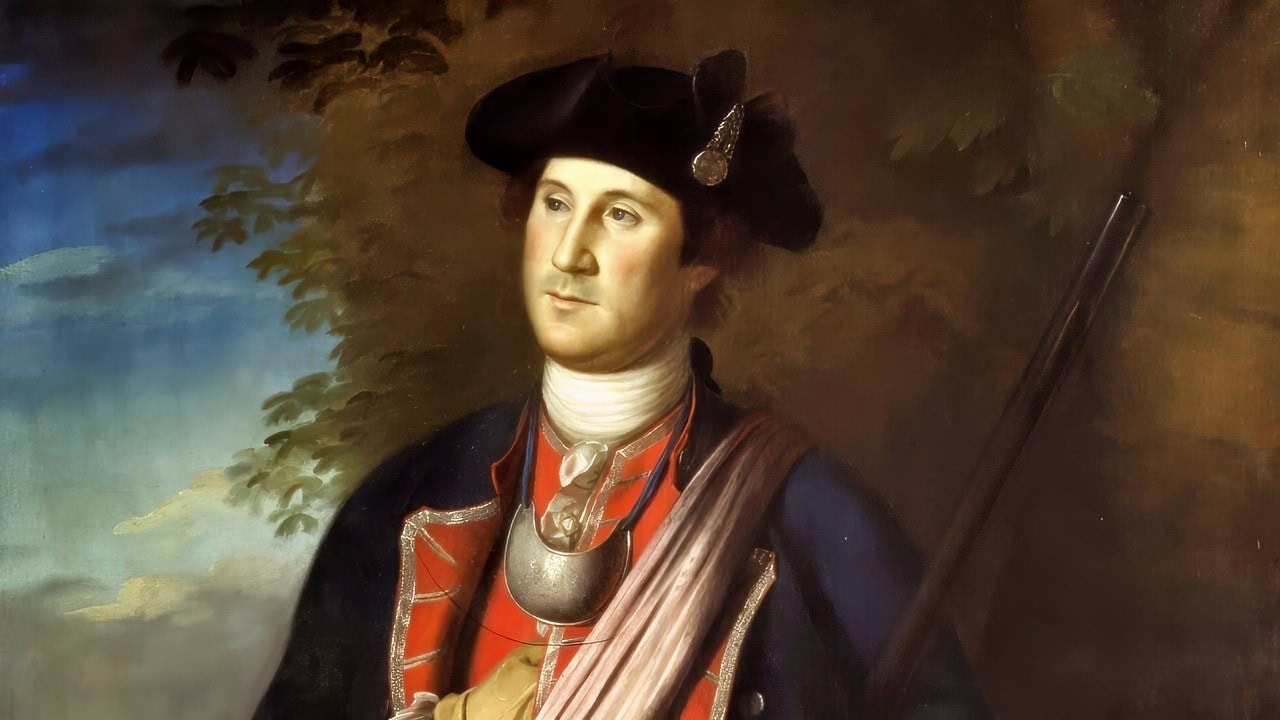
General George Washington Portrait. Image Credit: Creative Commons.
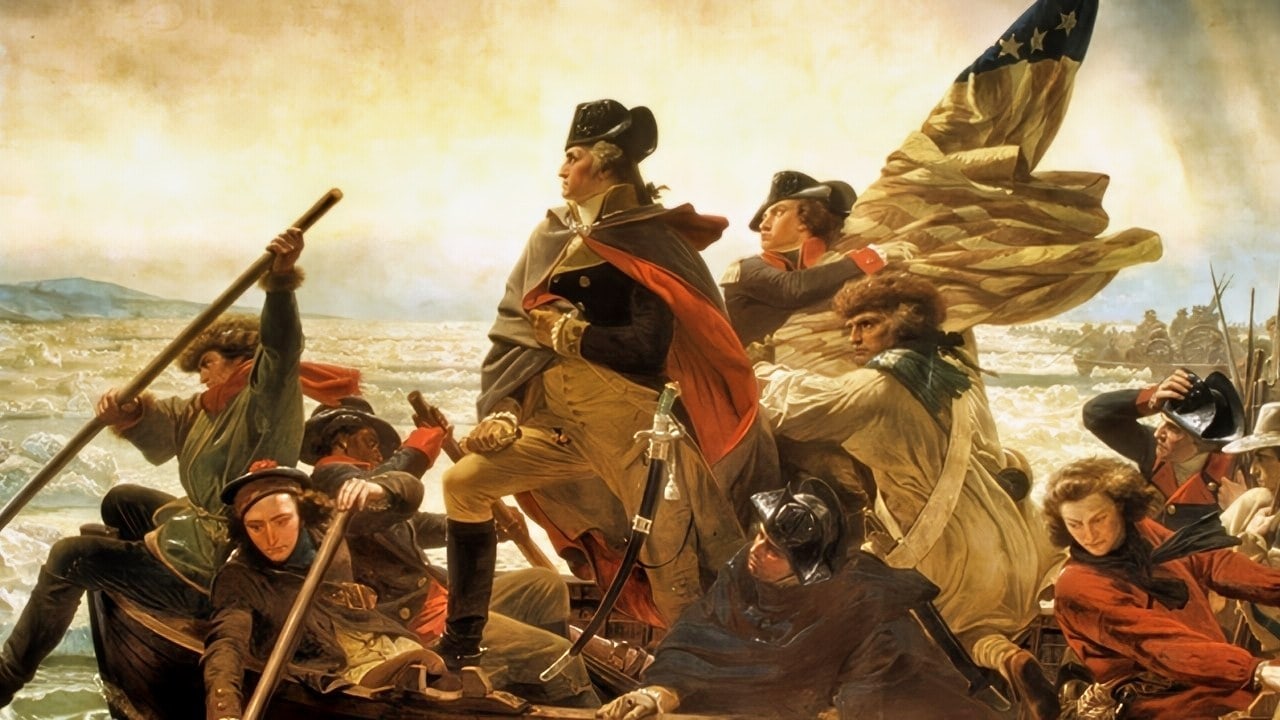
General George Washington. Image Credit: Creative Commons.
His persuasive diplomacy and international renown after the first American battlefield success at Saratoga convinced France to recognize American independence and conclude an alliance with the thirteen American states in 1778.
Franklin presented his credentials to the French court in 1779, becoming the first American Minister (the eighteenth-century American equivalent of an Ambassador) to be received by a foreign government.
Franklin was a lead negotiator for the Treaty of Paris (1783). As the principal negotiator, he helped secure the peace treaty that formally ended the war and established U.S. independence.
Franklin was one of three American negotiators, along with John Adams and John Jay, who hammered out a peace treaty with the English negotiator David Hartley. It not only secured British recognition of the United States but also established the boundaries that would secure later westward expansion for the United States.
When Franklin returned to the United States in 1785, Thomas Jefferson succeeded him in Paris. French Foreign Minister Vergennes asked Jefferson, “It is you who replaces Dr. Franklin?” Jefferson famously replied, “No one can replace him, Sir; I am only his successor.”

Image: Public Domain.
Franklin’s role in France was indispensable, transforming him into America’s first international face and securing the foreign backing essential for victory.
Franklin died in 1790 in Philadelphia at the age of 84. His funeral in Philadelphia saw the largest procession the city had ever witnessed, marking a national moment of mourning for the celebrated statesman, scientist, and diplomat.
Curiously, neither President George Washington nor members of Congress attended his funeral.
About the Author: Military Expert Steve Balestrieri
Steve Balestrieri is a National Security Columnist. He served as a US Army Special Forces NCO and Warrant Officer. In addition to writing on defense, he covers the NFL for PatsFans.com and is a member of the Pro Football Writers of America (PFWA). His work was regularly featured in many military publications.