

Key Points and Summary – John Adams wasn’t a soldier in the conventional sense, but he understood war’s price and the necessity of preparedness. In a 1780 letter to Abigail, he explained why he studied “politics and war” so future generations could pursue higher learning in peace.
-While Adams never served in the Continental Army, he was linked to militia service in mid-18th century Massachusetts.
-His true military legacy came as president during the Quasi-War with France, when the “XYZ Affair” helped spark public outrage, accelerated the revival of the U.S. Navy, and proved the young republic could fight at sea without paying tribute.
John Adams Has a Military Message for Today’s Officers in 1 Quote: Study War First
‘I must study politics and war that my sons may have liberty to study mathematics and philosophy.’—That quote belongs to John Adams, in a 1780 letter to his wife Abigail.
Well, as any commissioned officer in the U.S. Armed Forces who has obtained his/her commission via either one of the service academies or Reserve Officers’ Training Corps (ROTC) can attest, the study of politics & war on the one hand and the study of math & philosophy on the other hand are certainly not mutually exclusive.
Indeed, math is a necessary evil for service academy students and ROTC scholarship students alike. (Math was my academic Achilles’ heel in school, so I lucked out by obtaining my own commission via U.S. Air Force Officer Training School [OTS] after my college graduation, thus avoiding further mathematical misery).
But in fairness, Adams penned those words long before either the academies or ROTC were established.
He was one of America’s Founding Fathers, as well as the first-ever Vice President of the United States and the second-ever President of the United States.
As POTUS, one of John Adams’s duties was that of commander-in-chief of America’s army and navy (more on this in a bit).
But did he, in fact, also serve as a soldier himself?
John Adams the Soldier (Well, Sort of)
At the risk of sounding like a politician talking out of both sides of his mouth, the answer to the question is “Yes and no.”
John Adams never served in the Continental Army (nor in the pre-Revolutionary War British Army, as George Washington did during the French and Indian War), nor in the post-independence United States Army. So, in other words, he wasn’t a soldier in the conventional sense.
However, as noted by GunPundit Team in a December 14, 2024, article for The Civil War website, “In 1755, at the age of 20, Adams joined the Massachusetts militia, a volunteer force made up of local residents, to fight in the French and Indian War. As a member of the militia, Adams saw action in several battles, including the Battle of Fort Massachusetts and the Battle of Lake George. Although he did not see combat, Adams played an important role in organizing and supplying the militia.”
John Adams, the Commander-in-Chief: The Quasi-War
It was Adams’s successor, his friend and rival Thomas Jefferson, who presided over America’s first *official* major war, the First Barbary War.
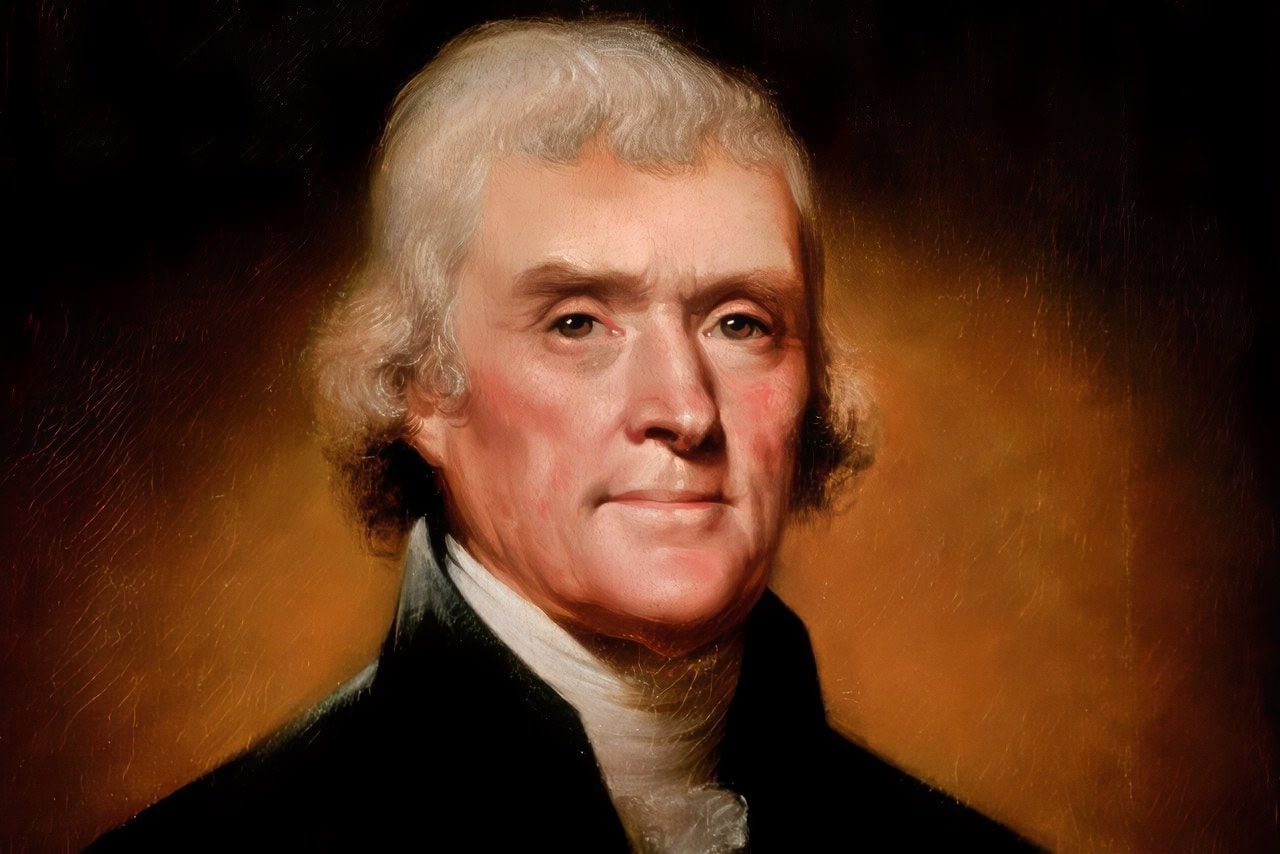
Thomas Jefferson. Image Credit: Creative Commons.
But that doesn’t mean John Adams never exercised his presidential powers as commander-in-chief of the armed forces.
On his watch, the Quasi-War with the French First Republic took place from July 7, 1798, to September 30, 1800.
It was an undeclared war (hence the “Quasi” label) that stemmed from political disagreements over treaties the United States had signed with France and Britain, and it was fought almost entirely at sea.
In a nutshell (courtesy of American History Central):
-The French started harassing American ships on the seas, so Adams sent a delegation to negotiate a treaty
-However, the French negotiators decided to play hardball, demanding that the U.S. pay a bribe (couched in official terms as a “tribute”) before they would start negotiations.
-This “XYZ Affair” proved to be quite a scandal Stateside, leaving the American public feeling outraged and inspiring the mantra “Millions for defense, but not one cent for tribute!”
-Instead of levying taxes to raise funds for tribute, Congress responded by reconstituting the U.S. Navy on April 30, 1798
-Though seemingly outnumbered and outclassed, the newly reborn USN, under the leadership of Commodore Thomas Truxtun, quickly established itself as a credible naval power by winning several key battles
-As luck would have it, Napoleon Bonaparte came to power in France whilst the Quasi-War was raging; for all Napoleon’s grand military ambitions, conquering the United States wasn’t one of them, and he instead wanted a better relationship with America
-Accordingly, the United States and France finally negotiated in earnest at the Convention of 1800 and agreed to the Treaty of Mortefontaine, which restored the diplomatic and economic relations between the two nations.
Final casualty tally for the Quasi-War amounted to the following: (1) 160 men killed or wounded, with 22 privateers and up to 2,000 merchant ships captured on the American side; and (2) 100+ sailors killed or wounded, 517 seamen captured, with one frigate, two corvettes, one brig, and 118 privateers sunk or captured.
Lasting Legacy
Despite his historical significance, John Adams was completely eclipsed by George Washington and Thomas Jefferson alike when it came to being immortalized in movies, TV miniseries, money (the quarter and the $1 bill in Washington’s case; the nickel and the $2 bill in Jefferson’s case), and touristy memorials and museums (e.g., Mount Vernon, the Thomas Jefferson Memorial, Monticello).
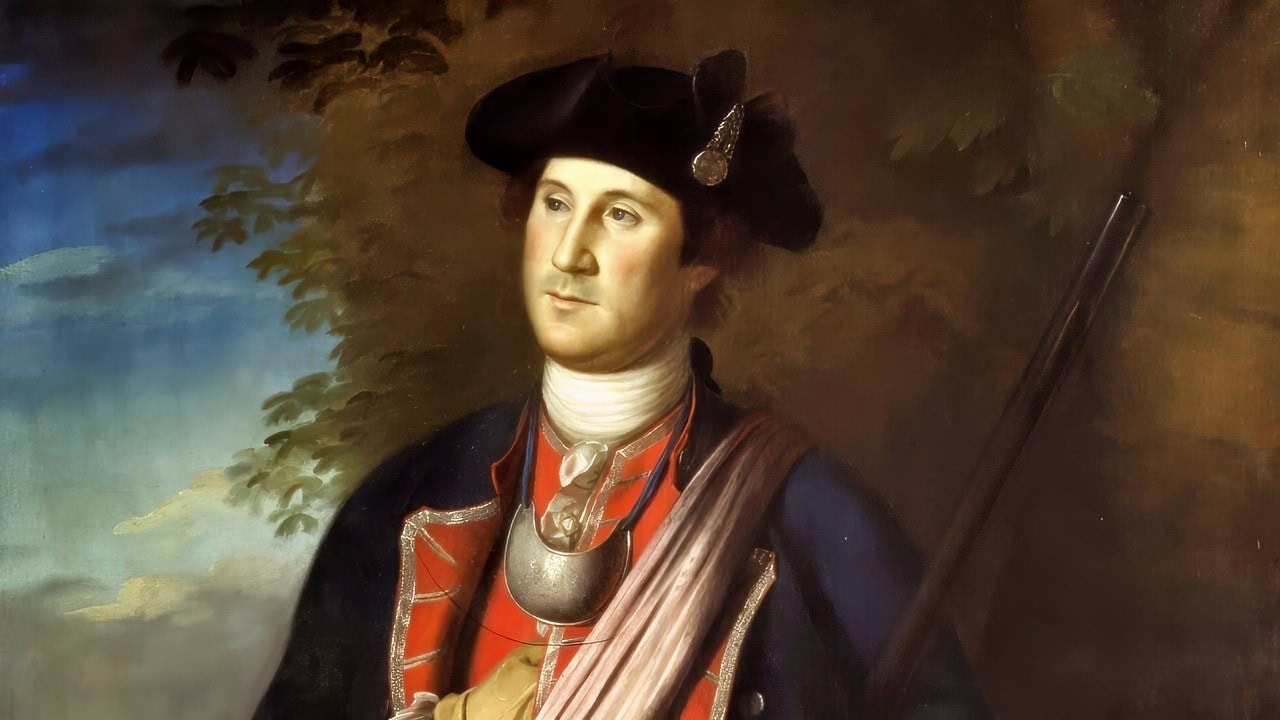
General George Washington Portrait. Image Credit: Creative Commons.
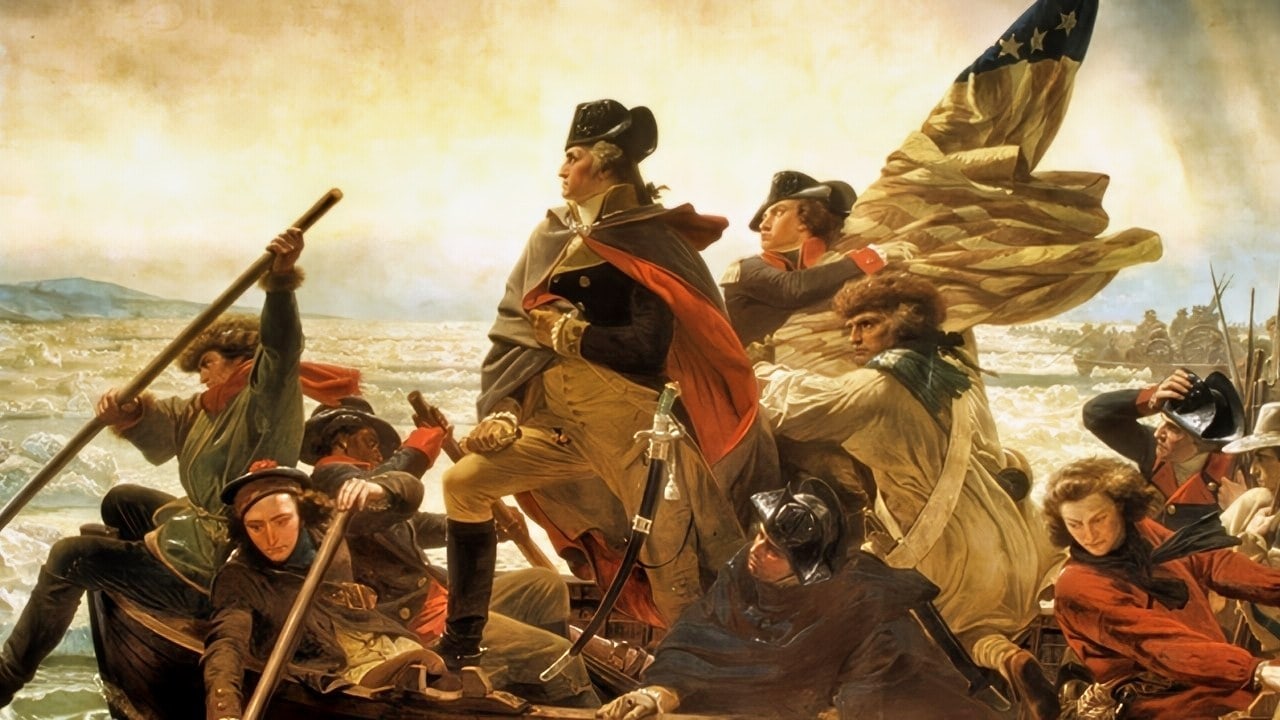
General George Washington. Image Credit: Creative Commons.
However, John Adams could claim at least one set of bragging rights that neither George nor Tom could; he produced an offspring who also became President, that being his son John Quincy Adams, who served as the 6th President of the United States from 1825 to 1829, thus making the first father & son tandem in U.S. history to serve as POTUS.
The only other example of a father-and-son legacy presidency in American history was George Herbert Walker Bush (AKA “Bush 41”), who served from 1989 to 1993, and George Walker Bush (AKA “Bush 43,” “Dubya”), who served from 2001 to 2009.
A big difference was, the elder Bush lived long enough to see his son complete two full terms of office, whilst the elder Adams passed away only one year into his own son’s first term of office.
Indeed, in one of American history’s best-known coincidences. John Adams and Thomas Jefferson died on the same day: July 4, 1826, America’s 50th birthday. Jefferson (age 83 at the time) preceded his old friend (age 91 at the time) by several hours, yet Adams’s famous last words were “Thomas Jefferson still lives.”
About the Author: Christian D. Orr, Defense Expert
Christian D. Orr is a Senior Defense Editor. He is a former Air Force Security Forces officer, Federal law enforcement officer, and private military contractor (with assignments worked in Iraq, the United Arab Emirates, Kosovo, Japan, Germany, and the Pentagon). Chris holds a B.A. in International Relations from the University of Southern California (USC) and an M.A. in Intelligence Studies (concentration in Terrorism Studies) from American Military University (AMU). He is also the author of the newly published book “Five Decades of a Fabulous Firearm: Celebrating the 50th Anniversary of the Beretta 92 Pistol Series.”