
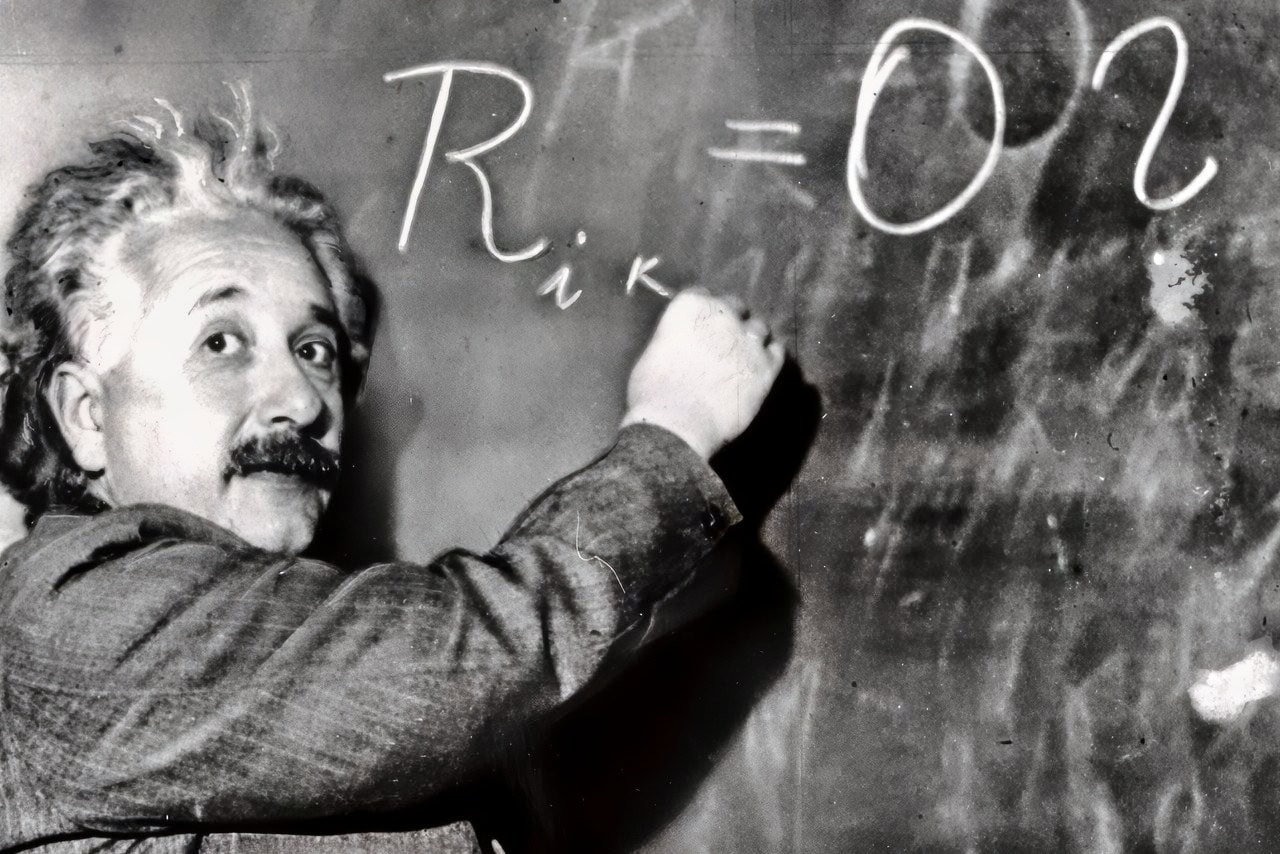
Einstein’s World War III Warning: “Sticks And Stones” After Nuclear War
Quote of the Day: “I don’t know what weapons World War III will be fought with, but World War IV will be fought with sticks and stones.” -Albert Einstein.
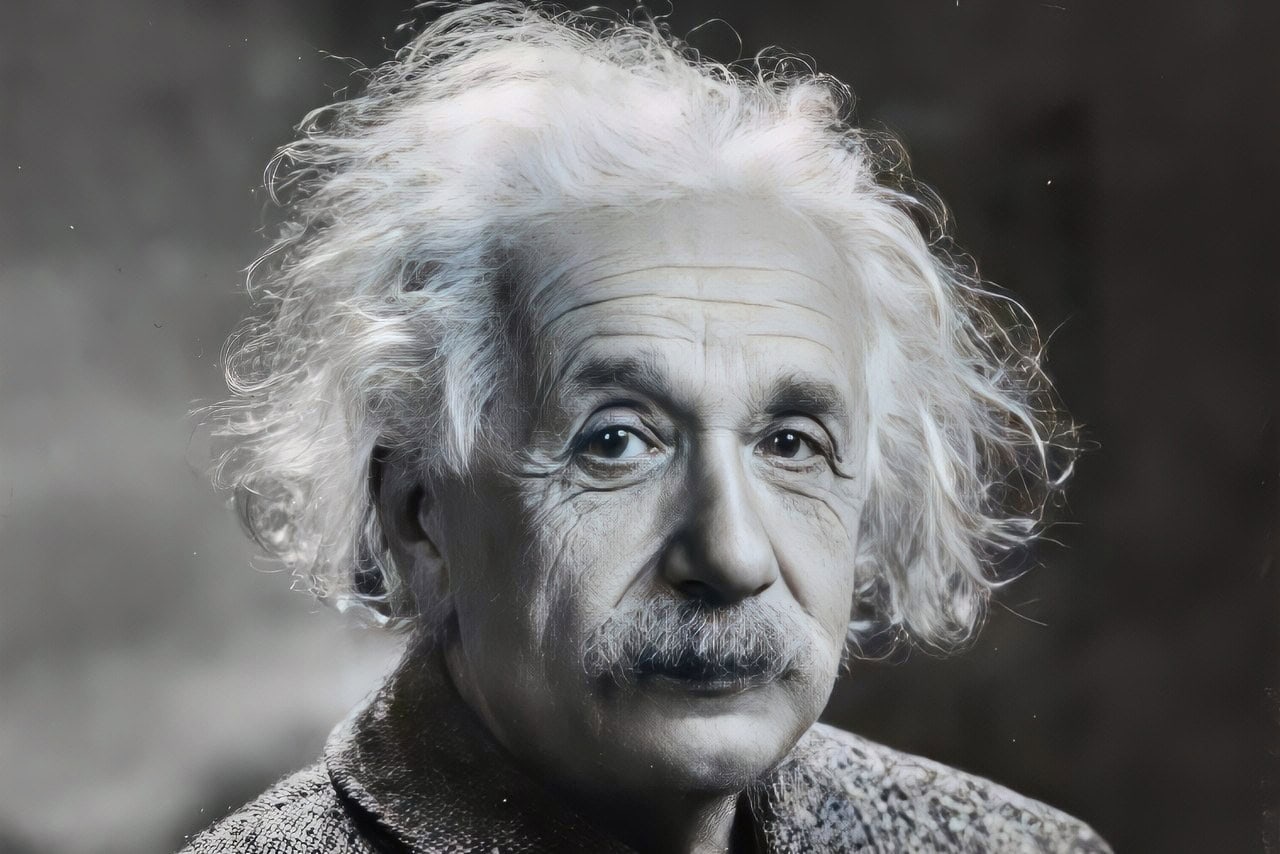
Albert Einstein. Image Credit: Creative Commons.
This quote is usually attributed to Albert Einstein. Still, others have used it, including President Harry S. Truman and at least one military officer at the Bikini Atoll atomic bomb tests.
Einstein desperately feared nuclear war, and like Robert Oppenheimer, worried that conflict with the Soviet Union could turn into a nuclear holocaust.
Einstein Was an Effective Public Speaker
In 1950, Einstein gave his well-known “Peace in the Atomic Era” speech. He was a huge proponent of avoiding conflict in the Cold War that could lead to World War Three.
“The idea of achieving security through national armament is, at the present state of military technique, a disastrous illusion. On the part of the United States, this illusion has been particularly fostered by the fact that this country succeeded first in producing an atomic bomb. The belief seemed to prevail that in the end it [would be] possible to achieve decisive military superiority,” he said.
Nuclear War Was Close at Hand Against the Communists
Einstein knew that the military build-up, even at this early stage of the Cold War, would be disastrous.
The Korean War would start in a few months after Einstein’s speech, and General Douglas MacArthur would later call for the use of a tactical nuclear weapon to end the conflict on the Korean peninsula sooner. Einstein foresaw that possibility, and he was frightened of the eventuality of a nuclear exchange with the Soviet Union if a lower-yielding nuclear bomb was used in a conventional shooting war.
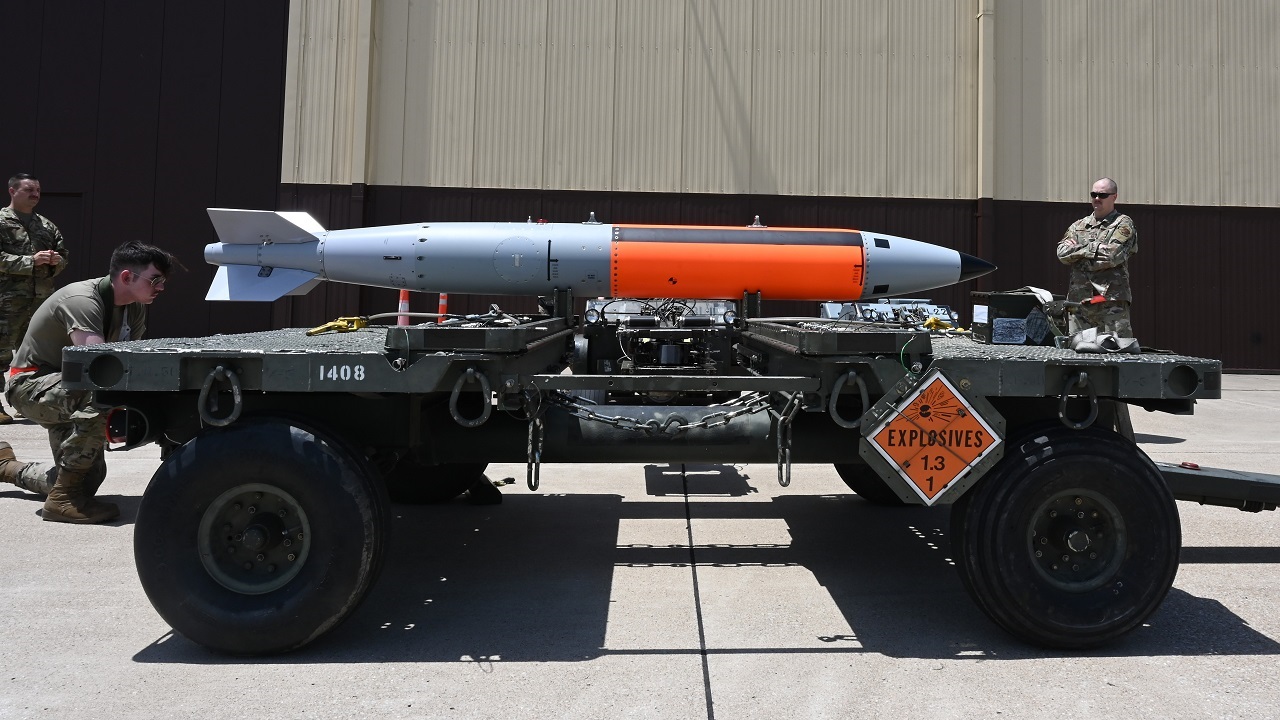
The 72nd Test and Evaluation Squadron test loads a new nuclear-capable weapons delivery system for the B-2 Spirit bomber on June 13, 2022 at Whiteman Air Force Base, Missouri. The 72nd TES conducts testing and evaluation of new equipment, software and weapons systems for the B-2 Spirit Stealth Bomber. (U.S. Air Force photo by Airman 1st Class Devan Halstead)
Avoiding Evil at All Costs
Einstein also considered ethics and morality and knew that mankind could fail, and that a zealous military commander or political leader could push the nuclear button in a situation involving evil people in nuclear strategy. He wanted to thread the needle philosophically among current practitioners and theorists in morality, science, and religion. Warfare fits into this construct, and World War Three could be inevitable without constraints on how far a country can go when waging war.
“The armament race between the USA and the USSR, originally supposed to be a preventive measure, assumes hysterical character. On both sides, the means to mass destruction are perfected with feverish haste—behind the respective walls of secrecy. The H-bomb appears on the public horizon as an attainable goal. The President has solemnly proclaimed its accelerated development.
If successful, radioactive poisoning of the atmosphere and hence annihilation of any life on earth has been brought within the range of technical possibilities. The ghostlike character of this development lies in its apparent compulsion.
Every step appears as the unavoidable consequence of the preceding one. In the end, there beckons more and more clearly general annihilation,” Einstein said in his 1950 speech on the importance of peacemaking.
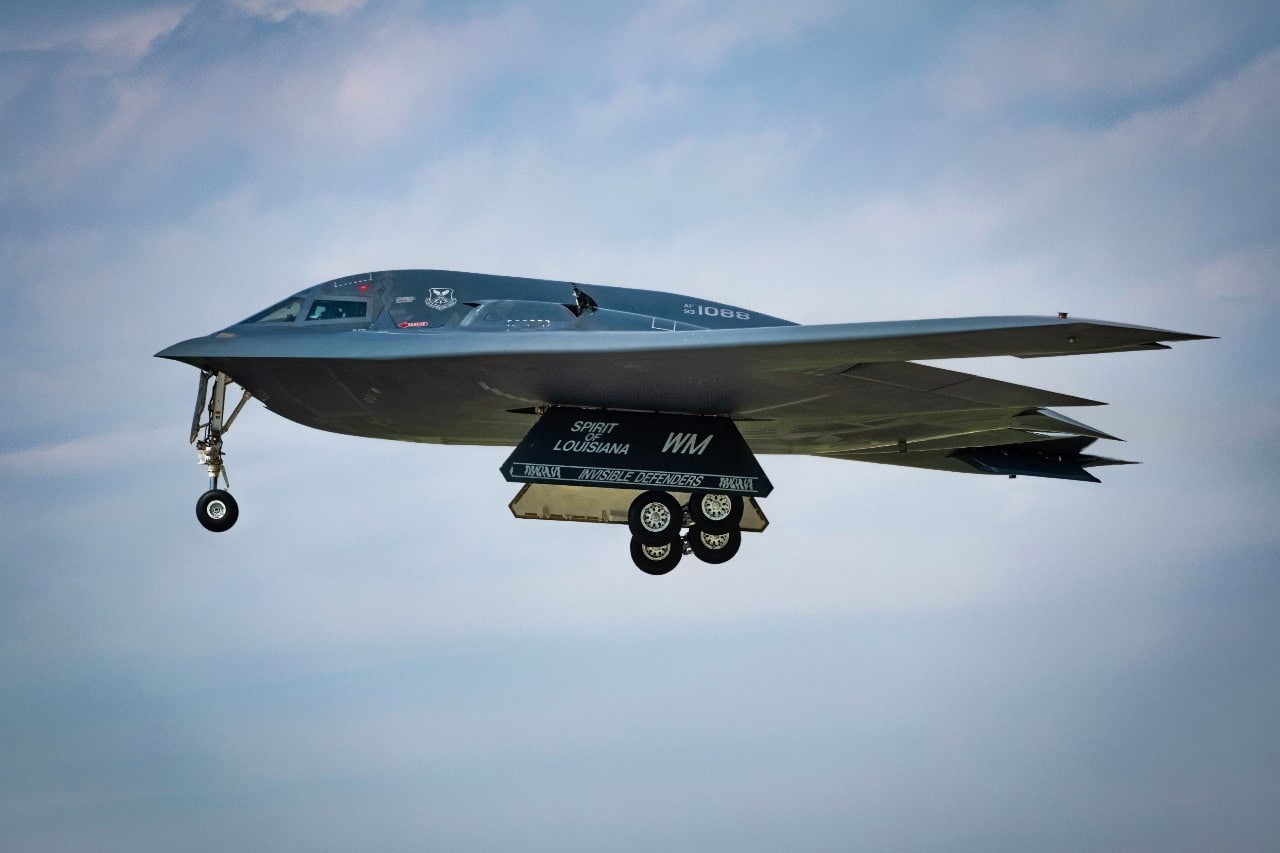
A B-2 Spirit stealth bomber departs from Whiteman Air Force Base, Missouri, April 16, 2025. The B-2 is capable of penetrating heavily defended air spaces and delivering conventional and nuclear munitions anywhere on the globe. (U.S. Air Force photo by Senior Airman Joshua Hastings)
Was Einstein a Global Leader In Action and In Words?
Einstein was a great statesman and diplomat, even though he would never admit to serving in such roles. He predicted the principles of massive retaliation and mutual assured destruction that were always going to be a doomsday strategy of nuclear brinkmanship between the United States and the USSR. We would mostly turn into ghosts if a nuclear war ever started, and anyone lucky enough to live would only fight with “sticks and stones.”
Short Biography of Einstein
Albert Einstein was born at Ulm, in Württemberg, Germany, on March 14, 1879. His family moved to Munich soon after. After another relocation, the Einsteins went to Italy, and their son was further educated at the Swiss Federal Polytechnic School in Zurich. Einstein loved physics and mathematics from an early age and planned to be a teacher. However, even though he had Swiss citizenship, he could not find a job in the classroom.
That’s when he decided to become a patent clerk instead. But Einstein did not give up on his dream of being a professor. He eventually earned his doctorate in 1905.
The patent office job spurred his creativity, and his ideas flowed. Seeing new inventions and innovations allowed him to think beyond what was possible in science and mathematics.
From 1909 to 1914, Einstein became more successful in his academic career, landing several professorships. This culminated in him becoming a Professor of Theoretical Physics at Princeton after renouncing his citizenship and emigrating to the United States due to the rise of Nazism.
“In the 1920s, Einstein embarked on the construction of unified field theories, although he continued to work on the probabilistic interpretation of quantum theory, and he persevered with this work in America. He contributed to statistical mechanics by his development of the quantum theory of a monatomic gas, and he has also accomplished valuable work in connection with atomic transition probabilities and relativistic cosmology,” according to NobelPrize.org.
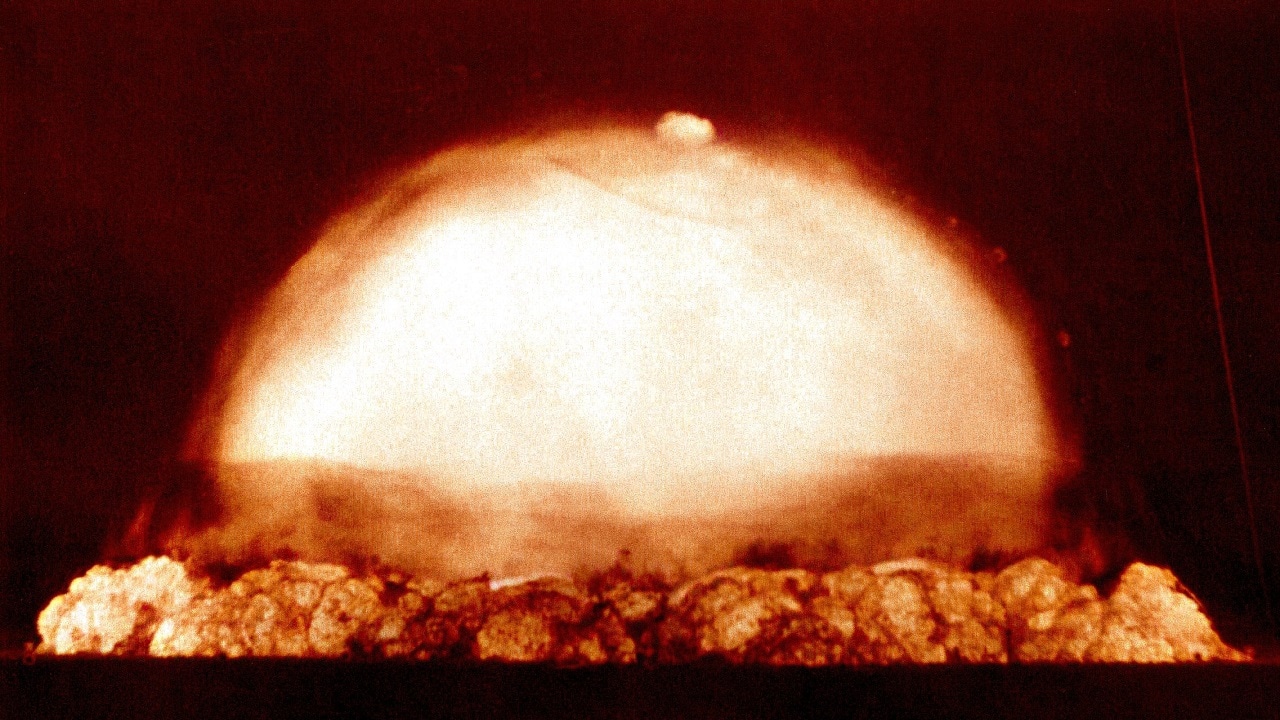
Trinity nuclear weapons test. Image Credit: Creative Commons.
But he was best known for the theory of relativity he developed early in his career. In 1916, he published his famous paper on relativity, catapulting him into the world’s consciousness and imagination.
Einstein was a huge driver of peace, and he foresaw a world where nuclear war was possible. He was a practitioner of political leadership without meaning to be.
He would have been disappointed that Russia, North Korea, and China still have large numbers of nuclear weapons and that Iran is always trying to get the bomb, but he would be encouraged that World War Three or even World War Four never started.
About the Author: Brent M. Eastwood
Author of now over 3,000 articles on defense issues, Brent M. Eastwood, PhD is the author of Don’t Turn Your Back On the World: a Conservative Foreign Policy and Humans, Machines, and Data: Future Trends in Warfare plus two other books. Brent was the founder and CEO of a tech firm that predicted world events using artificial intelligence. He served as a legislative fellow for US Senator Tim Scott and advised the senator on defense and foreign policy issues. He has taught at American University, George Washington University, and George Mason University. Brent is a former US Army Infantry officer. He can be followed on X @BMEastwood.