
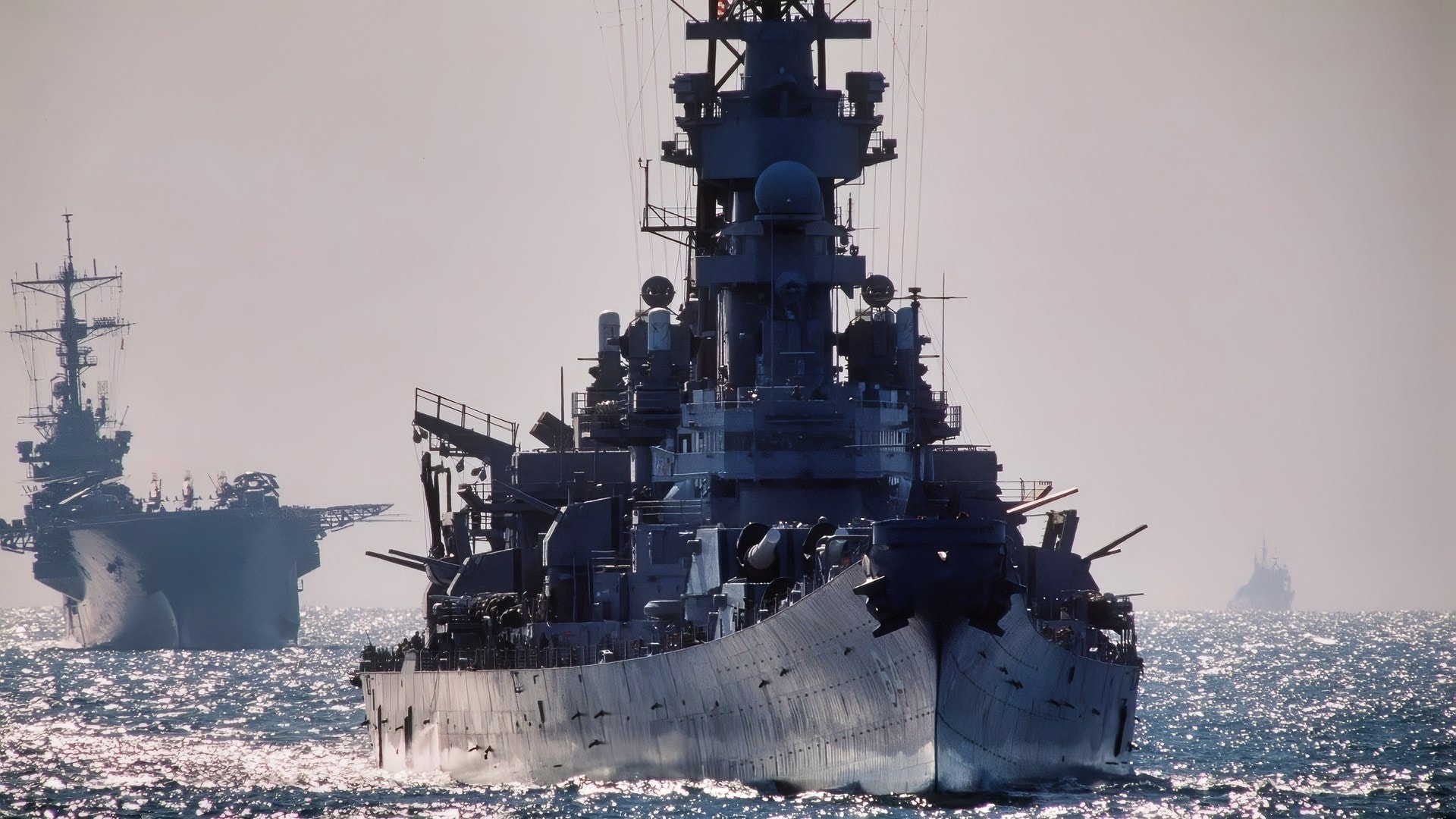
Summary and Key Points: President Trump has unveiled plans for the “Trump-Class” guided-missile battleship, debuting with a rendering of the first vessel, the USS Defiant.
-Intended to counter China’s naval expansion and restore American maritime dominance, the “Golden Fleet” faces significant hurdles. One, is the cost.
-Strategically, the inclusion of nuclear-capable cruise missiles raises risks of catastrophic miscalculation, while the large hulls remain vulnerable to modern saturation attacks.
-Industrially, the program must overcome the U.S. Navy’s troubled history of cost overruns and delays seen in the Zumwalt and Ford classes.
-Politically, the partisan nature of the project—named after a sitting president—makes it a prime target for cancellation by future administrations or Congress.
The “Trump-Class” Battleship: A Legacy Project Doomed to Fail?
In late December 2025, President Donald Trump unveiled plans for a new class of U.S. Navy surface combatants known as the Trump-Class, revealing a rendering of the first ship, the USS Defiant, and describing it as the largest American warship concept since the Second World War.
The announcement, made just days before Christmas, stressed the importance of the Trump-Class as a response to China’s rapid naval expansion and a symbol of strengthened American maritime power.
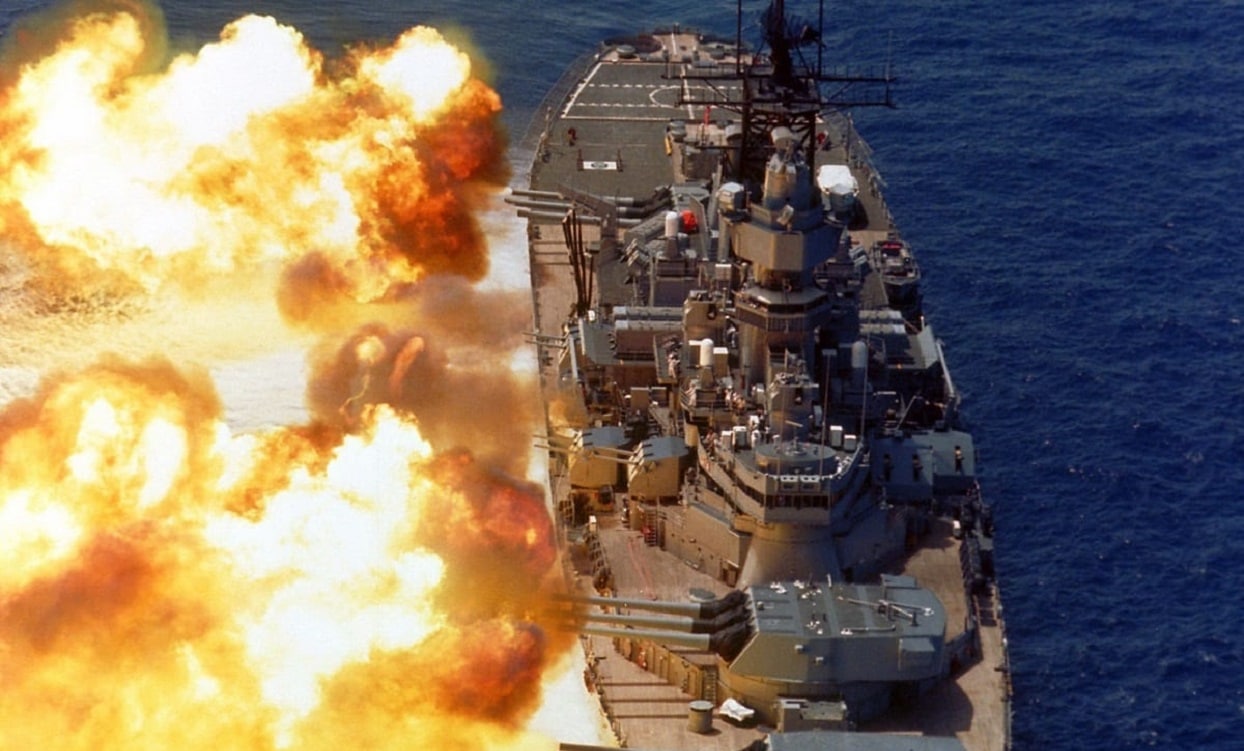
Iowa-Class Battleship.
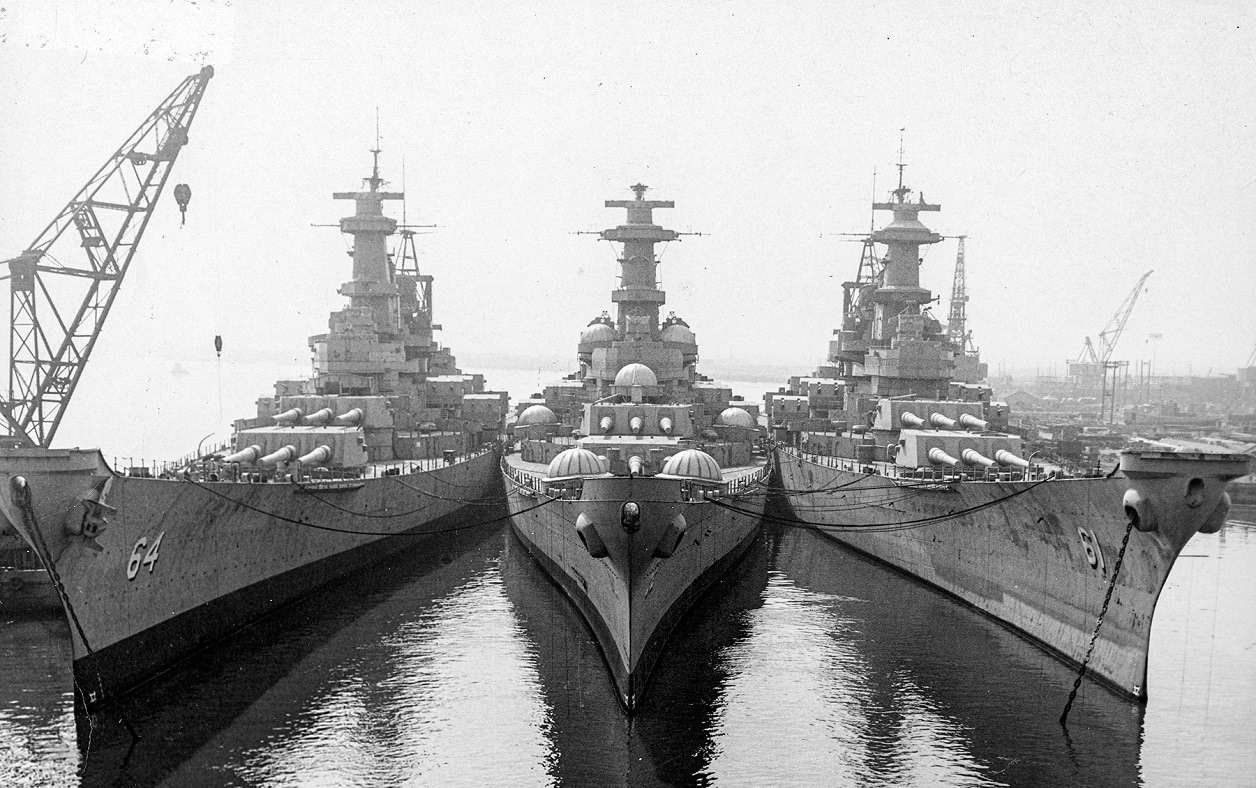
Image of Iowa-class Battleships. Image Credit: Creative Commons.
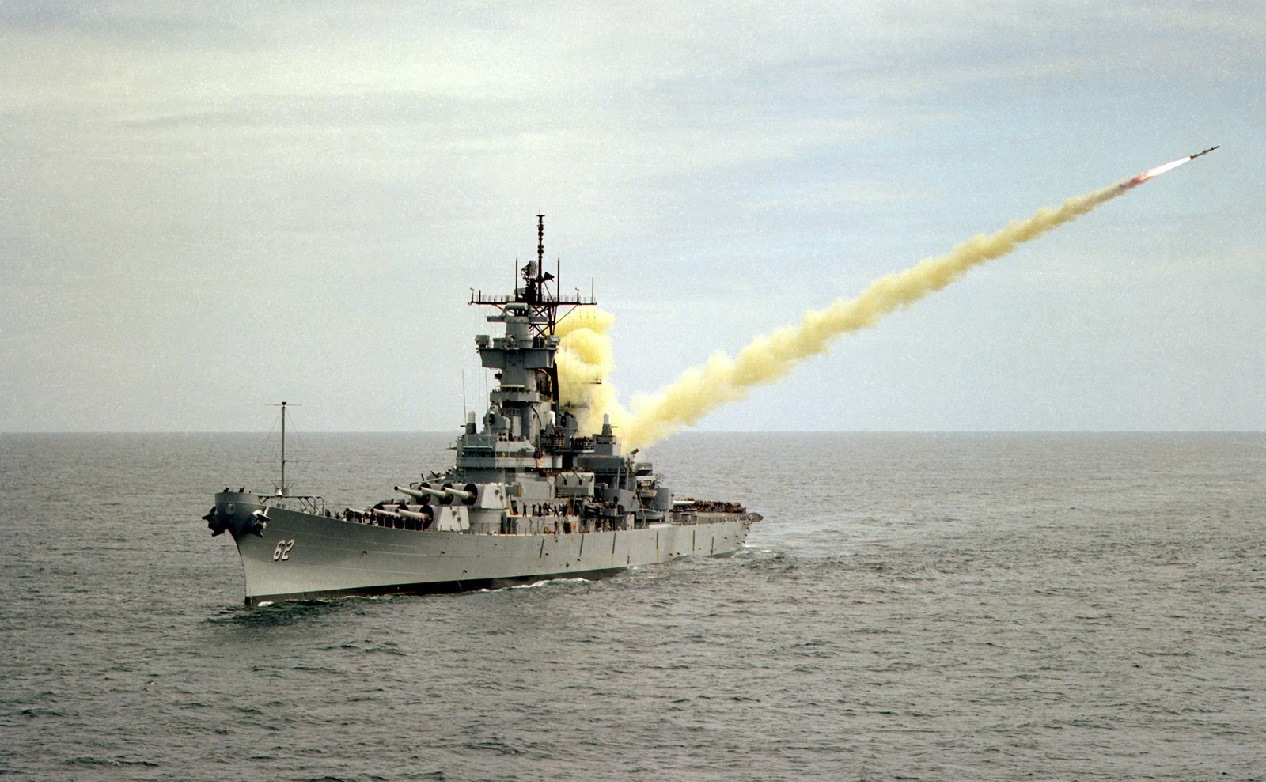
An aerial port bow view of the battleship USS NEW JERSEY (BB-62) launching an RGM-84 Harpoon missile on the Pacific Missile Test Center Range.
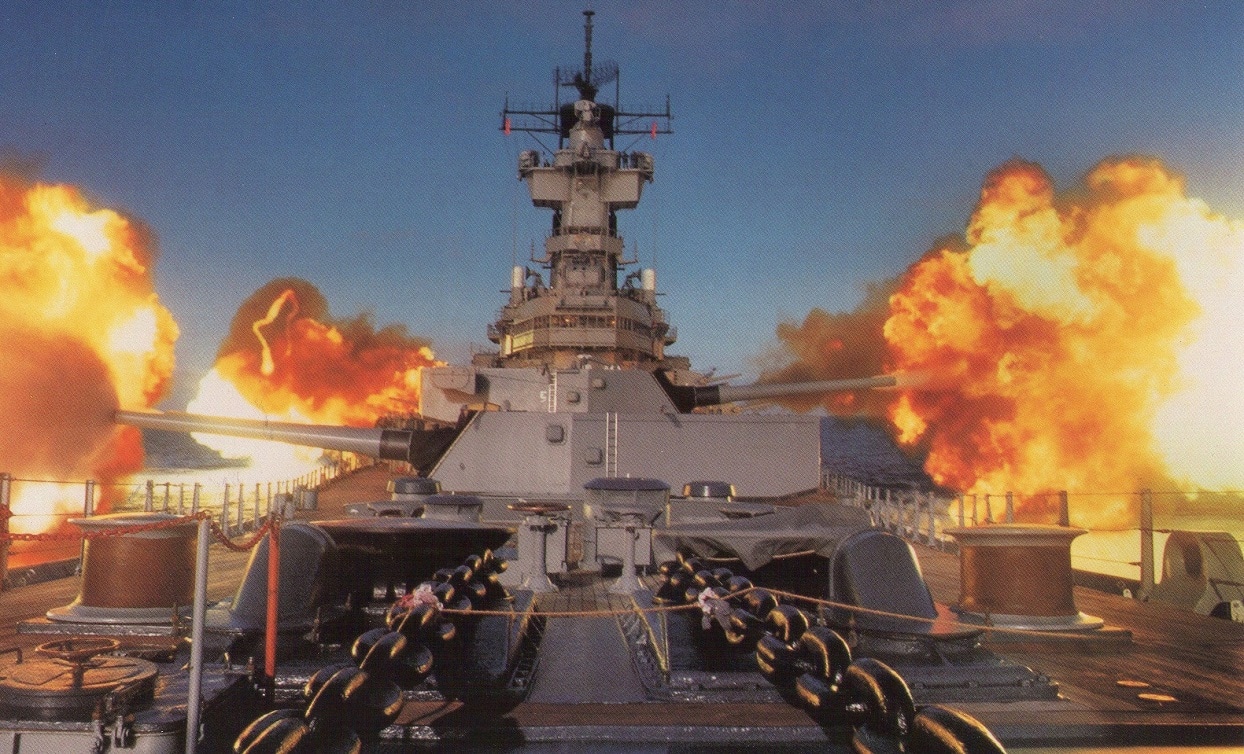
Image: Creative Commons.
President Trump has argued that the fleet would restore U.S. naval dominance, deter Beijing, and reassert American industrial strength – but it’s a tall order and fraught with risk. Even supporters of a larger Navy are warning that the Trump-Class faces serious challenges – many of which extend beyond weapons design and engineering.
The ships may, for example, struggle to survive in modern missile warfare, compete with China’s new naval model, and even overcome long-standing U.S. shipbuilding problems. Perhaps most importantly, however, it remains unclear whether the program will survive future administrations.
The Challenges Ahead for the Trump-Class
One of the most immediate strategic concerns for Trump’s so-called “Golden Fleet” is the decision to arm the Trump-Class with nuclear-capable cruise missiles. Unlike ballistic missiles, cruise missiles are difficult to distinguish from conventional weapons once launched, meaning the risk of catastrophic miscalculation in a crisis is possible if an adversary assumes that a nuclear strike is underway.
But that’s just the start – and a problem that would arrive only once the vessels have been designed, built, and launched. Outside of escalation risks, the Trump Class could also prove to be vulnerable to saturation missile attacks. Modern anti-ship warfare relies on massed salvos of cruise and hypersonic missiles, a threat that large surface vessels struggle to defend against completely.
This is by no means a new problem, but it is relevant when building entirely new, expensive platforms at a time when China is rapidly expanding its naval assets and reach.
Surface vessels are being increasingly seen as vulnerable in modern warfare – not just because China is expanding its anti-access/area-denial zone with new carriers and vessels, but because autonomous systems pose an increasingly large threat to high-end, valuable assets at sea.
Again, though, this assumes that the project will simply work out as planned.
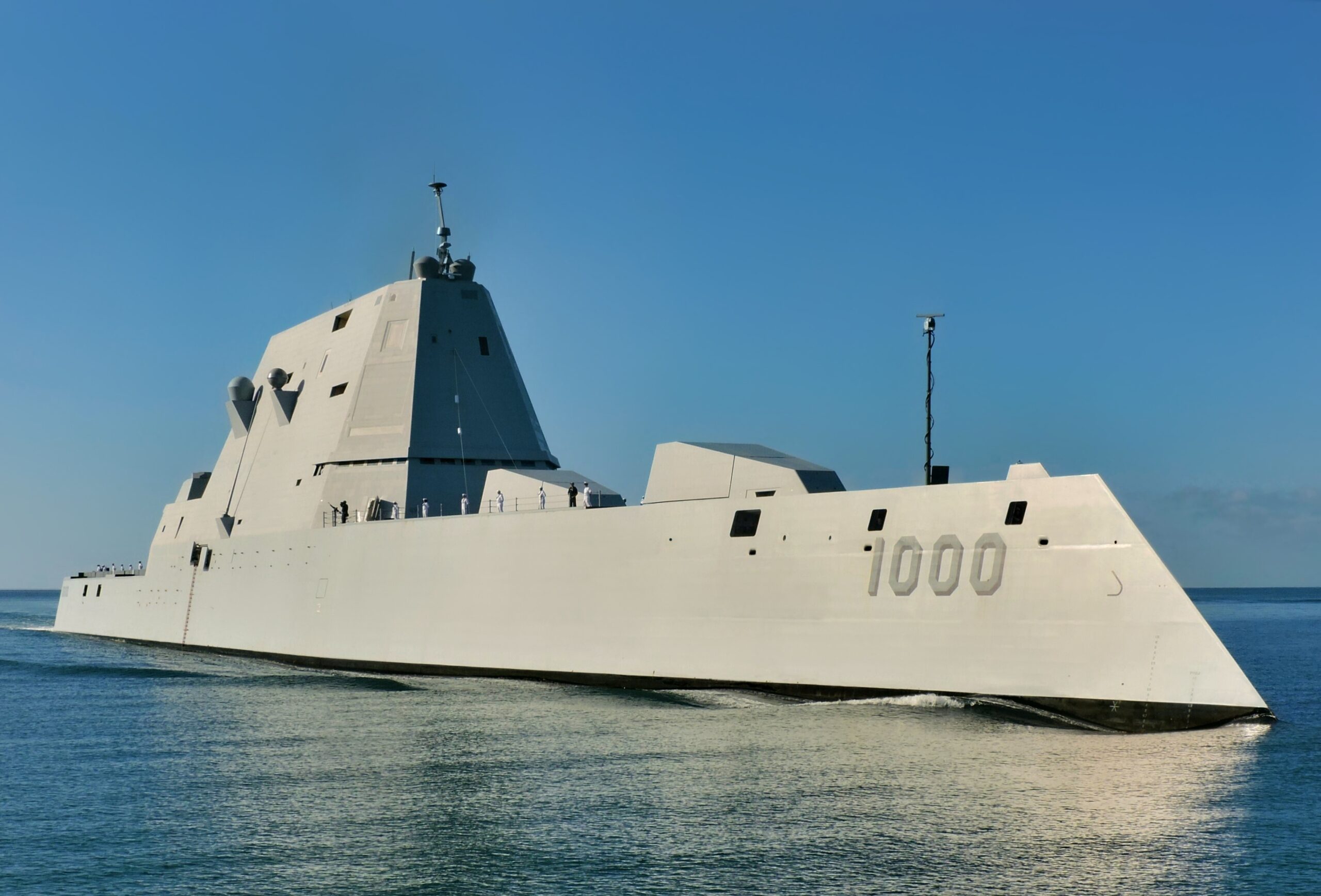
Zumwalt-Class Destroyer U.S. Navy. Image Credit: Creative Commons.
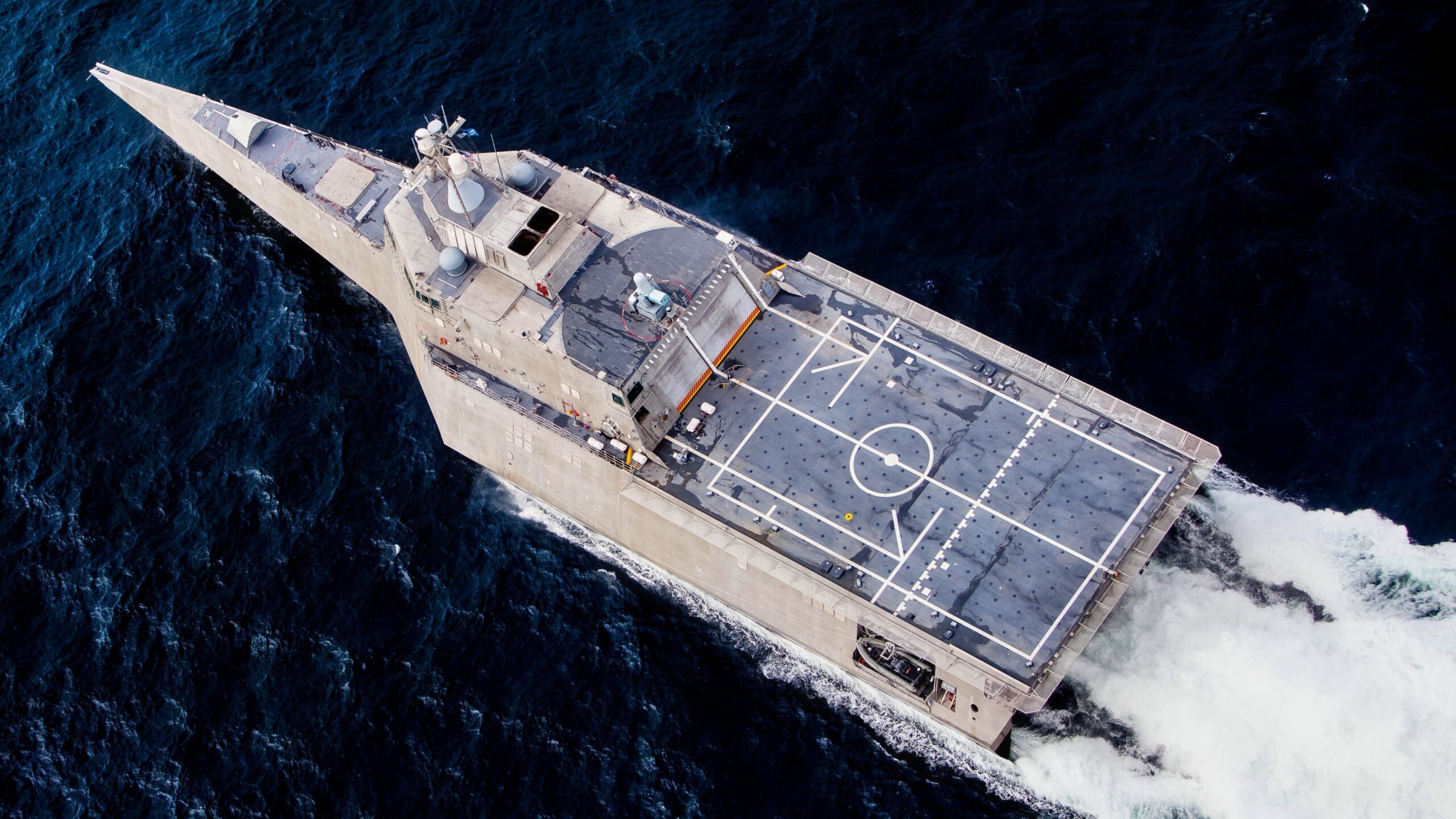
US Navy Littoral Combat Ship. Image Credit: Creative Commons.
Despite the announcement this that a design schedule for the new class of vessels is expected within the next 60 days, the U.S. Navy’s troubled shipbuilding record and a strained domestic industrial base pose major questions about the future of this new fleet.
Over the past two decades, several major programs – including the Zumwalt-class destroyers, Littoral Combat Ships, and the Constellation-class frigates – have suffered severe cost overruns, delays, or capability shortfalls, despite tens of billions of dollars being allocated to the programs.
And, in fact, the Trump-class might cost $21 billion for the first warship.
The Navy has also struggled with chronic over-engineering, whereby new technologies are constantly added to vessels during construction, thereby inflating costs and delaying delivery – and even introducing new risks. The USS Gerald R. Ford, for example, continues to face operational challenges with its advanced weapons elevators years after commissioning and despite being the United States’ newest aircraft carrier.
Could Democrats Derail the Program?
The most serious risk facing the Trump-Class is not so much technical or geopolitical as it is simply political. Large naval programs require decades of stable funding and bipartisan commitment to succeed, yet the Trump-Class is already very partisan.
It’s named after a sitting president and has been unveiled as a signature legacy project. Programs like this, which are associated closely with a specific administration – and a controversial one, at that – are especially vulnerable to cancellation or restructuring once the keys to the White House change hands.
Future administrations – particularly a Democratic one – could well kill the program entirely. Congress ultimately controls defense funding through annual and multi-year appropriations, too, meaning that it can slow, reshape, or terminate major weapons programs by withholding funds, limiting procurement quantities, or refusing authorization altogether.
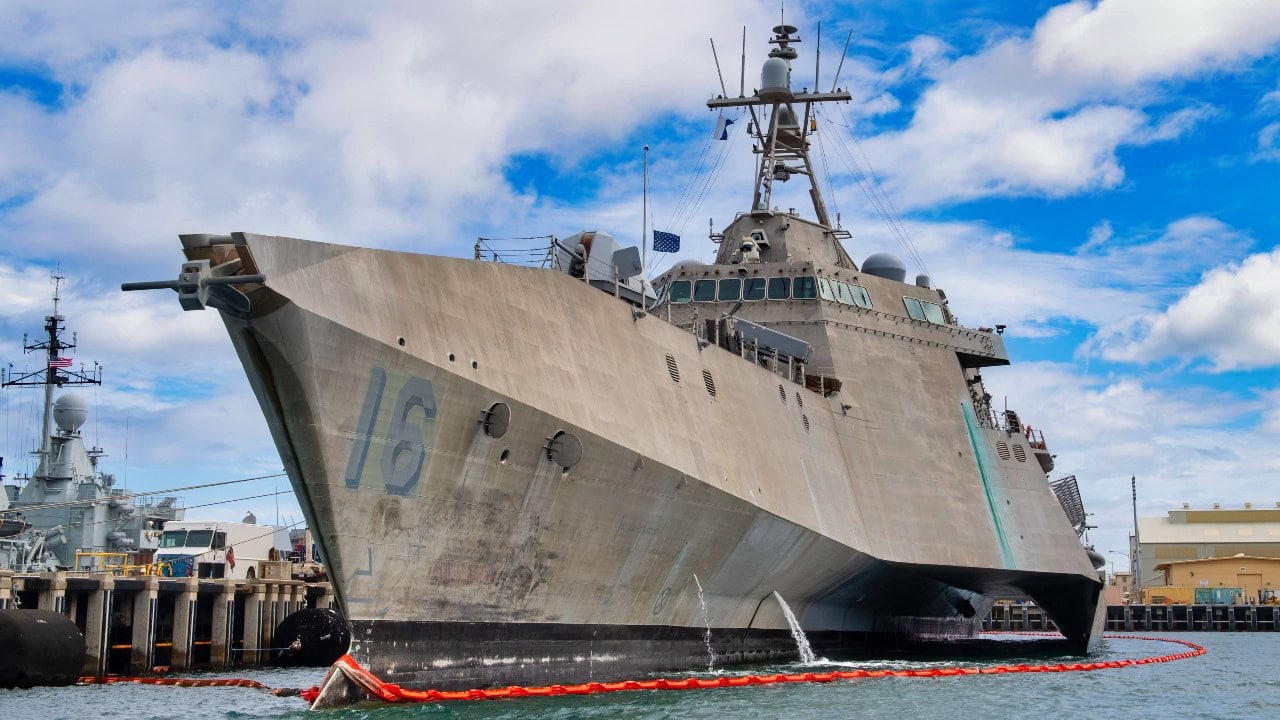
(July 7, 2022) – Independence-variant littoral combat ship USS Tulsa (LCS 16) moored at Joint Base Pearl Harbor-Hickam during Rim of the Pacific (RIMPAC) 2022. Twenty-six nations, 38 ships, four submarines, more than 170 aircraft and 25,000 personnel are participating in RIMPAC from June 29 to Aug. 4 in and around the Hawaiian Islands and Southern California. The world’s largest international maritime exercise, RIMPAC provides a unique training opportunity while fostering and sustaining cooperative relationships among participants critical to ensuring the safety of sea lanes and security on the world’s oceans. RIMPAC 2022 is the 28th exercise in the series that began in 1971. (U.S. Navy photo by Mass Communication Specialist 3rd Class Demitrius J. Williams)
There is precedent for this, too. Congress has curtailed or ended high-profile Pentagon programs in the past – including the Army’s Future Combat Systems and the Navy’s CG (X) cruiser – after reassessing priorities or costs according to new political conditions. Presidents can also redirect defense priorities through budget submissions and guidance, as seen when the Biden administration reversed or defunded multiple Trump-era initiatives as soon as he took office.
If the Trump-Class comes to be viewed primarily as Trump’s personal legacy project rather than a crucial national capability, future Democratic administrations – or even a divided Congress – may be inclined to cancel or hollow it out on principle.
An outcome like that would not merely waste the funds invested but weaken U.S. naval readiness in the name of political partisanship. And that’s a real – or, in fact, likely – possibility.
About the Author:
Jack Buckby is a British researcher and analyst specialising in defence and national security, based in New York. His work focuses on military capability, procurement, and strategic competition, producing and editing analysis for policy and defence audiences. He brings extensive editorial experience, with a career output spanning over 1,000 articles at 19FortyFive and National Security Journal, and has previously authored books and papers on extremism and deradicalisation.