
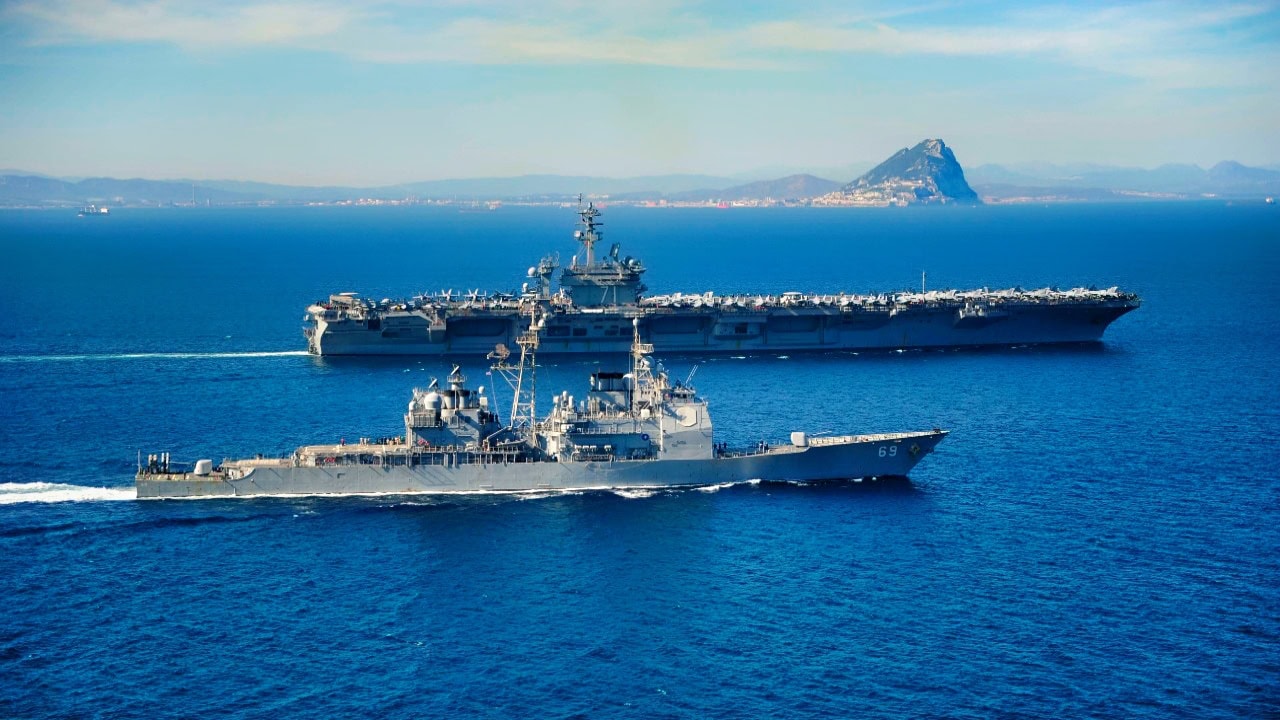
Synopsis: The Ticonderoga-class cruisers were built around the Aegis Combat System as carrier strike group defenders and command-and-control hubs, combining SPY-1 radar with a versatile vertical launch battery for air defense, strike, and anti-submarine missions.
-Over time, age and relentless deployment cycles produced corrosion, cracking, and mechanical issues that drove maintenance costs steadily upward.
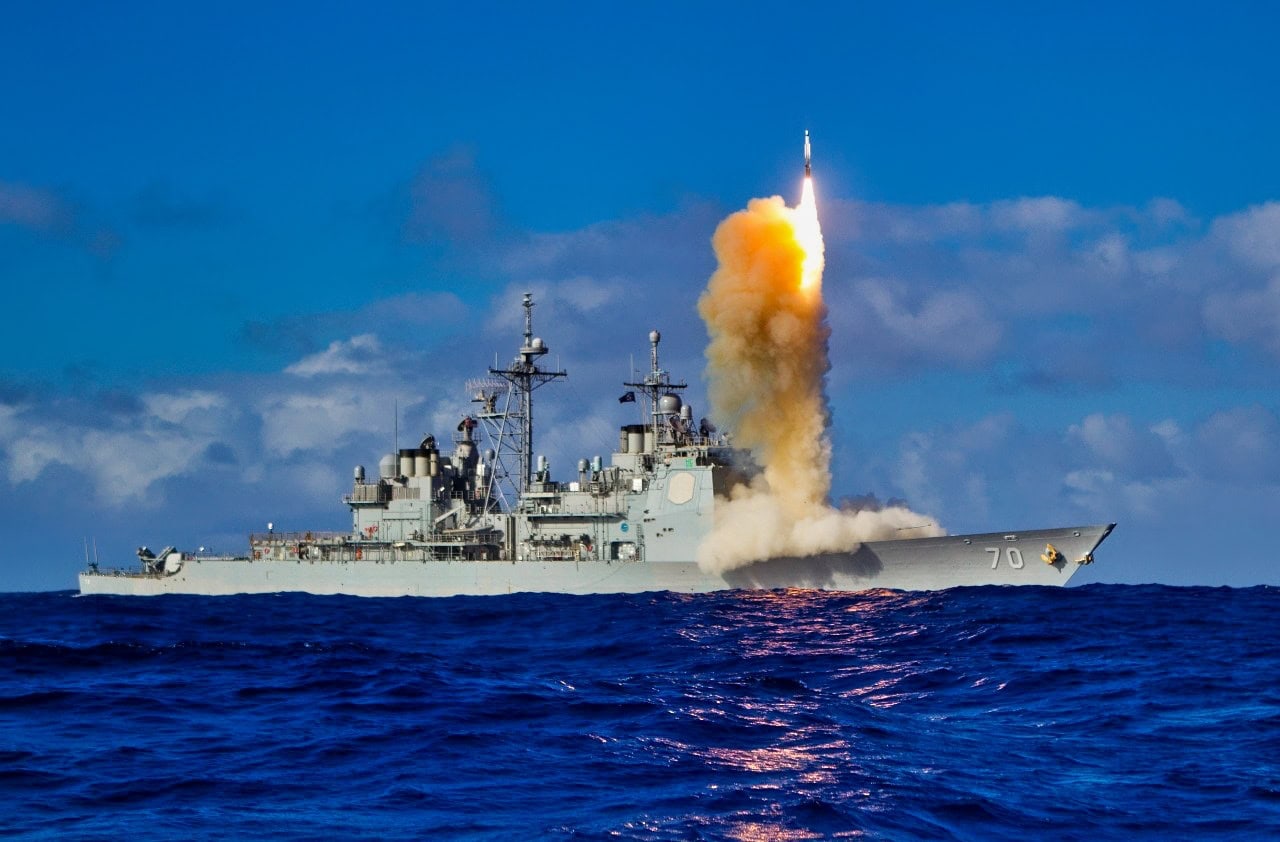
Ticonderoga-Class US Navy. Image Credit: Creative Commons.
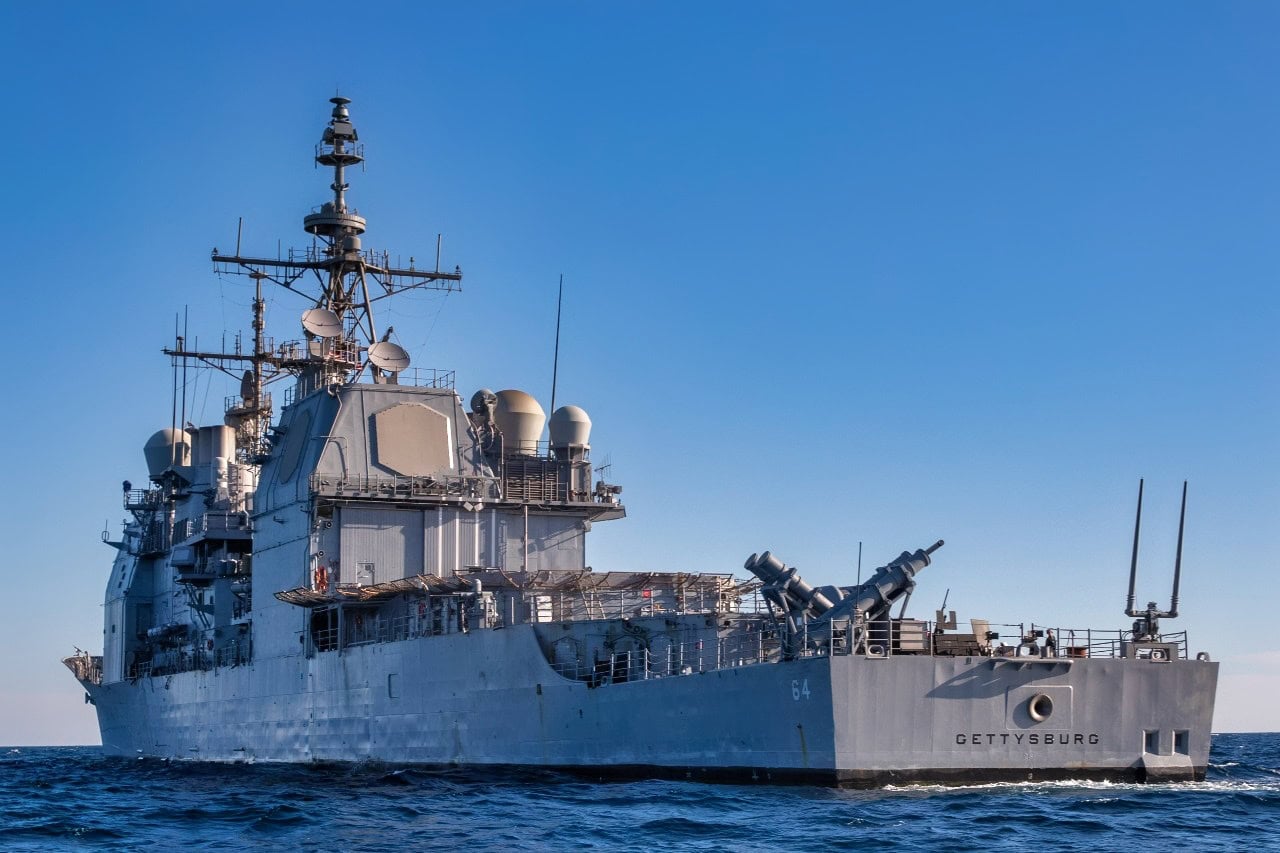
(Feb. 18, 2025) The Ticonderoga-class guided-missile cruiser USS Gettysburg (CG 64) sails in the U.S. Central Command area of responsibility. (Official U.S. Navy photo)
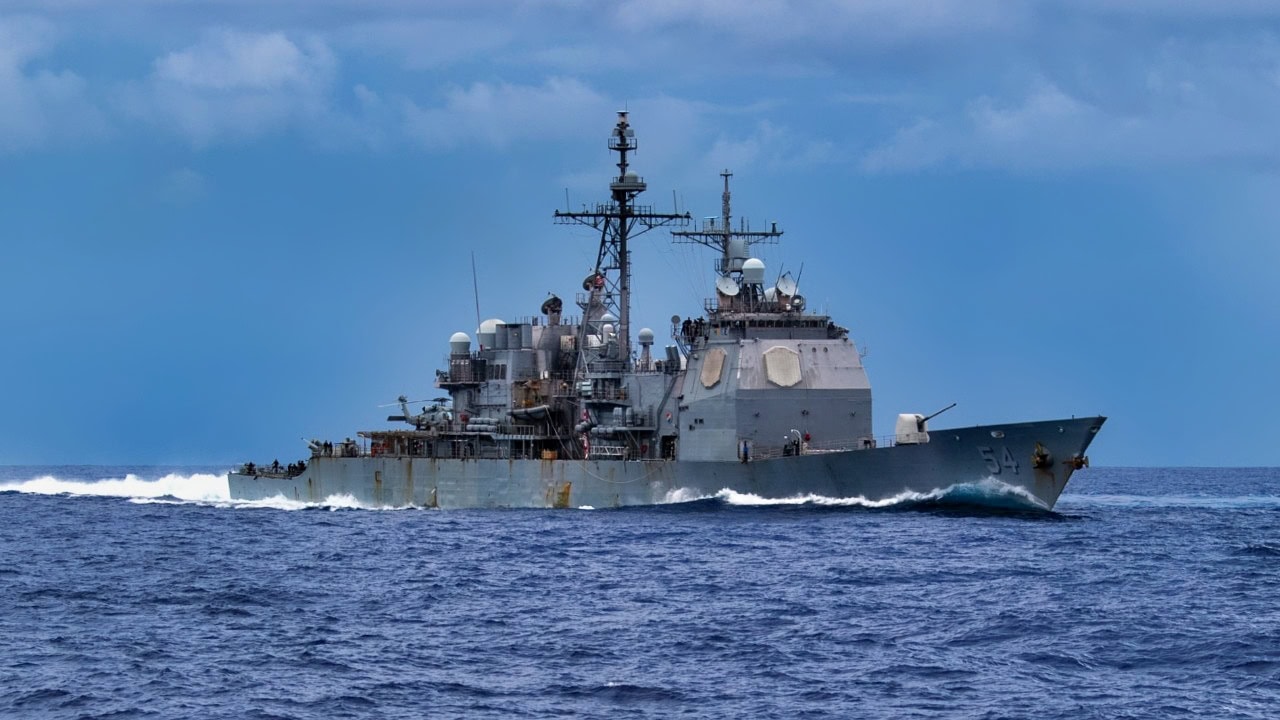
PACIFIC OCEAN (Sept. 14, 2020) The Ticonderoga-class guided-missile cruiser USS Antietam (CG 54) moves in formation during exercise Valiant Shield 2020. Valiant Shield is a U.S. only, biennial field training exercise (FTX) with a focus on integration of joint training in a blue-water environment among U.S. forces. This training enables real-world proficiency in sustaining joint forces through detecting, locating, tracking, and engaging units at sea, in the air, on land, and in cyberspace in response to a range of mission areas. (U.S. Navy photo by Mass Communication Specialist 2nd Class Nick Bauer)
-A major modernization effort launched in the early 2010s aimed to extend service life, but delays and cost growth limited results.
-As Flight III Arleigh Burke destroyers bring newer radars, updated Aegis software, and smaller crews, the Navy has chosen retirement despite short extensions.
The Navy’s Ticonderoga-Class Cruiser Problem in 1 Word: Maintenance
The Ticonderoga-class cruisers were a class of guided-missile cruisers built for the United States Navy during the Cold War.
With the integration of the Aegis Combat System, these cruisers were built to protect carrier strike groups but are capable of taking on several roles, including anti-submarine warfare.
Despite their advanced capabilities, the Navy decided to retire these vessels due to their high maintenance costs and age.
They are tobe replaced by Flight III Arleigh Burke-class destroyers and the upcoming DDG(X) destroyers.
Design and Capabilities
The Ticonderoga-class was built to protect carrier strike groups from the threat of Soviet aviation, missiles, and submarines.
Rather than designing a completely new platform, naval architects adapted the hull of the Spruance-class destroyer and equipped it with a system that radically expanded the Navy’s situational awareness and reaction capabilities.
The Ticonderoga-class was, in many respects, a ship designed around a brain rather than a body. That “brain” was the Aegis system, which made them far more than traditional cruisers. These were command-and-control nodes, air-defense coordinators, and multi-mission combatants all wrapped into a single hull.
Central to the class’s significance was its versatility. With its phased-array SPY-1 radars, the ship could track large numbers of airborne targets at once.
A suite of vertical launch cells allowed it to carry a mixture of Standard surface-to-air missiles, long-range Tomahawk land-attack cruise missiles, anti-submarine rockets, and other munitions.
Many ships in the class were later upgraded with ballistic missile defense capabilities, expanding their usefulness in a world where missile threats were proliferating. In a carrier strike group, the Ticonderoga often served as the Air and Missile Defense Commander, responsible for coordinating the protection of the entire formation.
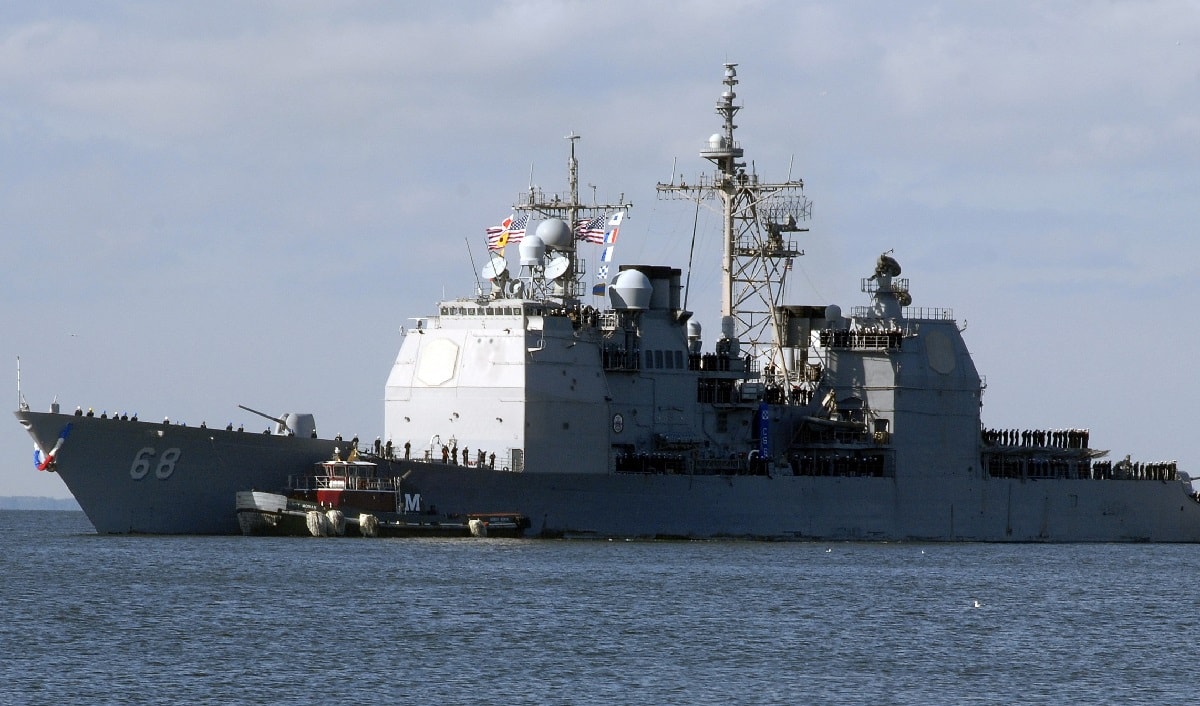
The Ticonderoga-class guided-missile cruiser USS Anzio (CG 68) returns to Naval Station Norfolk after completing a six-month deployment in the U.S. 5th and 6th Fleet areas of responsibility. Anzio served off the Horn of Africa as the flagship of the international anti-piracy task force, Combined Task Force (CTF) 151. (U.S. Navy photo by Mass Communication Specialist 3rd Class John Suits/Released).
Crews aboard these ships were unusually large for modern surface combatants, allowing them to staff specialized warfare teams and manage the heavy command-and-control workload.
Proposed Modernization Efforts
Despite their impressive capabilities, the aging of the class gradually became an unavoidable issue. These ships were originally intended to serve for about thirty years, but many were pushed far beyond that limit. Some cruisers had served for 35 years or more, and a few were extended further still.
The strain of constant deployments, combined with an aging hull design, led to cracking, corrosion, and increasing mechanical problems.
Maintaining them became more expensive, complex, andtime-consuming with each passing year. Pushing the hulls beyond their intended lifespan eventually proved unsustainable.
To address these problems, the Navy launched a Cruiser Modernization Program in the early 2010s. This ambitious effort aimed to overhaul the combat systems, radars, computing infrastructure, engineering systems, and hull components of multiple ships to keep them viable into the late 2020s and early 2030s.
In theory, it was a way to preserve valuable capabilities without prematurely retiring the ships or spending billions to replace them immediately. In practice, the results were mixed.
Upgrades took far longer than expected, often running years past their planned schedules. Costs ballooned, with only a handful of the intended modernizations completed by the mid-2020s.
The combination of delays, overruns, and persistent structural problems ultimately convinced Navy leaders that continuing the program was no longer practical.
Why the Ticonderoga-class is Slated to Retire
At the same time, the Navy was investing heavily in the newest generation of Arleigh Burke–class destroyers. These Flight III destroyers arrived with more modern SPY-6 radars, improved Aegis software, and enhanced air-and-missile-defense capabilities that, in many respects, rivaled or surpassed those of the aging cruisers.
Although destroyers carry fewer vertical launch cells than the Ticonderogas, advances in radar, software, and missile technology made them increasingly capable of filling the same command roles within a carrier strike group.
In addition, the destroyers required smaller crews and less maintenance, making them far more appealing from a cost and readiness standpoint.
Strategic pressures also played a role. The U.S. Navy has been struggling to balance its global commitments with a fleet that is not growing fast enough to meet demand. Rising tensions in the Indo-Pacific, coupled with crises in the Middle East and Europe, have increased the need for ready, deployable ships.
Maintaining aging cruisers that required lengthy overhauls and expensive repairs worked against this goal. The Navy needed to direct resources toward platforms that would define its future force, not its past.
The Ticonderoga-class Stays for a Little longer
Some members of Congress argued that retiring such heavily armed ships during a period of heightened great-power competition was unwise. The expanding Chinese navy, now the largest in the world by hull count, increased the pressure on the United States to retain as much firepower as possible.
Advocates of keeping the cruisers in service pointed out that no other surface ships offered as many missile tubes, that their radars remained powerful even if dated, and that the Navy needed every advantage while new ships were still years away from joining the fleet.
These arguments persuaded the Navy to temporarily extend the service life of a few cruisers, keeping them in service into the late 2020s. But these extensions did not alter the long-term trajectory.
Ultimately, the Navy concluded that the class could not be maintained indefinitely without siphoning off resources needed elsewhere.
Aging hulls, ballooning modernization costs, the arrival of newer, more capable destroyers, and the demand for a ready, flexible fleet all contributed to the decision.
The Ticonderoga-class cruisers had served long and effectively, but they were products of another era, one that is now long gone.
About the Author: Isaac Seitz
Isaac Seitz, a Defense Columnist, graduated from Patrick Henry College’s Strategic Intelligence and National Security program. He has also studied Russian at Middlebury Language Schools and has worked as an intelligence Analyst in the private sector.