
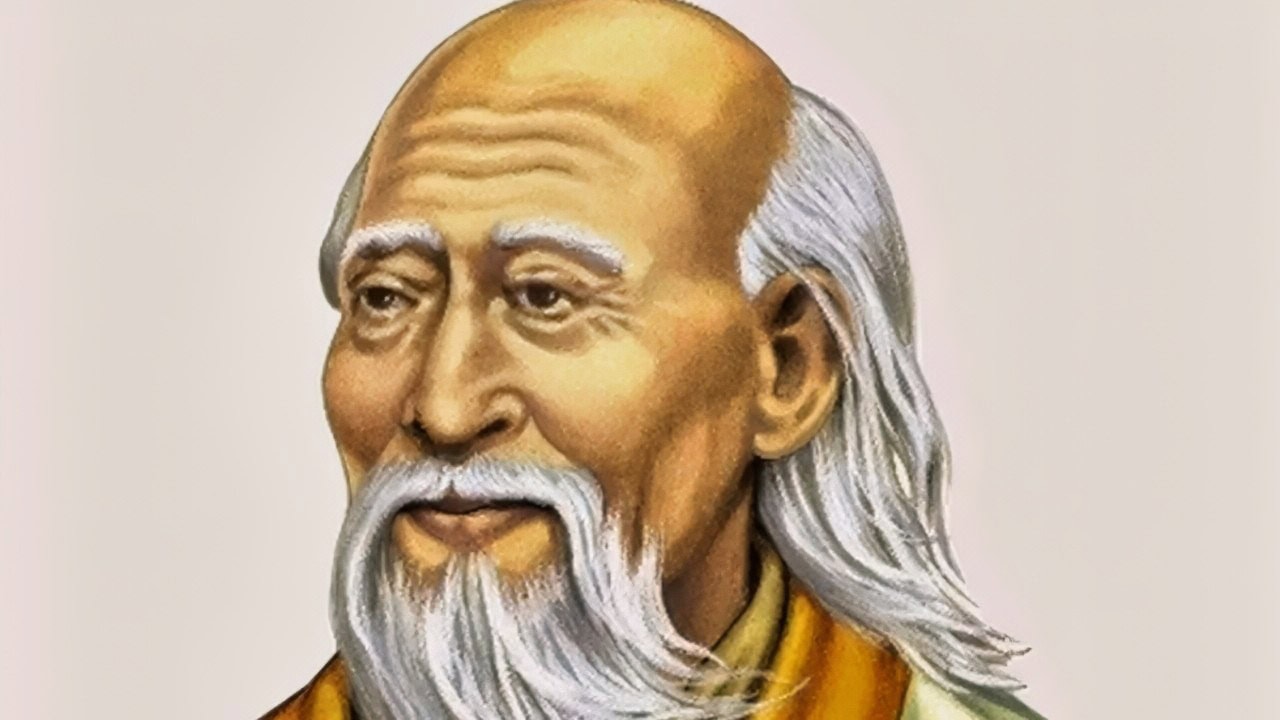
Lao Tzu’s 1 Quote That Explains Real Wealth: “Knowing You Have Enough”
“If you realize that you have enough, you are truly rich.” – Lao Tzu
The above line is widely attributed to ancient Chinese thinker Lao Tzu. It is generally understood as expressing a core principle in Taoist thought: Recognizing when you have everything you need, rather than endlessly pursuing accumulation, defines true wealth. The formulation comes from Chapter 33 of the Tao Te Ching, a Taoist text attributed to Lao Tzu that has been translated many times across the centuries. In several English-language translations of the chapter, the idea or quote has been written as, “He who knows he has enough is rich.”
The Tao Te Ching is an ancient work of aphorisms and philosophical guidance. Its title is often translated as The Classic of the Way and Its Virtue, and it sits at the center of Taoist philosophy, a line of thinking that focuses on harmony with the natural order (the Tao) and the avoidance of excessive desire or forceful action.
While traditional accounts date the text to the sixth century BCE, modern textual scholarship suggests that the version known today may have been compiled or standardized later, with some fragments only reliably traceable to the late fourth century BCE.
Putting the Quote in Taoist Context
The core meaning of the statement lies in the distinction between external possessions (accumulation) and internal fulfillment. In Taoist philosophy, the accumulation of material goods or social status does not, by itself, provide stability or tranquility. Instead, the Tao Te Ching repeatedly frames contentment—the recognition of sufficiency—as a stabilizing disposition.
In the passage from which the modern paraphrase comes, the line defines contentment as a combination of self-knowledge and harmony with the Tao. Knowing one has enough becomes an external marker of internal balance. Practically, that balance was said to be a method of correcting the excesses of rulers and individuals in ancient China who sought power or control beyond their means.
That line of thinking aligns with other quotes in the Tao Te Ching that define restraint and modernization as a way of establishing or cultivating long-term equilibrium. For example, the text also warns more generally against the instability that is created by excessive desire.
Who Is Lao Tzu?
Lao Tzu, whose name is often transliterated as Laozi and literally means “Old Master,” is traditionally regarded as the foundational figure of Taoism and the putative author of the Tao Te Ching. That would make him the creator of one of China’s earliest and most influential philosophical texts.
Historical documentation of Lao Tzu’s life is sparse and hotly contested by historians. The earliest biographical account appears in the Records of the Grand Historian (the Shiji)compiled by the Chinese historian Sima Qian around 94 BCE. In that source, Lao Tzu is described as a keeper of the imperial archives for the Zhou court, a position that would have given him access to classical texts and bureaucratic records.
According to the Shiji, Lao Tzu was a contemporary of Confucius (circa 551–479 BCE), and his surname was said to be Li, with personal names sometimes recorded as Er or Dan. That account describes him as leaving the court, after becoming disillusioned with political life, and heading westward toward the frontier. At Hangu Pass, the story asserts, a gatekeeper named Yinxi persuaded him to compose his teachings before allowing him to continue, resulting in the text now known as the Tao Te Ching.
Despite the traditional narrative, modern scholars doubt the historical Lao Tzu was one single individual. Some evidence now suggests that the Tao Te Ching in its received form may not have been composed until the late fourth or early third century BCE, long after the accepted timeframe. That has led many historians to regard Lao Tzu’s biographical details as legendary or the product of multiple individuals’ stories.
Some scholars now argue that the Tao Te Ching reflects a collective tradition of early Chinese philosophical thought rather than the work of a single author, while others maintain that the Lao Tzu figure may represent an archetypal sage deliberately constructed to embody the ideas outlined in the text.
Traditional accounts of Lao Tzu include a range of mythological tales and embellishments, too: for example, some later stories depict Lao Tzu as having been born old or living an unrealistically long life—attributes that are usually accorded to legendary ancient Chinese sages.
But regardless of the uncertainties, Lao Tzu’s association with the Tao Te Ching is central to the development of Taoist philosophy and religion, and during the Han dynasty of 206 BCE-220 CE, the text became widely circulated under the name of Lao Tzu; the figure was venerated as a founding figure in Taoist thought.
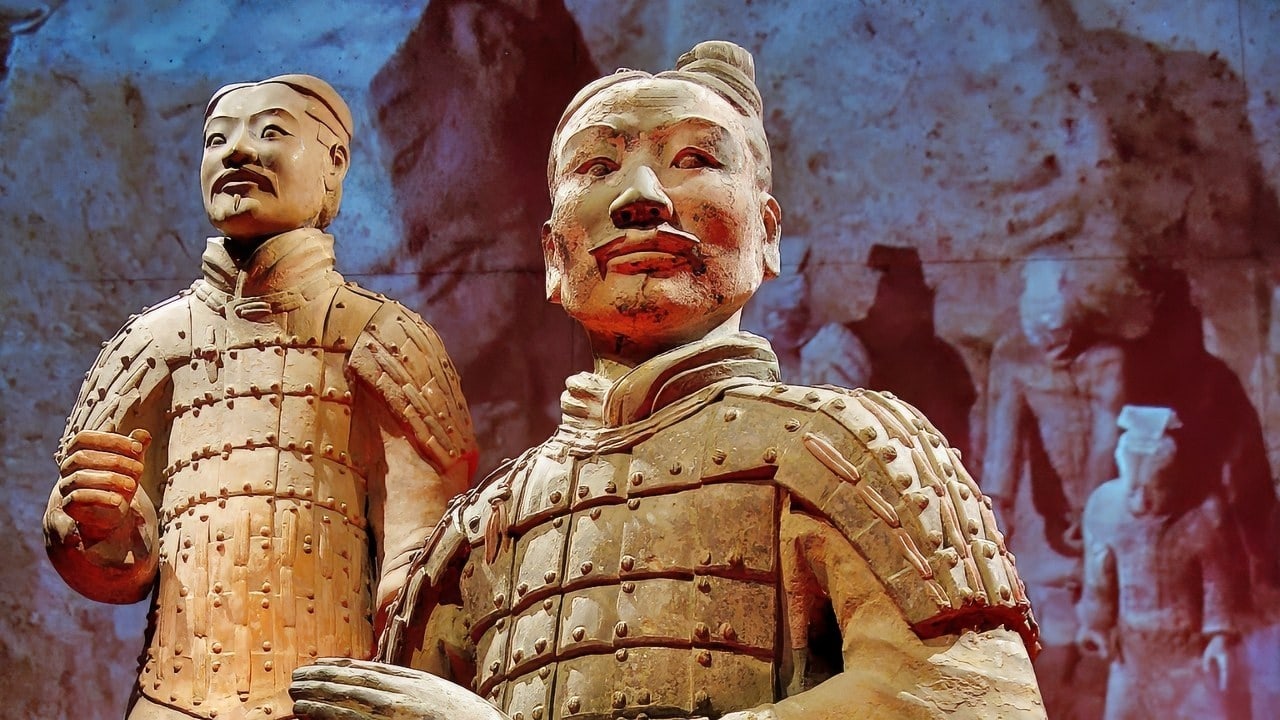
Sun Tzu. Image Credit: Creative Commons.
Later traditions have further expanded his role, with some even portraying him as a hermit, or even a mentor to Confucius.
About the Author:
Jack Buckby is a British researcher and analyst specialising in defence and national security, based in New York. His work focuses on military capability, procurement, and strategic competition, producing and editing analysis for policy and defence audiences. He brings extensive editorial experience, with a career output spanning over 1,000 articles at 19FortyFive and National Security Journal, and has previously authored books and papers on extremism and deradicalisation.

