
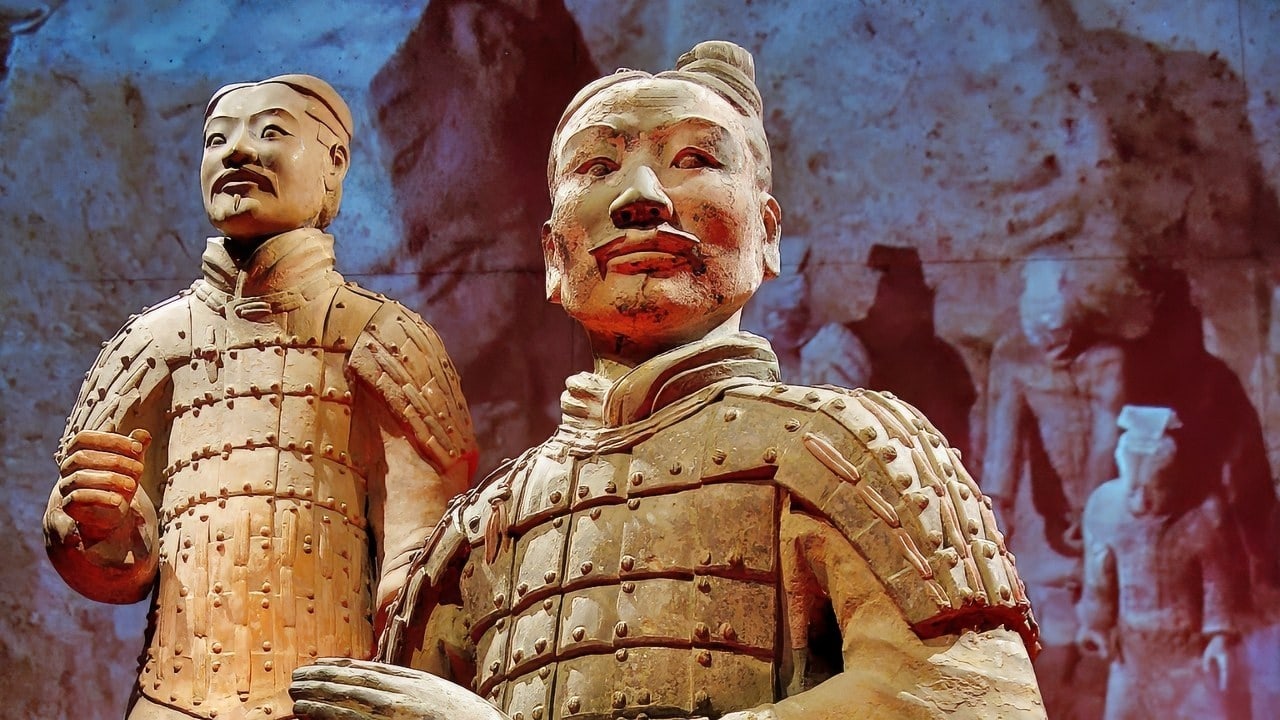
Summary and Key Points: A set of core lessons from Sun Tzu’s The Art of War is presented as practical guidance that extends beyond warfare into business, politics, and personal decision-making.
-After a brief sketch of Sun Tzu’s uncertain historical biography and the tradition linking him to the state of Wu, the focus shifts to five widely cited principles: deception as a foundation of strategy; the need for self-knowledge and intelligence about an opponent; winning by shaping outcomes without direct fighting; finding advantage amid chaos through adaptability; and prioritizing speed and decisive timing without slipping into recklessness.
-The throughline is that perception, preparation, influence, and execution often matter more than raw force.
Sun Tzu’s 5 Most Important Quotes—and What They Mean Today
“The experienced soldier, once in motion, is never bewildered; once he has broken camp, he is never at a loss.” – Sun Tzu
Sun Tzu is arguably one of the most influential strategists in all of history. His book The Art of War is full of practical wisdom that applies to military leaders and civilians alike. Although it was written over 2,500 years ago, its wisdom applies not only to warfare but also to business, politics, and personal decision-making. Today, I have listed what I think are the most important quotes from The Art of War and what they mean.
Who Was Sun Tzu?
Sun Tzu was an ancient Chinese military strategist and philosopher, traditionally believed to have lived during the Eastern Zhou period around the 5th century BC.
He is best known as the author of The Art of War, a treatise on military strategy and tactics that has influenced warfare, politics, and business for over 2,000 years.
While historical details about his life remain uncertain, most accounts describe him as a general serving the state of Wu, where his strategic insights helped secure significant victories. His work emphasizes principles such as adaptability, intelligence gathering, and psychological advantage, reflecting a deep understanding of both human nature and the dynamics of conflict.
The only detailed biography of Sun Tzu comes from Sima Qian’s Records of the Grand Historian. In this account, Sun Tzu is summoned to the court of King Helu of Wu, who had read his Art of War and became impressed by the wisdom within it.
The king reportedly tested Sun Tzu by challenging him to turn his harem of concubines into soldiers. When Sun Tzu succeeded, King Helu is said to have appointed him as a general, and he led the Wu successfully against the state of Chu at the Battle of Boju in 506 BC. While historians doubt this account, the author(s) of The Art of War undoubtedly possessed great insight into military strategy.
“All warfare is based on deception.”
There are many principles to be drawn from The Art of War; the first is that all warfare is based on deception. This emphasizes that success in conflict often depends on misleading your opponent. Deception can take many forms: feigning weakness when strong, pretending strength when weak, or creating false impressions about your intentions.
The goal is to manipulate the enemy’s perception so they make decisions that benefit you. In military terms, if your opponent believes you are retreating when you’re actually preparing an ambush, you gain the upper hand. The underlying lesson is that perception shapes reality in competitive environments. Controlling what others believe can be as powerful as controlling physical resources.
“If you know the enemy and know yourself, you need not fear the result of a hundred battles.”
The second principle is the famous saying: “If you know yourself and know your enemy, you will not fear the result of a hundred battles.” This stresses the importance of self-awareness and intelligence gathering. Understanding your own strengths and weaknesses is as critical as understanding your opponent’s.
Victory comes from accurate assessment, not blind confidence. Many failures occur because leaders underestimate their adversaries or overestimate their own capabilities.
Sun Tzu argues that preparation and knowledge reduce uncertainty. If you know your enemy’s resources, morale, and strategy, you can exploit their weaknesses while protecting your vulnerabilities. This principle teaches that success is rarely about brute force; it’s about informed decision-making.
“The supreme art of war is to subdue the enemy without fighting.”
The third principle is that the supreme art of war is to subdue the enemy without fighting. The highest form of victory is one achieved without direct conflict. This could mean winning through diplomacy, psychological advantage, or strategic positioning rather than costly battles.

Sgt. Jonathan Shue, noncommissioned officer-in-charge, machine shop, Marine Aviation Logistics Squadron 36, Marine Aircraft Group 36, 1st Marine Aircraft Wing, III Marine Expeditionary Force, fires on a secondary target after bayoneting the first here May 15 during the 2011 Australian Army Skill at Arms Meeting. The week-long meeting pit military representatives from partner nations in competition in a series of grueling combat marksmanship events. Represented nations include Canada, France (French Forces New Caledonia), Indonesia, Timor Leste, Brunei, Netherlands, U.S., Papua New Guinea, New Zealand, Singapore, Malaysia, Thailand as well as a contingent of Japanese observers. (U.S. Marine Corps Photo by Lance Cpl. Mark W. Stroud/Released)

German Military Tanks
Conflict consumes resources and creates risk. If you can achieve your objectives without fighting by making the enemy surrender or by removing their will to fight, you save time, money, and lives. This is not weakness; it’s efficiency. True mastery lies in influence and foresight, not aggression.
“In the midst of chaos, there is also opportunity.”
The fourth principle is that in the midst of chaos, there is also opportunity. Sun Tzu teaches that disorder is not always a disadvantage. When situations become unpredictable, those who remain calm and adaptable can exploit openings that others miss.
Chaos often paralyzes decision-makers. However, volatility creates gaps in defenses, shifts in priorities, and moments of vulnerability. Leaders who can identify and act on these opportunities gain a decisive edge. This principle encourages resilience and agility, qualities that are essential in today’s rapidly changing world. Whether in war or in other situations, those who pivot quickly in the face of uncertainty often emerge stronger.
“Speed is the essence of war.”
Speaking of pivoting quickly, the fifth principle is that speed is the essence of war. Timing and rapid execution are critical. Opportunities are fleeting, and hesitation can turn advantage into defeat. Acting decisively before the enemy can respond often determines the outcome.
Speed doesn’t mean recklessness; it means readiness and efficiency. A well-prepared, fast-moving force can overwhelm an opponent before they can organize a defense. In competitive environments, being first often creates lasting advantages.
The mark of a good leader is how quickly they can make decisions while remaining rational and well-informed. Risk is inherent to speed, but a good leader weighs these risks and still makes quick, well-reasoned decisions.
About the Author: Isaac Seitz
Isaac Seitz, a Defense Columnist, graduated from Patrick Henry College’s Strategic Intelligence and National Security program. He has also studied Russian at Middlebury Language Schools and has worked as an intelligence Analyst in the private sector.