
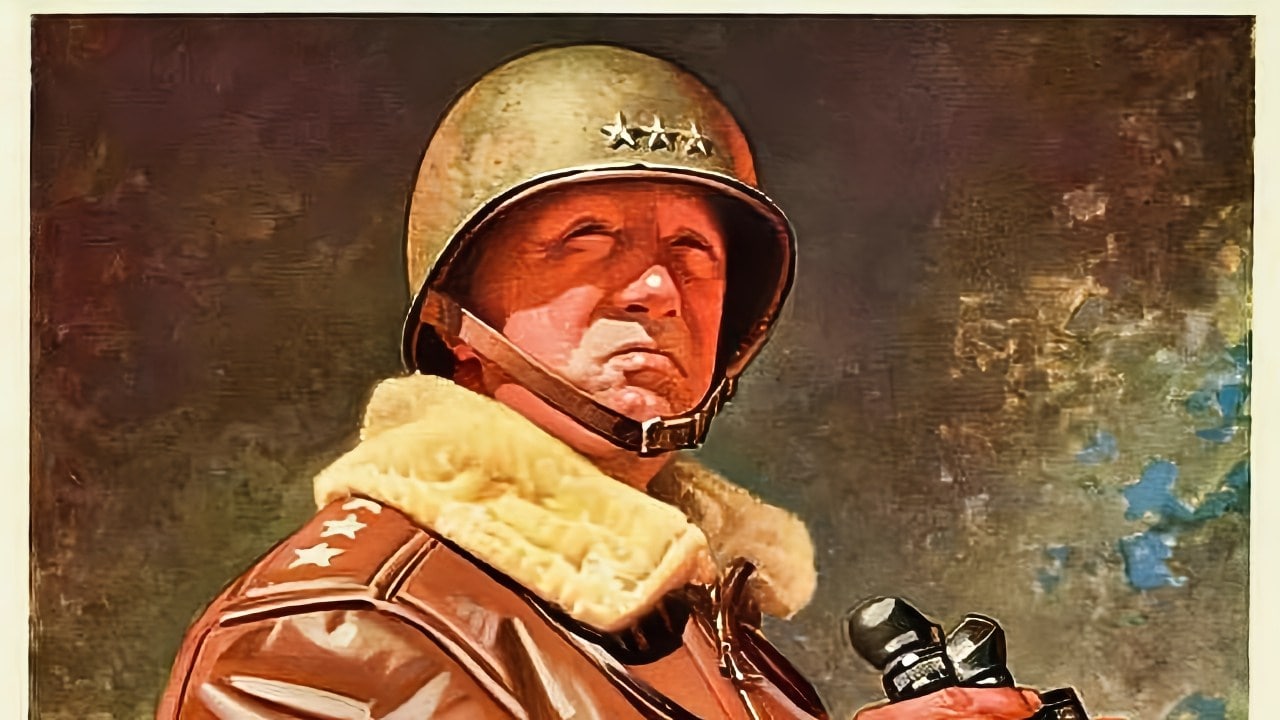
Synopsis and Key Points – General George S. Patton was a celebrated World War II commander known for his aggressive tactics, but his abrasive personality led to three major controversies that nearly ended his career.
War is a Bloody Business: The Aggressive Tactics and Scandals of General George S. Patton
“War is a bloody, killing business. You’ve got to spill their blood, or they will spill yours.” George S. Patton was renowned for his aggressive attitude and his brusque personality.
At best, this rugged disposition allowed him to command his troops effectively and push forward even in unfavorable conditions.
At his worst, however, Patton’s abrasive character sometimes landed him in controversy. There were a couple of incidents that occurred during and after the Second World War that landed him in hot water with high command.
These are three of Patton’s biggest controversies.
The Slapping Incidents
The first and most infamous controversy occurred during the Allied invasion of Sicily in August 1943. Patton visited two field hospitals where soldiers suffering from what was then called “battle fatigue” (now recognized as PTSD) were being treated.
In two separate incidents, he slapped Private Charles Kuhl and Private Paul Bennett, berating them for cowardice and accusing them of shirking their duty. Patton even threatened Bennett with execution by firing squad. Initially, these incidents were kept quiet by military authorities, including General Eisenhower, who feared the damage such revelations could cause to morale and Patton’s reputation. However, when journalist Drew Pearson broke the story later that year, public outrage erupted.
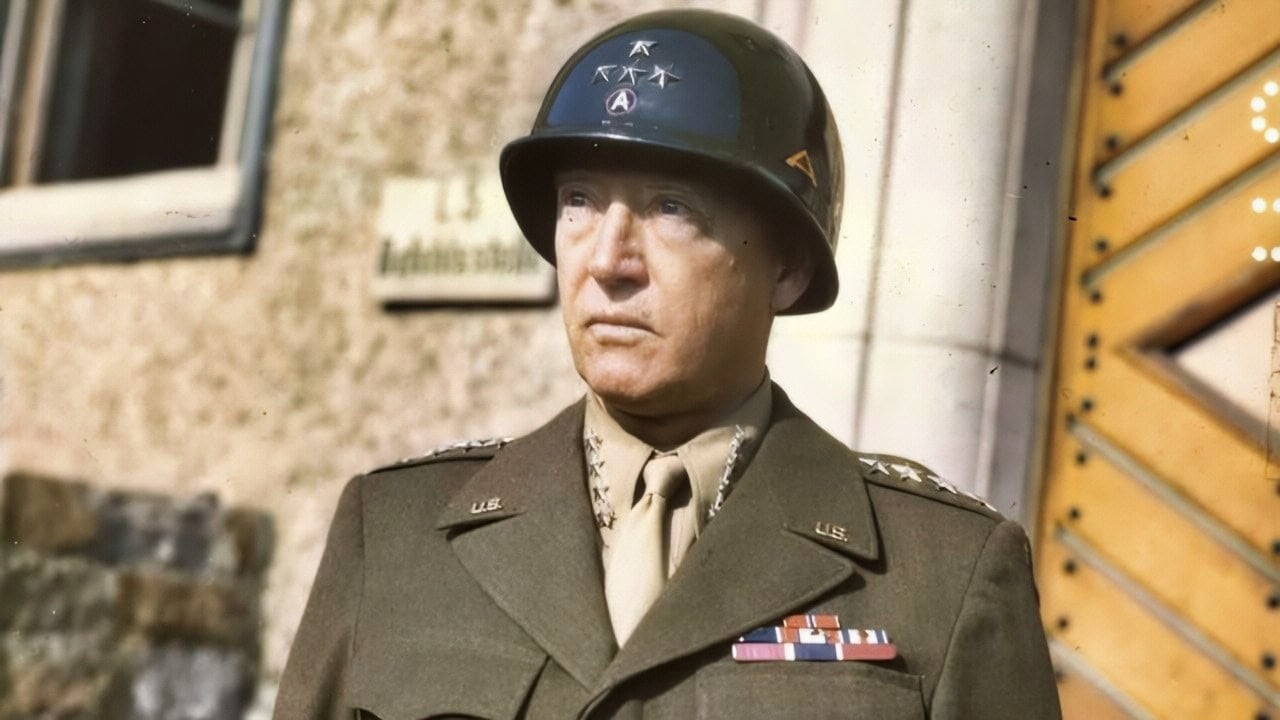
General George Patton U.S. Army Photo

U.S. Army General George Patton. Image Credit: Creative Commons.
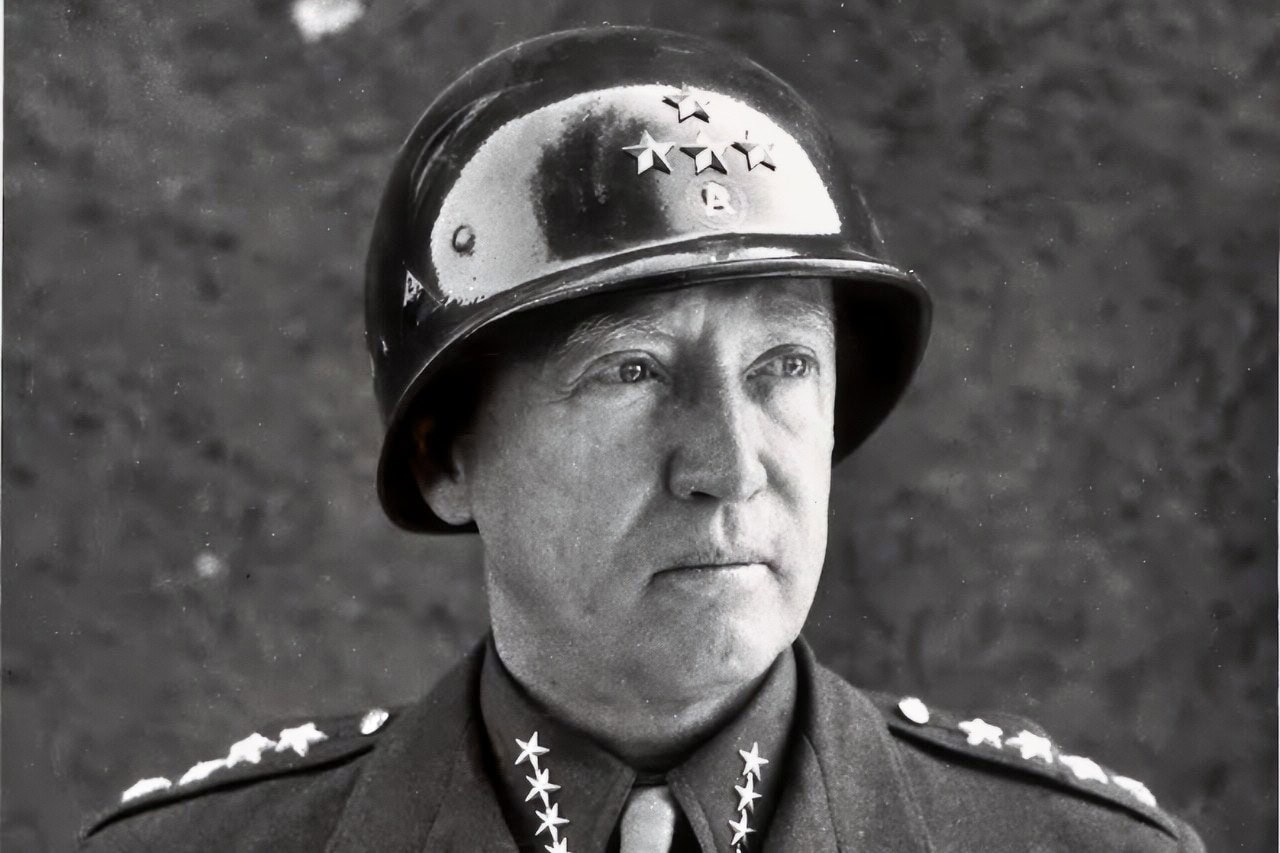
U.S. Army General George Patton
Some Americans, particularly veterans and hardliners, defended Patton’s strict discipline, while others condemned his treatment of psychologically wounded soldiers as cruel and unacceptable. Eisenhower formally reprimanded Patton and ordered him to apologize to the men involved. Though Patton avoided dismissal, the scandal sidelined him from front-line command for months. Ironically, his notoriety was later exploited in Operation Fortitude, a deception plan designed to mislead German forces about the location of the D-Day invasion.
The Biscari Massacre
The Biscari Massacre was another controversy that also happened during the Allies’ invasion of Sicily in 1943. After intense fighting near the Biscari airfield, American troops captured Italian and German soldiers.
In two separate incidents, U.S. soldiers executed a total of seventy-one prisoners of war. The killings were carried out after the prisoners had surrendered and posed no immediate threat. These acts violated the Geneva Conventions and shocked military leadership when they came to light.
Two soldiers were court-martialed for the murders, but the controversy deepened when they claimed they were following orders inspired by General Patton’s aggressive rhetoric, which they interpreted as a directive to take no prisoners.
Although Patton denied issuing any such orders and was cleared of legal responsibility, the massacre raised troubling questions about command responsibility and the influence of leadership language during wartime. Historians have debated whether Patton’s fiery speeches enabled such actions and whether he secretly approved of such actions. Although he publicly condemned such actions, as a General and commander of the troops, he was ultimately responsible for his men’s conduct.
Post-War Denazification Comments
The third controversy occurred after the war, when Patton served as Military Governor in Bavaria. In September 1945, he publicly questioned the denazification process, dismissing it as unnecessary and comparing it to partisan political disputes in the United States.
His remarks suggested that purging former Nazis was akin to routine political turnover, a stance that alarmed U.S. officials and Allied authorities committed to dismantling the remnants of the Nazi regime. Eisenhower responded swiftly, removing Patton from his governorship and reassigning him to a less sensitive command.
Patton’s comments were a mixture of political naiveté and strategic calculation; he believed that stabilizing Germany quickly was essential to counter Soviet influence and prevent the spread of communism.
Nevertheless, his statements were widely interpreted as minimizing the crimes of the Nazi regime and undermining Allied efforts to establish democratic governance in postwar Germany. This controversy marked the final blow to Patton’s influence and illustrated the perils of outspoken military leaders navigating complex political landscapes.
Honorable Mention: The Lorriane Campaign
This isn’t an actual controversy, but it was one of Patton’s most controversial campaigns. The Lorraine campaign, fought in the fall of 1944, was one of General Patton’s most challenging operations during World War II.
After the breakout from Normandy and the rapid advance across France, Patton’s Third Army was tasked with pushing into Lorraine, a region near the German border. Initially, Patton hoped for another swift offensive, but the campaign quickly bogged down due to logistical shortages, worsening weather, and stiff German resistance.
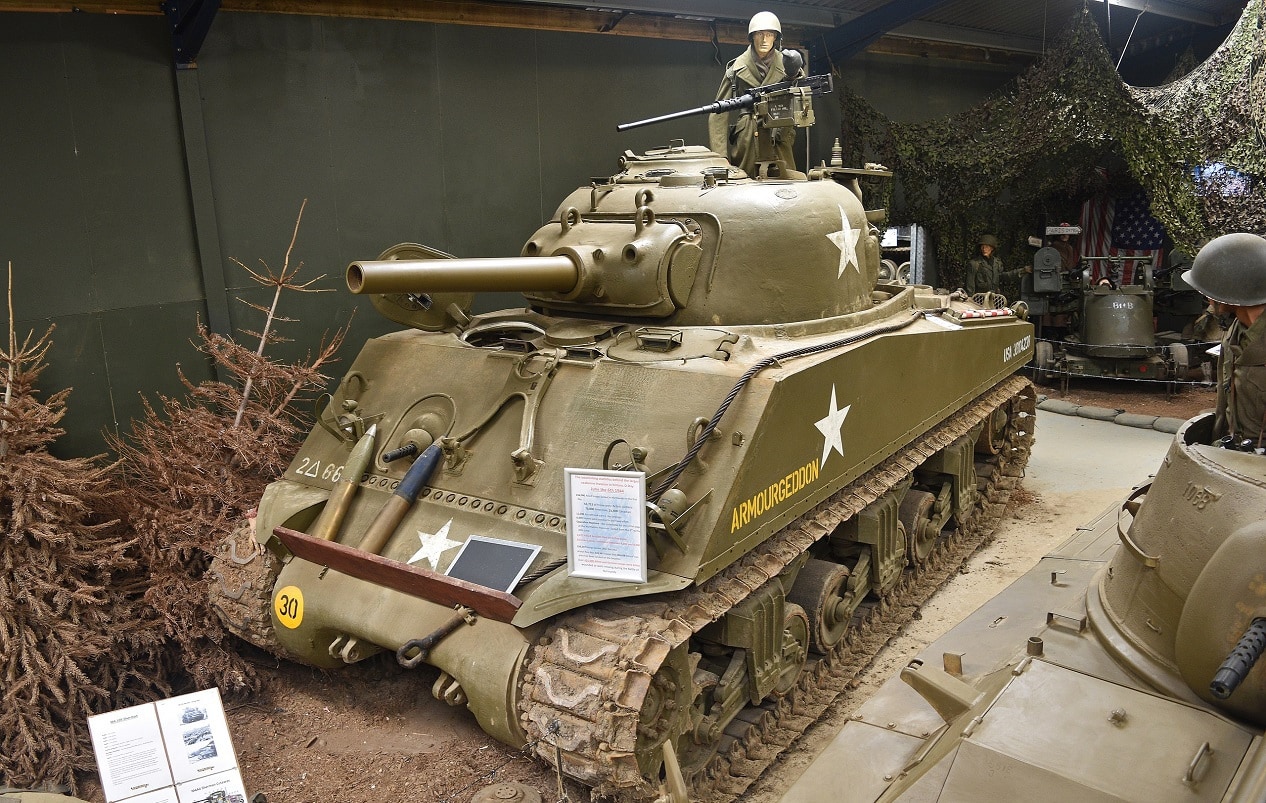
M4 Sherman Tank.
The terrain of Lorraine, with its rivers, hills, and fortified towns, favored the defenders, and the Germans exploited these advantages effectively. Patton’s forces faced fierce counterattacks, particularly from well-equipped German panzer divisions, which slowed progress and inflicted heavy casualties.
Despite these difficulties, Patton remained aggressive, launching multiple assaults to seize key towns such as Metz and Nancy. However, Metz proved especially problematic; its extensive fortifications and determined defenders turned the battle into a prolonged siege rather than the rapid maneuver warfare Patton preferred.
The campaign dragged on for months, consuming significant resources and manpower. While Patton eventually captured Metz in November 1944, the Lorraine campaign is often criticized for its high cost and limited strategic gains compared to earlier operations.
About the Author: Isaac Seitz
Isaac Seitz, a Defense Columnist, graduated from Patrick Henry College’s Strategic Intelligence and National Security program. He has also studied Russian at Middlebury Language Schools and has worked as an intelligence Analyst in the private sector.