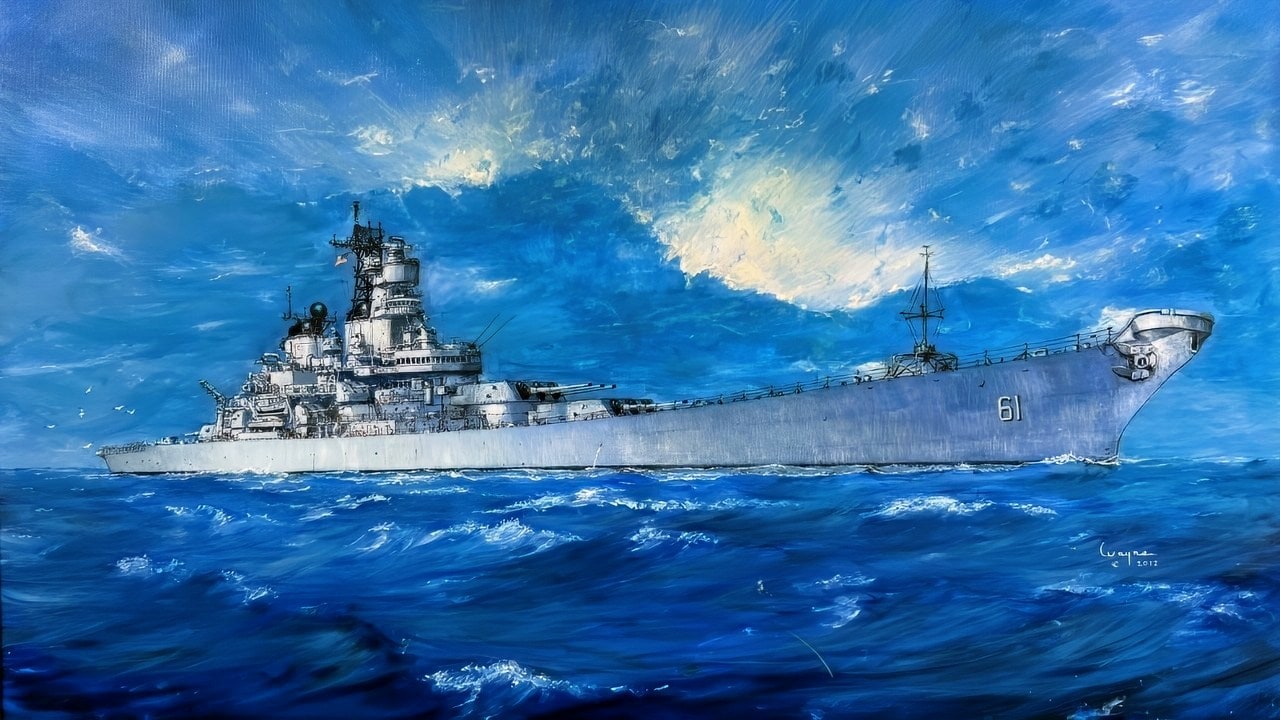
Summary and Key Points: Commissioned in 1943 and modernized across World War II, Korea, Vietnam, and the Cold War, USS New Jersey later faced a different mission: surviving as a museum ship.
-Preservation required structural upkeep to combat corrosion—hull inspections, rust removal, specialized coatings, repainting, and periodic dry-docking to repair plating and reinforce internal supports.
-Spaces were adapted for public safety with railings, improved walking surfaces, and restricted access to hazardous machinery.
-Original systems were retained for display, but new electrical wiring, climate control in select areas, and updated fire suppression were added for modern operations.
-Accessibility and interpretive upgrades—tours, restored spaces, and interactive exhibits—help visitors experience the ship’s combat-era evolution.
USS New Jersey Didn’t Just Retire: The Upgrades That Turned a Battleship Into a Museum
The USS New Jersey, one of the most decorated battleships in United States naval history, did not simply retire when her combat service ended, but instead underwent a series of updates, modifications, and preservation efforts to transition from an active warship into a moored museum.
The design, technological systems, and overall configuration were preserved for posterity.
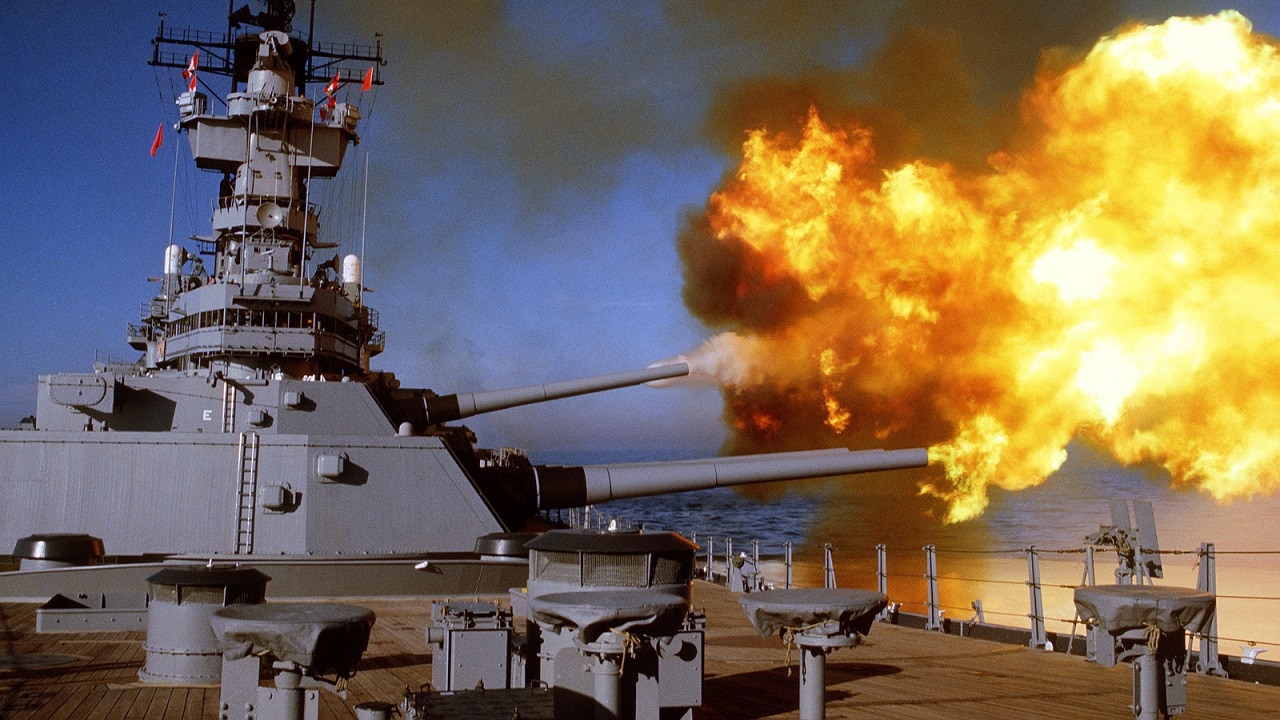
The Nos. 1 and 2 Mark 7 16-inch/50-caliber guns are fired to starboard during a main battery firing exercise aboard the battleship USS NEW JERSEY (BB-62).
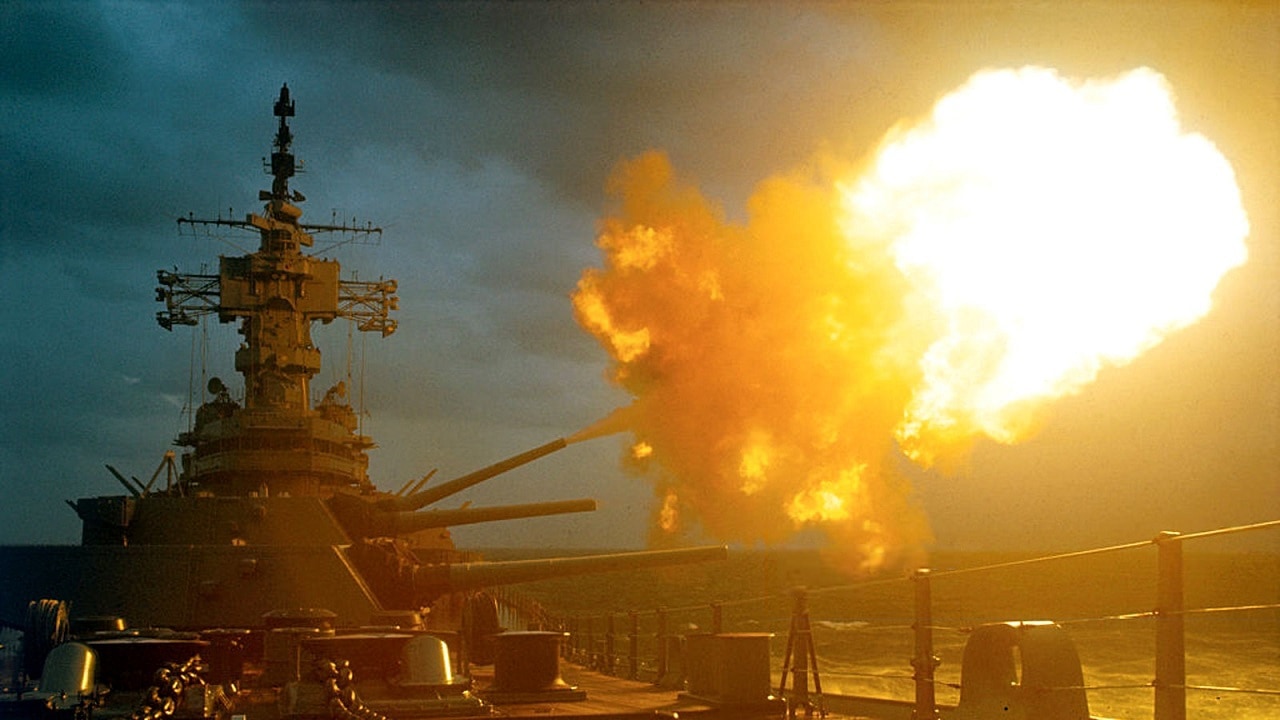
30 Sep 1968 — The battleship USS New Jersey fires its 16-inch guns into the demilitarized zone here 9/30. These were the first shells fired by the New Jersey in the Vietnamese war. The vessel is the only battleship on active duty in the U.S. Navy.
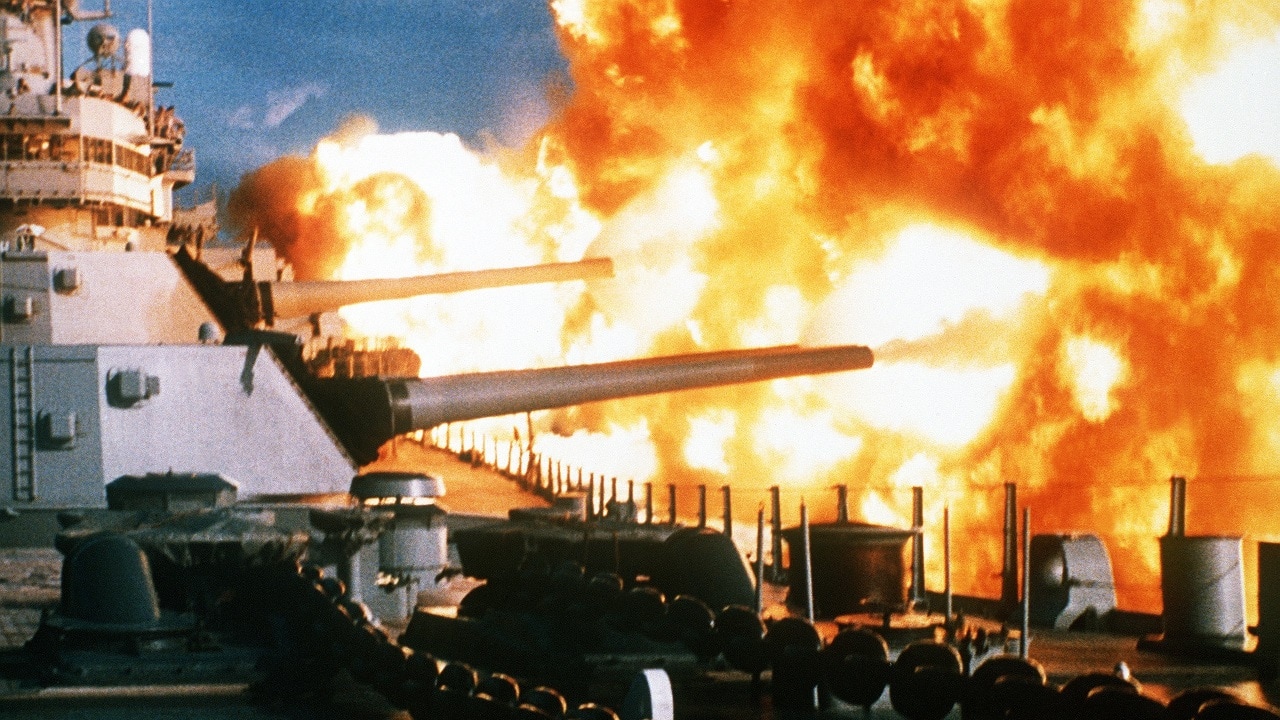
The Iowa-class battleship USS New Jersey fires at positions near Beirut on 9 January 1984 during the Lebanese Civil War.

USS New Jersey (BB 62) fires her 16” guns during a training exercise at San Clemente Island during fleet training exercises conducted off the coast of California. Photographed, July 15, 1968. Official U.S. Navy Photograph, now in the collections of the National Archives.
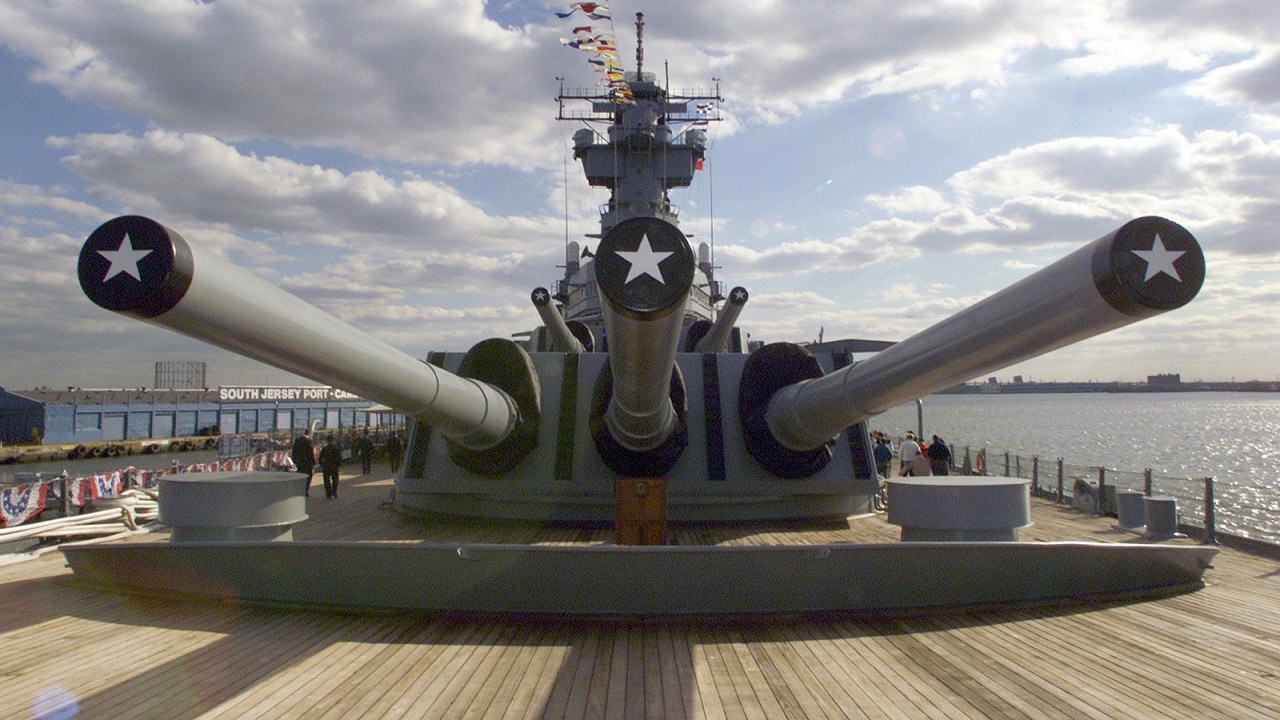
A head on view of the forward 16″ gun turrets on the USS NEW JERSEY (BB 62).
Commissioned in 1943 during World War II, the USS New Jersey was, of course, built for combat and not intended to exist in perpetuity as a floating museum.
Over decades of service in World War II, the Korean War, the Vietnam War, and briefly during the Cold War in the 1980s and 1990s, the ship underwent numerous military modernizations, including radar upgrades, improved fire-control systems, and missile capabilities.
USS New Jersey: Attacking Iwo Jima
For example, the USS New Jersey is famous for pounding the shores of Iwo Jima, conducting “carrier screening” protective missions, and simply “bombarding” enemy strongholds with massive firepower.
The combat successes of the USS New Jersey are spread across several wars and are extremely significant to the point that the ship became a famous, war-tested platform to be remembered. Therefore, once decommissioned in 1991, the USS New Jersey has become an emblem of the U.S. enduring combat power.
“The USS New Jersey helped shoot down twenty Japanese warplanes and kamikazes, and rescued downed American pilots. New Jersey also fought in the two largest naval battles of the Pacific War. First, in the Battle of the Philippine Sea, the largest carrier battle in history, she helped throw up the impenetrable wall of antiaircraft fire which, with Navy fighters, decimated Japan’s naval air arm in the Marianas Turkey Shoot. Second, she led the Navy’s main fleet in the Battle for Leyte Gulf, the largest sea battle of all time, which destroyed the Japanese fleet as a fighting force,” a formal write-up on the battleship’s history states.
Reworking Ship Structure
One of the most important updates involved structural maintenance.
Steel warships are highly vulnerable to seawater corrosion once they are no longer actively maintained by a naval crew.
Therefore, not surprisingly, preservation teams conducted hull inspections, rust removal, and repainting. Painters doing the preservation used a special kind of coating to preserve the “look” of the ship and slow down deterioration.
Periodic dry-docking allowed engineers to repair hull plating, reinforce internal structures, and ensure the ship remained watertight to keep the ship afloat and stable as a museum.
Part of the transition from combat service to museum involved safeguarding the ship for civilian visitors by adding railings to stairs, less slippery materials, and less access to exposed machinery.
Electrical and mechanical systems also required updates. While many original systems were preserved for display, modern electrical wiring was installed to safely power lighting, climate controls in select areas, and interactive exhibits. Fire suppression systems were added to protect both visitors and the historic structure, replacing or supplementing outdated naval firefighting equipment that was no longer practical for museum use.
Reworked for Public Display
Accessibility improvements also played an increasingly important role.
Although it is difficult to fully retrofit a World War II battleship to modern accessibility standards, the museum introduced ramps, elevators, and virtual tours to make the ship’s history more inclusive.
These updates ensured compliance with contemporary expectations while respecting the physical limitations of the original design.
Finally, interpretive updates transformed the USS New Jersey from a static artifact into a living educational space. Interactive displays, restored combat information centers, audio guides, and veteran-led tours help visitors understand how the ship functioned during wartime.
Some areas were restored to specific historical periods, allowing guests to experience how the ship evolved over its decades of service.
About the Author: U.S. Navy Expert Kris Osborn
Kris Osborn is President of Warrior Maven – Center for Military Modernization. Osborn previously served at the Pentagon as a highly qualified expert in the Office of the Assistant Secretary of the Army—Acquisition, Logistics & Technology. Osborn has also worked as an anchor and on-air military specialist at national TV networks. He has appeared as a guest military expert on Fox News, MSNBC, The Military Channel, and The History Channel. He also has a Masters Degree in Comparative Literature from Columbia University