
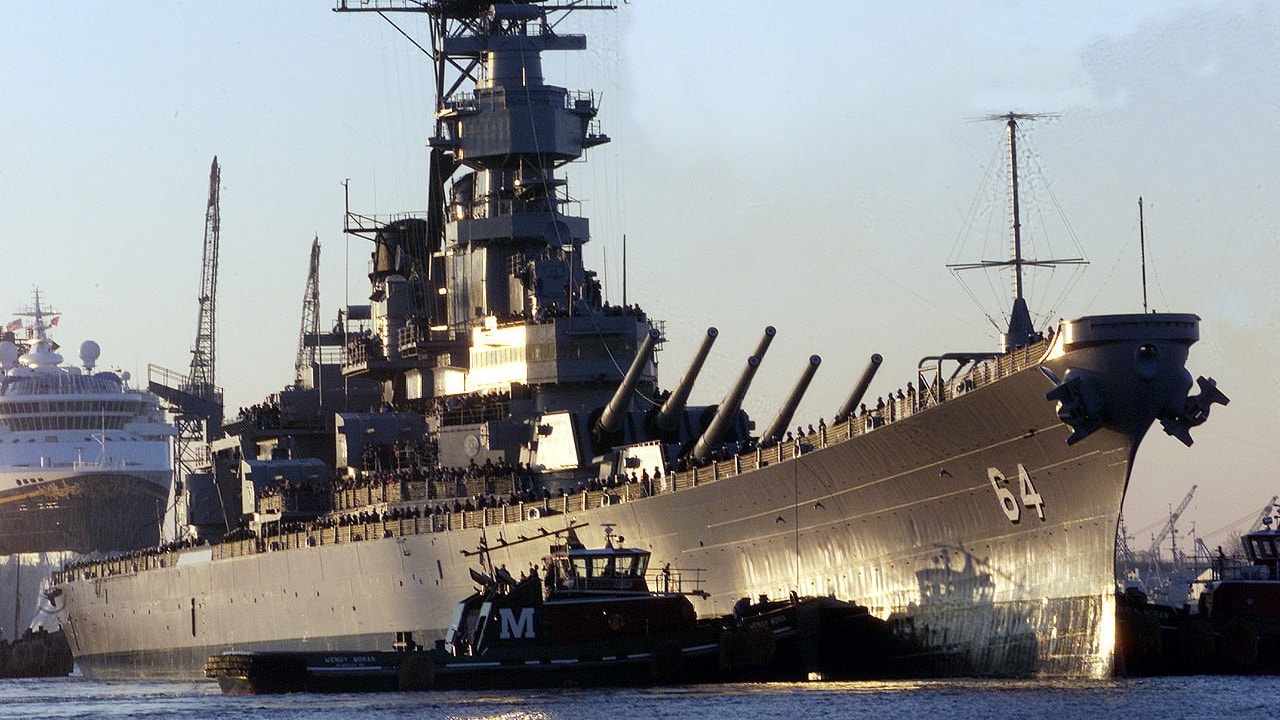
Key Points and Summary – In the 1970s and 80s, the U.S. Navy considered converting Iowa-class battleships into “battlecarriers” equipped with flight decks for STOVL aircraft and massive firepower, including 320-tube vertical launch systems.
-Proposed by military reformer Charles E. Myers to provide littoral fire support, the radical “Phase II” plan was ultimately scrapped due to cost and strategic obsolescence, though the ships were briefly reactivated in the 1980s.
-While President Trump has recently expressed interest in bringing back battleships—praising their “solid steel” durability over modern ships—experts argue that high costs, large crew requirements, and the dominance of long-range missiles make their return strategically impractical.
‘Battlecarriers’: The 1980s Plan to Turn Iowa-Class Battleships into Aircraft Carriers
During the 1970s and 1980s, it was proposed a couple of times that the U.S. Navy should convert its Iowa-class battleships into “battlecarriers.”
According to Naval History, the idea in the 1970s was to turn the ships into “one-ship power-projection force with a landing deck for short take-off vertical landing (STOVL) aircraft operations.”
How would it have worked?
According to Naval History, the idea of adding a flight deck to a capital ship had been bandied about as far back as 1910. The British Navy gave the idea a shot during World War II, as did the Japanese.
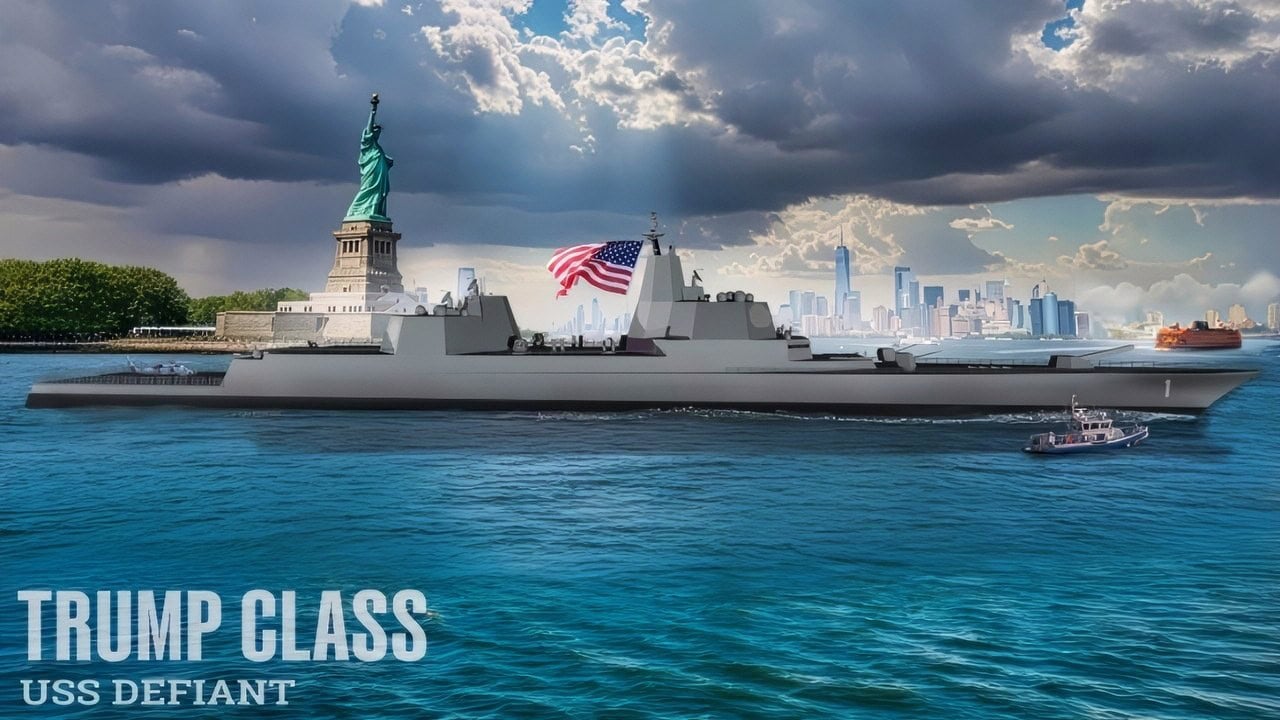
Trump-Class Battleship. Image Credit: Creative Commons/White House.
Such a ship conversion was again considered during the Korea- and early Vietnam-War eras but did not happen. The idea reappeared in the late 1970s.
A Late ‘70s Proposal
“With the Vietnam War winding down, the Navy sought to modernize the fleet and produce a lighter ship that could carry aircraft to effect control of the sea,” the Naval History article reads. “As Admiral Zumwalt wrote to one petty officer in 1973, conversion of the Iowa-class battleships had been considered and studied, but all had reached the same conclusion: the ships were too old, too manpower intensive, too expensive to operate, and too costly, especially in comparison to the new sea control ship design.”
In 1978, the idea was once again revisited.
“There now was a need not just for power projection, but also for an ‘all-weather fire support from a warship that could engage successfully protected targets located in the littoral ribbons of the world,’” according to the article. “The idea for the interdiction/assault ship was born.”
Charles E. Myers, in a 1979 article, floated one possibility that Naval History describes as radical.
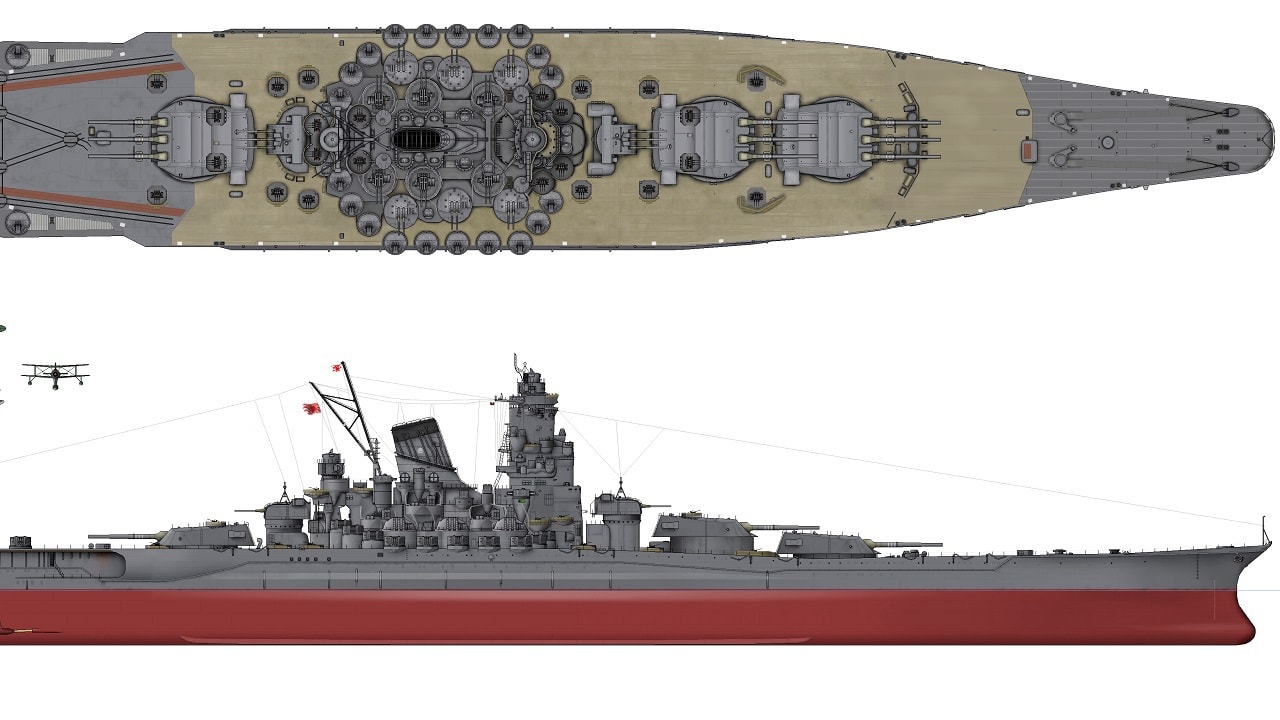
Battleship Yamato Blueprint. Image Credit: Creative Commons.
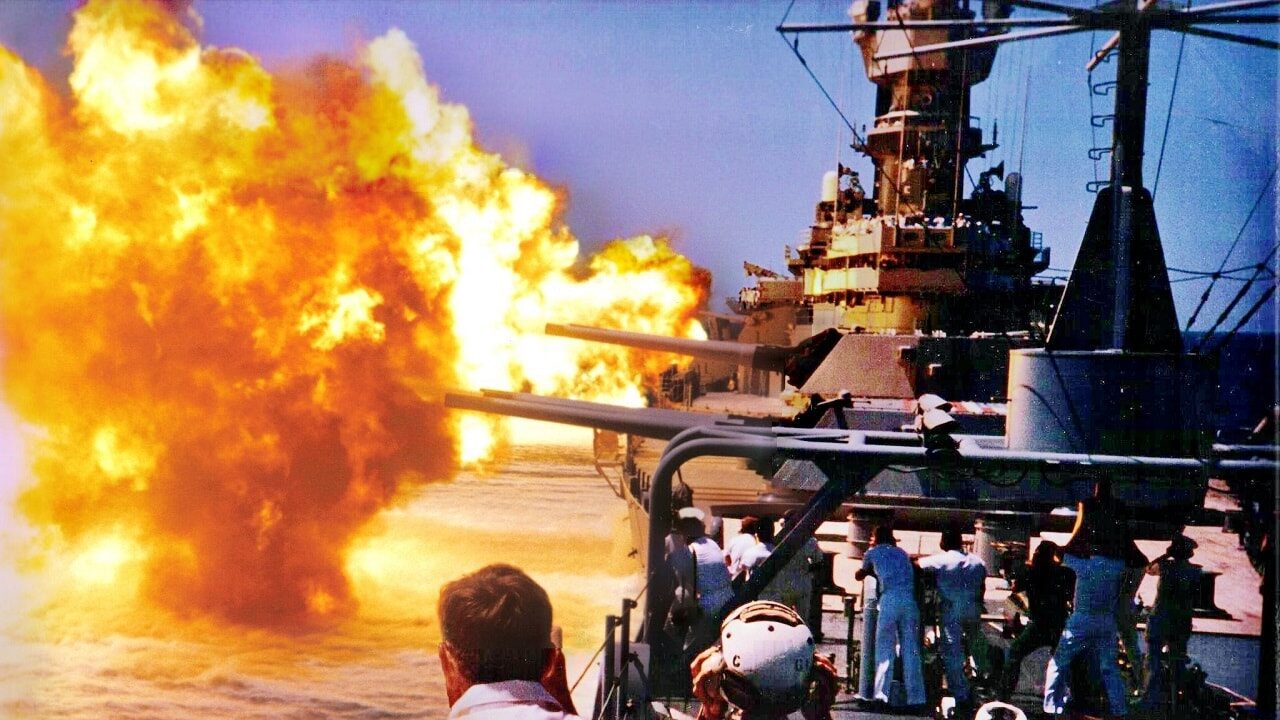
Battleship USS Iowa. Image Credit: Creative Commons.
“The concept of operations for the interdiction ship involves working inside the ten-fathom line (less than 60-foot depth) where she would be relatively immune to interference from submarines,” Myers proposed.
“The draft of the ship at 55,000 tons is 35 feet. The aircraft carrier providing air cover will operate from a station 50 to 200 miles at sea to minimize exposure to enemy air and shore defenses. Air cover and spotting sorties can easily be provided from such proximity.”
The idea was debated during the early years of the Reagan presidency. It would require different phases. Phase 1entailed the battleships being reactivated with minimal modifications to get them into service as quickly as possible. This was approved, leading to the battleships hitting the seas again in the 1980s.
Phase II?
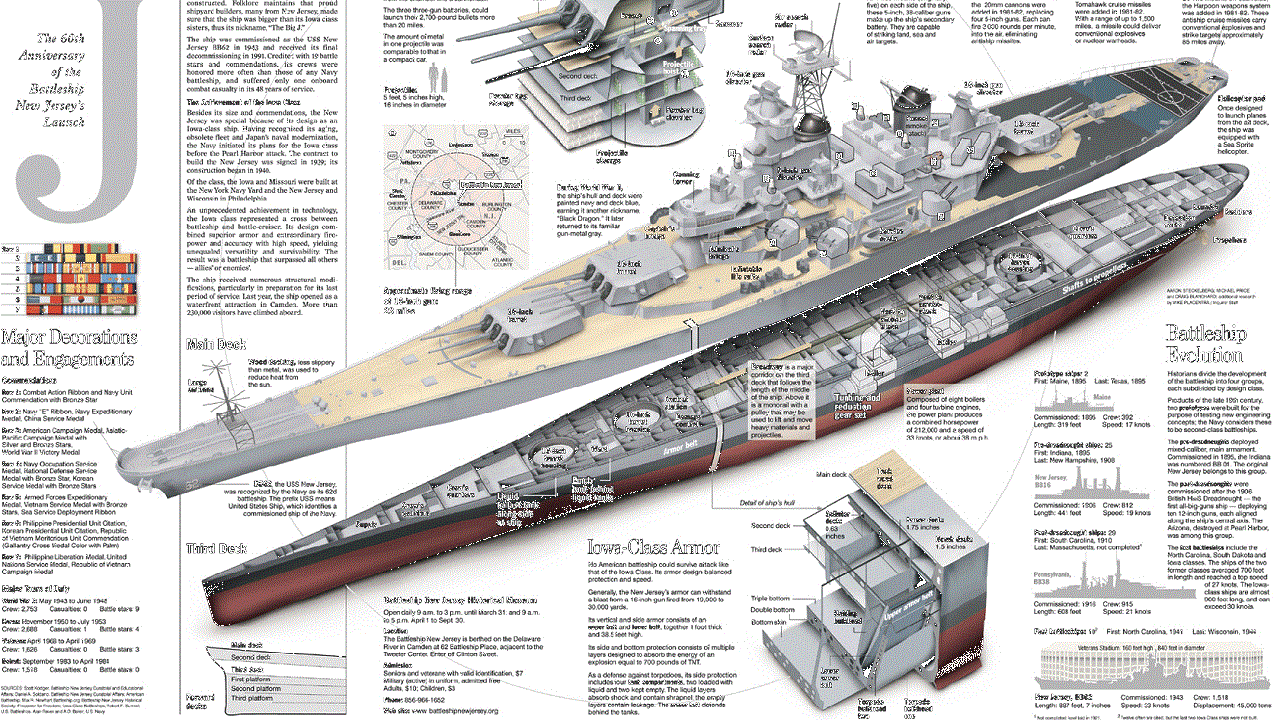
A proposed second phase would have included 16-inch guns, flight and hangar decks, and “A 320-tube vertical launch system (VLS) capable of firing Tomahawks, Standard Missiles, ballistic missiles, and the Army Tactical Missile System family.” The ship would have also had “accommodations for SEALs and 800 Marines for short periods.”
But alas, it wasn’t to be.
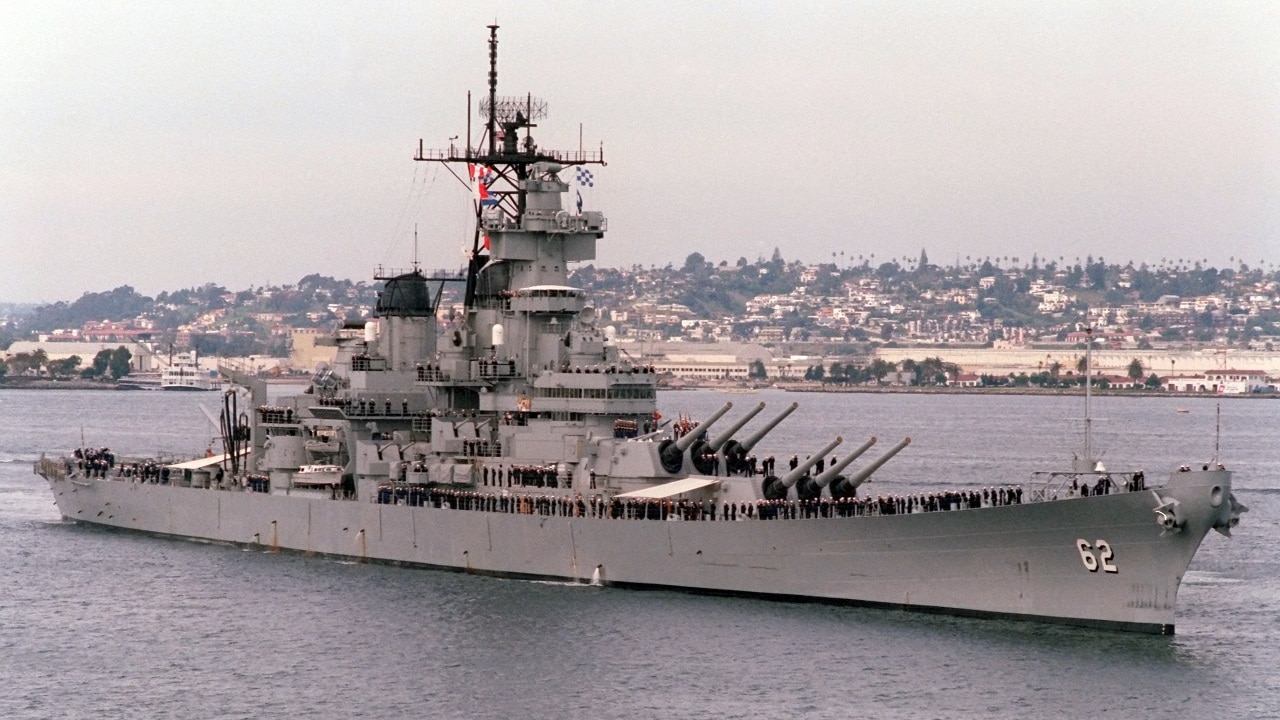
Iowa-class battleship.
“Ultimately, and unsurprisingly, the design went nowhere. By 1984, the plan was all but dead,” the Naval History article says. “Following Desert Storm, the Navy recapitalized its assets and decommissioned the Iowas, though Charles Myers continued to push for the conversions as late as 1995.”
The four Iowa-class battleships are now museum ships.
Myers’ Plan
When Myers, an accomplished pilot and “valued and colorful member of the military reform movement,” passed away at age 91 in 2016, the Project on Government Oversight (POGO) remembered the work he did in advocating for the return of battleships:
“One of his big ideas was to bring back the Navy’s battleships. The Iowa-class battleship New Jersey had seen action during Vietnam, but most had been placed in mothballs during the 1950s. Myers thought they would be useful for amphibious and generalized ground combat operations in coastal areas when ground forces would need long-duration and highly destructive fire support.”
While acknowledging that Myers “ruffled some feathers,” the POGO remembrance noted that the Iowa-class recommissioning at least partially fulfilled his vision.
“It wasn’t until the Reagan administration created a 600-ship navy that his efforts paid off, with four Iowa-class battleships recommissioned to see another decade of service, including Operation Desert Storm in 1991,” POGO said.
Bring Back Battleships?
It might not represent the vision laid out back in the late 1970s and early 1980s—and it might not ever actually happen. But there’s one big advocate for the return of battleships to service: President Donald Trump.
The president has occasionally said, including as recently as this fall, that he would like the Navy to bring back battleships.
At the September meeting of American military commanders from around the world, Trump discussed the idea.
“It’s something we’re actually considering,” the president said, according to Business Insider. “The concept of the battleship, nice six-inch side, solid steel, not aluminum, aluminum that melts if it looks at a missile coming at it. Starts melting as the missile is about two miles away. No, those ships, they don’t make them that way anymore.”
The president expressed appreciation for the USS Iowa (BB-61).
USS Iowa battleship. Image Credit: Creative Commons.
“I look at those ships, they came with the destroyers alongside of them, and man, nothing was gonna stop them,” Trump said. “Some people would say, ‘No, that’s old technology,’ I don’t know, I don’t think it’s old technology when you look at those guns.”
Trump’s battleship nostalgia, which is of a piece with his frequent pining for the ways and things of the past, does not appear to have reached the level of actual defense procurement, or of real-life proposals for the recommissioning or rebuilding of American battleships.
There are, perhaps needless to say, some logistical and strategic roadblocks in the way of them becoming a reality.
“Battleships fast became obsolete as aircraft carriers, submarines, and missiles proved deadlier and more capable at long range, while their substantial costs and crews made them inefficient. Furthermore, modern naval strategy didn’t have a role for big-gun warships the way it did in the past,” Business Insider said in reporting about Trump’s comments.
About the Author: Stephen Silver
Stephen Silver is an award-winning journalist, essayist, and film critic, and contributor to the Philadelphia Inquirer, the Jewish Telegraphic Agency, Broad Street Review, and Splice Today. The co-founder of the Philadelphia Film Critics Circle, Stephen lives in suburban Philadelphia with his wife and two sons. For over a decade, Stephen has authored thousands of articles that focus on politics, national security, technology, and the economy. Follow him on X (formerly Twitter) at @StephenSilver, and subscribe to his Substack newsletter.