
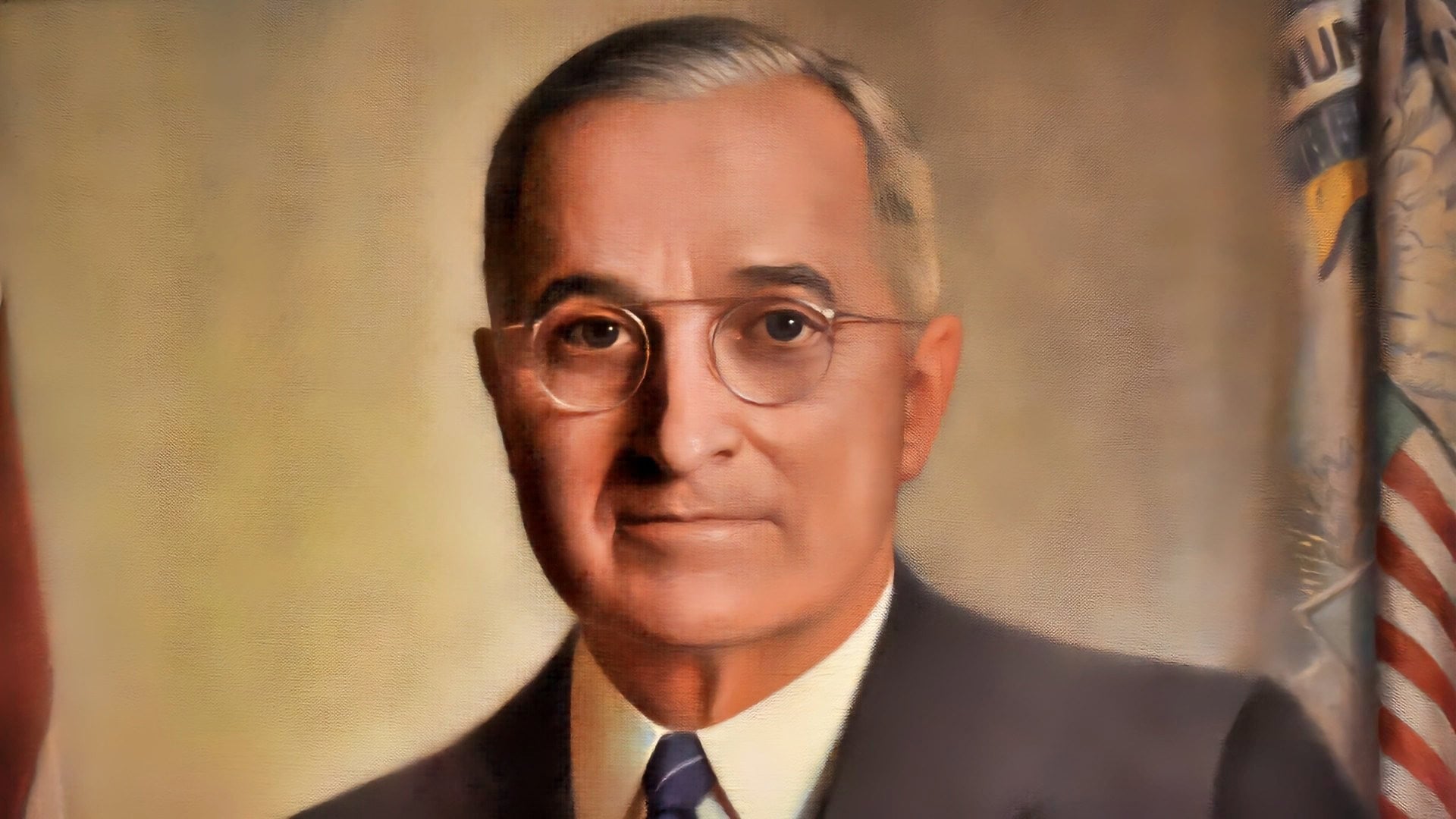
Summary and Key Points: “Make no little plans” is most strongly tied to architect Daniel Burnham and the 1909 Plan of Chicago, a Progressive-era blueprint meant to modernize and beautify a fast-growing city.
-The line’s enduring power is its argument for audacious goals that inspire action—and its corollary, often linked to Harry S. Truman, that big plans can be amended while small ones rarely scale.
-The piece then traces Truman’s rise from Missouri to World War I artillery command, to Senate prominence, to a presidency defined by hard choices at WWII’s end, the Marshall Plan, Cold War containment, and the Korean War, including firing MacArthur.
Truman’s “Make No Little Plans” Quote Has A Twist—Here’s Where It Really Came From
Harry S. Truman Quote: “Make No Little Plans. Make The Biggest One You Can Think Of, And Spend The Rest Of Your Life Carrying It Out”
This famous, inspiring quote urging ambitious, long-term thinking is primarily attributed to architect Daniel Burnham (often cited in relation to his 1909 Plan of Chicago) but was also frequently used by U.S. President Harry S. Truman.
It means that people should pursue ambitious, visionary goals that inspire others, rather than settling for small, easily achievable tasks. He believed big plans can be amended, but small ones can never be expanded, fostering a legacy that outlasts the individual.
Key Details Regarding This Quotation
The quote is often associated with Daniel Burnham (1846–1912), who urged, “Make no little plans. They have no magic to stir men’s blood… Make big plans; aim high in hope and work”.
Context: It was a call for audacious urban planning and, more broadly, a, philosophy for achieving greatness.
Burnham’s 1909 Plan of Chicago
The 1909 Plan of Chicago, also commonly known simply as the “Burnham Plan,” was a visionary Progressive Era proposal that sought to beautify Chicago and improve efficiency of commerce.
Published through the support of the Commercial Club of Chicago, the plan used renderings to convey the possible scenarios for a rapidly growing city. Although many of its aspirational ideas never became reality, as a document, the Plan of Chicago continues to serve as a reference in urban design today.
Burnham’s quote is often cited in the context of his ambitious 1909 Plan of Chicago. It urges leaders to create visionary, ambitious, and inspiring goals rather than small, timid ones, suggesting that only large, audacious plans have the power to inspire people and transform environments.
Burnham believed that grand, noble plans possess a lasting, “magical” power to motivate, whereas small, “safe” plans often fail to inspire action and may never be realized.
The quote is: “Make no little plans; they have no magic to stir men’s blood… Make big plans; aim high in hope and work, remembering that a noble, logical diagram once recorded will never die, but long after we are gone will be a living thing, asserting itself with ever-growing insistency”.
Presidential Usage
Harry S. Truman used this in various forms, advising, “You can always amend a big plan, but you can never expand a little one”.
Its core message is to avoid small, safe goals and instead pursue ambitious, visionary, and lasting projects.
Harry S. Truman Biography
Harry S. Truman (May 8, 1884 – December 26, 1972) was the 33rd president of the United States, and served from 1945 to 1953. As the 34th vice president in 1945, he assumed the presidency upon the death of Franklin D. Roosevelt that year.
Subsequently, Truman implemented the Marshall Plan in the aftermath of World War II to rebuild Western Europe’s economy and established both the Truman Doctrine and NATO to contain the expansion of Soviet communism.
Early Life
Truman was born in Lamar, Missouri, but his family moved to Independence, Missouri, when he was still young. After high school, he attended a Business College for just a year. He’s the first president since William McKinley to not have a college degree.
He worked for a time as a timekeeper at the Atchison, Topeka and Santa Fe Railway, often referred to as the Santa Fe or AT&SF, which was one of the largest Class 1 railroads in the United States between 1859 and 1996.
He enlisted in the Missouri National Guard in 1905 and served until 1911 in the Kansas City-based Battery B, 2nd Missouri Field Artillery Regiment, in which he attained the rank of corporal.
Although he was legally blind in his left eye, he memorized the eye chart and was allowed to enlist.
World War I Service
When the United States entered World War I on April 6, 1917, Truman rejoined Battery B, successfully recruiting new soldiers for the expanding unit, for which he was elected as their first lieutenant.
Prior to his deployment to France, Truman was sent to Camp Doniphan at Fort Sill, near Lawton, Oklahoma, for training when his regiment was federalized as the 129th Field Artillery.
His mentor during this time was Colonel Robert Danford, who later became the Army’s Chief of Artillery. After arriving in France, he was promoted to Captain and given command of Battery D, 129th Field Artillery, 35th Division. It was a unit prone to discipline problems.
During a German night attack, many of his men fled, and Truman was hard-pressed to get them to return and fight. But he turned the unit around and was credited with saving many men’s lives of the 28th Division when he spotted a German artillery unit preparing to fire on them. He waited until the Germans moved their horses to the rear and opened fire, destroying the German guns.
His battery supported George Patton’s tank attack in the Meuse-Argonne Offensive, firing some of the final shots of the war. Truman remained in the Reserves and in 1932, was promoted to Colonel.
Post WWI, Marriage
After the war, Truman married Bess Wallace in 1919, and they had one daughter. Despite not having a law degree, Truman was elected as the County Court judge of Jackson County’s eastern district. He lost his re-election in 1924. However, he ran again and was re-elected in 1926 and 1930.
In 1934, during the wave of Roosevelt’s New Deal landslides, he was elected to the U.S. Senate from Missouri, winning by more than 20 percentage points. He was narrowly re-elected in 1940.
He was an ardent opposer to both Hitler’s Nazi Germany as well as the Soviet Union under Stalin.
Vice President and President Of the United States
In 1944, FDR was running for an unprecedented fourth term. Truman had developed quite a reputation in Congress, and the Democratic leadership thought FDR’s current VP, Henry Wallace, was too far left to appeal to voters, especially since FDR’s health was failing. Truman was selected to run with FDR as his VP. They won in a landslide.
His time as Vice President was brief, from January 1945 to April 12, 1945, when Roosevelt died of a cerebral hemorrhage. He was sworn in as President that night.
Less than a month later, WWII in Europe ended with the defeat of Nazi Germany. It wasn’t until April 25 that he learned the United States had a nuclear weapon. As VP, he had been out of the loop.
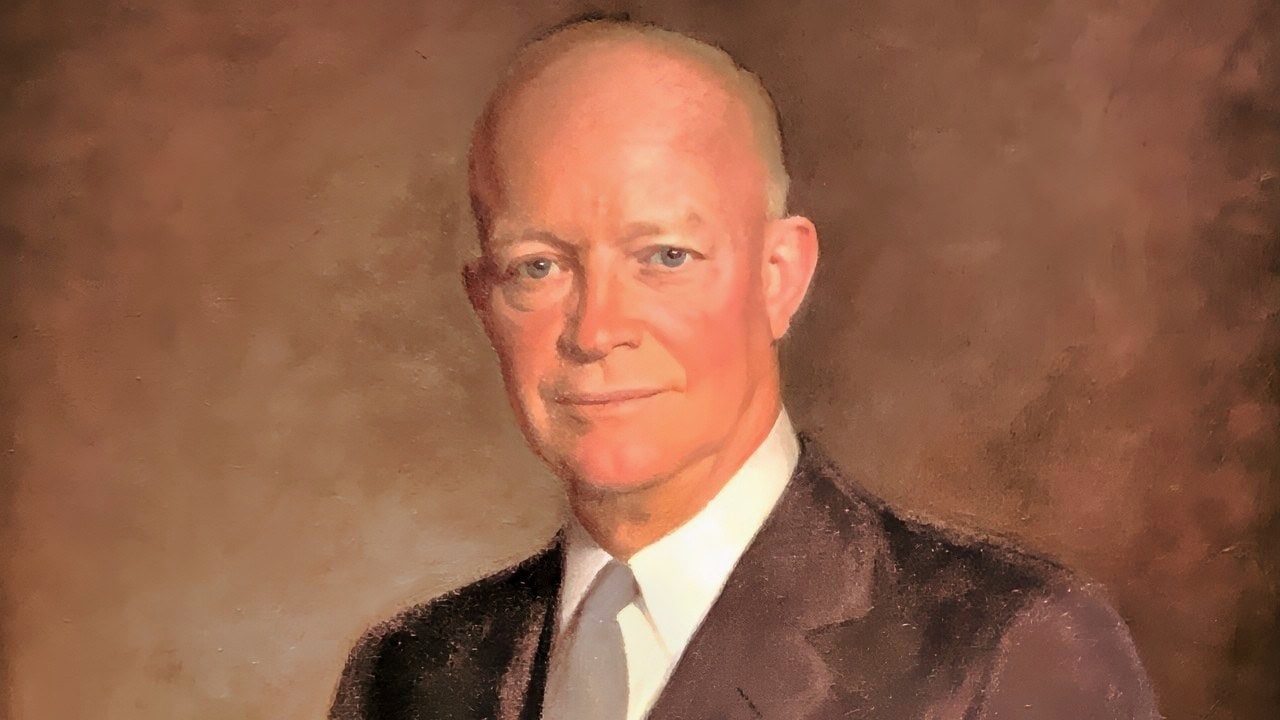
Dwight D. Eisenhower President. Image Credit: Creative Commons.
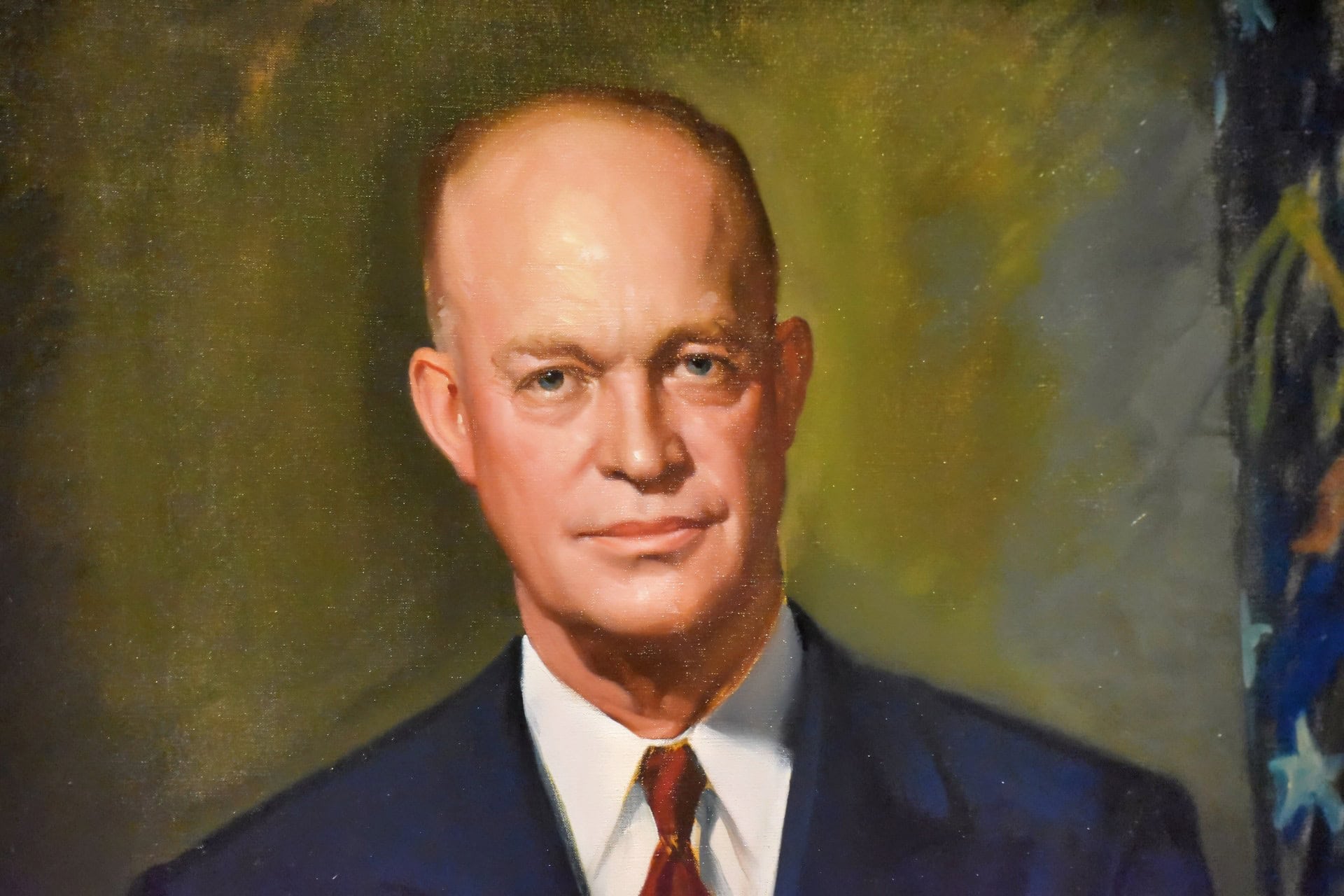
Dwight D. Eisenhower 19FortyFive.com Image. Taken on 1/23/2026 at the National Portrait Gallery in Washington, DC By Dr. Brent M. Eastwood.
After Japan had rejected surrender ultimatums from the US, Truman approved the dropping of the two available atomic bombs. Truman maintained the position that attacking Japan with atomic bombs saved many lives on both sides; a military estimate for the invasion of Japan submitted to Truman by Herbert Hoover indicated that an invasion could take at least a year and result in 500,000 to 1,000,000 Allied casualties, and up to 10 million Japanese.
The Marshall Plan And the Cold War
One of the most ambitious and effective economic plans ever devised was the Marshall Plan, or European Recovery Program, a U.S. initiative that provided over $13 billion in aid to Western Europe (1948-1951) to rebuild economies devastated by World War II.
Under the Truman administration, General George C. Marshall’s plan aimed to prevent poverty, political chaos, and the spread of communism by stimulating production, restoring infrastructure, and fostering stable democracies, making it a landmark foreign aid program that benefited both Europe and the U.S. markets.
Truman had named Marshall as his Secretary of State. Rather than just a free handout, this aid served as a strategic investment to help the countries become strong and stable partners to the United States while expanding markets for American goods.
The Cold War with the Soviets commenced, and Truman’s strategy in defeating the Soviets’ expansion involved the National Security Act of 1947. China fell to the Communists in 1949, the US recognized Israel, the Berlin Airlift were all situations that arose during his presidency.
The Korean War
On June 25, 1950, the North Korean army under Kim Il-sung invaded South Korea, starting the Korean War. The early battles were marked by defeats. Then an influx of US forces led by General Douglas MacArthur pushed the North Koreans all the way to the Chinese border.
China then sent nearly a million soldiers streaming across the border, forcing the war south and into a stalemate. After MacArthur overstepped his bounds, Truman made the controversial and unpopular decision to fire MacArthur, who returned to the United States to a hero’s welcome.
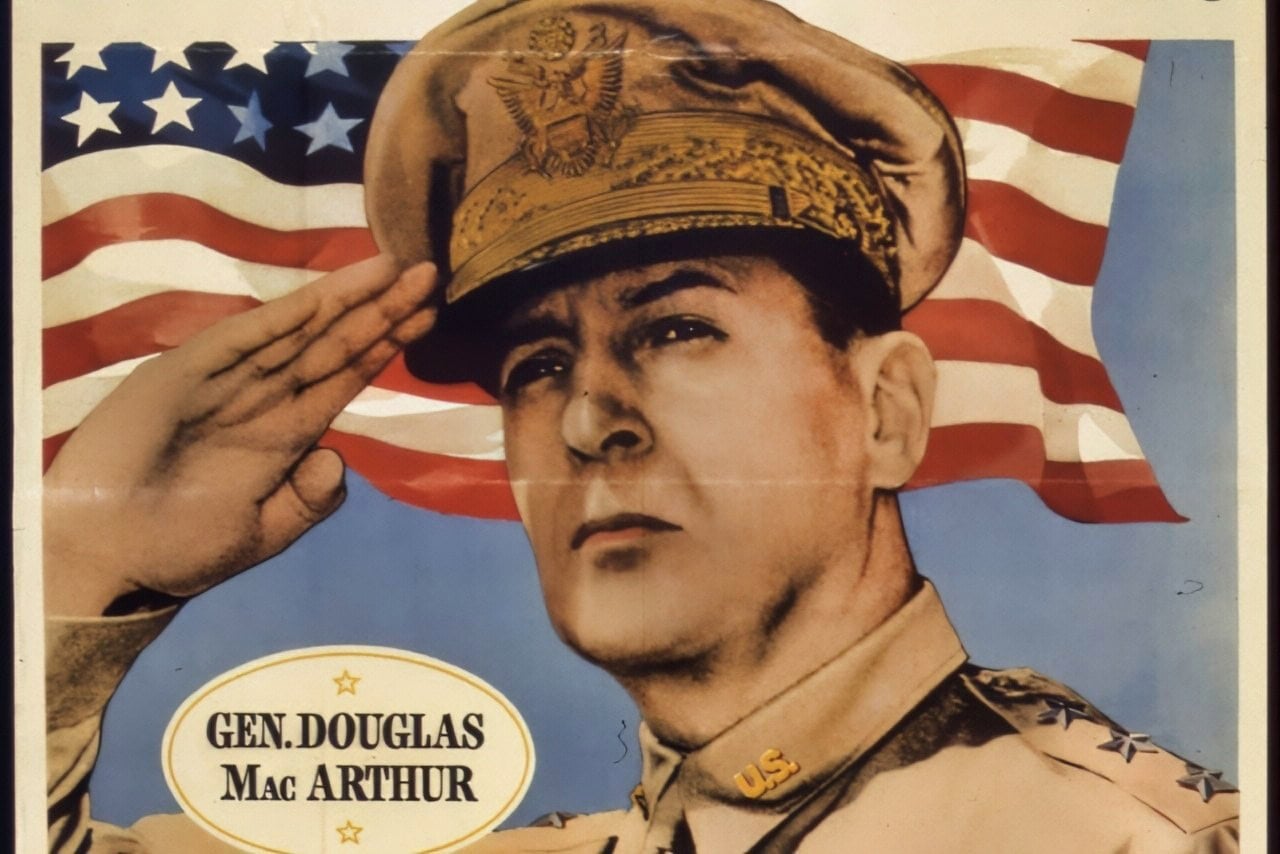
Douglas MacArthur. Image Credit: Creative Commons.
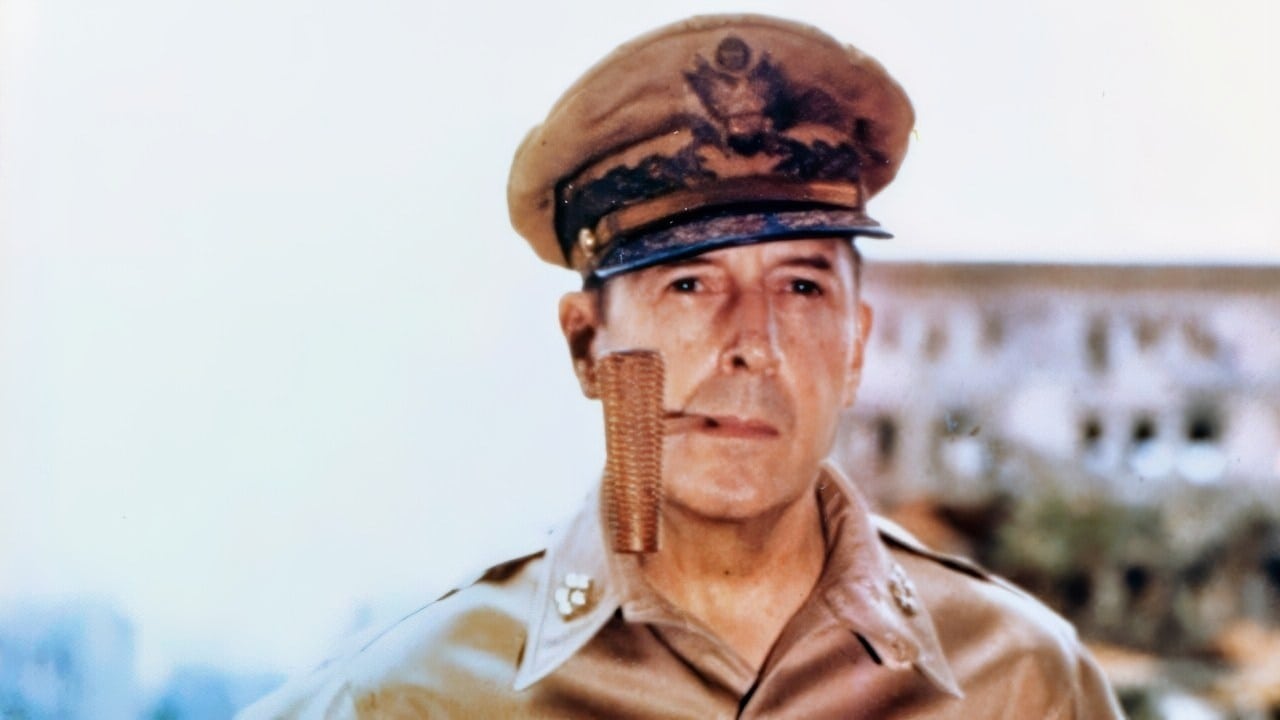
General Douglas MacArthur. Image Credit: Creative Commons.
In the 1952 Presidential Election, General Dwight D. Eisenhower defeated Adlai Stevenson.
He returned to Independence, Missouri, where he lived out his life quietly and wrote his memoirs.
Truman died on December 5, 1972, and was buried in Independence.
About the Author: Steve Balestrieri
Steve Balestrieri is a National Security Columnist. He served as a US Army Special Forces NCO and Warrant Officer. In addition to writing on defense, he covers the NFL for PatsFans.com and is a member of the Pro Football Writers of America (PFWA). His work was regularly featured in many military publications.