Synopsis: On January 7, 2026, U.S. forces, supported by the UK, seized the Russian-flagged tanker Marinera in the North Atlantic following a pursuit that began near Venezuela.
-Russia, which had deployed a submarine to monitor the vessel, condemned the act as “piracy” and a violation of maritime law.
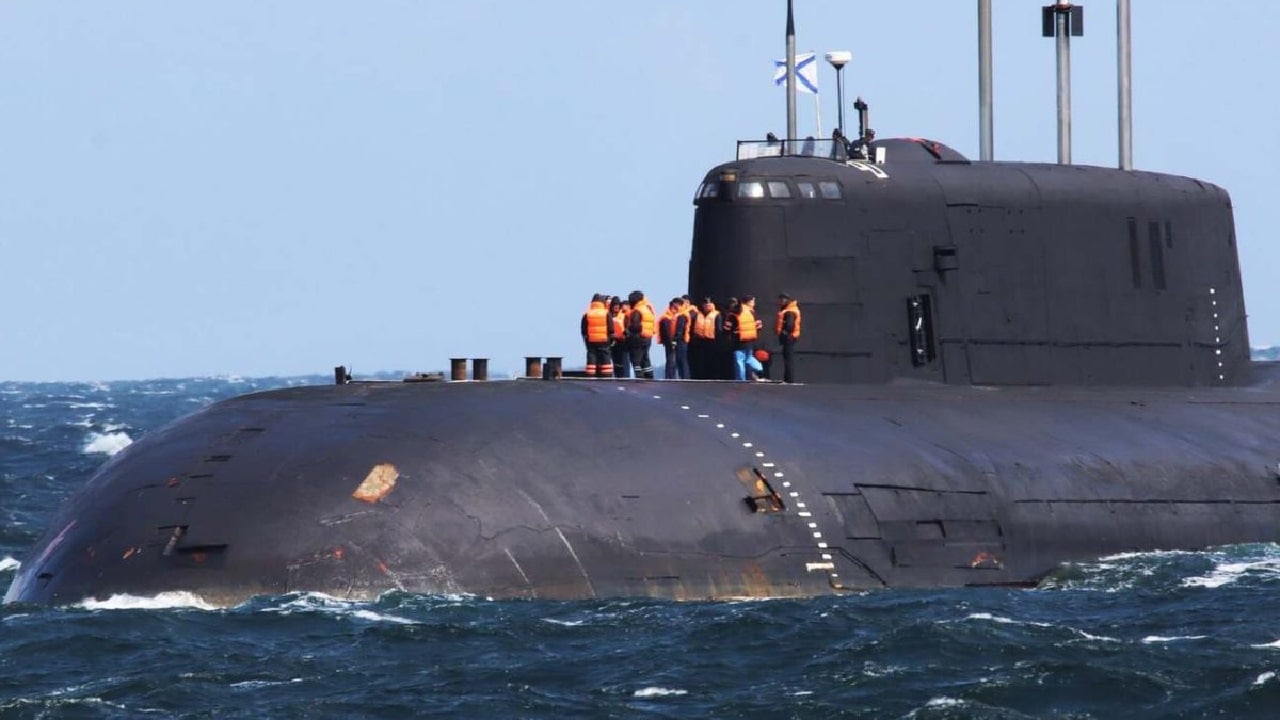
Russian nuclear submarine. Image Credit: Creative Commons.
-The seizure is part of an intensified U.S. blockade on Venezuelan oil following President Maduro’s arrest.
-Tensions de-escalated slightly on January 9 when President Trump agreed to release two detained Russian crew members, though Moscow continues to demand the return of the vessel.
Russia Deploys Submarine as US Seizes Tanker Marinera After Venezuela Chase
On January 7, 2026, the United States seized the Russian-flagged oil tanker Marinera in the North Atlantic after a weeks-long pursuit that began off the coast of Venezuela in what was a significant escalation of sanctions enforcement following the capture and arrest of Venezuelan President Nicolas Maduro.
The vessel, which previously operated as Bella 1, had been sanctioned by the U.S. since June 2024 and was accused by American authorities of transporting oil linked to Venezuela, Iran, and associated entities under U.S. sanctions.
Russia has since argued that boarding the vessel violated international maritime law, citing the tanker’s re-registration under the Russian flag while at sea and the detention of Russian crew members.
Under international maritime law, every merchant vessel is mandated to be registered under a sovereign nation’s flag, with the flag determining the legal jurisdiction and regulatory oversight that applies to the ship at sea. It is not uncommon for shipowners to de-register a tanker from one flag and re-register it under another – often referred to as using a “flag of convenience” – when the vessel makes a port call, allowing the ships to avoid stricture rules or sanctions enforcement.
The Marinera episode is particularly interesting: Russia deployed naval assets to monitor the vessel, the United Kingdom provided operational support to U.S. forces, and Washington ultimately conducted near-simultaneous seizures of multiple tankers over a period of days.
From Venezuela to the North Atlantic
The tanker at the center of the dispute was first encountered by U.S. maritime enforcement in mid-December 2025, after the Trump administration intensified actions under a blockade on sanctions on Venezuelan oil exports announced on December 16.
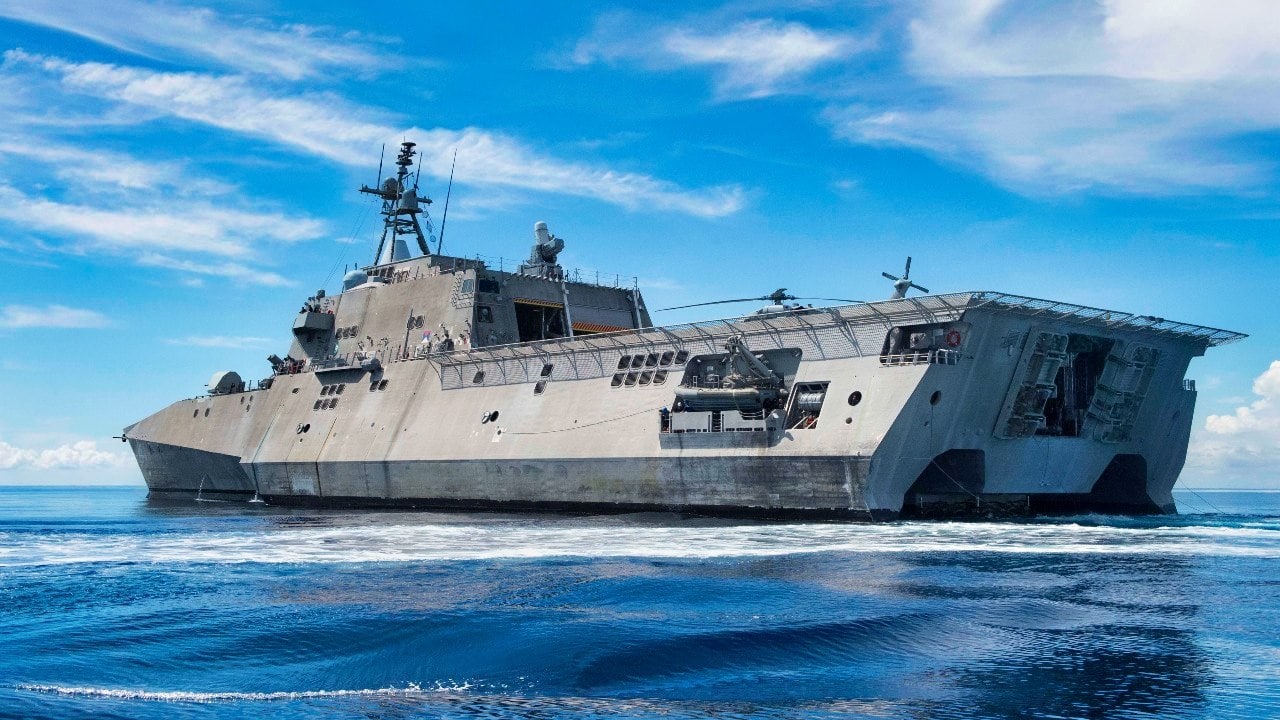
170623-N-PD309-122 BOHOL SEA (June 23, 2017) Littoral combat ship USS Coronado (LCS 4) transits the Bohol Sea during an exercise with the Philippine Navy for Maritime Training Activity (MTA) Sama Sama 2017. MTA Sama Sama is a bilateral maritime exercise between U.S. and Philippine naval forces and is designed to strengthen cooperation and interoperability between the nations’ armed forces. (U.S. Navy photo by Mass Communication Specialist 3rd Class Deven Leigh Ellis/Released)
U.S. officials said the vessel, then operating as Bella 1, resisted an attempted boarding by the U.S. Coast Guard in the Caribbean, altered course into the Atlantic to evade interception, subsequently reflagged and renamed Marinera, and was later seized in the North Atlantic by U.S. forces in early January.
As the tanker moved north, U.S. surveillance assets tracked it across the Atlantic. NBC News reported the presence of U.S. Navy P-8A Poseidon maritime patrol aircraft, U.S. Air Force refueling and transport aircraft, and allied surveillance support near the ship’s last known positions west of Scotland.
The United Kingdom confirmed that RAF surveillance aircraft and the Royal Fleet Auxiliary vessel RFA Tideforce supported the operation at Washington’s request.
On January 7, U.S. European Command confirmed the Coast Guard seized the Marinera in international waters pursuant to a warrant issued by a U.S. federal court, citing violations of U.S. sanctions.
How Russia Responded
Before the seizure, Russia escalated the situation by deploying naval assets, including a submarine, to accompany or monitor the tanker as it transited the North Atlantic, according to multiple media reports.
Russian officials publicly condemned the U.S. boarding and described it as an illegal use of force against a civilian vessel. Moscow also rejected American claims that the tanker was stateless, arguing that ships registered under a national flag are protected by international law governing freedom of navigation.
Russian lawmakers went further, too, describing the seizure as piracy and warning that the actions risked generating a larger international crisis. Speaking to Tass, chairman of the State Duma Committee on International Affairs Leonid Slutsky said that the incident was “unquestionably a violation of maritime law and UN conventions” and that it constituted “outright piracy on the high seas.”
The Marinera seizure coincided with other U.S. actions targeting sanctioned shipping. On the same day, U.S. forces also seized the tanker M/T Sophia in the Caribbean, which U.S. Southern Command described as a stateless vessel engaged in illicit activity. Reports have since suggested that the Sophia was carrying around 1.8 million barrels of Venezuelan crude worth around $108 million.
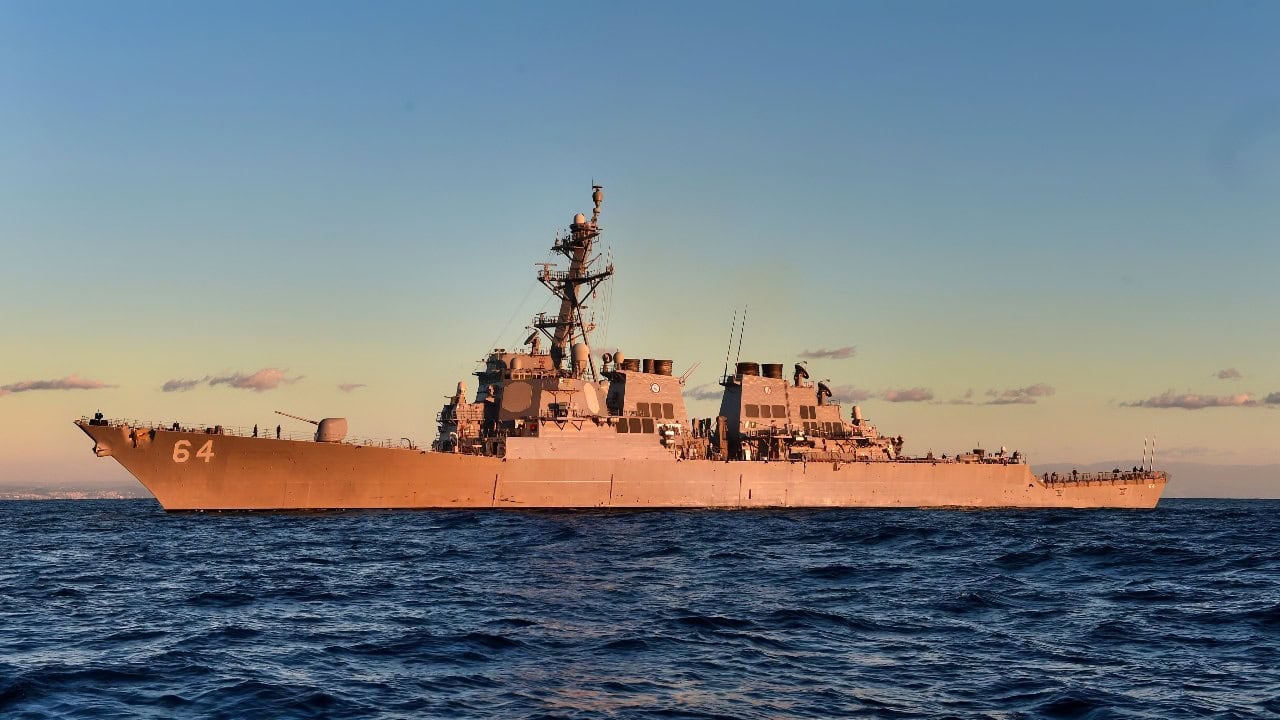
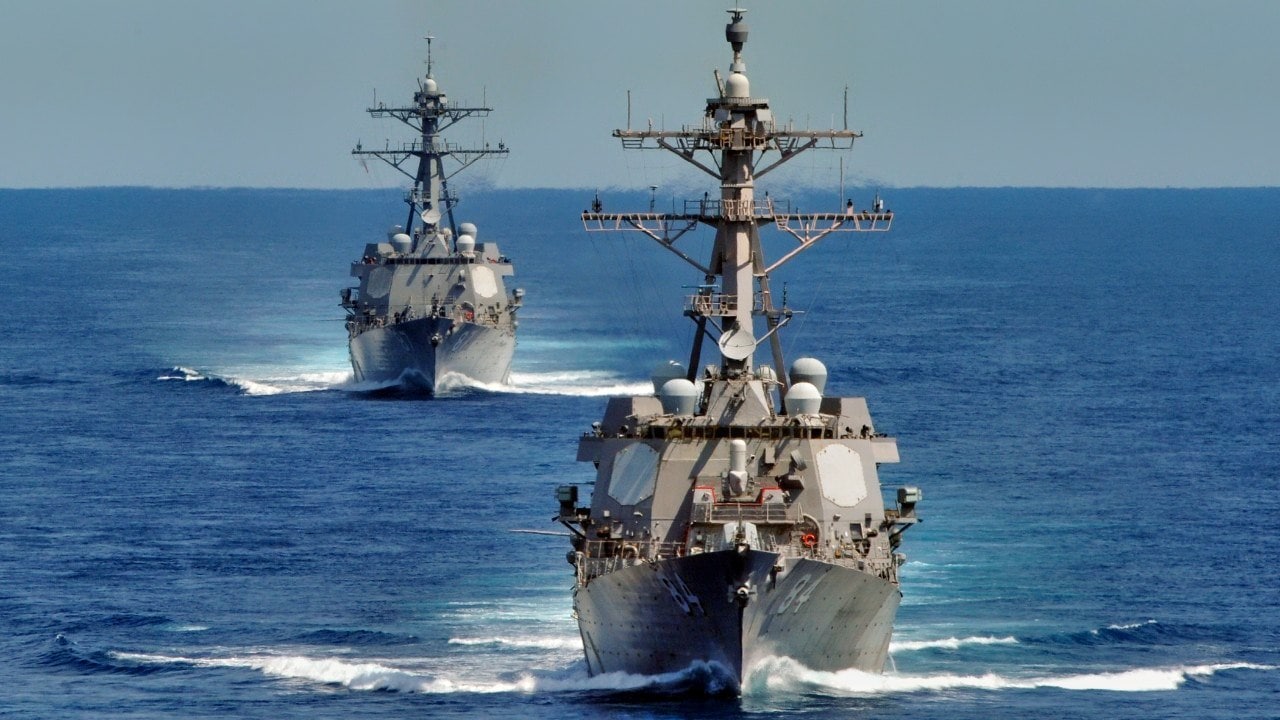
(Dec. 6, 2015). USS Carney (DDG 64) awaits the return of its small boat crew during a passenger transfer Dec. 6, 2015. Carney, an Arleigh Burke-class guided missile destroyer, forward deployed to Rota, Spain, is conducting a routine patrol in the U. S. 6th Fleet area of operations in support of U.S. national security interests in Europe. (U.S. Navy photo by Mass Communication Specialist 1st Class Theron J. Godbold/Released)
British officials described their support for the Marinera operation as part of an effort to counter “shadow fleets” – aging tankers that repeatedly change names, flags, and registries to continue dealing and transporting sanctioned oil. UK Defence Minister John Healey said that these vessels have been used to move millions of barrels of oil on behalf of sanctioned states, with proceeds often linked to terrorism financing and regional instability.
“As we know, the proceeds from which are used to finance terrorism and instability across the world. The Iranian regime continues to export violence across the region through its proxies and partners, including Hamas, Hezbollah, the Houthis, and Iraqi militias,” Healey said in a statement.
Tensions eased somewhat on January 9 when Russia announced that the U.S. had agreed to release two Russian crew members detained during the operation, following a direct appeal to President Donald Trump.
“In response to our appeal, US President Donald Trump decided to release two Russian citizens from among the crew of the tanker Marinera, who had earlier been detained by the American side during an operation in the North Atlantic,” Russian Foreign Ministry spokeswoman Maria Zakharova said in a statement.
However, Moscow continues to demand the release of the vessel itself.
About the Author:
Jack Buckby is a British researcher and analyst specialising in defence and national security, based in New York. His work focuses on military capability, procurement, and strategic competition, producing and editing analysis for policy and defence audiences. He brings extensive editorial experience, with a career output spanning over 1,000 articles at 19FortyFive and National Security Journal, and has previously authored books and papers on extremism and deradicalisation.