
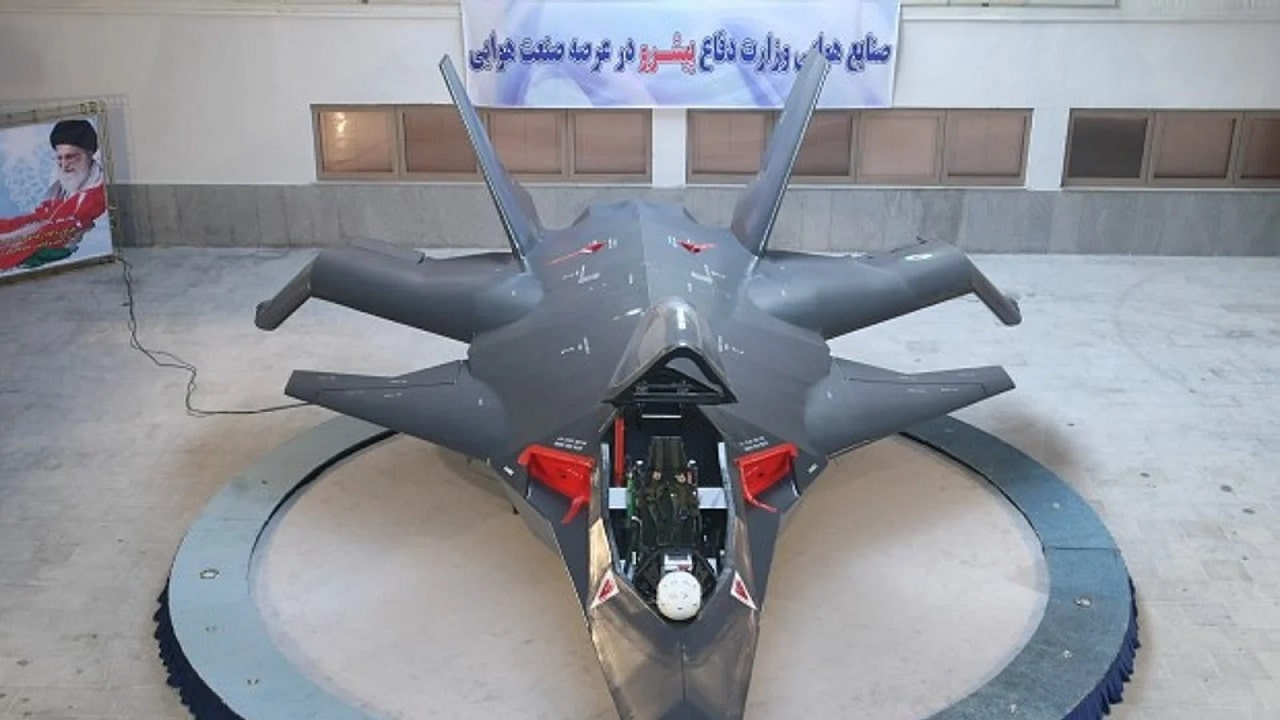
Summary and Key Points: Iran unveiled the Qaher-313 in February 2013 as a domestically produced “stealth fighter,” portraying it as a major leap in self-reliant defense technology.
-Outside Iran, analysts quickly questioned the jet’s plausibility, citing mismatched proportions, suspect cockpit details, and a lack of verifiable flight-test evidence.
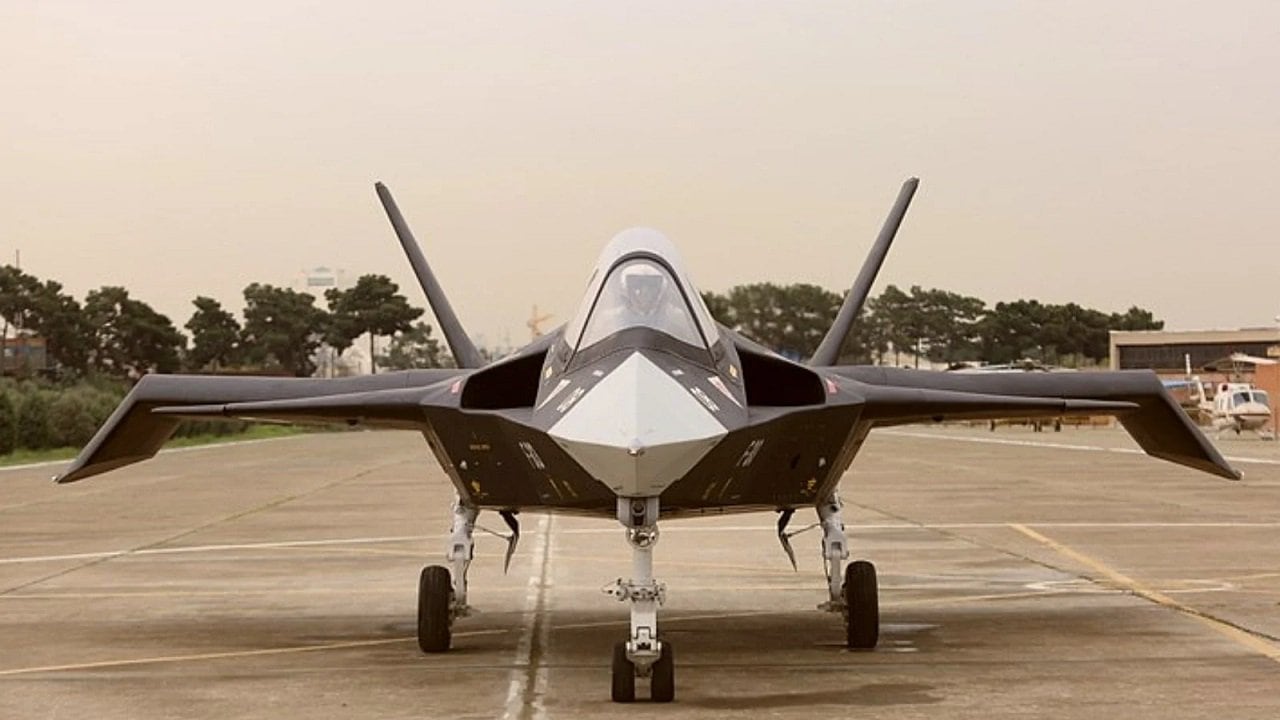
Qaher-313. Image Credit: Creative Commons.
-Over the following decade, the program never produced a confirmed manned aircraft.
-Instead, Iran appears to have repurposed the concept into smaller, unmanned variants—most recently showcased as Qaher-derived jet drones associated with drone-carrier experiments.
-The result is a revealing case of ambitious messaging outpacing industrial reality.
Iran’s “Stealth Fighter” Wasn’t What It Seemed: The Qaher-313 Story
When Iran unveiled what it called its first domestically produced “stealth fighter” on February 1, 2013, state media described the moment as a major breakthrough for the nation’s defense technology. The Qaher-313, also known as the F-313, was presented by then-President Mahmoud Ahmadinejad during anniversary celebrations of the 1979 Islamic Revolution.
The platform was said to be a low-observable combat aircraft with advanced features designed and built entirely in Iran.
According to Tehran, it was a proud symbol of the country’s self-reliance after decades of international sanctions and diplomatic isolation—but it didn’t pan out quite as planned.
Outside Iran, the news met immediate skepticism. Aerospace professionals and military observers quickly pointed out that the Qaher’s design and its lack of credible flight data suggested Tehran was presenting a mock-up, not a real, working fighter. In the years since, the story of the Qaher has gotten even more interesting.
In the process, it has shown Iran’s defense sector is nowhere near as capable as its leaders hoped it would be by now.
What Iran Claimed To Have Built
When the Qaher-313 debuted, Iranian officials claimed it was a modern, stealth-optimized multirole fighter capable of flying at low altitudes while delivering a very small radar cross section. They also claimed it was made from indigenous materials, relied on domestically developed avionics, and could carry a range of weapons designed for air-to-air and strike missions.
The implication of the announcement was this: Iran was closing technology gaps with Western and Asian aerospace giants. At least, that’s what Tehran hoped the message would be.
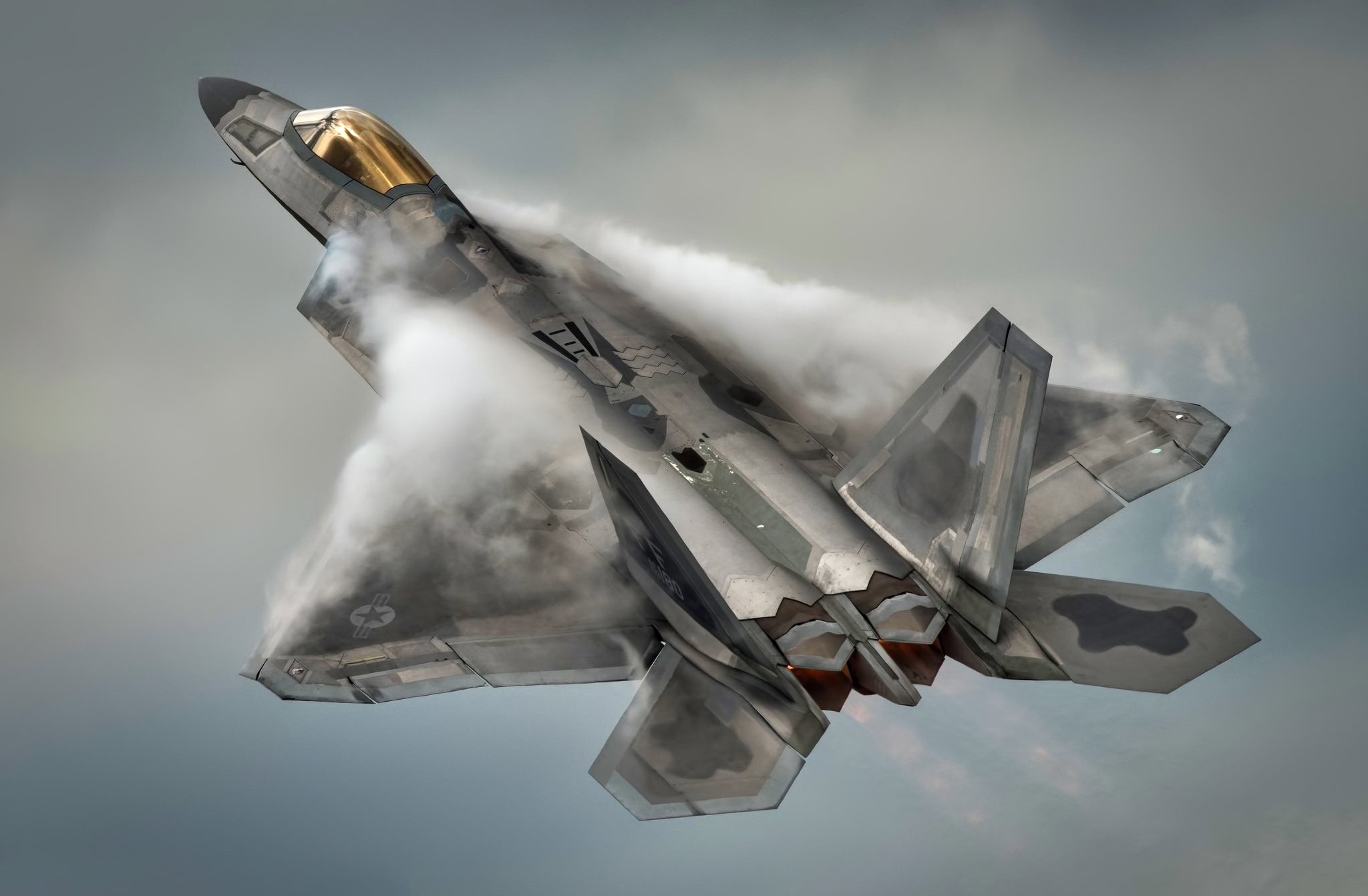
F-22 Raptor Fighter Jet US Air Force
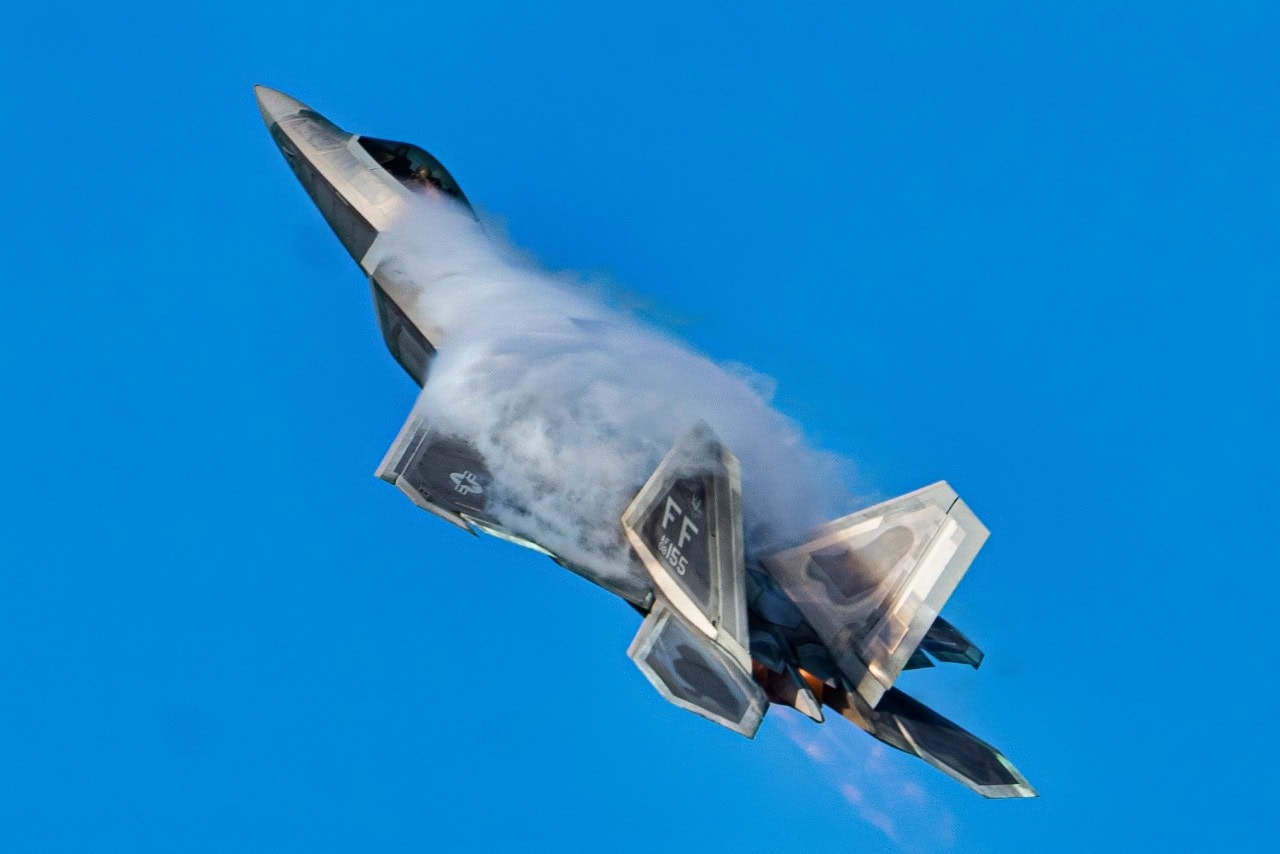
U.S. Air Force Capt. Samuel “RaZZ” Larson, F-22 Raptor Demonstration Team commander and pilot, performs an aerial maneuver during the team’s certification flight at Joint Base Langley-Eustis, Virginia, Dec. 9, 2022. In order to perform at aerial shows around the world, the F-22 Demo Team has to be certified by Gen. Mark Kelly, commander of Air Combat Command, to ensure safety and performance standards are adhered to. (U.S. Air Force photo by Staff Sgt. Marcus M. Bullock)
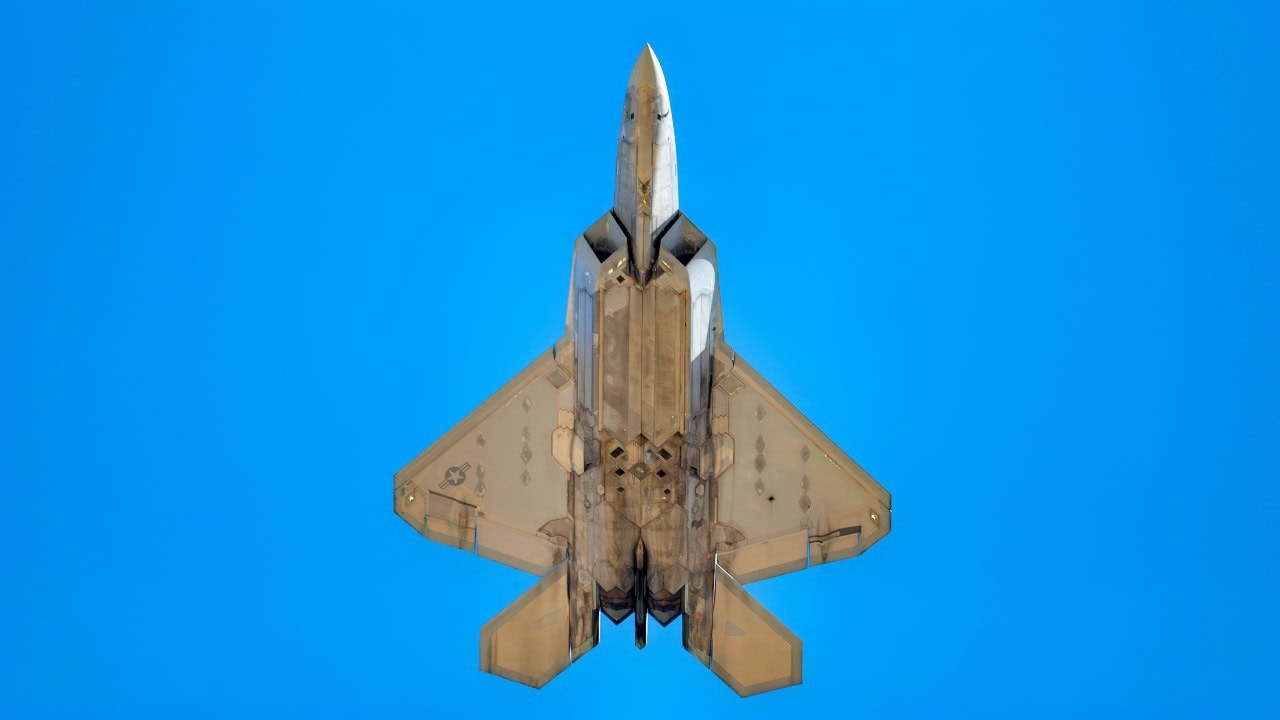
A U.S. Air Force F-22 Raptor performs an aerial demonstration at Davis-Mothan Air Force Base, Ariz. for the 2025 Heritage Flight Training and Certification Course, March 2, 2025. The Heritage Flight Training and Certification Course is an annual event where military and civilian pilots train together to fly in formations to showcase both modern and vintage military aircraft. These flights are often performed at airshows across the country to honor U.S. military aviation history and service members. (U.S. Air Force photo by Staff Sgt. Lauren Cobin)
Domestically, the messaging worked. Many Iranians believed the government in Tehran was effectively resisting foreign pressure and becoming more militarily independent. But the endeavor was little more than just messaging. No detailed performance data was given.
There were no verified flight-test reports, no sensor performance numbers, and no independent technical assessments of the aircraft. All those things are considered standard milestones for programs like this. They never came to fruition.
How the World Responded
Within hours of the reveal, analysts and journalists from all over the world started pointing out anomalies.
Photographs of the aircraft’s cockpit, for example, suggested its dimensions were implausibly small for a pilot, and the instrumentation looked more like that found in civilian aircraft. The canopy was also described by some specialists as being made of regular plastic, and the air intakes looked too small to feed a jet engine. The overall appearance was also compared to a scale model rather than a fully functional fighter, too. It was abundantly clear this was not a real aircraft.
Video footage released by Iran also purportedly showed the aircraft in flight, but it was widely interpreted outside of Iran as video footage of a radio-controlled model, not a full-scale prototype.
The lack of any independently verifiable test flights fueled criticism that the Qaher was little more than propaganda. Israeli aeronautics specialist Tal Inbar told Maariv at the time that “it’s not a plane, because that’s not how a real plane looks.”
“Iran doesn’t have the ability to build planes. Plain and simple,” he said.
From Manned to Unmanned Models
The aircraft was unveiled in 2013, but some 13 years later it still does not exist. After the unveiling, public updates on the Qaher program were sporadic for years. Iranian officials did claim in 2017 that the aircraft was ready for flight testing, and some video footage appeared to show a prototype rolling on a runway. Since then, however, there has been no widely accepted evidence that a full-scale, manned flight ever occurred.
In the 2020s, Iran began adapting the Qaher design into unmanned aerial vehicles, a platform with which the country has had more success. At the 12th Iran International Aerospace Exhibition in late 2024, officials announced that a Qaher-derived, unmanned version had completed initial flight tests.
By 2025, imagery and reports indicated that scaled-down, unmanned versions of the Qaher design were being tested for use as drones rather than for piloted fighters. Some of the aircraft were shown operating from the Shahid Bahman Bagheri, a vessel Iran has repurposed as a floating base for drones.
Where Is It Now?
The Qaher-313 “stealth fighter” has never flown as a manned combat aircraft and remains unverified. Iran has instead converted the concept into unmanned variants, unveiled in early 2025 as the JAS-313 jet drones. Those drones are real aircraft and are being tested, but they are a far cry from the operational stealth fighters Iran promised more than a decade ago.
Further, since the announcement, even the JAS-313 drone has failed to enter full production, and there are no confirmed reports of it being used in combat.
About the Author: Jack Buckby
Jack Buckby is a British researcher and analyst specialising in defence and national security, based in New York. His work focuses on military capability, procurement, and strategic competition, producing and editing analysis for policy and defence audiences. He brings extensive editorial experience, with a career output spanning over 1,000 articles at 19FortyFive and National Security Journal, and has previously authored books and papers on extremism and deradicalisation.