
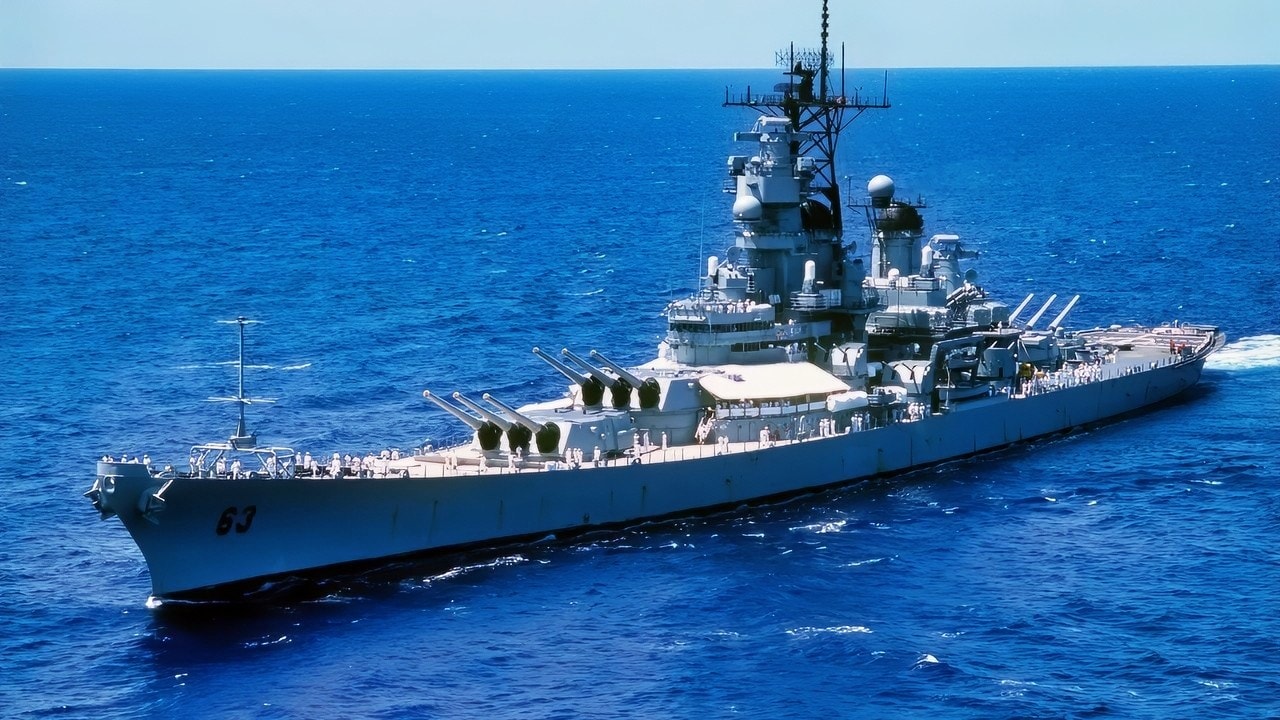
Synopsis: President Trump’s proposed “Trump-class” guided-missile battleship, BBG(X), is designed to sound like a revival of American sea power—but the concept is strategically mismatched to modern naval war.
-The platform, as described, isn’t a traditional battleship at all: it’s a missile-heavy surface combatant with aspirational add-ons like railguns and lasers.
-That creates a familiar problem—larger hull, higher cost, higher-value target—without solving survivability in an era defined by submarines, ISR saturation, and long-range missile salvos.
-Worse, shipyards and skilled labor are already stretched across submarines, destroyers, and logistics ships. The result looks more like political theater than a viable procurement path.
The Trump-Class Battleship Problem: A Bigger Target, Not a Better Navy
President Trump announced, in a December 2025 press conference, the new Trump-class battleship, or BBG(X).
The program is a headline-grabber, indeed—the first US battleship proposal in several decades, which explicitly references reviving American naval power.
Yet while the announcement gestures at real strategic anxieties, the Trump-class concept is incoherent mainly historically regressive, and operationally misaligned with modern naval warfare.
Said another way: the idea is nonsense.
Historical Context
The US retired its last Iowa-class battleships in 1992, platforms that were half a century old and well past their prime.
The battleship had declined after World War II because aircraft carriers had eclipsed it in terms of range and flexibility, while the emergence of missile technology made large surface ships increasingly vulnerable.
The Iowa-class endured, being revived multiple times from decommissioning, for the sake of shore bombardment and symbolic presence. But even that role faded as precision strike replaced massed gunfire.
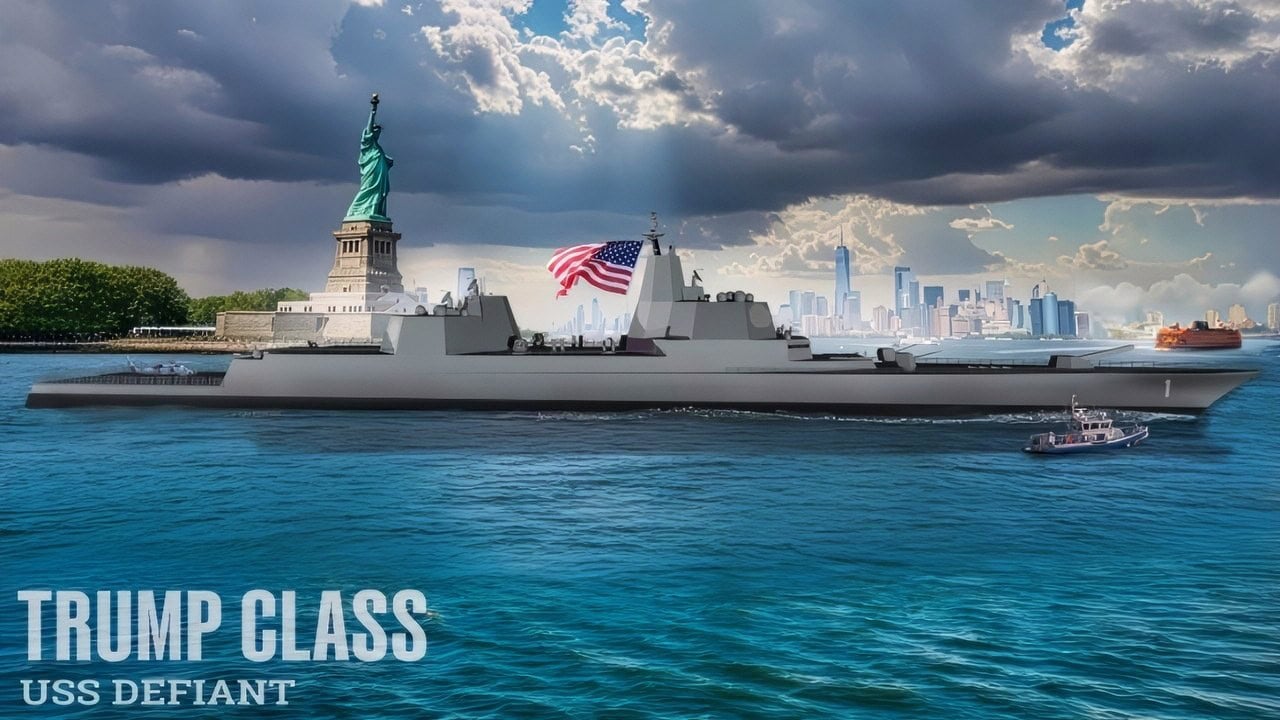
Trump-Class Battleship. Image Credit: Creative Commons/White House.
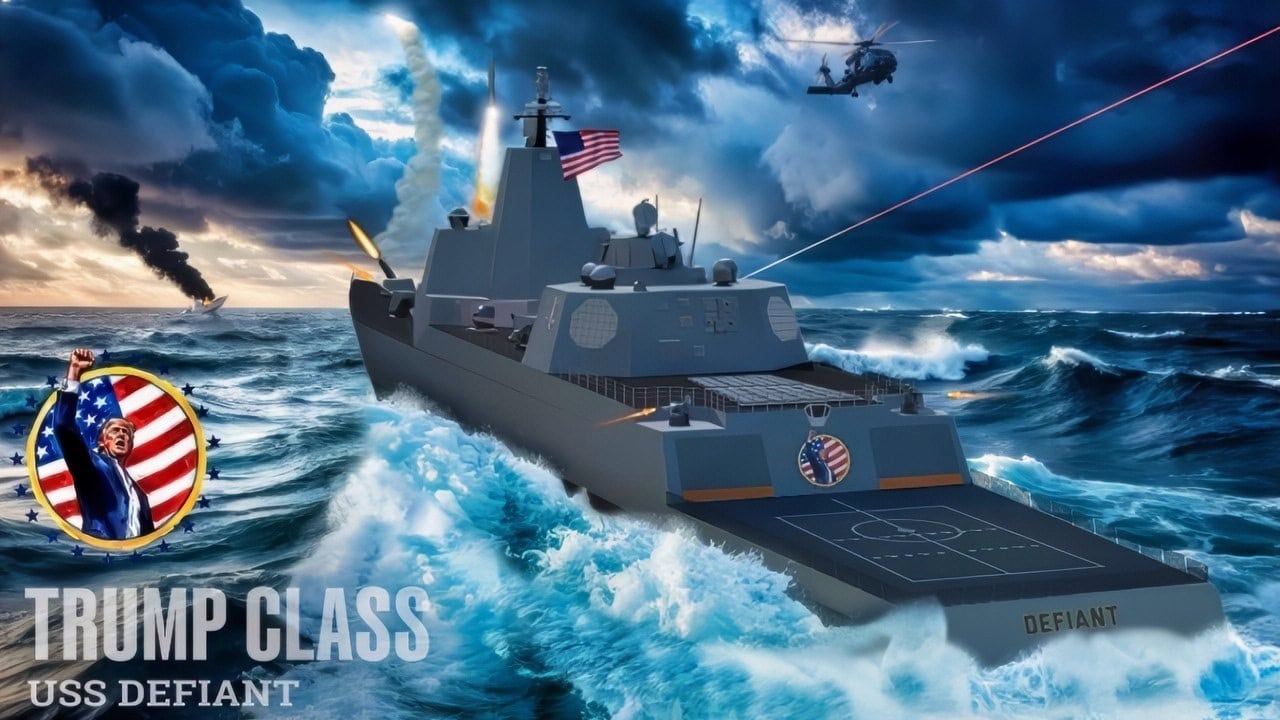
Trump-Class Battleship. Image Credit: Creative Commons/White House Photo.
And since Iowa’s retirement, over thirty years ago, no serious naval planner has advocated for a new battleship.
The Battleship Plan
Officially designated the BBG(X), the Trump-class is intended as a “guided-missile battleship,” outfitted with a variety of weaponry, including nuclear-capable cruise missiles (SLCM-N), hypersonic CPS missiles, a large VLS battery, a railgun, lasers, and conventional guns.
The BBG(X) would also feature aviation facilities for VTOL aircraft and drones.
And generally, the BBG(X) would not be a battleship in the traditional sense—there would be no heavy armor or large-caliber main battery serving as a primary weapon.
So the idea is not a pure throwback.
Traditional battleships were defined by their armor, their big guns, their ability to engage in, and survive, direct surface combat.
The proposed Trump-class, meanwhile, is missile-centric, resembling a battlecruiser or oversized destroyer. The closest analogs are the Russian Kirov-class, or a scaled-up DDG(X). Using the battleship designation appears to be about rhetoric and nostalgia, more political than doctrinal.
Fundamental Flaws
But the concept is operationally flawed. Missile-centric surface ships already exist (cruisers, destroyers).
Adding more missiles to a larger hull does not solve survivability problems and only increases the cost to build it, while also increasing the target’s value from adversary’s perspective.
Large surface ships are mismatched for modern naval combat, suffering from high visibility and high vulnerability to submarines, long-range missiles, and hypersonic weapons. Essentially, large surface vessels are sitting ducks. And the railgun and high-energy lasers, which surface vessels have been proposed to deploy, remain developmental, intensively power-hungry, and consistently unreliable at sea.
Addressing China
Trump’s proposal does reflect real concerns, specifically, China’s massive shipbuilding spree, an overt attempt at naval assertion. China has already achieved numerical superiority in surface combatants.
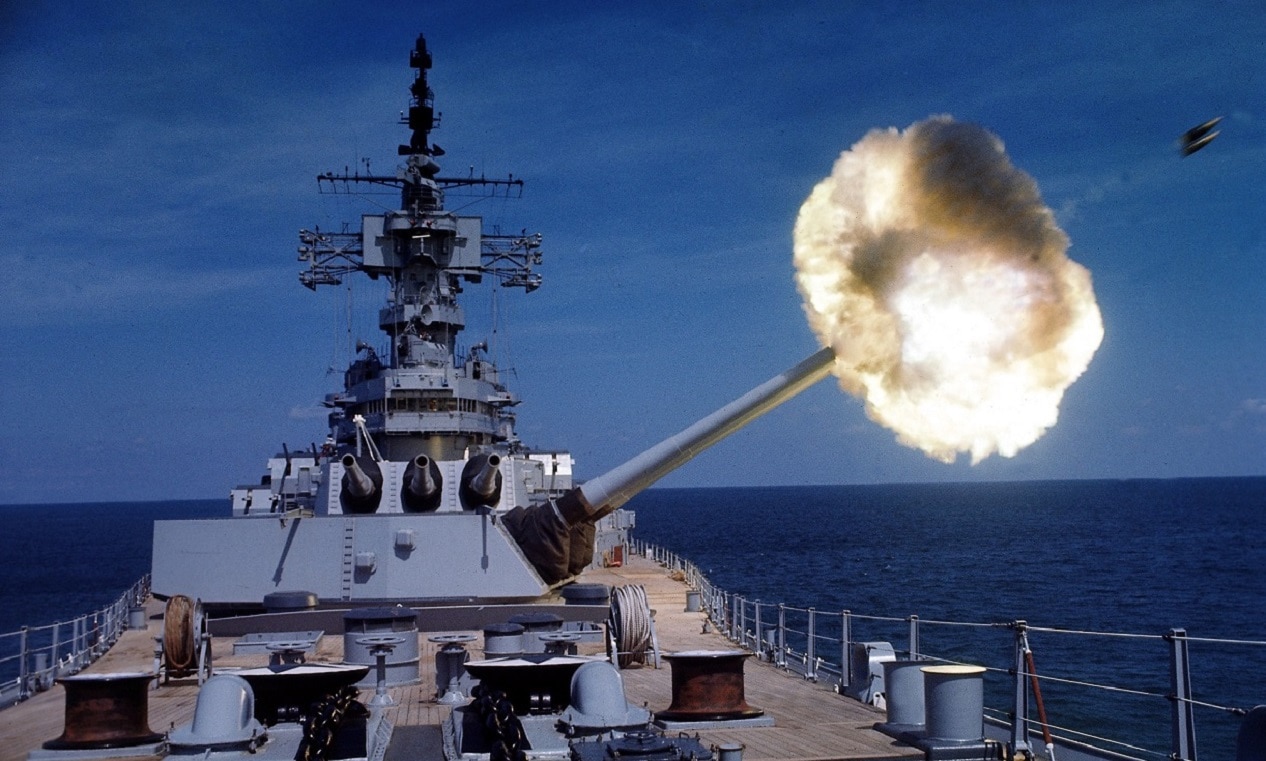
USS New Jersey Iowa-Class Battleship. Image Credit: US Navy.
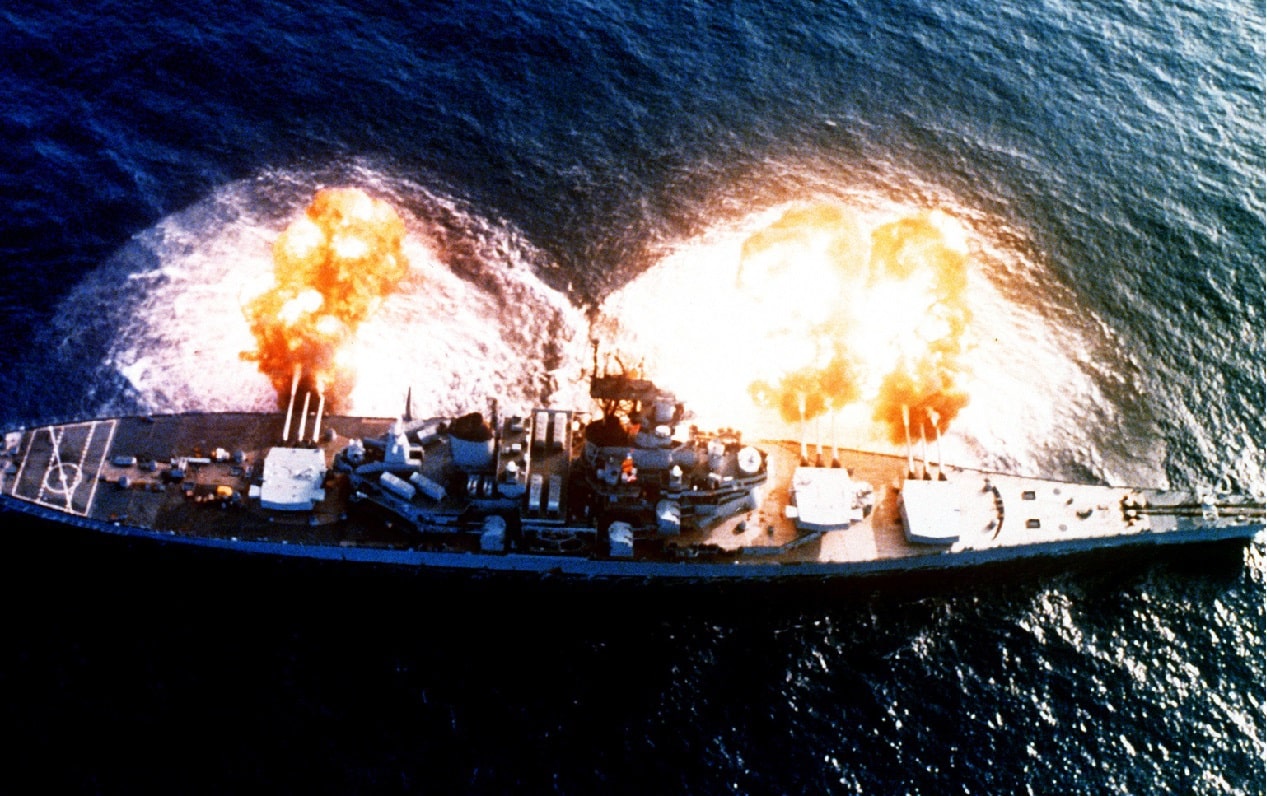
An overhead view of the battleship USS NEW JERSEY (BB-62) firing a full broadside to starboard during a main battery firing exercise.
But quantity isn’t everything; the US still retains a qualitative advantage. And US naval strength rests not on surface combatants, but on aircraft carriers, submarines, and networked warfare.
A new battleship would not address the real threats to US naval superiority, like China’s increasingly capable A2/AD network, or ISR saturation, or missile salvos. Basically, the Trump-class serves to address a political narrative problem (China’s naval rise) rather than a strategic one (operating against China’s A2/AD network).
Industrial Realities for the Trump-Class Battleship
Aside from the strategic irrelevance, the industrial reality is that US shipyards are already strained. Submarines are backlogged. Destroyers are backlogged. Skilled welders and engineers are scarce.
The World War II-style industrial mobilization that yielded so many battleships in such a short span no longer exists. Building a dozen or more new surface combatants would disrupt higher-priority programs, likely crowding out submarines and logistics ships with higher value.
But the Trump-class doesn’t sound like a serious proposal, and is unlikely ever to enter production. For one, the naming itself suggests a lack of seriousness.
US battleships are historically named after states, whereas presidents’ names are reserved for carriers. Naming a class after a living president would be unprecedented, almost silly enough to suggest this is not a real procurement effort.
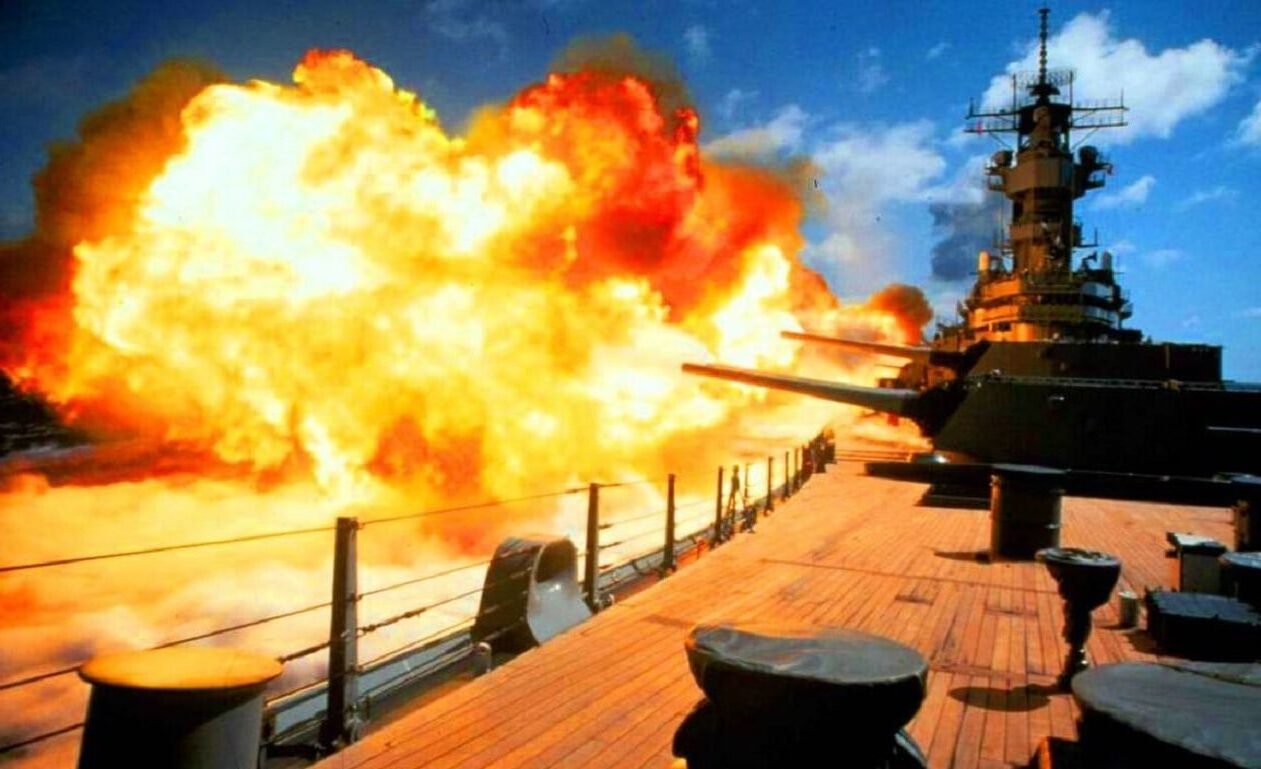
Iowa-class Battleships. Image: Creative Commons.
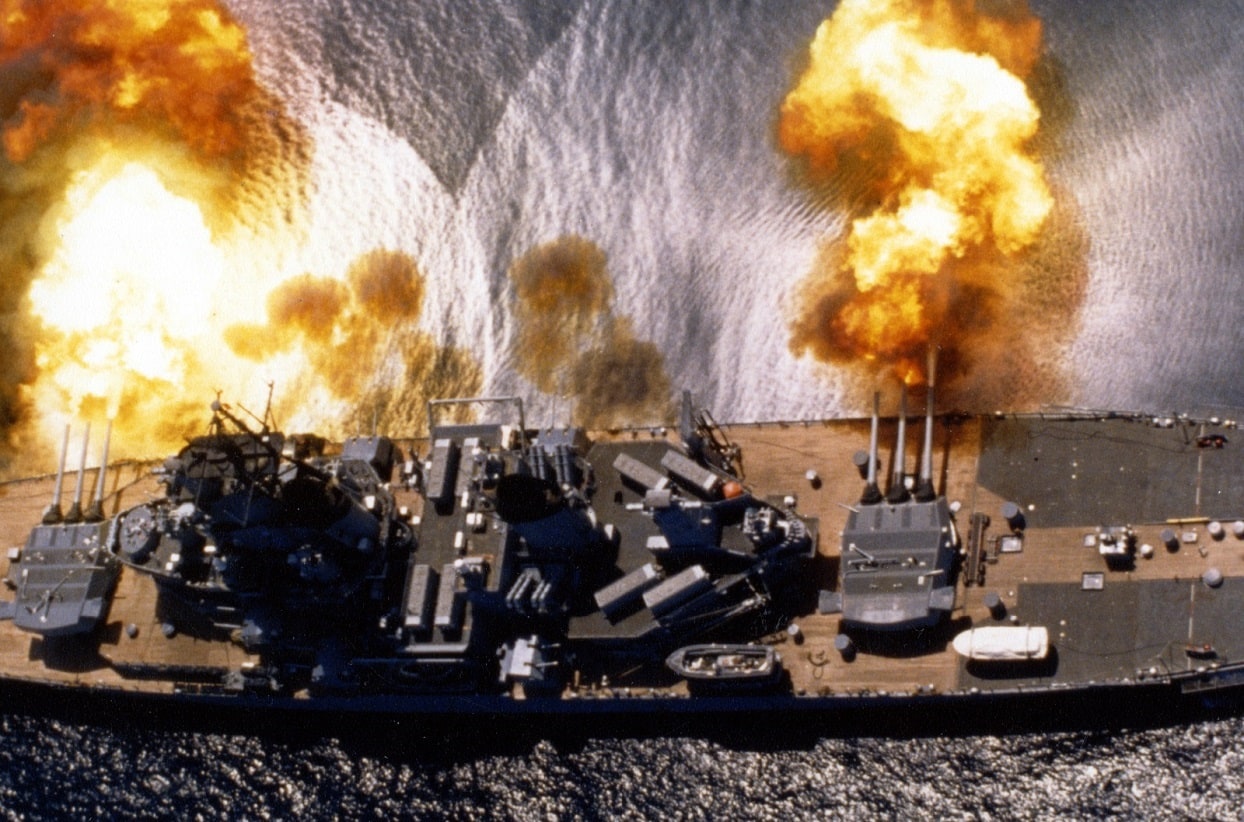
USS Iowa (BB-61) Fires a full broadside of nine 16/50 and six 5/38 guns during a target exercise near Vieques Island, Puerto Rico, 1 July 1984. Photographed by PHAN J. Alan Elliott. Note concussion effects on the water surface, and 16-inch gun barrels in varying degrees of recoil. Official U.S. Navy Photograph, from the the Department of Defense Still Media Collection.
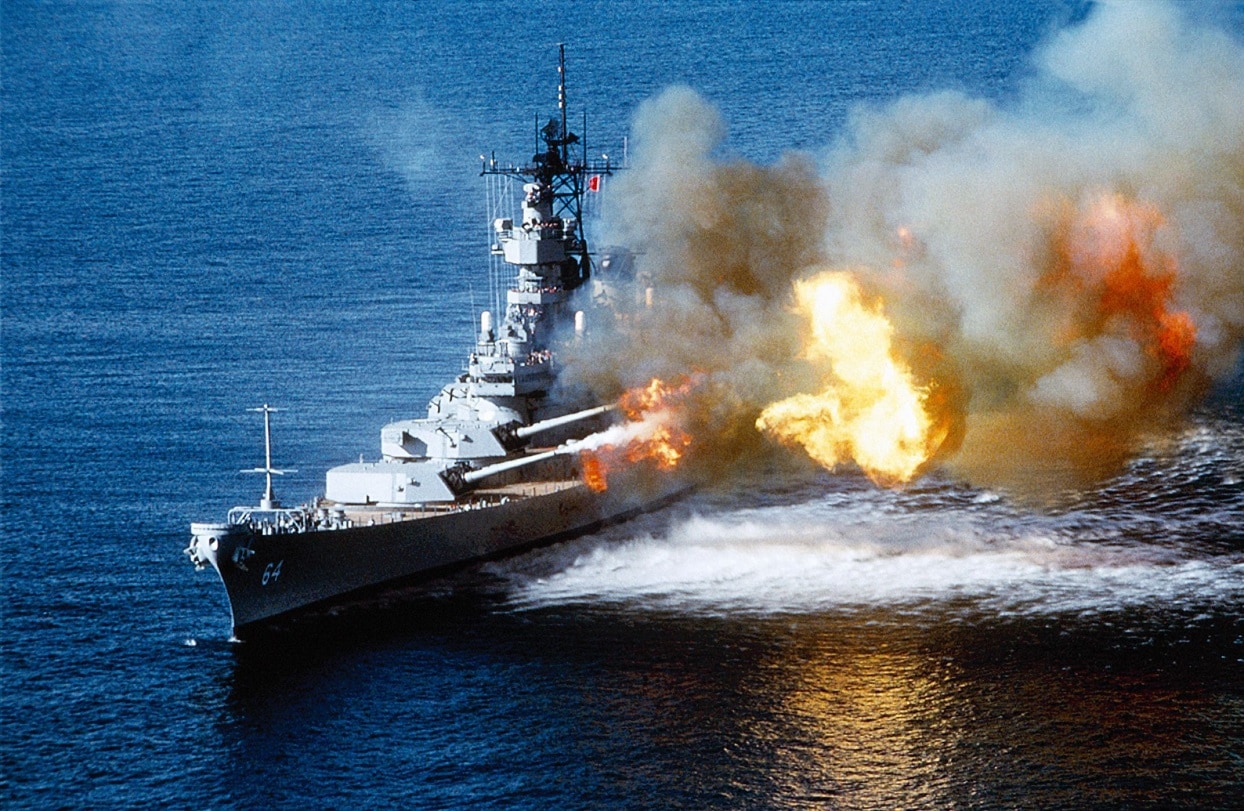
Image: Creative Commons.
Regardless, Congressional skepticism is likely to be overwhelming. Cost overruns are almost guaranteed.
So expect the concept to be quietly shelved or folded into some other program. The probability that this Trump-class proposal is ever actually commissioned is exceptionally low—borderline zero.
The Trump-class is a nostalgia play, deployed for rhetorical effect. The proposal reflects a strategic misunderstanding about how modern naval warfare works, a throwback to a time that no longer exists.
About the Author: Harrison Kass
Harrison Kass is an attorney and journalist covering national security, technology, and politics. Previously, he was a political staffer and candidate, and a US Air Force pilot selectee. He holds a JD from the University of Oregon and a master’s in global journalism and international relations from NYU.