

BBG(X) Trump-Class Battleship: The “One-Or-Two-Ship” Trap The U.S. Navy Can’t Afford
In a press conference on December 22, 2025, President Trump announced that a United States Navy guided-missile warship would be called the Trump-class battleship.
The class is also known as BBG(X) in some Navy documents and is intended to initially comprise the lead ship, USS Defiant (BBG-1), and an as-yet-unnamed vessel. Once commissioned, the class is expected to add a nuclear-capable cruise-missile option to the U.S. Navy surface fleet.
The warship, on paper, sounds great, assuming that all of the new supposed gadgetry works, which we all know is never a given, but what if the Navy actually builds one or two of them, and then the program gets canceled? Where would that leave the Navy?
Hopefully, The Big Battleship Isn’t Making A Comeback
According to the Navy, “This modern Battleship will leverage state-of-the-art combat systems, including large missile vertical launch systems (LMVLS) to deliver long-range hypersonic strike against strategic targets ashore that are unreachable by the current fleet and directed energy weapons to deliver more favorable exchange ratios against enemy threats.
“The Battleship will be capable of operating independently, as part of a Carrier Strike Group, or commanding its own Surface Action Group, depending on the mission and threat environment. With the ability to provide forward command and control for both manned and unmanned platforms, Battleship will be a critical component in executing the Navy Warfighting Concept.
“The President has been clear – we must bring back our American Maritime Industrial might, and he has told me many times that as Secretary of the Navy, it is my job to equip our sailors to win the fight at sea with the finest ships in our history.
“Now, when a conflict arises, you’re going to ask us two questions: where is the carrier, and where is the battleship?” said John C. Phelan, 79th Secretary of the Navy. But the big battleships were retired for a very good reason.
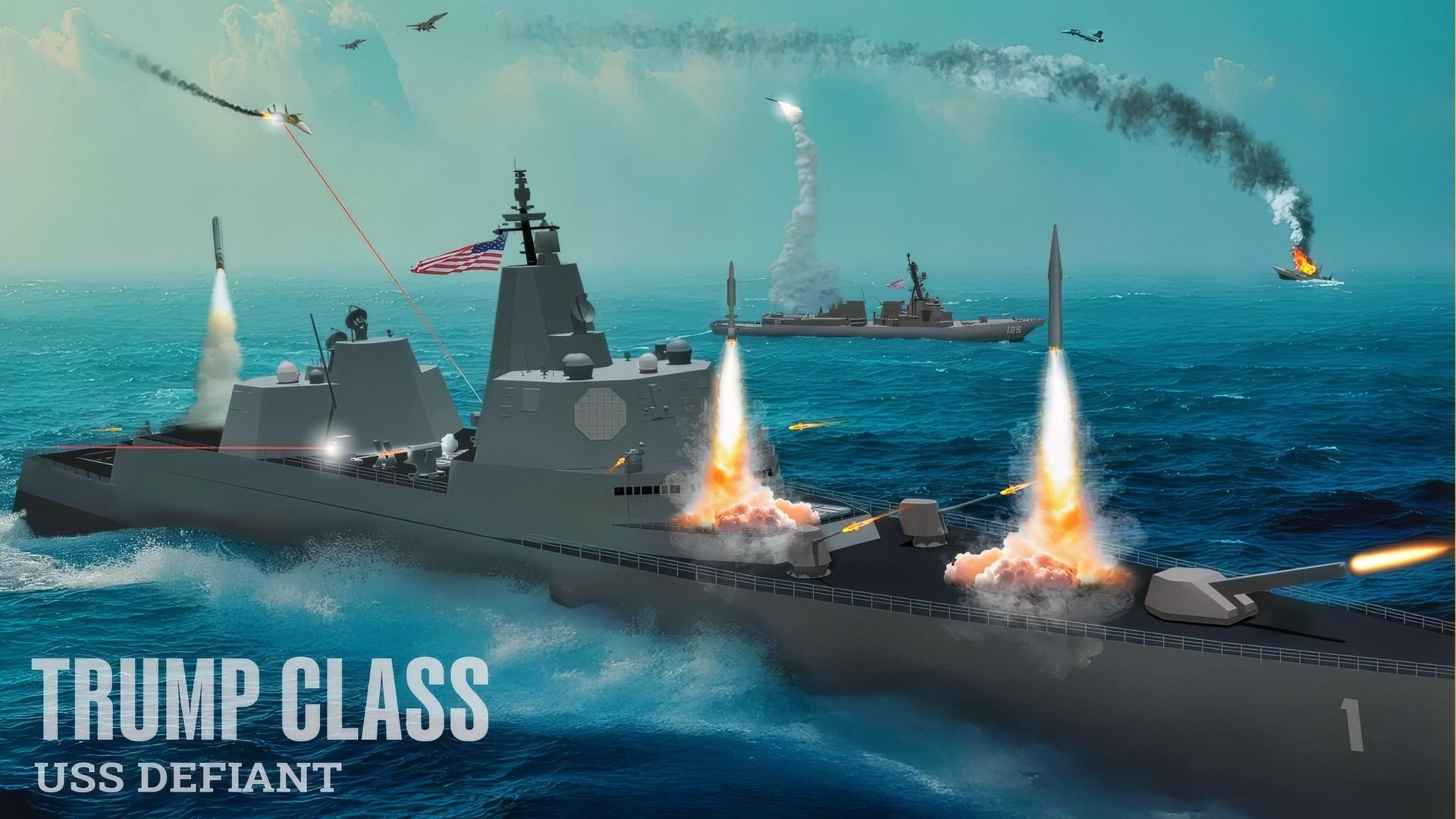
Trump-Class Battleship USS Defiant. Image Credit: Creative Commons.
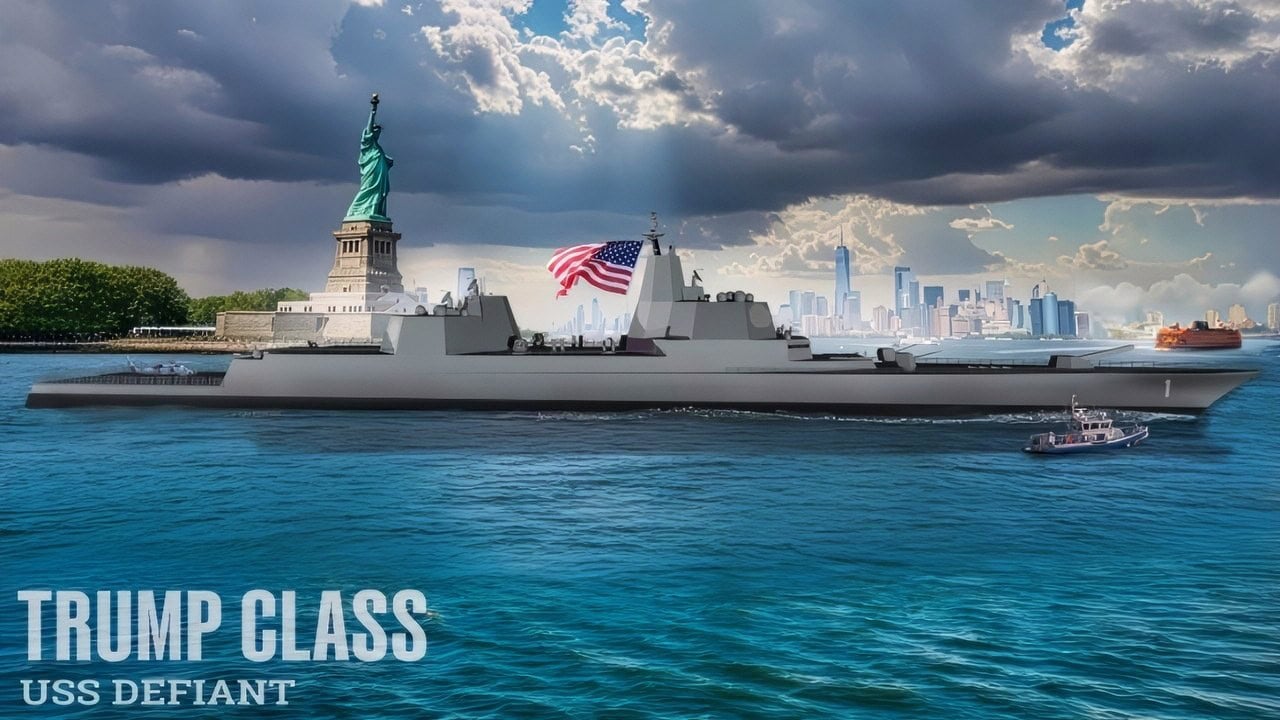
Trump-Class Battleship. Image Credit: Creative Commons/White House.
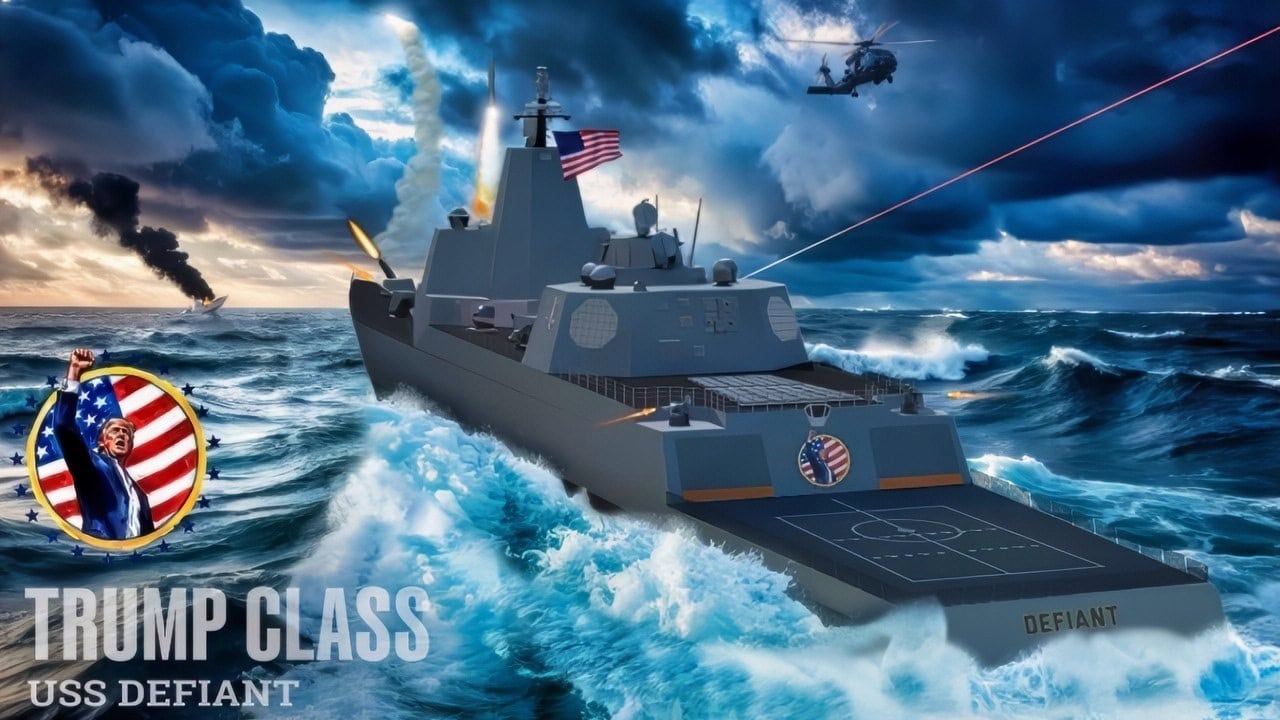
Trump-Class Battleship. Image Credit: Creative Commons/White House Photo.
Battleships Are More Vulnerable Today Than 80 Years Ago
The U.S. Navy has not had a battleship in commission since the retirement of the last Iowa-class battleship, USS Missouri, in 1992, nearly 35 years ago. There have been no plans for new ones since the cancellation of the Montana class in 1943.
The Navy was slow to recognize battleships’ vulnerabilities, even after General Billy Mitchell demonstrated that airpower could sink them by sinking the captured German battleship Ostfriesland in 1921.
The Navy pooh-poohed the results, and it cost them dearly on December 7, 1941, when the Japanese bombed Pearl Harbor. Four US battleships were sunk, and four more were damaged. The era of the battleship was over, and the era of the aircraft had begun.
In fact, the largest, most powerful battleship ever built, the Japanese Yamato, was obliterated by at least 11 torpedo hits and six bombs before sinking during the final days of World War II.
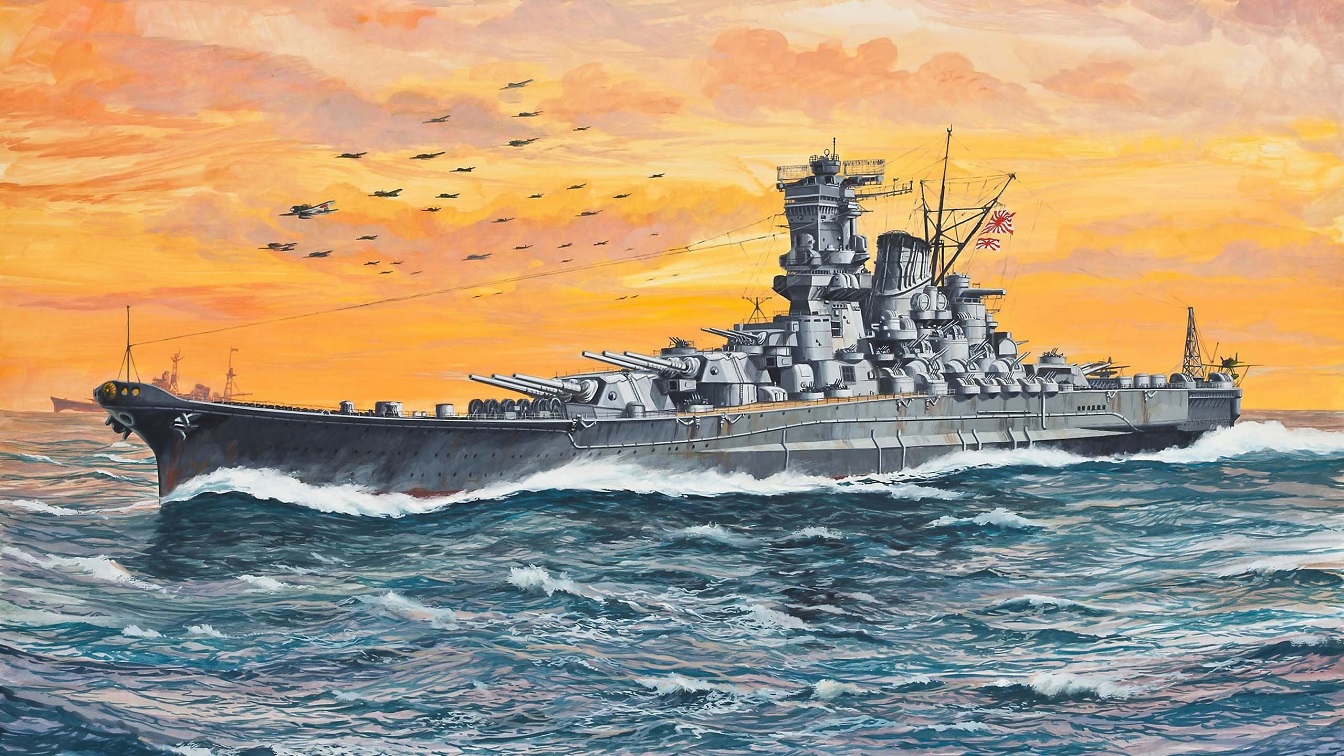
Yamato-Class Battleship/Artist Rendition. Image Credit: Creative Commons.
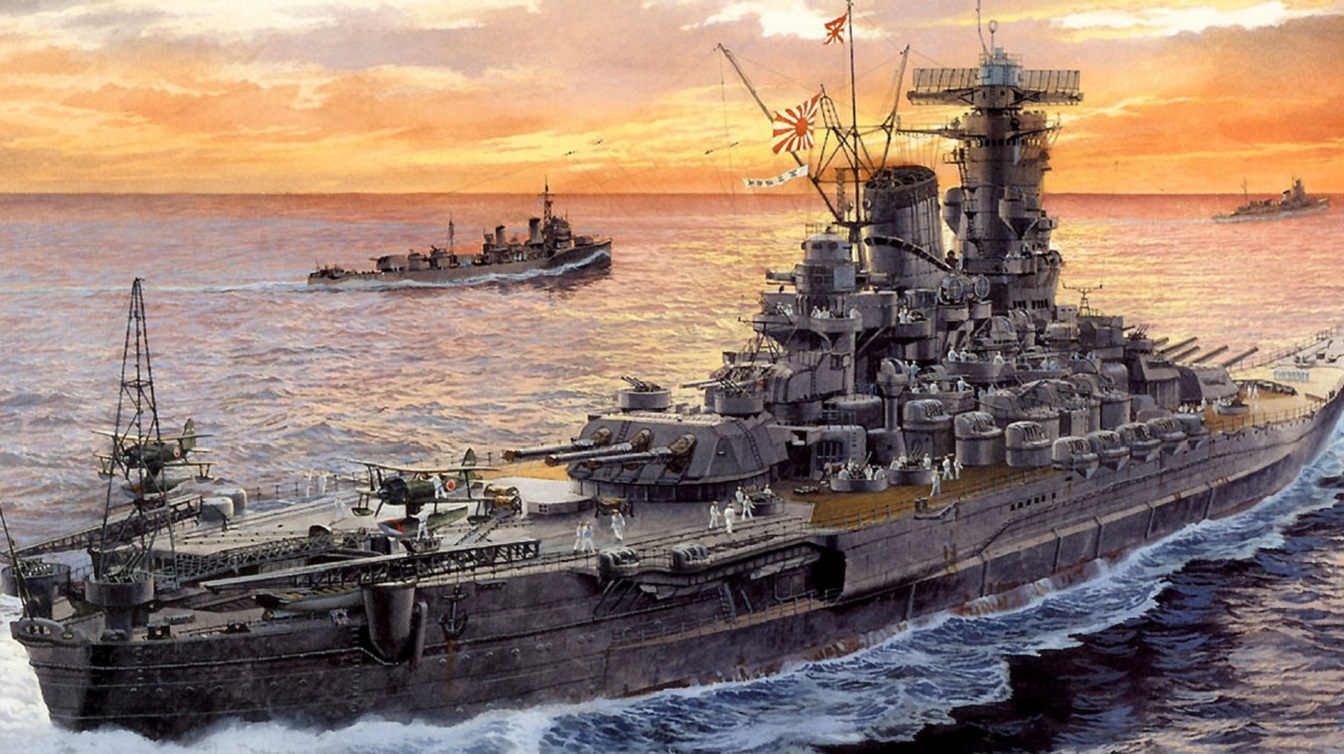
Battleship Yamato. Image Credit: Creative Commons.
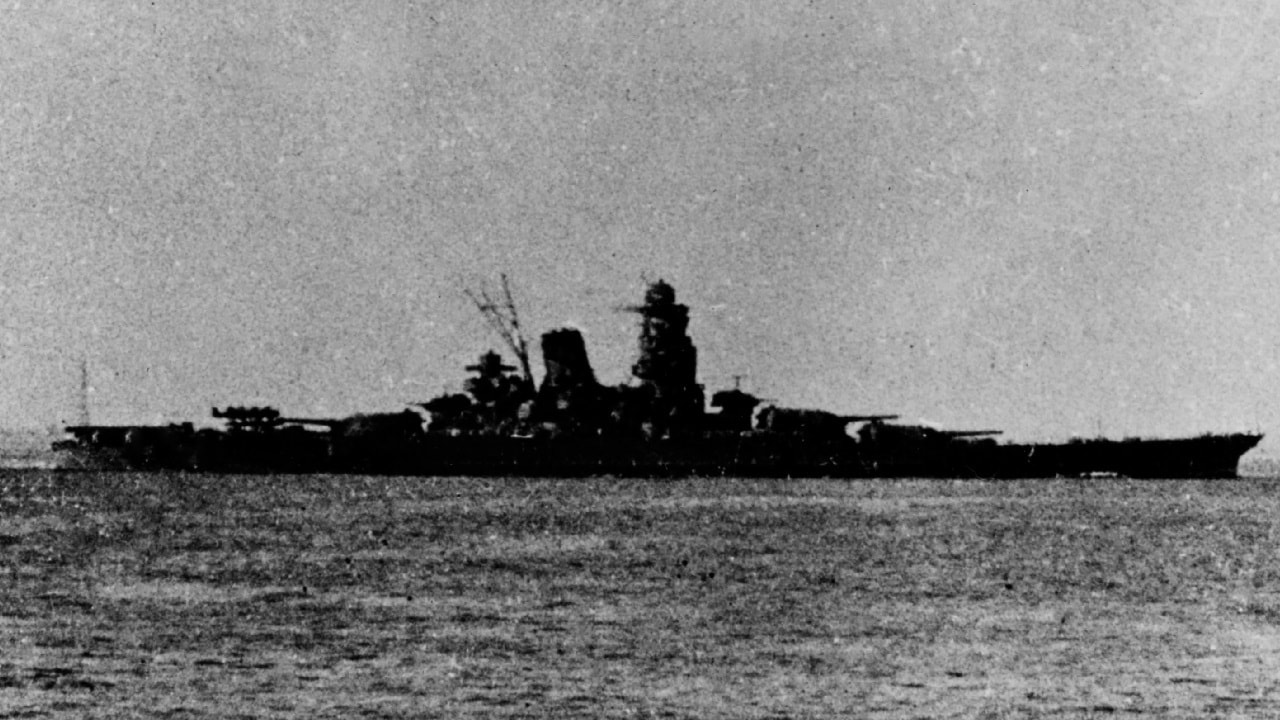
Yamato-class battleship Yamato. Image Credit: Creative Commons
The Navy can view what happened to the Russian Black Sea Fleet as a warning against attempts to bring back relics of the Cold War.
The Zumwalt Was The Missouri’s “Replacement”
After the retirement of the Iowa class, the Navy was split on how to replace its capabilities. The Zumwalt-class destroyer was developed to replace its gunfire-support role, but the class was cancelled after only three ships were built.
The Zumwalt class is currently the largest surface combatant ship operated by the U.S. Navy, and has 80 vertical launch missile systems.
After the cessation of Zumwalt procurement, the Navy announced a Large Surface Combatant initiative, which led to a design process for a DDG(X) or Next-Generation Guided-Missile Destroyer to replace both types.
A Bad Idea, Made Worse If The Navy Builds One…or Two
The idea of building a modern-era battleship with all the new technology (not yet perfected) is fraught with red flags.
First of all, the Trump-class battleship is somewhat at odds with the current US Navy’s Distributed Maritime Operations, an operational approach aimed at countering China’s anti-access/area-denial strategies in the Indo-Pacific, by dispersing assets widely while prioritizing a large number of smaller warships over fewer large surface vessels.
The proposed USS Defiant (BBG-1), in all likelihood, will never be built. Because the Navy can ill afford to design and build a new class of large warship when it can’t produce existing designs enough to maintain its global mission profile.
However, if the administration persists in building one, the Trump-class battleship wouldn’t survive beyond the president’s term of office, or the next one (if Vance were to run and be elected). It’s doubtful that another Republican, if elected, would optto keep the ship’s design and cancel the project. That would waste millions of dollars. If the Navy actually builds one of the ships prior to the project being cancelled would be even worse.
When building this or any other weapons system, the first question to ask is: “How will this protect the United States’ strategic interests?” Rather than investing in more survivable ships, such as destroyers and submarines, sinking billions into a large surface ship that would be a vulnerable target is not a sound investment for the Navy or the War Department.
Building only one or two “Trump-class” battleships would likely result in an inefficient, costly, and highly vulnerable, symbolic “golden fleet” rather than a practical military asset.
These massive, multi-billion-dollar vessels would consume limited defense budgets, strain shipyard capacity that is already at a critical point, and serve as large, high-value targets for modern anti-ship missiles, submarines, and drones.
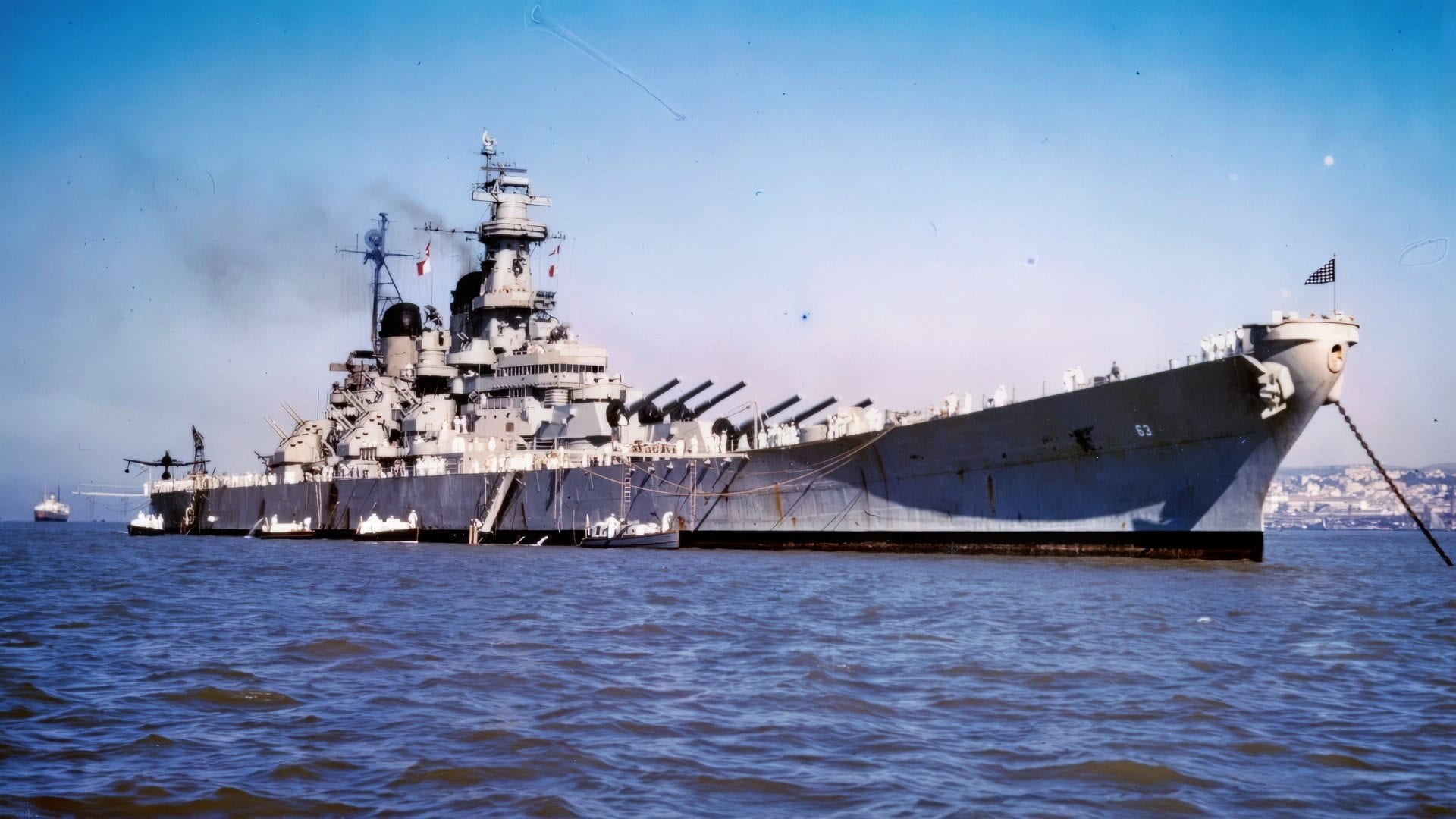
Anchored off Piraeus, Greece, April 1946. Official U.S. Navy Photograph, now in the collections of the U.S. National Archives.
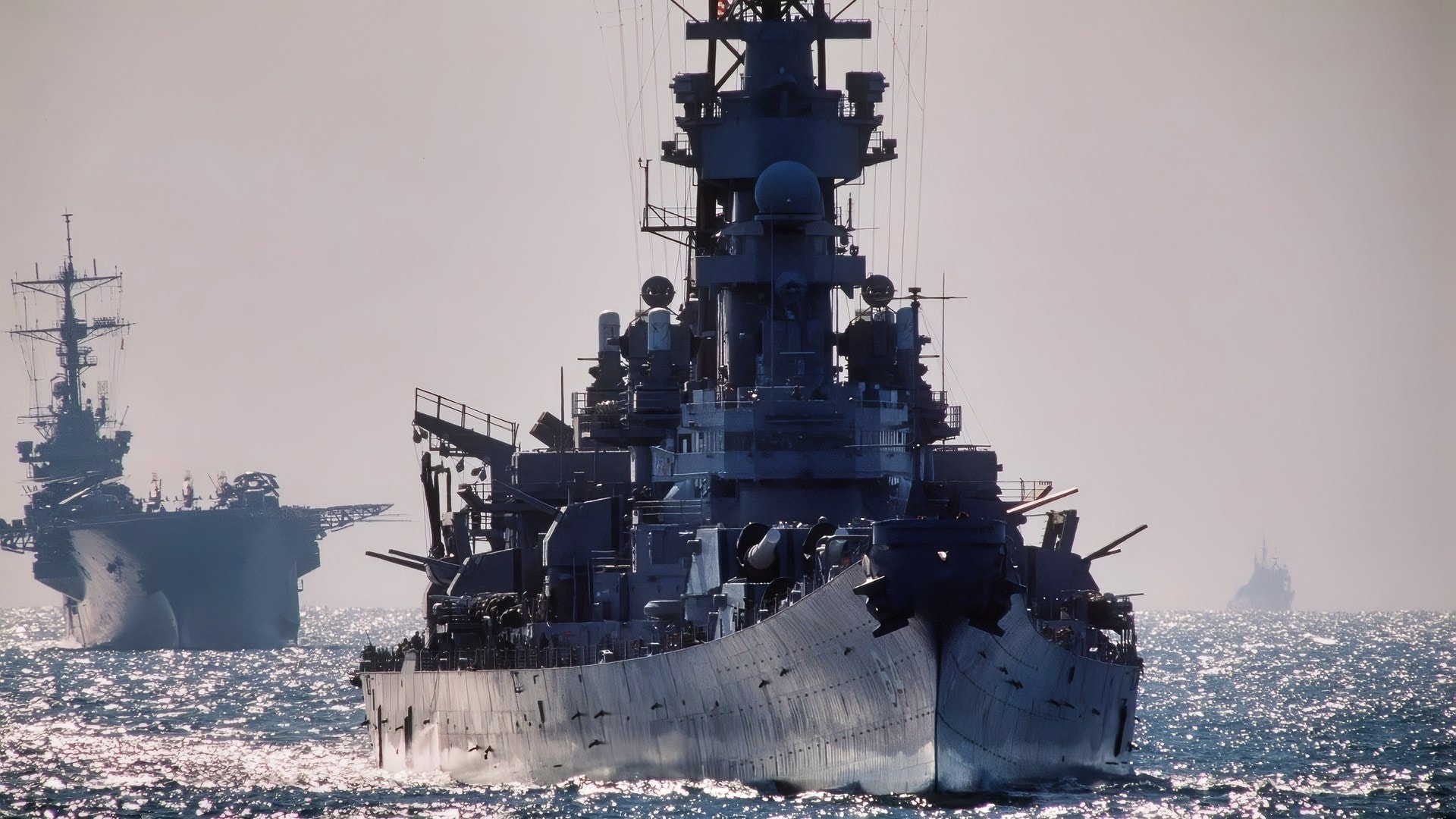
Iowa-Class Battleship Sailing with the Fleet. Image Credit: U.S. Navy.
Each ship could cost approximately $13 billion. These funds could alternatively be used for more numerous, versatile, and survivable smaller vessels or unmanned systems.
Construction would require specialized, limited resources, likely delaying other critical naval priorities, such as existing carrier or submarine designs. Rather than enhancing security, the ships might create a “hollow force” by concentrating too much firepower into a single, fragile node, reducing the fleet’s overall resilience.
The Navy needs to build existing designs now, as quickly as possible, and shift some production of smaller surface vessels to our Japanese and South Korean allies to alleviate the backlog in our moribund shipbuilding industry.
Trying to design a new warship that will take years to finalize, and then try to build it within the confines of the industry, is not a risk the country should even consider, let alone take.
About the Author: Steve Balestrieri
Steve Balestrieri is a National Security Columnist. He served as a US Army Special Forces NCO and Warrant Officer. In addition to writing on defense, he covers the NFL for PatsFans.com and is a member of the Pro Football Writers of America (PFWA). His work was regularly featured in many military publications.