
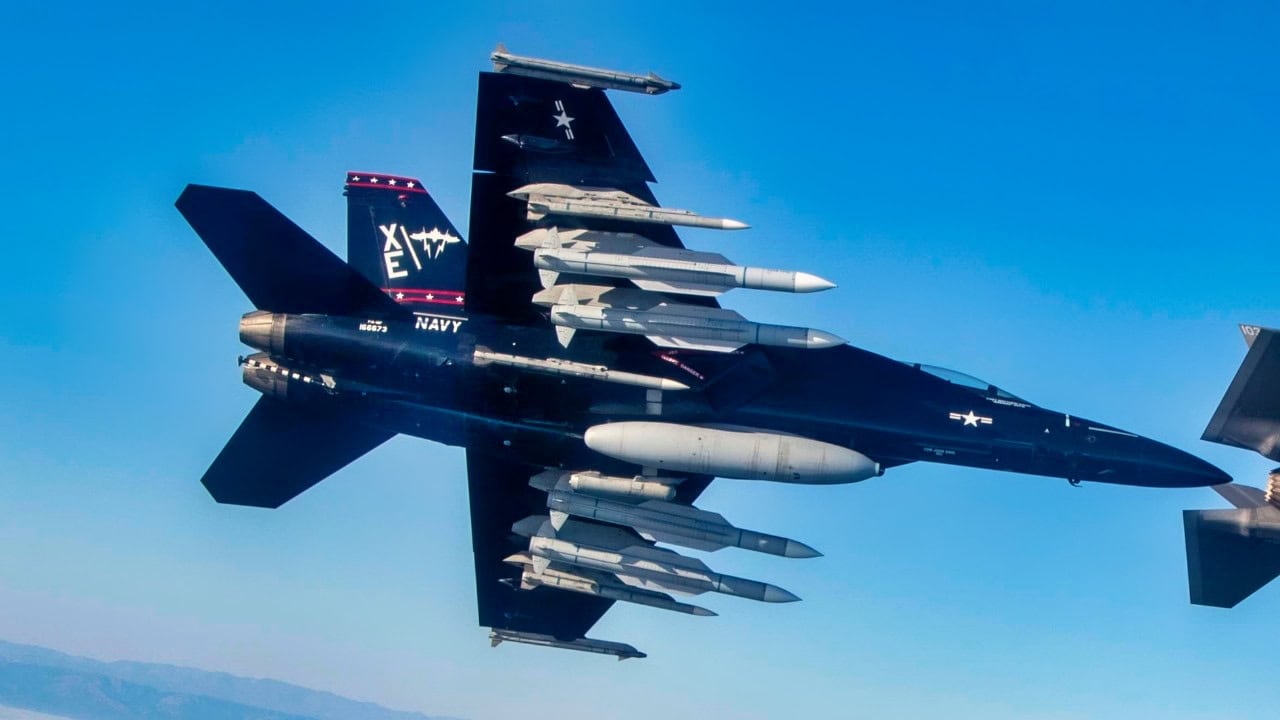
Summary and Key Points: On July 19, 2024, during RIMPAC west of Hawaii, a U.S. Navy F/A-18F Super Hornet launched an AGM-158C Long-Range Anti-Ship Missile to help sink the decommissioned USS Tarawa in roughly 15,000 feet of water.
-The headline capability was the weapon, not the target: a carrier-borne fighter delivering a stealthy anti-ship cruise missile in realistic conditions.
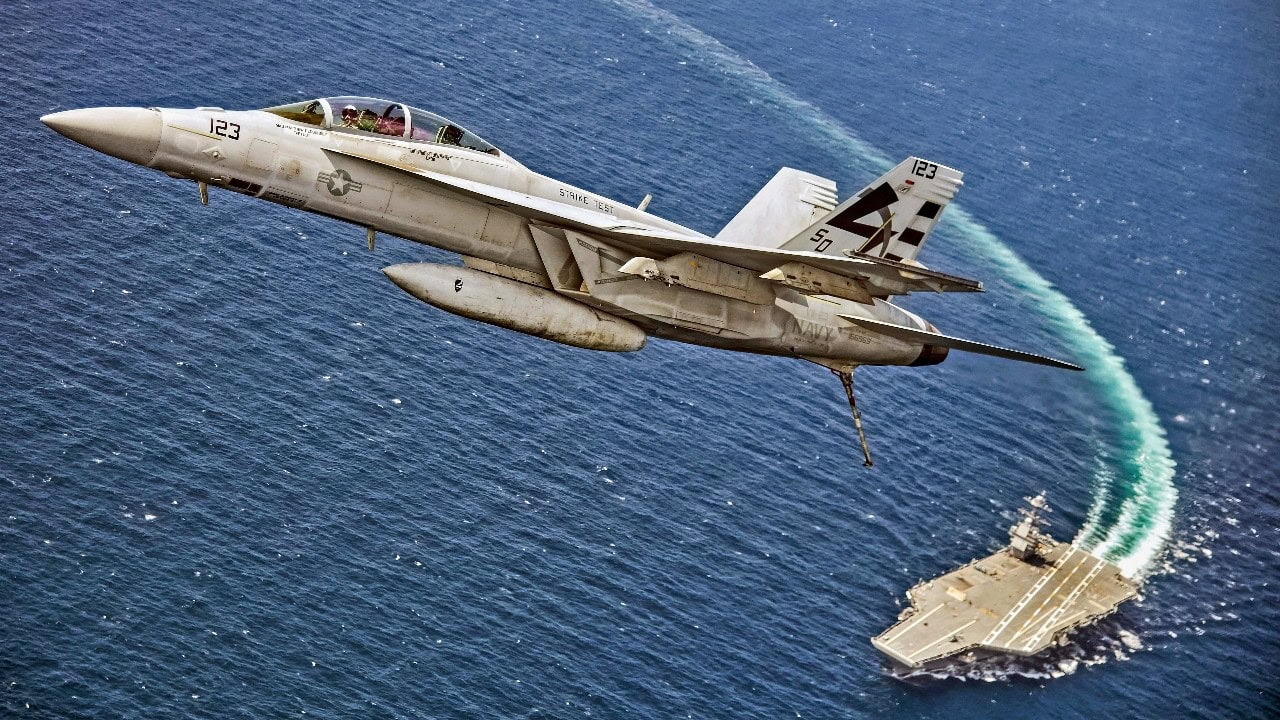
Super Hornet Navy Fighter. Image Credit: Creative Commons.
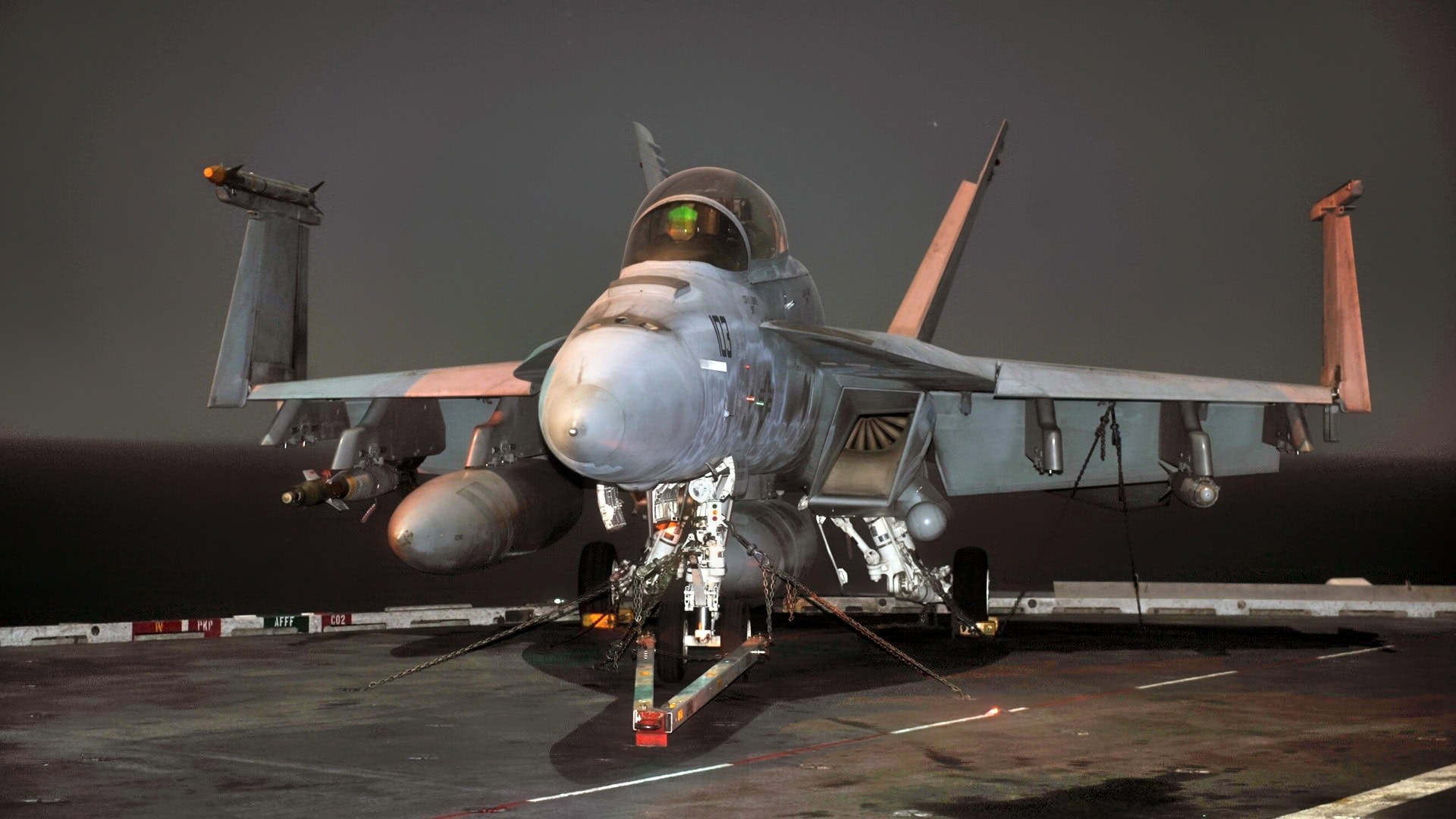
FA-18 Super Hornet. Image Credit: Creative Commons.
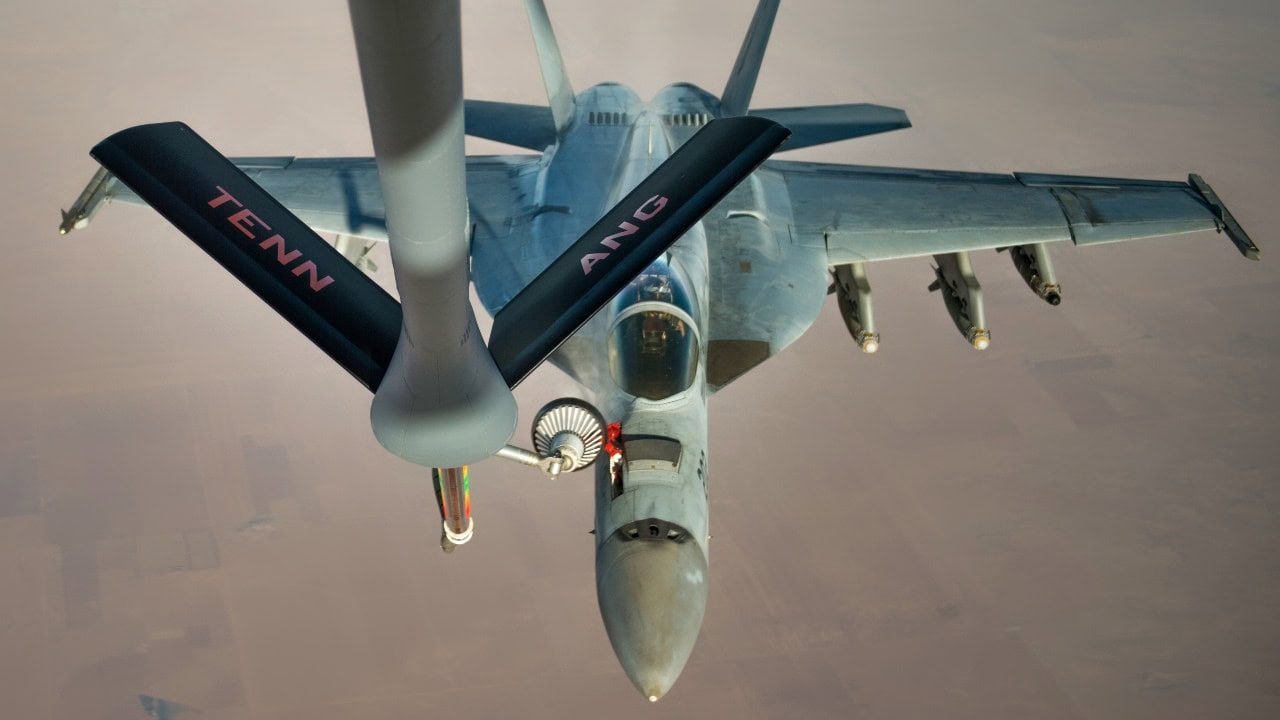
A U.S. Navy F/A-18 Super Hornet receives fuel from a KC-135 Stratotanker over Iraq in support of Operation Inherent Resolve Oct 17, 2016. The KC-135 provides the core aerial refueling capability for the U.S. Air Force and has excelled in this role for more than 50 years. (U.S. Air Force photo by Staff Sgt. Douglas Ellis/Released)
-LRASM’s low-observable design, passive sensors, and onboard autonomy allow it to navigate low, search, classify, and strike with minimal external support. For carrier air wings, it signals a modern answer to legacy Harpoon-era limits.
The Harpoon Era Is Over: LRASM Gives Carriers A Long-Range Ship-Killer
When the decommissioned USS Tarawa was sunk by friendly aircraft during an exercise on July 19, 2024, the bigger story didn’t get quite the amount of press one might have expected. The bigger story was that an F/A-18F Super Hornet had launched a stealthy munition, the Long-Range Anti-Ship Missile (LRASM), to sink it.
The U.S. Navy’s official announcement confirmed the “sinking of the ex-Tarawa included the employment of a Long-Range Anti-Ship Missile (LRASM) from a U.S. Navy F/A-18F Super Hornet.”
“As a precise, stealthy, and survivable cruise missile, LRASM provides multi-service, multi-platform, and multi-mission capabilities for offensive anti-surface warfare. Currently, LRASMs are deployed from U.S. Navy F/A-18 and U.S. Air Force B-1B aircraft,” the statement added.
It was a small note in a press release, but a significant moment for maritime warfare.
It was the first public, live-fire proof that the Navy’s stealth anti-ship missile works from a carrier-borne fighter.
Not only that, but it was proof that it was possible under realistic combat conditions.
The Sinking and the Striking
During the Rim of the Pacific exercise (RIMPAC) in 2024, the U.S. Navy conducted multiple live-fire sinking exercises west of Hawaii to evaluate the effectiveness of combined maritime strike capabilities with allied forces.
Among the targets was the former USS Tarawa, a 40,000-ton amphibious assault ship that was decommissioned in 2009 after serving for three decades.
On July 19, 2024, the Navy confirmed that the Tarawa was sunk in water roughly 15,000 feet deep, more than 50 nautical miles from the coast of Kauai.
The operation involved aircraft, ships, and ground-based assets from several partner nations, but the most notable among them was the U.S. Navy’s F/A-18F Super Hornet, which launched an AGM-158C LRASM—a stealth cruise missile designed to penetrate advanced air defenses and autonomously locate maritime targets.
After launch, the LRASM flew in a pre-programmed direction at a low altitude over open ocean, relying on onboard sensors and electronic support systems to detect, classify, and home in on the target ship without any external guidance.
Once within range, the missile then executed a high-speed “sea-skimming” attack and struck the Tarawa’s port side. The missile breached the hull and caused rapid flooding, and within hours, the ship began to sink.
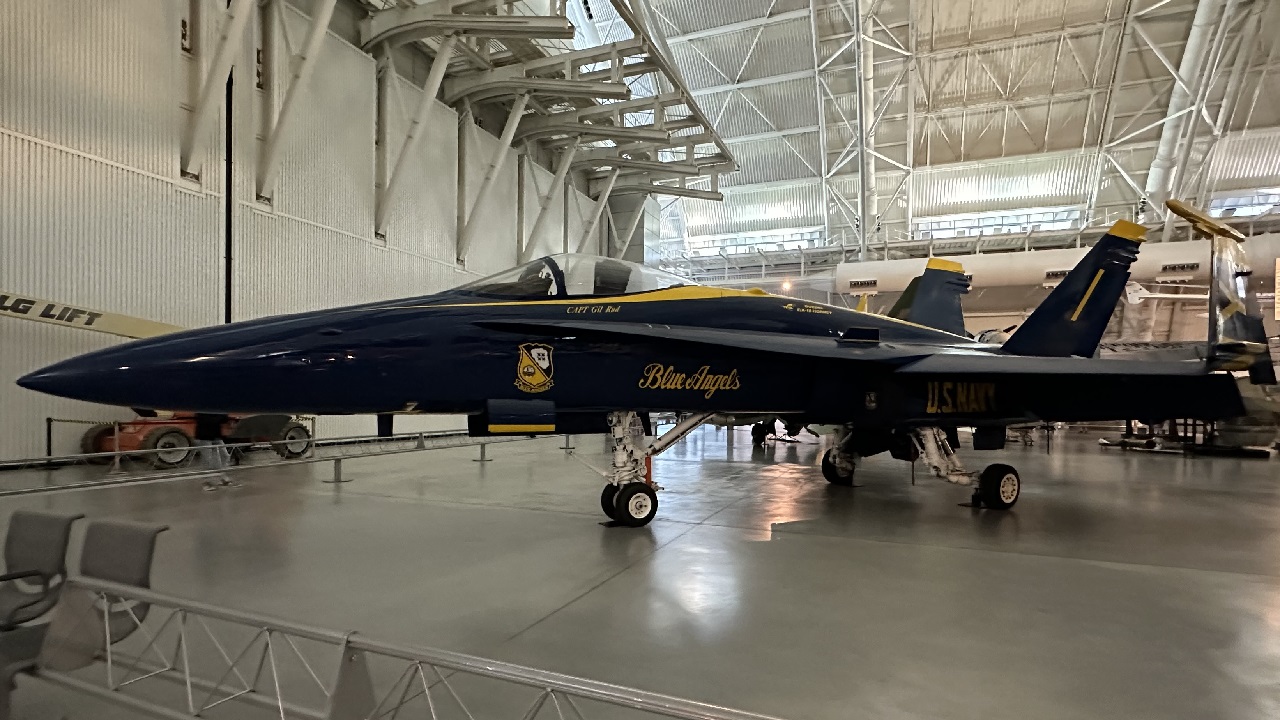
F/A-18 Hornet. Image taken at National Air and Space Museum on October 1, 2022. Image by 19FortyFive.
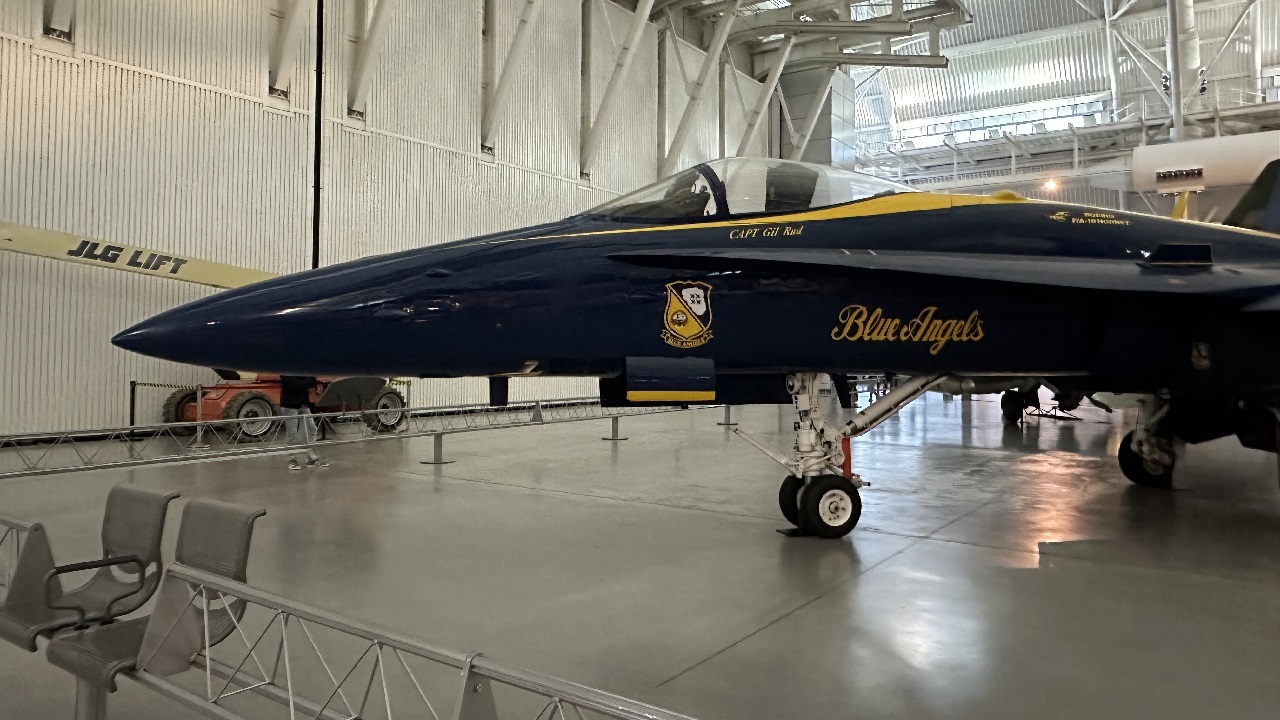
F/A-18 Hornet. Image taken at National Air and Space Museum on October 1, 2022. Image by 19FortyFive.
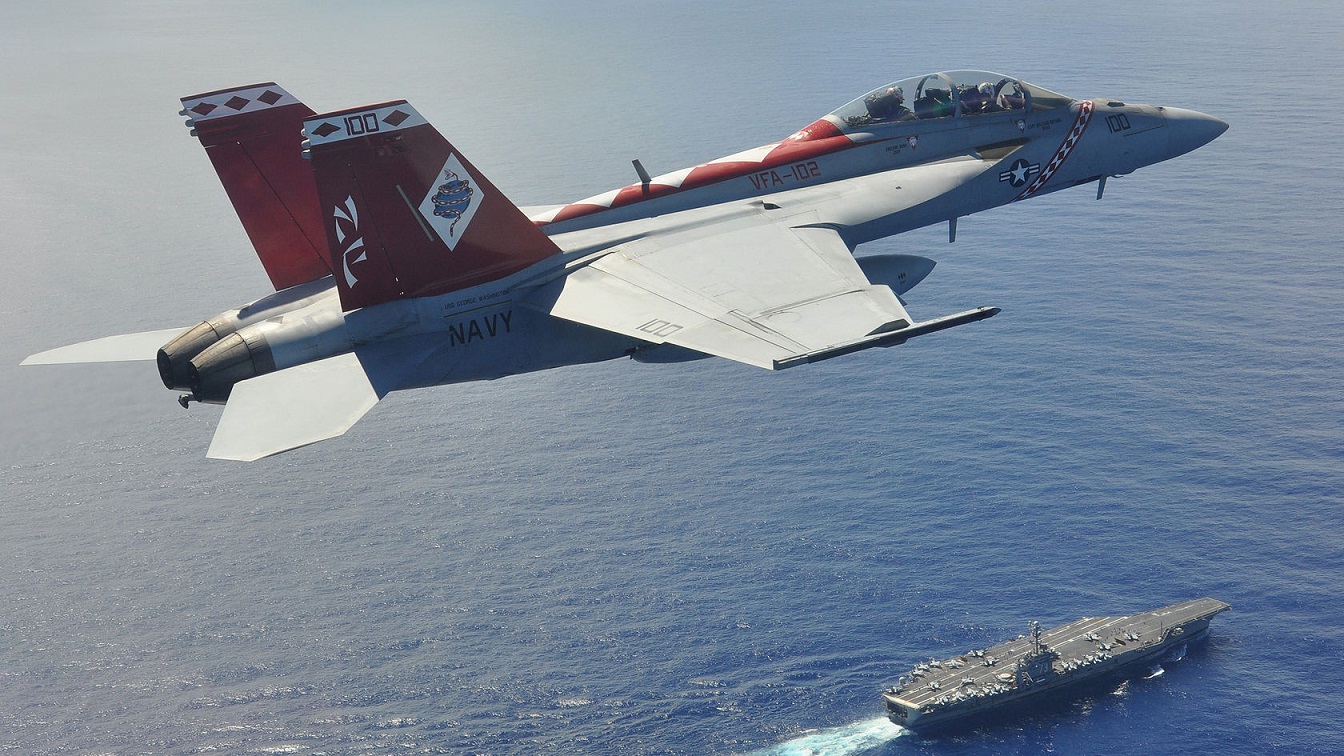
Block III Super Hornet. A U.S. Navy F/A-18F Super Hornet aircraft assigned to Strike Fighter Squadron (VFA) 102 flies past the aircraft carrier USS George Washington (CVN 73) in the Philippine Sea Aug. 21, 2013. The George Washington was underway in the U.S. 7th Fleet area of responsibility supporting maritime security operations and theater security cooperation efforts.
The exercise was designed to provide realistic kill-chain data – the information collected at each stage of the attack relevant to target acquisition, missile performance, and more. Each target was fitted with sensors to record the structural response and blast impact.
The sinking of the Tarawa, therefore, served as proof that the LRASM is as lethal as it needs to be, and as a test of how the U.S. and its partner forces can coordinate long-range precision strikes at sea.
The LRASM is a derivative of the Joint Air-to-Surface Standoff Missile – Extended Range (JASSM-ER) developed by DARPA and fielded by Lockheed Martin.
The missile carries a 1,000 lb penetrating warhead, is shaped to evade radar, is fitted with infrared sensors, and uses onboard artificial intelligence to autonomously navigate and prioritize high-value targets – and it is that latter feature that is so remarkable. Just a few years ago, artificial intelligence was nowhere near as capable as it is today, even in a military setting.
Now, it is informing missile strikes—at least, in test environments.
Why It Mattered for the U.S. Navy
The RIMPAC sinking of the Tarawa was an operational validation of a capability that the U.S. Navy has needed for many years.
The LRASM fills what the Navy has called an offensive anti-surface warfare air-launch capability gap, giving carrier-based aircraft a long-range strike option against advanced naval threats.
Until the LRASM’s arrival, the Navy had primarily relied on the Harpoon Block 1C, a missile first introduced in the 1980s that has become increasingly obsolete against modern electronic warfare and missile-defense systems.
The LRASM, by contrast, can be launched from F/A-18 Super Hornets or B-1B Lancers and navigate autonomously even in areas where GPS is not usable.
Combined with its onboard artificial intelligence and passive sensors, the missile is now an ideal option for U.S. aircrews looking to engage the likes of China’s Type 055 destroyers, or even aircraft carriers, from well beyond Beijing’s anti-access/area-denial (A2/AD) zone, which is enforced by long-range radar and surface-to-air missiles.
China’s rapid naval expansion is another reason the sinking of the Tarawa is relevant.
The sea trials of the Type 003 Fujian carrier and new Type 052D destroyers were underway at the time of the LRASM strike in 2024.
The exercise, involving 29 nations and 40 ships, showcased allied precision-strike coordination and proved that a new form of autonomous warfare was finally possible.
And with the winning design for the F/A-XX expected imminently, and expanded LRASM production now underway, the Tarawa strike previewed what we could expect from maritime warfare in the very near future.
About the Author:
Jack Buckby is a British author, counter-extremism researcher, and journalist based in New York who writes frequently for 19FortyFive and National Security Journal. Reporting on the U.K., Europe, and the U.S., he works to analyze and understand left-wing and right-wing radicalization, and reports on Western governments’ approaches to the pressing issues of today. His books and research papers explore these themes and propose pragmatic solutions to our increasingly polarized society. His latest book is The Truth Teller: RFK Jr. and the Case for a Post-Partisan Presidency.