
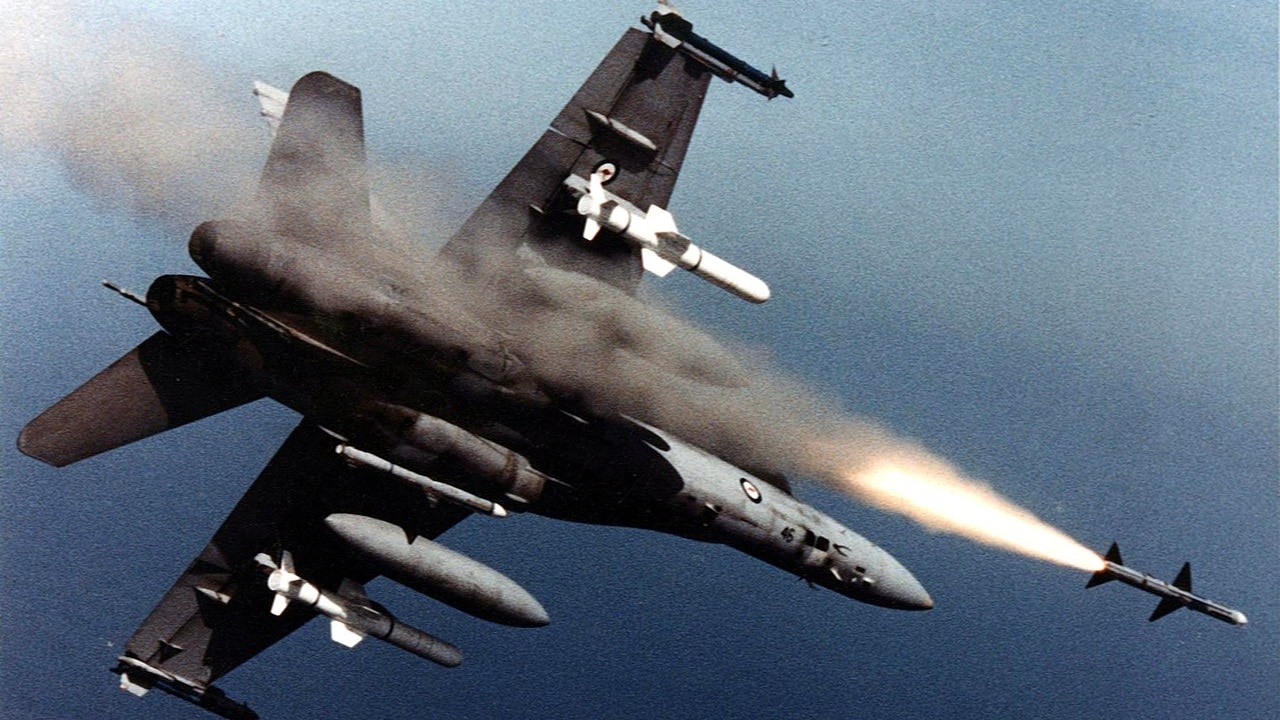
Synopsis: Despite the invention of autopilot in 1912 by Lawrence Sperry, U.S. Naval Aviators generally refuse to use it for landing on aircraft carriers.
-According to former EA-18G Growler pilot Adam Daymude, while autopilot works in calm conditions, it struggles unpredictably in rough weather, with auto-throttle systems occasionally cutting power at critical moments.
-Consequently, pilots rely on manual “seat of the pants” flying and arresting cables to ensure safety during these high-stakes recoveries.
Believe it or not, the first functioning airplane autopilot system emerged way back in 1912 (a mere nine years after the Wright Brothers’ historic first powered flight), long before the Jet Age, supersonic flight, stealth aircraft, or unmanned aerial vehicles. Lawrence Burst Sperry was the American engineering genius responsible for its invention.
Since then, the concept has undoubtedly saved many an aircrew’s and passenger’s lives, especially from potentially fatal crashes caused by pilot fatigue.
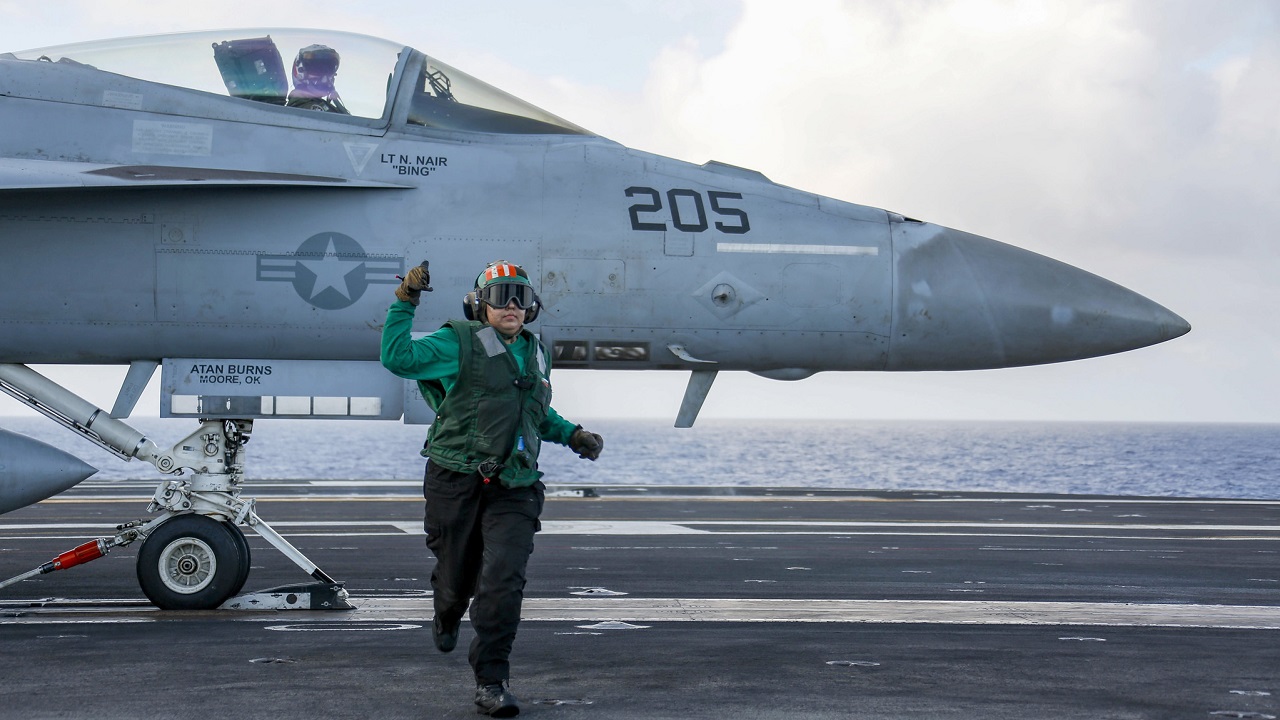
Aviation Boatswain’s Mate (Equipment) 3rd Class Anatalia Zamora, from Midland, Texas, runs to a safe distance before an F/A-18E Super Hornet assigned to the “Tophatters” of Strike Fighter Squadron (VFA) 14 launches from the flight deck of the Nimitz-class aircraft carrier USS Abraham Lincoln (CVN 72). The Abraham Lincoln Carrier Strike Group is on a scheduled deployment in the U.S. 7th Fleet area of operations to enhance interoperability through alliances and partnerships while serving as a ready-response force in support of a free and open Indo-Pacific region. (U.S. Navy photo by Mass Communication Specialist 3rd Class Michael Singley) 220228-N-MM912-1137
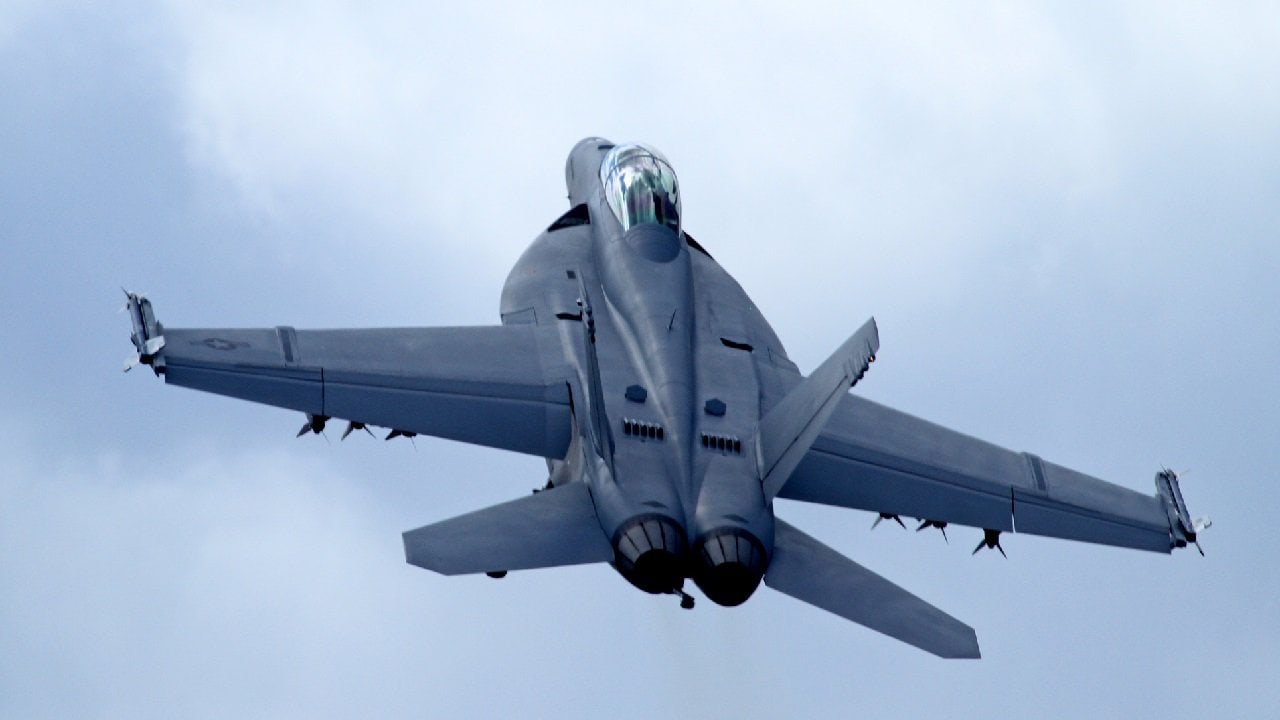
Block III F/A-18 Super Hornet.
However, nothing is an end-all, be-all solution, or as Professor Emeritus Dr. Peter Gordon was fond of telling his macroeconomics students at the University of Southern California (USC), “There are no solutions, only trade-offs.”
Accordingly, we now delve into why United States Naval Aviators don’t use the seemingly no-brainer autopilot function for the extremely tricky and risky act of landing on an aircraft carrier’s flight deck.
Bottom Line Up Front (BLUF)
A significant source of information for this article is a December 29, 2025, piece by Dario Leone of The Aviation Geek Club titled “US Navy EA-18G pilot explains why Naval Aviators inherently refuse to use the autopilot for aircraft carrier landing.”
The EA-18 Growler is the airborne electronic attack version of the F/A-18F Super Hornet fighter, and the replacement for the EA-6B Prowler. The Growler driver question is Adam Daymude, who served in the Navy from 1999 to 2013.
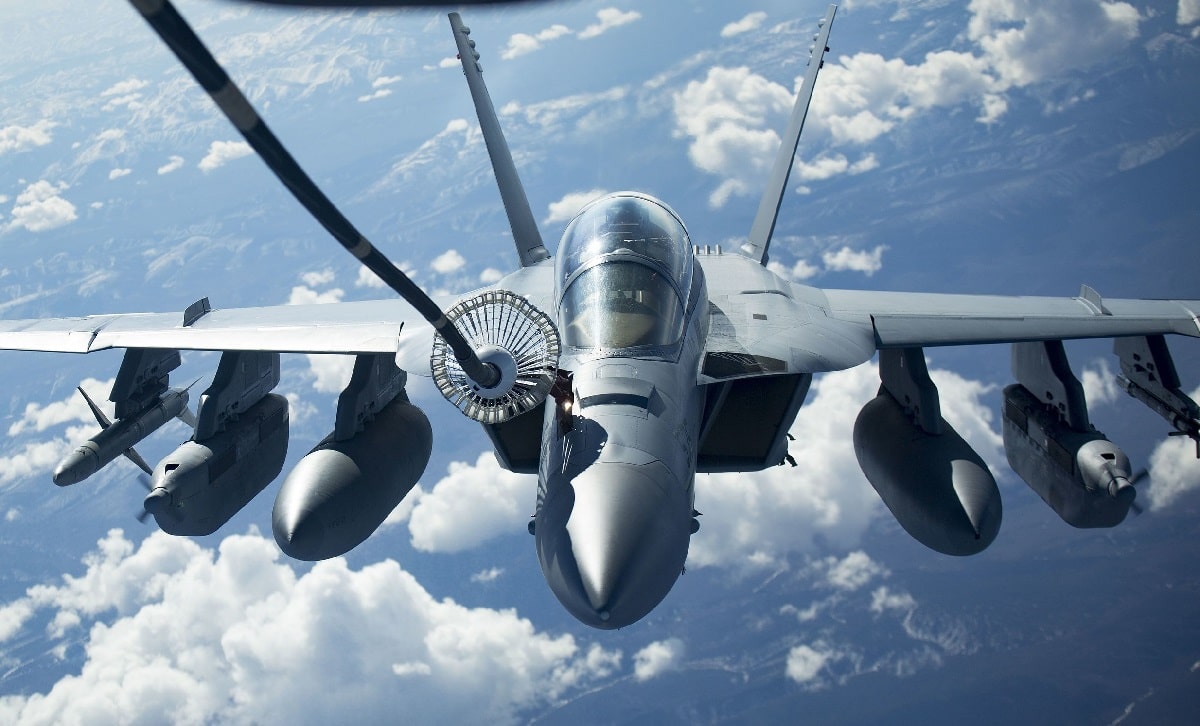
EA-18G Growler. Image Credit: Creative Commons.
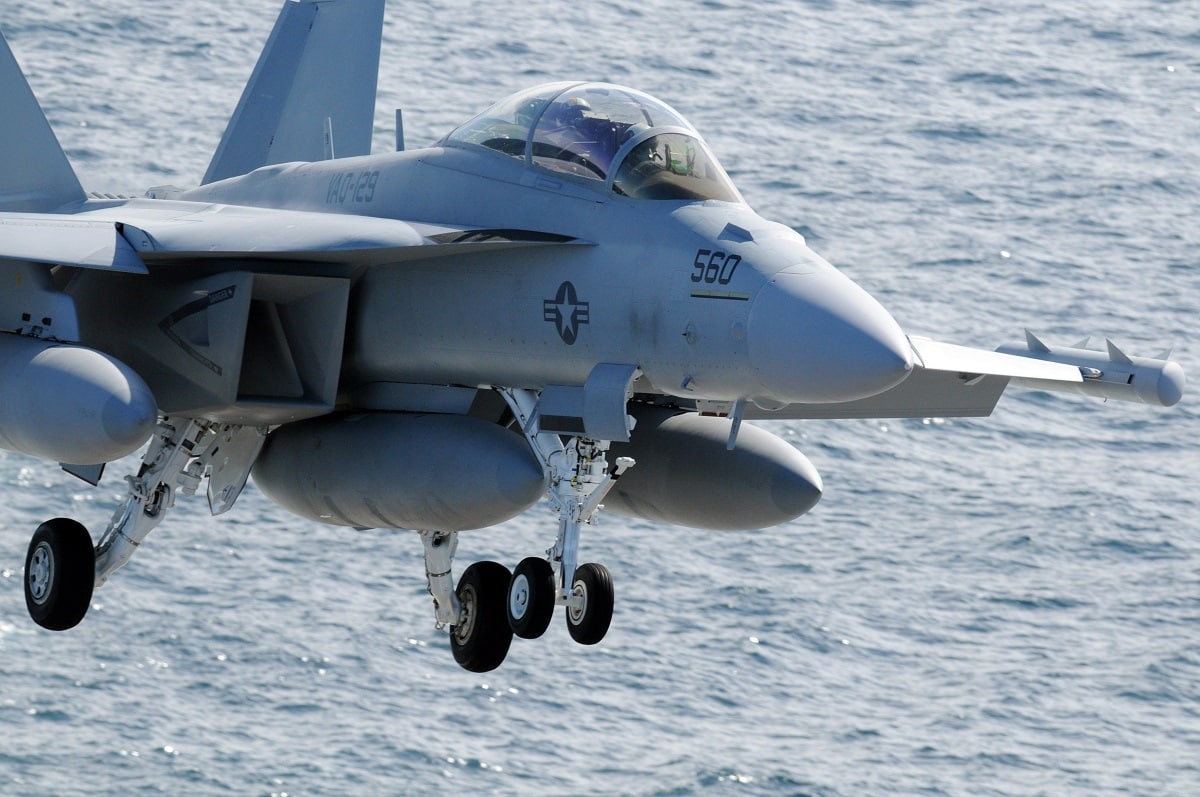
PACIFIC OCEAN (Feb. 17, 2009) An EA-18G Growler assigned to the “Vikings” of Tactical Electronic Warfare Squadron (VAQ) 129 aligns itself for an at sea landing aboard the Nimitz-class aircraft carrier USS Ronald Reagan (CVN 76). The Growler is the replacement for the EA-6B Prowler, which will be replaced in the 2010 timeframe. Ronald Reagan is underway performing Fleet Replacement Squadron Carrier Qualifications in the Pacific. (U.S. Navy photo by Mass Communication Specialist 3rd Class Torrey W. Lee/Released)
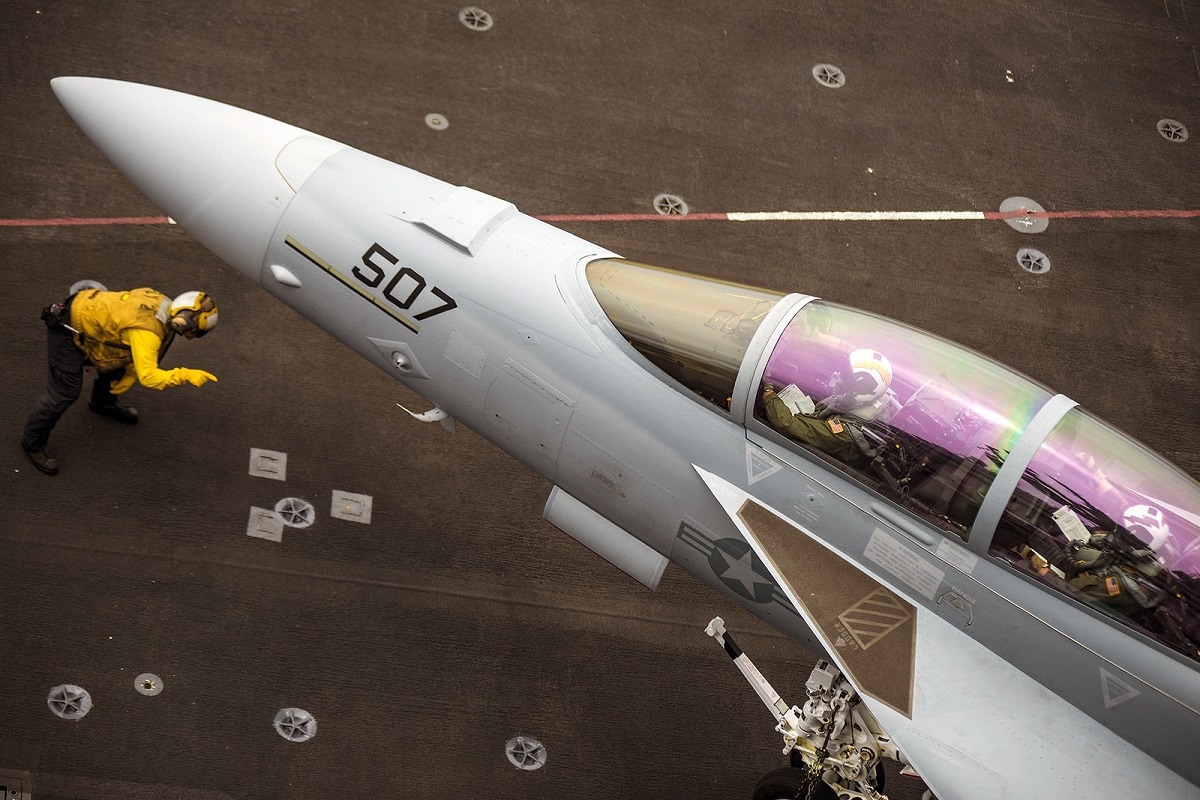
PACIFIC OCEAN (July 31, 2017) An E/A-18G Growler assigned to the Vikings of Electronic Attack Squadron (VAQ) 129 is inspected prior to launch aboard the Nimitz-class aircraft carrier USS Carl Vinson (CVN 70). Carl Vinson is underway conducting carrier qualifications off the coast of Southern California. (U.S. Navy photo by Mass Communication Specialist 2nd Class Zackary Alan Landers/Released)170731-N-GD109-068
Neither Signore Leone nor Mr. Daymude’s own Quora profile state what final rank he attained before leaving the Navy, but based upon my own experience as a former military officer I’ll venture an educated guess that he made the rank of lieutenant commander (pay grade O-4, equivalent of a major in the Air Force, Army, Marine Corps, and Space Force).
In any event, in Daymude’s words, here’s why Naval Aviators eschew the autopilot: “I will be the first to stand up and say ‘H–l, no!'” On a nice, calm day with natural wind of 25 knots or so, the autopilot is amazing. It fails spectacularly under other conditions … I’m here to tell you that unless they’ve massively improved auto-recoveries in the ten years I’ve been out, I would never trust full auto pilot. Setting the auto-throttle, which tries to keep you at speed, was a bust. I flew auto throttle for half a cruise … around 100 landings, and no problem. On landing 101, the auto throttle tried to kill me by pulling power at the exact moment that I needed to add power. So, 1% of the time, my trusty steed is going to try and kill me.”
Two aviation proverbs come to mind here: (1) “Any landing you can walk away from is a good one,” and (2) “There are old pilots, and there are bold pilots, but there are no [or very few] old, bold pilots.”
In any event, Adam concludes: “‘Manual landings are still the safest way to recover. We’ve tried, me in particular working with our simulator software development team, to build an algorithm that works in all situations. How do you tell a software engineer why you added power at a specific moment when it didn’t look like you needed it, but turned out to be the right correction at the time? I literally shrugged my shoulders and said, ‘I don’t know! The plane seemed to want to descend.
‘ That’s called seat of the pants and you can’t model it easily.”
So Then, How *Are* Flight Deck Landings Pulled Off?
Short answer: The old-fashioned way.
Long answer: It’s accomplished via the use of arresting cables installed on the flight deck and a tailhook installed on the aircraft.
The pilot (or to use the preferred official USN jargon, Naval Aviator; not to be confused with Naval Flight Officers [NFOs], i.e., the navigators, the lookouts, and the weapon operators), aims for the middle arresting wire, which is either the second or third, depending on the configuration of the flattop. Upon touchdown, the throttles are advanced to military/full power for three seconds, which sounds counterintuitive but is in fact done to keep the engines spooled and providing thrust in case a bolter (missing every wire, go-around) occurs or even for the unlikely event of a cable snapping. Afterwards, the throttles are reduced to idle, and the hook is raised in response to the aircraft director’s signal.
Autopilot Early History in Brief
Going back to Lawrence Sperry’s 1912 invention, it was a gyroscopic automatic pilot, a relatively simple yet ingenious device capable of maintaining an aircraft’s pitch, roll, and yaw. Unlike the invention of UAVs many decades later, Sperry’s device wasn’t intended to replace pilots but to assist them, enabling aviators to multitask in mid-flight, e.g., navigating routes or monitoring unpredictable weather patterns.
It was in June 1914 that Sperry demonstrated his invention’s worth in front of a large number of aviation authorities and spectators alike, doing so at the Concours de la Securité en Aéroplane (Airplane Safety Competition) in France. Working in tandem with his French mechanic Emil Cachin, Sperry competed against 56 aircraft while piloting a Curtiss C-2 biplane.
The highlights began when Monsieur Cachin boldly climbed out onto one of the plane’s wings.
As expected, the aircraft began to bank due to the sudden shift in weight … but the gyroscopic autopilot instantly compensated, keeping the biplane steady. To top it all off, on the tandem’s final pass, Sperry took the spectacle a step further, moving out onto the opposite wing and effectively leaving the plane pilotless.
The crowd roared in amazement and appreciation. This daring stunt not only secured first place in the competition but also earned Sperry a handsome 50,000 francs (approximately $10,000 USD) prize.
Sadly, Sperry was lost at sea on December 13, 1923, while flying from England to Holland. So as not to end this article on such a morbid note, I conclude with this snippet from the humorous ditty “Ain’t No Fighter Pilots Down in Hell“: “
A bomber pilot’s life is just a farce/The autopilot’s on/He’s reading comics in the john.”
About the Author: Christian D. Orr, Defense Expert
Christian D. Orr is a Senior Defense Editor. He is a former Air Force Security Forces officer, Federal law enforcement officer, and private military contractor (with assignments worked in Iraq, the United Arab Emirates, Kosovo, Japan, Germany, and the Pentagon). Chris holds a B.A. in International Relations from the University of Southern California (USC) and an M.A. in Intelligence Studies (concentration in Terrorism Studies) from American Military University (AMU). He is also the author of the newly published book “Five Decades of a Fabulous Firearm: Celebrating the 50th Anniversary of the Beretta 92 Pistol Series.”