
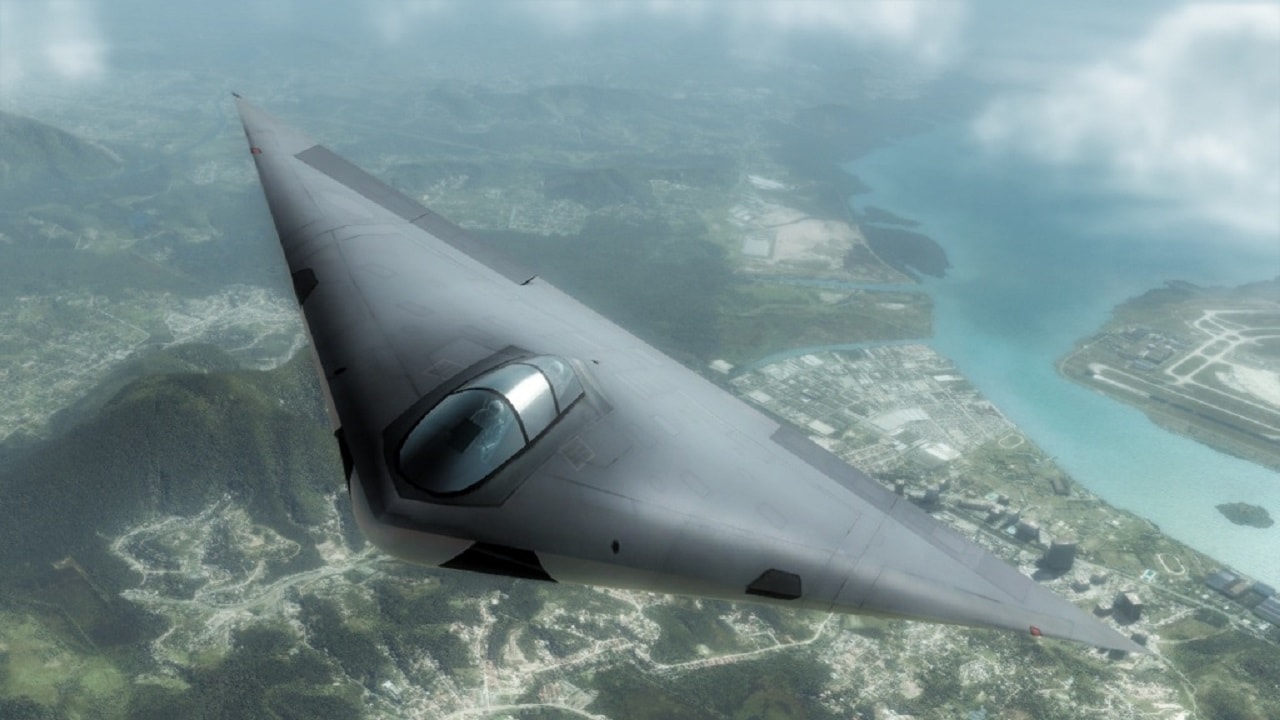
Key Points and Summary – The canceled A-12 Avenger II was supposed to give the U.S. Navy something it has never fully replaced: a carrier-based, low-observable aircraft built for long-range, deep strike against dense air defenses.
-Designed to succeed the A-6 Intruder, the “flying dorito” promised internal weapons carriage, survivability, and reach that multirole fighters struggle to match when carrying external stores.
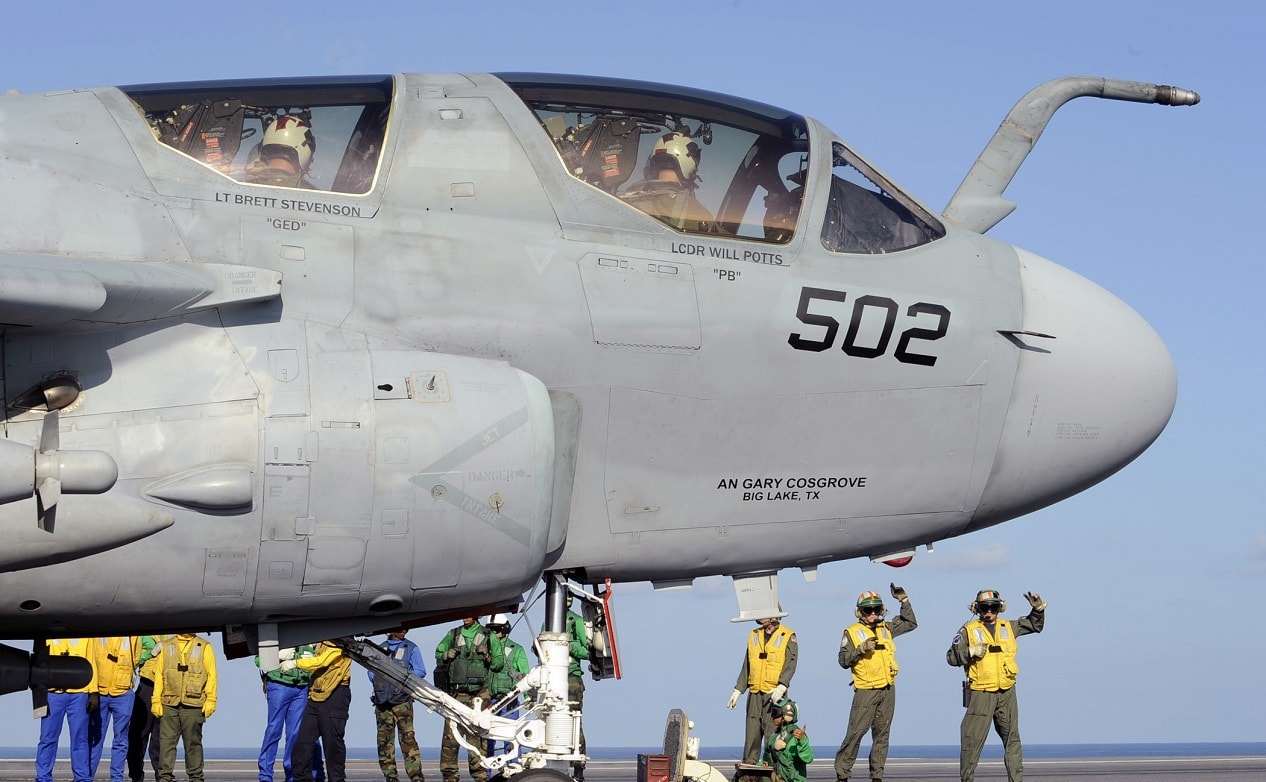
An EA-6B Prowler, assigned to the “Shadowhawks” of Electronic Attack Squadron 141 prepares to launch from a catapult during flight operations aboard the Nimitz-class aircraft carrier USS Theodore Roosevelt during carrier qualifications.
-But weight growth, software challenges, rising costs, and immature stealth manufacturing helped kill the program in 1991.
-Without it, carrier air wings leaned on the Hornet family, standoff weapons, tankers, and joint operations—shaping a Navy optimized more for presence and crisis response than independent penetration.
-Had A-12 reached service, stealth-at-sea doctrine, deck practices, and even later aircraft requirements may have evolved around range and payload first.
The A-12 Avenger II Has a Message: The Navy Lost Its Deep-Strike Future
Conceived in the late Cold War and originally intended to enter service in the mid-to-late 1990s, the A-12 Avenger II was meant to give the U.S. Navy a capability that has never been fully replaced: a carrier-based, low-observable aircraft purpose-built for deep-strike against heavily defended targets. The program’s cancellation in 1991 is perhaps unsurprisingly viewed by many as a historic procurement failure.
A platform with those capabilities specifically designed for the Navy could have been revolutionary for the force – and the prospect of the U.S. Navy having such a unique piece of hardware raises the question: what would the Navy’s future have looked like had the program gone ahead?
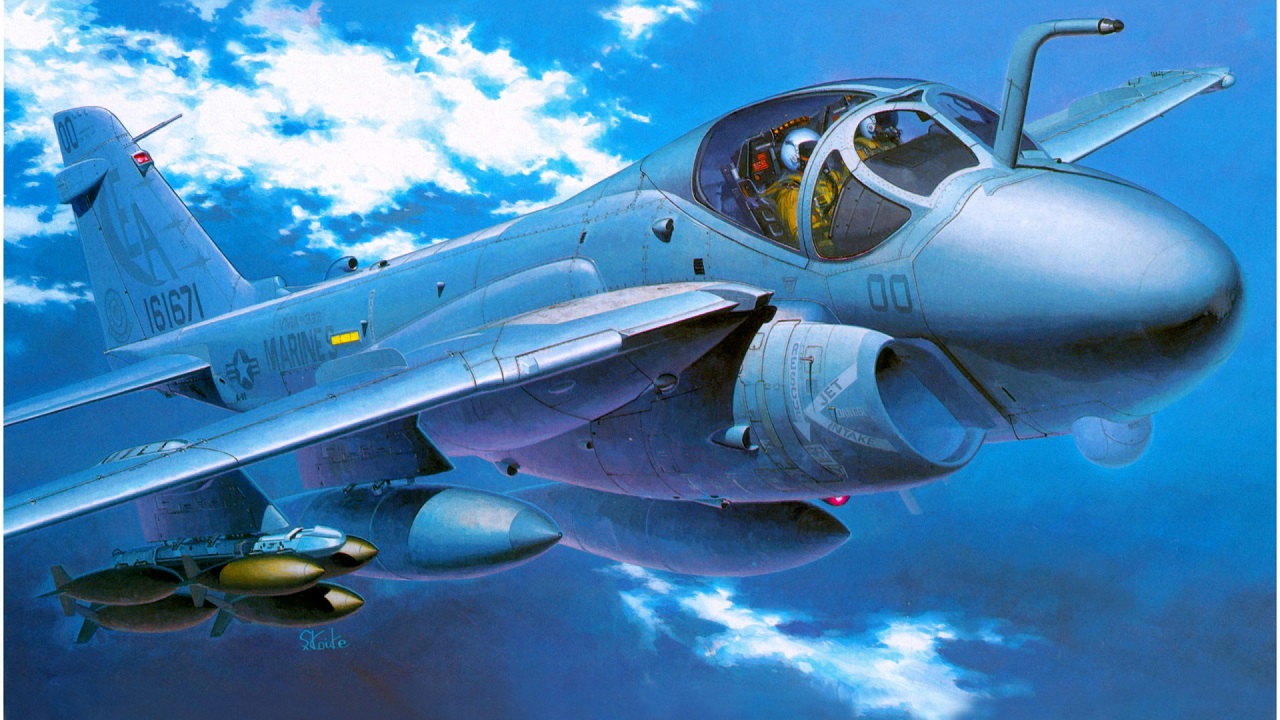
A-6 Intruder. Image Credit: Creative Commons.
Meet the A-12 Avenger II
The A-12 was a product of the Navy’s Advanced Tactical Aircraft (ATA) program, launched to replace the aging A-6 Intruder, which had served as the service’s primary long-range all-weather strike aircraft since the 1960s. The Intruder’s retirement was inevitable, but the Navy intended its successor to both preserve and expand its ability to conduct independent deep strike from aircraft carriers against sophisticated Soviet air defenses.
The A-12 was designed from the outset around low observability, internal weapons carriage, and sufficient range to strike inland targets without relying on escorts or extensive aerial refueling. It was the kind of mission profile even the modern Navy would dream of seeing, and one that was distinct from that of multirole fighters.
The A-12 was a one-man band capable of conducting missions almost independently.
That aircraft, however, never materialized. By the late 1980s, the A-12 program was plagued by the usual problems that bring military hardware projects crashing down: weight growth, software integration issues, spiraling costs, and, crucially, immature stealth manufacturing techniques. In that sense, the A-12 was ahead of its time.
When the Cold War ended, defense budgets began to contract. In January 1991, then-Secretary of Defense Dick Cheney canceled the program outright, citing both cost overruns and failure to meet performance milestones. And it was this decision that terminated the Navy’s only hope for a dedicated stealth aircraft before it could reach operational service or prove its concept in practice.
The Future Without A-12
The immediate consequence for the Navy was a significant hardware gap. The A-6 Intruder was retired in the late 1990s without a like-for-like replacement, leaving carrier air wings without a long-range strike aircraft optimized for penetration.
Instead, the Navy increasingly relied on the F/A-18C/D Hornet and later the F/A-18E/F Super Hornet to fill both fighter and strike roles. While competent multirole aircraft, the Hornet family offered substantially less combat reach and payload than the A-6, particularly when carrying external stores that increased radar signature and reduced survivability against modern air defenses.
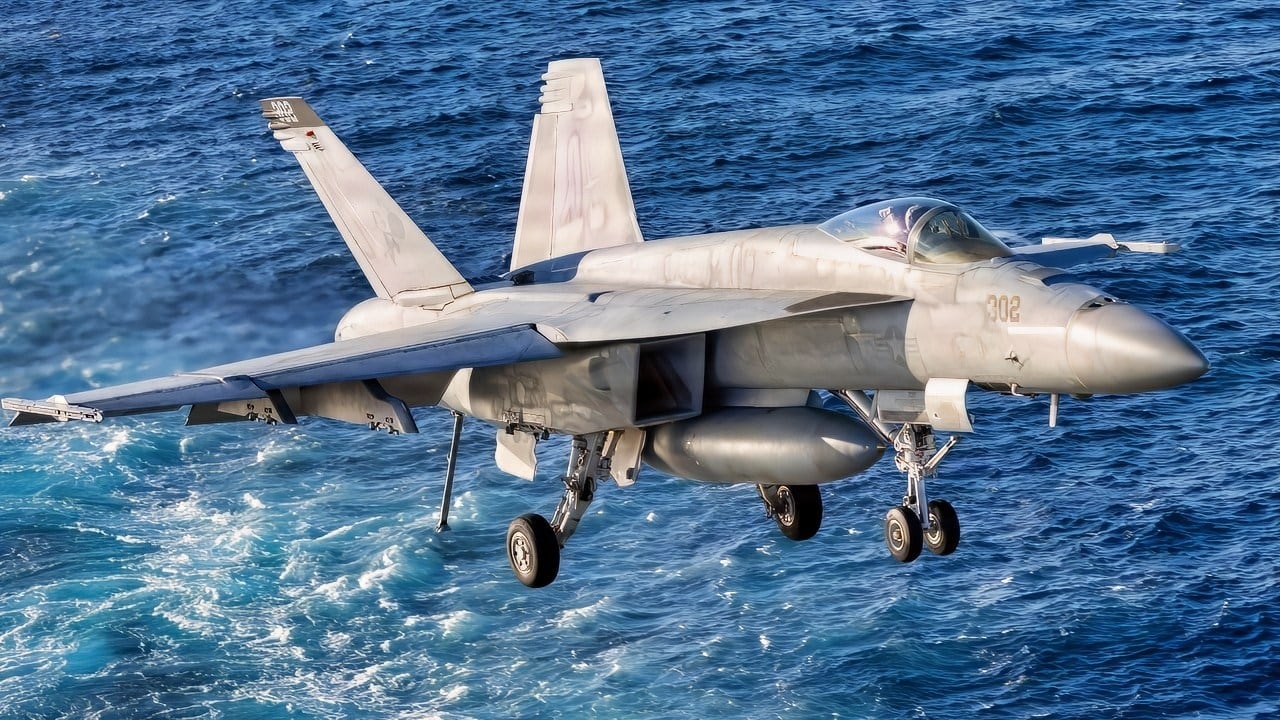
An F/A-18E Super Hornet aircraft approaches the flight deck of the world’s largest aircraft carrier, Ford-class aircraft carrier USS Gerald R. Ford (CVN 78), Nov. 17, 2025. U.S. military forces are deployed to the Caribbean in support of the U.S. Southern Command mission, Department of War-directed operations, and the president’s priorities to disrupt illicit drug trafficking and protect the homeland. (U.S. Navy photo)
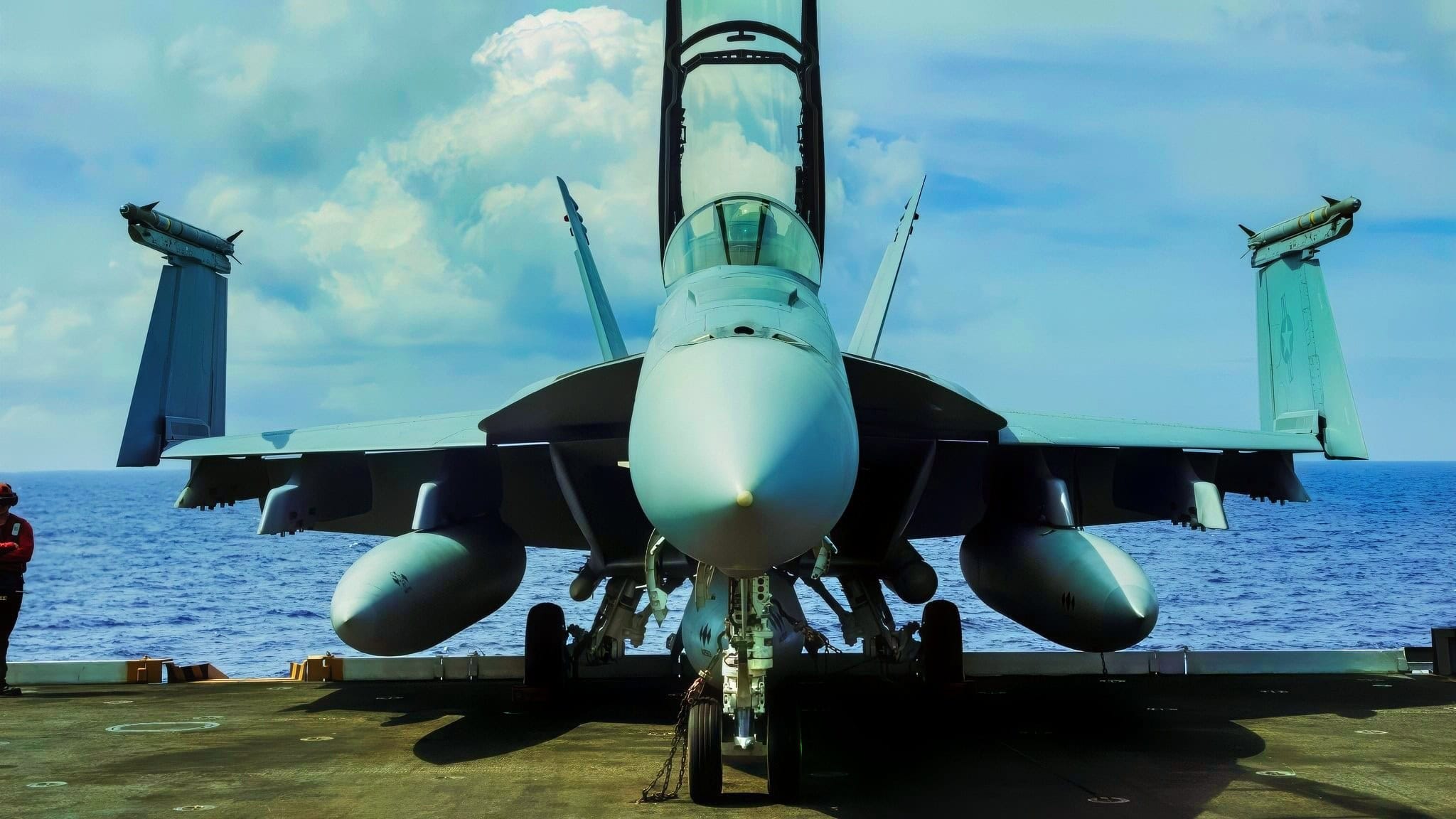
Capt. Tim Waits, commanding officer of Nimitz-class aircraft carrier USS George Washington (CVN 73), climbs into an F/A-18F Super Hornet, attached to Strike Fighter Squadron (VFA) 102, while underway in the South China Sea, Nov. 24, 2025. George Washington is the U.S. Navy’s premier forward-deployed aircraft carrier, a long-standing symbol of the United States’ commitment to maintaining a free and open Indo-Pacific region, while operating alongside allies and partners across the U.S. Navy’s largest numbered fleet. (U.S. Navy photo by Mass Communication Specialist 2nd Class Geoffrey L. Ottinger)
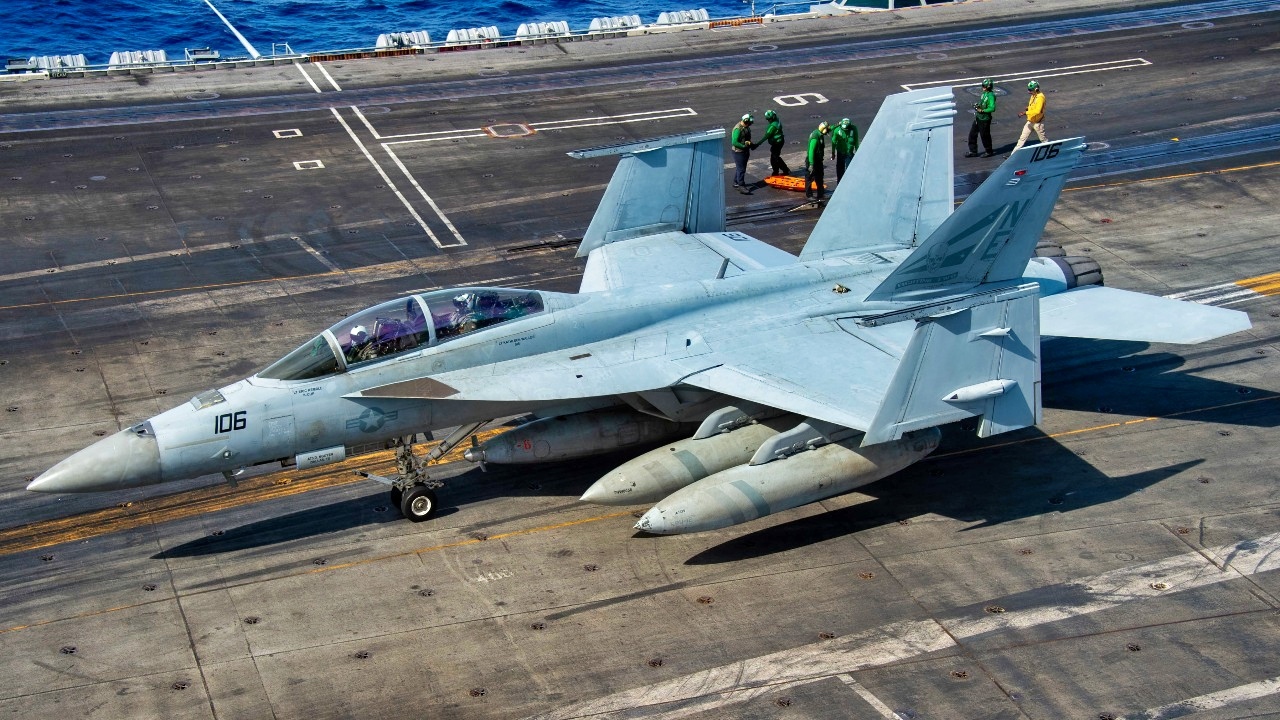
(Dec. 30, 2021) An F/A-18F Super Hornet, assigned to the “Bounty Hunters” of Strike Fighter Squadron (VFA) 2, taxis on the flight deck of Nimitz-class aircraft carrier USS Carl Vinson (CVN 70), Dec. 30, 2021. Carl Vinson Carrier Strike Group is on a scheduled deployment in the U.S. 7th Fleet area of operations to enhance interoperability through alliances and partnerships while serving as a ready-response force in support of a free and open Indo-Pacific region. (U.S. Navy photo by Mass Communication Specialist 3rd Class Jeff D. Kempton)
That substitution had an impact beyond aircraft inventories: it changed strategy. Without a stealthy, long-range strike platform, carrier air wings increasingly leaned on flexibility, sortie generation, and crisis response over missions that focused primarily on independent penetration of dense integrated air defense systems.
Strike planning changed too, shifting toward the use of standoff weapons, aerial refueling, and joint operations with the Air Force rather than carrier-led deep attacks in the early hours of high-end conflicts.
By the early 2000s, carriers were being optimized for presence missions, regional deterrence, and operations in less-defended or moderately contested environments, rather than as self-contained instruments for deep-strike against peer adversaries.
The A-12’s absence also had a ripple effect across the service. With the Navy stepping away from a dedicated stealth strike aircraft, low-observable penetration and strike was now only possible with the U.S Air Force.
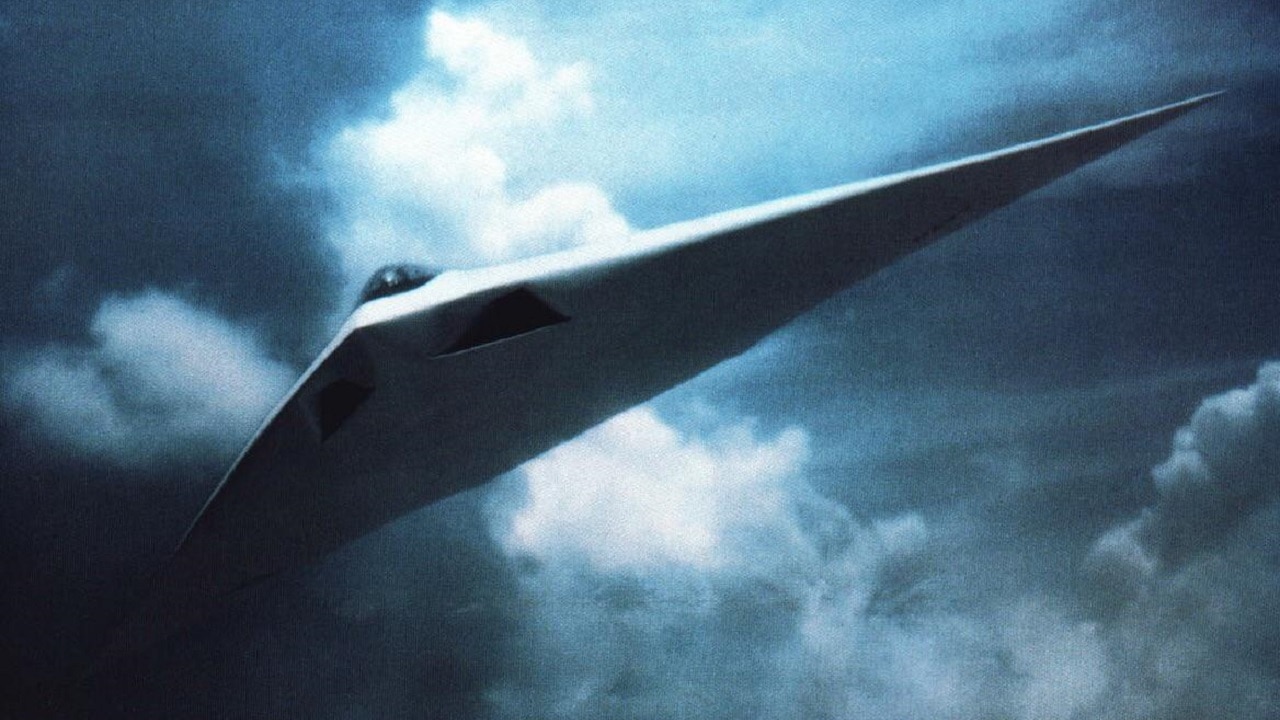
A-12 Avenger. Image Credit: Creative Commons.

A-12 Avenger diagram. Image Credit: Creative Commons.
The Air Force, as the sole steward of low-observable strike, consolidated around bomber platforms like the B-2 Spirit. And, as a result, stealth doctrine became bomber-centric, reducing the pressure to develop carrier-capable stealth concepts for the Navy and narrowing the overall U.S. stealth ecosystem rather than expanding it across services.
What Could Have Happened?
What might have happened had all gone to plan?
In the short term, an operational A-12 fleet in the late 1990s would have centered carrier air wings around penetration-first planning, forcing the Navy to develop new practices centered on low-observable maintenance, deck handling procedures, and strike doctrine tailored to stealth operations at sea.
Aircraft carriers might have also retained a greater degree of independence in early post-Cold War conflicts, reducing reliance on Air Force assets for high-end strike missions.
Over the longer term, the Navy might have also preserved a dedicated strike lineage rather than wholly embracing the multirole fighter model. The design and requirements of later programs – including the F-35C – could have evolved quite differently, with greater emphasis on range and payload rather than flexibility.
And it’s worth mentioning that today’s debates over tanker dependence, carrier vulnerability, and the need for next-generation carrier aviation, as reflected in programs like the F/A-XX, echo many of the same challenges the A-12 was intended to address three decades ago.
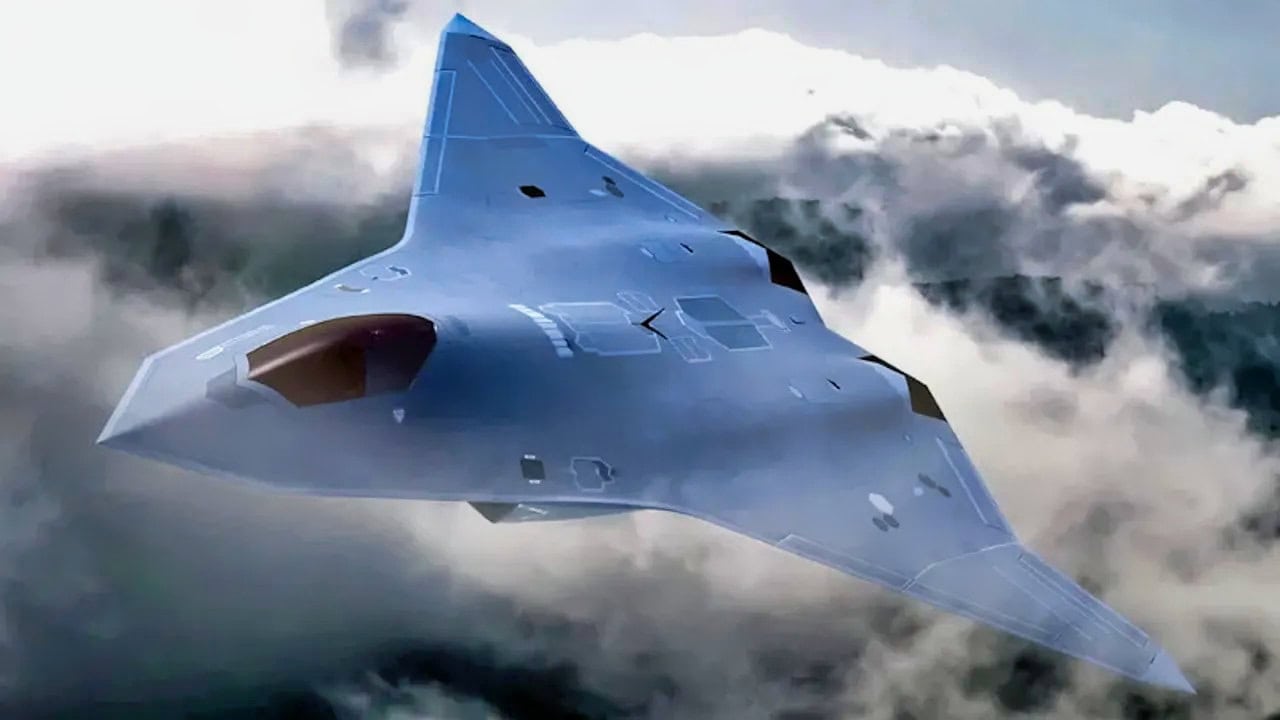
F/A-XX. Image Credit: Creative Commons.
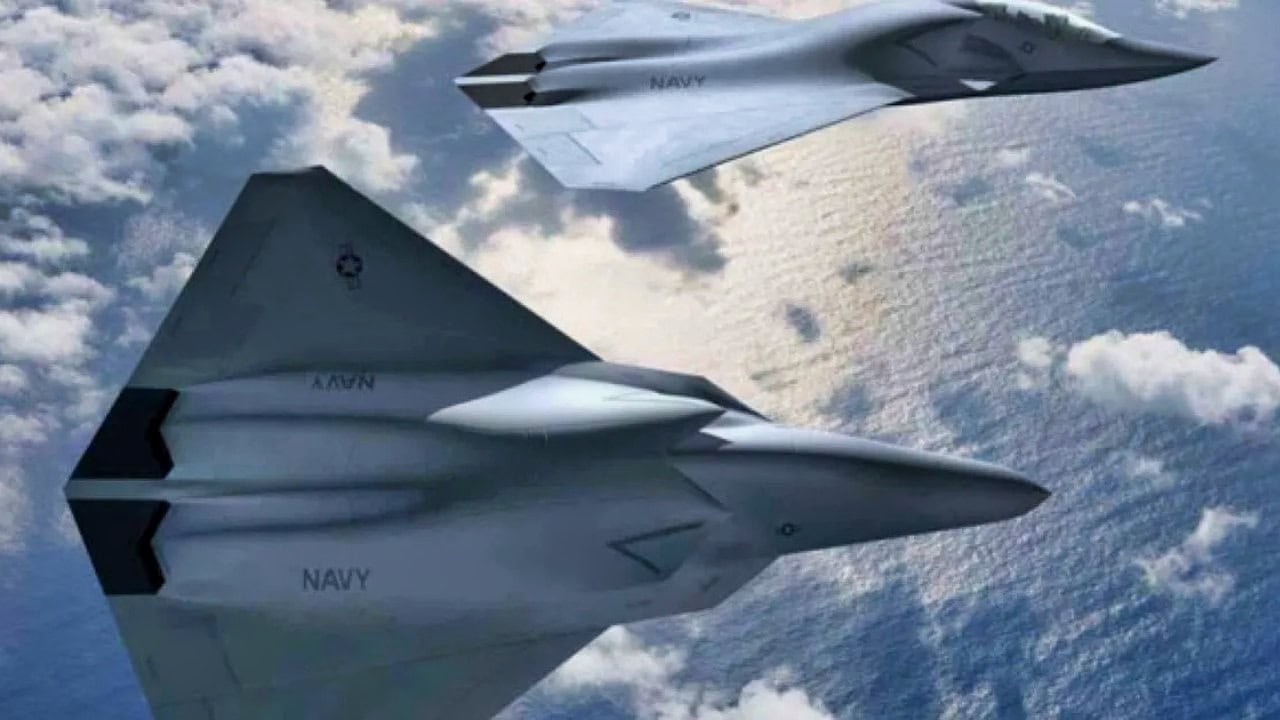
F/A-XX Fighter. Image Credit: Boeing.
The A-12 Avenger II may have been a good idea after all.
About the Author:
Jack Buckby is a British author, counter-extremism researcher, and journalist based in New York who writes frequently for National Security Journal and 19FortyFive. Reporting on the U.K., Europe, and the U.S., he works to analyze and understand left-wing and right-wing radicalization, and reports on Western governments’ approaches to the pressing issues of today. His books and research papers explore these themes and propose pragmatic solutions to our increasingly polarized society. His latest book is The Truth Teller: RFK Jr. and the Case for a Post-Partisan Presidency.